Nuremberg Revisited: A Timely Warning to the Trump Administration

The forthcoming film Nuremberg, slated for release on November 7th, 2025, offers more than just a historical drama, it arrives at a moment in time that invites reflection on the nature of authoritarian power, the fragility of democratic institutions, and the price paid when societies fail to hold tyranny to account. In publishing a cinematic depiction of the post-World-War II trials of Nazi war criminals, the film sends a pointed message, especially to the current U.S. administration, about the consequences of unrestrained power and the urgent need for vigilance in protecting democratic norms.

First, the timing of the release is significant: over eighty years since the original Nuremberg Trials of 1945–46, when the victors of the war sought to ensure that those responsible for crimes against humanity would be held to account. The film’s arrival at this milestone moment suggests that the lessons of that era are not mere relics, but living admonitions. For a present-day administration facing pressures from populist rhetoric, democratic back-sliding, or executive overreach, the film signals that the world remembers what unchecked power is capable of. The very act of dramatizing how the Nazi regime’s leaders were judged and how justice was pursued underscores that history is watching.

Second, by focusing on the moral, psychological and institutional dimensions of tyranny through characters such as Hermann Göring and the American psychiatrist mesmerized by his charisma, the film reminds us that dictators do not always rule by brute force alone, they often wield legitimacy, manipulation and institutional subversion. In a modern context, this is a cautionary tale. When a government begins undermining norms, bypassing checks and balances, or valorizing strong-man tactics, it is not merely a political condition, it echoes the first steps of authoritarianism. The release of this film invites the Trump administration (and by extension any power-consolidating regime) to reflect: the fate of dictatorships is grim, and history does not neglect them.

Third, the timing signals an admonition that accountability matters. The heroes of the film are not the dictators themselves, but the institutions and individuals who insisted on judgment, on due process, on shining light into darkness. That message runs counter to any present-day posture that seeks to evade responsibility or diminish oversight. For the U.S. administration, which holds itself up (and is held up by others) as a model for rule-of-law governance, the film is a reminder that even victors in war cannot sidestep justice: they must build systems that can stand scrutiny. The release date thus communicates that the film is more than entertainment – it is timely commentary.

By arriving in late 2025, a time when global politics are turbulent and the boundaries of democratic norms are under pressure, the film functions as a mirror. It asks: What happens when the “good guys” forget that the preservation of democracy requires constant vigilance? The implication for the Trump administration is subtle but unmistakable: look at the outcome of authoritarianism in the 20th century; learn from the decay of institutional safeguards; and recognize that public memory and moral judgment endure long after the regimes have fallen.

Nuremberg does more than retell a famous trial, it sends a message to the present: authoritarianism isn’t just history’s problem, it is today’s risk. By releasing now, the film invites the Trump administration to see itself in the narrative, one where the rule-of-law must be defended, where power must be constrained, and where the cost of forgetting is steep.


When Confederation Feels Like Confrontation: Ontario and Quebec’s Alberta Dilemma

As I write in my Ottawa living room, and although my sympathies stretch eastward into Quebec and the Martimes, I am watching Alberta events on the evening news as if viewing a distant cousin gone rogue. From here, in Central Canada, we’ve built our identity on a tapestry of industrial dynamism, social progressiveness, and an uneasy, yet genuine, devotion to national unity. So when Alberta thunders about “owning” its oil sands, rails under federal pipeline delays, and threatens separatism with a bravado more suited to Texas than to the spirit of Confederation, it feels less like a debate among equals, and more like a family spat escalating into road rage.

The Great Divide
Central Canada’s frustration begins with a simple question: Why can’t Alberta appreciate that its prosperity rides on Canada’s backbone? We know well the clang of steel from Lake Ontario factories, the laboratories of McGill and U of T, the commuter trains of the GTA carrying workers into offices that fuel innovation, culture, and trade. We see our tax dollars flow westward into infrastructure grants and environmental clean‑ups, yet all we hear back is how Ottawa is strangling Alberta’s lifeblood. In boardrooms and bistros alike, we exchange incredulous glances. “Is that really how they see us?”

In Ontario’s legislature or Quebec City’s cafés, the lament is the same. Alberta’s insistence on unfettered resource development, against carbon pricing, against pipeline regulations, against the minimal environmental guardrails that we accept as part of modern governance, strikes us as not only shortsighted, but tone‑deaf. After all, we’re the ones negotiating trade deals abroad, keeping Canada’s credit rating intact, and answering to the world for our climate commitments. When Alberta rips up its federal‑provincial agreements, and paints itself as a victim, it risks making the rest of us look like oppressors.

When Conservatives Moved the Needle
It wasn’t a personal chemistry with any one leader that mattered so much as policy alignment. Under Conservative governments, particularly during the years following 2006, Ottawa embraced free‑market principles that resonated deeply in Alberta: lower corporate taxes, streamlined approvals, and a lighter regulatory touch on energy projects. This wasn’t about nostalgia for a single prime minister, but about a political philosophy that saw energy as an engine of growth, not a problem to be managed.

From Alberta’s perspective, deregulated markets and balanced budgets felt like recognition of its core economic values. In Central Canada, we may have questioned some of those choices, but we accepted that a spectrum of economic approaches made Canada stronger. The result was a pragmatic détente: pipelines moved forward, investment flowed, and while we debated environmental trade‑offs, there was at least mutual respect for each region’s priorities.

When Regionalism Becomes Roadblock
Today, the rhetoric out west often sounds like, “Build the pipeline, or we’ll build our own exit ramp.” Yet Central Canada knows unequivocally that there is no exit ramp. Our factories, hospitals, and schools depend on the interprovincial movement of people, goods, and capital. The same pipelines Alberta demands are the conduits that keep our cars running, and our manufacturing humming. When Alberta complains that Ottawa’s carbon tax is an “Ottawa cash grab,” it ignores that those funds have helped pay for the recent transit expansions in Edmonton and Calgary, along with the wastewater infrastructure upgrades in Lethbridge.

Even more galling is the separatist thunder: poll after poll invites alarm with one in three Albertans saying they might consider leaving Canada under a Liberal government, feels like a hostage‑negotiation tactic, rather than a legitimate policy platform. Central Canada hears the echoes of Texas secession talk, fireworks and flags, bravado and bluster, but we see the policy vacuum behind the spectacle. We wonder: can they name a single agreement on the global stage that would willingly recognize a 4.4 million‑person “Republic of Alberta”? Or do they really believe they can simply flip a switch and declare independence?

Progressive Values Under Siege
For all our differences, Central Canada prides itself on progressive values: public healthcare that is universal, environmental targets that align with global science, and social policies that aim to reduce inequality. We do not see these as luxuries, but as imperatives for a 21st century nation. So when Alberta snarls at any shift toward renewable energy or regulatory tightening, we perceive a rejection, not only of policy, but of shared national values. It’s as if Alberta believes that “progressive” is a dirty word, an urban‑elitist dictate, rather than a democratic choice.

The result is a mutual distrust. We view Alberta as obstinate, and uncooperative; they view us as meddlesome and judgmental. And somewhere in the commotion, Canada the country begins to feel less like “one nation” and more like warring fiefdoms.

Pathways to Reconciliation
Even as Central Canadians exhale in frustration, we still cling to the idea that this can be repaired. We remember that the Constitution, our shared contract, grants Alberta ownership of its resources (Section 92A), but also vests Ottawa with authority over interprovincial trade, environmental standards, and national unity. Those overlapping jurisdictions are not battlegrounds to be won; they are negotiation tables to be inhabited with respect.

Here’s what we in the centre would propose:
1. Joint Stewardship Councils
Permanent federal‑provincial bodies—one on energy and one on climate—co‑chaired by ministers from Ottawa and Edmonton, with rotating seats for other provinces. Their mandate: to align pipelines, carbon policy, and regional development in a single coherent plan.
2. Mutual Accountability Reporting
Instead of one‑way complaints, require quarterly reports on how federal actions affect provincial economies and vice versa, published publicly so Albertans and Ontarians alike can see the trade‑offs.
3. Shared Diversification Funds
A federally matched investment fund for Alberta to channel resource revenues into hydrogen, critical minerals, and technology hubs—mirroring grants Ontario and Quebec receive for their own diversification.
4. Cultural Exchange Programs
Scholarships and internships pairing Alberta students with agencies in Ottawa, and Central Canadians with energy‑sector positions in Calgary and Fort McMurray, because trust grows when people move across the lines, not when walls go up.

Towards a True Confederation
As I look east from Ontario or west from Quebec, I still see Alberta as part of Canada’s grand promise, a province of immense resources, entrepreneurial spirit, and resilient people. But a promise requires reciprocity. If Alberta wants the benefits of the Canadian federation, it must share responsibility for national projects, ideals, and compromises. And if Central Canada wants Alberta to feel at home in Confederation, we must speak not with condescension, but with open hands and honest trade‑offs.

In the end, Texas doesn’t have to be our model, and neither does Paris or Beijing. We can be distinctly Canadian: united not in uniformity, but in a federalism that accepts our regional flavors and binds them together in mutual respect. Only then will Alberta’s roar feel like a proud Canadian voice, rather than an echo of someone shouting from outside our walls.

Frank McLynn: A Biographer Who Talks Back to History

“History is not a static record, and truth is not a simple story. It is a conversation, sometimes a quarrel, and always an argument well made.”

If you haven’t yet fallen into the work of Frank McLynn, consider this a gentle warning: once you do, history will never look quite the same. McLynn isn’t merely a writer of biographies; he is a thinker about biography itself, a historian who insists on a conversation with his peers even as he recounts the lives of figures long departed. His work is a masterclass in the art of writing history that is simultaneously rigorous, readable, and refreshingly candid.

Engaging with History, Not Just Telling It
Take his monumental work on Richard Francis Burton. Most biographers, in approaching a figure like Burton: the explorer, linguist, orientalist, and provocateur would pick a path of reverence, sensationalism, or straightforward chronology. McLynn does none of these exclusively. Instead, he immerses himself in the entire scholarly conversation on Burton, dissecting assumptions, noting disagreements, and then calmly explaining why his own interpretation diverges. He doesn’t dismiss other historians; he engages with them, highlighting blind spots, overlooked evidence, or interpretive errors. The result is not just a biography, but a kind of intellectual conversation that readers can follow and participate in.

Version 1.0.0

This dialogic approach is rare in modern biography. Many writers simply present their research, leaving the reader to assume that their conclusions are self-evident. McLynn, by contrast, shows the intellectual gears turning behind the narrative: why he favors one interpretation over another, why certain sources carry more weight, and why some claims advanced by previous historians are problematic. In doing so, he educates as he narrates, giving readers insight into the historian’s craft as well as the subject’s life.

The Challenge of Burton’s Lost Papers
McLynn’s work on Burton becomes even more remarkable when one considers the obstacles he faced. Much of Burton’s personal material: letters, diaries, manuscripts was deliberately destroyed by his wife, Isabel, after his death. Earlier biographers often treated this loss as a barrier too high to surmount, leaving gaps in the narrative or filling them with speculation that blurred the line between evidence and invention.

McLynn confronts these gaps head-on. He does not pretend they do not exist, nor does he indulge in imaginative reconstruction disguised as fact. Instead, he reconstructs Burton’s world with meticulous care, using surviving letters, published works, contemporary accounts, and even indirect references to piece together a life both vivid and credible. The result is a biography that is as rigorous as it is lively, a rare balance in historical writing, especially given the fragmentary nature of the surviving sources.

What stands out is McLynn’s ethical sensitivity. He demonstrates that historical gaps do not justify careless inference. Rather, he shows how one can be faithful to the evidence while still producing an engaging narrative. Readers gain not only a sense of Burton himself, but also an appreciation for how historians navigate the tension between curiosity and respect, interpretation and invention.

The Ethics and Craft of Biography
This transparency is one of McLynn’s defining traits. He models intellectual honesty in every chapter, reminding readers that biography is as much about interpretation as it is about fact. He acknowledges the limits of sources, the biases of previous scholars, and the moral ambiguity of his subjects. By doing so, he invites readers to think critically, weigh evidence, and arrive at their own conclusions.

McLynn’s biographies are, in a sense, lessons in historiography. Through his work, we see how historical interpretation evolves, how scholars argue across time, and how personal and cultural biases shape the telling of any life. He makes these debates accessible, without ever oversimplifying them, allowing readers to witness the historian’s reasoning in action.

Themes Across McLynn’s Work
Across his wide-ranging oeuvre, from Napoleon Bonaparte to Genghis Khan, from Carl Jung to Marcus Aurelius, McLynn’s approach is consistent. He is drawn to figures who are morally complex, intellectually audacious, or too misunderstood to be captured by conventional narratives. He eschews hagiography and sensationalism alike, favoring instead a careful, nuanced exploration of character and context.

Another hallmark is his attention to cultural and historical environment. McLynn situates his subjects within the broader currents of their times, showing how context shapes decisions, ambitions, and legacies. In Genghis Khan: The Man Who Conquered the World, for example, he paints a rich picture of the Mongol steppe and tribal politics, helping readers understand the extraordinary achievements of a man often caricatured in previous accounts. Similarly, in his Napoleon biography, he balances the public image with the private complexities of the man, providing both strategic analysis and human insight.

Why McLynn Matters
For readers, engaging with McLynn is thrilling. You are not merely absorbing facts; you are witnessing a historian navigate a maze of interpretation, weighing evidence, and arguing with the ghosts of scholarship past. His biographies are immersive, yet intellectually rigorous, blending narrative excitement with careful reasoning.

In a publishing world awash with hagiography, sensationalism, and truncated life sketches, McLynn reminds us why biography matters. He shows that history is a living dialogue, shaped by questions as much as answers. And in every book, quietly but insistently, he is the biographer who talks back, both to his subjects, and to the historians who have preceded him.

“He writes not to canonize or condemn, but to illuminate, and in doing so, he reveals something equally compelling about the practice of history itself.”

For those willing to read closely, McLynn’s footnotes, source critiques, and occasional asides provide a secondary narrative: a conversation about scholarship itself. In this sense, reading McLynn is not just a journey through the lives of extraordinary figures; it is a lesson in how history is written, interpreted, and understood.

Lansdowne 2.0: The half-billion-dollar deal that asks Ottawa to trust again

There are moments in a city’s life when the decisions made at council chambers shape not just its skyline, but its soul. The redevelopment of Lansdowne Park has entered such a moment. The City calls it Lansdowne 2.0. Once again we are asked to believe that this time things will finally work out. I am respectfully saying: no thank you.

I support investing in our city’s infrastructure, in affordable housing, and in vibrant community spaces, but I am deeply opposed to the kind of public-private partnership (PPP) model that Ottawa keeps repeating – especially when the affordable housing promise is quietly reduced, when the public carries the risk, and the private partner walks away with much of the upside.

In the case of Lansdowne 2.0, the City and its private partner, Ottawa Sports and Entertainment Group (OSEG), propose to rebuild the north-side stands and arena, build new housing towers, bring retail/condo podiums, and “revitalize” the site. The projected cost is now $419 million, according to City documents. The City’s Auditor General warns the cost could be as much as $74-75 million more and that revenues may fall short by $10-30 million or more. That alone should give us pause, but the real problem goes beyond the balance sheet.

The public-private problem
The idea of PPPs sounds appealing: share risk, leverage private capital, deliver publicly beneficial projects faster. But the repeated pattern in Ottawa is that the public land, public debt and public oversight become the junior partner in the deal. When good times happen, the private side takes the returns; when costs rise or revenues shrink, the City and the taxpayer carry the burden. We know this from Lansdowne 1.0 and from other large projects in the city. The question is not simply “Is this a partnership?” but “Who bears the downside when things go off plan?”

The Auditor General’s review of Lansdowne 2.0 flagged that the City is “responsible for the cost of construction…..and any cost overruns” even though much of the revenue upside depends on later ‘waterfall’ arrivals. If we’re asked to commit hundreds of millions now in the hope of returns later, we must demand transparency, risk caps, guaranteed affordable housing and binding public-benefit commitments. Anything less is not renewal, it’s risk-shifting.

Affordable housing is not optional
At a time when Ottawa faces an acute housing affordability crisis, we are told that “housing towers” are part of the funding model for Lansdowne. But the developer’s track-record of promising affordable units, and then claiming they can’t deliver is worn and familiar. In the updated Lansdowne plan the number of guaranteed affordable units was cut or deferred and shifted toward “air-rights” revenues and condo sales, effectively betting public good on speculative real estate. Affordable housing should not be a line-item to trim when the spreadsheets wobble. It is the social licence that allows private profit on public land. Approving a plan that pares back affordable units yet asks for public exposure is indefensible.

Traffic, transit and neighbourhood liveability
The Lansdowne site sits beside the Rideau Canal, the Glebe and the Bank Street corridor – one of the most traffic-choked corridors in the city. Yet the plan envisions adding 770 new residential units (down from an original 1,200) on top of retail podiums. Meanwhile, the city’s own “Bank Street Active Transportation and Transit Priority Feasibility Study” (June 2024) underlines that Bank Street is already at capacity for cars and buses, that pedestrian and cycling infrastructure is insufficient and that any added vehicle traffic will further degrade mobility.

Without a clear strategy to manage car access, parking, transit loads, cycling/pedestrian safety and construction impacts, this redevelopment risks worsening gridlock and degrading the very neighbourhood livability the project claims to enhance.

Sports tenants and viability
One of the central rationales for Lansdowne 2.0 is that the existing arena and stands are aging and that new facilities will retain sports franchises and major events. Yet the plan, as approved, reduces capacity for hockey to 5,500 seats and concerts to around 6,500 – considerably smaller than many mid-sized arenas. Meanwhile, neighbouring downtown developments such as the proposed new arena for the Ottawa Senators raise questions: what is Lansdowne’s tenant strategy once the major franchise relocates? If the largest anchor tenant leaves, the revenue model collapses. The City is committing hundreds of millions without a transparent long-term sports strategy. Sports teams argue they cannot stay if capacity or amenities shrink. If they depart, the burden falls back on taxpayers.

Commercial podiums and vacant retail
The redevelopment includes a shift from 108,000 square feet of retail to 49,000 square feet; a cut because local business viability was weak in the first phase. Even today many of the commercial units around Lansdowne 1.0 remain vacant because rents are too high for independent businesses and the location’s infrastructure doesn’t support consistent foot traffic outside game days. The plan’s assumption that retail will compensate for public investment is shaky at best. Until we see real evidence of market demand and rental levels that support small business and serve neighbourhoods, not just downtown condo-dwellers, we are betting public money on commercial models that already failed once.

The opportunity cost
Let’s not forget what’s at stake. Nearly half a billion dollars in public exposure. Imagine what that money could do across the city: hundreds of affordable housing units in multiple wards, refurbished community centres, libraries, rinks, park renewal, neighbourhood transit links. Instead, we’re being asked to invest that money in one downtown site, tied to a private partner’s spreadsheet and future real-estate and event-market assumptions. This is a question of equity: do we serve one marquee site or many? Do we favour single big deals or dozens of small, proven community-led investments?

A better path forward
I believe in renewal. I believe Lansdowne and its broader site matter. But I cannot support the current model unless three things change:
1. Full transparency: release the full pro-forma, risk tables, debt-servicing schedules, and waterfall projections.
2. Binding affordable-housing guarantees: not aspirational “10 per cent of air-rights revenue,” but concrete units or legally-binding contributions to affordable-housing stock.
3. An urban-livability strategy: traffic and transit modelling for Bank Street and the Glebe; tenant guarantees for sports franchises; a retail strategy that supports small local business; and a cap on public exposure in cost overruns.

If a deal only works when the public is last in line for returns, when affordable housing is trimmed, when traffic worsens and local business fails, then we shouldn’t do it. That is not civic renewal. It is a subsidy for speculative dysfunction.

Public land, public money, public trust. If those three are not aligned, the right move is not to sign another 40-year partnership and hope for the best. It is to pause, open the books, redesign the deal and ensure the structure serves the city first, not the private partner. Ottawa can build better than this. It just needs to decide whose interests it wants to serve.

Sources:
• CityNews Ottawa: OSEG revamp cost jumps to $419 M.
• City of Ottawa / Engage Ottawa: Lansdowne 2.0 project/funding details.
• Auditor General of Ottawa: cost under-estimation, financial risk.
• Glebe Report: traffic/transportation study on Bank Street.

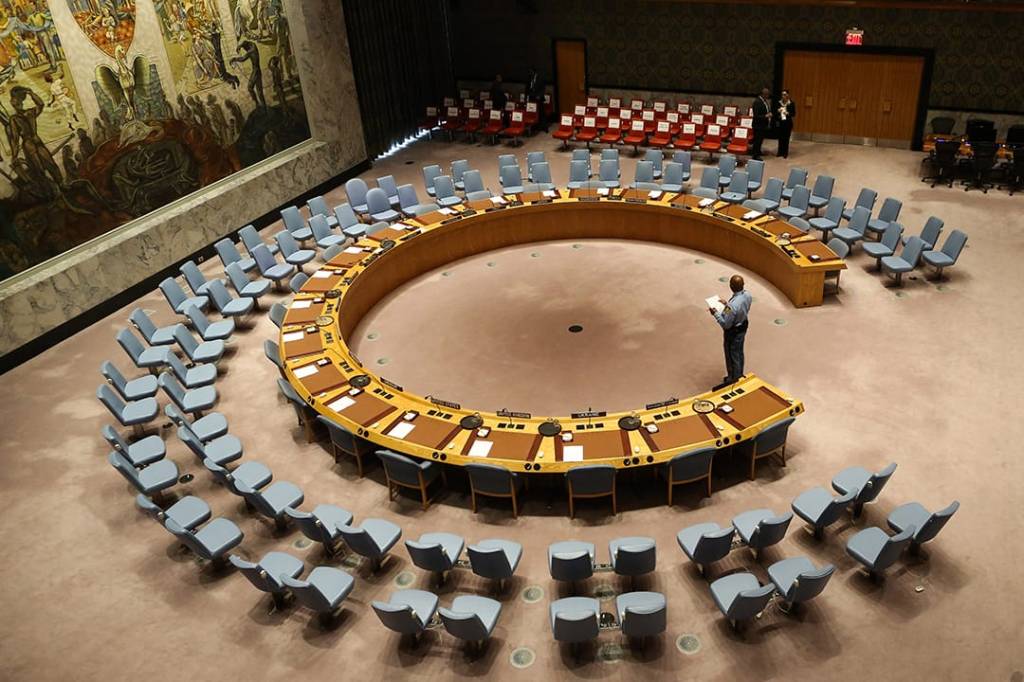
The UN’s Veto Trap: How Superpowers Sabotage Their Own Scapegoat 

The United Nations is often portrayed as the cornerstone of international diplomacy, a forum where nations come together to resolve disputes, prevent wars, and promote human rights. Yet, in practice, the UN is frequently cast as a convenient scapegoat by the very superpowers that designed it. Its structure, particularly the veto power held by the five permanent members of the Security Council, the United States, Russia, China, the United Kingdom, and France, has become a structural bottleneck, ensuring that decisive action is only possible when the interests of these nations align. Until the veto is removed, the UN will remain hamstrung, caught between high expectations and systemic limitations.

The veto was introduced in 1945 as a compromise to secure the participation of the world’s most powerful states. Without it, the founding members feared that superpowers might bypass or abandon the organization altogether. In theory, the veto was a stabilizing mechanism. In practice, it has become a tool for inaction. Consider Syria: during the ongoing civil war, Russia has repeatedly vetoed resolutions condemning the Assad regime and calling for intervention, while China has often supported Russia’s position. As a result, the Security Council has been paralyzed even in the face of clear evidence of atrocities, leaving millions of civilians exposed to violence. Western leaders then criticize the UN for inaction, conveniently ignoring the very vetoes that prevented it from acting.

Other historical examples reinforce this pattern. During the Rwandan genocide in 1994, the Security Council was slow to act, partly due to reluctance from major powers to commit troops or risk entanglement. The UN Assistance Mission in Rwanda (UNAMIR) was critically under-resourced, and resolutions to expand its mandate were delayed or watered down. Later, when Iraq invaded Kuwait in 1990, the Security Council acted decisively, but only because the superpowers’ interests aligned in opposing Saddam Hussein. This selective engagement demonstrates that the UN’s effectiveness is contingent less on law or morality than on the geopolitical priorities of the P5.

Even more recently, the Russian invasion of Ukraine in 2022 exposed the limitations of the UN system. Russia’s veto prevented any meaningful Security Council action, forcing Western nations to rely on unilateral sanctions, NATO coordination, and General Assembly resolutions that carry moral but not binding authority. Russia, in turn, dismissed UN criticism as biased or irrelevant, highlighting the paradox: the UN is invoked when it serves the interests of a superpower, and criticized when it does not. Similarly, the ongoing Israeli-Palestinian conflict shows how the U.S. veto has blocked resolutions condemning settlements or military actions, creating a perception that international law is applied selectively.

These examples illustrate a persistent problem: the UN is used by superpowers as both a tool and a scapegoat. It legitimizes actions when convenient, shields states from criticism, and is blamed for failures beyond its control. The veto allows a single nation to prevent collective action, regardless of the humanitarian or legal merits of a situation. Meanwhile, smaller nations, despite representing the vast majority of UN members, have little real influence. The General Assembly can issue resolutions expressing global consensus, but these are largely symbolic without enforcement mechanisms.

The solution is straightforward: no country should have veto power. The veto institutionalizes inequality and ensures that the UN cannot fulfill its mandate impartially. Proposals have been made to reform the Security Council, including requiring multiple vetoes to block a resolution or eliminating the veto for crimes against humanity, genocide, or aggression. Yet these reforms have stalled because the P5 have no incentive to relinquish privilege. True UN reform requires equalizing the decision-making process, where all nations have a voice and no single state can unilaterally obstruct action. Only then could the UN function as a legitimate arbiter of international law and human rights.

Until veto power is removed, the UN will continue to struggle. It will remain a forum where crises are debated but seldom resolved, where resolutions are celebrated symbolically but ignored in practice, and where superpowers externalize responsibility, casting the organization as weak or ineffectual while maintaining control behind the scenes. The world deserves a UN capable of enforcing its own principles, rather than one whose moral authority is hostage to the interests of a handful of powerful nations. Removing the veto is not just an administrative reform, it is a moral imperative, a prerequisite for a truly effective international system.

High School Forever? Why Americans Stay Stuck in Teen Mode While Brits Move On

Growing up in a working-class British comprehensive school and later helping raise kids in the U.S. and Canada, I noticed something odd; Americans treat high school as the definitive chapter of their lives. Prom queens cling to their tiaras on Instagram, and class clowns still crack the same jokes at reunions. Across the pond, however, Brits shrug off their teen years like an old school uniform. What gives?

Let’s dive into why Americans cling to their high school glory days while Brits are happy to leave theirs in the past.

America: High School as the Eternal Highlight Reel
For Americans, high school isn’t just a phase – it’s a cultural obsession. Hollywood has built an empire glorifying those years as either a glorious peak or a source of lifelong scars.

Take Napoleon Dynamite. Uncle Rico spends his days reliving a missed shot at football fame, his identity frozen in that one moment. Or Romy and Michele’s High School Reunion, where the main characters reinvent themselves to impress former classmates, only to realize high school wasn’t all that.

Even in uplifting tales like Grease, high school reigns supreme. Danny Zuko and Sandy Olsson’s love story unfolds against a backdrop of drag races, pep rallies, and leather jackets. Meanwhile, The Breakfast Club reminds us that social cliques define who we are, or at least who we think we are, during those years of detention and cafeteria drama.

Why this fixation? High school in America is a “mini-society,” complete with rites of passage like prom, homecoming, and sports rivalries. It’s not just about grades; it’s where you win (or lose) popularity contests, fall in love, and experience your first public humiliation.

The British Take: Awkward, Cringe, and Happily Forgotten
In Britain, adolescence is less “crowning achievement” and more “let’s never speak of this again.” British media portrays school as an awkward stepping stone rather than the main event.

Take The Inbetweeners. This comedy revels in the cringe-worthy antics of four painfully average lads. The goal isn’t to chase glory but to survive. By the end, they’re thrilled to leave it all behind.

Even British dramas sideline the school experience. At Hogwarts, the stakes in Harry Potter are life-and-death battles against dark wizards, not who’s taking whom to the Yule Ball. And in Billy Elliot, a boy’s love for ballet overshadows any schoolyard drama. Compare that to Footloose, where an entire American town’s angst revolves around high school kids’ right to dance.

Why the Difference?
For Americans, adulthood can feel like a letdown. Bills, jobs, and responsibilities often pale in comparison to the glory days of pep rallies and yearbooks. In the UK, adulthood is treated as a welcome reprieve from teenage awkwardness. Shows like Fleabag and The Office (UK) poke fun at adult life without constantly revisiting the schoolyard.

The school systems also play a role. American high schools are all-encompassing, blending academics, sports, and social life. British secondary schools are more segmented, with sports and extracurriculars often happening outside school. Without the glitz of prom or homecoming, there’s simply less to romanticize.

Pop Culture’s Verdict: America Stuck, Britain Moving On
In Hollywood, high school nostalgia reigns supreme. From Clueless to Superbadto Eighth Grade, the American teen years are endlessly rehashed. British films, by contrast, rarely dwell on adolescence. Even when they do, as in Skins, the focus is on complex issues rather than glorifying the teen experience.

While American characters like Cher in Clueless continue acting like queen bees into adulthood, British stories are more likely to explore adult challenges, whether it’s romance in Love Actually or workplace drama in The Office (UK).

A Tale of Two School Systems
For Americans, high school is a cultural anchor, equal parts triumph, trauma, and identity. Brits, on the other hand, happily lock those years in the attic, only to laugh about them over a pint decades later.

Perhaps the lesson is this: while it’s fine to glance back at your teenage years, there’s a reason the yearbook closes.

Rethinking Public Safety: Core Changes Needed in Western Policing

Western policing institutions, from the United Kingdom to the United States, are facing mounting scrutiny for systemic failures that undermine public trust and fail to meet the safety needs of communities. Incidents of racial and gendered violence, misuse of force, and institutional culture problems reveal the limitations of the traditional model in which a single, uniformed police force handles the full spectrum of societal harms. This essay argues that public safety requires a reimagined, plural, and layered system. It presents six core principles for reform, grounded in evidence from pilot programs and case studies on both sides of the Atlantic, and discusses the implications for sustainable, accountable, and equitable policing.

Introduction
The model of policing inherited from 19th-century Western institutions, exemplified by Sir Robert Peel’s Metropolitan Police in London and early municipal police forces in the United States, was designed to maintain order and protect property. While law enforcement has evolved considerably, the persistence of systemic failures: including excessive use of force, discrimination, and insufficient accountability, reveals that the traditional, centralized policing model is increasingly misaligned with the safety needs of diverse urban and rural populations. Recent investigations, such as the BBC Panorama exposure of the Metropolitan Police and multiple high-profile police misconduct cases in the United States, underscore the urgency of systemic reform.

Reimagining public safety involves shifting from a monolithic force model to a plural, layered system in which enforcement is distinct from care, accountability is democratized, coercive intervention is minimized, social determinants are prioritized, non-police responders are professionalized, and transparent data guide decision-making.

Principle 1: Separate Enforcement from Care
Crisis responses for homelessness, mental health emergencies, substance use, and domestic conflict are often inappropriate for traditional police intervention. Uniformed officers, trained primarily for law enforcement rather than care, may escalate tensions, criminalize vulnerability, or fail to provide adequate support.

Alternative models, such as CAHOOTS (Crisis Assistance Helping Out On The Streets) in Eugene, Oregon, and similar community response teams in Toronto, Canada, deploy trained clinicians, social workers, and mediators to handle nonviolent crises. Evidence suggests these programs reduce unnecessary arrests, minimize injuries, and improve trust between communities and public safety agencies. In both UK and US contexts, embedding healthcare professionals alongside response teams reduces escalation and prevents downstream criminalization.

Principle 2: Localize and Democratize Accountability
Public trust is strengthened when local communities have oversight and voice in shaping public safety priorities. Establishing community boards with authority over local response teams, transparent complaint resolution processes, and independent civilian audits creates structural incentives for cultural change.

Both London’s Metropolitan Police governance reforms and civilian oversight structures in cities such as New York and Chicago highlight the importance of independent, empowered bodies capable of enforcing accountability. External oversight must have investigatory authority and sufficient resources to ensure timely and effective review of misconduct or systemic failures.

Principle 3: Reduce the Role of Armed, Coercive Interventions
The routine deployment of armed officers contributes to the normalization of coercion and increases the risk of harm, particularly for marginalized communities. In Western contexts, both the UK and US demonstrate the need to reserve armed intervention for narrowly defined, high-risk tasks.

For routine public safety, prioritizing de-escalation, nonviolent conflict resolution, and restorative justice practices promotes harm reduction and community reintegration. Programs such as restorative justice circles in US municipalities and diversionary policing initiatives in the UK demonstrate measurable reductions in recidivism and enhanced community cohesion.

Principle 4: Reinvest in Social Determinants of Safety
Long-term safety cannot be achieved solely through law enforcement. Investments in housing, mental health services, youth programs, education, and employment opportunities address root causes of harm and reduce the likelihood of criminalized behaviors.

Budget reallocations toward prevention and community infrastructure yield higher returns in public safety than expansion of enforcement. Examples include community-led housing initiatives in Scandinavian cities and youth engagement programs in US urban centers, which correlate with reduced crime rates and increased community resilience.

Principle 5: Professionalize Non-Police Crisis Responders
Alternative responders require clear professional frameworks to ensure effectiveness and sustainability. Developing recognized career paths, standardized training, legal authority, and integration with public safety systems is essential. Professionalization enables accountability, credibility, and continuity, ensuring that non-police interventions are treated as legitimate and reliable components of public safety.

Principle 6: Transparent Data and Outcomes
Transparency is foundational for accountability and evidence-based reform. Public dashboards reporting complaints, use of force, referral outcomes, and demographic impacts allow communities to scrutinize performance and guide policy decisions. Both UK and US jurisdictions increasingly deploy open data initiatives to monitor law enforcement and response teams, enhancing trust and supporting adaptive reforms.

Case Studies and Evidence

  • CAHOOTS (Crisis Assistance Helping Out On The Streets), Eugene, Oregon: Mental health crises handled by clinicians rather than police resulted in fewer arrests and reduced hospitalizations.
  • London’s community policing pilots: Embedding officers with community liaison roles increased reporting of minor crimes and improved citizen satisfaction.
  • Toronto’s mobile crisis teams: Mental health and addiction response teams reduced unnecessary emergency department admissions and arrests.

Recent BBC Panorama revelations in London illustrate the stakes of failing to implement such principles: custody suites became environments of normalized bigotry and violence, reflecting an institutional mismatch between coercive tools and public needs. Similar patterns in US police departments, documented through DOJ investigations and local reporting, demonstrate that this is a transatlantic problem.

Western policing institutions are at a critical juncture. The evidence indicates that centralized, uniformed police forces, designed historically to maintain order and protect property, are insufficient to meet contemporary public safety needs. A plural, layered system guided by the six principles; separating enforcement from care, democratizing accountability, reducing coercive interventions, reinvesting in social determinants, professionalizing non-police responders, and ensuring transparency, offers a path toward equitable, effective, and sustainable public safety across Western societies.

Reforms must be systemic, not incremental, and must embrace experimentation and evaluation. The lessons from pilot programs and investigative revelations alike underscore a simple truth: public safety is not merely the absence of crime, it is the presence of care, trust, and community resilience.

Sources:

  1. BBC Panorama. (2023). Undercover: Inside the Met.
  2. Casey, L. (2023). Baroness Casey Review: Independent Review into the Standards of Behaviour and Internal Culture of the Metropolitan Police Service.
  3. CAHOOTS Program (Crisis Assistance Helping Out On The Streets), Eugene, Oregon. White Bird Clinic.
  4. Toronto Mobile Crisis Services. City of Toronto.
  5. New York City Civilian Complaint Review Board.
  6. DOJ Investigations into US Police Misconduct, 2010–2023. U.S. Department of Justice.

Canada’s Coast Guard Joins the Defence Team: Integration or Quiet Militarization?

The Canadian government’s decision to fold the Canadian Coast Guard (CCG) into the Department of National Defence marks a decisive moment in the evolution of the country’s maritime policy. Through an Order in Council enacted in early September, and framed publicly as a “historic integration,” the Coast Guard now formally joins the Defence Team while remaining, at least in name, a civilian special-operating agency. Alongside this bureaucratic shift, Bill C-2 – the Strong Borders Act – seeks to expand the CCG’s authority into new territory: maritime surveillance, security operations, and intelligence sharing. The language is cautious, but the direction unmistakable. Canada is re-casting its civilian fleet as a security instrument.

The advantages of this integration are clear enough. For decades, Canada’s maritime operations have suffered from duplication, fragmented command structures, and chronic under-coordination between the military, the Coast Guard, and various federal agencies. Unifying them under the defence umbrella promises better coordination, faster response times, and improved data flow across security domains. The move also signals a more assertive posture in the Arctic, where the melting of sea ice has opened new routes, resource prospects, and geopolitical interest. By linking the Coast Guard’s icebreakers, patrol ships, and scientific vessels to Defence planning, Ottawa aims to strengthen sovereignty and deterrence at a time when northern waters are becoming increasingly contested.

There is also an unmistakable element of fiscal and strategic pragmatism. Integrating existing civilian assets into the national security structure allows Canada to stretch its limited defence budget further without the political or financial burden of creating a new armed maritime service. The Coast Guard already provides an extensive logistical network, technical expertise, and near-permanent presence on three coasts and the Great Lakes. With modest investment, these capabilities can be adapted to enhance maritime domain awareness and support allied security objectives, including NATO’s northern surveillance initiatives. In an era of hybrid threats, where cyber intrusions, illegal fishing, and state-sponsored maritime interference blur traditional lines between defence and law enforcement, this integration appears both efficient and strategically inevitable.

Yet the risks are equally consequential. At stake is the Coast Guard’s long-standing civilian identity and the public trust that comes with it. The CCG has always been seen as a service of rescue, safety, and stewardship: unarmed, apolitical, and oriented toward the public good. As the agency takes on intelligence and security functions, that image could erode. The distinction between civilian protection and military surveillance becomes harder to maintain once the two operate under the same institutional roof. Without robust oversight, the Coast Guard’s evolution could lead to mission creep, where a service designed for environmental response and humanitarian aid finds itself entangled in enforcement or intelligence operations that carry political and ethical complexity.

Legal and constitutional questions also loom. Expanding the Coast Guard’s powers will require new frameworks for information sharing, privacy protection, and operational accountability. The proposed amendments under Bill C-2 would permit the collection and dissemination of security data to domestic and international partners. Such activities raise concerns about transparency, data governance, and proportionality, especially when conducted by a civilian agency with limited independent oversight. Moreover, the shift implies deeper operational alignment with the military and allied security agencies, a change that demands clear boundaries to prevent duplication, confusion, or jurisdictional conflict in crisis situations.

Behind the policy lies a broader strategic influence. The United States provides an obvious model. Its Coast Guard functions as a hybrid institution—part law enforcement, part military, part humanitarian service—operating seamlessly across domestic and defence spheres. Canada’s move appears to emulate that structure, reflecting an understanding that maritime security in North America is increasingly integrated. While there is no public evidence of direct U.S. pressure, the gravitational pull of American strategic expectations is unmistakable. Washington has long encouraged its allies to shoulder more responsibility for continental and Arctic security. As the United States expands its presence through the North American Aerospace Defense Command (NORAD) modernization and Arctic exercises, Ottawa’s reorganization of its maritime agencies can be read as a complementary alignment rather than a coincidence.

This convergence serves both nations. For the United States, a better-resourced, defence-aligned Canadian Coast Guard strengthens the North American maritime perimeter. For Canada, closer alignment provides diplomatic cover against accusations of underinvestment in defence and enhances interoperability with U.S. command structures. Yet this alignment carries political trade-offs. The closer the Coast Guard moves toward military functions, the more Canada risks blurring its distinctive approach to maritime governance, a tradition rooted in civilian expertise, scientific stewardship, and non-militarized presence.

The political optics of the transition will matter as much as its operational outcomes. The government has emphasized collaboration, modernization, and sovereignty, avoiding any suggestion of militarization. The opposition has been cautious, wary of the costs and implications but unwilling to oppose measures that appear to bolster national security. What remains missing is a transparent national conversation about what kind of maritime posture Canada truly wants: one that prioritizes civilian safety and environmental protection, or one that integrates those aims within a broader security agenda driven by alliance politics.

In strategic terms, the integration may be both inevitable and necessary. The maritime domain is no longer a quiet space of rescue operations and scientific missions; it is a theatre of competition, surveillance, and geopolitical risk. Canada cannot afford to operate its civilian and military fleets as separate silos. Still, the success of this reform will depend on balance, between security and service, between alliance and autonomy, and between efficiency and democratic oversight.

If handled wisely, this reorganization could give Canada a modern, resilient, and integrated maritime posture worthy of its geography and global role. If managed poorly, it risks politicizing a trusted civilian institution and blurring the lines that define responsible democratic defence. The Coast Guard’s new place within the Defence Team is not just an administrative adjustment; it is a statement about the kind of nation Canada intends to be on the world’s waters.

Sources:
Government of Canada, “National Defence welcomes the Canadian Coast Guard to the Defence Team,” September 2025;
CityNews Toronto, “Federal government begins to transfer Coast Guard to National Defence,” September 2, 2025;
Canadian Military Family Magazine, “Canadian Coast Guard joins Defence Team,” September 2025;
Open Government Portal, “Question Period Brief: Strong Borders Act (Bill C-2),” 2025.

A Transatlantic Lens: Exploring the Biggest Differences Between Europe and North America

The feedback I have been getting is that readers have been enjoying my serialised essays exploring subject matter to greater depth. This series of posts is for my friends on both sides of the Atlantic who love to debate this topic, often over European old growth wine and Alberta beef steaks.

Living in North America since the early 1990s as a European, I’m constantly struck by the quirks, surprises, and sometimes baffling differences between the continents. Over the next few weeks, I’ll explore ten key contrasts: spanning work, cities, food, and politics, and share what these differences mean in everyday life.

The Ten Differences

1. Social Safety Nets

In Europe, healthcare, pensions, and social support are expected parts of life. In North America, it’s more “your responsibility,” with benefits often tied to your job. It’s a mindset shift—comfort versus risk, security versus self-reliance, and it shapes so much of daily life.

2. Urban Planning and Transport

European cities invite walking, biking, and public transit. North American life often demands a car for everything. That difference affects how people socialize, shop, and spend their days. Suddenly, running errands isn’t quick, it’s a logistical decision.

3. Work-Life Balance

Europeans enjoy generous vacations and shorter workweeks. North Americans often work longer hours with less guaranteed downtime. Life here can feel like a constant race, while in Europe, there’s a stronger sense of living, not just working.

4. Cultural Formality and Etiquette

Europeans prize subtlety, traditions, and social cues. North Americans are casual, direct, and friendly—but sometimes painfully blunt. Adjusting between the two takes awareness: what feels warm here might feel sloppy there, and what feels polite there can seem distant here.

5. Business Practices

European companies lean toward consensus, careful planning, and stability. North American firms move fast, take risks, and chase growth. The difference shows up in meetings, negotiations, and career paths; you quickly learn when to push and when to wait.

6. Education Systems

Europe often offers low-cost or free higher education and emphasizes broad learning. North America favors expensive, specialized programs. The gap affects opportunities, student debt, and the way people approach learning for life versus learning for a career.

7. Food Culture

In Europe, meals are rituals – slow, social, and seasonal. Here, convenience and speed often rule, and portions are huge. That doesn’t just shape diets; it changes how people connect over meals and how they experience daily life.

8. Political Culture

European politics embrace multiple parties, coalitions, and compromise. North America leans on two parties and polarized debates. This difference affects trust, civic engagement, and how people view the government’s role in society.

9. History and Architecture

Europeans live among centuries of history in their streets, buildings, and laws. North America feels newer, faster, and more forward-looking. The environment subtly teaches what matters: continuity versus reinvention, roots versus growth.

10. Attitudes Toward Environment

Europe integrates sustainability into daily life: cycling, recycling, and urban planning. North American approaches vary, often prioritizing convenience or growth over ecology. Cultural attitudes toward responsibility shape everything from transportation to policy priorities.

These ten contrasts are just a glimpse of life across the Atlantic. In the weeks ahead, I’ll dive deeper into each, sharing stories, observations, and reflections. The goal isn’t just comparison, it’s understanding how culture shapes choices, habits, and even identity. Stay tuned for the journey.

Why We Must Rethink Policing: History, Failure, and a Path Forward

The Metropolitan Police Service (MPS) has long been emblematic of the modern police force, yet recent investigations, including the BBC Panorama undercover report and the Baroness Casey Review, have exposed deep-seated issues within the institution. These revelations highlight systemic racism, sexism, and a culture that often undermines public trust. This essay argues that the foundational purpose of policing—to protect property and maintain order—has evolved in a manner that no longer aligns with contemporary societal needs. Drawing on recent findings, it contends that the current model of policing is inadequate and proposes a reimagined approach to public safety.

Introduction

The inception of modern policing can be traced back to Sir Robert Peel’s establishment of the Metropolitan Police Service in 1829. Designed to protect property and maintain order, the force’s primary function was to serve the interests of the propertied classes. Over time, the role of police expanded to encompass broader public safety responsibilities. However, recent investigative reports have cast a spotlight on the MPS’s internal culture, revealing systemic issues that question the efficacy and fairness of the current policing model.

Historical Context: The Origins of Modern Policing

Sir Robert Peel’s creation of the MPS was predicated on the need to protect property and maintain social order. This foundational purpose embedded certain priorities within the institution, emphasizing control and enforcement over community engagement and support. As policing evolved, these priorities became ingrained in the institution’s culture, influencing recruitment, training, and operational strategies.

Recent Investigations and Findings

BBC Panorama Undercover Report

In a groundbreaking undercover investigation, BBC Panorama exposed disturbing behaviors within a central London custody suite. Officers were recorded making racist, misogynistic, and Islamophobic remarks, dismissing rape allegations, and boasting about harming detainees. This footage not only shocked the public but also underscored the existence of a toxic culture within the MPS that tolerates discriminatory behavior.

Baroness Casey Review

Commissioned in the wake of the murder of Sarah Everard by a serving officer, the Baroness Casey Review aimed to assess the standards of behavior and internal culture of the MPS. The 2023 report concluded that the MPS is institutionally racist, sexist, and homophobic. It identified systemic failures, including inadequate leadership, a lack of accountability, and a culture that tolerates discrimination. The review’s findings align with the concerns raised by the Panorama investigation, painting a grim picture of the institution’s internal dynamics.

The Inadequacy of the Current Policing Model

The revelations from these investigations suggest that the current model of policing is ill-equipped to serve the diverse and evolving needs of society. The emphasis on enforcement and control, rooted in the historical purpose of protecting property, has led to practices that disproportionately affect marginalized communities. For instance, Black Londoners are more likely to experience police powers such as stop and search, and there is a significant disproportionality in arrest rates.

Furthermore, the culture within the MPS, as highlighted by both the Panorama report and the Casey Review, often undermines public trust. Discriminatory behaviors are not only prevalent but are also tolerated or ignored, leading to a breakdown in the relationship between the police and the communities they serve.

The BBC Panorama Investigation: A Real-Time Illustration

The BBC Panorama undercover investigation inside a central Met custody unit documented officers making racist, misogynistic and Islamophobic remarks, dismissing rape allegations and boasting about harming detainees. The Met responded by suspending officers, disbanding the implicated custody team and opening fast-track disciplinary procedures. The Independent Office for Police Conduct launched further inquiries. The footage shocked national leaders and civil society and rekindled debate about whether incremental internal reform is adequate. The Panorama material must be read alongside the Casey review and prior IOPC reports to see the pattern of failure.

Rethinking Public Safety: Principles for a New Design

  • Separation of Enforcement and Care: Crisis responses, particularly those involving mental health, homelessness, and substance abuse, should be led by trained professionals such as social workers and healthcare providers.
  • Community-Based Policing: Policing should be localized, with officers embedded within communities to build trust and understanding, emphasizing prevention and engagement over enforcement.
  • Accountability and Transparency: Independent oversight bodies should monitor police conduct and ensure accountability. Transparency in operations is crucial to rebuild public trust.
  • Cultural Transformation: Address ingrained institutional discrimination with comprehensive training, clear policies, and a commitment to diversity and inclusion.

Conclusion

The recent investigations into the Metropolitan Police Service have illuminated deep-rooted issues that question the institution’s ability to serve the public effectively and equitably. The historical purpose of policing, focused on protecting property and maintaining order, has evolved in a manner that no longer aligns with the needs of contemporary society. By reimagining public safety through a model that emphasizes care, community engagement, accountability, and cultural transformation, we can build a system that truly serves all members of society. The Panorama footage, the Casey review findings and related inquiries make the imperative clear. It is time to take the harder path and redesign how we secure public safety for everyone.

References

  1. BBC Panorama. (2023). Undercover: Inside the Met.
  2. Casey, L. (2023). Baroness Casey Review: Independent Review into the Standards of Behaviour and Internal Culture of the Metropolitan Police Service.
  3. Hackney Council. (2023). The Met Police as an institution is broken.
  4. Southwark Council. (2023). Response to Baroness Casey’s Final Report.
  5. Mayor’s Office for Policing and Crime (MOPAC). (2024). London Policing Board Equality Impact Assessment.
  6. Independent Office for Police Conduct (IOPC). (2024). Race Discrimination Report.