Echoes of Empire: Israel, Settler Colonialism, and the Future Legitimacy of Hamas

To argue that Israel is merely the latest in a series of colonial powers, one must first place its establishment and policies in a broader historical context. The creation of Israel in 1948 fits within the broader framework of Western colonialism, where European powers imposed their influence and control over territories in the Middle East, Africa, and Asia. The Balfour Declaration of 1917, in which Britain promised to facilitate the establishment of a Jewish homeland in Palestine, was a significant milestone in this regard. For Palestinians and their supporters, Israel represents an extension of Western imperialism, where the interests of European powers and their settler populations took precedence over the rights of indigenous people.

Israel’s actions, such as the construction of settlements in the West Bank and its long-standing blockade of Gaza, are frequently seen as modern expressions of settler colonialism. In these policies, parallels can be drawn with historical colonial practices where indigenous populations were displaced and marginalized. The ongoing expansion of Israeli territory, particularly following the 1967 Six-Day War, reinforces this perspective. Many Palestinians and their allies view Israel’s occupation and annexation of land as a form of Western-backed colonial domination, perpetuated by powerful allies like the United States.

In this context, groups like Hamas are positioned as resistance movements, much like anti-colonial forces that have fought against imperial domination in other regions. Hamas, founded in 1987 during the First Intifada, perceives itself as a defender of Palestinian rights and sovereignty. While currently labeled as a terrorist organization by Israel, the United States, and the European Union, this status might be reconsidered in the future, much as other revolutionary movements once designated as terrorists have been recontextualized.

A strong comparison can be made between Hamas and the Provisional Irish Republican Army (PIRA) in the 1970s and 1980s. Both organizations were born out of frustration with the perceived domination and occupation of their homelands by foreign powers. In Northern Ireland, the PIRA emerged in response to the British government’s involvement and control over the region, which many Irish nationalists considered a form of colonialism. Similarly, Hamas sees Israeli occupation of Palestinian territories as an affront to their national sovereignty.

Both groups relied heavily on armed struggle, including acts of violence that targeted both military and civilian entities, in their efforts to achieve political aims. Just as Hamas has launched rocket attacks on Israeli cities and employed suicide bombers, the PIRA carried out bombings, assassinations, and ambushes targeting British soldiers, government officials, and civilians in Northern Ireland and England. The PIRA justified its actions as part of a broader fight for Irish independence and reunification, while Hamas views its military actions as part of a resistance against Israeli occupation and for the establishment of an independent Palestinian state.

Furthermore, both organizations have been characterized by their dual roles as political and militant entities. The PIRA worked closely with Sinn Féin, its political wing, to gain support for its cause, while Hamas operates both a military wing and provides social services through its political wing. In the case of the PIRA, after years of violence, the Good Friday Agreement of 1998 allowed for a political resolution to the conflict in Northern Ireland. The PIRA agreed to lay down its arms, and Sinn Féin transitioned into a legitimate political party, representing the interests of Irish nationalists in a peaceful political process.

Hamas, too, has maintained a significant role in Palestinian governance, particularly after its electoral victory in Gaza in 2006. While the group has not laid down its arms or accepted a negotiated settlement with Israel, it continues to wield significant political power. As with the PIRA, the eventual resolution of the Israeli-Palestinian conflict could result in a reappraisal of Hamas’s role, with the possibility of its evolution into a fully political organization recognized by the international community.

While many argue that Hamas’s violent methods and hardline stance make it an obstacle to peace, others contend that it represents a legitimate expression of Palestinian resistance to Israeli occupation. In this narrative, just as the PIRA was ultimately seen as a key player in the peace process in Northern Ireland, Hamas may one day be regarded as a crucial political actor that fought for Palestinian freedom, even if its methods were controversial.

By framing Israel as the latest in a line of colonial powers and drawing comparisons between Hamas and movements like the PIRA, one can argue that Hamas, over time, may be viewed through a different lens. Like the PIRA, which was once seen solely as a terrorist organization, but later recognized as part of a legitimate political process, Hamas might also be reinterpreted as a political organization that fought for the freedom and self-determination of the Palestinian people. Such a shift in perception may only come with a lasting resolution to the Israeli-Palestinian conflict, but historical precedent suggests that it is not an impossible outcome.

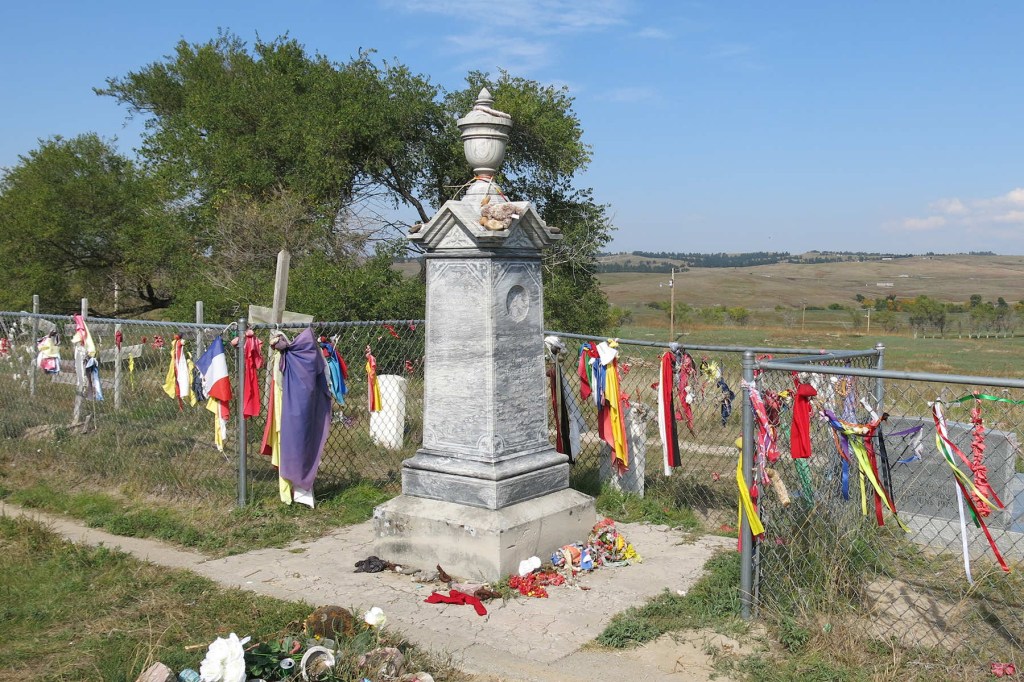
The Ghosts at Wounded Knee and the Politics of Honour

On December 29, 1890, near Wounded Knee Creek in what is now southwestern South Dakota, the U.S. Army’s 7th Cavalry surrounded a band of Lakota people led by Chief Spotted Elk, also known as Big Foot. What began as an effort to disarm a frightened group seeking refuge ended in slaughter. Eyewitness testimony, contemporary reports, and later historical study make clear that more than a hundred Lakota were killed outright, and estimates of the dead range commonly between 150 and 300, with many of the victims women and children. The column of Hotchkiss rapid-fire artillery on the ridge above the camp turned what might have been a chaotic surrender into an indiscriminate killing field. The event has been characterized by historians and by survivors’ accounts as a massacre, not a conventional military engagement.  

Within months, the army rewarded participants. Between March 1891 and 1897 the military issued a disproportionate number of Medals of Honor for actions tied to the Wounded Knee operation. Nineteen medals were awarded specifically for Wounded Knee, and 31 for the broader 1890 campaign. Modern historians have long questioned the propriety of these awards. They point out the disproportion when compared with other actions, the context of civilian slaughter, and the fact that late nineteenth century standards for the medal differed dramatically from today’s criteria. Those facts do not erase the moral question at the heart of this controversy. The medals were given for killing civilians during what many contemporaries already described as a tragic, shameful episode.  

For more than a century Native American leaders, scholars, and advocates have demanded that these honours be rescinded. They argue that keeping official military decorations for actions that amounted to the killing of noncombatants perpetuates a sanitized narrative of conquest and erases the suffering of the Lakota people. The push to revisit the medals intensified in 2024 when Congress and the Defense Department initiated reviews of honours awarded during Indian wars. Those reviews are not about rewriting history, they are about whether the United States wishes to continue officially celebrating actions that modern standards and moral judgment deem unconscionable.  

Into that fraught moral and historical space stepped Defense Secretary Pete Hegseth with a blunt, public proclamation on September 26, 2025. He announced that the soldiers who received Medals of Honor for Wounded Knee will keep them and said the soldiers “deserve those medals.” The decision was presented as a closure to the controversy and as a defense of martial valor. But treating the medals as a neutral technicality betrays two failures. First, it ignores the weight of historical evidence and eyewitness testimony that Wounded Knee was, by any honest reading, a massacre that included large numbers of noncombatant deaths. Second, it substitutes a crude politics of honour for a sober assessment of what military decorations are meant to signify. Medals of Honor are supposed to commemorate extraordinary gallantry consistent with the laws of war. When the conduct being commemorated is the killing of women and children in a one-sided action, the moral legitimacy of the award is rightly in doubt.  

Hegseth’s statement also displays a troubling detachment from the consequences of symbolic government acts. Official honours are not only personal rewards; they are public memory makers. Keeping these medals intact, while dismissing Native American calls for redress, sends a message about whose losses count in the American story. It is one thing to argue that you cannot retroactively apply modern sensibilities to historical actors. It is another to claim that the government should continue to sanctify actions widely recognized at the time as morally ambiguous or wrong. The choice to uphold the medals is not neutral. It privileges a narrative of conquest and martial glory over truth, accountability, and reconciliation. Contemporary Native leaders and organizations denounced the Pentagon’s decision, noting how it wounds descendants and undermines efforts at national healing.  

A final point. Government honours are mutable instruments of civic character. The United States has in many other instances chosen to correct honors that later ethical standards rendered inappropriate. To choose not to correct here is to place precedent over conscience. Furthermore, Hegseth’s framing, that the decision preserves the dignity of soldiers, rings hollow when the dignity of the victims is excluded from the calculus. Respect for soldiers and respect for victims are not mutually exclusive. A mature republic can acknowledge the bravery of individuals without perpetuating institutional honours that legitimize immoral collective actions.

Wounded Knee is not merely an historical footnote. It is a continuing wound in the national memory. How a nation treats its darkest episodes tells us as much about its present character as its triumphs do. Preserving medals awarded for conduct rooted in massacre is not an act of courage. It is an abdication of moral leadership and a refusal to allow public honours to reflect justice. Hegseth’s September 26, 2025 statement helps explain why calls for truth and reconciliation remain necessary. Those calls do not demand erasure of history. They demand honesty and a willingness to let national symbols reflect a fuller, truer account of what happened at Wounded Knee.  

Sources:
Hegseth decision reporting and reactions. Associated Press. Hegseth says Wounded Knee soldiers will keep their Medals of Honor.
Contemporary reporting and Native response. Reuters. Native Americans condemn Pentagon move to preserve Wounded Knee medals.
Contextual and historical overview. Britannica. Wounded Knee Massacre.
Primary accounts and museum histories. National Library of Medicine / Native Voices timeline and National Park Service battlefield materials.
Medal of Honor lists and army records. U.S. Army Medal of Honor listings for Indian Wars and Wounded Knee citations.  

The Scottish Smallpipes and the Northumbrian Smallpipes: Cousins in Tradition

The British Isles produced an array of bagpipes, each rooted in the culture of its region. Among the most distinctive are the Scottish smallpipes and the Northumbrian smallpipes. At first glance they are close relatives. Both are bellows blown, quieter than the Highland pipes, and intended for indoor playing. The differences in construction, style, and history show two distinct musical lives that remain proudly regional.

Origins and history

The Scottish smallpipes are often called the parlour pipes of Scotland. Their ancestry links to older bellows blown instruments that were common across southern Scotland and northern England from the 17th century onward. The rise of the Great Highland Bagpipe pushed many smallpipe traditions to the margins and by the 19th century the instrument was in decline. A folk revival in the late 20th century revived interest in the smallpipes and modern makers redesigned chanters and drone systems to suit ensemble work in concert keys such as A and D.

Scottish Smallpipes

The Northumbrian smallpipes developed a distinct identity in England’s far northeast. Key innovations set them apart. The chanter is closed at the end. When all holes are covered the pipe falls silent. This allowed pipers to play with an exceptional staccato articulation. In the 18th century makers added keys to extend the range to two octaves. Northumbrian music of hornpipes, reels and local dances suited this technical development and local societies maintained the tradition through times when many other regional instruments faded.

Northumbrian Smallpipes

Musical role and style

In performance the two instruments sometimes share repertoire. Both are suited to domestic music making and are quieter companions to fiddles, flutes and guitars. Both benefited from the revival movements of the 1970s and 1980s and many modern players cross boundaries, performing Scottish tunes on Northumbrian pipes and Northumbrian tunes on Scottish smallpipes.

The Scottish smallpipes favour continuous melodic flow with ornamentation drawn from Highland piping. Grace notes and rhythmic shaping create a sustained, singing quality. The Northumbrian smallpipes favour precise articulation. The closed chanter allows true staccato and rhythmic clarity. The keyed chanter invites chromatic notes and a wider range, which opens the pipes to arrangements beyond the purely traditional repertoire. Side by side comparison

FeatureScottish Smallpipes ScottishNorthumbrian Smallpipes Northumberland
Power sourceBellows blown, suitable for longer indoor sessionsBellows blown, also designed for quiet, indoor playing
Chanter styleOpen ended chanter producing continuous soundClosed ended chanter allowing true staccato phrasing
RangeRoughly nine notes in a scale similar to Highland pipingOften extended with keys to reach up to two octaves
DronesTypically three drones in a common stock tuned to the chanterOften four or more drones with individual shut off stops
TuningCommonly built in A or D to match session instrumentsVaried pitches possible with flexible drone options
OrnamentationHighland style grace notes and sustained ornamentationClean articulation and rapid ornaments enabled by closed chanter
RepertoireScottish airs, marches, reels and dance tunesNorthumbrian hornpipes, reels, jigs and local tunes with chromatic possibilities
Cultural rootsLinked to Lowland and Highland piping traditionsStrong regional identity in northeast England and Northumberland

The charm of these two smallpipe traditions is how they embody the same instrument family with very different musical personalities. The Scottish smallpipes give a mellow, flowing voice that suits ensemble and session work. The Northumbrian smallpipes offer an articulate, technically rich approach that keeps a strong local repertoire alive. Both show how folk instruments adapt and endure while remaining true to their roots.

Further Reading

  • Francis Collinson. The Traditional and National Music of Scotland
  • Colin Turnbull. The Bagpipe, a history of the instrument
  • Anthony Fenwick. The Northumbrian Bagpipes, their development and makers
  • Northumbrian Pipers Society. Collections and tune books used by local pipers
  • Hamish Moore. Articles and essays on the modern revival of the Scottish smallpipes

Losing the Diplomatic High Ground: America’s Isolation on Palestine

The international recognition of Palestine by Canada, Australia, and now the United Kingdom represents more than a symbolic act. It is a tectonic shift in global diplomacy that leaves Israel increasingly isolated. But perhaps the greater casualty is the United States, which finds its credibility and diplomatic standing downgraded by clinging to unconditional support for Israel in defiance of its closest allies. For Washington, the erosion of moral and strategic authority is becoming harder to disguise.

For decades, American foreign policy has rested on two pillars: an unwavering defense of Israel and a claim to universal principles of democracy, human rights, and international law. These pillars are now in conflict. As humanitarian conditions in Gaza dominate global headlines and images of suffering circulate daily, the United States insists that Israel’s military actions fall within the bounds of self-defense. Yet its closest allies no longer accept that narrative. By moving to recognize Palestine, Canada, Australia, and the U.K. are declaring that the humanitarian and political costs of Israel’s occupation and military campaigns can no longer be justified. In doing so, they implicitly rebuke Washington’s stance and downgrade America’s claim to moral leadership.

The credibility gap is stark. In London, Ottawa, and Canberra, leaders framed recognition of Palestine as a step toward justice, peace, and accountability. British Prime Minister Keir Starmer emphasized that recognition was both a matter of principle and of practical necessity for a two-state solution. Canadian and Australian leaders voiced similar reasoning, pointing to the humanitarian catastrophe in Gaza and the futility of endless deferrals of Palestinian statehood. In Washington, by contrast, the Biden administration maintains that recognition should only come after negotiations, a formula that has effectively stalled for three decades while Israeli settlement expansion continued unchecked. To many observers abroad, the U.S. position now looks like obstruction rather than leadership.

The diplomatic costs of this divergence are real. In forums such as the United Nations and the G20, the United States will find itself increasingly out of step not only with traditional critics in the Global South but with its own allies in the Anglosphere. Where once Washington could count on Canada or the U.K. to stand shoulder-to-shoulder in defense of Israel, it now risks looking like the last holdout defending a morally untenable status quo. That weakens American leverage on other issues, from rallying support for Ukraine against Russia to building coalitions in the Indo-Pacific to counter China. Allies may privately question why they should follow Washington’s lead on those fronts if the U.S. refuses to apply its professed values consistently.

At home, the contradictions are becoming sharper. Public opinion in the United States has shifted markedly, especially among younger Americans, who are far more sympathetic to Palestinians than their parents’ generation. Within the Democratic Party, calls for conditioning military aid to Israel or pressing harder for humanitarian access in Gaza are growing louder. Recognition moves by allies give these voices new legitimacy. If Canada and the U.K., two of Washington’s closest partners, can recognize Palestine, progressives ask, why can’t the U.S.? This deepens the political fault lines at home, with Republicans portraying recognition as rewarding terrorism while Democrats remain divided.

The broader danger is that the United States undermines its own strategic role as a credible broker in the Middle East. For decades, Washington has claimed to be the only power capable of mediating peace, precisely because of its unique leverage over Israel. But if the U.S. remains the only major Western democracy refusing to accept Palestinian statehood, it risks forfeiting that position. The European Union, or even a coalition of Arab states working with global partners, could step into the vacuum. Meanwhile, China and Russia eagerly exploit the perception of American hypocrisy, casting themselves as champions of Palestinian rights to gain influence across the Arab world and the wider Global South.

Washington still has choices. It can double down on its current course, shielding Israel diplomatically and vetoing recognition measures in international bodies. That would preserve its role as Israel’s protector but at the cost of deepening isolation and accelerating its decline in moral authority. Alternatively, it can begin to align more closely with its allies, signaling openness to Palestinian statehood while maintaining Israel’s security. Such a shift would not be politically easy, but it would restore some credibility and help rebuild American leadership. A third path lies in leveraging its support for Israel to demand concessions: humanitarian access, restraint in settlements, genuine negotiation. This would require a level of assertiveness toward the Netanyahu government that Washington has so far lacked.

The choice matters because America’s global position is at stake. Recognition of Palestine by Canada, Australia, and the U.K. is not just a rebuke of Israel, it is a rebuke of Washington’s failure to adapt to changing realities. The longer the United States clings to its lonely defense of Israel’s current policies, the more it downgrades its own diplomatic standing. Superpowers do not stay superpowers by ignoring their allies, and moral leadership cannot be maintained when it is visibly contradicted by one’s closest friends.

The United States once held the diplomatic high ground by presenting itself as both Israel’s ally and a defender of universal values. That balance has been lost. If Washington does not recalibrate soon, it risks becoming a diminished power: a superpower in name, but isolated, distrusted, and out of step with the very countries that once formed the backbone of its alliances. Recognition of Palestine is a turning point — not only for Israel and the Palestinians, but for America’s place in the world.

References
• Associated Press. “UK recognizes Palestinian state, joining Australia and Canada.” AP News. September 2025. Link
• Associated Press. “Canada joins push to recognize Palestinian statehood.” AP News. August 2025. Link
The Australian. “Australia, UK and Canada join to recognise Palestine.” The Australian. August 2025. Link
• Angus Reid Institute. “Most Canadians believe Israel is committing genocide in Gaza.” Angus Reid. September 2025. Link
• Times of Israel. “Israel mulling halt to security ties with UK if it recognizes Palestine.” Times of Israel. August 2025. Link
• World Policy Hub. “A historic shift: Why Europe is moving toward recognizing the state of Palestine.” World Policy Hub. August 2025. Link

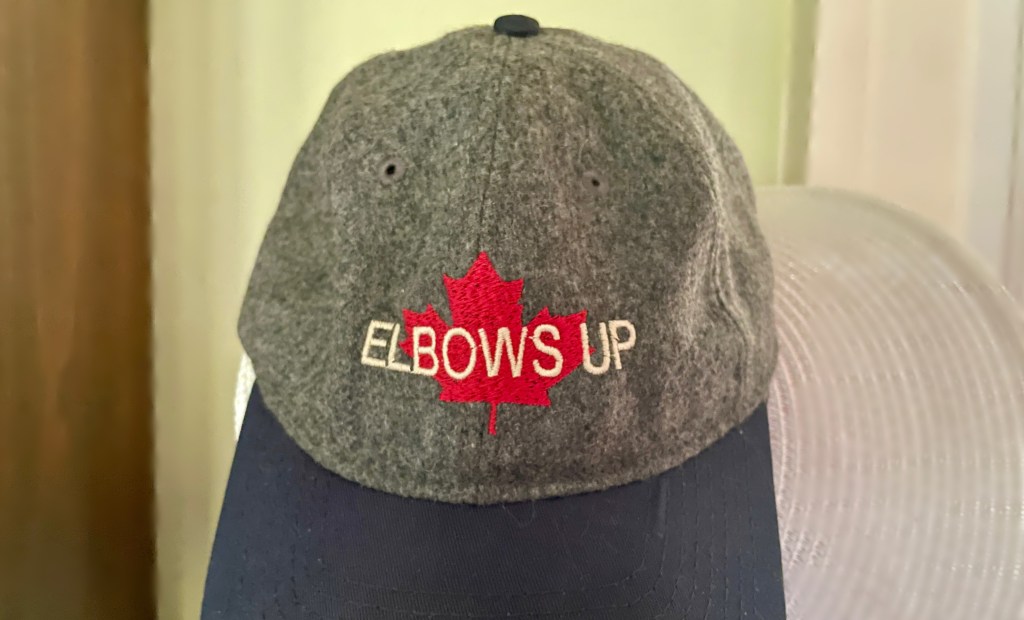
Elbows Up: How Canada’s Cooling Ties With America Expose U.S. Insecurity

With Canadian travel, spending, and goodwill toward the United States in steep decline, Washington’s defensive tone reveals a superpower under pressure and struggling to cope.

In recent months, the cross-border relationship between Canada and the United States has come under an unusual strain. What was once seen as one of the closest, most dependable partnerships in the world is now marked by tensions over trade, culture, and public perception. Data shows Canadians are spending less on American goods, traveling less often to the U.S., and expressing rising skepticism about their southern neighbor. Against this backdrop, the American response has been marked not by calm confidence, but by a defensive edge: an insecurity that suggests Washington is feeling the pressure and coping badly.

The tone was set when U.S. Ambassador Pete Hoekstra accused Canadians of harboring an “elbows up” attitude toward his country. Speaking to reporters, Hoekstra complained that Canadian leaders and the media were fanning what he called “anti-American sentiment” and warned against framing ongoing trade disputes as a “war.” His words revealed just how sensitive U.S. officials have become about Canada’s growing assertiveness. Where past American diplomats might have dismissed Canadian criticism as the grumblings of a junior partner, Hoekstra’s defensive language betrayed a sense of vulnerability.

If the rhetoric sounded strained, the economic numbers were even more alarming for Washington. Canadian travel to the United States, long a reliable driver of border-state economies, has fallen sharply. According to industry data, cross-border car trips by Canadians dropped by more than a third year-over-year in August 2025, with similar declines in road travel overall. Air bookings are also down, as Canadians increasingly avoid American destinations. Analysts warn that even a 10 percent fall in Canadian travel represents a loss of over US$2 billion in U.S. tourism spending, affecting thousands of jobs in hotels, restaurants, and retail along the border.

Nor is the pullback limited to tourism. Surveys indicate Canadians are choosing to buy fewer American goods, opting instead for domestic or third-country alternatives whenever possible. Retailers and importers report declining sales of U.S. products in sectors ranging from consumer electronics to clothing. The “buy Canadian” mood, once a marginal theme, has gone mainstream. These choices, multiplied across millions of households, amount to a quiet but powerful act of economic resistance, one that chips away at America’s largest export market.

For the United States, the twin shocks of declining Canadian tourism and shrinking demand for U.S. goods are more than economic nuisances. They strike at the heart of America’s self-image as Canada’s indispensable partner. When Canadians spend less, travel less, and look elsewhere for their needs, it signals a cultural cooling that U.S. officials have little experience confronting. Historically, American policymakers could take for granted that Canadians would continue to flow across the border for shopping trips, vacations, or work, while Canadian governments would swallow irritants in the name of preserving harmony. That assumption no longer holds.

The American response, however, has been reactive rather than reflective. Instead of acknowledging Canadian frustrations, whether over tariffs, trade disputes, or political rhetoric, U.S. officials have scolded Ottawa for being too combative. By objecting to the term “trade war,” by lecturing Canadians about their “attitude,” Washington has reinforced the perception that it neither understands nor respects Canada’s grievances. The tone has become one of deflection: the problem, U.S. diplomats suggest, is not American policy, but Canadian sensitivity.

This defensiveness has left Washington exposed. It reveals that, beneath the rhetoric of confidence, U.S. officials recognize that Canada’s resistance carries real consequences. With fewer Canadians traveling south, U.S. border states lose billions in revenue. With Canadian households buying less from U.S. suppliers, American exporters face measurable losses. And with Canadian leaders willing to frame disputes in sharp terms, U.S. diplomats find themselves on the back foot, struggling to preserve an image of partnership.

For Canada, this shift represents a moment of self-assertion. By spending less in the U.S. and leaning into domestic pride, Canadians are signaling that friendship with America cannot be assumed, it must be earned and respected. For the United States, it represents an uncomfortable reality: even its closest ally is no longer willing to automatically defer.

In the end, the story is less about Canadian hostility than about American fragility. A confident superpower would shrug off criticism, listen carefully, and adjust course. What we see instead is irritation, defensiveness, and rhetorical overreach. By lashing out at Canada’s “elbows up” attitude, Washington has confirmed what the numbers already show: it is under pressure, it is losing ground, and it is coping badly.

The Future of Museums, Part Two: Digitization, Repatriation, and the New Cultural Commons

If the first step in the ethical evolution of museums is reckoning with the origins of their collections, the second must be reimagining how cultural treasures can be shared, studied, and celebrated without being hoarded. Fortunately, the 21st century offers tools our forebears could only dream of. Digital technology, particularly high-resolution 3D scanning, modeling, and immersive virtual platforms, is rewriting the rules of preservation and access. When used with cultural sensitivity and ethical intention, these tools allow us to honour ownership, facilitate repatriation, and still nourish a global commons of cultural knowledge.

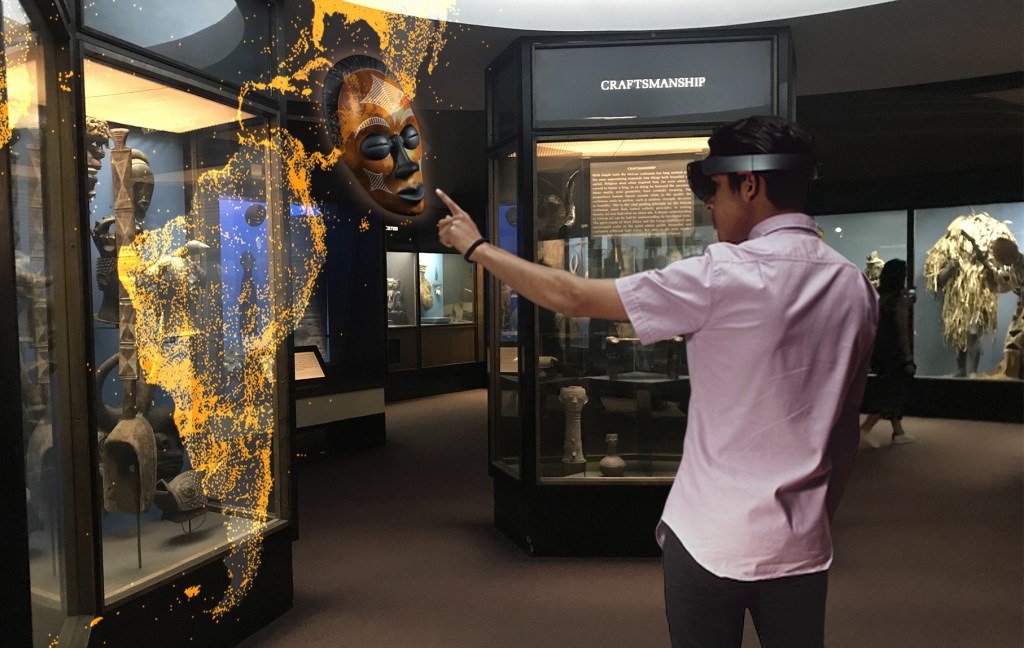
Take 3D scanning: what was once an expensive novelty is now a powerful instrument of restitution and democratization. Museums can now create hyper-detailed digital replicas of artifacts, capturing every chisel mark, brushstroke, or weave of fabric. These models can be studied, shared online, integrated into augmented or virtual reality tools, or even 3D printed, all without requiring the physical artifact to remain on display in a distant capital city. This changes the equation. The original object can go home, back to the community or country from which it was taken, while its likeness continues to serve educational and scientific purposes worldwide.

There is a quiet but profound dignity in this digital compromise. It allows for the physical return of heritage to those to whom it belongs, not just legally, but spiritually and historically, while also supporting the broader mission of museums to educate and inspire. And in many cases, the digital version can do things the original never could. Scholars can examine its dimensions in microscopic detail. Teachers can beam it into classrooms. Visitors can manipulate it, interact with it, and even walk through the worlds from which it came.

Yet let’s not pretend digital tools are a panacea. A scan cannot replicate the scent of parchment, the weight of a carved idol, or the sacredness of a funerary mask imbued with ancestral memory. Creating these models demands money, time, and skilled technicians, resources that smaller institutions may lack. But for those who can muster them, the return is substantial: ethical legitimacy, global engagement, and future-proof access to cultural heritage.

Enter the virtual museum, a concept whose time has truly come. With internet access now ubiquitous in much of the world, online museum platforms are exploding. Whether it’s the British Museum’s virtual galleries or the immersive tours of the Louvre, these digital spaces offer a new kind of cultural experience: borderless, accessible, and unconstrained by bricks, mortar, or geopolitics. For those unable to travel, due to distance, disability, or cost, virtual museums are not just convenient; they are transformational.

These platforms do more than display scanned objects. They weave in video, sound, oral histories, and expert commentary. They let users “handle” objects virtually, walk through reconstructions of lost cities, or compare artworks from across time zones and traditions. And crucially, they offer a space where repatriated artifacts can remain visible to the world. A sculpture returned to Nigeria or a mask restored to a Pacific island doesn’t need to vanish from global consciousness. Its story, and its scanned image, can be co-curated with local voices, shared respectfully, and kept safe in the digital domain.

This co-curation is vital. A truly decolonized digital strategy doesn’t just upload images, it shares authority. It ensures that the descendants of artifact-makers help decide how those objects are described, displayed, and interpreted. Digital museums can become sites of collaboration, not appropriation; places where cultural equity is baked into the code.

And then there’s the sustainability argument. Virtual museums dramatically reduce the environmental costs of international exhibitions, staff travel, and artifact shipping. They offer resilience against disaster, a fire, flood, or war may destroy a gallery, but not its digital twin. In a world of increasing instability, that matters.

So where does this leave us? It leaves us at the edge of something hopeful. The combination of digital modeling and virtual museums does not replace the need for physical repatriation, it complements and strengthens it. It allows us to move beyond the binary of “ours” versus “theirs,” and into a more nuanced, shared stewardship of humanity’s treasures.

The museum of the future is not a fortress. It is a node in a network, a partner in a dialogue, and a bridge across histories. If museums can embrace this vision, ethical, inclusive, and digitally empowered, they can transform from institutions of possession to institutions of connection. And that, perhaps, is the most valuable exhibit of all.

The Future of Museums, Part One: Reckoning with the Past

Museums occupy a cherished yet complicated place in our cultural landscape. They are, at their best, sanctuaries of human achievement and memory; places where we marvel, learn, and connect. They are guardians of our collective stories, offering glimpses into lives, ideas, and aesthetics across time and geography. Yet increasingly, those guardianship roles are being scrutinized. In this post, the first of a two-part reflection, I want to explore how museums must reckon with their past in order to remain relevant, ethical, and inspirational institutions in a post-colonial world.

Modern museums serve multiple purposes. They are educators, preserving and interpreting both natural and human histories. Through exhibitions, talks, and online media, they help us understand not only what came before us, but also how those pasts continue to shape the present. They are also preservers of culture, entrusted with tangible and intangible heritage, from tools and textiles to oral traditions and sacred rites. Increasingly, they are also spaces of community engagement and social inclusion. The best of today’s museums are no longer content to speak about people; they strive to speak with them, creating room for conversations around identity, migration, environment, and justice. And let’s not forget their economic impact: museums draw visitors, support local artisans, and boost cultural tourism. Their value is not only educational, but civic and economic.

And yet, many of the very objects that give museums their gravitas are also at the heart of a profound ethical challenge. Too many were acquired in contexts of coercion, extraction, or outright theft during the height of imperial expansion. The British Museum’s possession of the Elgin Marbles or the Rosetta Stone, icons of antiquity mired in controversy, is not exceptional; it is emblematic. These artifacts, however artfully displayed, carry the invisible weight of colonial conquest. For many communities of origin, their removal constitutes not just a historical grievance, but an ongoing erasure of identity.

Western museums often point to their capacity to conserve, study, and exhibit these artifacts responsibly. They argue, sometimes sincerely, that global access to human history is a noble goal. But this defense rings hollow in a world where digital preservation is commonplace and where the moral imperative to return stolen cultural property grows louder each year. The question isn’t simply who can care for these artefacts, it’s who should.

Repatriation, the return of cultural property to its place of origin, has shifted from a theoretical debate to a global movement. France’s pledge to return looted artifacts to Benin, Germany’s restitution of the Benin Bronzes, and the Smithsonian’s newly developed ethical return policies are not fringe gestures. They are signals of a deeper cultural shift. Repatriation, after all, is not just about boxes being shipped back across oceans. It’s about truth-telling. It’s about nations acknowledging histories of violence and dispossession, and about institutions committing to restorative justice.

This new ethical landscape demands changes in practice. Provenance research, once an obscure archival task, must now be a public commitment. Shared custodianship models, where institutions collaborate with origin communities to co-curate, rotate, or jointly own artifacts, offer ways forward that don’t sacrifice conservation. And above all, museums must embrace the decolonization of their own internal cultures: rethinking who gets to tell the stories, who sits on the boards, and whose voices shape the narrative.

Museums can still be temples of learning and wonder. But for them to truly serve society in the 21st century, they must relinquish their roles as colonial trophy cases. The future lies in humility, transparency, and cooperation. In part two of this series, I’ll look at how new technologies and evolving curatorial philosophies are helping museums reinvent themselves for the world to come.

The Paradox of Progress: Why Social Change Often Feels Like Loss To The Majority 

In the work of a business consultant, change is a constant theme. Helping teams and organizations evolve often involves navigating the resistance that accompanies any disruption to the status quo. But this resistance isn’t unique to the corporate world, it mirrors broader societal reactions to social rebalancing efforts aimed at addressing inequality.

When societies attempt to redress systemic inequities and provide fair treatment for historically marginalized groups, resistance from the majority is a predictable, if not inevitable, response. What feels like progress to one group can feel like a loss to another. This phenomenon, rooted in psychology, social dynamics, and cultural identity, often transforms equality into a battleground.

Fear of Loss: The Power of Perception
Psychologists point to loss aversion as a key driver of resistance. People fear losing what they perceive as theirs more than they value gaining something new. In the context of social change, efforts to redistribute opportunities or resources to marginalized groups, such as workplace diversity initiatives, can feel to the majority like favoritism or unfair quotas. The reality that their rights remain intact often does little to assuage the emotional perception of loss.

Compounding this fear is a mindset known as zero-sum thinking. Many see opportunities and resources as a fixed pie: if one group gets a larger slice, another must get less. This belief frames the push for equity as a direct threat to the majority’s status, even though social equity often creates broader benefits for society as a whole.

Identity Under Siege
Resistance is not just about resources, it’s also about cultural identity. When dominant norms are challenged by changes like gender-neutral policies, anti-racist education, or expanded LGBTQ+ rights, these shifts can feel deeply personal to those who see their traditions as under attack. This fear of cultural loss often fuels narratives that frame change as an existential threat to the majority’s way of life.

Visible changes exacerbate this perception. Policies aimed at diversity, for example, are often highly noticeable: new hiring practices, updated media representation, or inclusive language reforms. These changes stand out more than the entrenched inequities they seek to address, making them seem disproportionate or unnecessary.

Status and Power: The Fight to Stay on Top
Social dominance theory offers another lens to understand the pushback. Those accustomed to holding power within a social hierarchy often resist efforts to level the playing field. For these groups, rebalancing isn’t just about perceived loss, it’s a challenge to their very status, sparking defensive claims of oppression.

The perception of threat is amplified by polarized media and political rhetoric. Leaders and platforms that oppose social progress often frame equity efforts as an attack on the majority, fueling fear and resentment. This narrative turns equality into a zero-sum game and victimizes those who already hold power.

The Role of Historical Context
Another factor driving resistance is historical amnesia. Without an understanding of the systemic barriers faced by marginalized groups, rebalancing efforts can seem unjustified. For instance, policies like affirmative action, intended to address historical inequities, are often misinterpreted as preferential treatment, rather than as remedies for long-standing disadvantages.

Bridging the Divide
Resistance to social progress isn’t rooted in actual losses of rights, but in the perception of loss. Psychological tendencies, cultural attachment, and divisive narratives all play a role in creating this resistance. Addressing it requires empathy, education, and open dialogue.

By fostering an understanding of systemic inequities and the broader benefits of equity, societies can bridge divides and navigate the inevitable pushback that accompanies change. Social progress may be disruptive, but it paves the way for a more inclusive and equitable future – one where progress is not seen as a loss, but as a shared gain.

From Margins to Mainstream: Mapping Canada’s Extremist Surge

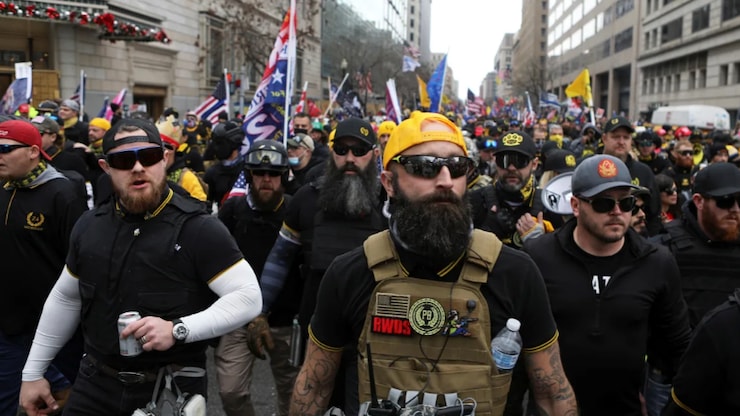
Masked street mobilizations and online echo chambers are visible symptoms of a deeper shift in Canada’s political landscape. What once seemed like marginal groups have found renewed capacity to organize, recruit and intimidate through a blend of in-person rallies and social media amplification. The Niagara rally reported by CBC is not an isolated curiosity, but part of a pattern of small, local actions that feed a national ecosystem of grievance, identity politics and conspiratorial narratives.  

The scale of the problem can be measured in public data. Police-reported hate crimes reached 4,777 incidents in 2023, an increase of 32 percent from 2022 and more than double the level recorded in 2019. These statistics do not merely count crimes. They indicate a widening public space in which targeted hostility against religious, racial and sexual minorities has become more frequent and more visible. The sharp rise in antisemitic and sexual orientation motivated incidents stands out as evidence that certain communities are being disproportionately affected.  

National security agencies have also sounded alarms. Recent public reporting from the Canadian Security Intelligence Service documents the diversification of extremist threats within Canada and the real-world harms that can emerge from online radicalization. Analysts point to a mosaic of actors including white supremacists, ethnonationalists, militia-style adherents and anti-government networks. That heterogeneity makes a single policy response insufficient. Effective mitigation requires coordinated law enforcement, targeted community supports and a sharper focus on the digital platforms that enable cross-jurisdictional recruitment.  

Transnational influences matter. Ottawa’s 2021 decision to list the U.S. Three Percenters militia as a terrorist entity underscores how American militia culture and extremist flows cross the border. That decision was an acknowledgement that ideological currents and organizational tactics are not constrained by national boundaries. Canadian actors borrow symbols, rhetoric and operational playbooks from movements abroad, complicating the domestic security picture and raising questions about how best to disrupt international networks without undermining civil liberties.   

Civil society research highlights the central role of online environments in the recent resurgence. Scans of social media and fringe platforms document how recruitment, normalization and coordination occur through memes, influencers and algorithmic suggestion. Those processes create local nodes of activity that can quickly translate into physical gatherings, harassment campaigns or worse. The internet does not create grievances, but it accelerates their spread and lowers the cost of mobilization.  

Policy responses must be pragmatic and evidence based. Better resourcing for hate crime reporting and victim support will improve data quality and community resilience. Transparent intelligence-public safety engagement can help identify violent plots early without casting suspicion across entire communities. Digital literacy initiatives and platform accountability will reduce the fertile ground on which extremist recruiters thrive. Above all, elected leaders must use language that reduces polarization rather than stokes it, because political rhetoric shapes both perception and legitimacy in the public square.

Sources:
CBC report on the Niagara rally https://www.cbc.ca/news/canada/hamilton/second-sons-rally-in-niagara-1.7628162
Statistics Canada Police-reported hate crime in Canada, 2023 https://www150.statcan.gc.ca/n1/daily-quotidien/250325/dq250325a-eng.htm
CSIS Public Report 2024 https://www.canada.ca/content/dam/csis-scrs/images/2024publicreport/newest/Public_Report_2024-ENG.pdf
Reuters on Three Percenters terrorist listing https://www.reuters.com/world/americas/canada-puts-us-right-wing-three-percenters-militia-group-terror-list-2021-06-25/
ISD An Online Environmental Scan of Right-wing Extremism in Canada https://www.isdglobal.org/wp-content/uploads/2020/06/An-Online-Environmental-Scan-of-Right-wing-Extremism-in-Canada-ISD.pdf

Blood and Creed: Vice President Vance’s Reimagining of American Citizenship

On July 5, 2025, Vice President J.D. Vance delivered a notable address at the Claremont Institute’s Statesmanship Award Dinner in San Diego. For a man in the second-highest office of the land, his treatment of American citizenship was striking, not for its novelty, but for its clear departure from foundational norms. 

From Creed to Kinship
Vance began by challenging the idea of the United States as a creedal nation, a polity bound by shared principles of the Declaration of Independence, calling it simultaneously over-inclusive (drawing in “hundreds of millions, maybe billions” who support American ideals abroad) and under-inclusive (excluding those with ancestral ties, but extremist beliefs). He presented a contrasting model of citizenship rooted in ancestry, place, and “blood-and-soil.” With sentimental reference to generations of his family buried in a Kentucky cemetery, Vance argued that belonging should be tied to living history and rootedness rather than abstract ideals. 

This represents more than rhetorical flourish. It signals a paradigm shift, from civic affiliation to ethnic membership. In Vance’s terms, ancestry becomes a qualifier; heritage becomes identity.

Critique from the Center and Beyond
Historians and public intellectuals wasted little time pushing back. Ambassador Daniel Fried offered a powerful critique in The National Interest, opposing Vance’s redefinition for its reversal of Abraham Lincoln’s post–Civil War vision. Lincoln had conceived the nation as “a new nation, conceived in liberty”, not as a bloodline-bound entity. Fried emphasized that Lincoln saw citizenship as a matter of shared principles, not ancestry, drawing on immigrants who “feel…they are part of us” through creed.

Historian and public author John Ganz described Vance’s stance as an “anti-Declaration.” He highlighted the inconsistency of invoking Revolutionary and Civil War symbols while undermining the very ideals those conflicts advanced. Ganz drew contrast with Harry Jaffa, whose defense of Lincoln affirmed that “all men are created equal” meant just that, regardless of bloodline.

Tad Stoermer’s “Heritage Citizenship”
Into this debate steps Tad Stoermer: public historian, educator, and author, who coined the term “heritage citizenship” to categorize this turn toward ancestry-based belonging. Stoermer views this not as nostalgic reflection but as active project: a “restoration” of a racially-defined First Republic rooted in whiteness. The goal, he suggests, is the rewriting of constitutional logic, to reassert lineage as citizenship’s arbiter. 

Why This Matters Today
If Vance’s vision is enacted, it would have real-world consequences:

1. Birthright Citizenship at Risk
The 14th Amendment guarantees citizenship based on birth within U.S. jurisdiction: an inclusive, principle-based foundation. Vance’s model, however, introduces a lineage test, posing a legal challenge to this constitutional baseline.

2. Political and Social Exclusion
Consider the millions of post-1965 immigrant-descended Americans: legal, patriotic, educated, yet lacking “Appalachian blood.” Their citizenship, under Vance’s rubric, becomes negotiable, diluted by ancestry.

3. Ideological Flexibility for Elites
Despite its broad implications, heritage citizenship allows selective exceptions, for political elites, spouses, or allies (e.g., Vance’s own wife, born in California to Indian immigrants), which erodes the internal consistency of the ideology. Vance can romanticize heritage, while simultaneously reserving membership for his inner circle.

Going Backwards – Constitutionally and Symbolically
This vision directly counters Lincoln’s redefinition of the Union after 1863. At Gettysburg, he consecrated the Union’s cause as “a new birth of freedom,”establishing citizenship through legal equality. Vance’s model, in contrast, retreats into pre-14th Amendment logic, where race and lineage determined belonging.

It also undermines the United States’ role on the global stage. Fried points out that the American creed, its principle-based identity, enabled it to attract “hundreds of millions, maybe billions” of adherents abroad, forming what he describes as a “positive-sum” global leadership structure  . Heritage-based identity, by contrast, is zero-sum, exclusive, and inward-looking.

A Historian’s Judgment
For any senior historian, the implications are stark:
Constitutional Regression: Voting rights and equal protection, hard-won through amendments and civil rights struggles, are put back on the chopping block.
Political Inequality: Heritage citizenship enables a bifurcated class of Americans, those with “authentic” lineage and those without.
National Myth versus National Reality: The U.S. has always been a nation of immigrants and wanderers. Vance’s speech polices belonging by ancestry, contra 250 years of integrated identity-building.

Vice President Vance’s Claremont Institute speech is not merely poetic, it is profoundly political. It stakes out heritage, soil, and blood as qualifiers of sovereignty. Critics like Fried, Ganz, and Stoermer understand this as both intellectual and legal retrenchment. The choice now faces American democracy: Will we continue as a principle-based republic, where citizenship is claimed through belief, law, and shared action? Or will we succumb to a lineage-based model that narrows the definition of who belongs?

In highlighting ancestry over creed, Vance’s model asks an inflammatory question: does American identity belong to those we include, or those we exclude? The answer, for nearly two centuries, has been creed. It must remain so.

In a nation guided by Vance-style heritage criteria, citizenship would shift from being a legal, civic covenant to a cultural inheritance. That model would disqualify immigrants, their children, Jewish Americans, those of Latino or Asian descent, even well-known political figures, unless they belong to the “right” ancestry group. Yet the model grants latitude for elite figures, a glaring hypocrisy exposing the project’s exclusionary core. It’s not just a nostalgic vision, it’s a blueprint for a tiered citizenry: real if you’re insider heritage, negotiable if not.