Duddo Five Stones: Northumberland’s Sacred Circle in the Shadow of Giants

The Duddo Five Stones, nestled atop a gentle rise in north Northumberland, are a compelling testament to prehistoric endeavours in the British Isles. Erected during the Early Bronze Age, roughly 4,000 years ago, these stones comprise five extant monoliths, though archaeological surveys from the 1890s revealed empty sockets for two additional stones and confirmed an original complement of seven. Inhabitants of that period fashioned these curious markers from local soft sandstone, now distinguished by deep vertical grooves, so pronounced that the stones are sometimes spoken of as the “Singing Stones,” a nod to the haunting whistles that breeze through their fissures. 

Despite their modest size compared to the monumental rings of Wiltshire, the Duddo Stones rise to heights between 1.5 m and 2.3 m and form a circle approximately 10 m in diameter. The largest stone, over two metres tall, has been likened to “a clenched fist rising menacingly out of the rough turf,” while others resemble giant decaying teeth. Weathered both by time and legend, the stones bear cup-marks and grooves that spark speculation, were these carved by ritual, or simply products of centuries of erosion?

In the heart of the circle lies evidence of its most solemn function: a central pit, excavated in the late 19th century, that contained charcoal and cremated human bone, suggesting funerary or ritual use. A later investigation unearthed fragments of pottery, perhaps a cremation vessel, further hinting at ancient rites performed upon this exposed Northumbrian hill. Such findings align with the broader traditions of Bronze Age Britain, where stones were placed to commemorate the dead, mark sacred boundaries, and orient events within a celestial calendar.

Indeed, solar and lunar alignments are often proposed for stone circles. In Duddo’s case, the stones occupy an eminence offering sweeping views of the Cheviot Hills to the south and Lammermuir Hills to the north, and may well align with midwinter sunrises or solstitial events. This deliberate positioning underlines a shared cosmological purpose with contemporaneous sites such as Stonehenge and Avebury, where built environments reflect ancient understandings of the cosmos. 

Any comparison to Stonehenge or Avebury must acknowledge scale. Those iconic sites, part of a UNESCO World Heritage complex, were grand ceremonial landscapes, featuring massive sarsen lintels, henges, and extensive rituals spanning centuries. Yet Duddo’s significance should not be measured in tonnage alone. The world of early Bronze Age Northumberland had its own spiritual horizons. Stone placement here demonstrates ingenuity in local engineering, community organisation, and a relationship with the landscape that mirrored the aims of their southern counterparts.

Moreover, Duddo may be Northumberland’s best‑preserved stone circle, admired by archaeologists for its dramatic hill‑top setting and intact character. Accessibility is simple: a short permissive path from the B6354 guides visitors to this serene site, free to all, but weather and muddy fields. The site evokes reverence and reflection, a place where wind and sky merge timelessly with carved stone.

In a cultural landscape often dominated by southern giants, the Duddo Five Stones deserve equal attention. They speak of regional expressions of Bronze Age spirituality, mortuary practice, and astronomical concern. While lacking the architectural complexity of Stonehenge or the vast scale of Avebury, they nonetheless resonate with ancestral agency, standing quietly yet powerfully within a broader tapestry of prehistoric monumentality. To relegate Duddo to a mere footnote is to impoverish the understanding of Britain’s Bronze Age mosaic. It is no lesser these many millennia later, just more intimate, more quietly potent, and every bit as integral to prehistoric Britain’s story.

Canada Day 2025: We the Land, We the People, We the Future

Each year, as summer settles across this vast country, Canada Day offers more than a pause to celebrate; it becomes a mirror. It reflects where we’ve been, how far we’ve come, and what still lies ahead. In 2025, that mirror shows a country in motion: humbled by hard truths, energized by change, and cautiously hopeful about its collective future.

Canada’s greatest strength has always been its people, more specifically, the way those people form communities, across difference, distance, and time. Whether it’s neighbourhoods organizing around mutual aid during crises, newcomers finding belonging through language and culture, or Indigenous and non-Indigenous Canadians working to build bridges of understanding, the story of Canada has always been about finding common cause in uncommon diversity.

A Country That Listens
The last decade has been a time of awakening. We have begun, in earnest, to face the truths long buried beneath the official narratives. The unmarked graves at residential school sites shook the conscience of the nation. The calls to action from the Truth and Reconciliation Commission and the National Inquiry into Missing and Murdered Indigenous Women and Girls have challenged us to move beyond apologies; to action, to justice, and to shared governance.

This year, as we mark Canada Day, many communities will fly the flag not just alongside fireworks, but beside Indigenous symbols and ceremonies. This is not tokenism, it is a recognition that Canada cannot be whole until its relationship with First Nations, Inuit, and Métis peoples is grounded in truth, respect, and partnership. We are not “including” Indigenous peoples in Canada. They are foundational to it. The land we gather on, from coast to coast to coast, has always been home to Indigenous Nations whose stewardship, governance, and wisdom predate Confederation by millennia.

Art by Mervin Windsor

Building Communities Worth Belonging To
Canada is changing, and so too is our idea of what belonging looks like. From the refugee who opens a bakery in a prairie town, to the queer teen finding affirmation in a Pride flag at city hall, to the elder reconnecting with their Anishinaabe language after decades of suppression, these are the quiet revolutions that define who we are becoming.

What binds us is not sameness, but a shared commitment to live well together. In our towns and cities, on reserves and in rural areas, Canadians are building communities that emphasize care, inclusion, and responsibility to one another. That might mean ensuring affordable housing, supporting local food systems, protecting public health care, or reimagining schools and services that honour different ways of knowing and being.

This is no small task in an era of global uncertainty, but across Canada, there is a growing understanding that prosperity isn’t measured solely in GDP, but in how well we support one another, and how wisely we care for the land we share.

A Collective Future Rooted in Respect
Canada Day is no longer a day of uncritical pride. It has become a space of reflection; of mourning, of gratitude, and of possibility. That shift is healthy. It shows maturity. It means we are ready to move past mythologies and start shaping a future based on partnership and mutual responsibility.

We must reject any vision of Canada that seeks to divide, exclude, or erase. Instead, we can choose a model of governance that is not merely tolerant, but collaborative. One where Indigenous laws sit alongside Canadian law, where treaties are living agreements, not dusty documents, and where decisions about land, water, and resources are made together, with full consent and shared benefit.

This is already happening. Across the North, in B.C., in the courts and in the communities, new models of co-governance are emerging. Indigenous youth are leading language revitalization and climate action. Urban reserves are revitalizing local economies. Land acknowledgements are being matched with land back initiatives. These are not threats to Canada, they are Canada’s best chance at becoming whole.

Choosing Hope
As we gather this Canada Day; on picnic blankets, around bonfires, in ceremonies, and in celebrations, let us remember that patriotism need not mean perfection. It can mean care. It can mean commitment. And it can mean an unwavering belief that we can do better – together.

The maple leaf is not just a symbol of peace and modesty. It’s a living thing, growing, branching, changing with the seasons. So too is this country.

Let us plant our feet not in nostalgia, but in the present. Let us honour the ancestors, Indigenous and settler alike, whose sacrifices shaped this land. Let us listen deeply to the truths we once ignored, and let us walk, side by side, into a future that is more just, more joyful, and more deeply rooted in shared respect.

Happy Canada Day – to the land, to the people, and to the promise of what we can build, together.

Pride Without the Glitter: Why Canada’s Queer Community is Reclaiming Its Roots

There’s a quiet, but growing conversation taking place within Canada’s queer communities, one that asks whether it might be time to scale back the spectacle of Pride, and get back to what it was really about in the first place. The parades are still colourful, the parties still loud, but something’s shifting. With corporate sponsorship drying up and the political climate growing colder, many in the 2SLGBTQIA+ community are rethinking what Pride should look like in this new era.

For years, Pride events in cities like Toronto, Vancouver, and Montreal have felt less like grassroots activism, and more like mobile advertising campaigns. Walk down the route and you’ll see branded floats from banks, telcos, and beer companies. TD Bank, to name just one example, once earned applause for being an early supporter of queer inclusion, but these days, its giant green float can feel more like marketing than allyship. Many of us, especially those who’ve been around long enough to remember when participating in a Pride parade involved appreciable risk, can’t help but feel the soul has been somewhat bleached out of the rainbow.

Image source: Catalina Vásquez on Behance

Part of the shift is financial. With the Trump-era backlash and culture wars bleeding across the border, some corporations, particularly U.S.-based multinationals, are scaling back their public-facing support of Pride. In 2024, Reuters reported that global brands have “significantly reduced” their LGBTQ-themed campaigns in markets like Canada to avoid conservative backlash. These decisions affect more than just parade floats; they impact grants, community programming, and the broader financial ecosystem that’s supported major Pride festivals for years.

Yet, this isn’t necessarily bad news. In fact, many long-time activists see it as an opportunity to re-centre Pride around the people it’s meant to serve. Before there were glitter canons and wristbands with logos, Pride was a protest. The first Canadian marches, in the wake of the 1981 Toronto bathhouse raids, were acts of raw defiance, calling out police brutality and demanding civil rights. Nobody was handing out swag. No corporations were clambering to associate their brand with queer people. That history matters.

Now, with funding drying up and public support shifting, a new generation of organizers is looking backward to move forward. Smaller Pride celebrations are cropping up across the country that focus less on parade floats and more on community picnics, protest marches, zine fairs, and teach-ins. In places like Peterborough and Hamilton, organizers have made the deliberate choice to scale down the main event in favour of something that feels more connected, less commercial.

We’re at a cultural crossroads. Pride doesn’t need to be louder to be more meaningful. In fact, the moment may call for exactly the opposite. There’s power in returning to the grassroots, not out of nostalgia, but out of necessity. If Pride becomes less about the glitter and more about the grit again, that might just be the most radical thing we’ve done in decades.

Sources
• CBC News (June 2024): “Pride organizers across Canada reassess role of corporate sponsorship”
• Reuters (June 2024): “Global brands rethink LGBTQ marketing amid backlash”
• Xtra Magazine (May 2023): “The Fight Over Pride: Protest or Party?
• The Canadian Encyclopedia (2022): “How the Bathhouse Raids Sparked Toronto Pride”

Five Things We Learned This Week

Here’s the fresh edition of “Five Things We Learned This Week” for June 14–20, 2025, featuring entirely new events—no repeats from earlier editions:

🕊️ 1. Israel‑Iran Exchanges Calm Markets, Not Conflict

• Despite new strikes and missile exchanges during the week of June 14‑20, Reuters reports that markets showed cautious optimism, with volatility easing amid hope for de-escalation  .

• The Federal Reserve maintained a hawkish stance, while the Swiss National Bank cut rates to zero, and the Bank of Japan adopted a dovish tone  .

🦶 2. Ancient New Mexico Footprints Confirm Earlier Human Arrival

• Radiocarbon dating of sediments around the White Sands fossil footprints confirms they are between 20,700–22,400 years old  .

• This consolidates evidence that humans were present in North America well before the previously estimated timelines.

🇺🇸 3. Mass ICE Raids Trigger Protests, National Guard Deploys in LA

• On June 6–9, mass ICE operations in Los Angeles spurred protests and unrest. California activated over 4,100 National Guard troops plus federal forces in response   .

• Over 575 arrests, injuries among police/officers, and journalists were reported, spotlighting tensions around deportation enforcement .

🇹🇭 4. Thai Coalition Government Cracks in Political Crisis

• As of June 18, Thailand’s 8‑minister Bhumjaithai Party exited the ruling coalition, citing scandal and a leaked call—threatening PM Shinawatra’s government  .

• This marks a sharp political shift and potential for early elections amid instability.

💡 5. AI-Driven Tech Fights Mosquito‑Borne Diseases

• Researchers at the University of South Florida unveiled an AI-enabled mosquito trap that identifies and targets disease‑carrying mosquitoes in real time, reported on June 11   .

• The innovation offers a promising, focused approach to reduce transmission of illnesses like Zika and dengue.

These five items—spanning geopolitics, archaeology, civil unrest, national politics, and health tech—are all within June 14–20 and entirely new to this series. Let me know if you’d like full article links or expanded analysis!

Lansdowne Park: A Case Study in Public-Private Partnership Failure

In the heart of Ottawa lies Lansdowne Park, a public asset that has undergone over a decade of controversial redevelopment under the banner of public-private partnerships (P3). Initially hailed as a visionary collaboration between the City of Ottawa and the Ottawa Sports and Entertainment Group (OSEG), Lansdowne has instead become a cautionary tale; an emblem of how private interests can hijack public value, with taxpayers left holding the bill. Despite grand promises of economic revitalization, self-sustaining revenues, and community benefit, the Lansdowne project has consistently failed to deliver on its core goals.

The Origins: Lansdowne 1.0 and the Rise of the P3 Model
The current saga began in 2007, when structural concerns forced the closure of Frank Clair Stadium. In response, the City sought partners to reimagine Lansdowne as a revitalized hub for sports, entertainment, and urban life. The resulting Lansdowne Partnership Plan (LPP), approved in 2010, was a no-bid, sole-source agreement with OSEG. It created a 30-year limited partnership through which OSEG would refurbish the stadium, build retail and residential developments, and share profits with the City through a revenue “waterfall” model.

The City’s share of the original $362 million redevelopment was around $210 million, used for stadium upgrades, a new urban park, parking facilities, and relocating the historic Horticulture Building. OSEG contributed roughly $152 million, not as direct capital, but largely through operational losses rolled back into the project in exchange for an 8% return on equity. The land remained public, but OSEG was granted long-term leases for commercial components, at just $1 per year.

A Financial Model Built on Sand
The P3 structure was sold to the public with the assurance that Lansdowne would eventually pay for itself. Early forecasts predicted a $22.6 million net return to the City. In reality, those profits never materialized. Retail revenues rose steadily, but so did costs. By 2016, OSEG was reporting $14.4 million in losses. As of 2023, the partnership had not returned a cent to municipal coffers. The revenue waterfall prioritized OSEG’s return on equity before any surplus could flow to the City, meaning taxpayers bore the financial risk, while private partners had guaranteed returns.

Worse, the project locked the City into a complex financial structure that made renegotiation difficult. The Auditor General of Ottawa has since criticized the model, citing opaque accounting and a lack of oversight over cost estimates and projections.

Lansdowne 2.0: Doubling Down on a Broken System
Rather than reassess the underlying flaws of Lansdowne 1.0, the City has pressed forward with an even more ambitious sequel: Lansdowne 2.0. Approved by Council in 2023, this next phase proposes to demolish and rebuild the north-side stadium stands, construct a 5,500-seat event centre, and erect two residential towers atop a retail podium. The estimated cost is $419 million, with over $300 million of that funded by the City through new debt.

Despite lessons from the past, the same P3 framework persists. The City continues to rely on OSEG’s management and forecasts, despite repeated underperformance. Recent findings from the Auditor General suggest that construction costs may be underestimated by as much as $74.3 million, bringing the actual cost closer to half a billion dollars.

Community Concerns Ignored
One of the most damning aspects of the Lansdowne saga has been its consistent disregard for community needs. Neither Lansdowne 1.0 nor 2.0 includes affordable housing. This, in the midst of a housing crisis, is a glaring omission. Public green space will be reduced by more than 50,000 square feet in Lansdowne 2.0. Traffic and parking concerns persist, especially given the site’s poor access to Ottawa’s light rail system.

Environmental groups have flagged the project for increasing the urban heat island effect and ignoring climate resilience standards. Ecology Ottawa and other watchdogs note that the loss of mature trees, additional hard surfaces, and energy-intensive stadium lighting run counter to the City’s own climate goals.

Public feedback has been overwhelmingly negative. A survey by the advocacy group Better Lansdowne found that 77% of respondents opposed the new plan. Critics have called for a full reassessment, independent cost-benefit analysis, and alternative development models that prioritize public use and affordability.

The Broader P3 Problem
The Lansdowne project exemplifies the risks inherent in the P3 model. When private partners are guaranteed returns and public entities assume the risk, the result is rarely equitable or efficient. While the private sector pursues profit, as it must, government has a duty to prioritize public interest. In this case, the lines blurred, and profit came first.

Public-private partnerships are often promoted as a way to leverage private investment for public good. Yet in practice, they can enable private actors to extract value from public land and public funds, with minimal accountability. Lansdowne is a textbook case of this imbalance.

Time to Reclaim Public Space
As Ottawa moves forward, the Lansdowne experience should serve as a clear lesson: public infrastructure must be publicly driven. The City needs to step back, reassess its relationship with OSEG, and consider alternative models that place public interest at the centre. This could include establishing a municipal development corporation, returning retail management to the City, and mandating affordable housing in all new residential builds.

If Lansdowne Park is truly to be the “people’s place” as once envisioned, it must serve the city, not subsidize private profit. The future of Ottawa’s public assets depends on getting this right.

Sources
• Ottawa City Council Reports, 2023–2025 – ottawa.ca
• Ottawa Auditor General Report, June 2025 – link2build.ca
• Better Lansdowne Community Survey – betterlansdowne.ca
• Ecology Ottawa – ecologyottawa.ca
• Ottawa Business Journal Archives – obj.ca
• Lansdowne Park Redevelopment History – en.wikipedia.org

Alberta, the Treaties, and the Illusion of Secession

It is a curious feature of Canadian political discourse that every few years, the spectre of Alberta separatism re-emerges, driven largely by feelings of Western alienation or perceived federal overreach. Yet few of its proponents seem to understand the constitutional, historical, and moral terrain on which they stake their claims.

Most glaringly, the notion that Alberta could legally or legitimately secede from Canada ignores the foundational reality that this province exists entirely upon Indigenous treaty land: Treaties 6, 7, and 8, signed decades before Alberta was even established.

Treaty Obligations: The Legal Bedrock
Treaties 6 (1876), 7 (1877), and 8 (1899) are not quaint relics of the colonial past. These were solemn nation-to-nation agreements made between the British Crown and various Indigenous nations; primarily Cree, Dene, Blackfoot, Saulteaux, Nakota, and others. The Crown, not the provinces, is the party to these treaties. This distinction matters enormously: Alberta, created in 1905, was superimposed upon lands already bound by legal and moral obligations that persist to this day.

Treaty nations agreed to share the land, not to surrender it to a future province. Indigenous consent was given to the Crown, not to the provincial governments that came later. As such, Alberta’s claims to land, resources, and governance are valid only to the extent that they flow through the Crown’s treaty responsibilities, not through any inherent sovereignty.

The Supreme Court Speaks: Secession Is Not a Unilateral Act
This legal landscape was sharply clarified in the Supreme Court of Canada’s landmark Reference re Secession of Quebec (1998). The Court ruled decisively that no province has a unilateral right to secede. Any attempt at secession would require negotiations with the federal government and with other provinces and, crucially, with Indigenous peoples.

The Court emphasized that Indigenous peoples have rights protected under Section 35 of the Constitution Act, 1982, and that their consent is a necessary component of any major constitutional change. As the ruling states:

“The continued existence of Aboriginal peoples, as well as their historical occupancy and participation in the development of Canada, forms an integral part of our constitutional fabric.” (Secession Reference, [1998] 2 S.C.R. 217)

This is not simply a legal technicality. It is a reaffirmation of the reality that Canada is a nation founded not just through British and French settler traditions, but through treaties with Indigenous peoples, treaties that are still very much alive in constitutional law.

Indigenous Sovereignty and the Fallacy of Secession
The idea that Alberta could leave Canada while continuing to govern Indigenous treaty land is untenable. Indigenous peoples were never consulted in the creation of Alberta, and any attempt by the province to secede would, by necessity, face resistance from Indigenous governments asserting their own sovereignty.

During the Quebec referendum in 1995, the Cree and other First Nations asserted that they would remain in Canada regardless of Quebec’s decision. They argued, correctly, that their treaty relationships were with the Crown, not the province of Quebec. The same principle applies here: Treaty First Nations in Alberta are under no obligation to follow a secessionist provincial government. In fact, they would have a powerful legal and moral claim to reject it.

Furthermore, the United Nations Declaration on the Rights of Indigenous Peoples (UNDRIP), which Canada has committed to implement, recognizes the inherent right of Indigenous peoples to self-determination. Any secession that disregards that right would contravene both domestic and international law.

No Secession Without Consent
In short, Alberta cannot separate from Canada without first navigating the constitutional reality of treaties, Indigenous sovereignty, and the Supreme Court’s own binding interpretation of secession. The land on which Alberta stands is not Alberta’s to take into independence. It is treaty land, Indigenous land, shared under solemn agreement with the Crown.

Alberta exists because those treaties allowed Canada to exist in the West. To attempt secession without Indigenous consent is to ignore the very foundations of the province itself.

If separatist advocates wish to have a serious conversation about Alberta’s future, they must first understand its past, and the enduring obligations it entails.

Sources:
Supreme Court of Canada. Reference re Secession of Quebec, [1998] 2 S.C.R. 217
Constitution Act, 1982, Section 35
United Nations Declaration on the Rights of Indigenous Peoples (UNDRIP), 2007
Indigenous and Northern Affairs Canada. “Treaties 6, 7, and 8.”
Royal Commission on Aboriginal Peoples, Volume 1 (1996)
Borrows, John. Recovering Canada: The Resurgence of Indigenous Law (2002)

A Strategic and Moral Reckoning: The UK-Mauritius Agreement on the Chagos Islands

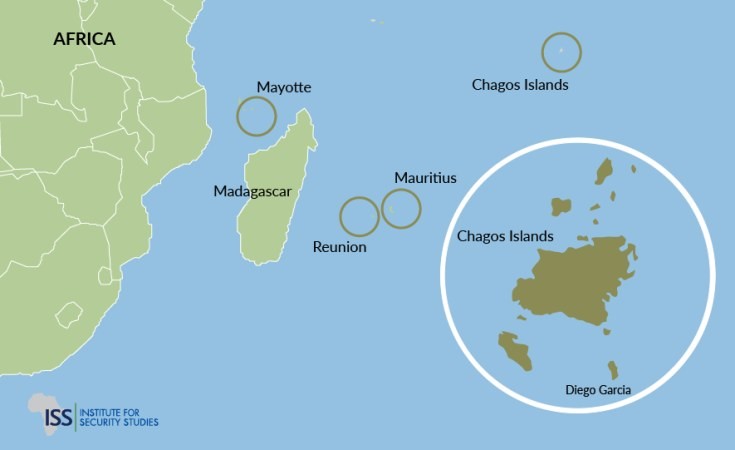
In a rare moment of geopolitical clarity and moral courage, the United Kingdom has agreed to transfer sovereignty of the Chagos Islands to Mauritius while securing a 99-year lease on Diego Garcia, the region’s pivotal military base. The agreement, unveiled by Prime Minister Keir Starmer’s government, is both a forward-looking strategic arrangement and a long-overdue act of historical redress.

At the heart of the deal is a pragmatic security arrangement: the UK will retain uninterrupted access to Diego Garcia, which hosts vital joint operations with the United States. In return, it will pay £101 million annually to Mauritius. This ensures that Britain continues to anchor its defence capabilities in the Indo-Pacific; a region where rival powers like China, Russia, and Iran are rapidly expanding their influence.

From a fiscal standpoint, the agreement is well within reason. Defence Secretary John Healey rightly pointed out that the annual lease cost is comparable to operating a single aircraft carrier. In fact, the payment constitutes just 0.15% of the UK’s £67.7 billion annual defence budget—a fraction of the cost for maintaining global readiness and a meaningful presence in one of the world’s most strategically significant regions. For a modest financial outlay, the UK preserves its operational edge, cements a critical alliance with the US, and reinforces its relevance in global affairs.

Yet the agreement is more than a security calculation. It also addresses one of Britain’s most painful colonial legacies. In 1965, the UK controversially separated the Chagos Archipelago from Mauritius, evicted the native Chagossians, and facilitated the construction of the Diego Garcia military base. These actions, condemned by the International Court of Justice and the UN General Assembly, have weighed heavily on the UK’s international standing.

The return of sovereignty to Mauritius is therefore a landmark act of accountability. It signals that Britain is willing to engage honestly with its imperial past, even when doing so involves diplomatic and political complexity. This is a step not just toward reconciliation with Mauritius, but also toward reasserting the UK’s commitment to international law and human rights.

Still, the success of this agreement must be judged not only by its geopolitical merit, but also by how it serves the people most affected: the Chagossians. The agreement allows Mauritius to implement a resettlement plan across the archipelago, excluding Diego Garcia. While this represents progress, it does not fully resolve the aspirations of Chagossians who long to return to their ancestral home.

As Bernadette Dugasse, a displaced Chagossian, movingly put it: “I don’t belong in the UK, I don’t belong in Mauritius, I don’t belong in the Seychelles. I belong in Diego Garcia.” These voices must not be sidelined. It is imperative that the UK and Mauritius ensure that Chagossians are not only consulted but empowered in shaping the future of the islands.

This deal is a model of how a former colonial power can act responsibly in today’s world, by marrying strategic foresight with moral responsibility. Britain has taken a step forward, not just in securing its defence, but in doing justice. Now, it must ensure that the Chagossian people are treated with the dignity they have long been denied.

The Quiet Rebirth: Canada’s Path to a Parliamentary Republic

With the King and Queen in Ottawa, I thought I might just post this small Republican fantasy, laid out for all to read. 

Prologue: The End of the Crown
In the year 2032, following a decade of public debate, constitutional conferences, and grassroots engagement, Canada formally transitioned from a constitutional monarchy to a parliamentary republic. The catalyst was a national referendum, driven by rising republican sentiment in Quebec, a resurgent Western populism demanding proportional representation, and an Indigenous-led movement for political sovereignty within the Canadian state.

The result was overwhelming: 68% of Canadians voted in favour of replacing the monarchy with a democratically elected head of state, establishing a fully Canadian republic with a new constitution rooted in reconciliation, regional balance, and democratic renewal.

A President for All Canadians
The new President of Canada is elected by ranked-choice ballot every seven years, with a non-renewable term. The position is ceremonial, but symbolically powerful: a national unifier who replaces the King and Governor General, chosen by the people rather than inherited title. Quebec supported the reform overwhelmingly. For the first time, the Canadian state acknowledged its dualistic identity: one anglophone and one francophone society within a shared democratic framework. Official bilingualism was strengthened. The first President, a Métis jurist from Saskatchewan, addressed the country in Cree, French, and English during their inaugural speech.

The Two Houses of Parliament
A. The House of Commons

Reformed to use Mixed Member Proportional Representation (MMP):
• 60% of MPs are elected directly in ridings.
• 40% are elected from regional party lists to reflect actual vote share.

This addressed a central grievance of Western provinces, especially Alberta and Saskatchewan, who had long seen their votes “wasted” under the old system. Under MMP:
• Western-based parties gained consistent, proportional representation.
• Coalition governments became the norm, requiring negotiation and respect across regions.

B. The Senate of Canada
Recast as an Elected Council of the Federation:
• Each province and territory elects equal numbers of Senators, regardless of population, to ensure regional parity.
• Senators serve staggered eight-year terms.
• Legislation must pass both Houses, but the Senate cannot permanently block Commons bills, only delay and revise.

Crucially, Indigenous Peoples were granted 20 permanent Senate seats:
• These seats are chosen by First Nations, Métis, and Inuit national councils, not political parties.
• Their mandate: to protect Indigenous rights, oversee federal treaty obligations, and act as stewards of land, climate, and cultural legislation.

Indigenous Representation in Governance
For the first time in Canadian history, Indigenous Nations are formally recognized as constitutional partners. Their rights are not granted by the Crown, they are affirmed by co-sovereignty agreements embedded in the Constitution.
Twenty seats in the House of Commons are permanently reserved for national Indigenous representatives, elected by pan-Indigenous vote.
Twenty Senate seats, as noted, are selected by national Indigenous councils and rotate among Nations.
• All legislation affecting land, language, or treaty obligations must be reviewed by an Indigenous-Led Standing Committee.

This gave concrete form to the nation-to-nation vision long promised under UNDRIP.

Quebec’s Role in the Republic
• With the monarchy gone, Quebec’s national identity was affirmed in law: it was recognized as a distinct society, with its own civil code, cultural protections, and immigration quotas.
• French became the co-equal language of the state, not merely a translation.
• The Republican Constitution of Canada acknowledged the right of Quebec to self-determination, but also embedded it in a new federal partnership of equals, making secession less urgent and less attractive.

Quebec found itself more powerful inside the republic than outside the monarchy-bound confederation it had long resented.

A More Responsive and Inclusive Democracy
The post-monarchy Canada is:
More representative, with diverse voices in Parliament.
More cooperative, with minority governments requiring negotiation.
More just, with Indigenous peoples at the table, not petitioning from the outside.
More regionally balanced, with the West and Quebec no longer sidelined.
More future-focused, with a Senate that values long-term planning over short-term headlines.

A Canada Reimagined
By 2040, the republican Canada is no longer simply a continuation of its colonial past. It is a democratic partnership of peoples, Indigenous, settler, immigrant, Quebecois, and regional, bound not by allegiance to a Crown, but by shared stewardship of land, rights, and future generations.

It was not a revolution. It was a quiet rebirth, a new chapter written in many voices, with none silenced, and none above the law.

Resetting the Relationship: A Vision for a True Indigenous Partnership

As the dust settles from the recent election, there’s a palpable sense that the Liberal Party has been handed not just another mandate, but a historic opportunity; to begin building a new Canadian future rooted in respect, renewal, and real partnership with Indigenous peoples.

This isn’t merely an electoral moment. It’s a constitutional and moral one, and with the planned visit of King Charles III, it’s time to reset the relationship. 

The last decade saw growing national awareness around reconciliation, but also hard truths: court rulings reminding us of Canada’s obligations, tragedies like unmarked graves that brought history into the present, and persistent gaps in housing, healthcare, and infrastructure that continue to shape the daily lives of Indigenous families. The incoming government must now shift the conversation from acknowledgment to architecture. From reconciliation as sentiment to reconciliation as structure.

And that starts with one fundamental premise: Indigenous peoples are not stakeholders. They are nations, governments, and partners. That means our approach must be built not on program delivery, but on rights recognition, not on federal paternalism, but on Indigenous self-determination.

At the core of the Liberal government’s first steps should be a legislative framework for implementing the United Nations Declaration on the Rights of Indigenous Peoples (UNDRIP). While Bill C-15 laid important groundwork, it must now be operationalized across the federal system, with Indigenous consent and co-development embedded in environmental regulation, resource management, and national law. A new generation of legal pluralism is needed, one that supports Indigenous legal systems in areas like child welfare and justice, alongside Canadian institutions.

Health care is another frontline. The federal government has made strides, but now must go further by supporting the creation of a fully Indigenous-governed national health authority. The British Columbia model has shown us what’s possible. Culturally grounded, community-run care is not a luxury, it’s a human right. This includes mental health programs rooted in ceremony and land-based healing, supported through sustained federal investment.

Education is likewise a transformative space. Indigenous-run schools, immersion language programs, and universal post-secondary supports aren’t just policies, they are acts of resurgence. They offer a way forward not just for Indigenous youth, but for Canada itself, by rebuilding cultural foundations dismantled through generations of colonial education.

Meanwhile, the housing and infrastructure crisis in Indigenous communities must be treated with the urgency of a national emergency. No government can speak of reconciliation while children live in overcrowded homes, and communities boil their water for decades. The incoming government must move quickly to fund 25,000 new homes and eliminate every long-term boil water advisory, with planning and implementation led by Indigenous governments themselves.

Yet, reconciliation isn’t only rural. More than half of Indigenous people now live in urban centres. Yet their voices are often excluded from nation-to-nation dialogues. That has to change. The new Liberal government should support Indigenous-led urban governance models, recognizing urban Indigenous peoples not as dislocated citizens but as rightful partners in policy design and delivery.

The question of representation also looms large. If we’re serious about nation-to-nation relationships, then Indigenous peoples must have permanent seats at the table, literally. That could mean Indigenous representation in Parliament or the establishment of a Council of Indigenous Nations with the authority to review federal legislation. Either way, the message must be clear: the age of unilateralism is over. Perhaps a dedicated number of seats in the House of Commons and Senate, similar to the New Zealand system, might see Indigenous voices heard in the legislative process? 

This is the path toward a new Canadian approach, one that accepts the truth of the past but refuses to be limited by it. The Liberal Party has long seen itself as a nation-building force. Reconciliation must be at the center of that vision now. Not as a political issue, not as a file on a minister’s desk, but as the defining project of a generation.

We have the ideas. We have the frameworks. What we need now is the political will to turn commitments into laws, pilot projects into national systems, and partnerships into power-sharing. If we get this right, Canada will not only be more just, it will be stronger, more resilient, and more united than ever before.

Louisiana: A Tapestry of Cultures and Clashing Politics

Thinking about how the Trump administration targeted Quebec, it’s language and cultural protection laws as a trade issue, makes me wonder about other unique cultures to be found in North America, and how they must be protected and supported so that can thrive. 

Louisiana is one of the most culturally and politically diverse states in the U.S., shaped by centuries of colonization, migration, and social upheaval. Its identity is a fusion of Indigenous heritage, French and Spanish rule, African influence, and waves of immigrant communities, each leaving an indelible mark on the state’s music, food, language, and traditions. While Louisiana’s reputation often conjures images of jazz-filled streets and spicy Creole dishes, its cultural complexity goes far beyond the postcard version. The same holds true for its politics, which remain as layered and contradictory as the people who call it home.

At the heart of Louisiana’s cultural richness is its history of colonization. Long before Europeans arrived, Indigenous tribes such as the Houma, Chitimacha, and Caddo lived along the state’s bayous and forests, cultivating their own traditions that persist to this day. The arrival of French explorers in the late 17th century set the stage for Louisiana’s deep Francophone roots, later reinforced by Spanish rule and the eventual return to French governance before Napoleon sold the territory to the United States. Unlike other parts of the American South, Louisiana retained much of its European colonial heritage, from its legal system, still based on Napoleonic civil law, to the Catholicism that remains a cultural and religious cornerstone, particularly in the southern part of the state.

The distinct identities of Louisiana’s Creole and Cajun populations further enrich its cultural landscape. The term “Creole” originally referred to people of European descent born in the colony, but over time it expanded to include people of mixed French, Spanish, African, and Indigenous ancestry. Creole culture is inseparable from the rhythms of zydeco music, the spice-laden flavors of gumbo and étouffée, and the linguistic blend of French, Spanish, and West African dialects that still echo in Louisiana Creole speech. Cajuns, on the other hand, descend from Acadian exiles forced out of Canada by the British in the 18th century. They settled in the swamps and prairies of south Louisiana, where they developed a fiercely independent identity rooted in their own dialect of French, fiddle-driven music, and a cuisine that, while similar to Creole food, leans more heavily on rustic ingredients like smoked sausage and crawfish.

The African influence on Louisiana’s culture is profound. Under both French and Spanish rule, enslaved Africans were a critical part of Louisiana’s economy and society, bringing agricultural expertise and spiritual traditions that persist in the region’s religious practices, including voodoo. Unlike in much of the American South, enslaved people in Louisiana had a higher rate of manumission under Spanish rule, leading to a large and influential population of free people of color who contributed to the state’s art, music, and business world. This legacy is most famously seen in New Orleans, where jazz was born in the late 19th century, blending African rhythms, blues structures, and European brass instrumentation into what would become America’s greatest musical export.

Beyond its historic communities, Louisiana continues to be a place of immigration and cultural blending. In the aftermath of the Vietnam War, thousands of Vietnamese refugees settled along the Gulf Coast, where they became an integral part of the seafood industry and introduced new flavors and traditions to the region. Today, their influence is visible in everything from Vietnamese-Cajun crawfish boils to the bustling pho restaurants of New Orleans and Baton Rouge. Other immigrant groups, including Hondurans, Italians, and Croatians, have also left their mark, particularly in Louisiana’s fishing and food industries.

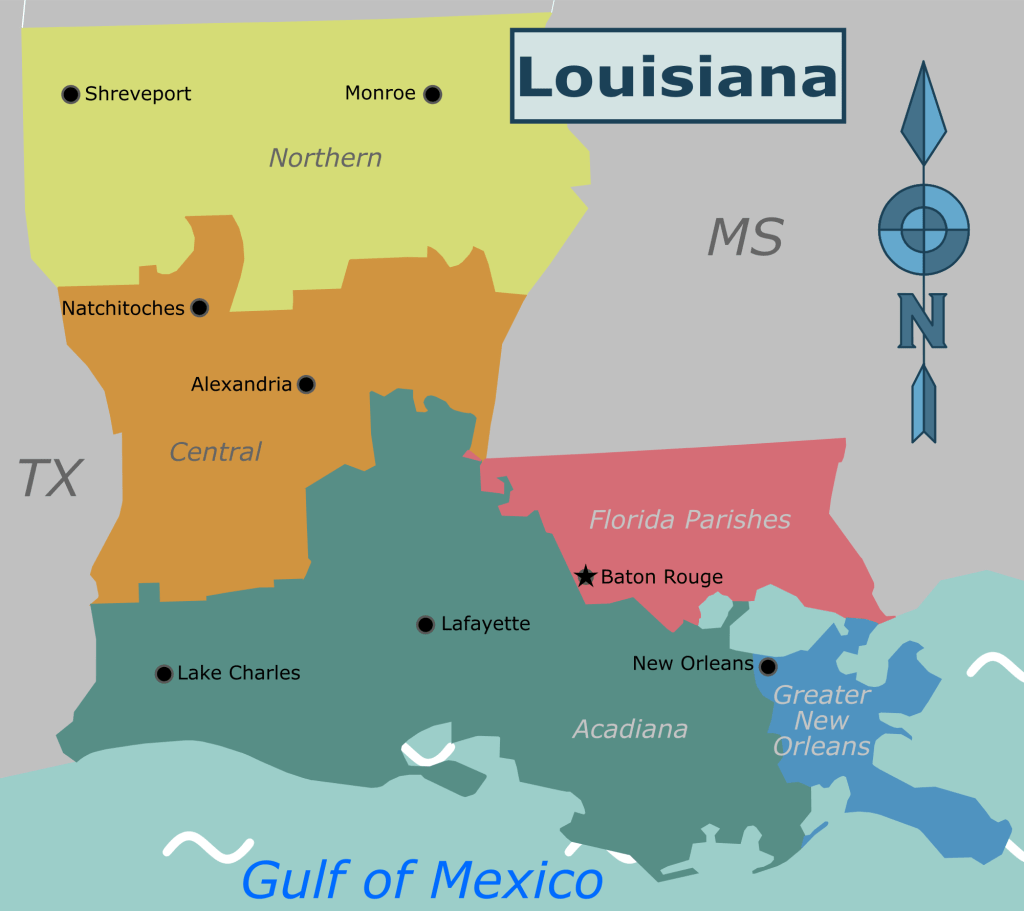
Just as Louisiana’s culture defies easy categorization, so does its politics. Historically, the state was a Democratic stronghold, shaped by its Catholic, agrarian roots, and the populist legacy of figures like Huey Long, who built his career on promises of wealth redistribution, infrastructure development, and defiance of the political elite. Long’s legacy remains deeply embedded in Louisiana’s political DNA, with many politicians still invoking his populist rhetoric even as the state has shifted toward Republican dominance.

Today, Louisiana’s political landscape is sharply divided by geography and demographics. Urban centers like New Orleans and Baton Rouge lean liberal, with strong Black and progressive voting blocs advocating for criminal justice reform, environmental protections, and expanded social programs. In contrast, rural Louisiana, particularly in the north, aligns more closely with the Deep South—socially conservative, evangelical Protestant, and deeply Republican. The Acadiana region, home to the Cajun population, has long maintained a distinct political identity. While once a bastion of working-class Democratic politics, it has increasingly moved to the right, particularly on social issues, though economic populism remains a common theme in local elections.

Louisiana’s racial history continues to shape its political discourse in ways that are often contentious. The long struggle for civil rights, from the desegregation battles of the 1960s to ongoing debates over voting rights and police reform, remains a central issue. Meanwhile, the state’s economic reliance on oil, gas, and fishing means that environmental politics are often fraught, as coastal communities grapple with rising seas and frequent hurricanes while also depending on industries that contribute to these very problems.

Perhaps the most defining feature of Louisiana politics is its enduring embrace of colorful, often scandal-ridden leadership. Corruption has long been a fact of life in the state’s political world, with governors, legislators, and city officials frequently making headlines for bribery, fraud, and backroom deals. Yet, rather than diminish voter engagement, this history has fostered a kind of cynical but amused pragmatism among Louisiana’s residents. People expect their politicians to be flawed, but they also expect them to deliver; whether that means rebuilding roads, cutting through bureaucratic red tape, or simply keeping the good times rolling.

In many ways, Louisiana is a place of contradictions. It is at once fiercely traditional and wildly innovative, politically conservative yet home to some of the most progressive cultural movements in the country. It reveres its past but is constantly reshaped by new influences. This complexity is what makes Louisiana so compelling; a state where history is always present, culture is never static, and politics, for better or worse, is never boring.