Crown and Country: King Charles’s Visit Tests Canada’s Unity

King Charles III is scheduled to open Canada’s Parliament on May 27, 2025, an event of considerable constitutional and political significance. It will be the first time a reigning monarch has performed this ceremonial role since Queen Elizabeth II in October 1977, during her Silver Jubilee tour. The announcement, made jointly with Prime Minister Mark Carney, carries symbolic weight and calculated political intent. As Canada contends with renewed provocations from U.S. President Donald Trump, including veiled economic threats and rhetoric that edges toward neo-imperial posturing, the Carney government appears to be leveraging the royal visit as a demonstration of constitutional resilience and international dignity. The moment is carefully staged to evoke continuity, stability, and institutional maturity in a time of cross-border unpredictability.

Yet there is a deeper strategic layer to this decision. Donald Trump has, in recent months, made no secret of his admiration for the British monarchy. He has praised royal decorum as a model of “true leadership” and even quipped during a campaign rally in Ohio that the United States “might do better in the Commonwealth.” While intended as theatre, the remark underscores Trump’s peculiar reverence for monarchical symbolism, a reverence that contrasts sharply with his often dismissive tone toward democratic norms. By welcoming King Charles into such a central role in Canadian political life, Carney may be sending a coded diplomatic signal to Washington: Canada, unlike its southern neighbour, is grounded in institutions that project both dignity and endurance. If Trump is moved by monarchy, then Carney is speaking a language he understands.

Domestically, however, the political optics are more complicated. While the Crown remains Canada’s formal head of state, public sentiment toward the monarchy is lukewarm at best. Recent polling suggests that 67 percent of Canadians were indifferent to Charles’s accession, and more than 80 percent described themselves as personally disconnected from the institution. For many, the monarchy feels like a vestige of another era, more relevant to history books than to modern governance. Carney’s gamble, then, is that the ceremonial gravitas of a royal visit will outweigh the public’s prevailing sense of apathy or irrelevance.

That apathy becomes pronounced opposition in Quebec, where nationalist sentiment remains particularly resistant to symbols of British authority. Quebec’s sovereigntist movements have long framed the Crown as emblematic of colonialism and cultural erasure. During King Charles’s coronation, the Société Saint-Jean-Baptiste de Montréal sent a telegram to Buckingham Palace declaring him “not welcome” in the province. The message was more than rhetorical: it echoed a deep-rooted political ethos that has challenged Canada’s constitutional architecture since the Quiet Revolution. In 2022, Premier François Legault’s government moved to eliminate the requirement that members of the National Assembly swear allegiance to the monarch, a pointed gesture of institutional defiance. For Quebec nationalists, the King’s presence in Ottawa may not symbolize unity, but rather federal tone-deafness.

Yet even as the visit stirs unease in some quarters, it presents a lesser-discussed opportunity: to reimagine the role of the Crown in Canada’s ongoing reconciliation with Indigenous peoples. The monarchy is, historically and legally, a signatory to many of the foundational treaties that continue to define the relationship between Indigenous nations and the Canadian state. For many Indigenous leaders, the Crown is not merely a colonial artifact, but also a legal partner whose standing can be invoked to press for the recognition of rights, lands, and sovereignty. If handled with humility and commitment, the King’s visit could serve as the opening of a new chapter, one in which the Crown renews its role not through symbolic visits alone, but through meaningful engagement with treaty obligations. Such a move would not erase historical wrongs, but it could elevate the discourse from ceremonial niceties to active responsibility and mutual respect.

In this light, the King’s appearance is more than a formal gesture. It is a high-stakes exercise in multi-layered symbolism, directed outward to a volatile American neighbour, inward to a fragmented federation, and downward through the strata of Canada’s colonial legacy. Carney is clearly betting that monarchy, however ambivalently received, can still serve as a unifying force if cast with the right mixture of diplomacy, gravity, and forward-looking intent. The risk is that in attempting to speak to all Canadians, the gesture may resonate with too few people. On the other hand, if successful, it could lay the foundation for a reimagined relationship between Canada and its institutions, one that asserts sovereignty, invites reconciliation, and strategically reclaims tradition in a turbulent geopolitical moment.

About Alberta: A Personal Perspective on Culture, Conversation, and Contribution

After more than 25 years as a business consultant, I’ve been fortunate to work across continents, meeting people, solving problems, and learning from cultures far from home. Yet, one of the most eye-opening cultural journeys I’ve taken has been much closer to home, right here in Canada.

In the early 2000s, I married a university professor from Alberta. With that union came a second family: ranchers, farmers, nurses, and small business owners from the Prairies. They welcomed me warmly, and over time, I found myself immersed in a culture both deeply Canadian and distinctly Albertan. What I discovered challenged assumptions I didn’t even know I had, and continues to shape how I think about communication, leadership, and nation-building.

Alberta isn’t just a place. It’s a way of being.

Like all Canadian regions, Alberta’s culture is shaped by its geography, economy, and history, but what stands out most is its ethos: plain speaking, hard work, and a fierce belief in self-reliance. This is a province built on the backs of people who tamed land, raised cattle, built farms, extracted energy, and raised families while weathering the booms and busts of resource cycles. It’s no surprise that such a setting produces a political and social landscape that leans more conservative, values independence, and tends to be skeptical of centralized authority, especially from Ottawa.

Yet, it’s also a province of surprising complexity. Urban centres like Calgary and Edmonton are home to vibrant, diverse communities. There’s deep thoughtfulness here, too, but it often takes a different form than what some Central Canadians might expect. Alberta’s discourse is grounded in lived experience, not theory. “Common sense” matters. So does speaking your mind, and when someone feels unheard, it’s often not about a lack of airtime, but about the feeling that their reality is being brushed aside.

One phrase I’ve heard countless times in Alberta is, You’re not listening to me. Sometimes, that’s not a literal complaint, it’s a coded way of saying, You’re not agreeing with me. In Alberta, where beliefs are often forged in the furnace of real-world outcomes, farming yields, small business margins, frontline nursing shifts, disagreement can feel like dismissal. If someone tells you a policy won’t work, it’s probably because they’ve lived through something similar. Ignoring that isn’t just impolite, it’s a denial of experience.

This is where conversations between Alberta and other parts of Canada can break down. We confuse disagreement with disrespect. We treat pragmatism as resistance to progress, and we forget that emotional intelligence requires listening to not just what is being said, but why it matters to the speaker.

My Alberta family holds views that might make some urban Central Canadians bristle. They question bureaucratic red tape. They prize personal responsibility. They believe in earning what you get, and yet these are the same people who will pull over in a snowstorm to help a stranger, or give you the shirt off their back if they think you need it. They don’t expect perfection, but they expect fairness, honesty, and above all, effort.

So how do we move forward, together?

First, we stop talking about Alberta and start talking with Albertans. We acknowledge the tensions, but we also recognize the province’s extraordinary contributions: to our economy, to our energy independence, to our national character. As we help Alberta navigate economic transformation, from oil to innovation, we must do so with respect for the culture that built this place.

That means understanding that communication here is not always couched in policy language or academic nuance. It’s plain. It’s passionate. It’s personal. And it deserves to be met with the same.

If we want a better Canada, we need a better conversation with Alberta, not just about it. That begins with listening not just to words, but to the values and experiences behind them. When we do that, we’ll find that Alberta doesn’t need to be changed, it needs to be understood.

The Quiet Leader: Alberta’s Hidden Role in North America’s Prosperity

In an era of mounting economic uncertainty, geopolitical tension, and post-pandemic recovery, Alberta has quietly emerged as North America’s top subnational performer in a critical and often overlooked metric: the Human Development Index (HDI). For policy watchers and socio-economic analysts, this isn’t just a number to file under “interesting trivia.” Alberta’s position at the top of the HDI rankings among all Canadian provinces, American states, and Mexican territories marks a significant case study in the relationship between natural resource wealth, public policy, and long-term human development outcomes.

As of the most recent figures, Alberta boasts an HDI score of 0.947, narrowly edging out perennial Canadian leaders like British Columbia and Ontario, and standing shoulder to shoulder with wealthy U.S. states like Massachusetts (0.956). The HDI, developed by the United Nations, is a composite measure of life expectancy, education, and per capita income. It is often used as a more holistic gauge of prosperity than GDP alone, as it reflects not only how much wealth a region generates, but how that wealth translates into actual well-being.

Alberta’s strong showing may come as a surprise to some, especially given the narrative often pushed about the province being overly reliant on fossil fuels or politically out of step with the rest of the country, but the truth is more nuanced. Alberta’s prosperity, particularly in the past two decades, has allowed it to make significant investments in healthcare, education, and infrastructure. Its high-income levels have supported strong public services, when policy has aligned with long-term development goals, and its young, well-educated workforce has given the province a demographic advantage. This is not to ignore Alberta’s volatility or the challenges of a boom-and-bust economy, but rather to acknowledge that, when things align, the outcomes can be extraordinary.

Education is a particular strength. Alberta consistently ranks among the top in Canada, and even internationally, in literacy, math, and science scores, according to the OECD’s PISA results. Its public healthcare system, while strained like others across Canada, remains broadly effective and accessible. Meanwhile, high wages, especially in the energy and trades sectors, boost the per capita income metric significantly, even when adjusted for cost of living.

Of course, HDI doesn’t capture everything. Alberta’s Indigenous communities, rural populations, and recent immigrants often experience very different outcomes than the provincial average. Income inequality, climate vulnerability, and questions around economic diversification remain pressing concerns, but as an overall measure of human potential realized, Alberta’s HDI score offers a compelling counter-narrative to those who dismiss it as a one-note petro-state.

The implications of Alberta’s top-tier HDI rating should not be understated. For federal policymakers, it underscores the importance of regional economic engines in lifting national development indicators. For other provinces and territories, it poses a question: what mix of resources, governance, and vision leads to sustained human flourishing? And for Alberta itself, it’s a reminder that the province’s legacy need not be only pipelines and politics, it can also be about how to build a society where people truly thrive.

The Prime Minister’s New Home: A National Symbol Reimagined

For nearly a decade, 24 Sussex Drive has sat in dignified decay; its halls silent, its windows dark. Once the official residence of Canada’s Prime Ministers, it has become a symbol not of leadership, but of limbo. The questions of what to do with 24 Sussex, renovate, rebuild, repurpose, have lingered without resolution, weighed down by political caution and public ambivalence. But perhaps we’ve been asking the wrong question. Instead of struggling to salvage a mid-century home with outdated systems and looming asbestos, it’s time we recognized that this moment calls for vision, not nostalgia. Canada deserves not only a new residence for its Prime Minister, but a bold reimagining of what leadership looks like, and where it lives.

Imagine this, a purpose-built complex that serves as both the official residence and the working headquarters of the Prime Minister of Canada, located on the sprawling grounds of Rideau Hall. This would not be a fortress, nor a vanity project. It would be a national institution, designed for transparency, diplomacy, and sustainability. It would reflect not just the occupant of the office, but the country they serve. Here is a rare opportunity to commission a project that shows the world who we are: a country of bold ideas, architectural excellence, Indigenous respect, recognition of the provinces and territories, and ecological consciousness.

Placing the Prime Minister’s residence and office at Rideau Hall makes both symbolic and logistical sense. It is already the site of Canada’s vice-regal presence and home to state ceremonies, visiting dignitaries, and national celebrations. Integrating the Prime Minister’s quarters into this historic landscape would bring coherence to the ceremonial heart of the nation. It would also enhance security, reduce inefficiencies, and allow for shared infrastructure between the Governor General’s operations and the Prime Minister’s Office. More than that, it would physically express Canada’s model of constitutional democracy: a Prime Minister, not as a distant executive, but as a visible, engaged steward of public trust.

This would be no private enclave. The new complex could feature public spaces: gardens, galleries, viewing areas, where Canadians and visitors could witness history in the making. Designed through an open national competition, the project would draw upon the talents of Canadian architects, builders, and artists. It would foreground Indigenous perspectives, perhaps through partnerships with First Nations designers and knowledge keepers, making reconciliation a structural and aesthetic principle. It could be built to the highest environmental standards, net-zero energy, carbon neutral, and climate resilient, setting a global benchmark for how democratic institutions can lead by example in a warming world.

As for 24 Sussex, it too deserves a future, not as a personal residence, but as a public place. Rather than disappearing behind construction tarps or bureaucratic indecision, it could be reborn as The Museum of Canadian Prime Ministers. There, the lives and legacies of the country’s leaders, visionary and flawed alike, could be explored with nuance and depth. Imagine rooms restored to reflect different eras, immersive exhibits about the crises and triumphs that unfolded within its walls, and interactive installations that encourage civic learning and debate. It would be a museum not of personalities alone, but of ideas and institutions, a place where Canadians could come to better understand the machinery of government, and their role in shaping it.

The cost of doing nothing is not zero. Every year we stall, the price of restoring 24 Sussex climbs, while the image of our national leadership suffers from association with crumbling plaster and political fearfulness. This isn’t about extravagance. It’s about pride, coherence, and nation-building. Other countries, Australia, Germany, the Nordic nations, have constructed modern official residences that reflect their identity and values. Canada can and should do the same.

We’re standing at the threshold of a generational opportunity. Let’s stop asking whether we can afford to build something worthy of our Prime Minister, and start asking what kind of country we want to present, to ourselves and the world. A new residence and office at Rideau Hall, paired with a museum at 24 Sussex, would tell a story of continuity and progress, of humility and ambition. It would turn a political liability into a cultural legacy. And it would say, without apology: this is Canada, and this is what we stand for.

Reviving Voices: How Canada is Fighting to Save Indigenous Languages

Each year on March 31, Canada pauses to recognize National Indigenous Languages Day, a moment to reflect on the state of Indigenous languages across the country. For many, this is not just a symbolic date on the calendar; it is a call to action, a reminder of both the fragility and resilience of the more than 70 Indigenous languages spoken in Canada today. These languages, rooted in the land, carrying centuries of knowledge, culture, and identity, have survived despite relentless attempts to erase them. Now, communities are fighting to bring them back to life.

The weight of history is impossible to ignore. For generations, Indigenous children were taken from their families and placed in residential schools, where speaking their native language was strictly forbidden. The goal was assimilation, the devastating impact still felt today. Some languages have been lost entirely, while others teeter on the edge of extinction, with only a handful of fluent speakers left. Yet, amid this painful legacy, a quiet, but determined movement is growing, breathing new life into words and phrases once whispered in secret.

In 2019, Canada passed the Indigenous Languages Act (ILA), recognizing Indigenous languages as fundamental to identity and committing to their protection. This legislation also led to the creation of the Office of the Commissioner of Indigenous Languages, tasked with supporting revitalization efforts. Government funding has followed, helping to sustain language programs across the country, though many communities argue that the support remains inconsistent and insufficient. Real change, they insist, must come from within, driven by those who have lived the loss and are determined to reclaim what was stolen.

One of the most promising efforts has been the growth of language immersion programs, where young learners are surrounded by their ancestral language from an early age. In places like Kahnawake, Mohawk immersion schools have become a beacon of hope, proving that with dedication and resources, language revival is possible. Universities and colleges have also stepped in, offering courses in Cree, Inuktitut, and other Indigenous languages, ensuring that the next generation of educators is equipped to pass on these traditions.

Beyond the classroom, technology has emerged as an unexpected ally. Apps like Duolingo, have introduced Indigenous languages such as Ojibwe and Michif, while YouTube channels and TikTok creators are making language learning accessible in ways that previous generations never could have imagined. Even radio and television stations, including the Aboriginal Peoples Television Network (APTN), continue to broadcast in Indigenous languages, reinforcing the presence of these voices in mainstream media.

Recently, Manitoba took a bold step in expanding the role of Indigenous languages in government. The province announced a pilot project to translate Hansard, the official transcript of legislative proceedings, into Indigenous languages. This project, starting with Anishinaabemowin, is expected to generate a wealth of linguistic material, supporting both language learners and artificial intelligence researchers; working to integrate Indigenous languages into modern technology. It also creates new jobs, with Manitoba actively recruiting Indigenous translators to bring this initiative to life.

Despite these efforts, challenges remain. Some Indigenous languages have so few speakers that urgent action is needed to prevent their disappearance. Others struggle with finding enough fluent teachers to meet demand. And while federal funding exists, it is often tied to bureaucratic processes that slow progress rather than support it.

Yet, if there is one thing that history has shown, it is that Indigenous languages, like the people who speak them, are resilient. National Indigenous Languages Day is more than just a commemoration; it is a reminder that these languages are still here, still fighting to be heard, and that their survival is a testament to the strength of the communities that cherish them.

The Delusions of Authoritarians: Why it never ends well for Fascist Leaders

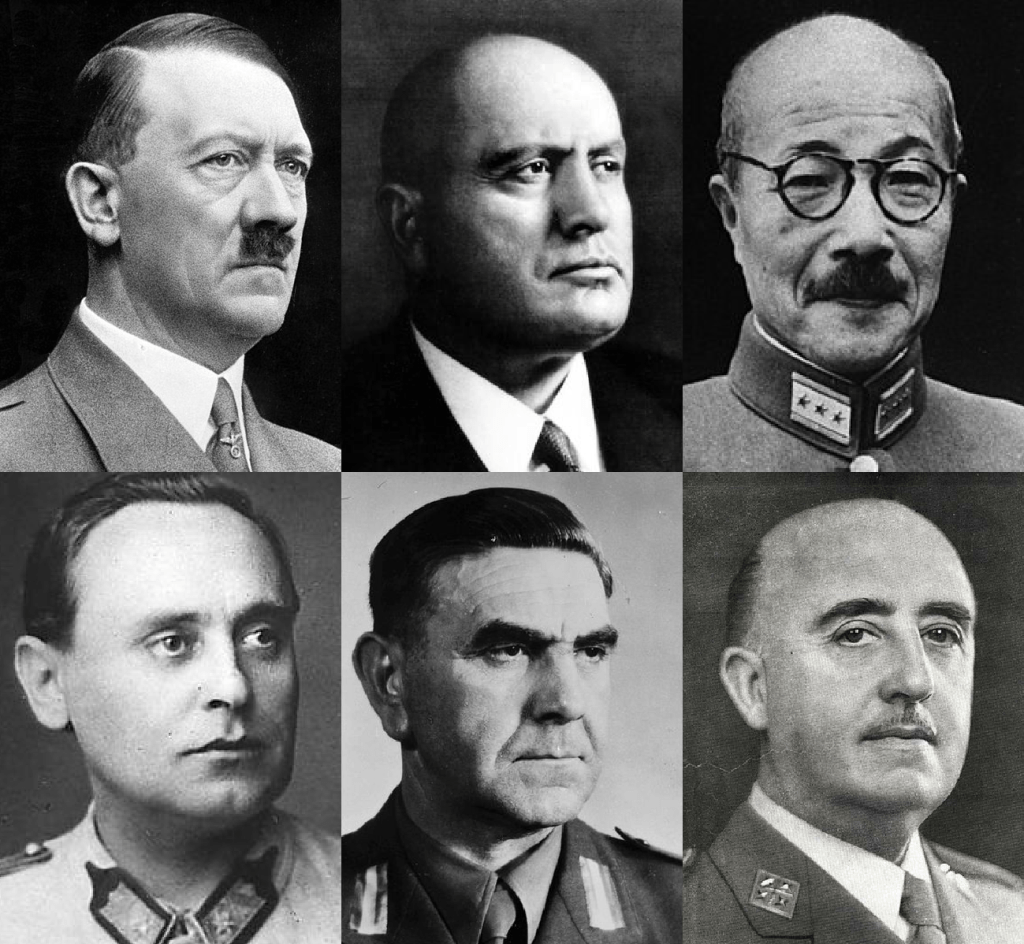
Fascist and authoritarian leaders rarely see themselves as doomed figures in history. On the contrary, they often believe they are exceptional – capable of bending the course of history to their will. Whether through the cult of personality, the rewriting of historical narratives, or sheer force, they assume they can control how they will be remembered. This delusion has led many to catastrophic ends, yet new generations of authoritarians seem undeterred, convinced that they will be the ones to succeed where others failed. Trump and his allies fit squarely into this pattern, refusing to believe that history might judge them harshly or that their actions could lead to their own downfall.

Mussolini provides one of the most vivid examples of this phenomenon. He envisioned himself as a modern-day Caesar, reviving the grandeur of the Roman Empire through Fascism. His brutal repression of dissent, his alliance with Hitler, and his reckless military ambitions ultimately led to disaster. When the tide of World War II turned, Mussolini found himself abandoned, hunted, and finally executed by his own people; his corpse hung upside down in Milan as a stark rejection of his once-grandiose vision. And yet, to the very end, he believed he was the victim of betrayal rather than the architect of his own demise.

Hitler, too, was utterly convinced of his historical greatness. He meticulously curated his own image, producing propaganda that cast him as Germany’s savior. Even as the Third Reich collapsed around him, he ranted in his bunker about how the German people had failed him rather than the other way around. His ultimate act, suicide rather than surrender, was an attempt to control his narrative, ensuring he would never be paraded as a prisoner. But history did not grant him the legacy he sought. Instead of being remembered as a visionary, he became the ultimate symbol of genocidal tyranny.

The pattern continued into the later 20th century. Nicolae Ceaușescu, the Romanian dictator, had convinced himself that his people adored him. He built extravagant palaces while his citizens starved, crushed opposition, and developed a personality cult that portrayed him as a paternal figure of national strength. When the moment of reckoning arrived in 1989, he seemed genuinely shocked that the crowd in Bucharest turned on him. Within days, he and his wife were tried and executed by firing squad, their supposed invincibility revealed as an illusion.

Even those who manage to hold onto power longer do not always escape history’s judgment. Augusto Pinochet ruled Chile through terror for nearly two decades, believing that his iron grip would secure him a revered place in history. But his crimes – torture, executions, forced disappearances eventually caught up with him. Though he escaped trial for most of his life, his reputation was destroyed. His legacy became one of shame rather than strength.

Trump, like these figures, operates in a world where loyalty and spectacle take precedence over reality. He dismisses mainstream historians as biased, preferring the adulation of his base over any broader judgment. He likely assumes that as long as he can retain power, whether through elections, legal battles, or intimidation, he can dictate how history views him. But history has a way of rendering its own verdict. Those who believe they can shape their own myth while trampling on democratic institutions, rule of law, and public trust often find themselves remembered not as saviors, but as cautionary tales.

Carney’s First Move as Prime Minister: A Smaller, More Focused Cabinet

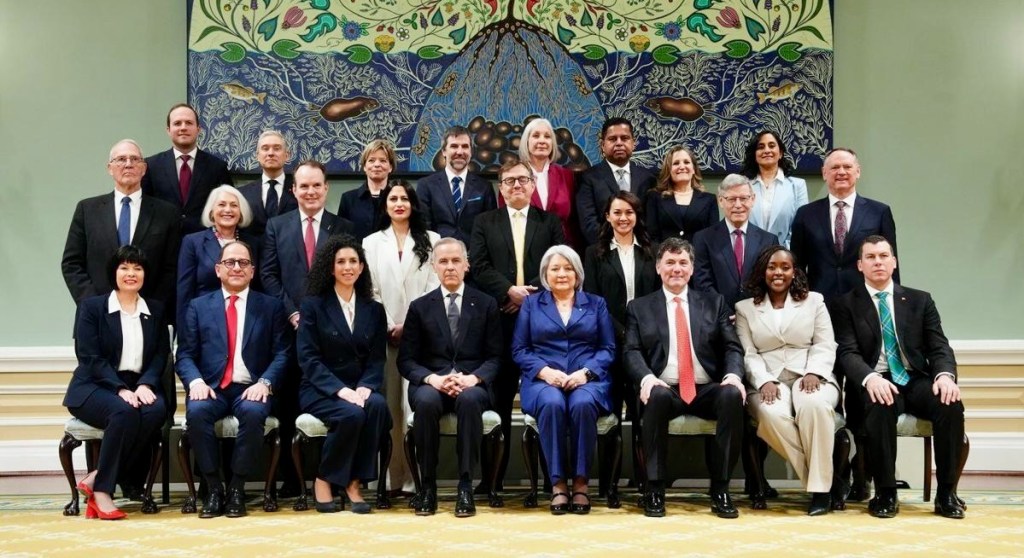
Mark Carney was sworn in as Canada’s 24th Prime Minister during March 2025, taking over from Justin Trudeau at a time of economic uncertainty, and escalating trade tensions with the United States. Carney, the former governor of both the Bank of Canada and the Bank of England, is widely seen as a steady hand in financial matters. His first major move as leader was to restructure the Liberal cabinet, streamlining its size and refocusing its priorities to address the most pressing issues facing the country.

One of the defining characteristics of Carney’s new government is efficiency. The cabinet has been reduced in size, reflecting longstanding calls within the Liberal Party for a more effective governance structure. With no more than 20 ministers, the streamlined approach is meant to improve coordination and decision-making. A key figure in this reshaped cabinet is Dominic LeBlanc, who takes on the powerful role of Minister of International Trade and Intergovernmental Affairs, while also serving as President of the King’s Privy Council. His extensive political experience positions him as a central player in both trade negotiations and federal-provincial relations, two areas where stability will be crucial.

Mélanie Joly retains her role as Minister of Foreign Affairs, but with an expanded focus on international development. At a time of growing global instability, Canada’s diplomatic relationships will be under close scrutiny, particularly as tensions with the United States continue to simmer. Meanwhile, François-Philippe Champagne steps into the critical position of Minister of Finance. His background in trade and innovation makes him well suited to tackle Canada’s economic challenges, especially as the government navigates the fallout of trade disputes, and seeks to bolster domestic investment.

Another notable appointment is Anita Anand, who assumes the role of Minister of Innovation, Science, and Industry. With Canada needing a competitive edge in technology and research, her portfolio will play a key role in shaping the country’s economic future. Bill Blair moves into National Defence, bringing his experience in emergency preparedness and public safety to an increasingly complex security environment. With global conflicts intensifying and Canada’s military commitments under review, Blair’s role will be one of the most closely watched in the new cabinet.

On the domestic front, Carney has signaled a renewed emphasis on Indigenous relations and social equity. Patty Hajdu remains in charge of Indigenous Services, reinforcing the government’s commitment to reconciliation and improved support for Indigenous communities. Jonathan Wilkinson, whose portfolio has been expanded to include both Energy and Natural Resources, will be tasked with balancing Canada’s economic interests with environmental sustainability—a challenge that has long been a point of contention in federal politics.

Chrystia Freeland, one of the government’s most experienced ministers, has taken on the role of Minister of Transport and Internal Trade. Her ability to manage complex negotiations will be key as the government looks to strengthen internal trade and infrastructure development. Meanwhile, Steven Guilbeault has been given a new role overseeing Canadian culture, heritage, and national parks. His appointment suggests a renewed effort to promote national identity and environmental conservation as part of the government’s broader agenda.

Overall, Carney’s cabinet reshuffle reflects a clear strategy: economic resilience, strengthened trade relationships, national security preparedness, social equity, and environmental sustainability. By bringing together experienced political veterans and streamlining decision-making, the new Liberal government is positioning itself to navigate both domestic and global challenges with a renewed sense of purpose. Whether this strategy will prove effective remains to be seen, but for now, Carney’s government appears focused and ready to tackle the road ahead.

The Failing Republic: Why the U.S. is Losing Its Separation of Powers

The United States was designed as a carefully balanced system, drawing from Polybius’ theory of anakyklosis, the ancient idea that governments cycle through different forms of rule as they degenerate. The Founders sought to prevent this cycle from repeating in America by creating a mixed government – a system that combined elements of monarchy (the presidency), aristocracy (the Senate and judiciary), and democracy (the House of Representatives and popular elections). This balance was supposed to be maintained through separation of powers and checks and balances, preventing any single branch from becoming dominant. However, over time, this system has eroded, leading to political dysfunction, growing authoritarian tendencies, and an increasing sense that American democracy is failing to sustain itself.

One of the most obvious signs of this breakdown is the expansion of executive power. The U.S. presidency, originally designed to be a limited office constrained by Congress, has grown into an institution that wields enormous influence over both domestic and foreign policy. Congress’ constitutional power to declare war has been effectively ignored for decades, with presidents engaging in military actions without formal approval. Executive orders, once meant for administrative matters, now serve as a way for presidents to bypass legislative gridlock and unilaterally shape national policy. Emergency powers, originally intended for genuine crises, have been used to consolidate authority, further tipping the balance away from Congress and toward the executive. What was once a system of monarchy constrained by law is increasingly resembling the early stages of tyranny, where power becomes concentrated in the hands of a single leader.

Meanwhile, the institutions meant to act as a wise, stabilizing force, the Senate and the judiciary, have themselves become distorted. The Senate, originally designed to serve as a check on populist excess, has become a bastion of partisan gridlock, where legislative action is often blocked not through debate and compromise but through procedural loopholes like the filibuster. The Supreme Court, meant to provide legal stability, has evolved into a de facto policymaking body, issuing rulings that shape national laws based on the ideological leanings of its justices rather than broad democratic consensus. The fact that justices serve lifetime appointments ensures that political biases from decades past continue shaping the present, often overriding the will of the electorate. Rather than serving as an aristocratic check on instability, the judiciary and Senate have increasingly acted as oligarchic strongholds, where entrenched power resists democratic accountability.

At the same time, the democratic elements of the system have begun to decay into their own worst tendencies. Gerrymandering has allowed political parties to carve up districts in ways that virtually guarantee electoral outcomes, stripping voters of meaningful representation. Populist rhetoric has taken over political campaigns, where leaders appeal not to reasoned debate but to emotional manipulation and fear-mongering. The rise of social media-driven outrage politics has further fueled division, turning every issue into an existential battle where compromise is seen as betrayal. The January 6th attack on the Capitol was not just an isolated event but a symptom of a deeper problem, the slide of democracy into oligarchy, or mob rule, where decisions are no longer made through structured governance but through force, intimidation, and the manipulation of public anger.

This erosion of balance has led to a state of chronic political paralysis. Congress, once the heart of American governance, now struggles to pass meaningful legislation, forcing presidents to govern through executive action. Public trust in institutions is collapsing, with many Americans believing that elections, courts, and government bodies are rigged against them. And looming over it all is the increasing potential for authoritarianism, as political leaders, on both the left and right, flirt with the idea that democratic norms can be bent, ignored, or rewritten to serve their interests. This is precisely the pattern that anakyklosis predicts: when democracy becomes too unstable, people turn to strong leaders who promise to restore order, often at the cost of their freedoms.

If the United States is to avoid falling deeper into this cycle, it must take deliberate action to restore the balance of power. Congress must reclaim its authority over war, legislation, and oversight. The judiciary, particularly the Supreme Court, may need reforms such as term limits to prevent long-term ideological entrenchment. Electoral integrity must be strengthened, ensuring fair representation through independent redistricting commissions and protections against voter suppression. And perhaps most importantly, the American public must become more politically literate, resisting the pull of demagoguery and demanding a return to governance based on reason, debate, and compromise.

Without these changes, the U.S. risks following the path of so many republics before it, where democracy fades, power consolidates, and the cycle of anakyklosis completes its turn once again.

Does National Service Strengthen Democracy?

Over the decades, my views on national service have shifted in ways I never anticipated. In the 1970s, I opposed it as a right-wing strategy to control young people. By the 1990s, after working in military settings that fostered aggressive elitism, I argued that civilians should remain separate from the patriarchal uniformed culture. Then, in the 2010s, I found myself engaged in change management projects within uniformed teams plagued by misogyny and racism. Now, after six decades of reflection, I find myself reconsidering my stance yet again.

National service has long been debated as a tool for unity, civic responsibility, and military readiness. But its potential to erode military elitism and foster a stronger connection between soldiers and society is often overlooked. Professional militaries, especially in nations where service is voluntary, tend to cultivate exclusivity—a culture where soldiers see themselves as distinct, even superior, to the civilians they serve. This divide reinforces the notion of the military as a separate class, rather than an integrated part of society. National service disrupts this dynamic by compelling a broader cross-section of the population to serve, reshaping military identity from an elite institution to a shared civic duty.

In voluntary systems, the military often attracts those who seek discipline, structure, or prestige—creating an insular culture with its own rigid hierarchy. Civilians, in turn, either glorify or distance themselves from this world, reinforcing the idea that service is for a dedicated few rather than a collective obligation. By contrast, when participation is mandatory across social classes and career paths, the military becomes more representative of society. The uniform is no longer a symbol of an exclusive warrior class, but a temporary role worn by people from all walks of life.

This integration fosters deeper civilian-military interaction. In countries like Switzerland and Israel, where service is universal, military experience is common rather than exceptional. Nearly everyone has served or knows someone who has, preventing the formation of a professional military caste detached from the society it protects. In contrast, nations with fully voluntary forces risk developing a military with its own insular traditions and perspectives, further widening the civilian-military gap.

Scandinavian countries offer compelling examples of how national service can shape military culture. Norway introduced gender-neutral conscription in 2015, significantly increasing female participation and reinforcing the country’s commitment to equality. Sweden, after briefly abolishing conscription, reinstated a selective system in 2017 to address recruitment shortages. While both countries prioritize inclusivity, Norway enforces universal service more strictly, while Sweden selects only those necessary for military needs. These models highlight how national service can be adapted to different societal priorities while still promoting integration.

This shift from exclusivity to civic duty is essential for preventing an isolated, professionalized force with an “us vs them” mentality. In a national service system, military service is just one form of contribution, alongside disaster relief, infrastructure projects, and community assistance. This broader framework erodes the idea that military life is inherently superior, reinforcing the principle that national service—whether military or civilian—is about collective responsibility, not personal status.

The benefits of this integration extend beyond military culture. Veterans who return to civilian life find themselves in a society where their experience is widely shared, reducing post-service isolation and preventing the hero-worship that can distort public perceptions of the military. When nearly everyone has served in some capacity, soldiers are seen not as a privileged class, but as fellow citizens fulfilling a duty like everyone else.

Perhaps most importantly, national service strengthens democracy itself. By grounding military power in the citizenry, it prevents the rise of a professional warrior class detached from national values. It ensures that defense, like governance, remains a shared responsibility rather than the domain of a select few. In this way, national service transforms military duty from an elite pursuit into a universal expectation—one that keeps soldiers connected to, rather than separate from, the society they serve.

Mapping the Future: Why the Cahill-Keyes and AuthaGraph Projections Matter

For centuries, the way we represent the world on maps has shaped our understanding of geography, politics, and culture. Traditional projections, like the widely used Mercator, have long been criticized for distorting the relative sizes of continents, reinforcing a Eurocentric worldview. But over time, innovative cartographers have sought to challenge these distortions with alternative projections that offer a more balanced and accurate view of our planet. Two such approaches—the Cahill–Keyes projection and the AuthaGraph map—stand out for their unique methods of minimizing distortion and improving spatial representation.

The Cahill–Keyes map, an evolution of Bernard Cahill’s 1909 “Butterfly Map,” was refined by Gene Keyes in 1975 to create a more symmetrical, contiguous world map. Unlike the Mercator projection, which greatly exaggerates landmasses near the poles, the Cahill–Keyes map unfolds the Earth into an octahedral shape, forming an “M” configuration that keeps continents connected while reducing distortion. By presenting landmasses with a higher degree of spatial accuracy, this projection fosters a more holistic view of global geography. It has been praised for its educational value, challenging the parochial perspectives often reinforced by traditional mapping systems.

The AuthaGraph map, developed in 1999 by Japanese architect Hajime Narukawa, takes a different approach. Using a complex method of dividing the globe into 96 triangles and transforming it into a near-rectangular form, this projection maintains proportional relationships between continents and oceans better than most existing maps. The AuthaGraph gained significant recognition after winning Japan’s Good Design Grand Award in 2016, and has since been used in scientific and educational contexts to provide a more accurate representation of Earth’s geography. Unlike the Cahill–Keyes projection, which prioritizes contiguity, the AuthaGraph sacrifices some familiar visual continuity to achieve an exceptional balance of size and shape accuracy.

Both of these projections challenge outdated methods that have long influenced global perceptions. The Mercator map, despite its usefulness for navigation, has historically exaggerated the importance of northern regions while diminishing the size of Africa, South America, and other equatorial regions. These distortions have subtly reinforced geopolitical biases, making alternative projections like Cahill–Keyes and AuthaGraph essential tools for rethinking our worldview. While no single map can perfectly translate a three-dimensional Earth onto a two-dimensional surface, these newer projections push the boundaries of cartography, offering fresh perspectives that align more closely with reality.

Beyond their technical advantages, these maps serve a broader purpose in education and global awareness. The Cahill–Keyes map emphasizes planetary unity by maintaining continent contiguity, making it particularly useful for fostering a connected understanding of world geography. The AuthaGraph, with its emphasis on accurate proportions, is invaluable for scientific applications, such as climate modeling and oceanic studies. Both contribute to a growing movement that seeks to correct historical inaccuracies and promote a more equitable, data-driven representation of our planet.

In the end, cartography is as much about perspective as it is about accuracy. The Cahill–Keyes and AuthaGraph maps remind us that the way we visualize the world shapes the way we think about it. By embracing innovative projections, we take a step toward seeing Earth not just as a collection of distorted borders, but as a dynamic, interconnected whole.