Posts that mine the past to illuminate the present—whether through political memory, family lineage, or historical analogy. From the Scottish Highlands to the Paraguayan interior, these reflections offer both insight and continuity across generations and geographies.
I firmly believe in the right of 16 and 17 year old Canadians to vote. They are more than ready to shoulder this responsibility, and society already entrusts them with far greater challenges. Here’s why I support enfranchising them.
The Responsibilities They Already Bear At 16, young Canadians can obtain a driver’s license, manage the responsibilities of operating a vehicle, and comply with traffic laws. Many also join the workforce, contributing taxes that fund services without having a say in how those funds are spent. This taxation without representation runs counter to the principles of fairness in a democratic society.
Some 16 year olds live independently, taking full responsibility for their finances, households, and futures. These young people already make life-altering decisions, proving their ability to assess and manage complex situations.
They also have the legal right to make important healthcare decisions without parental consent in most provinces. From mental health treatments to reproductive choices, they show the capacity to evaluate critical issues. Moreover, the age of consent in Canada is 16, and in some cases, they can even join the military, committing themselves to a life of service and sacrifice. If we trust them with these decisions, why not trust them with a vote?
Their Political Awareness Critics say 16 year olds lack the maturity to vote, but that argument doesn’t hold water. Today’s youth are incredibly engaged with issues like climate change, education, and social justice. They organize protests, sign petitions, and participate in grassroots movements. They are not just passive observers; they are active participants in shaping their world.
Civics education in Canadian schools equips them with the knowledge to understand governance and the electoral process. Giving them the vote would deepen their connection to democracy, encouraging lifelong participation.
Looking at Other Democracies Canada wouldn’t be breaking new ground here. Countries like Austria, Brazil, and Scotland already allow 16 year olds to vote, and studies show these younger voters are as thoughtful and engaged as older ones. Early enfranchisement fosters a lifelong habit of voting, strengthening democratic systems for everyone.
A Voice for the Future
The decisions made today—on climate policy, education, and job creation—will define the futures of these young Canadians. Denying them a voice in these matters is short-sighted. They are the generation that will live with the long-term consequences of today’s elections.
It’s time we acknowledge the responsibilities and contributions of 16 year olds and empower them with the right to vote. They have proven their maturity and commitment to society. Including them in the democratic process would make Canada’s democracy stronger, more inclusive, and better prepared for the future.
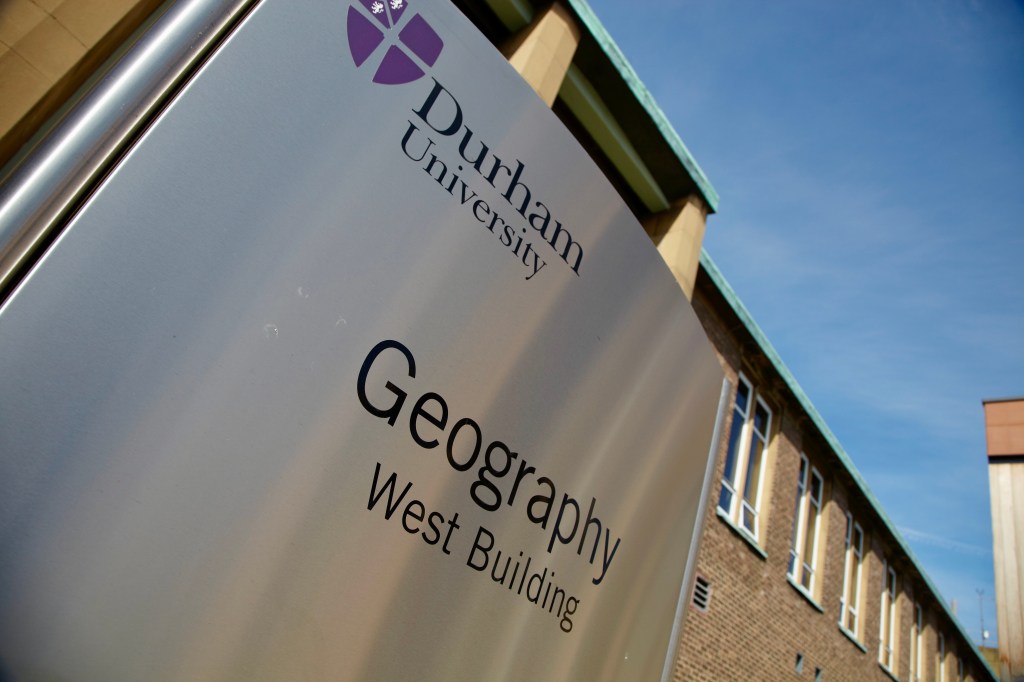
When I arrived at Durham University in 1985 to begin my PhD research, I was given an office once occupied by David Rhind, a leading figure in geomatics. Professor Rhind passed away this month at 81, following a distinguished career in geomorphology, geomatics and cartography. Two of his most notable contributions were to the Chorley Committee’s 1987 report on the “Handling of Geographical Information” and his leadership of the Ordnance Survey (OS) as Director General from 1992 to 1998; a position I once aspired to.
In the early 1990s, the UK Ordnance Survey transitioned from offering maps at cost to a commercially-driven model aimed at reducing taxpayer dependence. Spearheaded by Rhind, this shift was intended to generate new revenue streams by charging commercial rates, fostering innovation in the private sector, with this change occurring during John Major’s continuation of Margaret Thatcher’s free-market Conservative government.
On the surface, the strategy seemed a logical response to the digital age, but its impact on the OS’s client relationships raised concerns. A prime example was the UK Automobile Association (AA), which had long relied on OS maps. As the OS raised prices, the AA, caught between increasing costs and the need to maintain affordable services, began developing its own mapping solutions. This shift, prompted by Rhind’s commercial model, mirrored a broader industry trend where rising prices forced organizations to explore alternatives.
The AA’s move away from OS data highlighted a flaw in the OS’s strategy: by prioritizing revenue, the OS alienated loyal clients and opened the door for competitors offering cheaper or more specialized services. This weakened OS’s market dominance and contributed to the rise of private mapping services, eroding its monopoly.
This shift also sparked debate about public ownership of data. Mapping data, funded by taxpayers, had once been made available at cost to ensure equitable access. Rhind’s commercialization, while financially successful, seemed to contradict this principle, favoring revenue over the broader public good.
In hindsight, the transition to a commercial model raised important questions about the long-term sustainability of the OS. While it aimed to modernize the service and ensure financial self-sufficiency, it fragmented the market, driving clients to develop in-house solutions and creating competition. The AA’s departure underscores the risks of prioritizing profit over accessibility.
Today, the OS operates on a mixed-cost model, offering both free OpenData and premium products sold based on usage. This model aims to balance public access with financial sustainability, generating revenue for ongoing data maintenance. However, the legacy of the commercialization strategy persists, and the question remains whether the OS can maintain its mission of serving the public good while ensuring its financial independence. The challenge is finding a balance that doesn’t drive clients away or erode public access.
It’s interesting to note that the U.S. Geological Survey (USGS) continues to distribute a significant amount of its data free to the public including topographical map, earthquake and water data along with Landsat imagery. While the USGS does offer some cost-recovery and subscription-based data sets, the vast majority of its data holdings are still freely available, but I wonder how long this financial model will be in place under the second Trump administration.
I have been working on this post for a while, as soon as it became clear that Justin Trudeau would be resigning. I don’t normally publish pieces this long, but I found that I needed this length to enable me to even just skim the surface of how this man transformed Canada as a nation, and its standing in the world. For me, his biggest failure was not reforming Canada’s federal election system after he vowed that the 2015 process would be the last conducted under the first past the post model. However, it soon became clear that the party’s backroom boys, and many newly minted MPs had other priorities, and so his government abandoned the pledge in 2017, disappointing advocates for electoral reform and leaving a key campaign promise unfulfilled.
Justin Trudeau’s tenure as Canada’s 23rd Prime Minister is a legacy of contradictions: one of bold progressive achievements, and high-profile missteps, of inspiring rhetoric and underwhelming follow-through. While his time in office has left the country more inclusive and forward-looking in many ways, it has also been marked by challenges and controversies that complicate the narrative of his leadership. Viewed holistically, Trudeau’s legacy is one of meaningful but imperfect progress – an era defined by a mixture of transformative change and opportunities missed.
Economically, Trudeau’s record is more complex. Programs like the Canada Child Benefit significantly reduced child poverty, providing direct financial relief to families and underscoring his government’s focus on middle-class Canadians. His investments in infrastructure and housing created jobs and spurred economic growth. However, these initiatives came at the cost of mounting deficits and an increased national debt, raising questions about long-term fiscal sustainability. Critics argue that his government’s policies failed to adequately address systemic issues such as housing affordability, which worsened during his tenure. Rising home prices left many young Canadians struggling to enter the housing market, highlighting a gap between Trudeau’s promises and tangible results. While his economic agenda was ambitious, it often struggled to balance short-term relief with long-term stability.
One of the most enduring aspects of Trudeau’s legacy is his commitment to diversity and inclusion. From the outset, he reshaped the face of Canadian politics with his historic, gender-balanced cabinet that included individuals from a variety of racial, religious, and cultural backgrounds. His reasoning – “Because it’s 2015” – became a shorthand for Canada’s progressive aspirations on the global stage. By elevating underrepresented voices, Trudeau sought to ensure that Canada’s leadership reflected its diverse population, signaling a renewed commitment to multiculturalism at a time when many countries were turning inward. This emphasis on inclusion not only bolstered Canada’s international reputation but also helped inspire a new generation of Canadians to see politics as a space for all.
Climate change was one of the defining issues of Trudeau’s leadership, and his government made significant strides in this area. The implementation of a nationwide carbon pricing system positioned Canada as a global leader in climate policy, reinforcing the country’s commitment to the Paris Agreement. Yet, this progress was undermined by the government’s purchase of the Trans Mountain Pipeline, which angered environmental advocates and Indigenous communities. Trudeau’s attempt to balance environmental goals with the economic realities of a resource-driven economy often left both sides dissatisfied. Nevertheless, his climate policies laid the groundwork for Canada’s transition to a more sustainable future, even if they were not without contradictions.
Trudeau’s relationship with Indigenous communities represents another area of mixed results. He made reconciliation a central theme of his leadership, offering apologies for historical injustices and pledging to address long-standing inequities. His government made progress on some fronts, such as lifting long-standing boil-water advisories in many Indigenous communities. However, significant gaps remained, particularly in addressing land rights and implementing the Truth and Reconciliation Commission’s calls to action. Many Indigenous leaders criticized the slow pace of change, arguing that Trudeau’s symbolic gestures often failed to translate into substantive action. While his efforts were genuine, they were frequently insufficient to meet the scale of the challenges at hand.
Ethics and accountability proved to be persistent weak points in Trudeau’s leadership. The SNC-Lavalin affair and the WE Charity scandal highlighted a troubling pattern of ethical lapses that undermined public trust. In both cases, Trudeau faced accusations of placing political interests above transparency and accountability. These controversies tarnished his image as a champion of ethical governance, leaving a stain on his record that cannot be ignored.
Yet, even amid these challenges, Trudeau’s ability to connect with Canadians on a personal level remained one of his greatest strengths. Whether marching in Pride parades, hosting town halls, or addressing the nation during the COVID-19 pandemic, he demonstrated an empathy and accessibility that set him apart from many of his predecessors. His optimism and charisma helped re-energize Canadian politics, particularly among younger voters, who saw in him a leader who genuinely cared about their concerns. While his leadership style occasionally veered toward the performative, it also reflected a deep understanding of the importance of symbolism in shaping national identity.
Ultimately, Trudeau’s legacy is one of imperfect but meaningful progress. His government advanced diversity, economic support for families, and climate action, while grappling with the realities of governance in a polarized and rapidly changing world. His tenure was far from flawless, marred by ethical lapses, unfulfilled promises, and the challenges of balancing competing priorities. However, his vision for a more inclusive, progressive, and globally engaged Canada resonated with millions and left an indelible mark on the country’s political landscape.
Justin Trudeau’s time as Prime Minister will likely be remembered not for perfection, but for aspiration. He sought to push Canada forward in ways that reflected its highest ideals, even if he sometimes fell short. For all the controversies and compromises, his leadership ushered in an era that redefined what Canada could stand for on the world stage: diversity, progress, and hope.
Is America flirting with fascism, or are such claims the product of alarmist hyperbole? It’s a question that divides dinner tables, social media feeds, and even academic circles. Some argue that the United States is a democracy fighting for its soul; others see it as a country standing perilously close to authoritarian rule. But to call America fascist – or even on the road to it – requires a careful unpacking of what fascism truly entails, and how it might resonate within the American political landscape.
Let’s be clear: fascism isn’t a vague insult for policies we don’t like. It’s an authoritarian ideology with specific hallmarks. Think Mussolini’s Italy, Hitler’s Germany – regimes steeped in violent nationalism, the suppression of dissent, and a drive to create a monolithic cultural identity. Robert Paxton, one of the leading scholars on the subject, described fascism as thriving on crises, exalting the group over the individual, and depending on a strong leader to restore a supposedly decaying nation. So, how does America stack up against these criteria? Let’s dig deeper.
Nationalism and Authoritarian Rhetoric Nationalism is the drumbeat of every fascist regime, and it’s undeniable that America has had its moments of chest-thumping pride. But the “America First” rhetoric of recent years has pushed nationalism to a different level, stirring debate about its compatibility with democratic ideals. Take the Trump administration, where slogans like “Make America Great Again” dovetailed with a barrage of attacks on immigrants, minorities, and even the democratic process itself. Muslim travel bans, family separation policies at the southern border, and the vilification of immigrants as existential threats bear a troubling resemblance to the exclusionary policies of fascist regimes.
And then there’s the attack on the press—“the enemy of the people,” as Trump called it. Fascism thrives on controlling narratives, suppressing inconvenient truths, and manufacturing enemies to unite the populace. These tactics were echoed in efforts to discredit media outlets, undermine trust in elections, and dismiss dissenting voices. While America still enjoys a free press and opposition parties, these tactics are red flags in any democracy.
Civil Liberties Under Pressure A free society requires robust protections for civil liberties, yet the U.S. has shown cracks in its foundation. Think about the use of force against peaceful protesters during the George Floyd demonstrations, or the revelations of mass surveillance by whistleblower Edward Snowden. Then there are laws in certain states aimed at curbing protests – an unsettling echo of fascist regimes that treated dissent as treason.
Still, America hasn’t crossed the line into wholesale repression. Dissent exists, opposition thrives, and courtrooms regularly challenge abuses of power. These are democratic lifelines, but they must be safeguarded vigilantly.
Corporate Power and Economic Control Fascism often entails a symbiotic relationship between the state and corporations, where economic power is wielded for nationalist purposes. In America, the government doesn’t control corporations outright, but the influence of corporate money in politics is undeniable. Lobbying, dark money in elections, and the revolving door between big business and government raise questions about whether democracy is being eroded by oligarchic forces.
Economic inequality is another point of tension. Policies favoring the wealthy over the working class may not fit the fascist mold exactly, but they exacerbate social divisions, fueling the kind of crises that fascism preys upon.
Racial and Cultural Tensions A defining feature of fascism is the enforcement of a singular racial or cultural identity, often to the detriment of minorities. The U.S. has a long history of systemic racism, from slavery and segregation to redlining and mass incarceration. Contemporary issues – like police brutality and racial inequality – continue to expose deep wounds in the fabric of American democracy.
White nationalist groups, emboldened in recent years, represent another disturbing trend. The normalization of their rhetoric in certain political spaces harks back to fascist tendencies to scapegoat minorities for societal woes. Yet, these groups remain fringe elements rather than central powers, and their rise has been met with strong opposition from civil society.
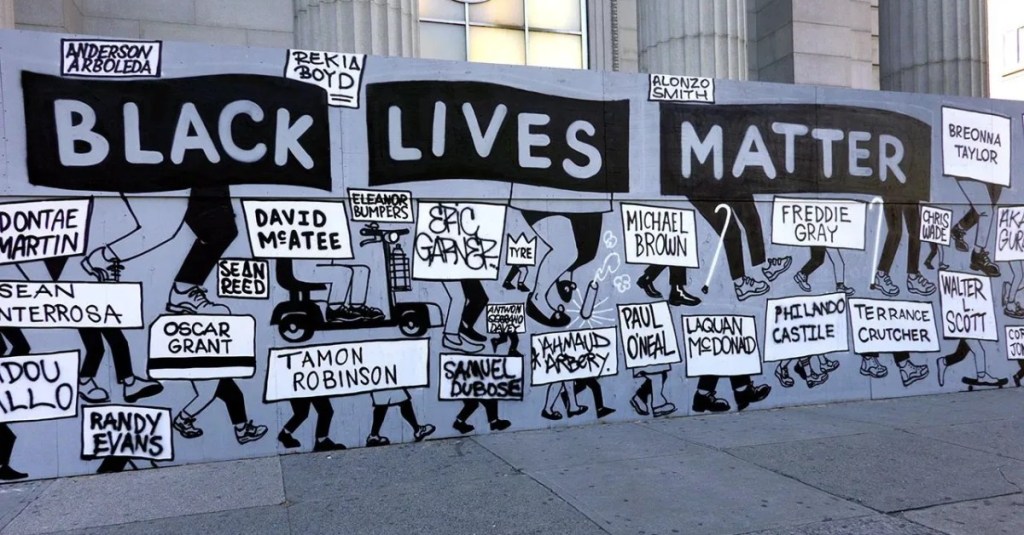
America’s Democratic Struggle Despite these troubling signs, it would be a mistake to paint America as fully fascist. The U.S. retains institutions that fascist regimes dismantle: a separation of powers, an independent judiciary, and regular elections. Social movements – from Black Lives Matter to grassroots environmental campaigns – demonstrate that the democratic spirit is alive and well.
America’s story is not one of fascism triumphant, but of democracy under pressure. Its history is riddled with contradictions, from its founding on ideals of liberty while maintaining slavery, to its championing of free speech while tolerating systemic inequality. Yet, those contradictions are precisely why it remains a battleground for change.
So, Is America Fascist? Not yet – and perhaps not even close. But the warning signs are there. The flirtation with authoritarianism, the normalization of exclusionary rhetoric, and the entrenchment of corporate influence all demand vigilance. America isn’t Mussolini’s Italy or Hitler’s Germany, but it is a nation grappling with the forces that could pull it in that direction. The question isn’t just “Is America fascist?” – it’s “What are we doing to ensure it never becomes so?”
Americans must keep democracy’s flame alive by holding power to account, protecting civil liberties, and fighting for the inclusive ideals the country was built on. After all, democracy isn’t just a system – it’s a struggle. And that struggle is theirs to win.
The Canadian Liberal Party finds itself at a crossroads, staring down the barrel of declining voter support, a fractured image, and leadership fatigue. Recent polling paints a grim picture for the governing party. According to a Nanos Research poll from November 2024, the Conservatives are riding high with 41% support, compared to the Liberals’ dismal 23%, while the NDP trails just behind at 20%. Similarly, an Abacus Data poll reveals an equally bleak scenario, with the Conservatives holding a commanding 22-point lead. For a party that once dominated Canadian politics, the question isn’t just about how to bounce back—it’s about survival.
The Curse of Intellectual Leadership The Liberals’ current predicament has parallels to their past missteps. Two glaring examples—Stéphane Dion and Michael Ignatieff—serve as cautionary tales about the dangers of picking leaders who, while intellectually formidable, fail to connect with voters on a human level.
In 2006, the Liberals turned to Stéphane Dion, an academic and policy wonk with a passion for climate change. Dion’s “Green Shift” plan was ambitious, but lacked the messaging needed to win over Canadians worried about the economy. In the 2008 election, the party was hammered, falling to just 77 seats and 26.3% of the popular vote. Dion’s perceived aloofness, and inability to inspire confidence left the Liberals weak and divided, opening the door for Stephen Harper’s Conservatives to consolidate power.
The Liberals repeated this mistake with Michael Ignatieff, an accomplished academic and author, in 2008. Despite his intellectual prowess, Ignatieff struggled to shake the perception that he was a carpetbagger disconnected from the concerns of average Canadians. In the 2011 election, the party collapsed, capturing a mere 18.9% of the vote and just 34 seats—the worst performance in Liberal history. For the first time, the Liberals were relegated to third-party status, a stunning fall for Canada’s so-called “natural governing party.”
The Liberal Dilemma in 2025 Fast forward to today, and the Liberals seem poised to repeat history. With Justin Trudeau’s star power fading after nearly a decade in office, there is a real risk that the party might turn to yet another “safe” choice—a figure who mirrors the old archetype of a white male intellectual, disconnected from the realities of modern Canada. But the Canada of 2025 isn’t the Canada of 2006 or 2011. Demographics have shifted, and so have voter priorities.
Canada is now more diverse than ever. Over a quarter of the population identifies as part of a racialized group, and millennials and Gen Z make up the largest voting blocs. These voters expect leaders who reflect their lived experiences—not just in terms of identity but also in terms of relatable policies and vision. A leader who represents “business as usual” risks alienating not only racialized communities but also younger, progressive Canadians who are increasingly drawn to the NDP or Greens.
Recent polling reflects this growing discontent. The Liberals are hemorrhaging support to both the Conservatives and the NDP, with voters fed up with Trudeau’s perceived failures on affordability, housing, and climate action. Even Liberal loyalists are looking for something—or someone—new to rekindle their enthusiasm.
What the Liberals Need Now The Liberals must understand that leadership is as much about identity and relatability as it is about policy and experience. A leader who embodies the diversity of Canada, speaks to the struggles of everyday people, and offers a compelling vision for the future could galvanize the party’s base and attract disillusioned voters. In contrast, opting for another “old white academic” risks reinforcing the image of a party out of touch with 21st-century Canada.
The successes of other leaders offer lessons. Jagmeet Singh’s historic leadership of the NDP has drawn younger and more diverse voters to his party, even if they haven’t translated into electoral dominance. Meanwhile, Pierre Poilievre has managed to connect with younger Conservatives through his populist messaging on affordability and housing.
The stakes for the Liberals couldn’t be higher. If they fail to read the room and make a bold choice, they risk not just losing the next election but fading into irrelevance altogether. As Dion and Ignatieff’s defeats demonstrated, intellectual credentials alone don’t win elections. Representation, relatability, and vision do.
For the Liberals, the time for reinvention is now—or never.
December 25th, the Dies Natalis Solis Invicti or “Birthday of the Unconquered Sun,” has long been associated with cosmic renewal and light’s triumph over darkness, aligning with the winter solstice. Its significance may stretch back to ancient Persia and found deep resonance in Roman religion, particularly within the mystery cult of Mithras.
Mithraism flourished in the shadowy corners of Roman society, appealing to soldiers, merchants, and officials. Mithras, a god of light and justice, was central to a complex mythology that emphasized cosmic order and renewal. His worship featured the tauroctony, a scene depicting Mithras slaying a sacred bull in a cave, from whose blood life and fertility emerged. This act symbolized victory over chaos and the cycles of life and death, themes reinforced by Mithras’ divine “rock birth” (Petra Genetrix), which emphasized his eternal and unshakable essence.
Mithras’ bond with Sol Invictus, the Roman solar deity, was central to his worship. Together, they were shown feasting after the bull’s defeat, celebrating cosmic renewal and the return of light. This connection tied Mithras to the December 25th celebration, when the days began to grow longer, signifying hope and rebirth for his followers. Worship took place in cave-like Mithraea, where initiates advanced through seven secretive ranks, fostering bonds of loyalty and discipline, particularly among Roman soldiers.
Christianity rose alongside Mithraism, drawing parallels with Mithras in themes of salvation, sacrifice, and divine light. Jesus Christ, like Mithras, came to symbolize victory over darkness, spiritual rebirth, and eternal life. By aligning Christ’s nativity with December 25th, Christianity absorbed and redefined the pagan imagery of the “unconquered sun,” positioning Jesus as the true “light of the world.” This synthesis appealed to Mithraic followers and others drawn to sun worship, securing Christianity’s dominance within the empire.
Mithras endures as a figure of cosmic mystery, his story largely conveyed through art and ritual. From his rock birth to his symbolic feast, he remains a mediator between worlds, forever linked to humanity’s quest for order and light in the face of darkness.
Oman, situated on the southeastern coast of the Arabian Peninsula, is a nation with a rich history, and distinctive culture shaped by its geography, strategic location, and traditions.
I was fortunate enough to spend many months working in Oman during the ‘80s at part of a multi-disciplinary scientific project run by the Royal Geographical Society. I will probably write more about this interesting time in my life, and for now I want to talk about Oman.
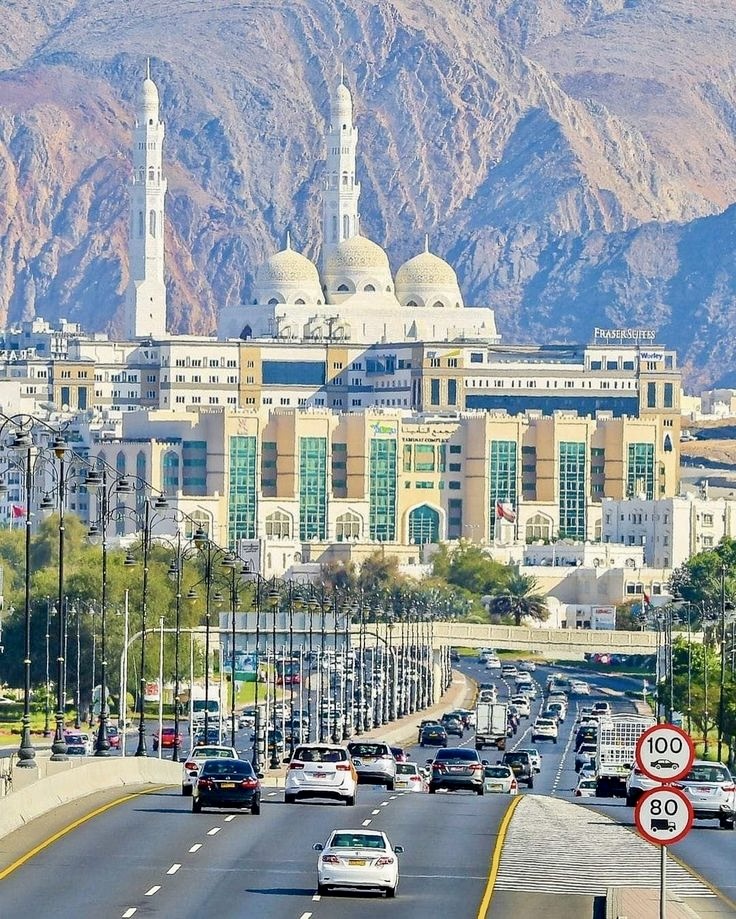
The first thing that strikes you about Oman is its profound serenity. Arriving in Muscat, the capital, you are greeted by a landscape unlike the glittering skyscrapers of its Gulf neighbors. Instead, Oman embraces you with its ochre-hued forts, low-rise whitewashed buildings, and mountains that seem to cradle the city. It’s a country that whispers its charm rather than shouts it, and as you explore, you realize Oman’s uniqueness lies in its unhurried blend of history, culture, and the gentle hospitality of its people.
Oman has been inhabited since prehistoric times, with archaeological evidence of early settlements dating back to the Stone Age. It was an important center for the production and trade of frankincense, a commodity highly prized in the ancient world. Oman’s strategic location at the mouth of the Persian Gulf established it as a significant maritime power. During the 17th and 18th centuries, the Omani Empire controlled parts of East Africa, including Zanzibar, as well as key trade routes in the Indian Ocean. Oman maintained a degree of autonomy throughout history, resisting colonization by European powers. Its ability to preserve sovereignty has contributed to its unique identity in the Arab world.
Omani architecture reflects a blend of Islamic, African, and indigenous styles. The country is home to many forts, castles, and watchtowers, such as the Bahla Fort, a UNESCO World Heritage Site. Omani food blends Arabian, African, and Indian influences, reflecting its role in ancient trade networks. Signature dishes include shuwa (slow-cooked lamb) and majboos (spiced rice with meat). Omani music and dance are deeply tied to its history and geography. Traditional genres like al-bar’ah and razha often feature drums and chanting. The art of silverwork, especially the crafting of khanjars (traditional curved daggers), is also emblematic of Omani culture.
Venturing into the interior, you find Nizwa, a city crowned by a fortress that once served as a stronghold of the Imamate. Standing atop the fort’s towers, you see the palm-fringed oases of date plantations, the lifeblood of this desert nation. Here, the centuries-old aflaj irrigation systems, recognized by UNESCO, snake through the earth, embodying the ingenuity of Oman’s ancestors. At the Friday livestock market in Nizwa, you see another side of Oman. Farmers, clad in traditional attire, auction goats and cattle with a practiced rhythm that has remained unchanged for generations. It’s a scene vibrant with life, blending practicality with the rituals of community.
Omanis are known for their hospitality and religious tolerance. While the majority practice Ibadism, an Islamic sect known for its moderation, Oman has significant Sunni and Shia populations, as well as expatriate communities from South Asia and East Africa.
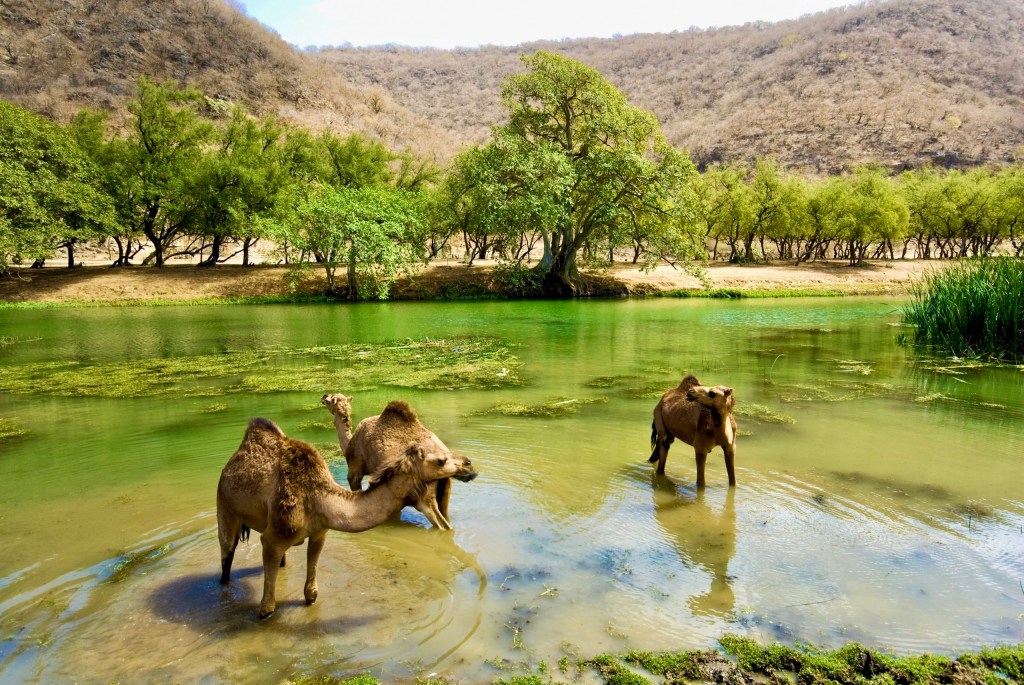
The country’s landscapes mirror its cultural diversity. In Dhofar, the southern province, the monsoon season transforms the arid desert into a lush, green paradise—a phenomenon locals call khareef. This region, home to the fabled Land of Frankincense, feels like a world apart, with mist-shrouded hills and a coastline where waves crash dramatically against cliffs.
Oman is unique in the Arab world for its diplomatic neutrality, and its dedication to preserving its identity amidst modernity. Sultan Qaboos, who ruled Oman for half a century, transformed the nation with thoughtful modernization, emphasizing education and infrastructure while retaining cultural authenticity.
As I reflect on my time in Oman, I am reminded not only of its serene landscapes and warm hospitality, but also of the enduring spirit of a country that remains steadfast in its identity, offering an experience unlike any other in the Arab world. Oman is not merely a place—it is a living testament to the harmony between the past and the present.
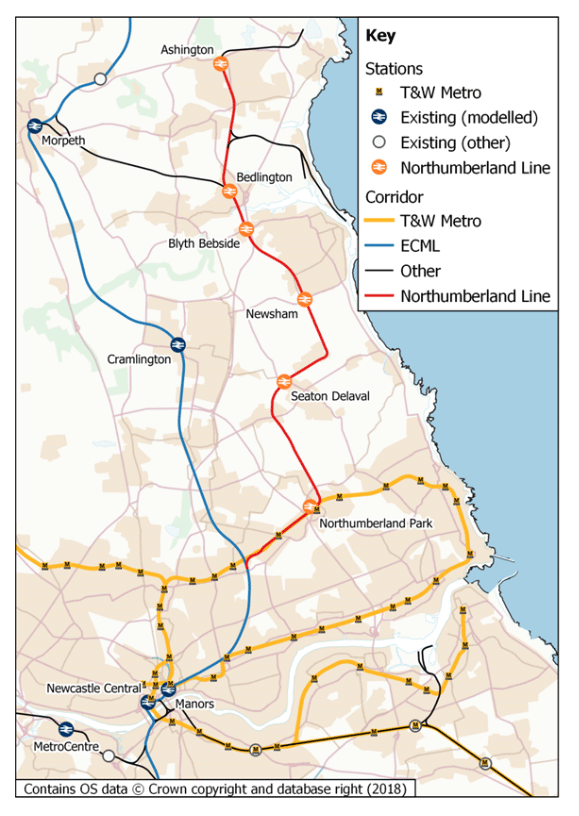
After more than 60 years, passenger services have returned to the Northumberland Line, reconnecting rural Northumberland to Newcastle and the wider UK rail network. Officially reopened on December 11, 2024, this project represents a significant milestone in North East England’s transport history, reversing the cuts of the Beeching era and reigniting the economic and social potential of the region.
A History Restored The Northumberland Line was once part of the Blyth and Tyne railway network, integral to the industrial heartland of the region. However, passenger services ceased in 1964 due to the sweeping Beeching cuts, which prioritized cost-saving over connectivity. For decades, residents of towns like Ashington and Bedlington, which were once mining hubs, were left reliant on buses and cars for transportation.
Last passenger train 1964
Calls to reopen the line grew over the years, driven by the decline of local industries and increasing traffic congestion. Recognizing the need for improved transport infrastructure, a coalition of local councils, regional transport bodies, and the UK government invested £298.5 million to make the project a reality.
Rebuilding the Connection The reopened line stretches 12 miles, linking six newly constructed or refurbished stations, including Ashington, Bedlington, Blyth Bebside, and Seaton Delaval, with Newcastle Central Station. Modern amenities, such as accessible platforms, onboard Wi-Fi, and spaces for bicycles and wheelchairs, make it a 21st-century solution tailored to today’s commuters.
Trains, operated by Northern Rail, run every 30 minutes during weekdays and hourly on evenings and Sundays. Notably, travel is priced affordably, with fares from just £1 for under-21s and a maximum of £3 for peak journeys between Ashington and Newcastle.
Integrated into the Wider Network The Northumberland Line is seamlessly integrated into the Tyne and Wear Metro via Newcastle Central Station, giving passengers direct access to destinations across Tyneside, Sunderland, and Newcastle International Airport. This connectivity makes it easier for commuters, students, and tourists to move between rural Northumberland and urban centers, reducing reliance on car travel and alleviating congestion on major roadways.
The historical Newcastle Central Station is a vital hub on the East Coast Main Line, linking Northumberland Line passengers to long-distance services to London, Edinburgh, and beyond. This integration with both regional and national networks transforms the reopened line into a bridge between local communities and broader economic opportunities.
A Catalyst for Regional Growth The project’s goals extend beyond transport. By improving access to education, employment, and leisure, it aims to stimulate economic development in towns along the line. For example, easier commutes to Newcastle could attract new businesses to Ashington and Blyth, while better transport links are expected to boost tourism in the region. The line also supports the region’s climate goals by encouraging a shift from cars to public transport, reducing congestion and emissions.
A Model for the Future The Northumberland Line reflects a growing recognition of the value of rail in reconnecting underserved communities. It is part of the UK government’s Restoring Your Railway initiative, which seeks to reverse decades of cuts and restore lines that once served as lifelines for rural and industrial areas.
First train of the new era
As the first passenger train in over six decades pulled into Ashington Station on opening day, it symbolized more than just the return of a rail service. It marked the renewal of hope, opportunity, and a commitment to sustainable transport. The Northumberland Line is not just a revival of a forgotten route—it is a promise of what thoughtful investment in public infrastructure can achieve..
I want to share my love of Northumbrian smallpipes with you. Yes, it is partly because I was born and raised in that part of the world, but I have always been a huge fan of the folk music and instruments of the British Isles. In my late teen/early twenties, I was a member of an electric folk band called ‘Pastime with Good Company’ playing a variety of the ‘fill’ instruments such as mandolin, crumhorn, and bodhran, along with the odd backing vocals. We were paid in beer for the first year or two, and it was just great fun seeing the same friendly faces at the Blackbird, the King’s Arms or a Working Men’s club.
The Northumbrian smallpipes are a traditional folk instrument from Northeast England with a rich and varied history. These small pipes are known for their sweet, melodious sound, and are distinguished by their closed-finger holes, allowing for a staccato playing style unique among bagpipes.
Dating back to the 17th century, their evolution was heavily influenced by various cultural and musical trends over the centuries. The modern version, with its distinctive closed chanter and keyed system, emerged in the early 19th century, thanks to innovations by pipemakers such as John Dunn and Robert Reid.
Throughout its history, the Northumbrian piping tradition has been shaped by many notable musicians. One key figure is Billy Pigg (1902-1968), renowned for his virtuosic playing and composition. Pigg’s influence on the Northumbrian piping repertoire is profound, with many of his compositions still widely played today. He was a central figure in reviving interest in the instrument during the mid-20th century, often performing at folk festivals and on radio broadcasts.
Another significant figure is Richard Butler, an old work colleague and friend, who served as the Duke of Northumberland’s Piper for four decades until his death in 2022. I remember watching and listening to Richard practice most lunchtimes, while I munched on my date and cream cheese stottie, drinking tea from one of the lab’s old enamel mugs. Butler was an esteemed piper and educator, known for his deep knowledge of the instrument and his contributions to Northumbrian music. He played at many high-profile events, including performances for British royalty, as well as producing educational materials for the pipes, ensuring the tradition’s continuation through his teaching and published works.
The history of the Northumbrian smallpipes is marked by the role of ducal piper at Alnwick Castle. This tradition dates back to the 18th century, with pipers playing at various ceremonial and public functions. Notable past pipers, before Richard, include William Green and Tom Clough, both of whom made significant contributions to the repertoire and technique of Northumbrian piping. Andrew Davison is the current official Piper to His Grace the Duke of Northumberland, and Chairman of the Northumbrian Pipers’ Society.
Kathryn Tickell, a modern-day ambassador of the Northumbrian smallpipes, has further elevated the instrument’s profile. Born in 1967, Tickell learned to play from her family and local pipers. Her career has seen her perform internationally, collaborate with various artists, and release numerous acclaimed albums. Tickell’s contributions have been pivotal in bringing the Northumbrian pipes to new audiences and ensuring their ongoing relevance in contemporary music. Her work with Sting and Jon Lord has always been favourites of mine, but it’s her ability to blend the pipes with more modern instruments and the human voice that pleases me the most.
The Northumbrian smallpipes continue to build their storied history, enriched by the contributions of many talented musicians including Ian Gelston, Alice Robinson, and Andrew Lawrenson. From the early pipers who developed the instrument to modern virtuosos like Kathryn Tickell, the tradition continues to thrive, bridging the past with the present. Richard Butler’s legacy exemplifies the dedication required to preserve and advance this unique musical tradition.
When I get a moment, I will update this post with links to some of my favourite pieces.
Last week, I discovered a new curry house in the Ottawa suburbs where the food is extraordinary with its unique blend of spices, and its offerings of Indo-Chinese cuisine. My experience at Rang De Indian on Terry Fox Dr reminded me so much of another curry-based phenomenon from my past.
Balti curries, a beloved British dish, trace their origins to Birmingham in the 1970s. Though the word balti comes from the Urdu word for “bucket” or “pot,” referring to the round, flat-bottomed steel dish in which the curry is traditionally cooked and served, it wasn’t directly imported from the Indian subcontinent. Instead, balti was born out of culinary innovation by Pakistani and Bangladeshi immigrants who combined their traditional cooking methods with British ingredients and tastes.
As an undergrad Earth Sciences student in Birmingham during the 1980s, going for “a balti” on a Saturday night after few beers might just have been the highlight of the month. The hallmark of a balti curry is its quick cooking time over high heat, often with marinated meats, vegetables, and a spice mix of cumin, coriander, turmeric, and ginger. Everything is prepared in the same dish, intensifying the flavors. What sets it apart even more is the way it’s eaten; served with naan rather than rice, making the experience more communal and tactile, as diners scoop up the rich sauce directly from the cooking pot with the bread.
During my time at Aston, Birmingham’s Balti Triangle was the epicenter of this culinary explosion. Famous restaurants like Adil’s, often credited as the first Balti house, Shababs, and Imran’s became go-to spots for anyone seeking this aromatic, flavorful dish. These restaurants were pioneers, turning balti into a British institution. The unpretentious, communal style of eating and the vibrant, spice-laden dishes quickly captured the hearts of locals and students alike.
While balti curries have spread far beyond the West Midlands, I have fond memories of a uniquely British take on curry, which continues to thrive in UK food culture. With this latest discovery, I now have yet another opportunity to explore the sub-continent cuisine, right here in Ottawa.



















 The Rowanwood Chronicles