Celebrating the joyful, the hand-made, and the far-flung: cider tastings, embroidery, travel stories, and creative experimentation. These posts are love letters to curiosity, beauty, and the sensory pleasures of slowing down and paying attention.
The past seven days brought wins on the pitch, hard lessons about infrastructure security, big sporting firsts and renewed climate focus. Below are five date-checked items from Saturday, September 20 to Friday, September 26, 2025, drawn from primary reporting so you can follow the facts and the context.
🏈 NFL to host regular-season games in Rio starting 2026
The NFL committed at least three regular-season games in Rio de Janeiro over a five-year span beginning in 2026, with the first expected at Maracanã Stadium. Why it matters: This is a major step in the NFL’s globalization strategy and signals serious investment in Brazil’s fan base.
🏟 Sold-out Twickenham cements the UK as a hub for women’s sport
The Women’s Rugby World Cup final at Twickenham drew more than 80,000 spectators, breaking attendance records and underlining the UK’s strength as a venue for top-tier women’s events. Why it matters: It shows that women’s sports can fill major stadiums and attract large audiences, changing the economics of media rights and sponsorship.
🖥 Cyberattack disrupts check-in systems at major European airports
A cyberattack on September 20 disrupted check-in and boarding systems at airports including Brussels, Berlin and London Heathrow, forcing manual processing and flight delays. Why it matters: The incident exposed vulnerabilities in travel infrastructure and the real costs of digital disruption in critical services.
🌍 New York prepares for a record Climate Week amid political headwinds
New York readied dozens of events, UN forums and activist actions for Climate Week starting late September, despite political tensions around environmental policy. Why it matters: Climate Week remains a key forum for mobilizing civic and corporate pressure on climate action and policy.
🚴 UCI Road World Championships held in Kigali, marking the first time in Africa
The UCI Road World Championships began on September 21 in Kigali, Rwanda, the first time the event was hosted on African soil and including new women’s U23 categories. Why it matters: Hosting the worlds in Africa reflects cycling’s geographic diversification and could accelerate development of talent and interest across the continent.
Closing thoughts: This week combined sporting milestones with urgent reminders about infrastructure resilience and the continuing centrality of climate diplomacy. Sport continues to expand its global footprint while attackers probe digital weak points and activists press for policy action. We will keep watching how these threads evolve and what they mean locally and globally.
In an era when artificial intelligence threatens to displace traditional journalism, a glaring contradiction has emerged: news organizations that block AI crawlers from accessing their content are increasingly using AI to generate the very content they deny to AI. This move not only undermines the values of transparency and fairness, but also exposes a troubling hypocrisy in the media’s engagement with AI.
Fortifying the Gates Against AI Many established news outlets have taken concrete steps to prevent AI from accessing their content. As of early 2024, over 88 percent of top news outlets, including The New York Times, The Washington Post, and The Guardian, were blocking AI data-collection bots such as OpenAI’s GPTBot via their robots.txt files. Echoing these moves, a Reuters Institute report found that nearly 80 percent of prominent U.S. news organizations blocked OpenAI’s crawlers by the end of 2023, while roughly 36 percent blocked Google’s AI crawler.
These restrictions are not limited to voluntary technical guidelines. Cloudflare has gone further, blocking known AI crawlers by default and offering publishers a “Pay Per Crawl” model, allowing access to their content only under specific licensing terms. The intent is clear: content creators want to retain control, demand compensation, and prevent unlicensed harvesting of their journalism.
But Then They Use AI To Generate Their Own Content While these publishers fortify their content against external AI exploitation, they increasingly turn to AI internally to produce articles, summaries, and other content. This shift has real consequences: jobs are being cut and AI-generated content is being used to replace human-created journalism. • Reach plc, publisher of Mirror, Express, and others, recently announced a restructuring that places 600 jobs at risk, including 321 editorial positions, as it pivots toward AI-driven formats like video and live content. • Business Insider CEO Barbara Peng confirmed that roughly 21 percent of the staff were laid off to offset declines in search traffic, while the company shifts resources toward AI-generated features such as automated audio briefings. • CNET faced backlash after it published numerous AI-generated stories under staff bylines, some containing factual errors. The fallout led to corrections and a renewed pushback from newsroom employees.
The Hypocrisy Unfolds This dissonance, blocking AI while deploying it, lies at the heart of the hypocrisy. On one hand, publishers argue for content sovereignty: preventing AI from freely ingesting and repurposing their work. On the other hand, they quietly harness AI for their own ends, often reducing staffing under the pretense of innovation or cost-cutting.
This creates a scenario in which: AI is denied access to public content, while in-house AI is trusted with producing public-facing content. Human labor is dismissed in the name of progress, even though AI is not prevented from tapping into the cultural and journalistic capital built over years. Control and compensation arguments are asserted to keep AI out, yet the same AI is deployed strategically to reshape newsroom economics.
This approach fails to reconcile the ethical tensions it embodies. If publishers truly value journalistic integrity, transparency, and compensation, then applying those principles selectively, accepting them only when convenient, is disingenuous. The news media’s simultaneous rejection and embrace of AI reflect a transactional, rather than principled, stance.
A Path Forward – or a Mirage? Some publishers are demanding fair licensing models, seeking to monetize AI access rather than simply deny it. The emergence of frameworks like the Really Simple Licensing (RSL) standard allows websites to specify terms, such as royalties or pay-per-inference charges, in their robots.txt, aiming for a more equitable exchange between AI firms and content creators.
Still, that measured approach contrasts sharply with using AI to cut costs internally, a strategy that further alienates journalists and erodes trust in media institutions.
Integrity or Expedience? The juxtaposition of content protection and AI deployment in newsrooms lays bare a cynical calculus: AI is off-limits when others use it, but eminently acceptable when it serves internal profit goals. This selective embrace erodes the moral foundation of journalistic institutions and raises urgent questions: • Can publishers reconcile the need for revenue with the ethical imperatives of transparency and fairness? • Will the rapid rise of AI content displace more journalists than it empowers? • And ultimately, can media institutions craft coherent policies that honor both their creators and the audience’s right to trustworthy news
Perhaps there is a path toward licensing frameworks and responsible AI use that aligns with journalistic values, but as long as the will to shift blame, “not us scraping, but us firing”, persists, the hypocrisy remains undeniable.
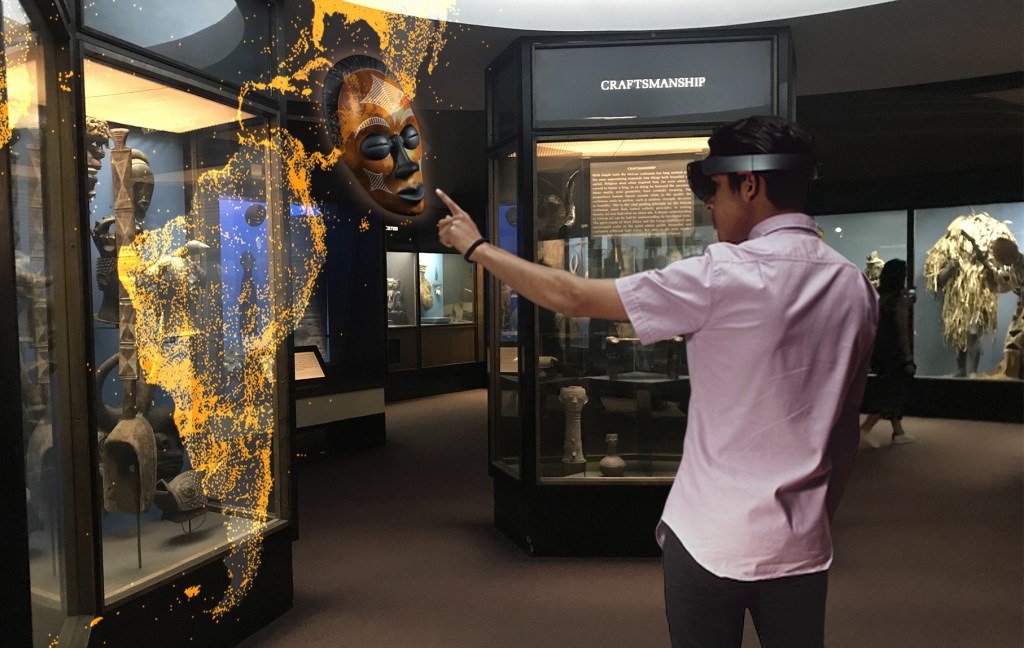
If the first step in the ethical evolution of museums is reckoning with the origins of their collections, the second must be reimagining how cultural treasures can be shared, studied, and celebrated without being hoarded. Fortunately, the 21st century offers tools our forebears could only dream of. Digital technology, particularly high-resolution 3D scanning, modeling, and immersive virtual platforms, is rewriting the rules of preservation and access. When used with cultural sensitivity and ethical intention, these tools allow us to honour ownership, facilitate repatriation, and still nourish a global commons of cultural knowledge.
Take 3D scanning: what was once an expensive novelty is now a powerful instrument of restitution and democratization. Museums can now create hyper-detailed digital replicas of artifacts, capturing every chisel mark, brushstroke, or weave of fabric. These models can be studied, shared online, integrated into augmented or virtual reality tools, or even 3D printed, all without requiring the physical artifact to remain on display in a distant capital city. This changes the equation. The original object can go home, back to the community or country from which it was taken, while its likeness continues to serve educational and scientific purposes worldwide.
There is a quiet but profound dignity in this digital compromise. It allows for the physical return of heritage to those to whom it belongs, not just legally, but spiritually and historically, while also supporting the broader mission of museums to educate and inspire. And in many cases, the digital version can do things the original never could. Scholars can examine its dimensions in microscopic detail. Teachers can beam it into classrooms. Visitors can manipulate it, interact with it, and even walk through the worlds from which it came.
Yet let’s not pretend digital tools are a panacea. A scan cannot replicate the scent of parchment, the weight of a carved idol, or the sacredness of a funerary mask imbued with ancestral memory. Creating these models demands money, time, and skilled technicians, resources that smaller institutions may lack. But for those who can muster them, the return is substantial: ethical legitimacy, global engagement, and future-proof access to cultural heritage.
Enter the virtual museum, a concept whose time has truly come. With internet access now ubiquitous in much of the world, online museum platforms are exploding. Whether it’s the British Museum’s virtual galleries or the immersive tours of the Louvre, these digital spaces offer a new kind of cultural experience: borderless, accessible, and unconstrained by bricks, mortar, or geopolitics. For those unable to travel, due to distance, disability, or cost, virtual museums are not just convenient; they are transformational.
These platforms do more than display scanned objects. They weave in video, sound, oral histories, and expert commentary. They let users “handle” objects virtually, walk through reconstructions of lost cities, or compare artworks from across time zones and traditions. And crucially, they offer a space where repatriated artifacts can remain visible to the world. A sculpture returned to Nigeria or a mask restored to a Pacific island doesn’t need to vanish from global consciousness. Its story, and its scanned image, can be co-curated with local voices, shared respectfully, and kept safe in the digital domain.
This co-curation is vital. A truly decolonized digital strategy doesn’t just upload images, it shares authority. It ensures that the descendants of artifact-makers help decide how those objects are described, displayed, and interpreted. Digital museums can become sites of collaboration, not appropriation; places where cultural equity is baked into the code.
And then there’s the sustainability argument. Virtual museums dramatically reduce the environmental costs of international exhibitions, staff travel, and artifact shipping. They offer resilience against disaster, a fire, flood, or war may destroy a gallery, but not its digital twin. In a world of increasing instability, that matters.
So where does this leave us? It leaves us at the edge of something hopeful. The combination of digital modeling and virtual museums does not replace the need for physical repatriation, it complements and strengthens it. It allows us to move beyond the binary of “ours” versus “theirs,” and into a more nuanced, shared stewardship of humanity’s treasures.
The museum of the future is not a fortress. It is a node in a network, a partner in a dialogue, and a bridge across histories. If museums can embrace this vision, ethical, inclusive, and digitally empowered, they can transform from institutions of possession to institutions of connection. And that, perhaps, is the most valuable exhibit of all.
Museums occupy a cherished yet complicated place in our cultural landscape. They are, at their best, sanctuaries of human achievement and memory; places where we marvel, learn, and connect. They are guardians of our collective stories, offering glimpses into lives, ideas, and aesthetics across time and geography. Yet increasingly, those guardianship roles are being scrutinized. In this post, the first of a two-part reflection, I want to explore how museums must reckon with their past in order to remain relevant, ethical, and inspirational institutions in a post-colonial world.
Modern museums serve multiple purposes. They are educators, preserving and interpreting both natural and human histories. Through exhibitions, talks, and online media, they help us understand not only what came before us, but also how those pasts continue to shape the present. They are also preservers of culture, entrusted with tangible and intangible heritage, from tools and textiles to oral traditions and sacred rites. Increasingly, they are also spaces of community engagement and social inclusion. The best of today’s museums are no longer content to speak about people; they strive to speak with them, creating room for conversations around identity, migration, environment, and justice. And let’s not forget their economic impact: museums draw visitors, support local artisans, and boost cultural tourism. Their value is not only educational, but civic and economic.
And yet, many of the very objects that give museums their gravitas are also at the heart of a profound ethical challenge. Too many were acquired in contexts of coercion, extraction, or outright theft during the height of imperial expansion. The British Museum’s possession of the Elgin Marbles or the Rosetta Stone, icons of antiquity mired in controversy, is not exceptional; it is emblematic. These artifacts, however artfully displayed, carry the invisible weight of colonial conquest. For many communities of origin, their removal constitutes not just a historical grievance, but an ongoing erasure of identity.
Western museums often point to their capacity to conserve, study, and exhibit these artifacts responsibly. They argue, sometimes sincerely, that global access to human history is a noble goal. But this defense rings hollow in a world where digital preservation is commonplace and where the moral imperative to return stolen cultural property grows louder each year. The question isn’t simply who can care for these artefacts, it’s who should.
Repatriation, the return of cultural property to its place of origin, has shifted from a theoretical debate to a global movement. France’s pledge to return looted artifacts to Benin, Germany’s restitution of the Benin Bronzes, and the Smithsonian’s newly developed ethical return policies are not fringe gestures. They are signals of a deeper cultural shift. Repatriation, after all, is not just about boxes being shipped back across oceans. It’s about truth-telling. It’s about nations acknowledging histories of violence and dispossession, and about institutions committing to restorative justice.
This new ethical landscape demands changes in practice. Provenance research, once an obscure archival task, must now be a public commitment. Shared custodianship models, where institutions collaborate with origin communities to co-curate, rotate, or jointly own artifacts, offer ways forward that don’t sacrifice conservation. And above all, museums must embrace the decolonization of their own internal cultures: rethinking who gets to tell the stories, who sits on the boards, and whose voices shape the narrative.
Museums can still be temples of learning and wonder. But for them to truly serve society in the 21st century, they must relinquish their roles as colonial trophy cases. The future lies in humility, transparency, and cooperation. In part two of this series, I’ll look at how new technologies and evolving curatorial philosophies are helping museums reinvent themselves for the world to come.
Back in December 2024, I wrote about the need for Ontario Cider to be labeled with its sugar content, and now with removal of interprovincial trade barriers there is a more urgent requirement for this change to be implemented nationwide.
As Canada steadily dismantles its long-standing patchwork of interprovincial trade barriers, from wine to eggs to trucking regulations, we must also address the smaller, subtler obstacles to open commerce and informed consumer choice. One such barrier, hidden in plain sight, is the inconsistent requirement for sugar labelling in Canadian craft cider.
Currently, cider producers are not required to list residual sugar content on their bottles or cans: not in Ontario, not in Quebec, not in B.C., or anywhere else in Canada. This lack of transparency undermines both public health goals and consumer trust. It also creates an uneven playing field for craft producers committed to lower-sugar products who must compete in a marketplace where consumers are left guessing.
Sugar Content: A Consumer Right Residual sugar in cider can vary wildly, from dry, brut-style ciders with under 5 g/L to sweet dessert ciders with over 60 g/L. Yet without disclosure, consumers are flying blind. For diabetics, keto adherents, or simply those who want to monitor their sugar intake, this is more than a minor inconvenience, it’s a barrier to safe and informed consumption.
By contrast, wine labels often include sweetness descriptors like “dry” or “off-dry,” and many producers voluntarily publish grams per litre. Even big-brand soda discloses exact sugar content, so why are fermented apple products exempt?
A Barrier to Fair Trade The newly energized national push to eliminate interprovincial trade barriers, backed by premiers and the federal government alike, is about more than just moving goods freely. It’s about creating a common regulatory language so producers in Nova Scotia can sell into Alberta without retooling their labels or marketing. If one province (say, Ontario) were to mandate sugar content on cider labels and others did not, that becomes a de facto barrier.
If Health Canada or the Canadian Food Inspection Agency mandated a national requirement for sugar content in grams per litre on all cider products, we’d level the playing field and remove an ambiguity that hinders cross-provincial commerce. More importantly, we’d be empowering Canadian consumers to make more informed decisions in a market that’s become increasingly diverse, from bone-dry craft ciders to syrupy-sweet fruit blends.
The Health Argument Is National Too According to Statistics Canada, the average Canadian consumes about 89 grams of sugar per day, well above the World Health Organization’s recommended maximum of 50 grams. Alcoholic beverages, especially “alcopops” and flavoured ciders, are a hidden contributor. The federal government has already moved to require nutrition labels on prepackaged foods and some alcohol categories; cider should be next.
A Simple, Feasible Fix Requiring sugar content on cider labels is not technically difficult. The metric, grams per litre, is already measured during fermentation and used internally by cideries to define style and taste profile. A national labelling requirement would cost little to implement and make a meaningful difference to consumers.
One Label, One Standard As Canada moves toward true internal free trade, let’s make sure consumer transparency travels alongside it. Listing sugar content on cider labels isn’t just good policy for public health, it’s a smart, simple step toward harmonizing our food and drink economy. When it comes to cider, it’s time Canadians knew exactly what they’re drinking, no matter where it’s made.
On a personal note, my interest goes beyond the health issue, it’s that I much prefer ciders with less than 5 g/L and that currently just because a can or bottle says “Dry” doesn’t mean the cider is actually dry.
Volunteerism has long been woven into the fabric of Canadian society. From informal acts of neighbourly support to highly structured programs run through non-profits and public institutions, the practice of giving time and effort without monetary reward has played a vital role in community building, social cohesion, and service delivery. Yet, as Canada changes, demographically, economically, and technologically, so too does the nature of volunteering. In particular, the contrast between rural and urban participation in volunteerism highlights both opportunity and strain within the sector.
A Historical Perspective: State Support and Civic Energy Canada’s federal government has historically recognized the value of volunteerism and made substantial efforts to coordinate and support the sector. The most significant of these efforts came in the early 2000s with the Voluntary Sector Initiative (VSI), a groundbreaking partnership between the federal government and the voluntary sector. It aimed to improve relations, support innovation, and enhance governance in the non-profit field. Within it, the Canada Volunteerism Initiative (CVI) funded research, capacity-building, and public engagement campaigns. Although the VSI ended in 2005, it laid important groundwork by formalizing the relationship between civil society organizations and the federal state.
Departments such as Human Resources Development Canada (HRDC), later restructured into Employment and Social Development Canada (ESDC), have overseen volunteer policy and programming. Recent federal initiatives, like the Canada Service Corps (launched in 2018), focus on youth engagement in service projects and offer microgrants to promote local volunteering. The New Horizons for Seniors Program also supports older Canadians’ participation in community volunteerism. While there is no standalone federal department solely dedicated to volunteerism, it remains embedded within broader social development frameworks.
Recent Trends: Decline and Resilience Data from the late 2010s and early 2020s reveal both strengths and stresses within the Canadian volunteer ecosystem. As of 2018, over 13 million Canadians, 41% of the population, were engaged in formal volunteerism, contributing a staggering 1.7 billion hours annually. Yet post-pandemic surveys show troubling signs: 55% to 65% of charities report difficulty recruiting and retaining volunteers, with many forced to cut programs due to shortages.
Notably, volunteer patterns are shifting. Traditional, long-term roles are declining in favour of more episodic or informal volunteering, especially among youth. Factors such as time constraints, economic insecurity, digital preferences, and burnout have reshaped how Canadians approach community service. While organizations like Volunteer Canada continue to offer leadership, training, and research, there is growing urgency to adapt volunteer roles to new realities; flexible schedules, virtual engagement, and better inclusion of marginalized groups.
The Rural – Urban Divide: Participation and Capacity Perhaps the most persistent, and revealing, dimension of volunteerism in Canada is the divide between rural and urban communities. Historically, rural Canadians have had higher participation rates in formal volunteering. Data from the late 1990s and early 2000s show that 37% of rural residentsvolunteered, compared with 29% in urban centres. Among those with post-secondary education, rural volunteers also outpaced urban peers: 63% of rural university grads volunteered versus 42% in urban areas. Similarly, 67% of college-educated rural residents participated in community groups, compared to 55% in cities.
This elevated participation reflects the central role that volunteering plays in small towns and rural communities, where fewer formal services exist, and much of the civic infrastructure, libraries, community centres, fire services, food banks, is volunteer-run. Yet this strength is also a vulnerability. In recent years, many rural communities have reported a sharp decline in volunteer numbers. A 2025 report from rural Alberta described the “plummeting” of local volunteers, warning that essential community functions were under threat.
The rural sector also faces structural challenges. Of Canada’s ~136,000 non-profit organizations in 2022, only 21.3% were located in rural or small-town settings, compared to 78.7% in urban areas. This limits both the reach and coordination capacity of the rural volunteer system, even as demand for services grows. Moreover, rural organizations often lack the staff or infrastructure to recruit and manage volunteers effectively. Data from Volunteer Toronto’s 2025 report confirms that non-profits with dedicated volunteer managers are 16 times more successful in engaging people, resources many rural groups simply don’t have.
The Broader Role of Volunteerism: Health, Identity, and Belonging Beyond economics and logistics, volunteerism holds deeper meaning in Canadian life. Research has long shown strong links between volunteering and well-being. Volunteers report lower stress levels, better mental health, and a greater sense of purpose. For newcomers, volunteering offers social integration. For youth, it builds skills and confidence. For seniors, it combats isolation.
Moreover, volunteering shapes Canadian identity. The nation’s reputation for kindness and civic responsibility is deeply connected to the widespread assumption that people help each other, often through organized groups. Volunteerism is one of the few activities that bridges socio-economic, linguistic, and cultural divides.
A Call for Renewal Volunteerism in Canada is both a legacy and a living system. While the numbers remain impressive, the sector is showing signs of strain, especially in rural areas and among long-time service organizations. A national renewal is underway: a National Volunteer Action Strategy is being developed with support from the federal government, aiming to modernize the sector and reverse declining trends.
As Canada continues to evolve, so too must its approach to volunteerism. This means investing in recruitment, training, and support, especially where capacity is low. It means listening to the needs of volunteers themselves and creating flexible, inclusive ways to contribute. Most of all, it means recognizing volunteerism not just as charity or goodwill, but as vital infrastructure in the Canadian democratic and social landscape.
Sources • Volunteer Canada (2023–2024 reports): https://volunteer.ca • Statistics Canada: General Social Survey and 2018 formal volunteering stats • Canada Service Corps and ESDC evaluation documents (2023–2024) • Volunteer Toronto Snapshot (2025): https://www.volunteertoronto.ca • Senate report “Catalyst for Change” (2023) • Rural Alberta volunteer crisis coverage: https://rdnewsnow.com
The Duddo Five Stones, nestled atop a gentle rise in north Northumberland, are a compelling testament to prehistoric endeavours in the British Isles. Erected during the Early Bronze Age, roughly 4,000 years ago, these stones comprise five extant monoliths, though archaeological surveys from the 1890s revealed empty sockets for two additional stones and confirmed an original complement of seven. Inhabitants of that period fashioned these curious markers from local soft sandstone, now distinguished by deep vertical grooves, so pronounced that the stones are sometimes spoken of as the “Singing Stones,” a nod to the haunting whistles that breeze through their fissures.
Despite their modest size compared to the monumental rings of Wiltshire, the Duddo Stones rise to heights between 1.5 m and 2.3 m and form a circle approximately 10 m in diameter. The largest stone, over two metres tall, has been likened to “a clenched fist rising menacingly out of the rough turf,” while others resemble giant decaying teeth. Weathered both by time and legend, the stones bear cup-marks and grooves that spark speculation, were these carved by ritual, or simply products of centuries of erosion?
In the heart of the circle lies evidence of its most solemn function: a central pit, excavated in the late 19th century, that contained charcoal and cremated human bone, suggesting funerary or ritual use. A later investigation unearthed fragments of pottery, perhaps a cremation vessel, further hinting at ancient rites performed upon this exposed Northumbrian hill. Such findings align with the broader traditions of Bronze Age Britain, where stones were placed to commemorate the dead, mark sacred boundaries, and orient events within a celestial calendar.
Indeed, solar and lunar alignments are often proposed for stone circles. In Duddo’s case, the stones occupy an eminence offering sweeping views of the Cheviot Hills to the south and Lammermuir Hills to the north, and may well align with midwinter sunrises or solstitial events. This deliberate positioning underlines a shared cosmological purpose with contemporaneous sites such as Stonehenge and Avebury, where built environments reflect ancient understandings of the cosmos.
Any comparison to Stonehenge or Avebury must acknowledge scale. Those iconic sites, part of a UNESCO World Heritage complex, were grand ceremonial landscapes, featuring massive sarsen lintels, henges, and extensive rituals spanning centuries. Yet Duddo’s significance should not be measured in tonnage alone. The world of early Bronze Age Northumberland had its own spiritual horizons. Stone placement here demonstrates ingenuity in local engineering, community organisation, and a relationship with the landscape that mirrored the aims of their southern counterparts.
Moreover, Duddo may be Northumberland’s best‑preserved stone circle, admired by archaeologists for its dramatic hill‑top setting and intact character. Accessibility is simple: a short permissive path from the B6354 guides visitors to this serene site, free to all, but weather and muddy fields. The site evokes reverence and reflection, a place where wind and sky merge timelessly with carved stone.
In a cultural landscape often dominated by southern giants, the Duddo Five Stones deserve equal attention. They speak of regional expressions of Bronze Age spirituality, mortuary practice, and astronomical concern. While lacking the architectural complexity of Stonehenge or the vast scale of Avebury, they nonetheless resonate with ancestral agency, standing quietly yet powerfully within a broader tapestry of prehistoric monumentality. To relegate Duddo to a mere footnote is to impoverish the understanding of Britain’s Bronze Age mosaic. It is no lesser these many millennia later, just more intimate, more quietly potent, and every bit as integral to prehistoric Britain’s story.
Here’s the latest edition of “Five Things We Learned This Week” for June 21–27, 2025, featuring fresh global developments—no repeats, all within the seven-day window:
• Between June 19–22, a severe weather event delivered 26+ tornadoes and hurricane-force derechos across the northern U.S. and southern Canada .
• The EF3 tornado near Enderlin, North Dakota, was the deadliest in the state since 1978, claiming three lives; overall, seven fatalities and numerous injuries were confirmed .
• Canadian provinces, including Saskatchewan, recorded at least eight additional tornado touchdowns during the event .
⸻
🔭 2. Vera C. Rubin Observatory Unveils First “First Light” Cosmic Images
• On June 23, the observatory released its inaugural ultra-high-resolution snapshot capturing the Virgo Cluster, Trifid and Lagoon Nebulae, and about 2,000 new asteroids .
• This marks a major milestone in Earth’s most powerful digital telescope operations, offering a transformative look at deep-space science ().
⸻
🛰️ 3. ESA’s Solar Orbiter Reveals the Sun’s South Pole
• On June 11, images from the European Space Agency’s Solar Orbiter provided the first-ever detailed view of the Sun’s south pole .
• The data sheds new light on solar magnetic dynamics and the mechanics of the solar cycle—opening avenues for better space weather forecasts .
⸻
🤖 4. DeepMind’s AlphaGenome Accelerates DNA Sequencing
• Announced this week, AlphaGenome—an AI model by DeepMind—can analyze million-base-pair DNA sequences with single-base resolution, significantly advancing genetic diagnostics .
• This leap forward holds huge potential for research into genetic disorders like spinal muscular atrophy .
⸻
🎤 5. Glastonbury Festival Rocked by Historic Lineup Kicking Off June 25
• The Glastonbury Festival began on June 25, headlined by The 1975, Neil Young, and Olivia Rodrigo, with over 90 hours of coverage via BBC TV, radio, and iPlayer .
• The festival preview included broadcasts of Pyramid Stage sets in UHD, accessibility services, and even children’s content on CBeebies .
⸻
Each of these highlights occurred within June 21–27, 2025, and are completely new to our weekly summary; spanning weather, astronomy, solar science, AI genomics, and music festival culture. Would you like this week’s story links or deeper commentary?
As my regular readers know, I am a big supporter of the Canadian cooperative movement, and so I have to applaud this recent change in ownership bringing MEC back to Canada.
MEC’s return to Canadian ownership isn’t just good news, it feels like a homecoming. For many of us who grew up buying our first tent, hiking boots, or pannier bags from Mountain Equipment Co-Op, the brand has always stood for more than just outdoor gear. It stood for trust, community, and a kind of quiet pride in doing things the Canadian way: cooperatively, responsibly, and with a clear eye on the land we all share.
Founded in 1971 by a group of climbers in British Columbia, MEC was created not to chase profits, but to help people get outside, affordably and together. It was a co-op, meaning it was owned by its members. If you paid the $5 lifetime membership fee, you weren’t just a customer, you were a part-owner. That sense of shared purpose ran deep. MEC was where we went not just to buy things, but to connect with others who cared about the same things we did: nature, community, and getting out into the wild with the right gear and the right mindset.
Yet over time, something shifted. The company grew fast. It opened more stores, expanded into new markets, and lost touch with its co-op roots. Eventually, the leadership made decisions that put growth and profit ahead of members’ voices. When MEC ran into financial trouble in 2020, the board quietly sold the company to a U.S. private equity firm, Kingswood Capital, without consulting the members. Just like that, a Canadian co-op was turned into a foreign-owned chain. People were furious, and rightfully so. Over 100,000 Canadians signed petitions demanding accountability, but by then, the deal was done.
That’s why it matters so much that MEC is back under Canadian ownership. In May 2024, a group of investors based in Vancouver bought it back. Their promise? To return the company to its values, more local partnerships, more transparency, more of the community spirit that made MEC special in the first place. They’re not promising to turn it back into a full co-op, but they are saying they’ll listen more, invest in Canada, and act with the kind of care that’s been missing for years.
This shift isn’t just about ownership. It’s about trust. It’s about remembering that good business doesn’t have to mean cutting corners or selling out. It’s about doing the right thing, even if it’s harder. MEC still has a long way to go to rebuild what was lost, but for many of us, knowing it’s Canadian again is enough to make us want to give it another chance.
What this shows is that Canadians still care deeply about how companies behave. We want businesses that reflect our values, not just our wallets, and when something we love is taken away, we fight for it. MEC was built by us. It should never have been sold without us, and now that it’s back, we can start climbing again – together.
Thinking about how the Trump administration targeted Quebec, it’s language and cultural protection laws as a trade issue, makes me wonder about other unique cultures to be found in North America, and how they must be protected and supported so that can thrive.
Louisiana is one of the most culturally and politically diverse states in the U.S., shaped by centuries of colonization, migration, and social upheaval. Its identity is a fusion of Indigenous heritage, French and Spanish rule, African influence, and waves of immigrant communities, each leaving an indelible mark on the state’s music, food, language, and traditions. While Louisiana’s reputation often conjures images of jazz-filled streets and spicy Creole dishes, its cultural complexity goes far beyond the postcard version. The same holds true for its politics, which remain as layered and contradictory as the people who call it home.
At the heart of Louisiana’s cultural richness is its history of colonization. Long before Europeans arrived, Indigenous tribes such as the Houma, Chitimacha, and Caddo lived along the state’s bayous and forests, cultivating their own traditions that persist to this day. The arrival of French explorers in the late 17th century set the stage for Louisiana’s deep Francophone roots, later reinforced by Spanish rule and the eventual return to French governance before Napoleon sold the territory to the United States. Unlike other parts of the American South, Louisiana retained much of its European colonial heritage, from its legal system, still based on Napoleonic civil law, to the Catholicism that remains a cultural and religious cornerstone, particularly in the southern part of the state.
The distinct identities of Louisiana’s Creole and Cajun populations further enrich its cultural landscape. The term “Creole” originally referred to people of European descent born in the colony, but over time it expanded to include people of mixed French, Spanish, African, and Indigenous ancestry. Creole culture is inseparable from the rhythms of zydeco music, the spice-laden flavors of gumbo and étouffée, and the linguistic blend of French, Spanish, and West African dialects that still echo in Louisiana Creole speech. Cajuns, on the other hand, descend from Acadian exiles forced out of Canada by the British in the 18th century. They settled in the swamps and prairies of south Louisiana, where they developed a fiercely independent identity rooted in their own dialect of French, fiddle-driven music, and a cuisine that, while similar to Creole food, leans more heavily on rustic ingredients like smoked sausage and crawfish.
The African influence on Louisiana’s culture is profound. Under both French and Spanish rule, enslaved Africans were a critical part of Louisiana’s economy and society, bringing agricultural expertise and spiritual traditions that persist in the region’s religious practices, including voodoo. Unlike in much of the American South, enslaved people in Louisiana had a higher rate of manumission under Spanish rule, leading to a large and influential population of free people of color who contributed to the state’s art, music, and business world. This legacy is most famously seen in New Orleans, where jazz was born in the late 19th century, blending African rhythms, blues structures, and European brass instrumentation into what would become America’s greatest musical export.
Beyond its historic communities, Louisiana continues to be a place of immigration and cultural blending. In the aftermath of the Vietnam War, thousands of Vietnamese refugees settled along the Gulf Coast, where they became an integral part of the seafood industry and introduced new flavors and traditions to the region. Today, their influence is visible in everything from Vietnamese-Cajun crawfish boils to the bustling pho restaurants of New Orleans and Baton Rouge. Other immigrant groups, including Hondurans, Italians, and Croatians, have also left their mark, particularly in Louisiana’s fishing and food industries.
Just as Louisiana’s culture defies easy categorization, so does its politics. Historically, the state was a Democratic stronghold, shaped by its Catholic, agrarian roots, and the populist legacy of figures like Huey Long, who built his career on promises of wealth redistribution, infrastructure development, and defiance of the political elite. Long’s legacy remains deeply embedded in Louisiana’s political DNA, with many politicians still invoking his populist rhetoric even as the state has shifted toward Republican dominance.
Today, Louisiana’s political landscape is sharply divided by geography and demographics. Urban centers like New Orleans and Baton Rouge lean liberal, with strong Black and progressive voting blocs advocating for criminal justice reform, environmental protections, and expanded social programs. In contrast, rural Louisiana, particularly in the north, aligns more closely with the Deep South—socially conservative, evangelical Protestant, and deeply Republican. The Acadiana region, home to the Cajun population, has long maintained a distinct political identity. While once a bastion of working-class Democratic politics, it has increasingly moved to the right, particularly on social issues, though economic populism remains a common theme in local elections.
Louisiana’s racial history continues to shape its political discourse in ways that are often contentious. The long struggle for civil rights, from the desegregation battles of the 1960s to ongoing debates over voting rights and police reform, remains a central issue. Meanwhile, the state’s economic reliance on oil, gas, and fishing means that environmental politics are often fraught, as coastal communities grapple with rising seas and frequent hurricanes while also depending on industries that contribute to these very problems.
Perhaps the most defining feature of Louisiana politics is its enduring embrace of colorful, often scandal-ridden leadership. Corruption has long been a fact of life in the state’s political world, with governors, legislators, and city officials frequently making headlines for bribery, fraud, and backroom deals. Yet, rather than diminish voter engagement, this history has fostered a kind of cynical but amused pragmatism among Louisiana’s residents. People expect their politicians to be flawed, but they also expect them to deliver; whether that means rebuilding roads, cutting through bureaucratic red tape, or simply keeping the good times rolling.
In many ways, Louisiana is a place of contradictions. It is at once fiercely traditional and wildly innovative, politically conservative yet home to some of the most progressive cultural movements in the country. It reveres its past but is constantly reshaped by new influences. This complexity is what makes Louisiana so compelling; a state where history is always present, culture is never static, and politics, for better or worse, is never boring.