Celebrating the joyful, the hand-made, and the far-flung: cider tastings, embroidery, travel stories, and creative experimentation. These posts are love letters to curiosity, beauty, and the sensory pleasures of slowing down and paying attention.
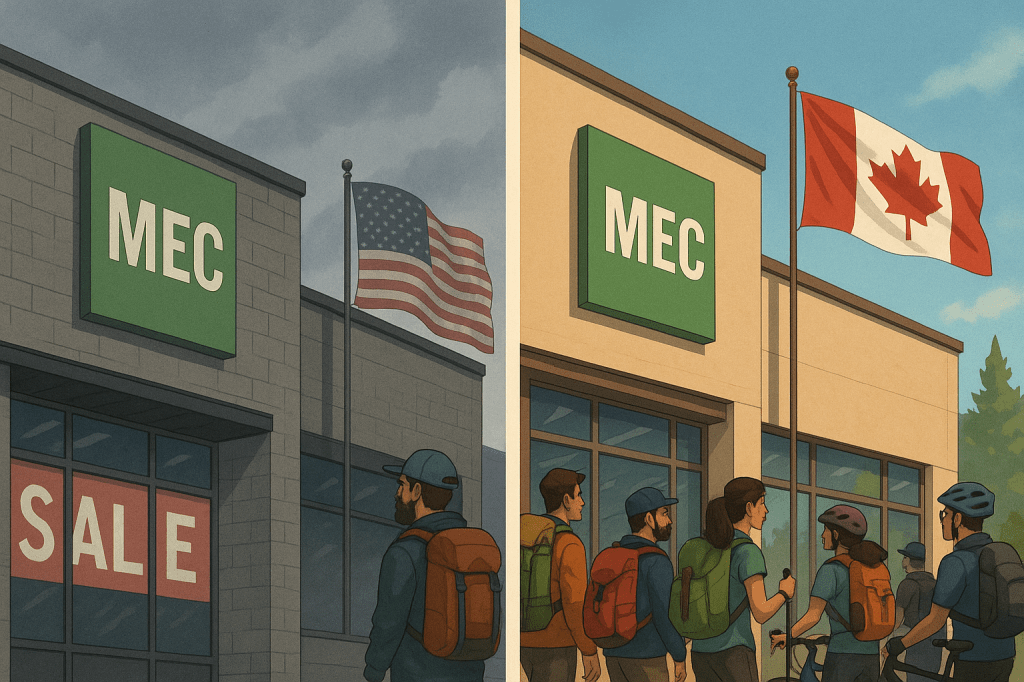
As my regular readers know, I am a big supporter of the Canadian cooperative movement, and so I have to applaud this recent change in ownership bringing MEC back to Canada.
MEC’s return to Canadian ownership isn’t just good news, it feels like a homecoming. For many of us who grew up buying our first tent, hiking boots, or pannier bags from Mountain Equipment Co-Op, the brand has always stood for more than just outdoor gear. It stood for trust, community, and a kind of quiet pride in doing things the Canadian way: cooperatively, responsibly, and with a clear eye on the land we all share.
Founded in 1971 by a group of climbers in British Columbia, MEC was created not to chase profits, but to help people get outside, affordably and together. It was a co-op, meaning it was owned by its members. If you paid the $5 lifetime membership fee, you weren’t just a customer, you were a part-owner. That sense of shared purpose ran deep. MEC was where we went not just to buy things, but to connect with others who cared about the same things we did: nature, community, and getting out into the wild with the right gear and the right mindset.
Yet over time, something shifted. The company grew fast. It opened more stores, expanded into new markets, and lost touch with its co-op roots. Eventually, the leadership made decisions that put growth and profit ahead of members’ voices. When MEC ran into financial trouble in 2020, the board quietly sold the company to a U.S. private equity firm, Kingswood Capital, without consulting the members. Just like that, a Canadian co-op was turned into a foreign-owned chain. People were furious, and rightfully so. Over 100,000 Canadians signed petitions demanding accountability, but by then, the deal was done.
That’s why it matters so much that MEC is back under Canadian ownership. In May 2024, a group of investors based in Vancouver bought it back. Their promise? To return the company to its values, more local partnerships, more transparency, more of the community spirit that made MEC special in the first place. They’re not promising to turn it back into a full co-op, but they are saying they’ll listen more, invest in Canada, and act with the kind of care that’s been missing for years.
This shift isn’t just about ownership. It’s about trust. It’s about remembering that good business doesn’t have to mean cutting corners or selling out. It’s about doing the right thing, even if it’s harder. MEC still has a long way to go to rebuild what was lost, but for many of us, knowing it’s Canadian again is enough to make us want to give it another chance.
What this shows is that Canadians still care deeply about how companies behave. We want businesses that reflect our values, not just our wallets, and when something we love is taken away, we fight for it. MEC was built by us. It should never have been sold without us, and now that it’s back, we can start climbing again – together.
Thinking about how the Trump administration targeted Quebec, it’s language and cultural protection laws as a trade issue, makes me wonder about other unique cultures to be found in North America, and how they must be protected and supported so that can thrive.
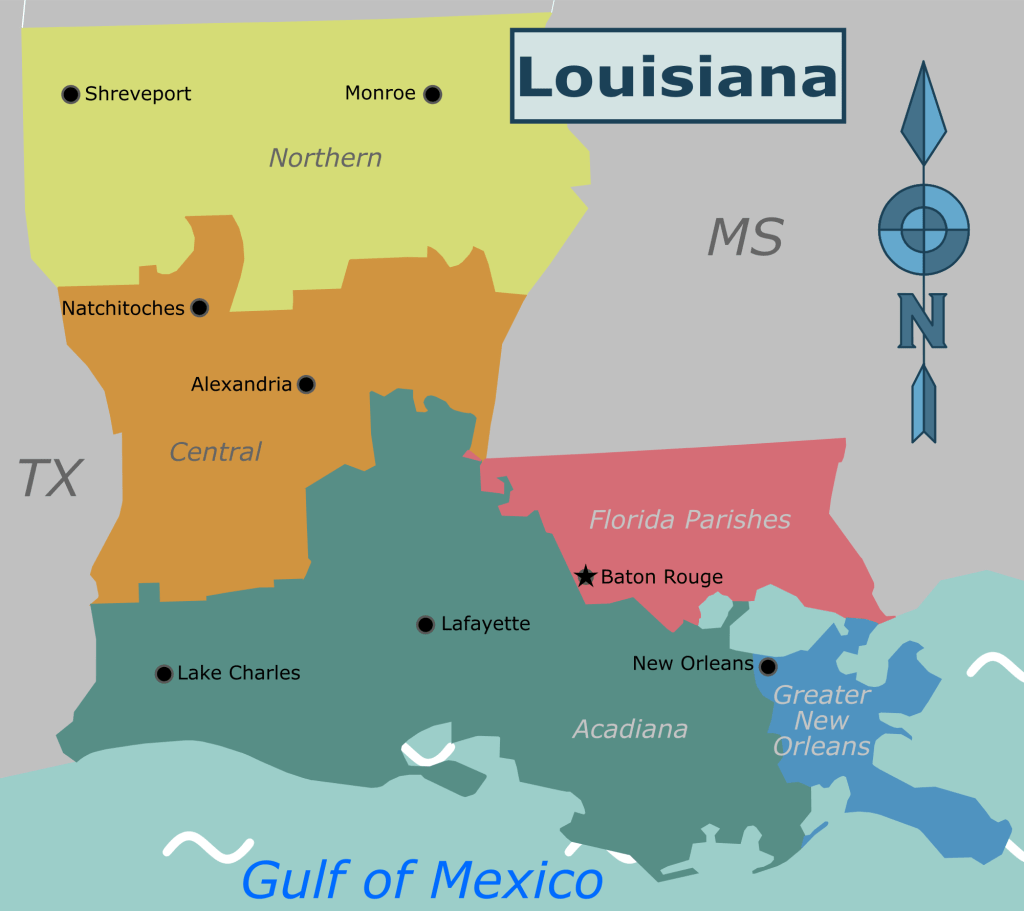
Louisiana is one of the most culturally and politically diverse states in the U.S., shaped by centuries of colonization, migration, and social upheaval. Its identity is a fusion of Indigenous heritage, French and Spanish rule, African influence, and waves of immigrant communities, each leaving an indelible mark on the state’s music, food, language, and traditions. While Louisiana’s reputation often conjures images of jazz-filled streets and spicy Creole dishes, its cultural complexity goes far beyond the postcard version. The same holds true for its politics, which remain as layered and contradictory as the people who call it home.
At the heart of Louisiana’s cultural richness is its history of colonization. Long before Europeans arrived, Indigenous tribes such as the Houma, Chitimacha, and Caddo lived along the state’s bayous and forests, cultivating their own traditions that persist to this day. The arrival of French explorers in the late 17th century set the stage for Louisiana’s deep Francophone roots, later reinforced by Spanish rule and the eventual return to French governance before Napoleon sold the territory to the United States. Unlike other parts of the American South, Louisiana retained much of its European colonial heritage, from its legal system, still based on Napoleonic civil law, to the Catholicism that remains a cultural and religious cornerstone, particularly in the southern part of the state.
The distinct identities of Louisiana’s Creole and Cajun populations further enrich its cultural landscape. The term “Creole” originally referred to people of European descent born in the colony, but over time it expanded to include people of mixed French, Spanish, African, and Indigenous ancestry. Creole culture is inseparable from the rhythms of zydeco music, the spice-laden flavors of gumbo and étouffée, and the linguistic blend of French, Spanish, and West African dialects that still echo in Louisiana Creole speech. Cajuns, on the other hand, descend from Acadian exiles forced out of Canada by the British in the 18th century. They settled in the swamps and prairies of south Louisiana, where they developed a fiercely independent identity rooted in their own dialect of French, fiddle-driven music, and a cuisine that, while similar to Creole food, leans more heavily on rustic ingredients like smoked sausage and crawfish.
The African influence on Louisiana’s culture is profound. Under both French and Spanish rule, enslaved Africans were a critical part of Louisiana’s economy and society, bringing agricultural expertise and spiritual traditions that persist in the region’s religious practices, including voodoo. Unlike in much of the American South, enslaved people in Louisiana had a higher rate of manumission under Spanish rule, leading to a large and influential population of free people of color who contributed to the state’s art, music, and business world. This legacy is most famously seen in New Orleans, where jazz was born in the late 19th century, blending African rhythms, blues structures, and European brass instrumentation into what would become America’s greatest musical export.
Beyond its historic communities, Louisiana continues to be a place of immigration and cultural blending. In the aftermath of the Vietnam War, thousands of Vietnamese refugees settled along the Gulf Coast, where they became an integral part of the seafood industry and introduced new flavors and traditions to the region. Today, their influence is visible in everything from Vietnamese-Cajun crawfish boils to the bustling pho restaurants of New Orleans and Baton Rouge. Other immigrant groups, including Hondurans, Italians, and Croatians, have also left their mark, particularly in Louisiana’s fishing and food industries.
Just as Louisiana’s culture defies easy categorization, so does its politics. Historically, the state was a Democratic stronghold, shaped by its Catholic, agrarian roots, and the populist legacy of figures like Huey Long, who built his career on promises of wealth redistribution, infrastructure development, and defiance of the political elite. Long’s legacy remains deeply embedded in Louisiana’s political DNA, with many politicians still invoking his populist rhetoric even as the state has shifted toward Republican dominance.
Today, Louisiana’s political landscape is sharply divided by geography and demographics. Urban centers like New Orleans and Baton Rouge lean liberal, with strong Black and progressive voting blocs advocating for criminal justice reform, environmental protections, and expanded social programs. In contrast, rural Louisiana, particularly in the north, aligns more closely with the Deep South—socially conservative, evangelical Protestant, and deeply Republican. The Acadiana region, home to the Cajun population, has long maintained a distinct political identity. While once a bastion of working-class Democratic politics, it has increasingly moved to the right, particularly on social issues, though economic populism remains a common theme in local elections.
Louisiana’s racial history continues to shape its political discourse in ways that are often contentious. The long struggle for civil rights, from the desegregation battles of the 1960s to ongoing debates over voting rights and police reform, remains a central issue. Meanwhile, the state’s economic reliance on oil, gas, and fishing means that environmental politics are often fraught, as coastal communities grapple with rising seas and frequent hurricanes while also depending on industries that contribute to these very problems.
Perhaps the most defining feature of Louisiana politics is its enduring embrace of colorful, often scandal-ridden leadership. Corruption has long been a fact of life in the state’s political world, with governors, legislators, and city officials frequently making headlines for bribery, fraud, and backroom deals. Yet, rather than diminish voter engagement, this history has fostered a kind of cynical but amused pragmatism among Louisiana’s residents. People expect their politicians to be flawed, but they also expect them to deliver; whether that means rebuilding roads, cutting through bureaucratic red tape, or simply keeping the good times rolling.
In many ways, Louisiana is a place of contradictions. It is at once fiercely traditional and wildly innovative, politically conservative yet home to some of the most progressive cultural movements in the country. It reveres its past but is constantly reshaped by new influences. This complexity is what makes Louisiana so compelling; a state where history is always present, culture is never static, and politics, for better or worse, is never boring.
Once upon a time, in the wilds of Tyneside, there emerged a force so powerful, so delicious, that it would one day rival the might of empires. No, not the Romans. We’re talking about Greggs, the humble bakery, turned national obsession that has swept across the UK like gravy on a sausage roll.
It all began in 1939 when a man named John Gregg decided that Newcastle needed something more than coal, fog, and football. So, he did what any visionary would do: he got on a bike and started delivering fresh eggs and yeast to the good people of the North East. Little did he know that his humble yeast rounds would eventually help leaven the British soul.
Fast forward to the 1950s, and the first Greggs shop opened. It sold bread, cakes, and dreams. And by dreams, we mean hot pastries that could scald your mouth, but warm your heart. Greggs soon became a staple of the British high street, which is no small feat considering the fierce competition from fish & chips, kebabs, and aggressive seagulls.
Now, Greggs isn’t just a bakery. It’s a lifestyle. A philosophy. A national institution. While France has the baguette, and Italy has pizza, the UK has the Greggs sausage roll, a flaky, meaty miracle that unites builders, bankers, and students alike. It’s one of the few things in Britain that still works reliably and costs less than a cup of designer coffee.
But let’s not forget innovation. In 2019, Greggs stunned the nation with the Vegan Sausage Roll. Critics laughed. Piers Morgan nearly exploded. But the people? The people lined up. The plant-based pastry launched Greggs into a new orbit, attracting vegans, vegetarians, and confused carnivores who just wanted to see what all the fuss was about.
From there, things escalated. Greggs went viral, won awards, and, brace yourself, teamed up with Primark to launch a fashion line. That’s right: you can now wear your steak bake with pride, even if it’s printed on a hoodie. The combo meal of clothing and carbs is the 21st century’s answer to haute couture.
Let’s be honest: Greggs is taking over the UK one pasty at a time. No town is too small, no train station too remote. There’s probably a Greggs opening inside your kitchen cupboard as we speak. Resistance is futile. You will be fed.
Plans for world domination remain hush-hush, but we all know it’s coming. First, it’ll be Europe, somewhere easy, like Belgium. Then maybe America, where Greggs will stun Starbucks with sausage roll-based frappuccinos. By 2040, the UN will convene in the Greggs Lounge, sipping on baked bean lattes and resolving conflicts over custard slices.
So next time you bite into a cheese & onion bake, know this: you’re not just enjoying a snack. You’re part of a movement. A flaky, buttery, gloriously British movement.
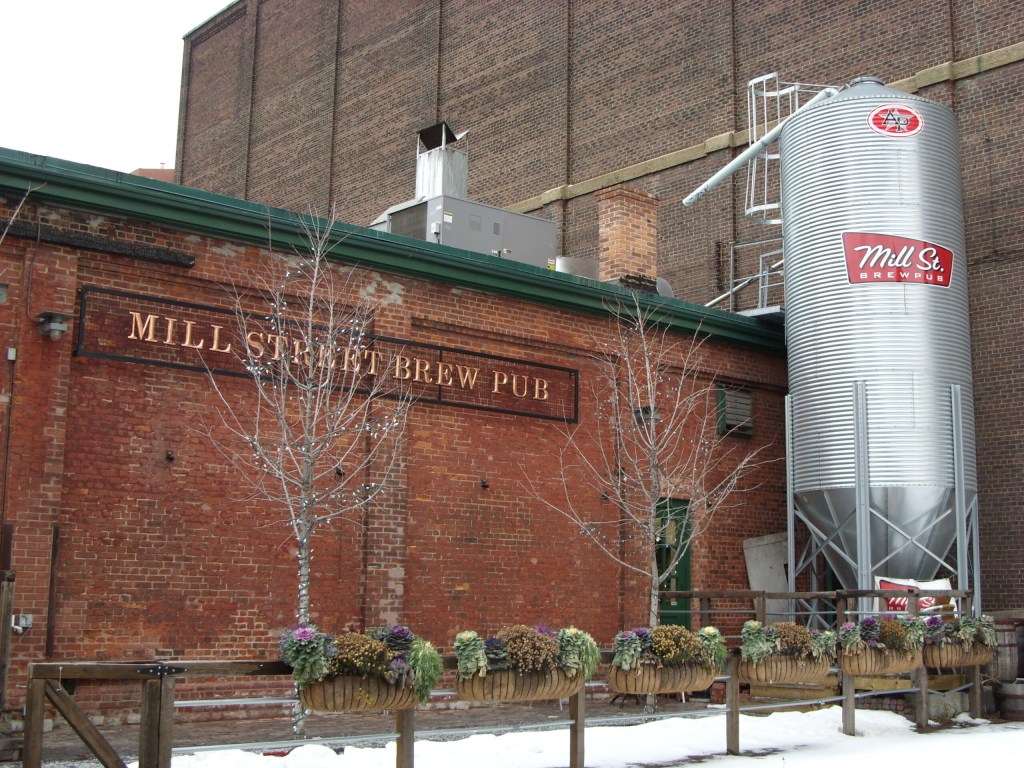
Fans of Mill Street Brewery are in shock after Labatt announced it was shutting down the North York brewery, and shifting production to its industrial-scale facility in London, Ontario. Thirty-nine workers will lose their jobs, and it’s unclear if many of Mill Street’s small-batch beers will survive. The three remaining brewpubs—in Toronto, Ottawa, and Pearson Airport—will continue to operate, but anyone who’s followed the beer industry knows what’s coming next. This is just another chapter in a long and predictable story.
When Labatt, itself owned by global behemoth AB InBev, acquired Mill Street a decade ago, craft beer lovers were divided. Some saw it as an opportunity for Mill Street to grow with the backing of a major player. Others saw it for what it really was: the beginning of the end. This wasn’t a rescue mission—it was an extraction.
We’ve seen this play out before. Lakeport Brewing, once a Hamilton-based success story built on discount beer, was scooped up by Labatt in 2007 for $201 million. Just three years later, Labatt shut down the brewery, put 143 people out of work, and moved production to London. More tellingly, when potential buyers showed interest in taking over the plant, and keeping it running, Labatt refused. The brewing equipment was dismantled, ensuring that no one else could compete.
Sapporo’s 2006 acquisition of Sleeman Breweries led to a similar fate for Sleeman’s Halifax operation, which was shuttered in 2013. The difference? Unlike Labatt, Sapporo allowed the equipment to be sold off, helping fuel the rise of Collective Arts Brewing in Hamilton, but the lesson remains the same: when a craft brewery is acquired by a major player, it’s no longer a craft brewery – It’s a brand.
Mill Street was never going to be an exception. It started with real craft credentials—a small brewery in Toronto’s Distillery District, a reputation for eco-conscious brewing, and flagship beers like Tankhouse Ale and Organic Lager that set it apart in the early 2000s. By the time Labatt took over, it had already expanded significantly, adding brewpubs and scaling up production. That growth made it an attractive acquisition target, but it also meant Mill Street was now operating in the corporate world, where efficiencies trump tradition and scale wins over local identity.
Now, as production consolidates in London, the brewery’s original spirit is all but gone. Sure, the remaining brewpubs will still pour Mill Street beer, just as other corporate-owned brewpubs do with “craft” labels that are little more than marketing exercises. But the North York brewery’s closure isn’t just about job losses—it’s the final confirmation that Mill Street, as craft beer fans knew it, no longer exists.
If you’re surprised, you weren’t paying attention. Once an independent brewery sells to a major corporation, it’s only a matter of time before the “craft” part disappears. This isn’t a betrayal—it’s just business as usual.
We’ve all heard the stories, someone flies halfway across the world, wanders into a famous landmark, and suddenly hears their name being called. They turn around, and there’s an old friend, a former coworker, or even a distant cousin grinning back at them.
It’s happened to me, on the steps of Sydney Opera House, where I bumped into an old college friend, and again in Washington D.C., while wandering around the Air and Space Museum. What are the odds? Well, higher than you might think.
The thing about the world’s top travel destinations is that they are, by definition, magnets for people just like you—curious, adventurous, and eager to soak in the sights. Whether it’s the Eiffel Tower, Times Square, or the Great Wall of China, these places attract millions every year. If you and your friends share even vaguely similar travel dreams, it’s not so surprising that your paths might cross in one of these iconic spots.
Think about it. Travel is often dictated by a handful of factors—school holidays, peak vacation seasons, and well-worn routes recommended by guidebooks and influencers. When you consider that most people take trips during long weekends, summer breaks, or major holidays, it becomes even more likely that someone you know is wandering the same bustling streets or snapping a selfie at the same lookout point.
Social media has also played its part in shaping our collective wanderlust. A well-timed Instagram post of Santorini’s blue domes or the sunrise over Angkor Wat can send a ripple effect through your social circle. Before you know it, three of your acquaintances have booked their own trips, each unknowingly setting themselves up for a coincidental reunion abroad.
But here’s the best part—none of this happens if you don’t put yourself out there. You won’t have a serendipitous encounter in the Piazza San Marco if you never leave your living room. You won’t bump into your college roommate in Tokyo’s Shibuya Crossing if you never take the plunge and book the flight. Travel isn’t just about seeing the world—it’s about being in it, fully immersed, and sometimes that means reconnecting with familiar faces in the most unexpected places.
So, if you’re hesitating to plan that trip because you think the world is too vast, take this as a sign. It’s big, yes, but it’s also small in the most magical ways. Pack your bags, set off on your adventure, and don’t be too surprised if, somewhere along the way, you hear a voice calling your name in the middle of a crowded street in Rome. It’s just one of travel’s little reminders that we’re all more connected than we think.
Listen, I’ve been around the craft ale block a few times. I’ve tangoed with Tripels, slow-danced with Sours, and had a downright torrid affair with a English IPA back in ‘98; but let me tell you, Sawdust City’s LDV Red Rocket Spiced Imperial Espresso Stout isn’t just a beer – it’s a sultry, full-bodied seduction in a glass.
From the moment you pour it, you know you’re in for a special treat. That thick, luxurious head – tan, creamy, that’s just begging to be admired, as it settles atop the obsidian body, like a velvet robe slipping from the shoulders of an old Hollywood starlet. You don’t chug a beer like this; You sip it, you savor it, you let it whisper sweet nothings in your ear.
The first taste is an all-encompassing embrace – bold espresso wraps around rich, dark chocolate, like two lovers entangled on a silk sheet of roasted malt. And just when you think you’ve got it figured out, a wicked little cayenne spice sneaks up on you from behind, like a mischievous nibble on your earlobe. It’s just enough heat to wake up your senses without making you regret last night’s life choices.
The mouthfeel? Velvety, thick, indulgent – it doesn’t just coat your tongue, it makes itself at home. This stout has presence – it lingers. It leaves traces of vanilla and cinnamon in its wake, making you question whether it’s a beer, or some kind of dark, boozy necromancy.
At 9% ABV, Red Rocket isn’t just here for a casual chat – it’s leaning in close, making eye contact, and asking if you’d like to see the river deck view. And honestly? You do!
And as I sit here, utterly bewitched by Red Rocket’s bold embrace, I can’t help, but hope that the fine folks at Sawdust City have had the good sense to tuck some of this delicious liquid away in bourbon barrels, letting it slumber, and soak up the kind of oaky, boozy wisdom that only time can bestow. Because if Red Rocket is already this seductive, imagine what it could become after a slow, patient transformation into something even more decadent – a worthy new incarnation of Titania, their Queenly masterpiece!
In support of my recent posts on Canadian economic sustainability and growth, in the presence of a Trump America, here is a piece about an industry close to my heart.
The story of craft brewing in Ontario is one of evolution, passion, and the persistent balancing act between government support and industry challenges. What began as a niche market for independent brewers has grown into a thriving sector that contributes significantly to the province’s economy. In 2023, Ontario’s craft brewing industry was estimated to be worth over $2 billion annually, with more than 270 craft breweries operating across the province. Despite already capturing approximately 10% of Ontario’s beer market, analysts suggest the industry has the potential to grow even further as consumers increasingly prioritize local, high-quality, and innovative products.
Ontario’s journey with craft beer began in the early 2000s when the government recognized the potential of small breweries to contribute to local economies and create jobs. The establishment of the Ontario Craft Brewers (OCB) association in 2003 marked a turning point. It provided a collective voice for independent brewers, allowing them to advocate for policies and resources that could help them compete with multinational corporations dominating the beer market. A few years later, the provincial government launched the Ontario Craft Brewers Opportunity Fund, a bold $8 million investment aimed at giving small breweries a much-needed leg up. This fund allowed many breweries to upgrade their equipment, improve packaging, and expand their marketing efforts. For many brewers just starting out, these investments were not only helpful; they were essential.
Beyond direct funding, tax incentives played an important role in shaping the industry’s early years. Breweries producing under a certain volume threshold benefitted from reduced excise duties, enabling them to reinvest savings into their operations. These measures helped level the playing field, allowing smaller breweries to compete in a market dominated by large-scale producers.
As the industry grew, so too did the government’s approach to supporting it. By the 2010s, Ontario’s craft beer market was booming, and policies shifted to focus on accessibility and expansion. One of the most significant changes came in 2015, when the province modernized beer retailing laws to allow sales in grocery stores. This move not only increased consumer access to craft beer, but also mandated that 20% of shelf space in participating stores be reserved for Ontario’s craft brewers. This was a game-changer for visibility, allowing small brewers to reach a broader audience, and compete more directly with large brands.
The government’s involvement didn’t stop there. In 2019, as part of the Canadian Agricultural Partnership (CAP), federal and provincial governments allocated over $1 million to help craft brewers adopt cutting-edge technologies, expand their production facilities, and tap into international markets. Rural breweries in particular benefitted from these programs, which often included support for tourism development, event spaces, and collaborations with local farmers. By emphasizing sustainable growth, these initiatives also supported environmental goals, such as reducing energy consumption and waste during brewing.
Despite these successes, government policies have not always aligned with the realities of small breweries. The “Buck-a-Beer” initiative introduced in 2018 is a prime example. While the program aimed to make beer more affordable for consumers by encouraging brewers to sell bottles for $1, it was widely criticized by craft brewers. For most, the economics simply didn’t work: producing high-quality beer at that price point would mean sacrificing either their profits or their standards. Instead, many brewers pushed for continued support in the form of grants and investments that prioritized long-term sustainability over short-term cost-cutting.
Today, Ontario’s craft beer industry is at an exciting crossroads. It has firmly established itself as a key economic driver, employing thousands of people and supporting local supply chains, from hop growers to independent retailers. With its current market size valued at over $2 billion, the sector has significant room to grow. Export programs are helping brewers break into international markets, while domestic consumers continue to seek out innovative, locally-produced beers. There’s also increasing interest in sustainable brewing practices, which could open up new opportunities for breweries willing to invest in eco-friendly technologies.
Still, challenges remain. Many small brewers are calling for expanded distribution infrastructure, particularly in rural areas, and more funding to support water conservation and waste management in brewing processes. Others advocate for greater access to affordable financing for equipment upgrades and facility expansions, arguing that these investments are critical to scaling up production to meet demand.
Ontario’s craft beer industry is a testament to what can be achieved when passion meets strategic support. From humble beginnings to a multi-billion dollar sector, it has proven its resilience and capacity for innovation. With thoughtful policies, ongoing investments, and a continued emphasis on quality and sustainability, the potential for future growth is as bright as the golden ales lining the shelves of Ontario’s breweries.
December 31st, New Year’s Eve, has rarely held much charm for me. The holiday feels drenched in sentimentality, forced cheer, and an overbearing expectation to reinvent oneself overnight. Years ago, I quietly stepped away from the revelry, trading the clinking of champagne glasses for moments of introspection. But it wasn’t always this way.
In my early thirties, I poured my energy into organizing rambunctious New Year’s celebrations with my university friends, and a few trusted work colleagues. These weren’t ordinary parties; they were full-blown, three-night events, held in ancient locations – castles in Northumberland, estates in the Lake District, or lodges in Snowdonia.
Planning began months in advance. We’d estimate guest numbers, scout properties, draft menus, and prepare endless shopping lists. My friend Vivienne and I spent weeks curating every detail; maps to the venue, suggested activities, which ranged from rock climbing to pub crawls, from shopping to board games, and even a schedule for who’d take turns cooking meals, washing dishes or restocking the booze. Everyone pitched in, and those who didn’t weren’t invited back, except for Nigel and Rosie, because we loved them anyway.
The guest list was as colorful as the events themselves: a Scottish laird, a supermarket heiress, police officers, geologists, a Hercules Loadmaster, an Australian Homeopath, and enough PhDs to launch a think tank. That first year, we hosted 40 people. By the time I attended my last event, the crowd had grown to over 70.
Eventually, I passed the torch to others, especially after I moved continents. Yet, decades later, those New Year’s gatherings still persist, now infused with the energy of attendees’ children, and the nostalgia of enduring friendships. For many years, my holiday ritual involved crossing the Atlantic; first to visit family for Christmas, then to join these gatherings, where we’d reminisce over old stories and create new ones – especially stories answering the question “why did Andy always have a black eye?”
But somewhere along the way, I began to feel restless. The same stories, the same faces, the same patterns – what once felt comforting, now seemed like a closed time loop, that I couldn’t escape. As I built a life, and family in North America, I realized it was time to step away, and embrace new traditions, ones that allowed for evolution and personal growth.
It’s funny, I hadn’t planned to write about this today. I rarely share personal stories like this, and maybe that’s something I’ll change in the coming year.
To everyone I love, near and far: Happy New Year. May 2025 bring you peace, fulfillment, and a wondrously, meaningful life.
I thoroughly enjoy a good glass of cider, and while I am open to exploring the unknown, I do prefer to imbibe drier beverages, yet I have learned that marketing labels do nothing to differentiate these alcoholic products. The word ‘Dry’ on a can of cider is currently meaningless in Ontario, and the amber liquid contained within can have any amount of sweetness.
Ontario’s cider industry has seen significant growth in recent years, reflecting an increasing interest among consumers. By 2030, the Ontario Craft Cider Association (OCCA) aims to increase production from the current 6 million to 30 million liters annually, with a projected economic impact of $115 million and the creation of 1,720 jobs. As more Ontarians turn to craft cider, consumers are pushing for greater transparency on what’s inside their favorite cans.
By mandating the inclusion of grams per liter (g/l) sugar content on cider labels, consumers gain valuable insights into the flavor profiles of different ciders. This information allows individuals to select beverages that align with their taste preferences, whether they prefer a drier, more tart cider or one with a sweeter, fruitier profile. Wine sold in Ontario already includes sugar content in the g/l format so with this precedent, all we need is an update to the current provincial labeling regulations.
Promoting product transparency, while supporting branding efforts, sugar content labeling contributes to the continued growth and diversification of Ontario’s vibrant cider industry.
Oman, situated on the southeastern coast of the Arabian Peninsula, is a nation with a rich history, and distinctive culture shaped by its geography, strategic location, and traditions.
I was fortunate enough to spend many months working in Oman during the ‘80s at part of a multi-disciplinary scientific project run by the Royal Geographical Society. I will probably write more about this interesting time in my life, and for now I want to talk about Oman.
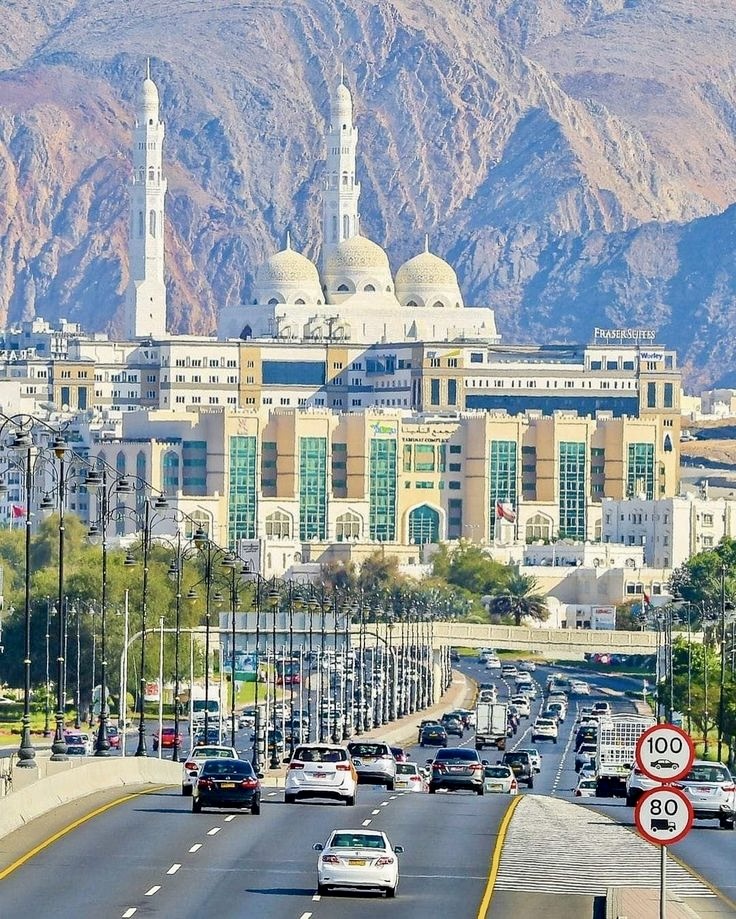
The first thing that strikes you about Oman is its profound serenity. Arriving in Muscat, the capital, you are greeted by a landscape unlike the glittering skyscrapers of its Gulf neighbors. Instead, Oman embraces you with its ochre-hued forts, low-rise whitewashed buildings, and mountains that seem to cradle the city. It’s a country that whispers its charm rather than shouts it, and as you explore, you realize Oman’s uniqueness lies in its unhurried blend of history, culture, and the gentle hospitality of its people.
Oman has been inhabited since prehistoric times, with archaeological evidence of early settlements dating back to the Stone Age. It was an important center for the production and trade of frankincense, a commodity highly prized in the ancient world. Oman’s strategic location at the mouth of the Persian Gulf established it as a significant maritime power. During the 17th and 18th centuries, the Omani Empire controlled parts of East Africa, including Zanzibar, as well as key trade routes in the Indian Ocean. Oman maintained a degree of autonomy throughout history, resisting colonization by European powers. Its ability to preserve sovereignty has contributed to its unique identity in the Arab world.
Omani architecture reflects a blend of Islamic, African, and indigenous styles. The country is home to many forts, castles, and watchtowers, such as the Bahla Fort, a UNESCO World Heritage Site. Omani food blends Arabian, African, and Indian influences, reflecting its role in ancient trade networks. Signature dishes include shuwa (slow-cooked lamb) and majboos (spiced rice with meat). Omani music and dance are deeply tied to its history and geography. Traditional genres like al-bar’ah and razha often feature drums and chanting. The art of silverwork, especially the crafting of khanjars (traditional curved daggers), is also emblematic of Omani culture.
Venturing into the interior, you find Nizwa, a city crowned by a fortress that once served as a stronghold of the Imamate. Standing atop the fort’s towers, you see the palm-fringed oases of date plantations, the lifeblood of this desert nation. Here, the centuries-old aflaj irrigation systems, recognized by UNESCO, snake through the earth, embodying the ingenuity of Oman’s ancestors. At the Friday livestock market in Nizwa, you see another side of Oman. Farmers, clad in traditional attire, auction goats and cattle with a practiced rhythm that has remained unchanged for generations. It’s a scene vibrant with life, blending practicality with the rituals of community.
Omanis are known for their hospitality and religious tolerance. While the majority practice Ibadism, an Islamic sect known for its moderation, Oman has significant Sunni and Shia populations, as well as expatriate communities from South Asia and East Africa.
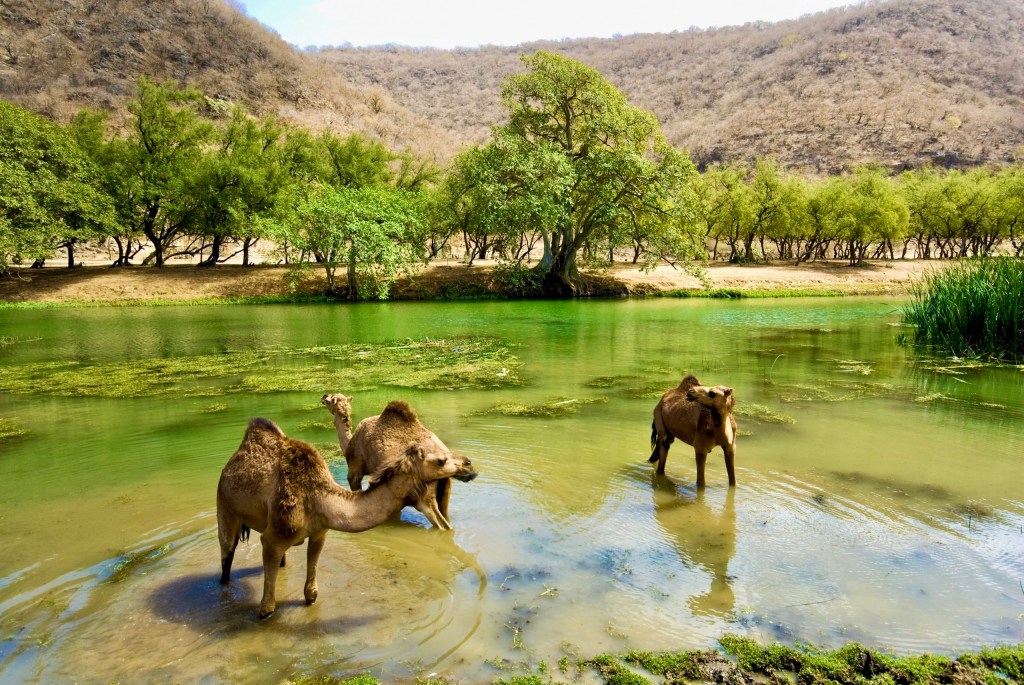
The country’s landscapes mirror its cultural diversity. In Dhofar, the southern province, the monsoon season transforms the arid desert into a lush, green paradise—a phenomenon locals call khareef. This region, home to the fabled Land of Frankincense, feels like a world apart, with mist-shrouded hills and a coastline where waves crash dramatically against cliffs.
Oman is unique in the Arab world for its diplomatic neutrality, and its dedication to preserving its identity amidst modernity. Sultan Qaboos, who ruled Oman for half a century, transformed the nation with thoughtful modernization, emphasizing education and infrastructure while retaining cultural authenticity.
As I reflect on my time in Oman, I am reminded not only of its serene landscapes and warm hospitality, but also of the enduring spirit of a country that remains steadfast in its identity, offering an experience unlike any other in the Arab world. Oman is not merely a place—it is a living testament to the harmony between the past and the present.







 The Rowanwood Chronicles