The Pie and a Pint Life

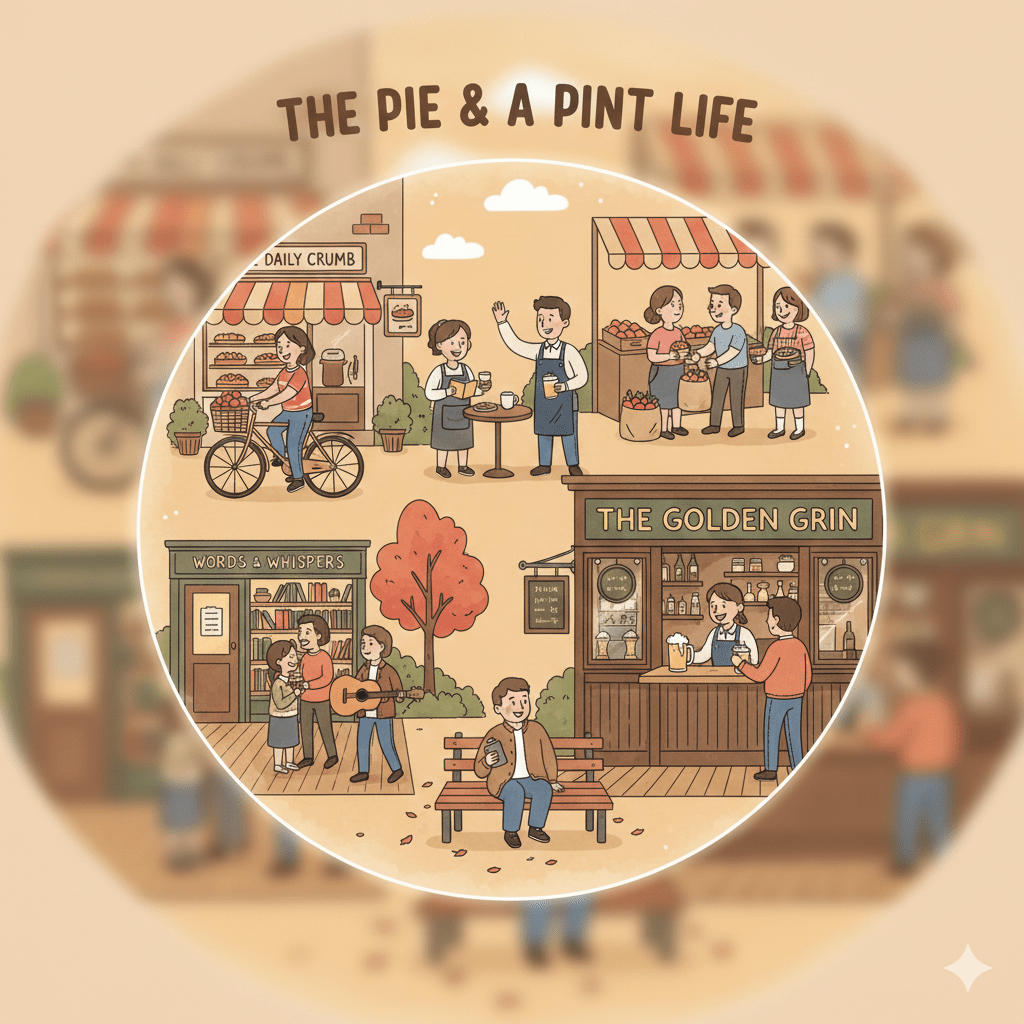
There’s a certain romance to the idea of a life lived in fifteen-minute circles. Not a metaphorical fifteen minutes, no, I mean a geography, a rhythm, a practical enchantment where everything one might need for daily sustenance and delight rests just a short stroll or a gentle bike ride away. I call it the “pie and a pint” model of living. The pie represents all the tangible necessities of life: food fresh from the market, clothing that fits just so, perhaps even a bookshop that smells faintly of vanilla and old paper. The pint, meanwhile, is the social lifeblood: laughter, conversation, music, the gentle buzz of humanity swirling around the edges of one’s existence.

It is, I admit, a model born of a lazy idealism, the sort that insists life can be both comfortable and endlessly charming. Imagine leaving home in the morning and, in the span of a quarter-hour, acquiring a warm pastry and a loaf of bread that smells faintly of honey. On the way back, one might linger by the corner café, exchanging pleasantries with a barista who knows your name and your preferred roast. At the market, the butcher waves. The grocer slides a bag of oranges across the counter as though performing a small, daily miracle. Every errand becomes a small ritual, a comforting loop that roots one in the neighborhood and the hours of the day.

The pint, of course, is the flourish to the pie’s sustenance. Perhaps it’s an evening spent in a local pub, the kind where the wooden floors creak with memory, and the beer tastes better because it was poured by someone who knows you, not just your credit card number. Or perhaps it’s a quiet chair in a communal park, a flask of something warming tucked beneath a coat, as the world meanders by. This is the part of life that reminds one why human existence is worth the effort: stories exchanged, music shared, glances that say more than words ever could. The pie fills the stomach, the pint fills the heart.

The beauty of this model is its intimacy. Fifteen minutes, one discovers, is long enough to venture, to explore, but short enough to return. One becomes familiar with the rhythms of place, the subtle shifts in light across a street corner, the seasonal hints in the produce at the market. There is less rush, less constant negotiation with time. A walk to acquire a loaf of bread is also a walk to notice the scarlet leaves tumbling along the sidewalk, to hear a snippet of laughter from a nearby table, to greet a neighbor with a wave and a nod. Life, when framed in such increments, folds into itself, gentle and satisfying.

Of course, one must admit this model is not without whimsy. It presumes a city or town willing to play along, one that fits neatly into the radius of desire. It presumes the world will conspire to place the essential and the pleasurable within reach, and for those willing to walk fifteen minutes, or perhaps pedal gently, the world indeed becomes a smaller, sweeter place. It is a model both humble and audacious: humble in its insistence on simple joys, audacious in its refusal to accept life as a matter of endless commuting and distant errands.

So here it is: the pie and a pint life. A life that honors the mundane and the magical alike, that balances sustenance with delight, that finds happiness not in distant horizons but in the familiar arcs of the day. Fifteen minutes may not sound like much, but in those fifteen minutes, one can hold the universe in the grasp of a warm hand and a warm heart. It is a small radius, yes, but sometimes, the smallest circles hold the greatest magic.

Alignment: The Key to Lasting Romantic Connections

I occasionally find myself in discussion groups, talking about relationship dynamics and the choices people make, so perhaps it’s time I turn the lens inward, and share more about how I approach life, particularly when it comes to romantic relationships. For me, what I desire in such a partnership isn’t simply about affection or companionship. It’s about creating a bond rooted in shared ethics, values, and priorities. For me, these foundational elements are essential for building depth, harmony, and longevity in any relationship.

Ethics at the Core
Ethics shape who we are; they define our principles and guide how we navigate the world. In relationships, alignment in ethics fosters trust and respect. Integrity is key; partners who embrace honesty create emotional safety, allowing the relationship to flourish. Without it, feelings of betrayal and insecurity can take root.

Fairness and respect also stand out. When partners honour each other’s boundaries, needs, and individuality, the relationship becomes a space of equality and support. Misalignment here can lead to power imbalances and resentment. Additionally, shared ethical perspectives on broader issues, such as social justice, environmental concerns, or interpersonal conduct, create a deeper sense of connection. It’s not just about compatibility in the small, everyday things; it’s about seeing the world through similar lenses.

Shared Values
Values are the compass points of our lives, reflecting what we hold dearest. When partners align in their values, they’re better equipped to navigate life’s challenges and create a shared future. Core values like family, ambition, and personal growth can either unite or divide couples. For example, two people deeply invested in family will find it easier to agree on time spent with loved ones or decisions about raising children.

Lifestyle choices also come into play. Whether it’s a shared passion for travel, commitment to health, or dedication to community, these mutual priorities smooth the day-to-day rhythms of a relationship. Conversely, mismatched values, be they cultural, religious, or practical, can lead to friction unless both partners are willing to communicate and adapt.

Alignment in Priorities
If ethics and values form the foundation of a relationship, priorities are how these ideals take shape in everyday life. Partners need to align not only in long-term aspirations but also in short-term goals. Whether it’s career ambitions, health milestones, or financial planning, harmony in priorities ensures a sense of direction and teamwork.

The balance of time and energy is equally vital. A couple’s ability to negotiate how they spend their time, be it between work, hobbies, or family, can either strengthen the bond or create tension. Flexibility matters too. Life is unpredictable, and partners must adapt to shifting circumstances, whether that means embracing parenthood, navigating career changes, or even relocating.

Why Alignment Matters
When ethics, values, and priorities align, relationships thrive. Shared principles foster emotional intimacy, as partners understand each other on a fundamental level. This alignment also enhances communication, minimizing misunderstandings and creating a solid foundation for navigating life’s complexities. While disagreements are inevitable, a shared framework reduces the risk of major, relationship-ending conflicts.

Cultivating Alignment
Building alignment doesn’t happen by chance; it requires effort and intention. Open communication is essential. Regular conversations about personal ethics, values, and priorities allow partners to identify shared ground and address potential conflicts. Active listening deepens this connection, fostering empathy and respect.

Of course, no two people will align perfectly, which is where compromise comes in. The willingness to adapt and meet halfway bridges gaps that might otherwise feel insurmountable. Finally, shared experiences, whether joyful or challenging, solidify bonds over time, creating a relationship that evolves alongside its participants.

A Foundation for Fulfillment
At its heart, desiring alignment in ethics, values, and priorities reflects a desire for a relationship that is both loving and rooted in mutual respect. Differences are inevitable, but with open communication, adaptability, and a commitment to nurturing alignment, partners can create a connection that stands the test of time. This balance fosters trust, deepens intimacy, and lays the groundwork for a partnership that is not only fulfilling but enduring.

In the end, alignment isn’t about perfection. It’s about building a shared life that honors both individuals while creating something greater together. That, to me, is the essence of a meaningful romantic connection.

A Year in the Wilds of The Rowanwood Chronicles

A reflective essay by the fellow who somehow decided that blogging about politics, climate, gender, and quantum mechanics was a relaxing hobby

I did not set out to become a blogger. No one does. Blogging is something that happens to you when you’ve said “someone should really write about this” one too many times and then realize the someone is you. That was my first year of The Rowanwood Chronicles. A steady accumulation of small irritations, large curiosities, and the occasional planetary existential dread finally pressuring me into a keyboard.

Over the past twelve months I have written about food systems, seismic faults, mononormativity, AI governance, and the demise of centralized social media platforms. This is, I admit, not a tidy list. Most writers pick a lane. I picked several highways, a few dirt roads, and one unmarked trail that led straight into a thicket of gender theory. Some readers have thanked me. Others have quietly backed away like I had started talking about cryptocurrency at a family barbecue. Fair enough.

The funny thing about running a blog with the byline “Conversations That Might Just Matter” is that you end up feeling mildly responsible for the state of the world. Somewhere in the back of my mind I became convinced that if I took one week off, climate policy would collapse, privacy laws would be gutted by corporate lawyers, and Canada would discover a massive geological fault running directly under my house. It is exhausting being the only person preventing civilization from tipping off its axis, but I have bravely carried on.

Along the way, I learned a few things.

First, people really do want long-form writing. They want context. They want to know why their health system is groaning like a Victorian heroine on a staircase. They want someone to explain decentralized social media without sounding like a blockchain evangelist who drinks only powdered mushroom tea. They want nuance rendered in plain language. I can do that. Sometimes even coherently.

Second, writing about politics is like trying to pet a squirrel. You can do it, but you have to keep your hands calm, your movements measured, and be prepared for the possibility that something small and unpredictable will bite you. Every time I published a political piece, I felt like I was tiptoeing across a frozen lake holding a hot cup of tea. Most of the time it held. Some days it cracked.

Third, the world is endlessly, maddeningly fascinating. One moment I was researching drought-related crop instability in the Global South. The next, I was reading government reports about flood plain management. Then I found myself knee-deep in a rabbit hole about the Tintina Fault, which sits there in the Yukon like an unbothered geological time bomb politely waiting its turn. Writing the blog became my excuse to satisfy every curiosity I have ever had. It turns out I have many.

What surprised me most was what readers responded to. Not the posts where I worked terribly hard to sound authoritative. Not the deeply researched pieces where I combed through reports like a librarian possessed. No. What people loved most were the pieces where I sounded like myself. Slightly bemused. Occasionally outraged. Often caffeinated. Always trying to understand the world without pretending to have mastered it.

That was the gift of the year. The realization that a blog does not need to be grand to be meaningful. It simply needs to be honest. Steady. And maybe a little mischievous.

I will admit that I sometimes wondered whether writing about governance, equity, and science from my small corner of Canada made any difference at all. But each time someone wrote to say a post clarified something for them, or started a discussion in their household, or helped them feel less alone in their confusion about the world, I remembered why I started.

I began The Rowanwood Chronicles because I wanted to understand things. I kept writing because I realized other people wanted to understand them too.

So here I am, a year older, slightly better informed, and armed with a list of future topics that spans everything from biodiversity corridors to the psychology of certainty. The world is complicated. My curiosity is incurable. And The Rowanwood Chronicles is still the place where I try to make sense of it all.

If nothing else, this year taught me that even in a noisy world full of predictions and outrage, there is room for thoughtful conversation. There is room for humour. There is room for stubborn optimism. And there is definitely room for one more cup of tea before I press publish.

Non-Hierarchical Polyamory Requires Strong Personal Boundaries

Polyamory, when practiced without hierarchy, can be liberating.
No primaries calling the shots. No pecking order. Just grown-up humans building intentional relationships.

But freedom doesn’t mean chaos. And connection doesn’t require constant visibility.

This is a guide to practicing non-hierarchical polyamory with strong personal boundaries – for people who believe in honesty, not overexposure; in love, not surveillance; and in building sustainable relationships that don’t burn everyone out.


🔸 Truth Is Enough

“No, I’m not available tonight.”
That’s the truth. Full stop. It doesn’t need a follow-up essay.

In a culture that glorifies radical transparency, there’s pressure to explain yourself constantly –
❓Who you’re with
❓What you’re doing
❓Why someone else got your time

That’s not truth. That’s emotional bookkeeping.

In this model, truth means what someone needs to understand you – not every detail of your personal life. You are not a contestant in someone’s ranking system. You’re a whole person. Privacy is not betrayal.

🔸 Honesty Isn’t a Weapon

Honesty matters – but, not all honesty is created equal.

Too often, “radical honesty” becomes an excuse to dump emotional weight without care.
Let’s call it what it is: emotional discharge without consent.

Instead, ask:

  • Is this honest and kind?
  • Is the timing respectful?
  • Has the other person consented to this level of openness?

🗝 Good honesty is relational, not performative.
If it’s not asked for, or if it’s about your anxiety more than their needs, maybe it’s not time to say it.

🔸 Transparency Is a Choice, Not a Virtue

In some poly circles, transparency becomes a tool for control:

  • 🗓 Shared calendars turned into scoreboards
  • 🕵️ “Open access” used to snoop
  • 📢 Disclosures demanded to prove loyalty

This isn’t transparency. It’s surveillance.

In this framework, transparency is always opt-in and consent-based.
It’s a tool, not a virtue. Use it where it builds connection – not resentment.

🔸 Discretion Is an Act of Love

Discretion doesn’t mean secrecy. It means respecting privacy with care.

  • 💬 Not everyone wants to know everything.
  • 👂 Not every detail needs to be shared.
  • 🛡 And not all relationships want to be laid bare.

Discretion is choosing grace over total access.
It’s knowing how to protect dignity while staying honest.

🔸 Boundaries Make Freedom Sustainable

In non-hierarchical poly, where nothing is pre-defined, boundaries are your framework.
They’re not about control. They’re about clarity.

✒️ Examples of healthy boundaries:

  • “I need 24 hours’ notice before committing to plans.”
  • “I don’t share who I’m seeing unless it’s relevant.”
  • “I’m not available for emotional processing late at night.”

A boundary is how you take care of yourself – and tell others how to love you well.
🛠 It’s not a wall. It’s a tool.

🔸 Emotional Self-Regulation: Your Feelings, Your Job

You will feel things: jealousy, rejection, insecurity. That’s real.
But what you do with those feelings? That’s what makes or breaks your dynamic.

💡 Emotional self-regulation means:

  • Not reacting from your most triggered state
  • Asking for support, not compliance
  • Taking responsibility for your emotional landscape

Instead of:
❌ “Why didn’t you choose me?”
Try:
✅ “I’m feeling vulnerable – could we plan some time together?”

You’re allowed to feel. You’re just not entitled to offload your reaction onto someone else.

🔸 You Don’t Owe 24/7 Access

Say it again:
You don’t owe constant availability.

You can:

  • Say no
  • Ask for time
  • Turn off your phone
  • Decline a request without guilt

Your value doesn’t come from how available you are.
It comes from how authentic you are – even in saying no.

🔸 Build the Polyamory You Can Sustain

This is non-hierarchical polyamory for grown-ups.
It works best when it’s:

  • ✨ Rooted in respect
  • 🛠 Framed with boundaries
  • ❤️ Practiced with care
  • 🕊 Protected with discretion

You don’t need more rules. You need more self-awareness.

And if you’re constantly explaining yourself, justifying your schedule, or sharing things just to soothe someone else’s anxiety –
That’s not polyamory. That’s a pressure cooker.


🖋 Final Thought

You can choose transparency.
You can practice honesty.
You can love widely and deeply.

But only if those things are in service of connection – not control.

This is the polyamory of people who know themselves.
People who protect their peace.
People who choose love, and freedom, with care.

Kitchen Table Poly: The Joy, the Chaos, and the Crumbs in Between

As you ease into the weekend, here’s a cheerful wander through the world of kitchen table poly (KTP), where coffee meets connection, and everyone’s feelings try to fit around the same plate of muffins.

Juggling hot pancakes while trying not to burn the syrup
There’s a certain romantic ideal in polyamory known as kitchen table polyamory – the notion that everyone in the constellation can sit around the same table, drink coffee, and chat comfortably about their shared lives. In theory, it’s beautiful: all hearts open, no secrets, no tension, just the gentle clinking of mugs and the hum of consensual love. In practice, however, it’s more often like juggling hot pancakes while trying not to burn the syrup.

The term itself conjures homey images: sunlight streaming through a window, laughter echoing off tile, someone passing the butter while another partner mentions a date night plan. It’s the poly version of a Norman Rockwell painting, if Rockwell had painted metamours and handled complex emotional logistics instead of fishing trips. At its best, it is that warm and easy, a place where communication feels natural and everyone knows they’re safe and seen.

But here’s the catch: kitchens are also where the mess shows. Dishes pile up, crumbs multiply, and sooner or later, somebody knocks over the orange juice of unspoken jealousy. What looks like “just coffee” might also include passive-aggressive sugar stirring or the subtle choreography of seating choices, because while the theory is “we’re all adults who love each other’s happiness,” the reality can be “I adore your joy in principle, but could we not hold hands over the croissants?”

KTP isn’t the moral high ground
The beauty of kitchen table poly is the shared humanity of it. It’s the belief that love isn’t a competition, that community is more sustaining than secrecy. It thrives when people are genuinely curious about each other, not threatened by comparison. It’s the pleasure of knowing that your partners’ partners are good to them, and sometimes even becoming friends who can roll their eyes affectionately about the same endearing quirks. (“He alphabetizes the spice rack again? Adorable, right?”)

But not everyone wants to live there. Some prefer “parallel poly,” where the metaphorical tables are separate, perhaps linked by a hallway of mutual respect, but not by shared breakfast. That’s fine too. Kitchen table poly isn’t the moral high ground; it’s just one style of community. And even those who love it occasionally need a little solitude, a coffee mug that’s their own, a kitchen that’s quiet.

The table is for connection, not competition
Ultimately, kitchen table poly is less about proximity and more about possibility.It’s about knowing that even if life occasionally spills, there’s still room to laugh, mop it up, and pour another cup. Love, like a kitchen, works best when everyone does their part, and remembers that the table is for connection, not competition.

So pull up a chair, grab a muffin, and take a breath. The coffee’s strong, the company’s complex, and the conversation might just teach you something about the art of being human. After all, every good kitchen has both chaos and comfort, and the best ones smell faintly of trust.

The Grammar of Entitlement

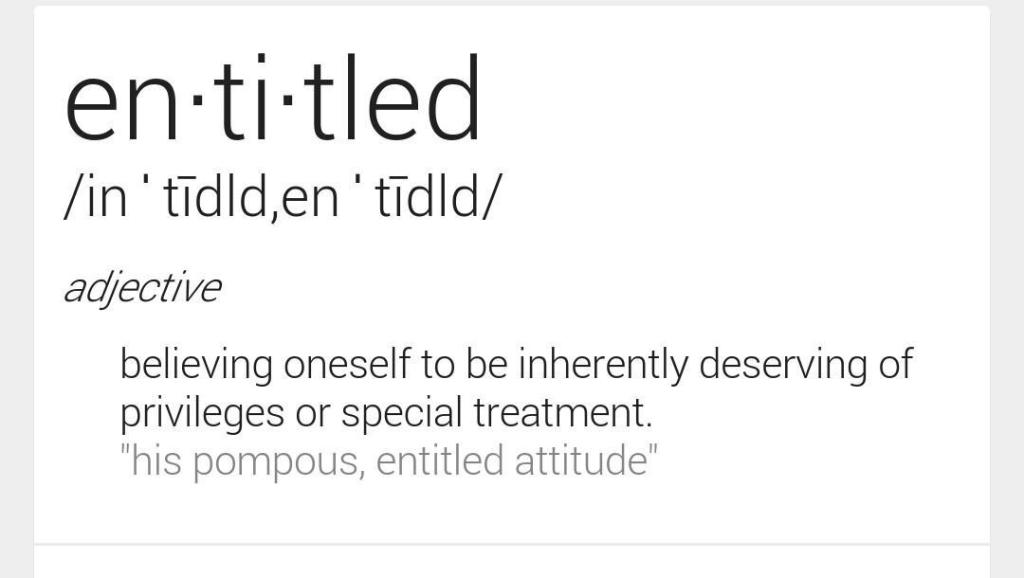
There is a kind of violence that rarely makes headlines. It doesn’t leave bruises or require an alibi, yet it shapes how millions of women move through the world. It lives in tone, expectation, and entitlement: the quiet insistence that a man’s desire constitutes a claim. This is the grammar of entitlement, and it underwrites much of what we call everyday life. When men are taught that kindness, attention, or money are currencies that purchase intimacy, the refusal of that transaction feels like theft. And from that imagined theft, violence grows, not only in action, but in attitude. It becomes the background noise of a culture that still believes women’s bodies are communal property, merely distributed through different forms of politeness.

Entitlement begins in subtle places. It begins in the stories boys are told about conquest, romance, and “getting the girl.” It begins in the way girls are socialized to soften their refusals, to keep themselves safe through diplomacy. This is not simply social conditioning; it is an architecture of expectation built into language itself. In most heterosexual narratives, the man’s desire drives the story. Her consent is not the point of origin but the obstacle, the dramatic tension to be overcome. Even the romantic comedy, that seemingly benign genre, is often structured around a man wearing down resistance until “no” becomes “yes.” The myth of persistence has always been the moral camouflage of entitlement.

When that persistence is frustrated, resentment follows. We are now witnessing an era where this resentment has become communal, a kind of organized grievance. It tells men that the modern world has conspired to deny them what they were promised: sex, affection, attention, reverence. The rhetoric of the “lonely man” often cloaks this in pathos, but loneliness itself is not the problem. It is the conviction that someone else must be blamed for it that turns grief into hostility. Within that hostility lies the logic of control: if women are free to choose, then men must find ways to reclaim authority over choice itself.

Violence begins there, long before it reaches the body. It begins in words, in the erosion of empathy, in the idea that intimacy is a right to be exercised rather than a gift to be offered. It manifests in the digital sphere where harassment, threats, and objectification form an ambient hum of hostility that too many women learn to normalize. The technology changes, but the dynamic is ancient: a man’s sense of rejection transforms into moral outrage, and his outrage becomes justification. This is why sexual violence cannot be separated from cultural entitlement; they are different verses of the same song.

We have grown used to defining violence by its visibility. We recognize bruises, but not the psychic contortions that come from being reduced to a function. When women describe the exhaustion of navigating entitlement: the emotional labour of softening refusals, the hypervigilance required to stay safe, they are often accused of exaggeration. Yet what they describe is the constant negotiation of ownership: whose comfort matters, whose boundaries are negotiable, whose will defines the encounter. Violence, in this sense, is not the breakdown of civility but its shadow. What civility hides so that power can feel like courtesy.

To name entitlement as violence is to understand that harm is cumulative. A woman who spends years accommodating the moods of men who believe they are owed her body or attention carries a kind of invisible scar tissue. It may never be recorded in police reports, but it shapes her choices, her confidence, her trust. The body remembers what the culture denies. Each unsolicited touch, each angry message, each demand for emotional compliance becomes another layer in a collective memory of threat.

And yet, we are told that men are the ones suffering. The so-called “male loneliness epidemic” has become a rallying cry; less for compassion than for backlash. The argument goes that women’s independence has left men adrift, unwanted, and angry, but this, too, is a distortion. Loneliness deserves empathy; entitlement does not. The problem is not that women refuse to date men, but that so many men interpret refusal as harm. To frame women’s autonomy as cruelty is to invert the moral order entirely, to make self-protection an act of aggression.

What we are witnessing is not a crisis of connection, but a crisis of entitlement. The more women assert boundaries, the more those boundaries are read as insults. The cultural reflex is to soothe male discomfort rather than question its legitimacy, yet a society that prioritizes men’s hurt feelings over women’s safety is not a society in decline, rather it is one in denial. 

If there is hope, it lies in unlearning this grammar. In rewriting the story so that desire is not a claim, but a conversation. In teaching boys that intimacy cannot be earned through performance or purchase, only invited through respect. In teaching girls that their boundaries are not provocations, but personal truths. This is the slow, quiet revolution that changes the world not by policy alone, but by perception: the recognition that violence often begins in the stories we tell about what is owed.

The antidote to entitlement is not shame, but empathy. Real empathy, the kind that accepts another’s autonomy as equal to one’s own. To desire without entitlement is to love without domination. It is to see the other as subject, not supply. Until we learn that difference, every act of so-called romance will carry within it the ghost of coercion. Every story that begins with “he wanted” will risk ending with “she feared.”

To unlearn that pattern is the work of generations, but it begins with a simple act of linguistic courage: to name entitlement for what it is, quiet, persistent form of violence.

References:
1. Abbey, A., Jacques-Tapia, A., Wegner, R., Woerner, J., Pegram, S., Pierce, J. (2004). “Risk Factors for Sexual Aggression in Young Men.” Journal of Interpersonal Violence. – The article notes that among perpetrators salient cues include “a sense of entitlement” to sexual access and anger.
2. Jewkes, R., Flood, M., Lang, J. (2015). “New learnings on drivers of men’s physical and/or sexual violence against women.” Global Health Action. – This paper connects patriarchal privilege, gender hierarchy, and entitlement to men’s violence against women.
3. Safer (Australia). “What do we mean by male entitlement and male privilege?” – A practical resource that outlines how male entitlement operates in relationships: e.g., entitlement to sex, entitlement to compliance, entitlement to emotional accommodation.
4. Kelly, I. & Staunton, C. (2021). “Rape Myth Acceptance, Gender Inequality and Male Sexual Entitlement: A Commentary on the Implications for Victims of Sexual Violence in Irish Society.” International Journal of Nursing & Health Care Research. – This article explicitly links ideologies of male sexual entitlement with sexual violence and victim-blaming.
5. Equimundo / Making the Connections. “Harmful Masculine Norms and Non-Partner Sexual Violence.” – Provides global evidence that attitudes of male privilege and entitlement are consistently associated with rape perpetration.
6. Santana, M. C., Raj, A., Decker, M. R., La Marche, A., Silverman, J. G. (2008). “Masculine Gender Roles Associated with Increased Sexual Risk and Intimate Partner Violence Perpetration among Young Adult Men.” Culture, Health & Sexuality. – Links traditional masculine ideologies (including control and entitlement) with sexual violence/partner violence.
7. World Health Organization / United Nations documentation (summarised in various reviews) linking gender inequality, harmful norms, and violence against women: For instance – “The Association Between Gender Inequality and Sexual Violence in U.S. States.” BMC Public Health. – Demonstrates how structural gender inequality correlates with sexual violence prevalence.  

The Mirage of Intimacy: Online Relationships and the Illusion of Closeness

In the digital age, relationships often begin, or even flourish, online. A message pings at midnight, and suddenly a conversation feels urgent, intimate, and deeply personal. The hours slip by as we reveal our thoughts, secrets, and vulnerabilities to someone whose physical presence we may never experience. Online connections have a remarkable capacity to feel profoundly close, sometimes more so than our in-person friendships. Yet, beneath this apparent closeness lies a subtle paradox: what feels intimate is often a carefully curated illusion, a projection of our desire for connection rather than a fully realized relational reality.

One of the most striking aspects of online communication is how quickly intimacy can develop. Psychological research identifies the “online disinhibition effect,” where people disclose personal thoughts, fears, and fantasies faster than they would in face-to-face interactions. Late-night chats, shared memes, and deep confessions create a sense of continuous access and emotional availability. In polyamorous or kink communities, this effect is amplified: the vulnerability required in these spaces: sharing desires, boundaries, and experiences, naturally fosters trust, even across screens. The result can be a rapid acceleration of closeness, sometimes outpacing the organic development of real-world relationships.

Yet, this intimacy is often an illusion. Online, we present curated versions of ourselves. We choose our words, images, and emojis carefully, emphasizing the aspects we hope will resonate. Likewise, the person on the other end is also performing a curated self, revealing only fragments of their life. This selective visibility can create a perception of depth that exceeds reality. We feel we know someone profoundly, when in truth, we are engaging with a projection of their identity shaped by context, desire, and expectation. The mind naturally fills in gaps, constructing a narrative of connection that may be more reflective of our own needs than the other person’s reality.

The challenges of this illusion are particularly pronounced in communities where trust and vulnerability are central. In kink or poly contexts, emotional intimacy can feel heightened through shared fantasies, discussions of boundaries, and the negotiation of desire. Yet these interactions, while genuine, exist in a digital space that strips away many grounding elements of relational reality. Physical cues, timing, and shared daily experiences – all critical for building resilient intimacy – are often absent. The result is a relationship that feels complete in our minds but is incomplete in practice.

This is not to suggest that online intimacy is inherently false. Many long-distance partnerships, mentorships, and friendships thrive entirely in digital form, creating meaningful and enduring bonds. The difference lies in grounding. Healthy online intimacy balances emotional openness with an awareness of the limitations inherent in digital interaction. It requires reflection, patience, and, when possible, opportunities for embodied connection that anchor the relationship in shared experience.

When this balance is absent, online relationships can become a double-edged sword. Misaligned expectations, idealization, and the absence of tangible reality can lead to disappointment, heartache, and confusion. We might overestimate the closeness we share, projecting onto the other person qualities or commitments that exist only in our own imagination. In extreme cases, this can strain in-person relationships, particularly in polyamorous or kink communities where multiple layers of connection must be navigated simultaneously.

The key is not to reject digital intimacy but to engage with it critically and consciously. Online relationships are powerful, evocative, and often transformative, but they are not replacements for embodied connection. They are a mirror, reflecting both the depth we feel and the gaps we cannot see. Recognizing this duality allows us to embrace the richness of online relationships while remaining attuned to the boundaries between perception and reality.

In the end, the lesson is subtle yet vital: intimacy is both real and illusory. The digital world magnifies our desire for connection, offering an immediacy and intensity that can feel intoxicating. Yet the most enduring relationships, whether online or offline, are those grounded in a balance of openness and discernment, imagination and reality. Understanding the mirage of digital closeness allows us to cherish the connection we feel while remaining aware of the distance it conceals. Only then can we navigate the fascinating, complex, and often intoxicating terrain of online intimacy with clarity, care, and compassion.

The NRE Rule: Why Nothing You Say Should Count within the First 180 Days

I first shared a version of this article on Fetlife, where it sparked some discussion. My aim here is to focus on the experience of being in the NRE zone, rather than on the potential fallout that can sometimes occur around it. That said, I do include a few considerations you might find worth reflecting on. Enjoy!

Polyamory veterans know a universal truth: New Relationship Energy (NRE) makes people completely, gloriously bonkers. And not in a “quirky fun” way – in a “you just cancelled dinner with your long‑term partner because your new crush sent you a TikTok of a honey badger” kind of way.

For the uninitiated, NRE is that fizzy cocktail of dopamine, oxytocin, and serotonin your brain starts shaking up the moment you meet someone new who lights up your nervous system. Think champagne meets espresso meets a sugar rush. You’re drunk on possibility, jittery with lust, and convinced you’ve found The One (or The One Plus the Others You Already Love).

Your friends nod knowingly while making silent bets on how long before you resurface. Your partners smile politely while you quietly move your toothbrush back to your bathroom. And you? You’re busy imagining joint vacations, co‑buying an air fryer, and wondering whether it’s “too soon” to introduce them to your entire extended family. (Spoiler: yes, it is.)

The NRE Rule

My personal safeguard – forged in the fires of experience – is what I call The NRE Rule:

For the first 180 days, whatever you say to each other is lovely – even magical – but it doesn’t count for shit.
Come day 181, you’d better know what you’re saying and committing to… or else.

Why 180 days? Because science says that’s about how long it takes for the champagne bubbles of NRE to start going flat. The hormonal flood subsides, reality wanders back in wearing sweatpants, and suddenly you’re seeing this person in normal lighting – not just by candlelight or after three Negronis.

Neuroscience tells us that in those first months, your brain is actively conspiring to make you overlook flaws. Evolution likes this trick – it’s great for mating – but terrible for deciding who you should let rearrange your furniture.

Why It Works

The NRE Rule is not about being cynical. It’s about enjoying the high without buying real estate while you’re still tipsy. It:

  • Protects your long‑term loves from your NRE‑drunk time‑management disasters.
  • Keeps your new connection fun without attaching premature permanence.
  • Gives relationships breathing space to prove they work in ordinary, boring, real‑life conditions.

So by all means, whisper “forever” under the covers, build blanket forts, and make each other playlists. Just don’t sign a mortgage, merge your Netflix accounts, or promise to raise alpacas together until you’ve passed the 180‑day checkpoint.

Because here’s the thing: Day 181 is when the fun talk turns into real talk. That’s when “I’ll always be there for you” starts meaning right now, in this actual moment, with all our messy schedules and emotional baggage. It’s when the NRE sparkle gives way to the glow of real compatibility — or the thud of “oh… so that’s who you are.”

Until then? Enjoy the sugar rush. Just remember: before 180 days, you’re spending Monopoly money. After that? The bank account opens for real.

And I don’t care how cute they are – no one gets the air fryer until they’ve made it to Day 181.

The Jade Tree and Carl Jung’s Synchronicity

I hadn’t thought about her in over a year. No particular reason. No emotional weight behind it. She just drifted across my mind, calmly, clearly, and I noted it, then moved on.

Half an hour later, my phone buzzed. A message from her. No small talk, no explanation. Just a photo of a jade tree I’d given her a while back. It looked healthy. Thriving, actually. She thought I’d like to see how well it was doing.

I thanked her for the photo, wished her well, and left it at that. I didn’t feel any great pull to re-engage, but the moment stayed with me, not because of her, but because of the timing. The randomness. The feeling that something just lined up.

Carl Jung had a name for this kind of thing: synchronicity. He defined it as a “meaningful coincidence”. Two or more events connected not by cause and effect, but by meaning. They happen together, seemingly by chance, but resonate with something deeper. He saw it as a sign that there’s more to reality than we can see or measure. That sometimes, our inner world and the outer world speak to each other. Quietly. Precisely.

I’m not someone who needs to romanticize everything. People reach out. Thoughts come and go. But there was something clean about this particular moment; no buildup, no emotional noise. Just the sense of a thread that hadn’t fully frayed. A small echo between two people, delivered through a jade tree and a phone screen.

There’s no need to dig into it more than that. I wasn’t longing for her. I wasn’t unresolved, but when synchronicity shows up like this, I pay attention. Not because I think it means something I need to act on, but because it reminds me I’m connected to more than just what’s in front of me.

Jung believed these moments reflected the presence of a collective unconscious, a shared field of symbolic meaning, memory, and emotion. A psychic network we’re all tuned into, whether we realize it or not. Maybe that’s true. Maybe it’s simpler than that. Maybe we just carry people with us in subtle ways, and now and then, something stirs.

What I know is this: there was no reason for her to reach out when she did. And no reason for me to be thinking of her right before. But she did. And I was. And I’m glad I noticed.

The jade tree is still growing. That’s enough.

Polyamory: The Questions That Never Go Away

The other day, I found myself having a familiar conversation with a friend, the kind I’ve had countless times with people curious about my relationship orientation and wondering if it might be a fit for them. It struck me that I’ve been here before, walking through the same starting points, answering the same questions. So I decided to put my thoughts into a reference piece. That way, when the topic comes up again, we can skip the “Polyamory 101” stage and dive straight into the richer, deeper conversations that matter most. With that all said, here’s how I think about the moral, ethical, and societal questions people often ask me about polyamory.

I’ve been openly polyamorous for decades now. Long enough to have seen the word move from whispered corners of niche communities into mainstream conversations, long enough to have been called both a dangerous libertine and a brave pioneer. And no matter how many workshops, blog posts, and late-night kitchen-table talks we have, the same core questions always seem to come back: Is this right? Is this fair? And what does it mean for the world we live in?

These are the moral, ethical, and societal questions about polyamory. I’ve lived with them, wrestled with them, and come to see them not as irritants, but as invitations to think more deeply about love, freedom, and responsibility.

The Moral Questions: Is It Right?
The first challenge people throw at polyamory is moral. We’ve been raised in a culture that equates “true love” with exclusive love. From fairy tales to wedding vows, monogamy is painted as the gold standard of moral romance. So when I say I love more than one person, and mean it, some people hear betrayal or moral failure.

But morality isn’t just about what’s familiar. It’s about how we treat people. I’ve always believed that love is not a finite resource; my love for one person doesn’t diminish my love for another any more than loving one child means I love the others less. In my experience, the moral litmus test for polyamory isn’t “one or many”, it’s whether everyone involved is respected, valued, and cared for.

Jealousy often gets cast as a moral signpost too. In monogamous thinking, if you’re jealous, it must mean something wrong is happening, or that love is being stolen away. In poly life, jealousy is a signal, not a verdict. It asks: What do I need? What am I afraid of? Can we talk about this? It’s uncomfortable work, but it’s moral work, the kind that builds rather than breaks trust.

The Ethical Questions: Is It Fair?
Even when people accept that polyamory can be moral, they ask about ethics, the fairness and integrity of the thing. And here, I’ll be the first to admit: it’s easy to get this wrong.

Polyamory rests on the foundation of informed consent. That’s not just a buzzword. It means that every partner knows the full truth of the relationship structure and has genuinely chosen it without manipulation or coercion. If someone’s “agreeing” because they fear losing their partner, that’s not consent, that’s survival.

It also means telling the truth even when it’s messy. Ethical polyamory is radical honesty in action: “Yes, I have feelings for someone else.” “Yes, I’m sleeping with them.” “Yes, I want to go deeper with them.” That kind of disclosure can sting, but it’s the only way this works without slipping into betrayal.

Then there’s the question of power. In polyamory, mismatched emotional maturity, financial independence, or social status can easily tilt the playing field. I’ve seen relationships where one partner held the “permission card”, and the other lived in quiet resentment. I’ve also seen polycules where new partners were treated like secondary accessories rather than full human beings. Ethical polyamory demands constant checking of those dynamics, because it’s all too easy for someone to feel trapped in what was meant to be a consensual, liberating arrangement.

The Societal Questions: What Does It Mean for the World?
Even if you sort out the personal morality and the interpersonal ethics, polyamory still sparks societal questions. Should we, as a culture, recognise polyamorous families in law? What would that mean for marriage, for inheritance, for child custody? These aren’t abstract questions when you’re raising kids with multiple committed partners, or when a hospital only recognises one “next of kin.”

There’s also the matter of public perception. Polyamory still carries stigma, enough that people can lose jobs, face custody challenges, or be ostracised from their communities if they’re open about it. That stigma bleeds into how we’re portrayed in media: either as exotic free-love rebels or as moral cautionary tales. Rarely as ordinary, loving, responsible adults living in families that just happen to be larger than average.

Public health debates make an appearance here too. Some assume that more partners mean more risk, full stop. The truth is more nuanced. In my experience, poly people, because we have to talk about sexual health with multiple partners, are often more rigorous about testing, safer sex practices, and ongoing health conversations than many monogamous folks.

And then there’s the question of the next generation. What does it mean for kids to grow up in polyamorous households? I can only speak from my own circle, but the kids I’ve seen raised in poly families tend to understand diversity in relationships from a young age. They learn that love can take many forms, that honesty matters, and that family is defined by care and commitment rather than a strict headcount.

Living the Questions
I don’t pretend polyamory is for everyone. It’s not morally superior to monogamy; it’s simply another valid form of relationship, one that requires its own skills, boundaries, and resilience. But I’ve learned that these moral, ethical, and societal questions are not hurdles to clear once and forget. They’re a constant part of the landscape.

Every time I commit to someone new, I’m asking myself: Is this right? Is this fair? What will this mean for the web of relationships I’m part of? Those questions don’t weaken my relationships, they strengthen them. They keep me honest. They keep me accountable.

Polyamory, at its best, isn’t just about loving more than one person. It’s about loving with more integrity, more awareness, and more intention. And in that sense, the questions aren’t a problem to solve. They’re the very thing that keeps the love alive.