F-35A vs Gripen E: Why Canada Needs a Mixed Air Fleet

Canada is finalizing a long-term commitment to its next-generation fighter fleet. While the Lockheed Martin F-35A Lightning II has dominated the headlines and procurement process, many analysts and defence strategists continue to argue for a more balanced approach that reflects Canada’s non-aggressive, defence-oriented military posture. Enter the JAS 39 Gripen E, Sweden’s cost-effective and resilient multirole fighter.

In this article, we compare the F-35A and Gripen E across key domains, and propose a strategic mixed-fleet solution tailored to Canada’s unique geography, alliances, and policy values.

F-35A vs Gripen E: A Comparative Analysis

FeatureF-35A Lightning IIJAS 39 Gripen E
OriginUnited StatesSweden
RoleStealth multirole strike & ISRAgile, cost-effective air defense
Stealth5th-gen stealth with internal weapons baysLow-observable 4.5-gen fighter; external weapons only
SensorsFusion: AESA radar, DAS, EOTS, HMDAESA radar, IRST, electronic warfare suite
Speed & AgilityMach 1.6, less agileMach 2.0, supercruise, high agility
Operating Cost~$35,000/hr~$8,000 – $10,000/hr
MaintenanceComplex, centralized logisticsModular, road-capable, easy maintenance
InteroperabilityDeep NATO/NORAD integrationFlexible, sovereign-capable system
Best Suited ForHigh-end coalition warfareDomestic sovereignty & intercept missions

The F-35A excels in stealth, sensor fusion, and networked warfare. It’s optimized for first-strike and multi-domain operations in complex allied theatres. The Gripen E, by contrast, is designed for national airspace protection, low-cost deployment, and high survivability through speed and agility.

For most countries, the choice between them is binary. But for Canada, a mixed fleet provides the best of both worlds.

Canada’s Defence Posture: Defence, Not Offence

Canada’s 2017 defence policy, Strong, Secure, Engaged (source), emphasizes:

  • Sovereignty protection, particularly in the Arctic
  • Fulfillment of NORAD and NATO responsibilities
  • Commitment to peacekeeping and allied security, not aggression or projection

This makes a single-type, stealth-heavy force both expensive and strategically limiting. The F-35A’s sophistication comes with high costs and logistical burdens. The Gripen’s versatility and affordability make it ideal for Canada’s domestic priorities, especially Arctic response and cost-effective patrols.

The Ideal Fleet Mix: 48 F-35A + 36 Gripen E

A proposed balanced force of 84 aircraft could look like this:

  • 48 F-35A Lightning II – Two combat squadrons for NATO/NORAD + First-strike SEAD missions
  • 36 JAS 39 Gripen E – Two intercept/sovereignty squadrons for Cold Lake & Bagotville + Pilot training

This mix satisfies Canada’s allied obligations while keeping operational costs under control and increasing resilience and redundancy.

Mission-by-Mission Alignment

Mission TypeAircraft Best Suited
NATO expeditionary combatF-35A
Arctic sovereignty patrolsGripen E
NORAD interceptsGripen E (routine), F-35A (high threat)
Peacekeeping air policingGripen E
First-strike SEAD missionsF-35A
Pilot trainingGripen E (cost-effective)

Additional Benefits of a Mixed Fleet

  • Economic efficiency: Gripen costs 3–4x less to operate, allowing more flying hours and Arctic readiness.
  • Strategic autonomy: Saab offers greater technology transfer and offset potential, unlike the F-35 program.
  • Operational resilience: Gripens can operate from rural or improvised runways in the North.
  • Supplier diversification: Reduces geopolitical and logistical risk from relying on a single supplier (U.S.).

Potential Challenges & Mitigations

ConcernMitigation
Dual logistics systemsSegmented basing and dedicated maintenance crews
InteroperabilityGripen is NATO-compatible and can integrate via standard datalinks
Training duplicationGripen used for advanced pilot training and tactical development

Final Word

A dual-fighter strategy is neither nostalgic nor redundant, it is forward-thinking. By balancing cutting-edge stealth with efficient sovereignty defence, Canada can build an air force that is:

  • Strategically aligned with its defensive posture
  • Economically sustainable over decades
  • Technologically capable of high-end conflict
  • Operationally flexible across vast geography

This isn’t just a compromise, it’s a model of how Canada can lead by example in blending technology, sovereignty, and peacekeeping into a cohesive air defence strategy.

Sources

Tags: #CanadianDefence #F35 #Gripen #NORAD #NATO #ArcticDefence #MilitaryPolicy #Peacekeeping #AirPower

Alberta, the Treaties, and the Illusion of Secession

It is a curious feature of Canadian political discourse that every few years, the spectre of Alberta separatism re-emerges, driven largely by feelings of Western alienation or perceived federal overreach. Yet few of its proponents seem to understand the constitutional, historical, and moral terrain on which they stake their claims.

Most glaringly, the notion that Alberta could legally or legitimately secede from Canada ignores the foundational reality that this province exists entirely upon Indigenous treaty land: Treaties 6, 7, and 8, signed decades before Alberta was even established.

Treaty Obligations: The Legal Bedrock
Treaties 6 (1876), 7 (1877), and 8 (1899) are not quaint relics of the colonial past. These were solemn nation-to-nation agreements made between the British Crown and various Indigenous nations; primarily Cree, Dene, Blackfoot, Saulteaux, Nakota, and others. The Crown, not the provinces, is the party to these treaties. This distinction matters enormously: Alberta, created in 1905, was superimposed upon lands already bound by legal and moral obligations that persist to this day.

Treaty nations agreed to share the land, not to surrender it to a future province. Indigenous consent was given to the Crown, not to the provincial governments that came later. As such, Alberta’s claims to land, resources, and governance are valid only to the extent that they flow through the Crown’s treaty responsibilities, not through any inherent sovereignty.

The Supreme Court Speaks: Secession Is Not a Unilateral Act
This legal landscape was sharply clarified in the Supreme Court of Canada’s landmark Reference re Secession of Quebec (1998). The Court ruled decisively that no province has a unilateral right to secede. Any attempt at secession would require negotiations with the federal government and with other provinces and, crucially, with Indigenous peoples.

The Court emphasized that Indigenous peoples have rights protected under Section 35 of the Constitution Act, 1982, and that their consent is a necessary component of any major constitutional change. As the ruling states:

“The continued existence of Aboriginal peoples, as well as their historical occupancy and participation in the development of Canada, forms an integral part of our constitutional fabric.” (Secession Reference, [1998] 2 S.C.R. 217)

This is not simply a legal technicality. It is a reaffirmation of the reality that Canada is a nation founded not just through British and French settler traditions, but through treaties with Indigenous peoples, treaties that are still very much alive in constitutional law.

Indigenous Sovereignty and the Fallacy of Secession
The idea that Alberta could leave Canada while continuing to govern Indigenous treaty land is untenable. Indigenous peoples were never consulted in the creation of Alberta, and any attempt by the province to secede would, by necessity, face resistance from Indigenous governments asserting their own sovereignty.

During the Quebec referendum in 1995, the Cree and other First Nations asserted that they would remain in Canada regardless of Quebec’s decision. They argued, correctly, that their treaty relationships were with the Crown, not the province of Quebec. The same principle applies here: Treaty First Nations in Alberta are under no obligation to follow a secessionist provincial government. In fact, they would have a powerful legal and moral claim to reject it.

Furthermore, the United Nations Declaration on the Rights of Indigenous Peoples (UNDRIP), which Canada has committed to implement, recognizes the inherent right of Indigenous peoples to self-determination. Any secession that disregards that right would contravene both domestic and international law.

No Secession Without Consent
In short, Alberta cannot separate from Canada without first navigating the constitutional reality of treaties, Indigenous sovereignty, and the Supreme Court’s own binding interpretation of secession. The land on which Alberta stands is not Alberta’s to take into independence. It is treaty land, Indigenous land, shared under solemn agreement with the Crown.

Alberta exists because those treaties allowed Canada to exist in the West. To attempt secession without Indigenous consent is to ignore the very foundations of the province itself.

If separatist advocates wish to have a serious conversation about Alberta’s future, they must first understand its past, and the enduring obligations it entails.

Sources:
Supreme Court of Canada. Reference re Secession of Quebec, [1998] 2 S.C.R. 217
Constitution Act, 1982, Section 35
United Nations Declaration on the Rights of Indigenous Peoples (UNDRIP), 2007
Indigenous and Northern Affairs Canada. “Treaties 6, 7, and 8.”
Royal Commission on Aboriginal Peoples, Volume 1 (1996)
Borrows, John. Recovering Canada: The Resurgence of Indigenous Law (2002)

Quiet Competence: The Technocratic Leadership of Mark Carney and Keir Starmer

In an era marked by political turmoil, populism, and polarized electorates, the emergence of two distinctly technocratic leaders, Canada’s Mark Carney and the United Kingdom’s Keir Starmer, signals a subtle, but significant shift in governance. Both men have stepped into their roles as Prime Ministers in the last year, bringing with them a pragmatic, policy-driven style that eschews grandstanding for steady, results-oriented leadership.

Mark Carney’s ascension to the Canadian premiership in March 2025 was, by many measures, unconventional. Known primarily for his extraordinary track record as an economic steward, having helmed two of the world’s most influential central banks, Carney entered politics without prior elected office experience. Yet this outsider status may be his greatest asset. Carney’s approach is quintessentially technocratic: data-driven, nuanced, and focused on long-term stability rather than short-term political gain.

Early in his tenure, Carney moved decisively, but quietly to abolish the consumer carbon tax, a move that was politically contentious, but signaled his willingness to recalibrate policies based on public sentiment and economic realities. Simultaneously, he maintained other industrial carbon levies, showing a measured balancing act between environmental priorities and economic concerns. His focus on national sovereignty, especially in the context of complex geopolitical pressures from the United States, demonstrates his comfort in navigating both domestic and international arenas with calculated precision.

Across the Atlantic, Keir Starmer’s rise to UK Prime Minister in mid-2024 was accompanied by a return to a more traditional, sober style of governance after over a decade of Conservative rule. Starmer’s background as a human rights lawyer and former Director of Public Prosecutions clearly informs his methodical and legalistic approach to leadership. His government has tackled thorny domestic challenges, from public sector strikes to immigration policy reform, without resorting to populist rhetoric or headline-grabbing gestures.

Starmer’s pragmatism is evident in his recent reforms: ending winter fuel payments for millions, launching an early prisoner release scheme to reduce overcrowding, and instituting new border security measures. These decisions, while controversial, reflect a focus on institutional reform and social justice framed within achievable policy frameworks. Unlike more flamboyant predecessors, Starmer projects a sense of quiet competence, aiming to rebuild public trust through consistency and fairness rather than drama.

What unites Carney and Starmer is their shared embrace of technocratic governance, an approach that values expertise, incremental progress, and policy refinement over ideological battles or media theatrics. Both leaders seem intent on “getting on with the job,” navigating complex political landscapes with a steady hand. This approach is particularly noteworthy given the current political climate, where many leaders lean heavily on spectacle or populist appeals.

Their quiet competence is not without risks. Technocratic leaders can be perceived as detached or insufficiently charismatic, which can make it challenging to galvanize broad popular enthusiasm. Yet, for electorates fatigued by volatility and crisis, Carney and Starmer offer a reassuring alternative: governance that promotes substance over style and incremental progress over sweeping promises.

The early months of Mark Carney’s and Keir Starmer’s premierships illustrate the power of quiet, data-driven leadership in modern politics. Their technocratic approaches may not dominate headlines, but they offer a compelling model for steady, pragmatic governance in an era that sorely needs it.

A Strategic and Moral Reckoning: The UK-Mauritius Agreement on the Chagos Islands

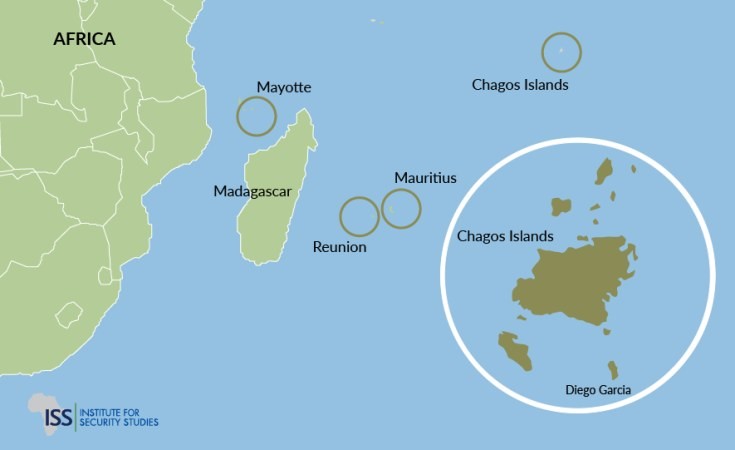
In a rare moment of geopolitical clarity and moral courage, the United Kingdom has agreed to transfer sovereignty of the Chagos Islands to Mauritius while securing a 99-year lease on Diego Garcia, the region’s pivotal military base. The agreement, unveiled by Prime Minister Keir Starmer’s government, is both a forward-looking strategic arrangement and a long-overdue act of historical redress.

At the heart of the deal is a pragmatic security arrangement: the UK will retain uninterrupted access to Diego Garcia, which hosts vital joint operations with the United States. In return, it will pay £101 million annually to Mauritius. This ensures that Britain continues to anchor its defence capabilities in the Indo-Pacific; a region where rival powers like China, Russia, and Iran are rapidly expanding their influence.

From a fiscal standpoint, the agreement is well within reason. Defence Secretary John Healey rightly pointed out that the annual lease cost is comparable to operating a single aircraft carrier. In fact, the payment constitutes just 0.15% of the UK’s £67.7 billion annual defence budget—a fraction of the cost for maintaining global readiness and a meaningful presence in one of the world’s most strategically significant regions. For a modest financial outlay, the UK preserves its operational edge, cements a critical alliance with the US, and reinforces its relevance in global affairs.

Yet the agreement is more than a security calculation. It also addresses one of Britain’s most painful colonial legacies. In 1965, the UK controversially separated the Chagos Archipelago from Mauritius, evicted the native Chagossians, and facilitated the construction of the Diego Garcia military base. These actions, condemned by the International Court of Justice and the UN General Assembly, have weighed heavily on the UK’s international standing.

The return of sovereignty to Mauritius is therefore a landmark act of accountability. It signals that Britain is willing to engage honestly with its imperial past, even when doing so involves diplomatic and political complexity. This is a step not just toward reconciliation with Mauritius, but also toward reasserting the UK’s commitment to international law and human rights.

Still, the success of this agreement must be judged not only by its geopolitical merit, but also by how it serves the people most affected: the Chagossians. The agreement allows Mauritius to implement a resettlement plan across the archipelago, excluding Diego Garcia. While this represents progress, it does not fully resolve the aspirations of Chagossians who long to return to their ancestral home.

As Bernadette Dugasse, a displaced Chagossian, movingly put it: “I don’t belong in the UK, I don’t belong in Mauritius, I don’t belong in the Seychelles. I belong in Diego Garcia.” These voices must not be sidelined. It is imperative that the UK and Mauritius ensure that Chagossians are not only consulted but empowered in shaping the future of the islands.

This deal is a model of how a former colonial power can act responsibly in today’s world, by marrying strategic foresight with moral responsibility. Britain has taken a step forward, not just in securing its defence, but in doing justice. Now, it must ensure that the Chagossian people are treated with the dignity they have long been denied.

The Quiet Rebirth: Canada’s Path to a Parliamentary Republic

With the King and Queen in Ottawa, I thought I might just post this small Republican fantasy, laid out for all to read. 

Prologue: The End of the Crown
In the year 2032, following a decade of public debate, constitutional conferences, and grassroots engagement, Canada formally transitioned from a constitutional monarchy to a parliamentary republic. The catalyst was a national referendum, driven by rising republican sentiment in Quebec, a resurgent Western populism demanding proportional representation, and an Indigenous-led movement for political sovereignty within the Canadian state.

The result was overwhelming: 68% of Canadians voted in favour of replacing the monarchy with a democratically elected head of state, establishing a fully Canadian republic with a new constitution rooted in reconciliation, regional balance, and democratic renewal.

A President for All Canadians
The new President of Canada is elected by ranked-choice ballot every seven years, with a non-renewable term. The position is ceremonial, but symbolically powerful: a national unifier who replaces the King and Governor General, chosen by the people rather than inherited title. Quebec supported the reform overwhelmingly. For the first time, the Canadian state acknowledged its dualistic identity: one anglophone and one francophone society within a shared democratic framework. Official bilingualism was strengthened. The first President, a Métis jurist from Saskatchewan, addressed the country in Cree, French, and English during their inaugural speech.

The Two Houses of Parliament
A. The House of Commons

Reformed to use Mixed Member Proportional Representation (MMP):
• 60% of MPs are elected directly in ridings.
• 40% are elected from regional party lists to reflect actual vote share.

This addressed a central grievance of Western provinces, especially Alberta and Saskatchewan, who had long seen their votes “wasted” under the old system. Under MMP:
• Western-based parties gained consistent, proportional representation.
• Coalition governments became the norm, requiring negotiation and respect across regions.

B. The Senate of Canada
Recast as an Elected Council of the Federation:
• Each province and territory elects equal numbers of Senators, regardless of population, to ensure regional parity.
• Senators serve staggered eight-year terms.
• Legislation must pass both Houses, but the Senate cannot permanently block Commons bills, only delay and revise.

Crucially, Indigenous Peoples were granted 20 permanent Senate seats:
• These seats are chosen by First Nations, Métis, and Inuit national councils, not political parties.
• Their mandate: to protect Indigenous rights, oversee federal treaty obligations, and act as stewards of land, climate, and cultural legislation.

Indigenous Representation in Governance
For the first time in Canadian history, Indigenous Nations are formally recognized as constitutional partners. Their rights are not granted by the Crown, they are affirmed by co-sovereignty agreements embedded in the Constitution.
Twenty seats in the House of Commons are permanently reserved for national Indigenous representatives, elected by pan-Indigenous vote.
Twenty Senate seats, as noted, are selected by national Indigenous councils and rotate among Nations.
• All legislation affecting land, language, or treaty obligations must be reviewed by an Indigenous-Led Standing Committee.

This gave concrete form to the nation-to-nation vision long promised under UNDRIP.

Quebec’s Role in the Republic
• With the monarchy gone, Quebec’s national identity was affirmed in law: it was recognized as a distinct society, with its own civil code, cultural protections, and immigration quotas.
• French became the co-equal language of the state, not merely a translation.
• The Republican Constitution of Canada acknowledged the right of Quebec to self-determination, but also embedded it in a new federal partnership of equals, making secession less urgent and less attractive.

Quebec found itself more powerful inside the republic than outside the monarchy-bound confederation it had long resented.

A More Responsive and Inclusive Democracy
The post-monarchy Canada is:
More representative, with diverse voices in Parliament.
More cooperative, with minority governments requiring negotiation.
More just, with Indigenous peoples at the table, not petitioning from the outside.
More regionally balanced, with the West and Quebec no longer sidelined.
More future-focused, with a Senate that values long-term planning over short-term headlines.

A Canada Reimagined
By 2040, the republican Canada is no longer simply a continuation of its colonial past. It is a democratic partnership of peoples, Indigenous, settler, immigrant, Quebecois, and regional, bound not by allegiance to a Crown, but by shared stewardship of land, rights, and future generations.

It was not a revolution. It was a quiet rebirth, a new chapter written in many voices, with none silenced, and none above the law.

Alberta at the Crossroads: Resource Sovereignty and Federal Cohesion

It began with a simple yet startling poll result: one‑third of Albertans said they would consider leaving Canada if the next federal government were Liberal, a figure up from 25 percent in 2001 and drawn from a 219 Ipsos survey that found 33 percent of respondents believing Alberta would be better off as a separate country. In the same year, an Angus Reid Institute study reported that half of Albertans saw separation as a “real possibility,” even if the practical likelihood was judged low. Other surveys have shown support fluctuating between 23 percent and 33 percent, but the headline number – one in three – captured the public imagination, and became shorthand for a deep provincial malaise.

That malaise has its roots in a storied history of perceived federal overreach. Albertans, and Western Canadians more broadly, still speak in hushed tones of the National Energy Program of 1980, when Ottawa’s sudden push to capture a greater share of oil revenues felt like an economic and cultural assault. Recent Liberal governments, with their emphasis on carbon pricing (the “carbon tax”), tighter environmental assessments through Bill C‑69, and tanker bans under Bill C‑48, have reawakened memories of Pierre Trudeau’s NEP and convinced many that, once again, the province’s lifeblood industry is under siege.

Yet the idea of actually breaking away faces almost insurmountable constitutional and practical barriers. The Supreme Court of Canada’s 1998 Reference re Secession of Quebec made clear that any province seeking to leave must first secure a “clear expression” of the popular will through a referendum on a clear question, and then negotiate terms of separation with Ottawa, and the other provinces, no small feat under Canada’s amending formula, which generally requires approval by Parliament plus seven provinces representing at least 50 percent of the national population. Indigenous nations in Alberta, whose treaty rights are with the Crown, would also have to be brought into the process, introducing further complexity and potential legal challenges.

Contrasting sharply with this looming constitutional labyrinth is the decade of Stephen Harper’s Conservative government (2006–2015), celebrated in Alberta as “our decade.” Under Harper who, though born in Ontario, was politically shaped in Calgary, Alberta’s oil patch felt valued rather than vilified. Pipelines advanced, carbon pricing was minimal, and fiscal transfers were viewed as fair. When Harper left office, Alberta enjoyed low unemployment, a booming energy sector, and a sense of national relevance seldom felt under Liberal administrations.

That stark contrast helps explain why talk of a fourth Liberal mandate elicits such fury.  It’s not just a change of political party, but a reopening of old wounds. Many Albertans feel that, under Liberal governments, their province unwittingly subsidizes federal programs and public services elsewhere, amid equalization debates, even as Ottawa imposes restraints on drilling and export infrastructure. Yet when Alberta needs federal support, whether for pipeline approvals through British Columbia, bailouts of orphaned wells (some $1.7 billion in 2020), or trade negotiations, it turns to the very same system it denounces.

At the heart of this contradiction lies a fundamental misunderstanding on both sides of the debate. Constitutionally, Alberta does own the oil and gas beneath its soil: Section 92A of the Constitution Act, 1982 grants provinces exclusive resource management powers. But that ownership comes with responsibilities and shared consequences. Oil and gas development contributes to national greenhouse‑gas targets, affects international trade obligations (e.g., under CUSMA), and relies on pipelines, rail lines, and workforce mobility that cross provincial boundaries and fall under federal jurisdiction.

This “siege mentality” sees only extraction and profit, ignoring that Alberta’s prosperity is woven into the Canadian federation: workers from Ontario and the Maritimes staff the oil sands; revenues fund national research and infrastructure; federal courts enforce property and contract law; and Ottawa’s diplomatic channels open markets abroad. The province’s economy is both “ours” and “Canada’s,” yet too often the narrative paints Alberta as a cash cow and Ottawa as a meddling bureaucrat.

Should Albertans ever find themselves voting for separation, they would quickly learn that the question is only the beginning. A referendum, no matter how decisive, would simply trigger constitutional negotiations. Debates over dividing federal debts and assets, the fate of interprovincial infrastructure, the status of Indigenous treaties, and even Canada’s seat at the United Nations would follow, all under the watchful eyes of domestic courts and foreign governments skeptical of a rump Canada and a new oil‑rich microstate.

In this light, the polling spikes in separatist sentiment reflect more than a serious bid for nationhood, they signal profound alienation. Up to 33 percent talking of leaving, up to 50 percent seeing separation as possible, and around 23 percent saying they would vote “yes” in a referendum are metrics of anger rather than blueprints for new borders. They underscore a demand for respect, recognition, and real partnership with the federal government, an insistence that Alberta’s economic contributions be matched with political influence and cultural validation.

Ultimately, Alberta’s future lies not in walking away from Canada, but in finding a new equilibrium within it. That requires:
1. Acknowledging interdependence: Alberta must recognize that its resource wealth, workforce, and infrastructure exist because of—and for—the Canadian market and legal framework.
2. Embracing diversification: Beyond oil and gas, investments in hydrogen, clean technology, and critical minerals can reduce the economic anxiety that fuels separatist talk.
3. Renewing federalism: Ottawa needs to move beyond top‑down policies and engage province‑by‑province on environmental and economic goals, respecting regional realities while upholding national standards.

The story woven by those polls, legal analyses, and emotional testimonies is not one of imminent breakup but of a province at a crossroads. The choice before Alberta, and Canada, is whether to deepen the divide into a chasm of mistrust, or to build new bridges of collaboration that honor both provincial autonomy and federal unity.

Can Food Belts Enhance Ontario’s Food Security Future?

Ontario is facing an escalating food security crisis, with food banks reporting unprecedented demand and rural communities increasingly unable to afford basic nutrition. In response, a new policy proposal is gaining traction among local leaders and agricultural advocates: the creation of provincially designated “food belts” to permanently protect farmland and strengthen local food systems.

Recent data paint a sobering picture. More than one million Ontarians accessed food banks between April 2023 and March 2024, a 25% increase over the previous year and nearly double the figures from four years prior. According to Feed Ontario’s 2024 Hunger Report, food bank use has surged across every region, including traditionally self-sufficient rural areas like Grey-Bruce, where the cost of a nutritious food basket consumes over 40% of a family’s income on Ontario Works. In Northumberland County, the monthly shortfall between assistance levels and basic expenses surpasses $1,300 even before rent is considered.

Amid this growing crisis, Ontario Green Party Leader Mike Schreiner has introduced the concept of food belts, designated agricultural zones protected from development, designed to ensure ongoing food production close to population centres. The idea has received support from municipal officials, including Markham and Waterloo Region councillors, who are increasingly alarmed by the pace at which farmland is being lost to suburban sprawl.

Between 2016 and 2021, Ontario lost over 620,000 acres of farmland, according to the 2021 Census of Agriculture. That represents more than 1,200 farms, not phased out due to productivity or retirement, but lost to development and land speculation. Once prime agricultural land is paved over, it is virtually impossible to restore, raising serious concerns about the province’s long-term food capacity.

In Waterloo Region, where one in eight households now reports food insecurity, the link between land use and hunger is becoming clearer. Eleven percent of those turning to food banks come from households with at least one working adult, reflecting broader structural challenges beyond poverty alone. At the same time, 50% of food banks have been forced to reduce services, while 40% have cut back on the amount of food distributed, according to Feed Ontario.

Food belts are proposed as a systemic solution. Modeled in part on the province’s existing Greenbelt, food belts would differ by prioritizing food production rather than simply preserving green space. Enabling legislation, potentially through amendments to Ontario’s Planning Act or the Provincial Policy Statement, would establish a policy framework, followed by municipal implementation through Official Plans and comprehensive land-use reviews.

The food belt model would involve identifying prime agricultural lands for protection, particularly in high-growth regions such as the Greater Golden Horseshoe. Within these zones, land use would be restricted to agricultural and food-related purposes, including greenhouses, food processing, and housing for seasonal farm workers. Non-agricultural development would be prohibited or tightly regulated.

To support farmers within the belts, advocates suggest a suite of provincial incentives. These could include property tax relief, grants for sustainable practices, support for young and new farmers, and investment in local food infrastructure such as processing facilities and distribution hubs. The intent is to foster both agricultural stability and economic opportunity in rural areas.

Crucially, food belts would not operate in isolation. Stakeholder engagement would be central to their design and implementation, involving farmers, Indigenous communities, conservationists, and municipal planners. A provincial oversight body could monitor compliance, enforce regulations, and report on agricultural output and environmental indicators within the belts.

Beyond farmland protection, proponents argue that food belts represent a strategic investment in Ontario’s long-term food resilience. By shortening supply chains, reducing reliance on imported goods, and anchoring food production within commuting distance of major urban centres, food belts could help the province navigate future disruptions caused by climate change, inflation, and geopolitical instability.

“Simply put, we cannot eat subdivisions,” Schreiner has said, warning that continued inaction could erode Ontario’s ability to feed itself. The Green Party’s position echoes findings from agricultural policy experts who have long cautioned that land-use planning must be treated as a food security issue, not just an environmental or economic concern.

As of 2024, Ontario’s policy landscape lacks a formal mechanism to establish food belts, though growing public and political interest may push the province to act. For now, the concept remains in the realm of advocacy and municipal discussion, but pressure is mounting.

With food insecurity no longer confined to urban poverty and food banks unable to keep pace, the proposal for food belts offers a rare convergence of long-term strategy and immediate relevance. Whether Queen’s Park chooses to seize the moment remains to be seen. What is clear, however, is that Ontario’s food future will depend not only on how the land is farmed, but on whether that land remains farmland at all.

Sources
• CBC News: https://www.cbc.ca/news/canada/kitchener-waterloo/foodbelt-reaction-schreiner-markham-councillors-1.7536995
• Feed Ontario Hunger Report 2024: https://feedontario.ca/research/hunger-report-2024
• Statistics Canada, Census of Agriculture 2021: https://www150.statcan.gc.ca/n1/daily-quotidien/220511/dq220511b-eng.htm
• Greenbelt Act, 2005: https://www.ontario.ca/laws/statute/05g01
• Grey Bruce Public Health: https://www.publichealthgreybruce.on.ca
• HKPR Health Unit (Northumberland): https://www.hkpr.on.ca

Five Things We Learned This Week

Here is the latest edition of “Five Things We Learned This Week” for May 17–23, 2025, highlighting significant global developments across various sectors.

🛑 1. UN Warns of Escalating Humanitarian Crisis in Gaza

UN Secretary-General António Guterres described the current stage of the Gaza conflict as possibly its “cruellest phase,” with Palestinians facing immense suffering amid escalating Israeli military operations. He warned that the entire population is at risk of famine and criticized the limited humanitarian aid reaching Gaza, citing that only a fraction of permitted aid trucks have reached those in need due to insecurity. In the past 24 hours, at least 60 people were killed, including strikes on Khan Younis, Deir al-Balah, and Jabaliya, with over 50 people still buried under rubble. UN agencies and aid groups have raised alarms about inadequate food and medical supplies, with over 9,000 children treated for malnutrition and the healthcare system near collapse—94% of hospitals are damaged or destroyed. Israeli airstrikes have also targeted hospitals, further straining emergency services. Despite easing an 11-week blockade, aid remains minimal, far below pre-war levels. International criticism of Israel’s military actions continues, with leaders calling for a ceasefire and increased humanitarian access. Meanwhile, discussions are underway among Western nations about formally recognizing the state of Palestine, adding a new diplomatic dimension to the ongoing crisis. 

💉 2. NHS England Launches World’s First Gonorrhoea Vaccine

On May 21, NHS England introduced the world’s first gonorrhoea vaccine, demonstrating an efficacy of 30–40%. This development aims to combat the rising rates of gonorrhoea infections and represents a significant advancement in public health efforts to control sexually transmitted infections. 

📉 3. Trump’s New Tariff Threats Shake Global Markets

President Donald Trump’s evolving trade policies continue to send shockwaves through global markets. After a brief period of de-escalation in the U.S.-China trade war, markets were rattled on May 23, 2025, when Trump threatened to impose a 25% tariff on Apple iPhones not manufactured in the U.S. and a 50% tariff on EU goods starting June 1. These moves undermined recent optimism following tariff reductions between the U.S. and China, which had reignited S&P 500 gains and stabilized investor sentiment. However, concerns about tariffs resurfaced alongside rising inflation, tepid economic growth, and persistent federal debt nearing 100% of GDP. Despite some temporary relief—such as tariff pauses and incentives for auto and tech firms—Trump’s unpredictable trade tactics, especially his criticism of Apple’s offshore manufacturing and pressure on trading partners like the UK and India, have reintroduced uncertainty. Furthermore, even with promising AI infrastructure investments from the Middle East, the U.S.-China relationship is strained by export restrictions and sanctions tied to Huawei’s semiconductor use. Economists warn these erratic policies could spur stagflation and erode S&P 500 earnings growth, highlighting the risks of Trump’s tariff-heavy strategy amid widening fiscal deficits and global trade tensions. 

🧬 4. Discovery of New Dwarf Planet Candidate in Outer Solar System

Astronomers have reported the discovery of 2017 OF201, a new dwarf planet candidate located in the outer reaches of the Solar System. This celestial body adds to our understanding of the Solar System’s composition and the diversity of objects within it. 

🎭 5. Hay Festival of Literature and Arts Commences in Wales

The Hay Festival of Literature and Arts began on May 22 in Hay-on-Wye, United Kingdom. This annual event is one of the largest literary festivals globally, attracting authors, thinkers, and readers to celebrate literature, arts, and ideas through various talks, readings, and performances. 

Stay tuned for next week’s edition as we continue to explore pivotal global developments.

A Strategic Reset: Is the UK’s 12-Year Deal with the EU a Trial Run for Rejoining?

In a move that may mark the beginning of a new chapter, or even a slow reversal, in post-Brexit Britain, Prime Minister Keir Starmer’s government has signed a sweeping 12-year deal with the European Union. Spanning trade, fisheries, defense, energy, and youth mobility, the agreement is being sold as a pragmatic step toward economic stability. Yet, for keen observers of European geopolitics and domestic UK policy, this isn’t just about cutting red tape or smoothing customs formalities. It’s about direction, intent, and trajectory; a trajectory, some might argue subtly, but surely points back toward Brussels.

Let’s be clear – this is not rejoining the EU. The UK retains its formal sovereignty, its independent trade policy, and its seat at the World Trade Organization. Yet, in practical terms, this agreement represents a partial realignment with the European regulatory and political sphere. It’s a détente, but one that many suspect could serve as a trial run for re-entry.

Trade and Regulatory Alignment: Quiet Integration
The most immediate impacts will be felt in trade. The deal includes a new sanitary and phytosanitary (SPS) agreement that significantly eases checks on animal and plant products, long a point of friction for exporters. British sausages and cheeses can once again cross the Channel with ease, and exporters have been granted breathing room after years of customs chaos.

The price? The UK will align dynamically with EU food safety rules and standards. Not only that, but the European Court of Justice (ECJ) will have an oversight role in this domain. It’s a politically delicate concession that the previous Conservative government would have balked at, but it is one that Starmer is positioning as an economic necessity rather than a political capitulation.

This kind of soft alignment, regulatory cooperation without full membership, mirrors the arrangements held by countries like Norway and Switzerland. The UK isn’t there yet, but it’s moving in that direction, and the economic benefits are likely to reinforce the case.

Fisheries: Symbolism and Compromise
Few sectors embody the emotion of Brexit like fisheries. The 2016 Leave campaign made maritime sovereignty a powerful symbol of national self-determination. Now, the UK has agreed to extend EU access to its waters for another 12 years, hardly the full “taking back control” once promised.

However, the government insists that the deal does not grant additional quotas to EU vessels, and preserves the right to annual negotiations. To offset the political fallout, £360 million is being invested into modernizing the UK fishing industry, a sweetener aimed at skeptical coastal communities.

Yet symbolism matters. This agreement effectively freezes the reassertion of full UK control over its fisheries until 2038. That’s long enough for an entire generation of voters to become accustomed to a cooperative status quo.

Energy, Climate, and Economic Integration
Perhaps the most telling element of the deal is its ambition in energy and carbon market integration. The UK and EU will link their Emissions Trading Systems (ETS), smoothing the path for cross-border carbon credit trading, and exempting British companies from the EU’s incoming Carbon Border Adjustment Mechanism (CBAM). This could save UK firms an estimated £800 million annually.

In strategic terms, it brings the UK closer to the EU’s climate governance framework, and represents a quiet, but firm repudiation of the “Global Britain” fantasy that post-Brexit Britain could thrive on deregulated free-market exceptionalism.

Security and Mobility: A Return to Practical Cooperation
Defense is also back on the table. The UK will participate in the EU’s PESCO initiative for military mobility, signifying renewed cooperation on troop and equipment movements. Intelligence sharing and sanctions alignment are also included, moves that suggest an increasingly coordinated foreign policy framework, even outside EU structures.

Meanwhile, UK travelers will soon regain access to EU e-gates, reducing airport queues, and negotiations are underway for a youth mobility scheme. The return to the Erasmus+ student exchange programme, in particular, is a major symbolic step, reconnecting young Britons with continental Europe in a way that had been severed post-2020.

A Trial Run for Rejoining?
Viewed in isolation, each element of the deal appears pragmatic and limited. Viewed together, however, they amount to a re-entangling of the UK within EU institutions and standards. The length of the deal, 12 years, is conspicuous. It places a review just past the midpoint of what could be two Labour governments, opening a window in the 2030s for a possible reapplication for membership.

Critics argue that Starmer is “Brexit in name only,” effectively undoing much of the substance of the 2016 vote. Proponents counter that he is offering economic stability, and international credibility without rekindling the divisive debate of formal re-entry, but no one should be under any illusions: this is a serious recalibration. For a generation of younger voters who never supported Brexit, it might just feel like the first step toward righting a historic wrong.

In this light, the 12-year deal may be best understood as a proving ground. It allows both the UK and the EU to rebuild trust, test cooperation mechanisms, and create the legal and political scaffolding that could one day support full re-accession. Starmer may deny it, and Brussels may downplay it, but history has a way of turning such “interim measures” into new norms.

For now, the UK is not rejoining the EU, but the doors, long thought closed, are no longer locked. And the steps taken in this agreement may well be remembered as the start of the long walk back in.

Sources
• BBC News: https://www.bbc.com/news/articles/czdy3r6q9mgo
• Sky News: https://news.sky.com/story/uk-eu-trade-deal-what-is-in-the-brexit-reset-agreement-13370912
• Al Jazeera: https://www.aljazeera.com/news/2025/5/21/will-eu-deal-make-food-cheaper-add-12bn-to-the-uk-economy
• Financial Times: https://www.ft.com/content/66763def-d141-465d-ba96-31399071bf3b
• The Times: https://www.thetimes.co.uk/article/starmers-done-no-better-with-the-eu-than-may-8l37jm2sf

Can the NDP Reclaim Its Socialist Roots?

With the Carney Liberals taking their traditional centralist policy approach to government, is there an opening on the left of the Canadian political spectrum for a truly socialist-leaning party?

The New Democratic Party (NDP) of Canada stands at a defining moment in its history. After years of struggling to maintain relevance in a political landscape increasingly polarized between the Liberals and Conservatives, the party finds itself adrift. The September 2024 decision to terminate its confidence-and-supply agreement with the Liberals was a tacit admission that its previous strategy had failed. Jagmeet Singh justified the move by accusing the Liberals of being “too weak, too selfish, and too beholden to corporate interests.” However, this abrupt shift, triggered by a labor dispute the Liberals chose to override, was as much about salvaging the NDP’s identity as it was about standing up for workers.

This is not the first time the NDP has faced an existential crisis. The party has long struggled to balance its socialist roots with the political realities of an electorate wary of radical change. In the late 1960s, the Waffle movement sought to push the party toward a more explicitly socialist and nationalist platform, only to be exiled from the mainstream. The early 2000s saw a similar push from the New Politics Initiative, which argued the party had strayed too far from its progressive ideals. Both movements failed, and the NDP continued its slow drift toward the center. That drift culminated in Singh’s decision to prop up Trudeau’s minority government; a decision that, while pragmatic, blurred the lines between the two parties and left voters questioning what the NDP actually stood for.

Yet, within living memory, the NDP has proven that it can be more than a third-place protest party. Jack Layton’s leadership from 2003 until his untimely death in 2011 remains the party’s high-water mark, a period when the NDP not only influenced policy, but commanded real electoral momentum. Layton took a party often dismissed as an afterthought and transformed it into the Official Opposition, securing a historic 103 seats in the 2011 federal election. His ability to connect with voters, offering a vision of pragmatic yet principled social democracy, resonated across generational and regional divides. Layton’s optimism, grassroots engagement, and unshakable commitment to progressive values energized Canadians in a way no NDP leader has managed since. His death left the party without a unifying figure, and in the years that followed, the NDP failed to maintain his momentum, squandering what should have been a launching point for greater electoral success.

With the collapse of the Liberal-NDP pact, the party now has a rare opportunity to redefine itself. If the NDP wishes to survive as more than just an opposition voice, it must embrace a bold, distinct platform that prioritizes social justice, labor rights, and public ownership. A genuine return to socialist principles could galvanize its base and attract disillusioned voters from both the Liberals and Greens. However, this transformation cannot be achieved with tired leadership.

Jagmeet Singh, once an energetic and charismatic leader, increasingly appears exhausted and frustrated. His declining support within the party, dropping to 81% in his last leadership review, the lowest for an NDP leader since 2016, signals growing dissatisfaction. If the party is serious about reinvention, it needs new leadership capable of articulating a compelling vision for the future.

Enter Wab Kinew, the newly elected Premier of Manitoba and leader of the Manitoba NDP. Kinew has demonstrated an ability to win elections in difficult political terrain while championing progressive policies. His emphasis on social justice, economic equity, and reconciliation has resonated deeply with voters. More importantly, he has something Singh now lacks: momentum.

But would Kinew be willing to make the jump to federal politics? His recent victory in Manitoba suggests he is invested in provincial leadership for the foreseeable future. Nevertheless, his name is already circulating in discussions about the NDP’s future. If not Kinew, the party must at least look for someone with his level of dynamism and credibility.

With the 2025 federal election results now in, and the party must decide: does it want to be a serious political force, or just a historical footnote? If the NDP is to survive, it must remember what Layton taught it, bold leadership, a clear progressive message, and the courage to fight for real change. Without these, the party’s future will remain uncertain, its best days forever in the past.