A Welcome with Questions: What Dr. Kaur’s Arrival Reveals About North Grenville’s Physician Incentive Strategy

Ontario is facing a growing shortage of primary care physicians, leaving millions of residents without regular access to a family doctor. This crisis is particularly acute in rural and small-town communities, where aging populations and physician retirements have widened care gaps. In response, municipalities across the province are adopting innovative strategies to attract, recruit, and retain doctors. These include financial incentive programs, housing and relocation support, flexible practice models, and community integration initiatives aimed at making smaller communities more appealing.

So, the arrival of a new physician in a small Ontario town is typically a cause for celebration. Access to primary care is under increasing pressure across the province, and communities like North Grenville work diligently to recruit and retain family physicians. Thus, when Mayor Nancy Peckford announced the addition of Dr. Pawandeep Kaur to the Rideau Crossing Family Health Centre in Kemptville, it was a moment of optimism.

However, a closer examination of the circumstances surrounding Dr. Kaur’s recruitment reveals complexities that warrant further scrutiny, particularly concerning the application and effectiveness of North Grenville’s Family Physician Incentive Program.

Dr. Lavitt’s Brief Tenure
Dr. Samantha Lavitt joined the Rideau Crossing Family Health Centre in June 2024 as part of the municipality’s North Grenville Primary Care Incentive Program. Her arrival was heralded as a significant step forward in enhancing primary care access for the community. However, less than a year into her tenure, Dr. Lavitt announced her departure, effective June 1, 2025. The reasons for her short stay have not been publicly disclosed, but her brief tenure raises questions about the program’s ability to retain physicians in the community. 

A Seamless Transition – But Not an Expansion
To ensure continuity of care, Dr. Kaur will begin transitioning into Dr. Lavitt’s practice starting April 16, 2025, with a full handover by June 1. This overlap aligns with the College of Physicians and Surgeons of Ontario (CPSO) guidelines, which mandate that physicians provide appropriate arrangements for patient care continuity upon leaving a practice.

While this transition is commendable from a patient care perspective, it is important to note that Dr. Kaur is not an addition to North Grenville’s physician roster, but a replacement. The total number of family physicians in the community remains unchanged.

The Optics of Growth
Mayor Peckford’s announcement welcomed Dr. Kaur as “another new family doctor,” a phrase that suggests an increase in the local healthcare workforce. However, this characterization is misleading, as Dr. Kaur is filling the vacancy left by Dr. Lavitt. The use of the term “new” in this context may create a perception of growth where there is none.

Furthermore, Dr. Kaur’s recruitment is again tied to the township’s Family Physician Incentive Program. This raises questions about the program’s application. Designed to attract new physicians to underserved areas, the program appears, in this instance, to be used to maintain existing capacity rather than expand it. 

A Stepping Stone, or a Sustainable Solution?
The brief tenure of Dr. Lavitt and the subsequent recruitment of Dr. Kaur under the same incentive program highlight potential vulnerabilities in the program’s design. If physicians view the program as a short-term opportunity or a stepping stone to other positions, the community may face ongoing challenges in maintaining stable, long-term primary care services. Perhaps the program’s retention strategies may need reevaluation to ensure sustainable healthcare delivery in North Grenville? 

Moving Forward with Transparency
While Dr. Kaur’s arrival ensures that existing patients continue to receive care, the situation underscores the need for transparency in how recruitment programs are utilized. It is essential to assess whether these programs are achieving their intended goals of expanding healthcare access, and to consider adjustments that enhance their effectiveness in both attracting and retaining physicians.

As North Grenville continues to navigate the complexities of healthcare provision, clear communication and strategic planning will be key to ensuring that the community’s needs are met not just today, but in the years to come.

Sources
• Rideau Crossing Family Health Centre. “Practice Update.” rideaucrossingfhc.ca
• My Kemptville Now. “North Grenville welcomes newest physician.” mykemptvillenow.com
• North Grenville. “North Grenville Enhances Primary Care Access with Arrival of Dr. Lavitt.” northgrenville.ca
• College of Physicians and Surgeons of Ontario. “Physician Information.” register.cpso.on.ca

Cameron Davies and the Rise of Alberta’s Republican Right: An American Echo in Western Canada

The emergence of the Republican Party of Alberta (RPA) on the political stage is more than just another footnote in the long tale of Western alienation, it’s a calculated, ideologically driven attempt to redefine Alberta’s place not just within Canada, but in the broader North American political culture. At its centre stands Cameron Davies, a seasoned conservative strategist whose own political evolution mirrors the rightward lurch of the party he now leads.

The RPA was officially registered with Elections Alberta in January 2024, marking the latest effort to unite various hard-right and sovereigntist factions that have cycled through Alberta politics over the past decade. It inherited the legacy of groups like the Wildrose Independence Party and Wexit Alberta, which had captured the imagination of disillusioned voters but failed to sustain momentum. The new branding, “Republican” in name and nature, signals a stark ideological shift. It’s not just about independence anymore; it’s about importing the ethos of American-style conservatism, down to the MAGA-hued slogans and policy choices.

When Cameron Davies was acclaimed as leader in April 2025, the party’s intentions crystallized. Davies, a former backroom operator for the Wildrose and United Conservative Party (UCP), is best known for his role in the controversial “kamikaze” campaign during the 2017 UCP leadership race. That episode, which sought to undermine Brian Jean in favour of Jason Kenney, resulted in Davies being fined $15,000 for obstructing an election investigation. Though bruised by scandal, he remained a prominent figure in conservative circles until he publicly resigned from the UCP in 2025, accusing it of corruption, entitlement, and ideological betrayal.

His resignation letter read like a manifesto, a rejection of institutional politics in favour of what he described as grassroots conservatism, though critics might call it a hard-right insurgency. Davies’ departure was both strategic and symbolic. He positioned himself as the torchbearer of the “real right” in Alberta, unencumbered by the compromises of power that had come to define Danielle Smith’s increasingly centrist UCP government.

Under Davies’ leadership, the RPA has embraced a platform that reads like it was drafted in a red-state Republican think tank. There’s the call for a binding referendum on Alberta independence, followed by a non-binding vote on joining the United States. There’s strong rhetoric about parental rightsreligious freedom, and gun ownership, coupled with opposition to “woke” policies like diversity, equity, and inclusion (DEI) programs. Carbon taxes, public healthcare, federal immigration policies—these are all painted as signs of moral and fiscal decline, to be swept away by a new order rooted in faith, family, and “freedom.”

If this sounds familiar, it’s because it is. Davies has openly fashioned himself in the mold of American populist leaders. His social media presence references his military background (“Marine”), his patriotism, and his adherence to traditional values. He speaks of Canada, especially under Liberal governments, in the kind of dire terms more commonly heard on Fox News than in Canadian legislatures. For Davies, Ottawa is not just a political rival; it is a moral adversary, and Alberta must be rescued from its grasp.

There is no hard evidence yet of direct ties between Davies and the machinery of the American right, no funding pipelines, no visits to CPAC (yet), no endorsements from U.S. figures. But the ideological alignment is unmistakable. The RPA’s aesthetics, policy priorities, and culture-war messaging are all deeply influenced by the Make America Great Again (MAGA) movement. It is a party that sees itself less as a provincial player and more as a cultural movement, seeking to spark a broader populist awakening.

Davies’ recent moves show that this isn’t just rhetorical posturing. In May 2025, the RPA signed a Memorandum of Understanding with The Independence Party of Alberta, forming a loose coalition aimed at consolidating the separatist vote. The message is clear: there is no room anymore for fragmented protest parties. To mount a serious challenge to the UCP and, by extension, the federal order, the independence movement must speak with one voice, and Davies intends to be that voice.

The question now is whether the Republican Party of Alberta will become a formidable political force, or simply another flare in Alberta’s long-burning bonfire of right-wing discontent. The UCP has already learned, painfully, what happens when the right fractures. The Wildrose-PC split in the early 2010s handed the NDP a surprise victory in 2015. That memory is still fresh, and it was precisely what motivated the formation of the UCP as a big-tent conservative party in 2017.

Yet that tent is fraying. Many rural voters feel the UCP has compromised too much on issues like education, healthcare privatization, and provincial sovereignty. The RPA, with its unapologetically radical platform, offers them an alternative, a place where the message isn’t diluted by political pragmatism. Davies has a keen understanding of this tension, and he’s betting that enough Albertans are tired of half-measures and ready to blow the whole system up.

But winning a few headlines and gaining traction in the echo chamber of social media is one thing; winning seats is another. The RPA currently has no MLAs. Its organizational infrastructure is limited. Unless a high-profile defection occurs or it pulls off an upset in a by-election, the party remains on the fringe. Moreover, its overtly American positioning, especially the proposal to join the U.S., may strike even sympathetic voters as unserious or dangerously naive.

Canadians, after all, are not Americans. While cultural conservatism resonates in parts of Alberta, many still value universal healthcare, peacekeeping diplomacy, and the Charter of Rights and Freedoms. The RPA’s invocation of U.S.-style populism could ultimately alienate more voters than it attracts, especially if it becomes associated with the chaos and polarization of American politics.

Still, it would be unwise to dismiss Cameron Davies and the RPA out of hand. They are tapping into something very real: a deep and growing disillusionment with traditional politics, a sense of cultural siege, and a yearning for bold, even revolutionary change. Whether that can be translated into electoral success remains uncertain, but the message is loud and clear: the populist right in Alberta is no longer content to sit on the sidelines. And under Davies’ leadership, it’s ready to speak with an American accent.

The Liberal Party’s New Power Struggle: Carney vs The Old Guard

Now that Mark Carney has won the 2025 federal election, and as Prime Minister, named his new cabinet, his ability to navigate the internal politics of the Liberal Party will be just as crucial as his capacity to govern the country. While Carney’s experience as Governor of the Bank of Canada and later the Bank of England gives him credibility as a skilled economic manager, political leadership is an entirely different challenge. Government is not just about making rational policy decisions; it is about managing competing egos, regional interests, and the internal factionalism that defines any major political party. The question is whether Carney, a newcomer to elected politics, can withstand the pressures of a party where everyone wants a piece of the action.

One of Carney’s greatest strengths is his ability to operate within complex institutions, where navigating bureaucracy and political sensitivities is essential. However, the Liberal Party is not a technocratic body, it is an organization with entrenched factions, long-standing rivalries, and individuals who expect rewards for their loyalty. A Prime Minister must act as both leader and power broker, ensuring that key players feel valued while still asserting control over the direction of the government. If Carney fails to grasp this dynamic early on, he risks being seen as an outsider unable to command the loyalty of his own caucus.

A major test will be how he handles the various factions within the party. The Liberals are not a monolithic entity; they consist of a progressive wing that leans heavily on social justice issues and a centrist bloc that prioritizes economic pragmatism. There are also strong regional interests at play, particularly from Ontario and Quebec, where powerful party figures hold significant influence. A successful leader must strike a balance, ensuring that no single faction feels alienated while maintaining a clear sense of direction. If Carney leans too heavily into one camp, especially if he is seen as overly technocratic at the expense of political instinct, he risks internal dissent.

Another potential challenge is dealing with the remnants of Trudeau’s inner circle. If Carney takes the leadership, it will not necessarily mean the party’s Trudeau-era power structure disappears overnight. There will be long-time MPs and advisers who built their careers under Trudeau’s leadership and may not be quick to embrace Carney’s vision. Some may resist his authority outright, while others could quietly work against him if they feel sidelined. Managing this transition will require careful maneuvering, if Carney fails to integrate these figures into his team in a way that acknowledges their influence, he could find himself facing internal power struggles before he even settles into office.

Cabinet appointments announced today will be an early indicator of whether Carney understands the importance of political management. Every successful leader knows that forming a cabinet is not just about qualifications; it is about rewarding allies, neutralizing threats, and ensuring regional representation. If Carney takes a purely meritocratic approach, appointing ministers based solely on expertise rather than political necessity, he could alienate those who expect a return on their loyalty. The most effective prime ministers understand that governing is about both competence and coalition-building; failing to strike that balance can quickly lead to discontent within caucus.

Beyond Parliament Hill, Carney will also need to connect with the party’s grassroots. The Liberal base consists of volunteers, donors, and riding association leaders who expect their voices to be heard. Carney’s reputation as an elite, internationalist figure could work against him if he does not make a concerted effort to engage directly with these groups. If he is perceived as distant or disconnected from the party’s rank and file, he could struggle to maintain cohesion within the Liberal movement. Trudeau, for all his faults, had a deep personal connection with the party’s grassroots, something that sustained him through difficult periods. Carney will need to build that relationship from scratch.

Like any new leader, Carney will face an early test, a moment that defines his ability to command respect and authority within his party. Whether it is a scandal, an economic crisis, or a policy misstep, how he handles that first major challenge will set the tone for his leadership. If he shows strength and decisiveness, he could solidify his position within the party. But if he falters, doubts about his leadership will begin to fester, potentially leading to deeper internal divisions.

Ultimately, Carney’s success will hinge on his ability to adapt. He has the intellectual firepower and the institutional experience, but politics is a game of relationships, instincts, and survival. If he can master that side of the job, he could thrive. If not, he risks becoming yet another promising leader undone by the very party that brought him to power.

Unforced Errors: How the Conservatives Undermined Their Own Campaign

The Conservative Party of Canada (CPC) faced a significant defeat in the 2025 federal election, despite early leads in the polls. Several factors related to their platform and campaign strategy contributed to this outcome.

Ideological Ambiguity and Policy Reversals
Under Pierre Poilievre’s leadership, the CPC attempted to broaden its appeal by moderating positions on key issues. This included adopting a more serious stance on climate change and proposing policies aimed at working-class Canadians. However, these shifts led to confusion among voters about the party’s core principles. The rapid policy changes, especially during the short campaign period, made the party appear opportunistic and inconsistent.  

Alienation of the Conservative Base
The CPC’s move towards the center alienated a portion of its traditional base. This disaffection contributed to the rise of the People’s Party of Canada (PPC), which saw its vote share increase significantly. Many former CPC supporters shifted to the PPC, attracted by its clear stance on issues like vaccine mandates and opposition to carbon taxes. This vote splitting weakened the CPC’s position in several ridings.    

Controversial Associations and Rhetoric
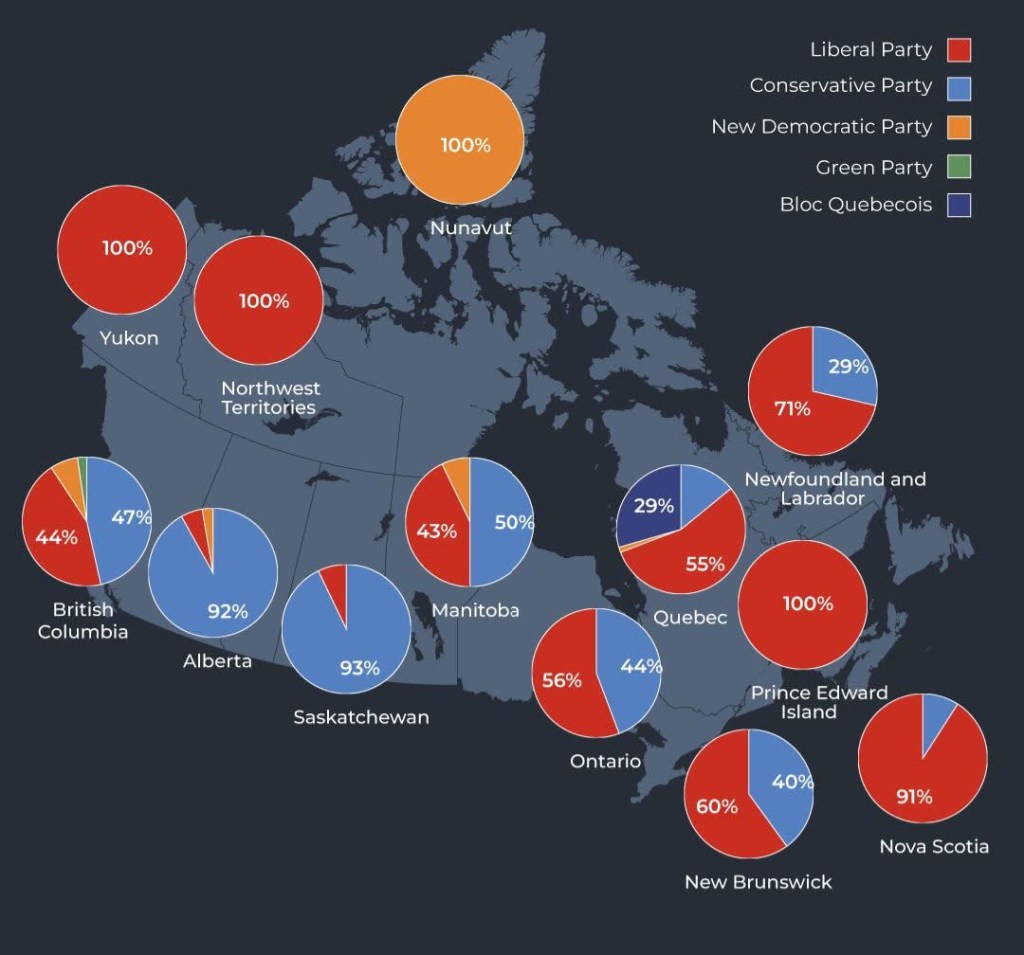
Poilievre’s perceived alignment with hard-right elements and reluctance to distance himself from controversial figures, including former U.S. President Donald Trump, raised concerns among moderate voters. Trump’s antagonistic stance towards Canada, including economic threats and inflammatory rhetoric, made the election a referendum on Canadian sovereignty for many voters, pushing them towards the Liberals.   

Ineffective Communication and Messaging
The CPC’s campaign suffered from inconsistent messaging. While initially focusing on pressing issues like housing, the campaign later shifted to a more negative tone, attacking Liberal policies without offering clear alternatives. This lack of a cohesive and positive message failed to inspire confidence among undecided voters.  

Structural and Demographic Challenges
The CPC continued to struggle with regional disparities, particularly between conservative-leaning western provinces and liberal-dominated urban centers in the east. The party’s inability to appeal to urban and suburban voters, coupled with changing demographics, hindered its ability to secure a national majority.  

Foreign Interference Concerns
Post-election analyses indicated that foreign interference, particularly from Chinese government-linked entities, may have influenced the election outcome. Disinformation campaigns targeted CPC candidates, especially in ridings with significant Chinese-Canadian populations, potentially costing the party several seats.  

The CPC’s defeat in the 2025 federal election can be attributed to a combination of ideological shifts that alienated core supporters, associations with controversial figures, inconsistent messaging, structural challenges, and external interference. These factors undermined the party’s ability to present a compelling and cohesive alternative to the electorate.

Resetting the Relationship: A Vision for a True Indigenous Partnership

As the dust settles from the recent election, there’s a palpable sense that the Liberal Party has been handed not just another mandate, but a historic opportunity; to begin building a new Canadian future rooted in respect, renewal, and real partnership with Indigenous peoples.

This isn’t merely an electoral moment. It’s a constitutional and moral one, and with the planned visit of King Charles III, it’s time to reset the relationship. 

The last decade saw growing national awareness around reconciliation, but also hard truths: court rulings reminding us of Canada’s obligations, tragedies like unmarked graves that brought history into the present, and persistent gaps in housing, healthcare, and infrastructure that continue to shape the daily lives of Indigenous families. The incoming government must now shift the conversation from acknowledgment to architecture. From reconciliation as sentiment to reconciliation as structure.

And that starts with one fundamental premise: Indigenous peoples are not stakeholders. They are nations, governments, and partners. That means our approach must be built not on program delivery, but on rights recognition, not on federal paternalism, but on Indigenous self-determination.

At the core of the Liberal government’s first steps should be a legislative framework for implementing the United Nations Declaration on the Rights of Indigenous Peoples (UNDRIP). While Bill C-15 laid important groundwork, it must now be operationalized across the federal system, with Indigenous consent and co-development embedded in environmental regulation, resource management, and national law. A new generation of legal pluralism is needed, one that supports Indigenous legal systems in areas like child welfare and justice, alongside Canadian institutions.

Health care is another frontline. The federal government has made strides, but now must go further by supporting the creation of a fully Indigenous-governed national health authority. The British Columbia model has shown us what’s possible. Culturally grounded, community-run care is not a luxury, it’s a human right. This includes mental health programs rooted in ceremony and land-based healing, supported through sustained federal investment.

Education is likewise a transformative space. Indigenous-run schools, immersion language programs, and universal post-secondary supports aren’t just policies, they are acts of resurgence. They offer a way forward not just for Indigenous youth, but for Canada itself, by rebuilding cultural foundations dismantled through generations of colonial education.

Meanwhile, the housing and infrastructure crisis in Indigenous communities must be treated with the urgency of a national emergency. No government can speak of reconciliation while children live in overcrowded homes, and communities boil their water for decades. The incoming government must move quickly to fund 25,000 new homes and eliminate every long-term boil water advisory, with planning and implementation led by Indigenous governments themselves.

Yet, reconciliation isn’t only rural. More than half of Indigenous people now live in urban centres. Yet their voices are often excluded from nation-to-nation dialogues. That has to change. The new Liberal government should support Indigenous-led urban governance models, recognizing urban Indigenous peoples not as dislocated citizens but as rightful partners in policy design and delivery.

The question of representation also looms large. If we’re serious about nation-to-nation relationships, then Indigenous peoples must have permanent seats at the table, literally. That could mean Indigenous representation in Parliament or the establishment of a Council of Indigenous Nations with the authority to review federal legislation. Either way, the message must be clear: the age of unilateralism is over. Perhaps a dedicated number of seats in the House of Commons and Senate, similar to the New Zealand system, might see Indigenous voices heard in the legislative process? 

This is the path toward a new Canadian approach, one that accepts the truth of the past but refuses to be limited by it. The Liberal Party has long seen itself as a nation-building force. Reconciliation must be at the center of that vision now. Not as a political issue, not as a file on a minister’s desk, but as the defining project of a generation.

We have the ideas. We have the frameworks. What we need now is the political will to turn commitments into laws, pilot projects into national systems, and partnerships into power-sharing. If we get this right, Canada will not only be more just, it will be stronger, more resilient, and more united than ever before.

The Hidden Cost of the F-35: Sovereignty on a Leash

This is the second in a series of posts discussing U.S. military strategic overreach. 

By any reasonable metric, the F-35 fighter is an impressive piece of military engineering. It boasts stealth capabilities, sensor fusion, and interoperable systems that promise to keep Canada in the front ranks of allied air power. Yet, beneath the glossy marketing and Lockheed Martin hype lies a truth so quietly alarming that it should give every Canadian policymaker pause: Canada does not fully control its own F-35s, not even the spare parts sitting on its own soil.

A recent Ottawa Citizen article revealed a startling fact: all spare parts for Canada’s F-35 fleet remain the legal property of the United States government until they are installed into an aircraft. Even parts that Canada has paid for, warehoused, and stored at Canadian bases are subject to U.S. control. The implications for sovereignty are both profound and disturbing.

This is not a bug in the system, it is a feature. The F-35 program operates under a U.S.-controlled global logistics system, originally known as ALIS (Autonomic Logistics Information System) and now being transitioned to ODIN (Operational Data Integrated Network). This system governs not only parts distribution, but also mission data, performance diagnostics, and maintenance schedules. In short, Canada cannot operate or maintain its F-35s without ongoing U.S. authorization.

What does this mean in practice? It means that in any scenario, be it a geopolitical crisis, a domestic emergency, or even a diplomatic spat, Canada’s operational readiness is beholden to U.S. goodwill. If Ottawa wanted to deploy its F-35s in a mission that Washington disapproved of, access to critical spare parts could be curtailed or denied. Even worse, Canada wouldn’t have a legal leg to stand on. That’s not interoperability, that’s dependency.

The Trudeau government, and now the Department of National Defence under Minister Bill Blair, has justified the F-35 purchase on the grounds of performance and alliance coherence, but this latest revelation should force a hard rethink. The fighter itself may fly, but Canadian sovereignty is grounded every time we accept conditions that limit our own use of military equipment.

This is not just a theoretical concern. Recent U.S. behaviour, whether through protectionist trade moves, political instability, or withholding of military assistance to allies, underscores the risk of over-reliance on a single partner, even one as historically close as the United States.

To be clear, this is not an anti-American stance. Cooperation with the U.S. remains vital to Canada’s defense posture. But there is a stark difference between cooperation and concession of control. The F-35 deal, as it stands, crosses that line.

Ottawa should demand contractual clarity and sovereign guarantees, including ownership and full control of spare parts. If that’s not possible within the F-35 framework, then we must have the courage to explore alternatives, however inconvenient or politically difficult they may be.

Because no matter how advanced the aircraft, a fighter jet that can’t be flown without permission isn’t a tool of national defence, it’s a symbol of diminished independence.

Sources
Ottawa Citizen F-35 fighter jet spare parts remain U.S. property until installed in Canadian aircraft https://ottawacitizen.com/public-service/defence-watch/f-35-fighter-jet-spare-parts-u-s-canada

The Cameron Comparison: Will Danielle Smith Trigger Her Own Political Exit?

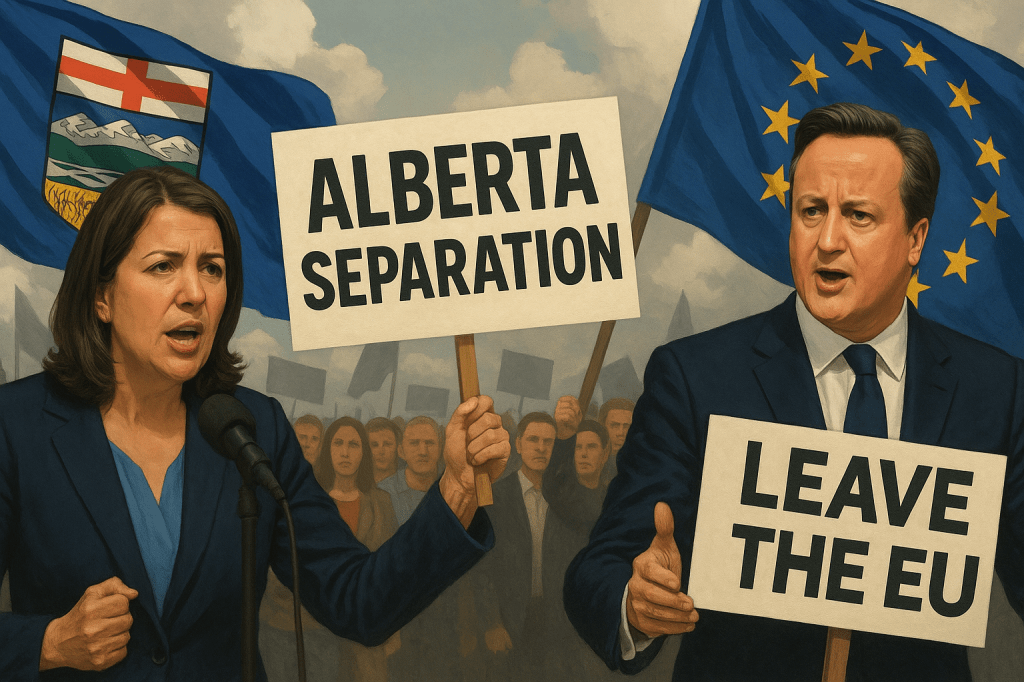
Danielle Smith’s political gambit with Alberta sovereignty bears an uncanny resemblance to David Cameron’s fateful decision to call a referendum on the United Kingdom’s membership in the European Union. Both leaders, faced with mounting internal pressures and populist insurgencies, sought to contain nationalist sentiment by giving it a structured outlet. In so doing, each gambled with the stability of their broader political project. Cameron, convinced that a plebiscite would put the Brexit question to bed and silence his party’s right-wing flank, ended up catalyzing the very crisis he had hoped to avoid, leading to his own political demise. Smith may be following the same treacherous path.

At the heart of both movements is the seductive notion of “taking back control”, from Brussels in the case of Brexit, and from Ottawa in Smith’s Alberta. The appeal is emotional and immediate: a narrative of betrayal by distant elites, a promise of restored autonomy, and the fantasy of economic self-sufficiency. Cameron allowed that narrative to play out on a national stage, legitimizing it with a referendum. Smith is doing something similar through legislation and rhetoric, invoking Alberta’s right to ignore or nullify federal laws under the guise of defending provincial jurisdiction.

Yet here lies the danger. Like Cameron, Smith has chosen to weaponize the language of sovereignty without a clear or viable endpoint. Her Alberta Sovereignty Within a United Canada Act is not a roadmap to secession, but it flirts with the logic of separation. The very act of mobilizing this discourse strengthens the hand of more radical forces in the province; those who see confederation not as a partnership, but as a prison. If Smith cannot deliver meaningful change within the framework of the Canadian constitution, and she likely cannot, she risks being outflanked by the separatists she once sought to co-opt. Just as UKIP’s rise drove Cameron’s decisions, the Maverick Party and other Alberta-first voices are shaping Smith’s hand, perhaps more than she realizes.

Politically, the parallels are striking and cautionary. Cameron misread the electorate and overestimated his ability to control the narrative. He expected the rational case for Remain to win out but failed to grasp the emotional and symbolic power of “Leave.” When the vote went against him, he resigned, leaving his party and country in turmoil. Smith may also be underestimating the Pandora’s box she is prying open. If public expectations are raised for a decisive break with Ottawa, one that cannot be delivered through mere provincial legislation, she may find herself either forced to escalate into unconstitutional territory or retreat in humiliation.

Moreover, Smith’s strategy could fracture the broader conservative coalition in Alberta. Urban moderates and business conservatives, critical to her electoral base, may grow weary of perpetual constitutional conflict, especially if it begins to affect investment, interprovincial relations, or federal funding. Meanwhile, the more extreme nationalist voices she has tried to placate will grow disillusioned if her sovereignty agenda produces no tangible results. Like Cameron, Smith is dancing between factions with incompatible goals, and she may end up satisfying none.

The tragedy of Cameron’s Brexit lies not just in the decision itself, but in the hubris that preceded it; the belief that one could flirt with nationalist fire and not get burned. Smith now faces a similar moment. In reaching for short-term political gain through an aggressive assertion of provincial autonomy, she may be sacrificing long-term credibility and coherence. The lesson from Brexit is not just about consequences, it’s about the limits of strategic populism. Smith, like Cameron, could soon discover that once sovereignty becomes the language of politics, it is no longer possible to control who speaks it, or how far they want to go.

From Reformist to Foot Soldier: The Political Evolution of Marco Rubio

For a time, Marco Rubio seemed to embody the hope that the Republican Party might modernize without losing its ideological spine. Young, charismatic, and the son of Cuban immigrants, he was hailed in the early 2010s as a conservative who could articulate traditional Republican values in a way that spoke to a broader, more diverse America. When he launched his presidential campaign in 2015, he positioned himself as a candidate of the future, one who could move past the culture wars and appeal to younger voters. To many in the media and even among some Democrats, Rubio seemed reasonable, serious, and, crucially, not dangerous.

This perception was always something of a projection. While Rubio carried himself with more polish and optimism than the emerging populist wing of the party, his actual positions were firmly in line with movement conservatism: staunchly anti-abortion, fiscally hawkish, anti-union, and reflexively interventionist on foreign policy.  Yet, because he wasn’t loud or cruel about it, and because he occasionally flirted with bipartisan gestures, most notably as a member of the 2013 “Gang of Eight” that attempted to pass comprehensive immigration reform, he was miscast as a moderate. The immigration effort was perhaps the high-water mark of his reputation as a bridge-builder, but the vicious backlash from conservative media and grassroots activists forced him into retreat. Rubio didn’t defend the bill; he distanced himself from it. This was an early sign of a pattern that would define his political choices; say the right thing when it’s safe, but retreat when it’s not.

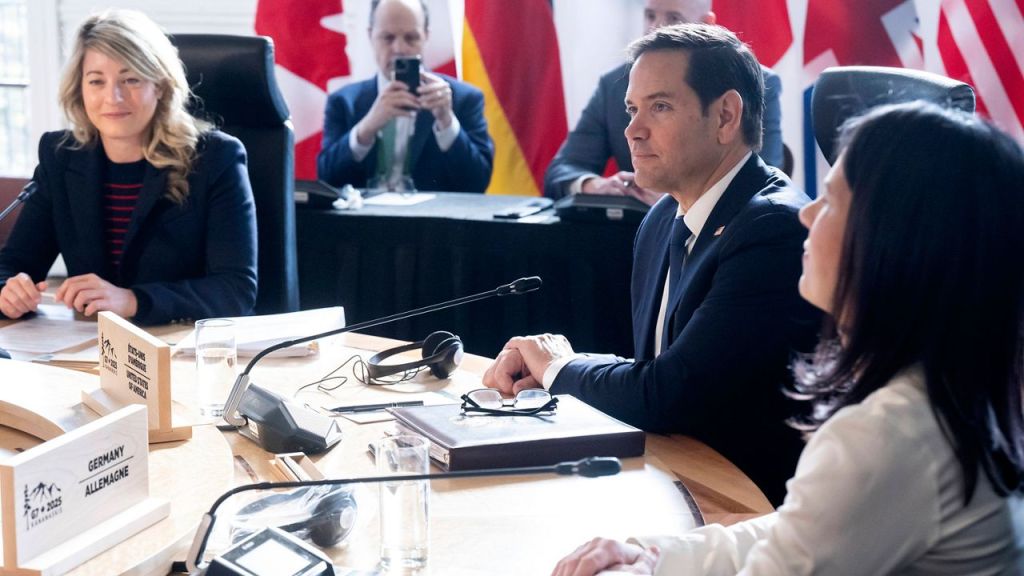
Rubio’s realignment became undeniable with the rise of Donald Trump. In 2016, he famously called Trump a “con artist,” mocking his hands and personal behavior in an unusually caustic exchange; but after dropping out of the presidential race, he quickly endorsed Trump and began the long process of political adaptation. By the time Trump had cemented his control over the GOP, Rubio had made his peace with the new order. He supported Trump through both impeachment trials, echoed his talking points about “election irregularities” in 2020 without directly endorsing false claims, and has steadily absorbed the rhetoric and priorities of the MAGA movement, particularly on issues like “wokeism,” China, and the weaponization of federal institutions.

What surprises many observers now is not so much Rubio’s positions, many of which he has held, if more quietly, for years, but how fully he has embraced the tone and sensibility of the MAGA worldview. The man once billed as a “next-generation Republican” has become another foot soldier in the party’s turn toward grievance politics, culture war maximalism, and a brand of authoritarian-adjacent populism that defines today’s GOP. His evolution is not unique. It mirrors that of a party whose internal incentives now reward loyalty to Trump and punishment for dissent. Rubio is not leading that transformation; he’s adapting to it, and perhaps surviving because of it.

In truth, the notion that Rubio was ever a centrist or a true reformer was a comforting myth told by centrists and pundits who longed for a less chaotic Republican Party, but Rubio was never that man. He was always a disciplined conservative with big ambitions, more fluent in elite political language than many of his peers, but no less ideologically committed. The real shift, then, is not in Rubio’s principles, but in the conditions under which he operates. The surprise people express today is less about his transformation, and more about our own willingness to believe he was something else.

When Can We Expect the Alberta By-Election, and What’s the Process, Anyway?

Well, folks, the question on everyone’s lips in Ottawa and across the Prairies is this: when can we expect the by-election in Alberta’s Battle River–Crowfoot riding? Especially now that Pierre Poilievre is looking to claw his way back into the House of Commons after that stunning loss in Carleton. With Damien Kurek stepping aside to clear the path, the machinery of a federal by-election is now grinding into motion, but how soon is soon? And what exactly does the process look like?

Let’s walk it through.

Step 1: The Writs Must Be Returned
Before anything official can happen, the election results from the April 28 general vote need to be certified and the writs returned. According to Elections Canada, the official deadline for that is May 19, 2025. Until then, the government can’t formally acknowledge the vacancy in Battle River–Crowfoot, even if we all know Kurek’s seat is about to be up for grabs.

Step 2: Notifying the Vacancy
Once the results are certified and published in the Canada Gazette, the Speaker of the House issues a warrant to the Chief Electoral Officer, officially declaring the seat vacant. That’s the moment the countdown truly begins.

Step 3: Issuing the Writ
Here’s where the Canada Elections Act comes into play. The Governor General must call the by-election no fewer than 11 days and no more than 180 days after the vacancy is declared. That gives the Prime Minister a fair bit of discretion in setting the date, unless, of course, he’s under pressure to get the Leader of the Opposition back into Parliament sooner rather than later.

Mark Carney, now comfortably in the PM’s chair, has said he’s not playing games with this one. He told reporters on May 2 that the by-election would happen “as soon as possible…no games, nothing, straight.” That could mean we’re looking at a late June or early July contest, an unusually quick turnaround, but not out of the question.

Step 4: Campaign Period
By law, a federal campaign must last a minimum of 36 days. So once the writ drops, expect a quick-and-dirty sprint to the finish line.

And if you thought this was going to be a sleepy rural by-election, think again. The Longest Ballot Committee, a merry band of electoral reform activists, is threatening to run up to 200 candidates in the riding. It’s a stunt aimed squarely at exposing the flaws of our first-past-the-post system. Whether it derails Poilievre’s re-entry or just clogs the ballot box, it’s going to add a layer of political theatre to what might otherwise be a foregone conclusion.

Bottom Line
Barring delays, we’re likely to see the writ dropped sometime in late May or early June, putting election day in late June or early July. The political urgency, Poilievre’s comeback bid, Carney’s no-nonsense commitment, and a media circus brewing in east-central Alberta, suggests Ottawa isn’t going to wait the full 180 days.

So keep your calendars open and your popcorn handy. Battle River–Crowfoot may be heading into the national spotlight.

Sources
Canada Elections Act – Elections Canada
Battle River–Crowfoot federal by-election – Wikipedia
iPolitics – Longest Ballot Committee
OurCommons.ca – Election Candidates

Public Consultation or Box-Ticking Exercise? A Critical Look at a Local Battery Storage Project

Last week, I attended a public consultation in my township concerning the proposed development and operation of a battery storage facility. While I support the idea of more distributed energy systems; including local generation, storage, and distribution, I left the session with more concerns than confidence.

The generational divide in the room was striking. The corporate representatives were mostly in their late 20s or early 30s, while the attending community members were primarily in their 50s and 60s. That’s not a critique of age, but it did highlight a gap in understanding and communication. One representative I spoke with didn’t even know the name of our village or the township they were in, and confused our location with the nearest city. That lack of local awareness is troubling.

When it came to questions about employment, the answers were just as vague. There are no local jobs being created by this facility. Pressed on this point, the company conceded that construction would likely be contracted out to a large regional firm. So much for community economic development.

Technically, this consultation was part of the process required to secure project approval. But calling it a “consultation” is generous. In practice, it was an information session for a project that already has funding and, by all appearances, a green light, once the required Environmental Assessment has been completed and approved. Input from residents was neither requested nor meaningfully incorporated. That’s not consultation—that’s optics.

There was discussion of the township gaining a $300,000 gift from the business, yet when this was explored further, it turns out that the gift is over the 20 year projected life of the facility; so by my calculations that’s $15,000/year for a township with an annual budget of around $4.5 million. 

I also learned that the company developing this project, which is ultimately owned by a private corporation through a series of businesses, partnered with a local First Nation to qualify for the contract. On paper, this is a positive step. I strongly support Indigenous involvement in provincial development, but I couldn’t help but ask: beyond a share of the profits, what is the First Nation partner actually gaining from this deal? Meaningful involvement? Job creation? Capacity building? Those questions went largely unanswered.

Many of the company reps struggled to answer even basic questions. When challenged, they became defensive, admitting they were not properly briefed or that statements about local benefits were merely “possibilities.” That kind of unpreparedness doesn’t inspire public trust.

Let me be clear: I’m not opposed to the project itself. I believe in the need for renewable energy infrastructure, and support the transition to a more decentralized grid. I have no “Not In My Backyard” objections here. My issue is with the process, and with the privatization of what should be a public utility. This kind of infrastructure should be owned and operated by the province for the benefit of its citizens, not by private firms whose primary accountability is to shareholders.

If this is the future of our energy system, we need a better framework, one rooted in public ownership, transparent processes, and genuine community engagement.