A Tale of Two Nations: Why Canada Celebrates Differences While America Seeks Sameness

For over a century, the United States has proudly embraced the metaphor of the “melting pot,” a vision in which immigrants from all over the world come together to form a singular American identity. This idea suggests that while people may arrive with distinct languages, customs, and traditions, they are expected to assimilate into a common culture; one that prioritizes English, democratic values, and a shared national ethos. The melting pot is often framed as a symbol of unity, a place where differences dissolve in the service of a greater whole. However, this model has its critics, who argue that it pressures immigrants to abandon their unique cultural heritage in order to conform.

The roots of the melting pot concept can be traced back to Israel Zangwill, a British playwright whose 1908 play The Melting Pot romanticized America as a land where old ethnic divisions would fade away, forging a new, united people. While Zangwill gave the concept its famous name, the push for assimilation had been shaping U.S. policy and attitudes long before. Theodore Roosevelt, the 26th president, was one of its most vocal proponents, arguing that immigrants must fully adopt American customs, language, and values to be considered truly American. The early 20th century saw the rise of the Americanization movement, which reinforced these ideas through public education, labor policies, and civic initiatives. By mid-century, the expectation of cultural conformity had become deeply embedded in American identity, influencing everything from language policies to popular media portrayals of immigrant life.

Canada, on the other hand, has cultivated a different metaphor, that of a “cultural mosaic.” Rather than seeking to merge all cultures into one, Canada actively encourages its people to maintain and celebrate their distinct identities. This approach is not just a social philosophy, but an official policy, first enshrined in 1971 with the introduction of the Multiculturalism Policy by Prime Minister Pierre Elliott Trudeau. Unlike the American melting pot, which emphasizes assimilation, Trudeau’s vision was one of inclusion without erasure. His government recognized that Canada’s growing diversity, particularly from non-European immigration, required a shift in how the country defined itself.

The passage of the Canadian Multiculturalism Act in 1988, under Prime Minister Brian Mulroney, further reinforced this philosophy by guaranteeing federal support for cultural communities, anti-discrimination measures, and the preservation of minority languages. Unlike the U.S., where English is seen as a central marker of national identity, Canada has long embraced bilingualism, officially recognizing both English and French. Additionally, Canada has extended support for Indigenous and immigrant languages in education and public services, further emphasizing its commitment to cultural pluralism.

The differences between these two models of integration are profound. In the United States, the expectation is often that newcomers will embrace “Americanness” above all else, whether that means speaking only English, adopting mainstream American customs, or minimizing their ethnic identity in public life. While the U.S. does recognize and celebrate diversity in some respects; Black History Month, Indigenous Peoples’ Day, and the popularity of international cuisines all attest to this, there remains a strong undercurrent that to be truly American, one must fit within a specific cultural framework.

Canada’s approach, by contrast, views multiculturalism as a strength rather than a challenge to national unity. Cities like Toronto, Vancouver, and Montreal are known for their ethnic neighborhoods, where different cultures not only survive, but thrive. Unlike the American approach, which often treats diversity as something to be managed or assimilated, Canada has built institutions that actively encourage it. Government funding for cultural festivals, multilingual public services, and policies that allow dual citizenship all reflect a belief that preserving one’s cultural roots does not weaken Canadian identity, but enriches it.

This difference is especially clear in the way both countries handle language. In the U.S., English is often seen as the primary marker of integration, with political debates regularly emerging over whether Spanish speakers should make greater efforts to assimilate linguistically. Canada, meanwhile, has long recognized both English and French as official languages, and has even extended support for Indigenous and immigrant languages in education and public services.

Ultimately, the American melting pot and the Canadian cultural mosaic reflect two very different visions of national identity. While the U.S. values unity through assimilation, Canada finds strength in diversity itself. Neither model is without its challenges, but the contrast between them speaks to fundamental differences in how these two North American nations define what it means to belong.


Ottawa’s Quiet Revolution: The 15-Minute City and the Rise of Local Commerce on Residential Lots

The City of Ottawa is in the midst of a bold, transformative journey; one that’s reshaping how we live, move, and connect. It’s called the “15-minute neighbourhood,” a simple idea with radical potential.  What if everything you need; groceries, a decent cup of coffee, childcare, your barber, a pharmacy, were just a short walk from your front door? No car required. No long bus rides, just a neighbourhood that works for you.

Ottawa’s New Official Plan, approved in 2021, plants the seeds for this future. At its heart is a commitment to building inclusive, sustainable, and healthy communities. The plan explicitly prioritizes 15-minute neighbourhoods across urban areas, and even pushes for better access to local services in suburban and rural villages. That’s right, this isn’t just a downtown pipe dream. This is city-wide policy.

What’s especially exciting is the quiet, determined push to overhaul the zoning rules that have long governed what can (and can’t) exist in our neighbourhoods. The city is in the thick of writing a new Zoning By-law, and the early drafts reveal a big shift. Residents may soon be able to host small-scale businesses on their own properties. Imagine that, a ground-floor bakery under your neighbour’s apartment, a tiny yoga studio two blocks over, a tailor or vintage shop tucked into a backyard laneway suite. This is no longer just theoretical, it’s in the works.

Ottawa planners are calling these new “Neighbourhood Zones,” and they reflect a sea change in how we think about land use. Rather than rigidly separating residential, commercial, and institutional uses, the city is beginning to embrace a more flexible, mixed-use vision; one that makes space for life to happen more organically. And yes, that means you might be able to open that little business you’ve always dreamed of, without needing to rent expensive storefront space on a commercial strip.

It’s not all roses yet. The first draft of the new by-law has been published, and city staff are collecting public feedback. A second draft is expected in spring 2025, with final council approval tentatively set for fall of the same year. Until then, existing zoning remains in place, but if the final version holds true to its promise, we’ll see the biggest zoning reform Ottawa has seen in decades.

Of course, this kind of change raises questions. Will small businesses in residential zones create noise or traffic? How will parking be handled? Will local character be preserved or diluted? These are fair concerns—and ones the city must address carefully. But the potential benefits are enormous: stronger local economies, reduced car dependency, and vibrant, human-scaled communities.

My regular readers will know that I am a supporter of the 15-minute community. I grew up in NE England where nearly everything we needed on a daily basis was within a 15 min walk, and so I am happy to see that for Ottawa this isn’t just a slogan here, it’s becoming real. And if we get this zoning update right, we may just find ourselves living in a more neighbourly, resilient, and walkable city than we ever imagined.

Building the Future: Kemptville’s Affordable Housing Vision

In communities across Canada, the housing crisis has become more than a policy debate, it’s a daily struggle. While costs rise and waitlists grow, the Municipality of North Grenville, just south of Ottawa, is offering a bold response. Its $25 million proposal to convert Bell Hall, a vacant dormitory on the Kemptville Campus, into more than 60 affordable rental units is both practical and symbolic, a microcosm of what’s possible when local governments lead.

The campus itself is a 630-acre hub of community, education, and sustainability activities. Once part of the University of Guelph’s agricultural network, it’s now owned by the municipality and governed by a 2021 master plan that prioritizes adaptive reuse, environmental responsibility, and deep community engagement. Bell Hall fits that vision precisely; a municipally owned, appropriately zoned, fully serviced building, already standing and waiting to be converted.

This is not a speculative plan. Developed over months with input from senior staff and not-for-profit partners, the Bell Hall project targets the real needs of North Grenville’s most vulnerable; seniors, veterans, and working families being priced out of their hometown. It offers not just housing, but stability, dignity, and a sense of belonging.

And yet, despite being shovel-ready, the proposal remains stalled in a growing backlog at the Canada Mortgage and Housing Corporation (CMHC). It’s a familiar story for municipalities across the country, many of whom are reporting delays due to limited federal processing capacity, particularly in underwriting. As federal priorities shift with the political winds, viable projects are left in limbo.

Mayor Nancy Peckford recently sounded the alarm in the Ottawa Citizen, arguing that the issue is not preferential treatment, but systemic inefficiency. Her call for transparency and faster turnaround is resonating with other small communities also ready to build. In an age where housing need is immediate, the logic is simple: when a plan meets all the criteria, and the groundwork is laid, it should move forward.

Some critics are suggesting that municipalities are just now “stepping up” on housing, but local governments have long managed zoning and development approvals. What’s new is the scale and pace of their engagement, assembling land, forming partnerships, applying for federal tools, and leading where senior governments lag.

North Grenville’s approach is part of a broader shift in small-town Canada, where pressures once confined to major cities are now spreading. The housing crisis isn’t urban anymore, it’s national. In this context, Bell Hall becomes more than a local project. It’s a test of the federal-municipal partnership that modern housing policy demands.

There’s also economic logic behind the urgency. A 2023 Deloitte report estimated that expanding community housing could add $70 billion to Canada’s GDP over five years. In places like Kemptville, where growth is manageable and materials can be sourced locally, the multiplier effects are significant with jobs, procurement, community stabilization, and reduced strain on health and social services.

And this is just one community. Rural municipalities across Eastern Ontario are facing similar challenges – aging populations, limited rental stock, and infrastructure that hasn’t kept pace. A regional alliance, or even a coordinated appeal, could elevate the urgency of rural housing and draw more attention to what’s at stake.

North Grenville is ready. Bell Hall is ready. The question is whether the federal system is ready to respond with the speed and seriousness the moment demands. If the next government wants to prove its commitment to housing, here is the perfect place to start.

Identity, Governance, and Privacy: The Controversy Over National IDs

The question of whether governments should mandate compulsory citizen photo identification is a complex one, balancing concerns over security, efficiency, privacy, and civil liberties. Proponents argue that such a system strengthens national security by reducing identity fraud, streamlining public services, and ensuring greater integrity in processes such as voting and law enforcement. Opponents, however, raise concerns about privacy risks, potential discrimination, and the financial and administrative burdens associated with implementation.

One of the strongest arguments in favor of compulsory identification is its role in preventing fraud and enhancing security. A standardized ID system makes it easier to verify identities in a wide range of scenarios, from accessing government benefits to conducting financial transactions. Proponents argue that this not only reduces the risk of identity theft but also ensures that public services reach their intended recipients without duplication or misuse. In the realm of law enforcement, such a system can help police quickly verify identities, track criminals, and even assist in locating missing persons. A national ID could also facilitate international travel within certain regions and improve border security by preventing unauthorized entries.

From a governance perspective, a universal identification system can improve the efficiency of public administration. Countries with well-integrated ID systems often experience fewer bureaucratic hurdles in service delivery, whether in healthcare, taxation, or social welfare. Standardizing identity verification can also strengthen the electoral process by reducing the potential for voter fraud and ensuring that only eligible citizens participate. Advocates suggest that, in an increasingly digital world, a government-issued ID could serve as a foundational tool for secure online verification, further modernizing access to services.

Concerns about privacy and government overreach remain central to opposition arguments. Critics warn that a compulsory ID system could expand state surveillance, allowing authorities to track individuals in ways that may infringe on civil liberties. The centralization of personal data also raises the risk of misuse, whether through state overreach or cyberattacks that compromise sensitive information. Given the increasing sophistication of cyber threats, a national ID database could become a high-value target for hackers, putting millions of people at risk of identity fraud.

Social equity is another significant concern. Some populations, including the homeless, elderly, and marginalized communities, may face barriers in obtaining and maintaining identification, potentially excluding them from essential services. If not carefully designed, an ID requirement could reinforce systemic inequities, disproportionately affecting those who already struggle with bureaucratic processes. Additionally, there is a risk of such a system being used to justify racial profiling or discrimination, particularly in law enforcement contexts.

Beyond ethical considerations, the financial cost of implementing and maintaining a compulsory ID program is substantial. Governments would need to invest in secure infrastructure, database management, and ongoing monitoring to prevent fraud or duplication. Citizens might also bear financial burdens in obtaining and renewing their identification, making it a potential source of economic hardship for some. Critics argue that as digital identification methods become more sophisticated, traditional photo IDs may soon become obsolete, making such an investment unnecessary.

The debate over compulsory citizen photo identification ultimately hinges on whether the benefits of security and efficiency outweigh the risks to privacy, civil liberties, and social equity. Any government considering such a system would need to address these concerns through clear legal safeguards, accessible implementation strategies, and a careful assessment of technological advancements. While a well-designed ID system could offer significant advantages, it must be developed in a way that protects citizens’ rights and ensures broad inclusivity.

The Prime Minister’s New Home: A National Symbol Reimagined

For nearly a decade, 24 Sussex Drive has sat in dignified decay; its halls silent, its windows dark. Once the official residence of Canada’s Prime Ministers, it has become a symbol not of leadership, but of limbo. The questions of what to do with 24 Sussex, renovate, rebuild, repurpose, have lingered without resolution, weighed down by political caution and public ambivalence. But perhaps we’ve been asking the wrong question. Instead of struggling to salvage a mid-century home with outdated systems and looming asbestos, it’s time we recognized that this moment calls for vision, not nostalgia. Canada deserves not only a new residence for its Prime Minister, but a bold reimagining of what leadership looks like, and where it lives.

Imagine this, a purpose-built complex that serves as both the official residence and the working headquarters of the Prime Minister of Canada, located on the sprawling grounds of Rideau Hall. This would not be a fortress, nor a vanity project. It would be a national institution, designed for transparency, diplomacy, and sustainability. It would reflect not just the occupant of the office, but the country they serve. Here is a rare opportunity to commission a project that shows the world who we are: a country of bold ideas, architectural excellence, Indigenous respect, recognition of the provinces and territories, and ecological consciousness.

Placing the Prime Minister’s residence and office at Rideau Hall makes both symbolic and logistical sense. It is already the site of Canada’s vice-regal presence and home to state ceremonies, visiting dignitaries, and national celebrations. Integrating the Prime Minister’s quarters into this historic landscape would bring coherence to the ceremonial heart of the nation. It would also enhance security, reduce inefficiencies, and allow for shared infrastructure between the Governor General’s operations and the Prime Minister’s Office. More than that, it would physically express Canada’s model of constitutional democracy: a Prime Minister, not as a distant executive, but as a visible, engaged steward of public trust.

This would be no private enclave. The new complex could feature public spaces: gardens, galleries, viewing areas, where Canadians and visitors could witness history in the making. Designed through an open national competition, the project would draw upon the talents of Canadian architects, builders, and artists. It would foreground Indigenous perspectives, perhaps through partnerships with First Nations designers and knowledge keepers, making reconciliation a structural and aesthetic principle. It could be built to the highest environmental standards, net-zero energy, carbon neutral, and climate resilient, setting a global benchmark for how democratic institutions can lead by example in a warming world.

As for 24 Sussex, it too deserves a future, not as a personal residence, but as a public place. Rather than disappearing behind construction tarps or bureaucratic indecision, it could be reborn as The Museum of Canadian Prime Ministers. There, the lives and legacies of the country’s leaders, visionary and flawed alike, could be explored with nuance and depth. Imagine rooms restored to reflect different eras, immersive exhibits about the crises and triumphs that unfolded within its walls, and interactive installations that encourage civic learning and debate. It would be a museum not of personalities alone, but of ideas and institutions, a place where Canadians could come to better understand the machinery of government, and their role in shaping it.

The cost of doing nothing is not zero. Every year we stall, the price of restoring 24 Sussex climbs, while the image of our national leadership suffers from association with crumbling plaster and political fearfulness. This isn’t about extravagance. It’s about pride, coherence, and nation-building. Other countries, Australia, Germany, the Nordic nations, have constructed modern official residences that reflect their identity and values. Canada can and should do the same.

We’re standing at the threshold of a generational opportunity. Let’s stop asking whether we can afford to build something worthy of our Prime Minister, and start asking what kind of country we want to present, to ourselves and the world. A new residence and office at Rideau Hall, paired with a museum at 24 Sussex, would tell a story of continuity and progress, of humility and ambition. It would turn a political liability into a cultural legacy. And it would say, without apology: this is Canada, and this is what we stand for.

Beyond Free Market Myths: Why Canada Needs the EU’s Stability

Mark Carney’s approach, alongside the broader European Union model, represents a forward-thinking vision that prioritizes long-term economic stability, environmental responsibility, and social equity; values that are increasingly crucial in a world facing climate change, global financial shifts, and geopolitical instability. Contrary to the claim, that these policies have led to economic and social decline, the EU has consistently ranked among the world’s largest and most stable economic blocs, demonstrating resilience in the face of global crises. Canada, by aligning with the EU’s principles, positions itself for a more sustainable and equitable future rather than shackling itself to the short-term volatility of unregulated free-market capitalism.

Economic Resilience Over Deregulated Instability
The argument against Carney relies on a false dichotomy; that Canada must choose between European-style economic management and a purely free-market U.S.-oriented model. However, the 2008 financial crisis demonstrated the perils of unchecked capitalism, particularly in the U.S., where financial deregulation led to one of the worst economic collapses in history. In contrast, Carney’s leadership at the Bank of Canada helped the country navigate that crisis more effectively than most, avoiding the catastrophic failures seen elsewhere. Similarly, his tenure at the Bank of England reinforced the importance of prudent regulatory oversight.

The EU, despite criticism, remains a powerhouse. It is the world’s third-largest economy, behind only the U.S. and China, and has consistently maintained a high standard of living, strong labor protections, and a more balanced wealth distribution than laissez-faire models allow. Canada benefits from closer ties with such an entity, particularly as economic nationalism rises in the U.S., where protectionist trade policies under both Democratic and Republican administrations have shown a clear shift away from open-market ideals.

Climate Leadership as an Economic Advantage
Critics of Carney’s climate policies fail to acknowledge that global markets are increasingly rewarding sustainable investments. Major institutional investors, including BlackRock and major European banks, are shifting towards green finance, recognizing that the transition away from fossil fuels is not just an environmental imperative, but a financial necessity. Canada’s economy, still heavily reliant on resource extraction, must evolve rather than double down on outdated industries.

The EU’s leadership in climate policy is not an economic burden; it is an opportunity. The European Green Deal has set the standard for sustainable economic transformation, spurring innovation in renewables, clean technology, and advanced manufacturing. Canada, with its vast natural resources and technological expertise, is well-positioned to benefit from this shift rather than clinging to an increasingly obsolete model of oil dependency.

A Stronger Canada Through Strategic Alliances
The portrayal of the EU as an anti-democratic bureaucracy ignores the reality that it is a collection of sovereign states voluntarily participating in a shared economic and political framework. The EU has been a stabilizing force, promoting peace, economic integration, and democratic norms across the continent. Canada’s engagement with such an entity strengthens its global influence, diversifies its economic relationships, and reduces over-reliance on any single partner, such as the increasingly unpredictable U.S.

Aligning with the EU does not mean abandoning national sovereignty but rather embracing a model of cooperative governance that has proven effective in mitigating economic shocks and geopolitical tensions. Given the uncertainty surrounding U.S. policies, including isolationist tendencies and shifting trade dynamics, Canada’s strategic interest lies in expanding partnerships rather than limiting them.

Carney’s vision is not a step towards economic decline, but a necessary evolution towards a more resilient, sustainable, and balanced economy. The argument for unregulated capitalism ignores the lessons of past crises, dismisses the realities of climate-driven economic transformation, and underestimates the benefits of diversified global partnerships. Rather than resisting European-style policies, Canada should embrace them as part of a modern, forward-looking strategy that ensures long-term prosperity, environmental sustainability, and social stability.

Reviving Voices: How Canada is Fighting to Save Indigenous Languages

Each year on March 31, Canada pauses to recognize National Indigenous Languages Day, a moment to reflect on the state of Indigenous languages across the country. For many, this is not just a symbolic date on the calendar; it is a call to action, a reminder of both the fragility and resilience of the more than 70 Indigenous languages spoken in Canada today. These languages, rooted in the land, carrying centuries of knowledge, culture, and identity, have survived despite relentless attempts to erase them. Now, communities are fighting to bring them back to life.

The weight of history is impossible to ignore. For generations, Indigenous children were taken from their families and placed in residential schools, where speaking their native language was strictly forbidden. The goal was assimilation, the devastating impact still felt today. Some languages have been lost entirely, while others teeter on the edge of extinction, with only a handful of fluent speakers left. Yet, amid this painful legacy, a quiet, but determined movement is growing, breathing new life into words and phrases once whispered in secret.

In 2019, Canada passed the Indigenous Languages Act (ILA), recognizing Indigenous languages as fundamental to identity and committing to their protection. This legislation also led to the creation of the Office of the Commissioner of Indigenous Languages, tasked with supporting revitalization efforts. Government funding has followed, helping to sustain language programs across the country, though many communities argue that the support remains inconsistent and insufficient. Real change, they insist, must come from within, driven by those who have lived the loss and are determined to reclaim what was stolen.

One of the most promising efforts has been the growth of language immersion programs, where young learners are surrounded by their ancestral language from an early age. In places like Kahnawake, Mohawk immersion schools have become a beacon of hope, proving that with dedication and resources, language revival is possible. Universities and colleges have also stepped in, offering courses in Cree, Inuktitut, and other Indigenous languages, ensuring that the next generation of educators is equipped to pass on these traditions.

Beyond the classroom, technology has emerged as an unexpected ally. Apps like Duolingo, have introduced Indigenous languages such as Ojibwe and Michif, while YouTube channels and TikTok creators are making language learning accessible in ways that previous generations never could have imagined. Even radio and television stations, including the Aboriginal Peoples Television Network (APTN), continue to broadcast in Indigenous languages, reinforcing the presence of these voices in mainstream media.

Recently, Manitoba took a bold step in expanding the role of Indigenous languages in government. The province announced a pilot project to translate Hansard, the official transcript of legislative proceedings, into Indigenous languages. This project, starting with Anishinaabemowin, is expected to generate a wealth of linguistic material, supporting both language learners and artificial intelligence researchers; working to integrate Indigenous languages into modern technology. It also creates new jobs, with Manitoba actively recruiting Indigenous translators to bring this initiative to life.

Despite these efforts, challenges remain. Some Indigenous languages have so few speakers that urgent action is needed to prevent their disappearance. Others struggle with finding enough fluent teachers to meet demand. And while federal funding exists, it is often tied to bureaucratic processes that slow progress rather than support it.

Yet, if there is one thing that history has shown, it is that Indigenous languages, like the people who speak them, are resilient. National Indigenous Languages Day is more than just a commemoration; it is a reminder that these languages are still here, still fighting to be heard, and that their survival is a testament to the strength of the communities that cherish them.

Manufactured Crisis? How Manning’s Separation Rhetoric Boosts Poilievre’s Leadership Image

Preston Manning’s recent comments suggesting that Mark Carney’s political positions might drive Western Canada toward separatism seem to serve a dual purpose: first, they reinforce long-standing Western alienation narratives, and second, they may act as a strategic setup for Pierre Poilievre to position himself as a national unifier ahead of the next federal election.

Western alienation has been a recurring theme in Canadian politics, particularly under conservative figures who have used it as a rallying point. Manning, as a former leader of the Reform Party, has deep roots in this movement. By framing Carney, who is associated with the Liberals and seen as a potential successor to Trudeau, as a threat to Western unity, Manning effectively stokes regional frustrations. However, the timing and messaging of his comments raise questions about whether they are part of a broader conservative strategy.

If Western separation is framed as an impending crisis, Poilievre can step in as the “voice of reason” advocating for national unity, all while reinforcing his commitment to Western interests. This allows him to attack both the Liberals and Carney while appearing above the fray as a leader who can keep the country together. This tactic, raising the specter of division to later present a preferred leader as the solution, is a classic political maneuver.

Additionally, such rhetoric creates a convenient contrast between Poilievre and Carney. Carney is often positioned as a technocratic elite with strong international credentials, whereas Poilievre appeals to populist, anti-establishment sentiments. By invoking Western alienation, Manning shifts the conversation away from policy and toward identity-based politics, an area where Poilievre has excelled.

Ultimately, whether this is a deliberate “red flag” operation or simply a reflection of Manning’s personal beliefs, the effect is the same: it benefits Poilievre by giving him a crisis to “solve,” reinforcing his national leadership image while deepening the perception of Liberal detachment from Western concerns.

Carney’s Distinction: Spending vs Investing

Mark Carney’s recent remarks at the housing development announcement have sparked an intriguing debate on fiscal responsibility that could well shape our nation’s political discourse this election season. In a climate where every policy decision is scrutinized, Carney’s clear differentiation between mere spending and genuine investment stands out as both a pragmatic and visionary approach.

At the event, Carney took the podium with a measured resolve, declaring, “This is not merely spending.” The announcement, a multi-billion-dollar initiative aimed at creating thousands of affordable homes, was not just a government outlay but, as Carney argued, a strategic investment in the country’s future. He reminded us that spending provides short-term relief, a temporary boost that often fades without leaving a lasting impact. In contrast, investing builds physical assets, from homes that shelter citizens to infrastructure that drives long-term economic growth.

During the press conference, a journalist pressed Carney for clarity: “But what exactly distinguishes spending from investing, especially in these turbulent economic times?” Carney’s response was incisive. “Consider this housing initiative. If we were simply spending, we’d be issuing subsidies or providing temporary relief. That money would dissipate, leaving us to confront the same issues a year or two down the line. What we’re doing here is building assets that not only meet immediate needs, but also stabilize our market for decades to come.” His explanation resonated, emphasizing that when the government borrows money for tangible investments, it’s laying the groundwork for future prosperity, rather than just adding to the current debt burden.

Critics have raised valid concerns about increasing deficits, asking, “But what about government deficits? Isn’t this just adding to our debt load?” Carney acknowledged the worry, noting that borrowing for short-term fixes often leads to a perilous cycle of debt. However, he argued, borrowing to invest in enduring assets, such as new housing, yields dividends in the form of job creation, improved living standards, and a robust, resilient economy. “Debt for spending is dangerous because it leaves nothing behind,” he stated. “Debt for investment, however, is different. When we invest in projects that drive economic growth, we’re not just managing debt, we’re transforming it into a catalyst for long-term stability.”

As someone who has witnessed countless policy debates, I find Carney’s distinction particularly refreshing. In an era dominated by immediate solutions, and short-lived political gains, his perspective challenges leaders to think beyond the next election cycle. The choice, as Carney laid it out, is stark: Will our policymakers continue to opt for fleeting spending that merely masks underlying problems, or will they embrace investments that secure a prosperous future?

This is more than a fiscal debate, it’s a much needed, fundamental question about our nation’s priorities. As voters and citizens, Canadians must demand that our leaders consider the long-term impacts of their decisions. The current housing development initiative, if executed wisely, is a testament to the power of strategic investment over transient spending, such as tax cuts for the rich, or removing the carbon tax. It promises to deliver not just immediate relief, but a foundation upon which a stronger, more resilient economy can be built. Again, this goes beyond the usual election cycle promises, and short-term thinking, that politicians usually indulge in, to get the votes they need to stay in power. 

In these uncertain times, Carney’s message is a timely reminder that every dollar spent should be scrutinized for its future value. As the election nears, his call to invest in our collective future rather than merely spending for today is one that deserves our full attention, and, perhaps, our support.

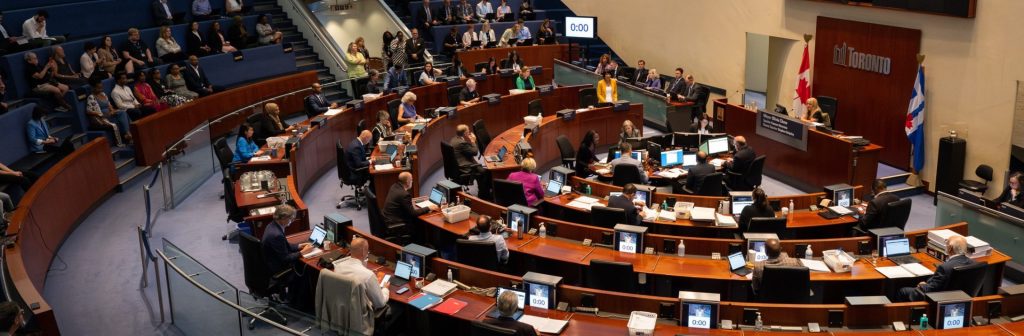
Greedy, Clueless, and Out of Touch: Toronto Councillors Debate a Disgraceful Pay Hike

Toronto politicians are completely out of touch with reality. At a time when the city is drowning in unaffordable rents, soaring food prices, and a crumbling public transit system, these councillors have the audacity to debate giving themselves a 24% pay raise—a jaw-dropping $33,000 increase—while ordinary Torontonians struggle to make ends meet.

This isn’t just tone-deaf; it’s selfish, unthinking stupidity. People across the city are losing their homes, skipping meals, and watching their quality of life deteriorate, but instead of focusing on fixing the city, these politicians are focused on fixing their own bank accounts. They already make $137,537 a year—more than enough to live comfortably—but apparently, that’s not enough for them. They want to pad their pockets while the people they’re supposed to serve scrape by.

And their excuse? That they haven’t had a significant raise since 2006? Cry me a river. Most workers in this city haven’t seen real wage growth in years, and many are stuck in precarious jobs with no benefits, yet councillors think now—in the middle of an affordability crisis—is the right time to fatten their wallets? It’s disgraceful.

If these politicians had even an ounce of integrity, they’d reject this outrageous raise outright. Instead, they’re actually debating it, proving once again that they are more concerned with their own wealth than with the suffering of the people they claim to represent.