BRICS Rising: The Challenge to Western Dominance in a Multipolar World

BRICS has evolved from an economic alliance into a geopolitical force challenging Western dominance. Originally conceived as a framework for cooperation among emerging markets, the bloc now pursues a strategic agenda that threatens the global order long shaped by Europe and North America. By fostering economic interdependence, promoting financial independence, and expanding its diplomatic influence, BRICS is positioning itself as a counterweight to Western-led institutions like the IMF, World Bank, and NATO. Its rise signals a shift toward a multipolar world where U.S. and European dominance is no longer assured.

At the core of BRICS’ strategy is economic cooperation aimed at reducing reliance on Western markets and financial institutions. Trade agreements and joint investment projects among Brazil, Russia, India, China, and South Africa strengthen internal resilience while offering developing nations an alternative to the West’s economic model. The New Development Bank (NDB) plays a key role, financing infrastructure and sustainability projects without the political conditions often attached to Western aid. This economic realignment is further reinforced by BRICS’ push to de-dollarize global trade, insulating its members from U.S. financial influence and sanctions. By increasing the use of local currencies and developing alternatives to SWIFT, BRICS is actively undermining the dollar’s global dominance. If oil-producing nations like Saudi Arabia shift toward BRICS’ financial system, the petrodollar system could face serious disruption, weakening the U.S. economy and limiting Washington’s ability to leverage economic power as a foreign policy tool.

For Europe, BRICS represents a different kind of challenge. While not as dependent on the dollar, the EU’s economic model relies on stable access to global markets, raw materials, and energy. BRICS’ growing control over critical resources—such as rare earth minerals, oil, and food supplies—poses risks to European industry. Russia and China have already demonstrated a willingness to use trade as a geopolitical weapon, and as BRICS strengthens its economic ties, European access to these resources could become more costly and politically conditional. Additionally, BRICS’ growing influence in Africa, Latin America, and the Middle East threatens Europe’s traditional soft power approach in these regions. By providing loans and investments without Western-style conditions, BRICS is offering an appealing alternative to nations wary of IMF-imposed austerity. This shift weakens Europe’s ability to shape international policies and erodes its influence in regions it has long considered strategic.

Beyond economics, BRICS is reshaping global diplomacy by advocating for a multipolar world. The bloc frequently aligns its positions in the UN, G20, and WTO, pushing for reforms that reduce Western dominance. By expanding its membership to include emerging economies across the Global South, BRICS is creating a parallel alliance network that enables countries to resist Western pressure. The potential inclusion of Iran and other anti-Western regimes raises concerns about a new axis of influence that could counterbalance NATO and other Western-led security alliances. While BRICS is not yet a military pact, growing defense cooperation—particularly between Russia and China—suggests that security coordination could become more structured over time.

Technology is another battleground where BRICS threatens Western leadership. China and India are emerging as global tech powerhouses, while Russia excels in cybersecurity and artificial intelligence. If BRICS nations successfully develop independent digital ecosystems—ranging from payment systems to semiconductor industries—Western tech companies may lose access to key markets. The push for BRICS-led internet infrastructure could also fragment global digital governance, reducing the West’s ability to shape online policies and monitor cyber threats. Meanwhile, BRICS’ emphasis on state sovereignty and non-interference in domestic affairs provides an ideological alternative to the Western model of governance. As more nations align with this approach, the ability of the U.S. and Europe to promote democracy, human rights, and free-market policies could diminish.

BRICS is not just an economic alliance, but a structural challenge to the Western-led world order. By advancing financial independence, expanding geopolitical influence, and fostering technological self-sufficiency, the bloc is steadily eroding the dominance of Western institutions. While internal divisions and logistical hurdles remain, BRICS’ trajectory suggests that Europe and North America must adapt to a world where their influence is no longer guaranteed. Whether the West engages with BRICS on more equal terms or resists and risks further global fragmentation will determine the shape of international relations in the years to come.  

16 Year Olds Should Be Allowed to Vote in Canada

I firmly believe in the right of 16 and 17 year old Canadians to vote. They are more than ready to shoulder this responsibility, and society already entrusts them with far greater challenges. Here’s why I support enfranchising them.

The Responsibilities They Already Bear
At 16, young Canadians can obtain a driver’s license, manage the responsibilities of operating a vehicle, and comply with traffic laws. Many also join the workforce, contributing taxes that fund services without having a say in how those funds are spent. This taxation without representation runs counter to the principles of fairness in a democratic society.

Some 16 year olds live independently, taking full responsibility for their finances, households, and futures. These young people already make life-altering decisions, proving their ability to assess and manage complex situations.

They also have the legal right to make important healthcare decisions without parental consent in most provinces. From mental health treatments to reproductive choices, they show the capacity to evaluate critical issues. Moreover, the age of consent in Canada is 16, and in some cases, they can even join the military, committing themselves to a life of service and sacrifice. If we trust them with these decisions, why not trust them with a vote?

Their Political Awareness
Critics say 16 year olds lack the maturity to vote, but that argument doesn’t hold water. Today’s youth are incredibly engaged with issues like climate change, education, and social justice. They organize protests, sign petitions, and participate in grassroots movements. They are not just passive observers; they are active participants in shaping their world.

Civics education in Canadian schools equips them with the knowledge to understand governance and the electoral process. Giving them the vote would deepen their connection to democracy, encouraging lifelong participation.

Looking at Other Democracies
Canada wouldn’t be breaking new ground here. Countries like Austria, Brazil, and Scotland already allow 16 year olds to vote, and studies show these younger voters are as thoughtful and engaged as older ones. Early enfranchisement fosters a lifelong habit of voting, strengthening democratic systems for everyone.

A Voice for the Future

The decisions made today—on climate policy, education, and job creation—will define the futures of these young Canadians. Denying them a voice in these matters is short-sighted. They are the generation that will live with the long-term consequences of today’s elections.

It’s time we acknowledge the responsibilities and contributions of 16 year olds and empower them with the right to vote. They have proven their maturity and commitment to society. Including them in the democratic process would make Canada’s democracy stronger, more inclusive, and better prepared for the future.

Canadian Communities Need Rural, Northern and Remote ERs 

I get somewhat peeved when I hear urban communities, politicians and healthcare administrators claim that we can’t afford to continue maintaining small hospitals, and especially their ERs.  They talk about cost benefits analysis and staffing shortages, but seem to totally lose sight of the big picture 

Canadian policy concerning equal access to public programs and services is guided by the Canadian Charter of Rights and Freedoms,  and a variety of federal and provincial legislation, including the Canada Health Act (1984) that establishes the principles of universality, accessibility, comprehensiveness, portability, and public administration in Canada’s healthcare system. It ensures that all Canadians have access to medically necessary healthcare services without financial or geographic barriers.

Emergency rooms (ERs) are a cornerstone of healthcare, providing critical, life-saving services during medical emergencies. While it may not be feasible to establish ERs in every small or remote community across Canada, prioritizing the integration and maintenance of ERs into communities with existing hospitals or sizeable healthcare clinics is essential. This approach balances the need for equitable healthcare access with resource availability. Ensuring consistent funding for ERs in such communities is crucial for delivering timely care, improving health outcomes, and supporting Canada’s universal healthcare system.

Communities with hospitals or sizeable healthcare clinics are often regional hubs that serve a broad population, including nearby rural areas. In medical emergencies, such as heart attacks, strokes, severe trauma, or childbirth complications, the existence of a local ER within these hubs can save lives by reducing travel times. Adding or maintaining ERs in communities with established healthcare infrastructure leverages existing facilities, ensuring efficient delivery of critical care without duplicating resources.

Canada’s healthcare system is founded on the principle of accessibility, but disparities persist, particularly in rural and remote areas. Prioritizing ERs in communities with hospitals or large clinics addresses these disparities by creating centralized points of care for surrounding regions. These hubs reduce the healthcare gap between urban and non-urban areas, especially for Indigenous populations and remote communities that rely on regional hospitals for services. Without an ER in these hubs, residents may face long travel distances to urban centers, delaying care and exacerbating health inequities.

ERs in communities with hospitals or large clinics enhance the overall effectiveness of regional healthcare systems. They act as critical entry points for patients who may require stabilization before being transferred to specialized facilities in larger cities. These ERs relieve pressure on urban hospitals by managing emergencies locally and prevent rural patients from overwhelming urban systems. This distributed model ensures more balanced resource utilization across the healthcare system.

Regional hubs with hospitals or large clinics often serve as economic and social anchors for their areas. A functioning ER not only ensures access to life-saving care but also supports community resilience by attracting families, workers, and businesses. Industries such as agriculture, forestry, and resource extraction—frequently located in rural areas—depend on access to emergency services to manage workplace risks and protect employees. Communities without ERs face difficulties retaining residents and businesses, weakening their long-term viability.

Expanding ER services in communities with existing healthcare infrastructure is a cost-effective approach to improving healthcare access. These communities already have trained healthcare professionals, medical equipment, and transportation networks, reducing the need for significant new investments. Furthermore, timely treatment at regional ERs reduces the severity of medical conditions, preventing costly hospitalizations or long-term care. In this way, proactive funding for ERs generates long-term savings for the healthcare system.

Critics may argue that staffing and resource constraints make it difficult to sustain ERs in smaller hubs. However, innovative solutions such as telemedicine, rotating staff from urban centers, and offering incentives for healthcare professionals to work in underserved areas can mitigate these challenges. Federal and provincial governments must collaborate to allocate funds strategically, ensuring ER services are available in communities where they are most needed.

While it may not be feasible to establish ERs in every community across Canada, ensuring that all communities with hospitals or sizeable healthcare clinics have access to ER services is essential. These hubs serve as vital lifelines for surrounding populations, providing timely care, reducing healthcare disparities, and supporting the broader healthcare system. Federal and provincial governments must prioritize funding for ERs in these communities to uphold Canada’s commitment to equitable and accessible healthcare. In doing so, Canada can ensure that the promise of universal healthcare is realized where it is most urgently needed.

America’s New Populist Diplomacy: A Threat to European Stability

As a European living in Canada, I watch with great dismay, as America begins to empower the nationalist Eurosceptics, clearly in an effort to weaken the Union against Russia, along with improving its own economic well-being. 

Vice President JD Vance’s decision to meet with Alice Weidel, the leader of Germany’s far-right Alternative für Deutschland (AfD), while snubbing Chancellor Olaf Scholz, is more than just a diplomatic misstep—it is a calculated provocation that undermines European stability. This is not simply an American conservative engaging in ideological dialogue; it is an intervention into European politics that emboldens those who seek to dismantle the post-war democratic consensus.

For decades, the United States has been a pillar of transatlantic stability, supporting European nations in their pursuit of economic integration, security cooperation, and democratic resilience. The very idea that an American leader—especially a sitting vice president—would break Germany’s long-standing political firewall against extremist forces is astonishing. This is not just a question of optics. It is a matter of realpolitik, of who gains and who loses from Washington’s new approach to European affairs.

The AfD, despite its attempts at rebranding, remains a party deeply rooted in xenophobia, anti-democratic sentiment, and historical revisionism. Germany’s mainstream parties maintain a strict policy of non-engagement with them for precisely this reason. By meeting with Weidel, Vance has done what no German chancellor, foreign minister, or major party leader would consider; granting the AfD legitimacy at the highest levels of international diplomacy.

And what message does this send? To Europe’s other far-right movements—from Marine Le Pen’s Rassemblement National in France to Giorgia Meloni’s Brothers of Italy—it signals that the United States, under its current administration, is willing to empower their nationalist, Eurosceptic agendas. It tells them that the old Atlanticist consensus, which valued stable, pro-democratic leadership in Europe, is fading. It suggests that the firewall against extremism is now seen in Washington not as a necessary protection against history repeating itself, but as an outdated restriction on political realignment.

Vance’s remarks at the Munich Security Conference—deriding European leaders for failing to address immigration and for being “afraid of their own voters”—are not just criticisms; they are endorsements of the very populist forces that threaten European cohesion. His rejection of a meeting with Scholz, reportedly on the basis that “he won’t be chancellor for long,” is more than an insult; it is a declaration that Washington now sees little value in engaging with Europe’s centrist leadership.

For Germany, a country that has spent decades carefully managing its historical responsibility, and cultivating a democratic, inclusive society, this is a direct challenge. Chancellor Scholz’s government, whatever one may think of its effectiveness, has upheld a firm stance against political extremism. By treating Scholz with indifference while meeting with 

Weidel, Vance has offered implicit backing to those who seek to erode the stability of German democracy from within.

There is a broader pattern at play here. The Trump-Vance administration is not simply skeptical of European integration—it is actively engaging with those who want to dismantle it. From Steve Bannon’s earlier attempts to unite Europe’s nationalist movements to Trump’s previous disdain for NATO and the European Union, this shift has been years in the making. But now, with a vice president openly embracing figures like Weidel, the implications are clear; the United States is no longer merely tolerating European populists; it is empowering them.

This will have consequences. European unity, already strained by economic challenges, war in Ukraine, and the resurgence of nationalist politics, will face further division if the U.S. continues to lend legitimacy to parties like the AfD. If Washington sees Europe not as a partner, but as a battlefield for ideological influence, then EU democratic institutions will suffer.

Germany and the rest of Europe must not be passive in the face of this shift. While they cannot control who American leaders choose to meet, they can reaffirm their own commitment to keeping extremist forces at bay. The AfD and its allies must not be allowed to claim that they now have a direct line to Washington without consequence.

This is a moment for European leaders to reassert the importance of their own transatlantic priorities. If the United States seeks to shift its alliances toward Europe’s nationalist right, then Europe must double down on strengthening its democratic institutions, reinforcing NATO’s role, and making it clear that their political landscape will not be dictated by the winds of populism from across the Atlantic.

Vance’s actions may have emboldened Europe’s far right, but they have also clarified the stakes. The question is whether Europe’s democrats are ready to respond? 

Partisan Outrage: Conservatives’ Double Standards on Prorogation

This week, the Federal Court is hearing a constitutional challenge against Prime Minister Justin Trudeau’s decision to prorogue Parliament until March 24, 2025. The applicants, David MacKinnon and Aris Lavranos, argue that this move is unconstitutional, claiming it undermines Parliament’s ability to hold the government accountable – especially in the face of pressing issues like recent U.S. tariff threats. They contend that while the Prime Minister has the authority to advise the Governor General on prorogation, this power is not absolute and must be exercised with reasonable justification.

Federal lawyers, however, insist that Trudeau’s decision aligns with constitutional conventions and falls outside the scope of judicial review. They argue that the government remains accountable to voters, and prorogation is a legitimate tool within Canada’s parliamentary system. The court’s ruling could set a significant precedent, determining whether prime ministers have unchecked authority to suspend legislative scrutiny or whether limits must be imposed.

Amid this legal battle, conservative politicians and business leaders have been vocal in their calls to end prorogation, claiming it damages democracy and disrupts economic stability. But their outrage is as selective as it is hypocritical. When Conservative Prime Minister Stephen Harper twice prorogued Parliament – once in 2008 to dodge a confidence vote, and again in 2009 to stall inquiries into his government – many of these same voices either defended the move or remained conspicuously silent. Their sudden concern for democratic norms now suggests that their stance depends entirely on who is in power.

Business leaders, too, have taken up the cry, arguing that prorogation creates uncertainty that harms investment and economic confidence. Yet these same figures have backed policies that introduce far greater instability – aggressive deregulation, tax cuts that balloon deficits, and budget standoffs that delay essential government funding. Their selective outrage makes it clear: they aren’t worried about economic disruption in principle, only about the inconvenience of a temporary legislative pause that may slow down policies they favor.

Conservatives have long weaponized procedural arguments to suit their political needs. When in opposition, they decry any government move that limits their ability to grandstand. When in power, they are quick to use the same tools to stifle criticism and control the political narrative. Harper’s use of prorogation to shut down inquiries into the Afghan detainee scandal is a prime example. Back then, the argument was that Parliament needed a “break” to focus on governance. Now, with Trudeau at the helm, they claim a temporary pause is an attack on democracy itself. The double standard could not be clearer.

Ultimately, the conservative push to end prorogation isn’t about principle – it’s about power. Their calls for accountability and stability ring hollow when contrasted with their own history of procedural manipulation. This is not a stand for democracy; it is political opportunism, plain and simple.

Public Utilities in Public Hands: The Case Against Privatization in Ontario

The privatization of public utilities is one of the most serious threats to the well-being of Ontario’s citizens. Essential services such as electricity, natural gas, and potable water are not mere commodities; they are fundamental to public health, economic stability, and social equity. Yet, time and again, privatization has proven to be a short-sighted policy that prioritizes corporate profit over public interest, leading to rising costs, reduced accountability, and degraded service quality.

Ontario has already had a taste of these consequences. The partial privatization of Hydro One in 2015, sold as a way to fund infrastructure projects, stripped the public of full control over a critical utility. The result? Electricity rates surged while executive salaries ballooned, all while Ontarians faced an affordability crisis. Now, the same logic is being applied to water infrastructure, with growing interest in public-private partnerships (P3s) that risk putting a basic human right in the hands of profit-driven corporations.

The United Kingdom serves as a cautionary tale. Margaret Thatcher’s aggressive privatization agenda in the 1980s dismantled public control over water, gas, and electricity. Decades later, the consequences are glaringly evident—privatized water companies have failed to maintain infrastructure, leading to widespread sewage pollution in rivers and skyrocketing utility bills. In 2023, public outrage reached a boiling point as UK citizens demanded renationalization, fed up with a system that prioritized shareholder dividends over basic service quality.

Ontario does not need to look across the Atlantic to see privatization’s dangers. The sale of Highway 407 in the late 1990s remains one of the most infamous examples. Originally built with public funds, the highway was sold to a private consortium, which promptly implemented steep toll increases. Now, it is one of the most expensive toll roads in North America, generating billions in private profits while Ontario drivers pay the price.

Similarly, in the 1990s, Premier Mike Harris’s government moved to privatize parts of Ontario’s water services, leading to deregulation that contributed to the Walkerton tragedy in 2000. E. coli contamination in the town’s water supply led to seven deaths and thousands of illnesses. A key lesson from Walkerton was that water safety should never be compromised for cost-cutting measures—yet renewed interest in water privatization suggests that this lesson is being ignored.

Proponents of privatization often push P3s as a supposed middle ground, but the reality is that these arrangements often result in long-term financial burdens for taxpayers and reduced service quality. In Ontario, numerous P3 infrastructure projects, including hospitals and transit systems, have faced cost overruns, delays, and contract disputes that leave the public footing the bill. The Brampton Civic Hospital, one of Ontario’s earliest P3 healthcare projects, ended up costing nearly $200 million more than a traditional public model, demonstrating how these deals frequently benefit corporate interests at the public’s expense.

When it comes to water and electricity, the risks are even greater. Private firms operating under P3 models have strong incentives to minimize costs, which can lead to deferred maintenance, staff reductions, and lower service quality. Meanwhile, the public remains on the hook for any failures, as companies structure contracts to shield themselves from financial risk while reaping the profits.

Once essential services are privatized, reversing the decision becomes extremely difficult. Private companies, armed with deep lobbying power, fight fiercely to protect their revenue streams. In the case of Hydro One, the Ontario government now owns less than 50% of the company, making it virtually impossible to fully reassert public control without an expensive and politically complex buyback.

The simple truth is that profit should never be the primary driver in the management of public utilities. Roads, water, electricity, and natural gas are the backbone of a functioning society, and their operation must be based on public interest, environmental sustainability, and affordability—not corporate greed.

Ontario must resist further privatization and instead strengthen public ownership of essential services. This means investing in infrastructure, enforcing transparency, and ensuring that these utilities serve the people rather than the pockets of a few wealthy shareholders. The province has seen the consequences of privatization firsthand, and the path forward is clear: protect public utilities, prioritize public well-being, and reject the false promises of privatization before it’s too late.

Universal Basic Income – Managing Supply and Demand

Managing both the supply and demand sides of the economy is critical when considering the implementation of a Universal Basic Income (UBI). A well-structured UBI program has the potential to stimulate economic growth and reduce poverty but requires careful planning to avoid inflationary pressures or supply shortages that could undermine its benefits.

On the demand side, UBI directly increases people’s purchasing power by providing a fixed income, thereby boosting consumer spending. Households are better able to meet their basic needs, such as food, housing, and healthcare, while also increasing discretionary spending on non-essential goods and services, including entertainment, travel, and retail. This injection of purchasing power can invigorate various sectors of the economy and drive broader economic activity. However, this surge in demand poses risks. If supply chains cannot adjust to meet the increased demand, inflationary pressures may emerge, especially in sectors with limited capacity, such as housing. For example, stagnant housing supply coupled with heightened demand could lead to skyrocketing rents and property prices. Similarly, inadequate production in critical areas like groceries or energy could result in shortages, exacerbating economic instability. Without safeguards, landlords or businesses may exploit increased consumer spending by raising rents or essential costs like transportation, effectively eroding the benefits of UBI. Rental controls and stable public transportation costs are therefore essential to prevent the market from absorbing the additional income without improving overall living standards.

The supply side of the economy, therefore, plays a pivotal role in determining the success of UBI. Policies must be implemented to ensure that businesses and industries can scale up production to meet heightened demand. Investments in infrastructure, energy production, and manufacturing are necessary to expand capacity and prevent bottlenecks. Labor market dynamics must also be addressed, as UBI may lead some workers to leave low-paying or undesirable jobs, potentially causing shortages in essential industries. To counteract this, governments can support workforce adaptation through investments in automation, technological innovation, and targeted training programs. Additionally, UBI may encourage individuals to pursue entrepreneurial ventures or invest in their education, potentially fostering long-term productivity and economic growth.

Balancing these dynamics requires deliberate strategies. Sustainable funding mechanisms, such as taxes on wealth, corporate profits, or consumption, are essential to finance UBI without undermining fiscal stability. These taxation strategies can also help mitigate inequality by discouraging excessive accumulation or speculative practices that drive economic disparities. To address potential price spikes, temporary measures such as subsidies or price controls on essential goods may be necessary, particularly during the initial rollout of UBI. A phased introduction of UBI, starting with smaller-scale trials, allows supply chains and industries time to adjust, minimizing the risk of economic shocks.

Ultimately, a successful UBI policy requires coordination between the demand and supply sides of the economy. On the demand side, increased consumer spending has the potential to stimulate growth and alleviate poverty. On the supply side, proactive measures must ensure that production and labor markets can adapt to meet the new economic realities without triggering inflation or shortages. By managing these elements in tandem, and by instituting measures like rental control and stable transportation costs to protect consumers, UBI can create a more balanced and inclusive economy, fostering resilience and shared prosperity.

Folly at the Border: Why War with Canada is a Losing Game

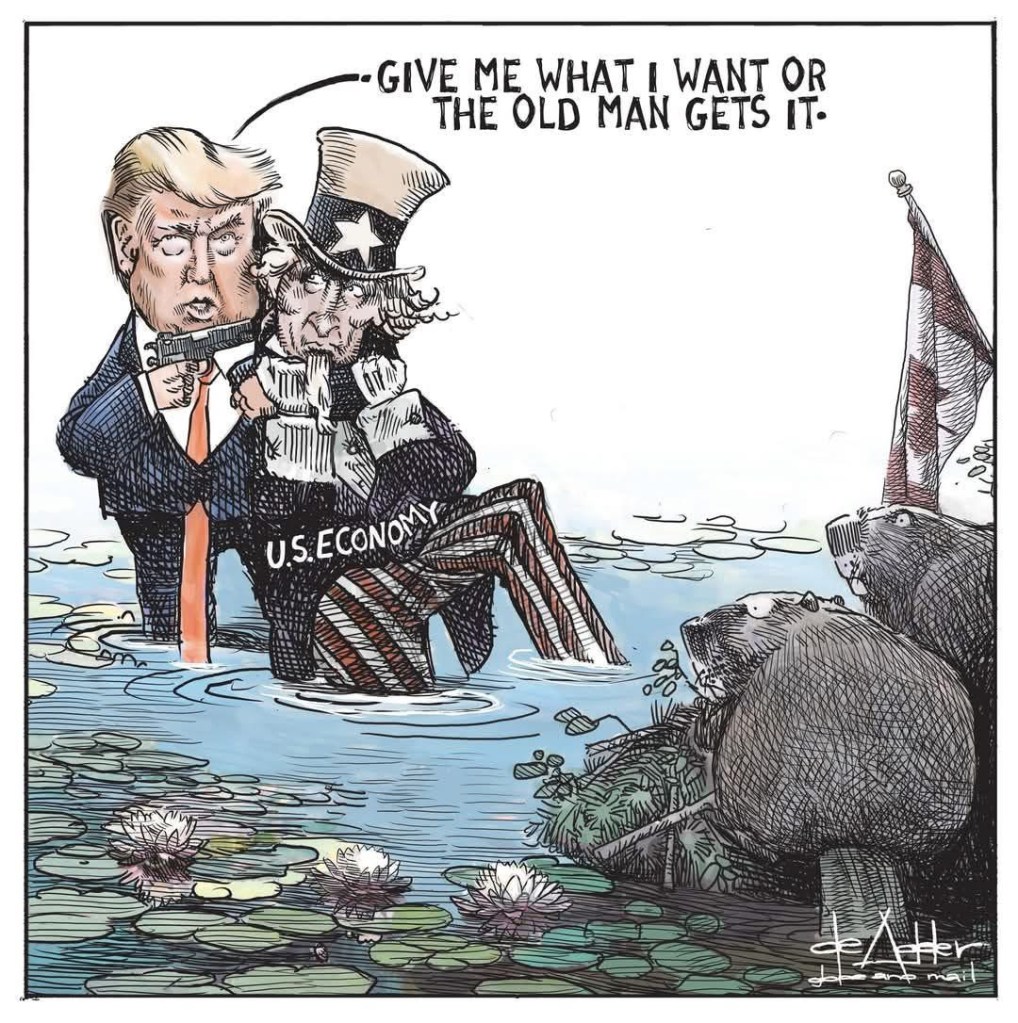
The idea of the United States invading Canada is pure fantasy – fiction that resurfaces when political tensions rise. History has seen conflict between the two nations, notably the War of 1812, but in modern times, such an invasion is not just improbable – it’s impossible. The recent escalation of trade tensions, triggered by the U.S. threat of 25% tariffs on Canadian imports in February 2025, has renewed debate over the state of relations. But let’s be clear: trade disputes don’t lead to tanks rolling across borders.

Canada and the U.S. share the world’s longest peaceful border (8,890 km) and a deeply intertwined economy. Canada is the U.S.’s second-largest trading partner, with trade worth hundreds of billions annually. A military invasion would shatter this economic relationship, triggering global market chaos, retaliatory tariffs, and crippling sanctions. The U.S.-Mexico-Canada Agreement (USMCA) would collapse, devastating American industries and consumers. Even the mere suggestion of aggression would spook markets and alienate key allies, making it a non-starter for even the most hardline economic nationalists.

Yes, the U.S. has the world’s most powerful military. No, that doesn’t mean invading Canada is feasible. Geography alone makes occupation nearly impossible. Vast forests, prairies, and the Rocky Mountains would bog down any invading force. Even during the War of 1812, when Canada was smaller and less industrialized, American forces struggled to maintain supply lines. Today, with modern infrastructure and a well-equipped Canadian military, the challenge would be exponentially greater.

Canada’s armed forces, though smaller than the U.S. military, are highly professional, technologically advanced, and well-integrated into NATO. The moment American troops crossed the border, global condemnation would be swift, and allies, including European powers, would not tolerate such an egregious violation of international law. The U.S. would find itself isolated and facing retaliatory action.

Invading Canada wouldn’t just be a military disaster, it would make the U.S. a global pariah. Canada is one of the world’s most respected nations, known for diplomacy, peacekeeping, and strong alliances. An unprovoked attack would trigger severe sanctions from the EU, UK, and other key trading partners, crippling U.S. banks and multinational corporations. The diplomatic fallout could even fracture NATO.

At home, the American public would reject such a reckless move. Canadians, fiercely proud of their independence, would mount an unyielding resistance. Any occupying force would face guerrilla warfare, sabotage, and mass civil disobedience – turning Canada into another unwinnable quagmire, like Vietnam or Iraq. The political backlash within the U.S. would be massive, with protests and upheaval against a war that serves no legitimate purpose.

Beyond all this, a war with Canada would be a direct threat to North American security. The U.S. and Canada work together through NORAD, jointly protecting the continent. Disrupting this alliance would leave both nations vulnerable to adversaries like China and Russia. In today’s world, power is determined by cybersecurity, economic influence, and technological dominance – not outdated military conquest.

Even in the heat of a 2025 trade war, where tensions are high, the leap from tariffs to military action is absurd. Trade disputes are fought with economic measures, not invasions. The fact that some even entertain this notion is more a reflection of political hyperbole than any serious strategic consideration.

A U.S. invasion of Canada isn’t just impractical – it’s impossible. The economic fallout, military challenges, guaranteed international backlash, and fierce Canadian resistance make it a non-option. The U.S. and Canada have their disagreements, but history has shown that their relationship is built on cooperation, shared values, and mutual benefit. The current trade war will eventually be resolved through negotiation, not war.

So, let’s put this nonsense to rest. Canada isn’t going anywhere. And if anyone thinks otherwise – think again.

A New Social Democratic Mandate for Ontario

As we are deep into the February 2025 Ontario election, I thought I might share my vision for the province, which might just be a little wide of traditional thinking for this part of North America, but would help rebalance the out of control neoliberal free-market capitalism we have today. 

I personally don’t feel that the New Democratic Party (NDP) is far enough to the left, as it makes too many compromises in order to attract centralist voters, whereas the Democratic Socialists of Canada (DSC) are uncompromising idealists, and politically ineffective. I fall somewhere in between these two parties, taking the best of both, and hopefully crafting a strategic message that’s attractive to others.  

Vision
The vision for Ontario is one of prosperity and equity, placing the well-being of its citizens at the forefront. This vision emphasizes robust investments in education, social programs, healthcare, and economic infrastructure to foster sustainable growth. The goal is to empower small and medium-sized communities, easing the burden on overpopulated urban centers and promoting regional equity, ensuring that all Ontarians benefit from the province’s future.

Core Pillars of the Mandate
The mandate is built upon five core pillars, each aimed at creating a more inclusive, prosperous Ontario. These pillars are focused on empowering citizens through education, improving community well-being, ensuring healthcare accessibility, fostering economic resilience, and promoting decentralized urban planning.

Education for Empowerment
A commitment to universal access to high-quality education is foundational. The focus will be on equipping Ontarians with the skills necessary for a modern, equitable economy. This will be achieved by expanding public education funding, particularly in smaller and medium-sized communities, ensuring that schools have access to modern facilities, resources, and technology. To make post-secondary education more accessible, tuition fees will be capped, grants increased, and debt forgiveness programs introduced for students who work in underserved areas. Moreover, lifelong learning programs will be developed to offer free or subsidized adult education and skills-training in emerging industries such as green energy and trades.

Social Equity and Community Well-Being
The goal is to build a society that is inclusive and supportive of its most vulnerable populations. Prioritizing affordable housing development in smaller communities will ensure that these areas remain accessible and livable. In addition, social safety nets such as universal childcare, guaranteed basic income pilots, and targeted support for Indigenous, rural, and marginalized communities will be strengthened. Public transit systems will also be expanded in smaller communities to reduce isolation and promote economic integration, ensuring better access to resources and opportunities for all.

Healthcare Accessibility and Innovation
Comprehensive healthcare that is accessible to all Ontarians is central to the mandate. Efforts will focus on strengthening local healthcare systems, particularly in smaller communities. By decentralizing healthcare services, the government will build and expand hospitals, clinics, and mental health centers, ensuring that these communities are well-served. Recruitment incentives for healthcare professionals will encourage doctors, nurses, and allied health workers to settle in underserved areas. Additionally, long-term care will be reformed, transitioning to fully public and community-centered models to ensure seniors receive care with dignity.

Economic Resilience and Green Growth
The mandate aims to promote sustainable economic growth through targeted investments in local industries and green initiatives. Creating tax incentives and grants for businesses to establish operations in smaller communities will be key to developing these regions economically. Expanding rural broadband to guarantee high-speed internet access will empower remote work, education, and commerce. Support for green industries, including renewable energy, sustainable agriculture, and low-emission manufacturing, will help these smaller regions thrive while contributing to environmental sustainability. Furthermore, worker-focused policies such as a $20/hour minimum wage, strong union protections, and expanded benefits like paid sick leave will ensure fair wages and working conditions across Ontario.

Decentralized Urban Planning
Shifting the focus from overburdened urban centers to smaller communities is a central part of the vision. Population redistribution strategies will provide tax benefits and relocation assistance for families and businesses moving to smaller towns. This will be complemented by investments in local infrastructure to improve water, energy, and transportation systems, making these communities more attractive for growth. Moreover, smart city planning will prioritize environmentally conscious and community-driven urban development, curbing urban sprawl and preserving green spaces.

Accountability Framework
To ensure the success of these initiatives, an accountability framework will be established. Regional citizens’ assemblies will guide local development, providing a channel for community input and ensuring government responsiveness. Transparent reporting will be maintained, with annual progress reports on education, healthcare, and economic initiatives. Regular equity audits will be conducted to ensure that the benefits of these programs are distributed fairly across rural, Indigenous, and urban populations.

Conclusion
The transformative changes outlined in this mandate will be funded through a progressive taxation system. The wealthiest individuals and corporations will contribute their fair share, while tax loopholes and corporate subsidies will be minimized, redirecting billions toward public investments. A modest increase in taxes on luxury goods, high-value real estate, and environmentally harmful industries will also generate revenue while promoting sustainability. Additionally, funding from inefficient urban sprawl projects will be reallocated to support investments in smaller communities. By partnering with federal programs and green investment funds, the province will secure additional resources for vital infrastructure, education, and healthcare reforms, ensuring fiscal responsibility while driving long-term economic growth.

This vision for Ontario is rooted in social democracy, seeking to build a fair, inclusive, and sustainable province by addressing the needs of all its citizens. By prioritizing smaller communities and strengthening public infrastructure, it aims to balance equity with opportunity, ensuring that no one is left behind in Ontario’s future.

Any takers? 

Why Metrolinx Should Run Ottawa’s Broken LRT

Those of you who regularly read my blog, know that I am a huge advocate of public transport, and a critic of the Public Private Partnership developing and operating the capital’s Light Rail Transit (LRT). 

Ottawa’s LRT system has been a profound disappointment, a fiasco of engineering failures, political mismanagement, and corporate negligence. Years after its launch, the system remains unreliable, its reputation tarnished by derailments, service disruptions, and public distrust. City officials, despite their best efforts, have failed to restore confidence or implement meaningful reforms. Given this ongoing dysfunction, it is time to consider a serious alternative: uploading the LRT to Metrolinx. A provincial takeover would bring in the expertise, resources, and oversight that Ottawa desperately needs while alleviating the financial strain on local taxpayers.

Metrolinx, despite its own challenges, has experience managing large-scale transit projects across Ontario. The agency has delivered rapid transit systems, expanded GO Transit, and led infrastructure projects that dwarf Ottawa’s troubled LRT. Unlike the City of Ottawa, which has been hamstrung by political infighting and bureaucratic inertia, Metrolinx operates with a broader provincial mandate and access to significantly greater funding. The province already has an interest in ensuring that Ottawa’s transit system is functional—after all, a well-run capital city benefits all Ontarians. Entrusting the LRT to Metrolinx would align Ottawa’s transit with the province’s long-term infrastructure planning, creating opportunities for better integration with intercity rail and bus services.

Financially, the benefits of provincial control are obvious. The LRT has drained Ottawa’s municipal budget, diverting funds away from other pressing priorities such as road maintenance, affordable housing, and social services. The city cannot afford to keep throwing money at a broken system while simultaneously planning for future expansions. If Metrolinx were to assume responsibility, the province would take on a greater share of the financial burden, allowing Ottawa to focus on local transit improvements that fall outside the LRT’s scope. This would not be an unprecedented move—Queen’s Park has already taken over major transit infrastructure in Toronto, such as the subway expansion projects, recognizing that municipal governments simply do not have the fiscal capacity to manage billion-dollar projects alone.

Of course, critics will argue that surrendering local control means sacrificing accountability. But let’s be honest: Ottawa’s local control has not served residents well. The city’s handling of the LRT has been defined by secrecy, questionable decision-making, and a lack of transparency. The provincial government, for all its faults, at least has the ability to intervene decisively when things go wrong. Under Metrolinx, operational standards would be enforced with greater rigor, and the pressure to deliver a functional transit system would be far greater than what we’ve seen from Ottawa City Hall. The public inquiry into the LRT debacle revealed a municipal government that was overwhelmed and, at times, complicit in its own failures. Perhaps it is time to let a more competent player take the lead.

This is not to say that Metrolinx is perfect. The agency has faced its own share of controversies, from cost overruns to delayed projects. But at least it has experience dealing with transit systems on a scale far larger than Ottawa’s. Unlike Ottawa’s municipal government, Metrolinx has the ability to negotiate directly with major infrastructure firms, access provincial funding streams, and bring in technical expertise that the city simply lacks. A takeover would not magically fix everything overnight, but it would place the LRT in the hands of those who at least know how to run a transit system.

The reality is that Ottawa’s LRT is beyond the city’s ability to fix on its own. Metrolinx, with its provincial backing and infrastructure expertise, offers the best hope for a reliable and efficient transit system. Ottawa residents deserve better than what they’ve been given. If that means surrendering local control to get a working train system, then so be it. The LRT was meant to be a transformative project for the city. If Ottawa cannot deliver on that promise, then it’s time to let Queen’s Park step in and do the job properly.