Is USA a Fascist State Struggling with Democracy? 

Is America flirting with fascism, or are such claims the product of alarmist hyperbole? It’s a question that divides dinner tables, social media feeds, and even academic circles. Some argue that the United States is a democracy fighting for its soul; others see it as a country standing perilously close to authoritarian rule. But to call America fascist – or even on the road to it – requires a careful unpacking of what fascism truly entails, and how it might resonate within the American political landscape.

Let’s be clear: fascism isn’t a vague insult for policies we don’t like. It’s an authoritarian ideology with specific hallmarks. Think Mussolini’s Italy, Hitler’s Germany – regimes steeped in violent nationalism, the suppression of dissent, and a drive to create a monolithic cultural identity. Robert Paxton, one of the leading scholars on the subject, described fascism as thriving on crises, exalting the group over the individual, and depending on a strong leader to restore a supposedly decaying nation. So, how does America stack up against these criteria? Let’s dig deeper.

Nationalism and Authoritarian Rhetoric
Nationalism is the drumbeat of every fascist regime, and it’s undeniable that America has had its moments of chest-thumping pride. But the “America First” rhetoric of recent years has pushed nationalism to a different level, stirring debate about its compatibility with democratic ideals. Take the Trump administration, where slogans like “Make America Great Again” dovetailed with a barrage of attacks on immigrants, minorities, and even the democratic process itself. Muslim travel bans, family separation policies at the southern border, and the vilification of immigrants as existential threats bear a troubling resemblance to the exclusionary policies of fascist regimes.

And then there’s the attack on the press—“the enemy of the people,” as Trump called it. Fascism thrives on controlling narratives, suppressing inconvenient truths, and manufacturing enemies to unite the populace. These tactics were echoed in efforts to discredit media outlets, undermine trust in elections, and dismiss dissenting voices. While America still enjoys a free press and opposition parties, these tactics are red flags in any democracy.

Civil Liberties Under Pressure
A free society requires robust protections for civil liberties, yet the U.S. has shown cracks in its foundation. Think about the use of force against peaceful protesters during the George Floyd demonstrations, or the revelations of mass surveillance by whistleblower Edward Snowden. Then there are laws in certain states aimed at curbing protests – an unsettling echo of fascist regimes that treated dissent as treason.

Still, America hasn’t crossed the line into wholesale repression. Dissent exists, opposition thrives, and courtrooms regularly challenge abuses of power. These are democratic lifelines, but they must be safeguarded vigilantly.

Corporate Power and Economic Control
Fascism often entails a symbiotic relationship between the state and corporations, where economic power is wielded for nationalist purposes. In America, the government doesn’t control corporations outright, but the influence of corporate money in politics is undeniable. Lobbying, dark money in elections, and the revolving door between big business and government raise questions about whether democracy is being eroded by oligarchic forces.

Economic inequality is another point of tension. Policies favoring the wealthy over the working class may not fit the fascist mold exactly, but they exacerbate social divisions, fueling the kind of crises that fascism preys upon.

Racial and Cultural Tensions
A defining feature of fascism is the enforcement of a singular racial or cultural identity, often to the detriment of minorities. The U.S. has a long history of systemic racism, from slavery and segregation to redlining and mass incarceration. Contemporary issues – like police brutality and racial inequality – continue to expose deep wounds in the fabric of American democracy.

White nationalist groups, emboldened in recent years, represent another disturbing trend. The normalization of their rhetoric in certain political spaces harks back to fascist tendencies to scapegoat minorities for societal woes. Yet, these groups remain fringe elements rather than central powers, and their rise has been met with strong opposition from civil society.

America’s Democratic Struggle
Despite these troubling signs, it would be a mistake to paint America as fully fascist. The U.S. retains institutions that fascist regimes dismantle: a separation of powers, an independent judiciary, and regular elections. Social movements – from Black Lives Matter to grassroots environmental campaigns – demonstrate that the democratic spirit is alive and well.

America’s story is not one of fascism triumphant, but of democracy under pressure. Its history is riddled with contradictions, from its founding on ideals of liberty while maintaining slavery, to its championing of free speech while tolerating systemic inequality. Yet, those contradictions are precisely why it remains a battleground for change.

So, Is America Fascist?
Not yet – and perhaps not even close. But the warning signs are there. The flirtation with authoritarianism, the normalization of exclusionary rhetoric, and the entrenchment of corporate influence all demand vigilance. America isn’t Mussolini’s Italy or Hitler’s Germany, but it is a nation grappling with the forces that could pull it in that direction. The question isn’t just “Is America fascist?” – it’s “What are we doing to ensure it never becomes so?”

Americans must keep democracy’s flame alive by holding power to account, protecting civil liberties, and fighting for the inclusive ideals the country was built on. After all, democracy isn’t just a system – it’s a struggle. And that struggle is theirs to win.
Please, Not Another Old White Male Academic

The Canadian Liberal Party finds itself at a crossroads, staring down the barrel of declining voter support, a fractured image, and leadership fatigue. Recent polling paints a grim picture for the governing party. According to a Nanos Research poll from November 2024, the Conservatives are riding high with 41% support, compared to the Liberals’ dismal 23%, while the NDP trails just behind at 20%. Similarly, an Abacus Data poll reveals an equally bleak scenario, with the Conservatives holding a commanding 22-point lead. For a party that once dominated Canadian politics, the question isn’t just about how to bounce back—it’s about survival.

The Curse of Intellectual Leadership
The Liberals’ current predicament has parallels to their past missteps. Two glaring examples—Stéphane Dion and Michael Ignatieff—serve as cautionary tales about the dangers of picking leaders who, while intellectually formidable, fail to connect with voters on a human level.

In 2006, the Liberals turned to Stéphane Dion, an academic and policy wonk with a passion for climate change. Dion’s “Green Shift” plan was ambitious, but lacked the messaging needed to win over Canadians worried about the economy. In the 2008 election, the party was hammered, falling to just 77 seats and 26.3% of the popular vote. Dion’s perceived aloofness, and inability to inspire confidence left the Liberals weak and divided, opening the door for Stephen Harper’s Conservatives to consolidate power.

The Liberals repeated this mistake with Michael Ignatieff, an accomplished academic and author, in 2008. Despite his intellectual prowess, Ignatieff struggled to shake the perception that he was a carpetbagger disconnected from the concerns of average Canadians. In the 2011 election, the party collapsed, capturing a mere 18.9% of the vote and just 34 seats—the worst performance in Liberal history. For the first time, the Liberals were relegated to third-party status, a stunning fall for Canada’s so-called “natural governing party.”

The Liberal Dilemma in 2025
Fast forward to today, and the Liberals seem poised to repeat history. With Justin Trudeau’s star power fading after nearly a decade in office, there is a real risk that the party might turn to yet another “safe” choice—a figure who mirrors the old archetype of a white male intellectual, disconnected from the realities of modern Canada. But the Canada of 2025 isn’t the Canada of 2006 or 2011. Demographics have shifted, and so have voter priorities.

Canada is now more diverse than ever. Over a quarter of the population identifies as part of a racialized group, and millennials and Gen Z make up the largest voting blocs. These voters expect leaders who reflect their lived experiences—not just in terms of identity but also in terms of relatable policies and vision. A leader who represents “business as usual” risks alienating not only racialized communities but also younger, progressive Canadians who are increasingly drawn to the NDP or Greens.

Recent polling reflects this growing discontent. The Liberals are hemorrhaging support to both the Conservatives and the NDP, with voters fed up with Trudeau’s perceived failures on affordability, housing, and climate action. Even Liberal loyalists are looking for something—or someone—new to rekindle their enthusiasm.

What the Liberals Need Now
The Liberals must understand that leadership is as much about identity and relatability as it is about policy and experience. A leader who embodies the diversity of Canada, speaks to the struggles of everyday people, and offers a compelling vision for the future could galvanize the party’s base and attract disillusioned voters. In contrast, opting for another “old white academic” risks reinforcing the image of a party out of touch with 21st-century Canada.

The successes of other leaders offer lessons. Jagmeet Singh’s historic leadership of the NDP has drawn younger and more diverse voters to his party, even if they haven’t translated into electoral dominance. Meanwhile, Pierre Poilievre has managed to connect with younger Conservatives through his populist messaging on affordability and housing.

The stakes for the Liberals couldn’t be higher. If they fail to read the room and make a bold choice, they risk not just losing the next election but fading into irrelevance altogether. As Dion and Ignatieff’s defeats demonstrated, intellectual credentials alone don’t win elections. Representation, relatability, and vision do.

For the Liberals, the time for reinvention is now—or never.

A Path to Sustainable and Inclusive Urban Living

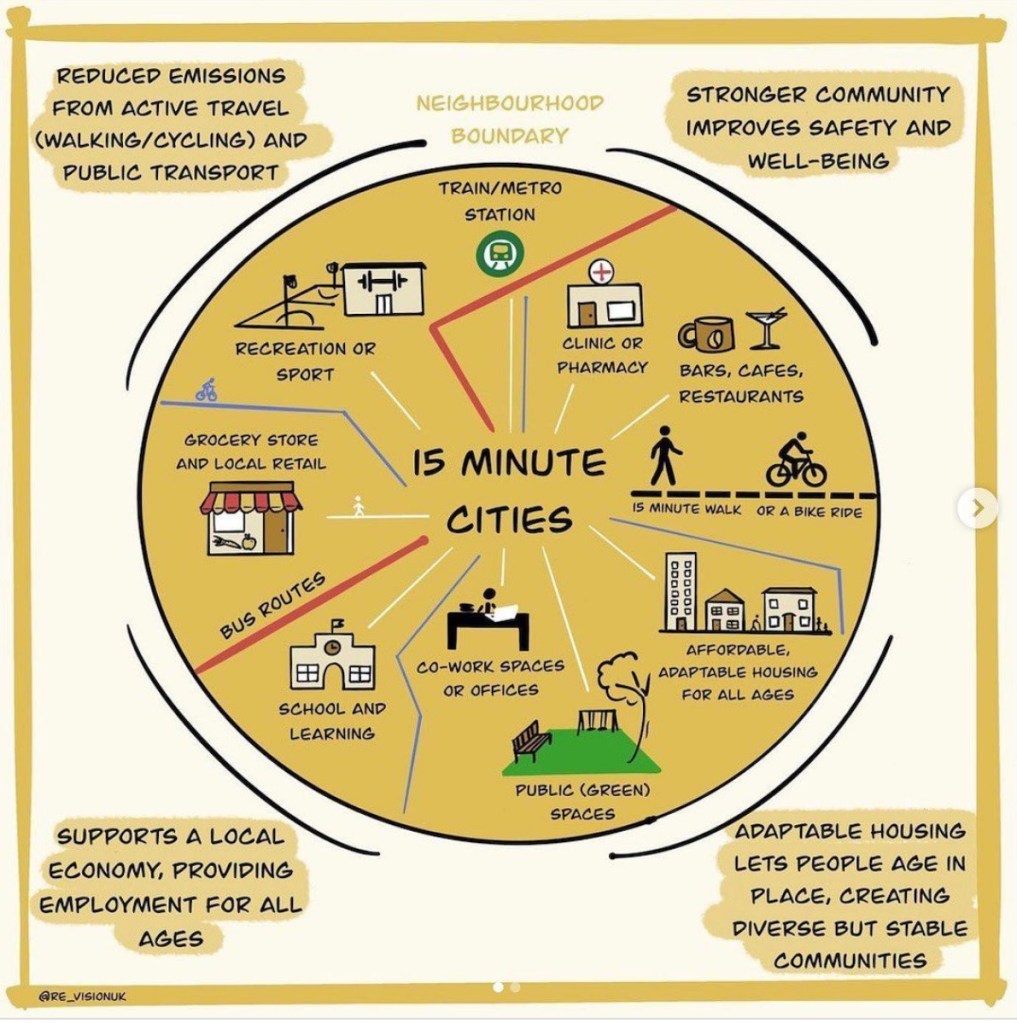
The 15-minute city concept is redefining urban planning by creating neighborhoods where residents can access essential services and amenities—such as schools, grocery stores, healthcare, parks, and cultural hubs—within a short walk or bike ride from their homes. This approach enhances livability, promotes sustainability, and fosters vibrant communities. While cities like Montreal and Vancouver are often highlighted as Canadian pioneers of this model, the concept has significant potential to transform smaller cities and suburban areas as well.

Modern suburban developments, with their sprawling layout, lack of sidewalks, and reliance on car travel, often isolate families and increase stress. Parents find themselves spending hours shuttling children to school, sports, and activities, leaving less time for connection with neighbors or the community. By contrast, the 15-minute city offers a remedy: neighborhoods designed for convenience, where daily needs are within walking distance, eliminating the dependency on cars and fostering tighter-knit communities.

Montreal’s Plateau-Mont-Royal exemplifies the 15-minute city with its dense urban fabric and mixed land use. The neighborhood integrates residential spaces with vibrant local businesses, green parks, and pedestrian-friendly streets. Residents can easily walk or bike to markets, cafes, schools, and public transit, making car ownership unnecessary for most. The Plateau demonstrates how retrofitting existing neighborhoods with human-scale design can create thriving, sustainable communities.

While Vancouver’s downtown core is often cited as a model of accessibility and vibrancy, Victoria has also embraced the 15-minute city concept through its commitment to walkable neighborhoods and cycling infrastructure. Areas like Fernwood and James Bay offer compact communities where residents can access markets, local cafes, healthcare, and schools without needing a car. The city’s investment in bike lanes and mixed-use development showcases how smaller cities can lead the way in creating vibrant, sustainable urban environments.

Stratford, a small Ontario city known for its arts and theater scene, has leveraged its human-scale design to embody the principles of the 15-minute city. Residents of Stratford can easily walk to schools, grocery stores, parks, and cultural venues. The city’s focus on local businesses and accessible public transit demonstrates how smaller municipalities can create thriving, close-knit communities while reducing environmental impact.

Growing up in Newcastle-upon-Tyne, I experienced firsthand the benefits of a 15-minute city before the term existed. Everything we needed—food shopping, schools, parks, and even the local fish-and-chip shop—was within walking distance. Pubs and restaurants were truly “local,” and an affordable public transit system connected us to the wider city. This lifestyle fostered independence, social connections, and a sense of belonging—qualities that modern urban planning seeks to replicate.

The 15-minute city has sparked debate, with critics fearing it may restrict personal freedom or create isolated “bubbles.” However, proponents argue that the model enhances choice by making essential services more accessible while reducing reliance on cars. Rather than limiting mobility, it offers more options for transportation, including walking, cycling, and transit. This model also aligns with public health goals, reducing long commutes and encouraging active lifestyles.

Danish urbanist Jan Gehl emphasizes designing cities around people, not cars. His research underscores the economic, social, and environmental benefits of walkable neighborhoods, from improved mental health to strengthened community bonds. By investing in pedestrian infrastructure and mixed-use development, cities can become more sustainable and equitable.

As Canadian cities grow, the 15-minute city offers a roadmap for livable, sustainable urban living. By prioritizing human-scale design and reducing car dependency, communities of all sizes can embrace this transformative model. Whether in a bustling metropolis or a small city like Stratford, the principles of the 15-minute city promise a more inclusive, resilient future for urban living.

Replacing Canada’s Aging Submarine Fleet

Canada is currently debating whether to invest in a new fleet of submarines to replace its aging Victoria-class vessels, which were purchased second-hand from the United Kingdom in the 1990s. These submarines, while functional, are nearing the end of their service life and face increasing maintenance challenges.

With Canada’s Arctic becoming more geopolitically significant due to climate change, which is opening new shipping lanes and increasing resource exploration; submarines capable of operating under ice are crucial for maintaining sovereignty in this region. Without them, Canada risks falling behind nations like Russia and the United States, which have invested heavily in Arctic-capable fleets.

Modern submarines, such as those with Air Independent Propulsion (AIP) or nuclear capabilities, offer enhanced endurance, stealth, and operational flexibility compared to the diesel-electric Victoria-class. Investing in these technologies would modernize Canada’s navy and ensure operational relevance.

The German Type 212CD (Common Design) submarine, developed by ThyssenKrupp Marine Systems, represents a modern and highly capable class of diesel-electric submarines with Air Independent Propulsion (AIP). These submarines are designed for stealth, endurance, and multi-role capabilities, and as a NATO platform, the Type 212CD would seamlessly integrate with allied operations, thus strengthening Canada’s contributions to NATO’s underwater defense network. Germany has a proven track record of delivering submarines on time and within budget. Partnering with an experienced supplier like ThyssenKrupp could help Canada avoid some of the delays and cost overruns seen in its previous defense procurement projects.

The operational performance of the Type 212CD remains speculative until it enters service. However, the proven track record of the Type 212A, combined with the extensive research and development efforts behind the CD variant, suggests it will be a reliable and capable platform for NATO-aligned navies.

With Canada’s “Sea to Sea to Sea” responsibilities, they really need a fleet of nine boats (operations, training, maintenance), but I think they would likely procure six over a decade timeframe. Ultimately, the decision will hinge on Canada’s strategic priorities, financial constraints, and Arctic sovereignty goals. If Canada prioritizes cost-efficiency and rapid acquisition, the Type 212CD could emerge as a leading choice, provided it meets specific Arctic and endurance requirements. 

Is Ford Coming for Poilievre? 

The idea that Ontario Premier Doug Ford may be positioning himself as a future contender for the leadership of the federal Conservative Party – and ultimately the role of Prime Minister – is worth serious consideration, especially given Ford’s political trajectory and unique approach to conservatism.

Ford’s Political Ambition
Doug Ford has consistently demonstrated a knack for navigating and surviving in the political spotlight. As Premier of Ontario, Ford has carefully cultivated a “common man” image, appealing to a broad swath of voters, including blue-collar workers and suburban families – key demographics for any federal election. His brand of conservatism is less ideologically rigid than Pierre Poilievre’s; Ford focuses on pragmatism and populist messaging, which could make him a strong contender in federal politics.

While Ford has repeatedly stated he is focused on Ontario, his actions suggest he is not averse to expanding his influence. His willingness to work with Prime Minister Justin Trudeau on infrastructure projects and economic initiatives may be positioning him as a centrist alternative to Poilievre’s more hardline, ideological approach. This strategy could help Ford appeal to swing voters in urban areas and ridings that Poilievre might struggle to win.

Tensions with Poilievre
Ford and Poilievre’s relationship has been notably distant. Ford has avoided openly endorsing Poilievre or closely aligning with him, even during the latter’s rise to federal Conservative leadership. This distance hints at a potential rivalry, or at the very least, an unwillingness to be overshadowed by Poilievre on the national stage.

Poilievre’s leadership style, which leans heavily on ideological conservatism and combative rhetoric, may alienate moderate voters – a gap Ford could exploit. Ford’s track record of winning elections in a diverse province like Ontario demonstrates his ability to bridge divides and appeal to a broader electorate, including centrists who might find Poilievre’s approach too polarizing.

Ontario, the Powerhouse of Canadian Politics 
Historically, Ontarians have shown a preference for balancing power between provincial and federal governments, often avoiding having the same political party in charge at both levels. This dynamic could spell trouble for Doug Ford if Pierre Poilievre’s federal Conservatives win the next election. A federal Conservative victory might shift Ontario voters toward the provincial Liberals or NDP in an effort to counterbalance federal policies, particularly if there is dissatisfaction with Conservative governance nationally. Ford’s political calculus must account for this trend, as maintaining his grip on Ontario could become significantly more challenging with a Conservative government in Ottawa. This precarious balance might also incentivize Ford to consider a move to federal politics, especially if he perceives his provincial support waning.

While Ford has not explicitly declared any federal ambitions, the possibility that he could eventually seek Pierre Poilievre’s job cannot be dismissed. His pragmatic approach to conservatism, ability to appeal to diverse voters, and political survival instincts make him a viable alternative for a party looking to broaden its appeal. Whether by design or by opportunity, Ford may very well see himself as Canada’s next Conservative Prime Minister-in-waiting.

Trump’s Transparent Bullying Tactics hold Real Menace  

Donald Trump’s suggestion that Canada could become the 51st state not only reveals a lack of understanding of Canadian sovereignty and identity, but also exposes a broader motivation; the United States’ desire to access Canada’s vast natural resources. Canada is rich in essential resources like fresh water, minerals, oil, and lumber, all of which are increasingly valuable as global demand rises and environmental pressures grow.

Fresh water, in particular, has become a critical resource as many U.S. states face drought and water scarcity. Canada holds about 20% of the world’s freshwater supply, making it an attractive target for U.S. interests. Similarly, Canada’s mineral wealth, including critical minerals like nickel, lithium, and cobalt used in renewable energy technologies, is vital for the U.S. as it seeks to secure supply chains for its green economy. Lumber from Canada’s vast forests has also long been a point of contention, with ongoing trade disputes reflecting the U.S.’s reliance on Canadian wood for construction and manufacturing.

Trump’s suggestion disregards over 150 years of Canadian self-governance, and the deep cultural and political differences between the two nations. Canadians take immense pride in their independence, multicultural heritage, and distinct political system, which are starkly different from those of the U.S. Such remarks alienate an important ally, ignore history and diplomacy, and trivialize the unique relationship between the two countries.

Ultimately, this kind of rhetoric attempts to undermine Canada’s sovereignty, and risks being perceived as a veiled attempt to exploit its natural wealth, rather than as a serious or respectful political proposition. It underscores a broader need for Canada to remain vigilant in safeguarding its resources and asserting its independence on the global stage.

Let’s Merge Canada Post into Service Canada to Provide Integrated Essential Services to Non-Urban Communities

With the future of Canada Post in danger, perhaps its time for some out of the box thinking? While inner city folk have a multitude of options for parcel and regular mail delivery, due to the high density of their population, there are many Canadian communities that exclusively rely on the services of the federal agency for both business and personal mail and parcel delivery. While it is clear that the status quo will no longer work for Canada Post, there is still a strong requirement to provide programs and services to Canadians, so instead of franchising, in an effort to streamline and lower costs, lets go big!

Establishing a Service Canada/Canada Post location in every rural, northern, and remote community would bring critical services closer to Canadians who currently often face challenges accessing them. Such an initiative would not only address long-standing gaps in financial, postal, and government service delivery, but also strengthen ties across the nation, reduce inequities, while leveraging the expanding digital infrastructure to provide accessible, timely citizen support and services. 

Canada’s vast geography often creates a sense of isolation for rural and remote communities, both physically and economically. Establishing local hubs for essential services would help foster a greater sense of inclusion by ensuring these communities are more connected to the rest of the country. By providing access to programs such as passports, employment insurance, and pension benefits, Service Canada/Canada Post outlets could act as bridges between remote areas and the national economy. Additionally, these centres could serve as venues for local engagement and civic participation, reinforcing Canada’s commitment to serving all its citizens, regardless of location.

The absence of adequate banking services in rural and remote areas creates significant inequities. Residents are often forced to rely on payday lenders or travel long distances to access financial services. I know that the only bank branch in my local village closed a few years ago during the pandemic, and now locals have a 20 or 30 minute drive to the nearest branches. Introducing postal banking through this new merged agency would provide an affordable alternative, allowing residents to manage their finances locally. Many other G7 countries offer financial services via postal outlets, especially in non-urban communities. Similarly, access to Service Canada programs—such as Employment Insurance and social assistance—without leaving the community would ensure more equitable access to resources that urban Canadians often take for granted.

These hubs could provide tailored services to Indigenous communities, many of which are in remote areas. A culturally sensitive approach to service delivery could address historical gaps and help foster reconciliation by ensuring Indigenous peoples have equitable access to essential resources.

Although digital technology has transformed service delivery across Canada, many rural and remote areas lack reliable internet infrastructure, making it difficult to access online services. New federal service outlets could serve as hybrid digital and in-person centres, enabling face-to-face interactions for complex needs while providing access to online resources for others. For example, trained staff could assist residents in navigating digital platforms for government programs or applying for financial products.

Additionally, these centres could act as technology hubs by offering internet access, video conferencing facilities, and digital literacy training. This would allow residents to connect with government representatives or other professionals in urban centres without leaving their communities, reducing costs and logistical barriers. They would also support the federal government’s goal of reducing emissions, as residents would no longer need to travel long distances for basic services.

Beyond providing essential services, these hubs would stimulate local economies by creating jobs and supporting entrepreneurship. For example, reliable postal services would make it easier for local businesses to engage in e-commerce, shipping goods to larger markets and sourcing supplies at lower costs. Similarly, residents could order essential items online, knowing they could rely on consistent delivery services.

While I am the first to criticize Canada Post’s senior management, and their lack of focus, the establishment of Service Canada/Canada Post locations in rural, northern, and remote communities is a visionary step toward creating a more inclusive, connected, and equitable Canada. Back in the early 2000s these two agencies tried to promote the idea that they should be the face of the federal government for all citizens-focused services. I attended a large meeting at Canada Post HQ where it was argued that Canadians needed a single service portal, and that traditionally these agencies were already known to citizens. Twenty years ago, federal departments were just becoming familiar with the Web as an online service platform and weren’t ready to give up their individual brands, but perhaps it’s time to rethink this position and consider a merged, single agency,

Finally, I feel that the new agency should be called Service Canada. This name falls in line with provincial thinking and it’s time to let go of the Canada Post brand and recognize a larger, integrated approach to providing Canadian with the services and programs that they need.