The Ferry That Would Not Settle: Wolfe Island and the Cost of Getting It Wrong

For generations, the Wolfe Island ferry was a quiet, functional piece of public infrastructure. It was not glamorous, and it did not promise innovation. It simply worked often enough that island life could organize itself around its rhythms. That unspoken reliability ended not with a single breakdown, but with a cascade of decisions that treated a critical transportation link as a technology showcase rather than a lifeline.

The roots of the current crisis reach back to the decision to replace the Wolfe Islander III, a vessel launched in 1976 that, despite its age, delivered consistent service. In 2017, the Ontario Ministry of Transportation committed to a new, larger hybrid-electric ferry, the Wolfe Islander IV, built overseas and marketed as a modern, higher-capacity, lower-emissions solution. On paper, it was progress. In practice, it was a project that outran its own ecosystem.

The new vessel arrived in Ontario in 2021, years before the docks, charging infrastructure, and staffing capacity required to operate it were fully in place. This mismatch created an immediate limbo. A ferry designed to function as part of an integrated electric system instead sat idle while shore-side systems lagged behind. Training shortages and labour constraints compounded the delay, turning what should have been a transitional period into a prolonged absence from service.

When the Wolfe Islander IV finally entered full-time operation in August 2024, expectations were high and patience already thin. Those expectations were quickly tested. Within months, the vessel suffered a grounding incident that damaged its hull and propulsion components. What was initially described as minor damage resulted in the ferry being removed from service for an extended period and sent to a Hamilton shipyard for repairs. The older Wolfe Islander III was pressed back into duty, once again carrying the weight of continuity.

The mechanical troubles did not end with that incident. The hybrid-electric design depended on shore-based charging infrastructure that was still incomplete, forcing the vessel to rely heavily on onboard diesel generators. Those generators, never intended for sustained primary operation, became a point of failure. By mid-2025, generator problems again sidelined the ferry. Brief returns to service were followed by further outages, including power system failures that left residents relying on temporary passenger shuttles and improvised arrangements.

These technical failures had predictable human consequences. The Wolfe Islander IV operates on a longer round-trip schedule than its predecessor, reducing the number of daily crossings. For island residents, this change reshaped daily life. Commutes grew longer and less predictable. Medical appointments, school schedules, supply deliveries, and emergency response planning all became more fragile. What had once been an inconvenience during rare outages became a chronic uncertainty.

Concerns around emergency access have been particularly acute. Wolfe Island relies on ferry access for ambulance transport to mainland hospitals. Longer crossing times and unreliable service are not abstract inconveniences in that context. They are measurable risks. Community petitions and advocacy groups emerged not out of nostalgia for the old ferry, but out of a clear understanding that transportation reliability is a public safety issue, not merely a service quality metric.

The deeper problem is not that a new ferry experienced teething issues. Complex infrastructure projects often do. The problem lies in the sequencing of decisions. The vessel was delivered before its supporting systems were ready. Operational assumptions were made about staffing and training capacity that did not hold. A technology-forward design was deployed into an environment that could not yet support it. Each of these choices transferred risk from the project plan onto the community it was meant to serve.

What has unfolded at Wolfe Island is a familiar Canadian infrastructure story. Ambition was not matched by coordination. Procurement timelines were allowed to drift out of alignment with construction and commissioning realities. Accountability became diffuse as responsibility spread across contractors, ministries, and timelines. Meanwhile, residents were left to absorb the consequences of decisions made far from the dock.

The Wolfe Island ferry saga is not primarily about electric propulsion or shipbuilding quality. It is about governance. It is about whether essential public services are designed around the lived realities of the communities that depend on them, or around abstract models of innovation and efficiency. Reliability, once lost, is difficult to regain. Trust follows the same rule.

Until the ferry system is treated first as critical infrastructure and only second as a demonstration project, Wolfe Island will continue to pay the price for a transition that was promised as an improvement and delivered as a disruption. The lesson is not that modernization is a mistake. The lesson is that modernization without readiness is not progress at all.

Sources

U.S. Border Rules: Security Theater at the Expense of the Economy

The United States is poised to implement border-crossing rules that threaten to strangle tourism and business travel under the guise of national security. Under a proposal from U.S. Customs and Border Protection, travelers from Visa Waiver Program countries could soon be required to disclose five years of social media activity, all phone numbers and email addresses used in the past decade, family details, and an array of biometric data including fingerprints, facial scans, iris scans, and potentially DNA. The stated purpose is to prevent threats before travelers set foot on American soil. The practical effect, however, is more likely to be economic self-sabotage than enhanced security.

Officials argue that social media monitoring can identify links to extremist networks and that biometric verification prevents identity fraud. Yet in reality, these measures are deeply flawed. Social media is ambiguous, easily manipulated, and prone to false positives. Connections to flagged accounts are not proof of malicious intent, and online behavior is rarely a reliable predictor of future actions. Biometric data can confirm identity, but it cannot reveal intent, and DNA collection provides little actionable intelligence for border security. What is billed as a comprehensive safety net is, in practice, security theater: a show of vigilance with limited ability to prevent genuine threats.

The economic consequences are far more immediate and measurable. Tourism generates hundreds of billions of dollars annually in the United States, and even modest deterrence can ripple across hotels, restaurants, retail, and transportation. Business travel and conferences may shift overseas to avoid intrusive vetting, while students and skilled professionals may choose alternative destinations for study and employment. The timing is particularly ill-advised: the 2026 FIFA World Cup, expected to bring millions of international visitors, risks diminished attendance and reduced economic activity due to privacy-invading entry requirements.

Beyond lost revenue, the proposal risks damaging the U.S.’s international reputation. Heavy-handed border rules signal that openness and hospitality are subordinate to bureaucratic procedures, potentially discouraging cultural exchange, foreign investment, and global collaboration. In balancing national security and economic vitality, policymakers appear to have prioritized symbolism over substance.

Ultimately, the proposed rules expose a stark imbalance: symbolic security at the expense of tangible economic and diplomatic costs. Public commentary over the next 60 days is the last line of defense against a policy that could chill travel, weaken industries reliant on foreign visitors, and tarnish America’s global image. National security is crucial, but when it comes at the cost of economic self-harm, it ceases to be protection and becomes self-inflicted damage.

🗓️ Five Things We Learned This Week

Week of December 20–26, 2025

Each week, we step back from the churn of daily headlines and look at five developments that help frame what is actually happening in the world. Even in the quiet stretch between holidays, global events continue to unfold across security, economics, climate, and sport.

✈️ 🇺🇸 1. U.S. conducts airstrikes against Islamic State targets in Nigeria

The United States carried out coordinated airstrikes against Islamic State-linked militants in northwest Nigeria on December 25, working alongside Nigerian forces to target insurgent camps. Officials described the operation as part of broader counterterrorism cooperation in West Africa.

Why it matters: The strikes mark a notable escalation of U.S. involvement in regional security efforts and reflect growing concern over extremist expansion in the Sahel and surrounding regions.

⚖️ 📉 2. U.S. stock markets remain resilient through holiday trading

Despite shortened trading weeks around Christmas, U.S. markets remained near record highs between December 24 and 26. Investors continued to focus on artificial intelligence investment, corporate earnings outlooks, and expectations of future interest-rate cuts.

Why it matters: Sustained market confidence during thin holiday trading suggests investors are looking past short-term uncertainty and positioning for longer-term structural growth themes.

🌨️ ❄️ 3. Major winter storm disrupts travel and power across North America

A powerful winter storm swept across eastern Canada and the northeastern United States over Christmas weekend, bringing heavy snow, freezing rain, flight cancellations, and widespread power outages. Several regions declared states of emergency as infrastructure strained under extreme conditions.

Why it matters: Severe winter weather continues to test transportation systems, energy grids, and emergency preparedness, reinforcing concerns about infrastructure resilience in a changing climate.

🏆 🏅 4. Women’s Handball World Championship concludes in Europe

The 2025 Women’s Handball World Championship wrapped up during the holiday week, following weeks of competition hosted jointly by Germany and the Netherlands. Thirty-two national teams participated, drawing growing international attention to the sport.

Why it matters: The tournament highlights the continued rise of women’s international sport and the expanding audience for competitions beyond the traditional global sports calendar.

🏟️ 🎯 5. World Darts Championship advances through holiday rounds

The 2025–26 World Darts Championship continued through its early rounds between December 20 and 26, featuring a 128-player field and a multi-million-pound prize fund. The event remains one of the most watched and commercially successful competitions in the sport.

Why it matters: Darts illustrates how so-called niche sports can build massive global followings, blending entertainment, professionalism, and evolving athlete careers.

Closing thought:
From counterterrorism operations and market confidence to winter storms and international sport, this week reminds us that the world does not slow down for the holidays. The forces shaping 2026 are already in motion — sometimes quietly, sometimes dramatically — even as the calendar turns.

Five Things is a weekly Rowanwood Chronicles feature tracking global developments from Saturday to Friday.

Enough Already: Greenland, American Strategy, and an Envoy That Makes No Sense

In December 2025, President Donald Trump announced that he would appoint Louisiana Governor Jeff Landry as the United States special envoy to Greenland. The announcement came with Trump’s customary social-media flourish, framing Greenland as “essential to our national security” and praising Landry’s willingness to advance U.S. interests in the Arctic. Landry himself declared that it was an “honor … to make Greenland a part of the U.S.” even as he would remain governor of Louisiana concurrently. Reuters

1. It’s a Diplomatic Stunt, Not Strategy

Appointing a U.S. special envoy to a territory that is not a U.S. partner or diplomatic interlocutor is, by definition, an odd choice. Greenland is a semi-autonomous territory of the Kingdom of Denmark, and sovereignty over Greenland rests with Copenhagen under international law. Even if Greenland exercises home rule over many internal matters, Denmark retains foreign-affairs authority. Euronews

Denmark reacted accordingly. Its foreign minister denounced the move and summoned the U.S. ambassador in protest, asserting that territorial integrity must be respected. Danish and Greenlandic leaders jointly declared that “you cannot annex another country,” and reinforced that “Greenland belongs to the Greenlanders.” Euronews

2. The People of Greenland Have Spoken—Loudly

Trump and his allies have repeatedly hinted that Greenlanders might welcome U.S. affiliation or even statehood. Yet public opinion data tell a different story: 85% of Greenlanders oppose becoming part of the United States, with only about 6% in favor. A News AMERICAS poll

Ignoring the expressed will of the local population while proclaiming sovereign ambitions isn’t strategic leadership. It’s symbolic posturing that weakens U.S. credibility with the very audiences that Washington claims to want on its side.

3. National Security Strategy vs. Tactical Execution

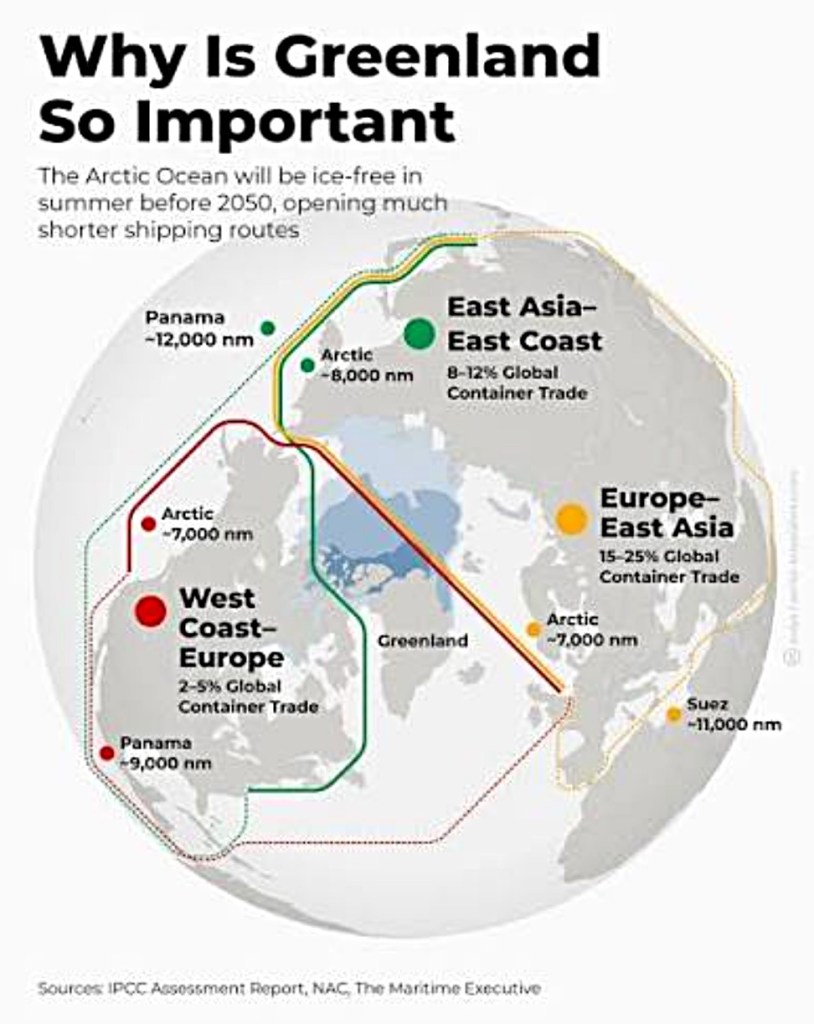
To be fair, Greenland does matter in the Arctic geostrategic environment. Its geographic position gives control over approaches to North America, and U.S. military assets like Pituffik Space Base have long been elements of continental defense. There is also growing global competition in the Arctic amid climate change and resource access. These realities are consistent with core themes in the U.S. National Security Strategy (NSS): maintaining technological edge, reinforcing alliance structures, and securing critical supply chains. Associated Press

But that strategic framework does not justify appointing a governor as envoy with public remarks about making another country part of the United States. That is a conflation of long-term objectives (strengthening U.S. strategic position in the Arctic) with short-term theatrics that have real diplomatic and legal consequences.

4. Why This Matters Beyond Headlines

A smart Arctic strategy might include genuine cooperative defense partnerships with Greenland and Denmark, investment in shared security infrastructure, climate resilience, and economic collaboration that respects sovereignty. Instead, the current approach:

  • Undermines alliance trust with a NATO member whose cooperation is critical in Europe and the Arctic.
  • Misreads local sentiment, dismissing Greenlanders’ clear preference to determine their own future.
  • Reduces U.S. policy to rhetorical brinkmanship, distracting from substantive cooperation where it matters.

If the NSS is a roadmap for how the U.S. secures its interests in an increasingly competitive world, this envoy appointment reads like a sideshow detour driven by personality rather than policy.

Sources

When Interview Styles Collide: Why Some Political Conversations Feel Like Car Crashes

Every few years, Canadian audiences rediscover the same irritation: a high-profile interview that feels less like an exchange of ideas and more like a verbal wrestling match. The questions may be legitimate, even necessary, but the delivery leaves viewers tense, unsatisfied, and oddly unenlightened. The repeated clashes between Rosemary Barton and Mark Carney are a useful case study, not because either is acting in bad faith, but because they embody two very different traditions of public communication that were never designed to coexist comfortably.

The first tradition is the parliamentary press-gallery style that dominates Canadian political journalism. It is adversarial by design. It emerged in an era when access was limited, answers were evasive, and power was something to be pried open rather than invited to speak. In this model, interruption is not rudeness; it is a tool. The journalist asserts control of the frame, resists narrative-setting by the interviewee, and signals independence to both the audience and their peers. Toughness must be visible. Silence or patience can be misread as deference.

The second tradition is technocratic communication, exemplified by figures like Carney. This style evolved in central banks, international institutions, and policy forums where precision matters more than punch. Answers are layered, contextual, and carefully sequenced. The speaker often builds a framework before arriving at a conclusion, because conclusions without context are seen as irresponsible. This approach assumes the listener is willing to follow a longer arc in exchange for accuracy.

When these two traditions meet on live television, friction is inevitable. The journalist hears preamble and assumes evasion. The interviewee hears interruption and assumes misunderstanding. Each responds rationally within their own professional culture, and the conversation degrades anyway.

What makes this especially grating for audiences is that modern broadcast incentives amplify the worst aspects of the collision. Political interviews are no longer just about extracting information. They are performances of accountability. The interviewer must appear relentless, particularly when questioning elite figures who are widely discussed as potential leaders. Interruptions become proof of vigilance, even if they interrupt substance as much as spin.

At the same time, viewers are more sophisticated than broadcasters often assume. Many can tell the difference between a non-answer and a complex answer. When an interviewee remains calm and methodical while being repeatedly cut off, the aggression reads less like accountability and more like impatience. The audience senses that something useful is being lost, not exposed.

This is why these interviews linger unpleasantly after they end. It is not that hard questions are unwelcome. It is that hardness has been mistaken for haste. A genuinely rigorous interview would often benefit from letting a full answer land, then dissecting it carefully. Precision, not interruption, is what exposes weak arguments. Control of the conversation is not the same thing as control of the truth.

None of this requires villains. Barton is doing what her professional ecosystem rewards. Carney is speaking in the register his career trained him to use. The problem is structural, not personal.

If public broadcasting is meant to inform rather than merely provoke, it may be time to rethink whether visible combat is the best proxy for journalistic seriousness. Sometimes the most incisive move is not to interrupt, but to listen long enough to know exactly where to press next.

That, in the end, is why these moments grate. They remind us that we are watching two competent professionals speaking past one another, while the audience pays the price in lost clarity.

Public Funding for Private Arenas: Economic Realities Behind the Ottawa Senators Proposal

The renewed push for a taxpayer supported arena at Ottawa’s LeBreton Flats arrives at a moment when the economic evidence is clear. Professional sports franchises continue to seek public subsidies while independent academic research demonstrates that taxpayer funded arenas provide little to no measurable economic return to host cities.

The current lobbying effort by Capital Sports Development Inc. mirrors a common strategy in North America: frame the project as an economic generator rather than a private entertainment investment. The empirical data provides a different assessment.

Economic research and city outcomes

Consensus across economic literature is stable. Major reviews and empirical studies show that sports arenas do not create net new economic activity. Spending at arenas typically reallocates existing entertainment consumption within a city. Construction jobs are temporary. Longer term measures such as regional GDP, employment, and household income do not show statistically significant improvement following arena construction.

Representative findings

StudyScopeFinding
Noll & ZimbalistMultiple stadium projectsEconomic effects extremely small or negative
Coates & HumphreysCross city panel analysesNo association between franchises and long term income growth
Bradbury, Coates & Humphreys (2023)Historical reviewLittle to no tangible economic impact from stadium subsidies
Journalist’s Resource (2024)Literature roundupPublic stadium funding rarely produces the projected economic returns

Comparative evidence from recent arena projects

Recent Canadian and North American arena projects reveal the scale of public exposure when municipal and provincial governments participate. The table below summarizes selected examples and a chart illustrates the variation in public contributions.

Arena ProjectApproximate Public Contribution (Millions CAD)Funding Notes
Calgary Event Centre537Municipal and provincial contributions for arena and district infrastructure
Rogers Place, Edmonton226Municipal funding combined with tax increment and CRL mechanisms
UBS Arena, New York0Privately financed on state land lease
T-Mobile Arena, Las Vegas0Privately financed

Why public private partnerships often underperform

Public private partnerships are presented as compromise solutions but frequently shift long term fiscal risk onto taxpayers while securing stable private returns for franchise owners. Cost overruns, maintenance liabilities and revenue shortfalls commonly become municipal obligations. Promised spinoff benefits such as meaningful tourism increases or broad district revitalization are often overstated in proponent studies.

Opportunity cost

Public funds allocated to stadium projects carry opportunity costs. Funds used for an arena are not available for transit, housing, healthcare, climate adaptation or education. These alternatives typically deliver higher social and economic returns than subsidizing privately owned entertainment facilities. Private financing eliminates this trade off.

Policy conclusion

Evidence supports a default policy of requiring private financing for professional sports facilities. Public funds should be reserved for investments that yield broad-based returns and reduce systemic risk for residents. Where public contributions are proposed they should be subject to independent review, enforceable community benefits, strict caps on public exposure and, where appropriate, direct public approval through referendum or legislative vote.

Sources and further reading

  • Bradbury, J C, Coates, D and Humphreys, B R. The economics of stadium subsidies. Policy retrospective. 2023.
  • Coates, D and Humphreys, B R. Do subsidies for sports franchises, stadiums, and mega events work? Econ Journal Watch.
  • Noll, R G and Zimbalist, A. Sports, Jobs and Taxes. Review of economic impacts of sports teams and stadiums.
  • Journalist’s Resource. Public funding for sports stadiums: a primer and research roundup. 2024.
  • Reporting on Ottawa Senators lobbying activity and StrategyCorp engagement. SportsBusiness Journal and national coverage.

For readers seeking original reports and news coverage please consult academic databases and major news outlets for the documents cited above.

🗓️ Five Things We Learned This Week

Week of December 13–19, 2025

Each week, we step back from the noise and look at five developments that actually tell us something about where the world is heading. This past week brought a mix of policy shifts, environmental tension, geopolitical maneuvering, regional sport, and a reminder that the universe is still very much larger than our daily concerns.

🇺🇸 1. U.S. launches pilot programs to cut Medicare drug costs

On December 19, the U.S. Centers for Medicare and Medicaid Services announced two new pilot programs aimed at lowering prescription drug costs for Medicare recipients. The initiatives, known as GLOBE and GUARD, will benchmark U.S. drug prices against those paid in comparable countries, with implementation planned for 2026.

Why it matters: This represents one of the most concrete efforts yet to confront runaway pharmaceutical pricing in the United States, with direct implications for millions of seniors and for how health care costs are managed in aging societies.

🌲 2. European Union delays landmark anti-deforestation law

EU member states agreed this week to delay implementation of the bloc’s anti-deforestation regulation by one year. The law targets imports linked to forest loss, including cocoa, palm oil, soy, and beef, and is intended to reduce Europe’s global deforestation footprint.

Why it matters: The delay highlights the tension between environmental ambition and economic pressure, raising concerns that climate and biodiversity commitments are still vulnerable to political hesitation.

💥 3. EU approves indefinite freeze on Russian state assets

European governments approved an indefinite extension of the freeze on Russian central bank assets held within the EU. This decision clears the way for expanded financial support to Ukraine, including the use of interest generated from frozen assets.

Why it matters: This move strengthens Ukraine’s financial position while signaling that economic sanctions against Russia are becoming more entrenched and structurally permanent.

🏆 4. Southeast Asian Games continue amid political tension

The 2025 Southeast Asian Games continued this week in Thailand, with thousands of athletes competing across dozens of events. Cambodia withdrew from the Games amid political disputes, but the competition has remained a focal point of regional sporting life.

Why it matters: Regional sports events often reveal as much about diplomacy and politics as they do about athletics, especially in parts of the world where sport plays a key role in national identity.

🪐 5. Interstellar comet makes rare close pass by Earth

Astronomers observed interstellar comet 3I/ATLAS as it made its closest approach to Earth on December 19. It is only the third confirmed interstellar object ever detected passing through our solar system.

Why it matters: Objects like 3I/ATLAS offer rare scientific opportunities to study material formed around other stars, expanding our understanding of how planetary systems evolve across the galaxy.

Closing thought: From the politics of medicine and forests to the frozen assets of war and visitors from beyond our solar system, this week reminded us that scale matters. Some decisions ripple through households, others reshape global alliances, and a few quietly remind us that we are part of something far larger than ourselves.

From Vision to Momentum: Alto Enters Its Defining Phase

For years, Canada’s ambitious dream of linking its greatest cities with true high-speed rail has hovered in the realm of feasibility studies and future pipe dreams. Now, in the closing weeks of 2025, that dream has shifted decidedly toward reality; not because steel is yet being laid, but because the Alto high-speed rail initiative has crossed a crucial threshold from concept to concerted preparation and public engagement.

At its core, Alto is a transformative infrastructure vision: a 1,000-kilometre electrified passenger rail network connecting Toronto to Québec City with trains capable of 300 km/h speeds, slicing travel times compared to what today’s intercity rail offers and binding half the nation’s population into a single, rapid mobility corridor. The design phase, backed by a multi-billion-dollar co-development agreement with the Cadence consortium, is well underway, and the federal government has signaled its intent to see this project delivered as one of the largest infrastructure investments in decades.  

The most noteworthy milestone in recent weeks has been a strategic decision about where Alto will begin to take physical shape. On December 12, officials announced that the Ottawa–Montreal segment – roughly 200 km – will be the first portion of the network to advance toward construction, with work slated to begin in 2029. This choice reflects a practical staging strategy: by starting with a shorter, clearly defined corridor that spans two provinces, engineering and construction teams can mobilize simultaneously in Ontario and Québec and begin delivering economic and skills-development benefits sooner rather than later.  

This announcement isn’t just about geography; it marks a shift in Alto’s progression from broad planning to community-level engagement. Beginning in January 2026, Alto will launch a comprehensive three-month consultation process that includes open houses, virtual sessions, and online feedback opportunities for Canadians along the corridor. These sessions will inform critical decisions about alignment, station locations, and mitigation of environmental and community impacts. Indigenous communities, municipalities, and public institutions will be active participants in these discussions as part of Alto’s ongoing commitment to consultation and reconciliation, a recognition that this project’s success hinges not only on engineering prowess, but on thoughtful, inclusive planning.  

Beyond route planning, Alto and Cadence are also turning to Canada’s industrial capacity, particularly the steel sector, to gauge the domestic supply chain’s readiness for what will undeniably be a massive procurement exercise. With thousands of kilometres of rail and related infrastructure components needed, early outreach to the steel industry is intended not just to assess production capacity, but to maximize Canadian content and economic benefit from the outset.  

Yet not every question has a definitive answer. Strategic discussions continue over the optimal location for Alto’s eventual Toronto station, with the CEO publicly acknowledging that a direct connection to Union Station may not be guaranteed; a decision that could shape ridership patterns and integration with existing transit networks across the Greater Toronto Area.  

As the calendar turns toward 2026, the Alto project sits at an inflection point: one foot firmly planted in detailed design and consultation, the other inching closer to the realm of shovels and steel rails. Political support appears robust, and fiscal planning, including major project acceleration initiatives and supportive legislation, has built momentum. Yet, as any transportation planner will tell you, the distance between planning and construction is long, often winding, and frequently subject to political, economic, and community pressures.

Still, for advocates and observers alike, the significance of the latest developments cannot be overstated. Alto has graduated from “what if?” to “when and how,” and that alone marks a major step forward in Canada’s transportation evolution.

When Sovereignty Drifts Quietly Out of Orbit

There is a peculiar habit in Ottawa that reveals itself most clearly in defence procurement. It is the habit of mistaking alignment for dependence, cooperation for deference, and interoperability for inevitability. The proposed Canadian Forces space command and control project, now quietly priced somewhere between two hundred and four hundred million dollars, is a textbook example. What should be a sober discussion about Canadian sovereignty in the most strategic domain of the twenty-first century has instead become another case study in how deeply the senior civilian and uniformed leadership of the Department of National Defence has been captured by American assumptions, priorities, and frameworks.

The issue is not that Canada works closely with the United States in space. That is both unavoidable and desirable. The issue is that DND increasingly appears incapable of imagining a serious military capability that does not begin with the question, “How does the U.S. do this?” rather than, “What does Canada actually need?” When briefing notes openly frame U.S. assistance as a foundational requirement rather than an optional enhancement, the problem is no longer technical. It is cultural. Strategic thinking has been outsourced long before any contract is signed.

This is institutional capture, not conspiracy. It happens when careers are built inside allied command structures, when promotion rewards smooth interoperability rather than independent judgment, and when senior civilians absorb the same assumptions as the generals they are meant to challenge. Over time, the centre of gravity shifts. Canadian officers and officials begin to see American systems as the default, American timelines as the clock, and American doctrine as neutral truth rather than national preference. At that point, sovereignty is not surrendered dramatically. It simply fades into the background.

The space project exposes this drift with unusual clarity. Space command and control is not a niche capability. It sits at the intersection of intelligence, surveillance, targeting, Arctic defence, and escalation control. A system that cannot function independently in a crisis, even for a limited period, is not a sovereign capability. It is a terminal plugged into someone else’s infrastructure. Yet DND’s language suggests comfort with exactly that outcome, as though Canada’s role is to be a well-behaved node in an American-led network rather than a state with its own strategic thresholds and political constraints.

This is where the Carney government must act decisively, and quickly. Defence reform cannot be limited to budgets and white papers. The problem is not primarily money. It is leadership. Both the senior civilian ranks and the uniformed command structure at DND require a reset in incentives, expectations, and worldview. Canada needs defence leaders who are capable of working with the United States without being intellectually subordinate to it, who understand that alliance management is not the same thing as strategic abdication.

Strategic changes at the top of DND are therefore not punitive. They are corrective. The Carney government should be looking for leaders with demonstrated experience outside permanent U.S. frameworks, leaders who have worked in multilateral, civilian-led, or genuinely independent contexts. It should be asking hard questions about how often Canadian alternatives are even presented internally before U.S. options are adopted by default. And it should be willing to rotate out senior figures who have become too comfortable treating American preferences as Canadian interests.

None of this requires anti-Americanism. It requires maturity. The United States will continue to pursue its own interests in space, just as Canada must pursue ours. True allies respect that distinction. What they do not respect, and should not be encouraged to expect, is quiet compliance dressed up as partnership.

Space is not just another procurement file. If Canada cannot think clearly about sovereignty there, it will not think clearly about it anywhere. The danger is not that Canada will anger Washington. The danger is that Canada will stop mattering to itself. That is a failure no ally can fix for us, and no amount of interoperability will excuse.

Canada and the CUSMA Crossroads: Policy Recommendations for Ottawa

As whispers from Washington grow louder about replacing the trilateral CUSMA with two separate bilateral trade agreements, one with the United States, one with Mexico, Canada finds itself at a pivotal moment. How Ottawa responds over the next eighteen months could determine not just near-term economic outcomes, but the resilience and global standing of the Canadian economy for decades to come.

The U.S. sees bilateral deals as a way to tighten rules of origin, enforce labour and environmental standards more aggressively, and gain leverage on regulatory issues. While these measures might appear to offer Canada the chance for a “customized” agreement, they also carry serious risks: fractured supply chains, diminished investment, and reduced bargaining power on the global stage. Canada cannot afford to approach this negotiation as a passive actor.

Policy Recommendations

1. Protect Integrated Supply Chains
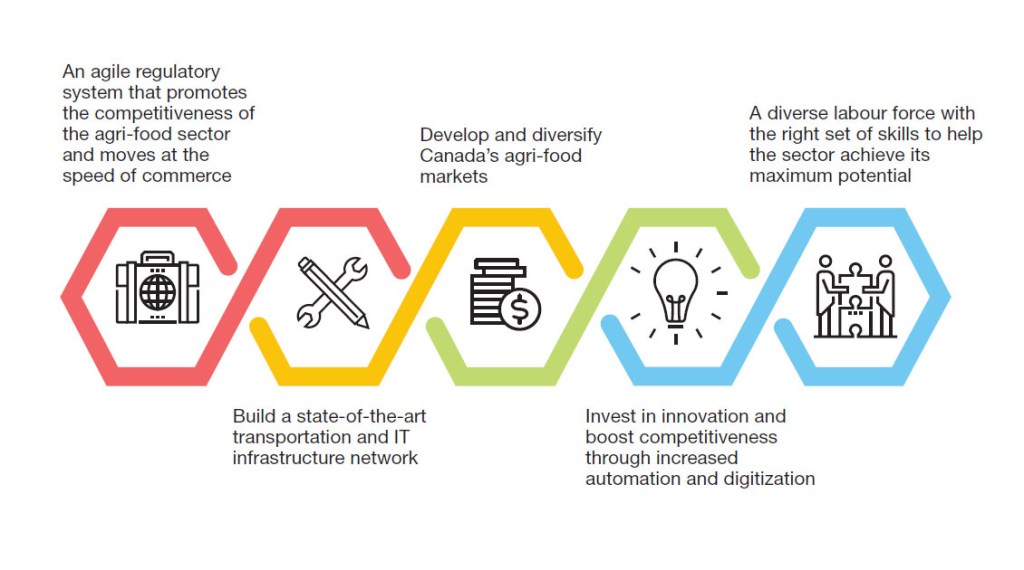
Canada should insist on provisions that preserve existing supply-chain networks spanning Canada, the U.S., and Mexico. Standstill clauses and grandfathering mechanisms should ensure that Canadian investments in autos, aerospace, electronics, and agriculture are not penalized under stricter U.S. bilateral rules.

2. Negotiate Realistic Rules of Origin
Ottawa should push for rules that recognize Canada’s production capacities and global sourcing realities. Overly restrictive thresholds would damage competitiveness; instead, the agreement should balance protection of U.S. interests with Canada’s need to remain a hub of North American manufacturing.

3. Secure Trade Policy Autonomy
A bilateral agreement must not lock Canada into U.S.-imposed restrictions on third-party trade. Canada needs the freedom to deepen relationships with the EU, Asia-Pacific, and emerging markets. Ottawa should insist on explicit clauses preserving this sovereignty.

4. Embed Environmental and Labour Standards Strategically
Canada should leverage the negotiation to advance shared values on environmental protection and labour rights. By including enforceable, mutually beneficial standards, Canada can turn compliance obligations into a competitive advantage for Canadian businesses, particularly in clean energy, forestry, and high-value manufacturing.

5. Diversify Market Access
The U.S. will always be Canada’s largest trading partner, but Ottawa must use this moment to accelerate diversification. Strong bilateral terms with the U.S. should complement, not replace, agreements with other regions. This strategy will reduce vulnerability to U.S. policy swings and strengthen Canada’s global economic resilience.

6. Maximize Leverage on Strategic Resources
Canada possesses energy, critical minerals, and clean-tech assets of global significance. Ottawa should use the bilateral framework to secure access to U.S. markets without ceding control or undervaluing these resources, ensuring that Canada retains long-term strategic advantage.

7. Prepare for Transition and Communication
Any shift from CUSMA to bilateral arrangements will create uncertainty for businesses. Ottawa should implement a clear, phased transition plan and communicate proactively with domestic industries. Providing certainty and guidance can prevent disruption, maintain investment confidence, and reinforce Canada’s reputation as a stable, reliable partner.

8. Protect Agricultural Supply Management Sectors as Part of Food Security Strategy
Canada’s supply-managed sectors — dairy, poultry, and eggs — are vital not only to farmers’ livelihoods but to national food security. Any bilateral agreement must safeguard these systems against excessive U.S. pressure or forced liberalization. This will ensure that Canadians maintain stable domestic production, buffer against global market volatility, and preserve a cornerstone of rural economic resilience.

Conclusion
The U.S. drive toward bilateral deals presents both danger and opportunity. Canada must approach negotiations not as a defensive exercise in preservation, but as a chance to reshape its trade strategy for a new global environment. By insisting on supply-chain continuity, flexible rules of origin, strategic autonomy, market diversification, and protection for food security, Ottawa can turn potential disruption into a springboard for long-term economic strength.

Canada’s response will signal whether it remains a reactive participant in North American trade or assumes the role of confident, sovereign actor capable of shaping its own destiny. This is not a time to defer to Washington. It is a time to plan boldly, negotiate shrewdly, and safeguard Canada’s future.