Five Things We Learned This Week

Here’s the latest edition of “Five Things We Learned This Week” for Aug 9–15, 2025, showcasing five entirely new global developments—each occurring in the past seven days:

A whirlwind of weather, science, space – and a fresh kickoff in football. Here are five globally-relevant moments from the past seven days.

1. 🏛️ No Ukraine peace deal at the Alaska summit

U.S. President Donald Trump and Russia’s Vladimir Putin met in Anchorage on Aug 15. After nearly three hours, both sides left without a ceasefire agreement, though Trump called it “very productive.” Why it matters: It was the highest-level direct talk since the war’s escalation, and the lack of a deal keeps pressure on Europe and NATO to sustain support for Kyiv. Source:Reuters video report (published Aug 16, covering the Aug 15 meeting).  

2. 🌪️ Erin became 2025’s first Atlantic hurricane – and quickly strengthened

By late Aug 15, Erin intensified from a tropical storm to a hurricane over the central Atlantic, with forecasters warning of further strengthening over warm waters. Why it matters: It ends an unusually quiet start to the Atlantic season and reinforces how hot oceans can turbo-charge storms even far from land. Sources: National Hurricane Center advisories on Aug 15; overview reporting.    

3. 🧠 A brain implant restored near-conversational speech after paralysis

Scientists reported a wireless brain–computer interface that let a person with paralysis produce natural-sounding speech at everyday speeds, with substantial accuracy, in trials published Aug 14–15Why it matters: It’s a major step toward practical communication for people who can’t speak, showing rapid gains in speed and intelligibility. Sources: Nature news explainer (Aug 14) and Stanford Medicine release (Aug 15).   

4. 🛰️ Europe launched MetOp-SG-A1 on Ariane 6 to supercharge weather & air-quality data

An Ariane 6 rocket lifted off from Kourou at 21:37 local time on Aug 12 (00:37 UTC Aug 13), placing MetOp-SG-A1 into orbit. The satellite carries Copernicus Sentinel-5 instruments to monitor pollutants and ozone daily. Why it matters: Better global forecasting and climate chemistry tracking are coming from Europe’s new polar-orbiting workhorse. Sources: Arianespace press release; Airbus press note.   

5. ⚽ The Premier League kicked off – with Liverpool’s late surge

The 2025–26 Premier League season opened Aug 15, and Liverpool pulled a dramatic 4–2 win over Bournemouth at Anfield after a second-half swing. Why it matters: Beyond the points, the opener set the tone for a tightly-bunched title race predicted across England’s top flight. Sources:ESPN match report; The Guardian coverage.  

Mass as Delay: Rethinking the Universe’s Clockwork

Every once in a while, a new idea comes along that doesn’t just tweak the edges of our understanding, but tries to redraw the map entirely. John C. W. McKinley’s Mass Imposes Delay principle is one such idea. Published in mid-2025 and still sitting at the intersection of speculation and serious theoretical intrigue, this deceptively simple thesis – that mass is not just an object of gravity, but an agent of temporal delay – invites us to reconsider what we think space, time, and matter are really doing.

What if mass is not a thing, but a tempo? What if the cosmos is not a machine, but a performance – its rhythms set not by ticking clocks, but by the gravitational drag of being itself?

At its heart, McKinley proposes that mass structures time by imposing delays on how photons, and by extension, all information, resolves into physical experience. Rather than viewing mass merely as the cause of curvature in spacetime (as in general relativity), or as a Higgs-bestowed quality of particles (as in the Standard Model), this theory suggests something more metaphysical and yet startlingly concrete: mass sets the timing of reality’s unfolding.

Delay × Mechanics = Observed Physics

This is McKinley’s governing equation. Delay, introduced by mass, interacts with basic mechanical instructions, what he calls “photon-coded instructions”, to produce the physical phenomena we observe. It’s a view that doesn’t discard quantum field theory or general relativity but reframes them as emergent from an underlying informational pacing system.

In the Shapiro delay, light signals passing near a massive object take slightly longer to reach us. Traditionally explained as curved spacetime, McKinley reframes it: mass itself introduces a resolution delay.

This subtle shift moves the focus from where things happen to when they are allowed to happen.

A Delayed Universe: From Quantum Collapse to Cosmic Expansion

In quantum mechanics, the collapse of a wavefunction – the moment when a system’s potential resolves into a definite outcome – has long baffled philosophers and physicists alike. It’s not the math that confuses us; it’s the implication that reality is, in some sense, probabilistic until someone, or something, causes it to resolve.

McKinley’s theory offers an elegant twist: mass itself acts as a selector. By introducing delay, it filters and sequences quantum outcomes into coherent, observed experience. This bridges relativity and quantum theory by offering a common denominator: timing control.

It also touches cosmology. In a universe where mass determines delay, and delay governs resolution, cosmic time itself becomes pliable. The early universe might have operated under very different delay patterns – suggesting that the laws we observe today could be the outcome of an evolving cosmic schedule. Inflation, dark energy, and even the cosmological constant could be reframed as manifestations of shifting delay regimes.

A Two-Filter Reality

McKinley envisions reality as filtered twice: first by wavefunction possibility and again by mass-governed delay. Picture a vast quantum landscape filled with all possible outcomes, then imagine a “mass curtain” that slows and sequences how those potentials crystallize into reality.

This recalls Mach’s principle, which links inertia to the gravitational influence of distant matter. McKinley extends it: not only inertia, but the timing of reality’s unfolding depends on the universe’s mass distribution.

No exotic particles, no extra dimensions – just a new lens on familiar physics. The photon’s instructions may be timeless, but when they’re read depends on the local mass environment.

Challenges and Promise

Is it testable? Not yet, but in principle yes. If mass imposes resolution timing, high-precision quantum timing experiments might detect non-local delays, or gravitational lensing could show subtle deviations from purely geometric predictions. Such tests could turn this elegant speculation into empirical science.

The biggest contribution may be conceptual: replacing the image of a universe as a stage with actors, with that of a performance unfolding according to a mass-driven tempo.

Final Thoughts

McKinley’s work, still awaiting rigorous peer review, is worth attention. It asks us to imagine mass not as the glue holding the universe together, but as the metronome pacing its unfolding.

We may be on the cusp of a physics that is not only about what exists, but about when it happens. If he’s right, mass isn’t what keeps the universe in place – it’s what slows it down, just enough for reality to make sense.

Sources

  • McKinley, J.C.W. (2025). The Principle of Delayed Resolution. SSRN. Read here
  • Shapiro, I. I. (1964). Fourth Test of General Relativity. Physical Review Letters.
  • SciTechDaily. (2025). “New Physics Framework Suggests Mass Isn’t What You Think It Is.”
  • Wikipedia. Mach’s Principle. Read here

AlphaEarth Foundations as a Strategic Asset in Global Geospatial Intelligence

Over the course of my career in geomatics, I’ve watched technology push our field forward in leaps – from hand‑drawn topographic overlays to satellite constellations capable of imaging every corner of the globe daily. Now we stand at the edge of another shift. Google DeepMind’s AlphaEarth Foundations promises a new way to handle the scale and complexity of Earth observation, not by giving us another stack of imagery, but by distilling it into something faster, leaner, and more accessible. For those of us who have spent decades wrangling raw pixels into usable insight, this is a development worth pausing to consider.

This year’s release of AlphaEarth Foundations marks a major milestone in global-scale geospatial analytics. Developed by Google DeepMind, the model combines multi-source Earth observation data into a 64‑dimensional embedding for every 10 m × 10 m square of the planet’s land surface. It integrates optical and radar imagery, digital elevation models, canopy height, climate reanalyses, gravity data, and even textual metadata into a single, analysis‑ready dataset covering 2017–2024. The result is a tool that allows researchers and decision‑makers to map, classify, and detect change at continental and global scales without building heavy, bespoke image‑processing pipelines.

The strategic value proposition of AlphaEarth rests on three pillars: speed, accuracy, and accessibility. Benchmarking against comparable embedding models shows about a 23–24% boost in classification accuracy. This comes alongside a claimed 16× improvement in processing efficiency – meaning tasks that once consumed days of compute can now be completed in hours. And because the dataset is hosted directly in Google Earth Engine, it inherits an established ecosystem of workflows, tutorials, and a user community that already spans NGOs, research institutions, and government agencies worldwide.

From a geomatics strategy perspective, this efficiency translates directly into reach. Environmental monitoring agencies can scan entire nations for deforestation or urban growth without spending weeks on cloud masking, seasonal compositing, and spectral index calculation. Humanitarian organizations can identify potential disaster‑impact areas without maintaining their own raw‑imagery archives. Climate researchers can explore multi‑year trends in vegetation cover, wetland extent, or snowpack with minimal setup time. It is a classic case of lowering the entry barrier for high‑quality spatial analysis.

But the real strategic leverage comes from integration into broader workflows. AlphaEarth is not a replacement for fine‑resolution imagery, nor is it meant to be. It is a mid‑tier, broad‑area situational awareness layer. At the bottom of the stack, Sentinel‑2, Landsat, and radar missions continue to provide open, raw data for those who need pixel‑level spectral control. At the top, commercial sub‑meter satellites and airborne surveys still dominate tactical decision‑making where object‑level identification matters. AlphaEarth occupies the middle: fast enough to be deployed often, accurate enough for policy‑relevant mapping, and broad enough to be applied globally.

This middle layer is critical in national‑scale and thematic mapping. It enables ministries to maintain current, consistent land‑cover datasets without the complexity of traditional workflows. For large conservation projects, it provides a harmonized baseline for ecosystem classification, habitat connectivity modelling, and impact assessment. In climate‑change adaptation planning, AlphaEarth offers the temporal depth to see where change is accelerating and where interventions are most urgent.

The public release is also a democratizing force. By making the embeddings openly available in Earth Engine, Google has effectively provided a shared global resource that is as accessible to a planner in Nairobi as to a GIS analyst in Ottawa. In principle, this levels the playing field between well‑funded national programs and under‑resourced local agencies. The caveat is that this accessibility depends entirely on Google’s continued support for the dataset. In mission‑critical domains, no analyst will rely solely on a corporate‑hosted service; independent capability remains essential.

Strategically, AlphaEarth’s strength is in guidance and prioritization. In intelligence contexts, it is the layer that tells you where to look harder — not the layer that gives you the final answer. In resource management, it tells you where land‑cover change is accelerating, not exactly what is happening on the ground. This distinction matters. For decision‑makers, AlphaEarth can dramatically shorten the cycle between question and insight. For field teams, it can focus scarce collection assets where they will have the greatest impact.

It also has an important capacity‑building role. By exposing more users to embedding‑based analysis in a familiar platform, it will accelerate the adoption of machine‑learning approaches in geospatial work. Analysts who start with AlphaEarth will be better prepared to work with other learned representations, multimodal fusion models, and even custom‑trained embeddings tailored to specific regions or domains.

The limitations – 10 m spatial resolution, annual temporal resolution, and opaque high‑dimensional features – are real, but they are also predictable. Any experienced geomatics professional will know where the model’s utility ends and when to switch to finer‑resolution or more temporally agile sources. In practice, the constraints make AlphaEarth a poor choice for parcel‑level cadastral mapping, tactical ISR targeting, or rapid disaster damage assessment. But they do not diminish its value in continental‑scale environmental intelligence, thematic mapping, or strategic planning.

In short, AlphaEarth Foundations fills a previously awkward space in the geospatial data hierarchy. It’s broad, fast, accurate, and globally consistent, but not fine enough for micro‑scale decisions. Its strategic role is as an accelerator: turning complex, multi‑source data into actionable regional or national insights with minimal effort. For national mapping agencies, conservation groups, humanitarian planners, and climate analysts, it represents a genuine step change in how quickly and broadly we can see the world.

Five Things We Learned This Week

Here’s your brand‑new edition of “Five Things We Learned This Week” for July 26 – August 1, 2025 – each highlight is entirely fresh and occurred within the past seven days:

1. Kamchatka Megaquake and Volcanic Eruptions Shake the Pacific

• On July 30, a massive 8.8 magnitude megathrust earthquakestruck off Russia’s Kamchatka Peninsula – one of the strongest ever recorded – triggering global tsunami alerts; fortunately, the eventual tsunami impact was limited.

• Multiple volcanoes erupted in response, including Krasheninnikov (for the first time in centuries) and others like Klyuchevskaya and Shiveluch – fueling a volcanic spike across the region.

2. USGS Issues Aftershock Forecast Following the Megaquake

• The USGS released a detailed aftershock forecast following the Kamchatka quake, projecting:

• a 2% chance of an additional magnitude-8 quake,

24% chance of a magnitude 7 or higher,

• and over 99% chance of further magnitude 4+ aftershocks in the coming week. 

3. A Tragic Campground Accident in Canada

• On July 31, at Cumberland Lake Park Campground in British Columbia, a falling tree tragically killed a 26-year-old mother and her 5-month-old baby; authorities confirmed the tree was decayed, with no foul play suspected. A memorial is planned for August 10.

4. Markets Brace for Trump’s Broad Tariffs

• On August 1, global markets reacted strongly after steep U.S. tariffs were imposed on key trading partners like Canada, Brazil, India, and Taiwan, triggering concerns over trade tensions and inflation; notably, Amazon’s shares fell 7% following underwhelming earnings, while pharma stocks fell after Trump demanded drug price cuts.

5. Britain’s Eurosceptic Move: State of Palestine Recognition

• On July 30Canada announced recognition of the State of Palestine, becoming one of the few Western countries to do so and signaling a geopolitical shift in global alignments.

These five items span global shifts in geology, safety, markets, diplomacy, and hard-to-forget human stories – all contained within July 26 to August 1, 2025 and entirely new to this series.

A Virtual Satellite for the World: Understanding the Promise and Limits of AlphaEarth

Geomatics, as my regular readers know, is a field in which I have worked for over four decades, spanning the intelligence community, Silicon Valley technology firms, and the geomatics private sector here in Ottawa. I’ve seen our discipline evolve from analog mapping and painstaking photogrammetry to real‑time satellite constellations and AI‑driven spatial analytics. This post marks the first in a new series exploring AI and geospatial data modeling, and I thought it fitting to begin with AlphaEarth Foundations – Google DeepMind’s ambitious “virtual satellite” model that promises to reshape how we approach broad‑area mapping and analysis.

Last week, Google DeepMind publicly launched AlphaEarth Foundations, its new geospatial AI model positioned as a “virtual satellite” capable of mapping the planet in unprecedented analytical form. Built on a fusion of multi-source satellite imagery, radar, elevation models, climate reanalyses, canopy height data, gravity data, and even textual metadata, AlphaEarth condenses all of this into a 64‑dimensional embedding for every 10 m × 10 m square on Earth’s land surface. The initial public dataset spans 2017 to 2024, hosted in Google Earth Engine and ready for direct analysis. In one stroke, DeepMind has lowered the barrier for environmental and land‑cover analytics at continental to global scales.

The value proposition is as much about efficiency as it is about accuracy. Google claims AlphaEarth delivers mapping results roughly 16 times fasterthan conventional remote sensing pipelines while cutting compute and storage requirements. It’s also about accuracy: in benchmark comparisons, AlphaEarth shows about 23–24% improvement over comparable global embedding models. In a field where percent‑level gains are celebrated, such a margin is significant. This efficiency comes partly from doing away with some of the pre‑processing rituals that have been standard for years. Cloud masking, seasonal compositing, and spectral index calculation are baked implicitly into the learned embeddings. Analysts can skip the pixel‑level hygiene and get straight to thematic mapping, change detection, or clustering.

That acceleration is welcome in both research and operational contexts. Environmental monitoring agencies can move faster from data ingestion to insight. NGOs can classify cropland or detect urban expansion without building a bespoke Landsat or Sentinel‑2 pipeline. Even large corporate GIS teams will find they can prototype analyses in days instead of weeks. The model’s tight integration with Google Earth Engine also means it sits within an established analytical environment, where a community of developers and analysts already shares code, workflows, and thematic layers.

Yet, as with any sensor or model, AlphaEarth must be understood for what it is, and what it is not. At 10 m ground sample distance, the model resolves features at the meso‑scale. It will confidently map an agricultural field, a city block, a wide river channel, or a forest stand. But it will not resolve a single vehicle in a parking lot, a shipping container, a rooftop solar array, or an artisanal mining pit. In urban contexts, narrow alleys vanish, backyard pools disappear, and dense informal settlements blur into homogeneous “built‑up” pixels. For tactical intelligence, precision agriculture at the plant or row scale, cadastral mapping, or detailed disaster damage assessment, sub‑meter resolution from airborne or commercial VHR satellites remains indispensable.

There’s also the mixed‑pixel problem. Each embedding represents an averaged, high‑dimensional signature for that 100 m² cell. In heterogeneous landscapes, say, the interface between urban and vegetation, one dominant surface type tends to mask the rest. High‑entropy pixels in peri‑urban mosaics, riparian corridors, or fragmented habitats can yield inconsistent classification results. In intelligence work, that kind of ambiguity means you cannot use AlphaEarth as a primary targeting layer; it’s more of an AOI narrowing tool, guiding where to point higher‑resolution sensors.

Another operational constraint is temporal granularity. The public dataset is annual, not near‑real‑time. That makes it superb for long‑term trend analysis: mapping multi‑year deforestation, tracking city expansion, monitoring wetland loss, but unsuitable for detecting short‑lived events. Military deployments, rapid artisanal mine expansion, seasonal flooding, or ephemeral construction activity will often be smoothed out of the annual composite. In agricultural monitoring, intra‑annual phenology, crucial for crop condition assessment, will not be visible here.

Despite these constraints, the model has clear sweet spots. At a national scale, AlphaEarth can deliver consistent, high‑accuracy land‑cover maps far faster than existing workflows. For environmental intelligence, it excels in identifying broad‑area change “hotspots,” which can then be queued for targeted VHR or drone collection. In humanitarian response, it can help quickly establish a baseline understanding of affected regions – even if building‑by‑building damage assessment must be done with finer resolution imagery. For climate science, conservation planning, basin‑scale hydrology, and strategic environmental monitoring, AlphaEarth is an accelerant.

In practice, this positions AlphaEarth as a mid‑tier analytical layer in the geospatial stack. Below it, raw optical and radar imagery from Sentinel‑2, Landsat, and others still provide the source pixels for specialists who need spectral and temporal precision. Above it, VHR commercial imagery and airborne data capture the sub‑meter world for operational and tactical decisions. AlphaEarth sits in the middle, offering the efficiency and generality of a learned representation without the cost or data‑management burden of raw imagery analysis.

One of the less‑discussed but important aspects of AlphaEarth is its accessibility. By releasing the embeddings publicly in Earth Engine, Google has created a shared global layer that can be tapped by anyone with an account: from a conservation biologist in the Amazon to a municipal planner in East Africa. The question is how long that access will persist. Google has a mixed track record in maintaining long‑term public datasets and tools, and while Earth Engine has shown staying power, analysts in mission‑critical sectors will want to maintain independent capabilities.

For the geomatics professional, AlphaEarth represents both a new capability and a familiar trade‑off. It accelerates the broad‑area, medium‑resolution part of the workflow and lowers the barrier to global‑scale thematic mapping. But it is no substitute for finer‑resolution sensors when the mission demands target‑scale discrimination or rapid revisit. As a strategic mapping tool, it has immediate value. As a tactical intelligence asset, its role is more about guidance than decision authority. In the right slot in the geospatial toolkit, however, AlphaEarth can shift timelines, expand analytical reach, and make broad‑area monitoring more accessible than ever before.

Professor Michele Dougherty: Breaking a 350‑Year Barrier in British Astronomy

When King Charles II created the post of Astronomer Royal in 1675, alongside the founding of the Royal Observatory at Greenwich, it was more than just a courtly appointment. The role was charged with solving one of the most pressing scientific problems of the age: finding longitude at sea. Over the centuries, its holders have included some of the most brilliant minds in science. John Flamsteed, the first Astronomer Royal, painstakingly mapped the stars to guide navigation. Edmond Halley predicted the return of his famous comet. Nevil Maskelyne brought precision to seafaring with The Nautical Almanac. Sir George Biddell Airy fixed Greenwich as the Prime Meridian. In the 20th century, Sir Frank Watson Dyson’s solar eclipse observations confirmed Einstein’s General Relativity, and Martin Rees became one of the world’s most eloquent science communicators.

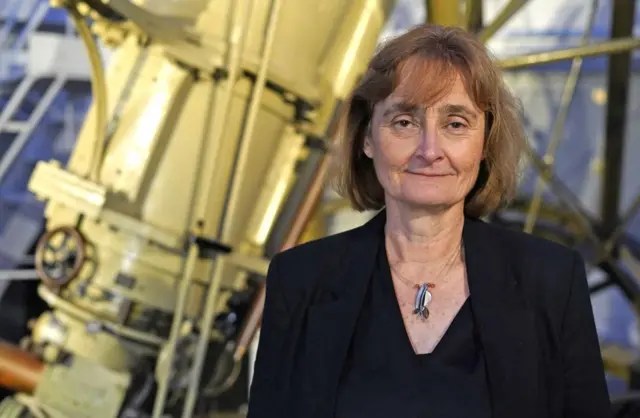
For 350 years, however, the title, one of the most prestigious in British science, was held only by men. That changed on 30 July 2025, when His Majesty King Charles III appointed Professor Michele Dougherty as the 16th Astronomer Royal, making her the first woman ever to hold the office.

Dougherty’s appointment was no token gesture. Born in South Africa and now Professor of Space Physics at Imperial College London, she has built an extraordinary scientific career. She led the magnetometer team on NASA’s Cassini–Huygens mission, which revealed towering plumes of water erupting from Saturn’s icy moon Enceladus; findings that ignited the search for life beyond Earth. Today, she leads the magnetometer investigation for ESA’s JUICE mission to Jupiter’s moons, launched in 2023, and bound for Ganymede to probe its suspected subsurface ocean.

Her leadership extends well beyond planetary science. Dougherty is Executive Chair of the UK’s Science and Technology Facilities Council, overseeing major research infrastructure and funding. She is also the President‑elect of the Institute of Physics. In each of these roles, she has championed ambitious science, argued for investment in research, and worked to make science accessible to the public.

Asked about her appointment, Dougherty expressed both surprise and pride. She acknowledged the symbolic significance of being the first woman in a position historically reserved for men, while insisting her selection was based on the strength of her record, not her gender. Still, she hopes her visibility in such a revered role will inspire girls and young women to pursue careers in STEM.

The Astronomer Royal no longer runs an observatory; the role is now honorary, a recognition of exceptional achievement and a platform for public engagement. Holders advise the monarch on astronomical matters and serve as ambassadors for British science. It is a role steeped in history and weighted with symbolic gravitas.

In that context, Dougherty’s appointment is more than a personal accolade. It signals the enduring relevance of astronomy in the 21st century and Britain’s commitment to scientific leadership. She inherits a legacy stretching from the age of sail to the age of space exploration. As she takes up the mantle, she has said her mission is clear: to enthuse the public about the wonders of the universe and to show how space science enriches life here on Earth.

Five Things We Learned This Week

Here’s your freshly updated “Five Things We Learned This Week” feature for July 26 – August 1, 2025 – all events are entirely new, fall within that window, and didn’t appear in previous editions:

⚖️ 1. Trump Signs Sweeping Tariffs Affecting ~70 Countries

• On July 31, President Trump signed a tariff package that imposes levies on imports from approximately 70 countries – tariffs now range from 15% (EU, Japan) up to 35% (Canada) and 50% (copper), with new duties on India, Vietnam, and others. This move intensifies trade tensions and raises inflation concerns.  

🛰️ 2. Asteroid 2025 OW Flies Safely Past Earth

• On July 28, near-Earth asteroid 2025 OW, roughly the size of an airplane (~210 ft wide), passed at ~393,000 miles away – one and a half times the distance to the Moon – and was harmless, though scientists emphasize the importance of continued monitoring.  

🏛️ 3. UN Urges Humanitarian Aid for Gaza Amid Rising Casualties

• Throughout late July, UN officials and NGOs highlighted worsening famine and civilian suffering in Gaza, pressing for expanded aid corridors and increased access as international concern grew.  

📉 4. Fed Holds Rates Steady, But Dissent Grows Over Future Cuts

• At its July 30 meeting, the U.S. Federal Reserve kept interest rates at 4.25–4.50%, yet two board members dissented – signaling readiness for a rate cut later in 2025 if data worsens, especially amid trade-driven uncertainty.  

🌍 5. Ukraine Reports Major Russian Advances & High Drone, Missile Attacks

• Between July 26–31, Russia reportedly advanced in eastern towns like Vovchansk and Maliivka; meanwhile Ukraine’s air defenses shot down 309 of 324 drones and 2 of 7 missiles in one night. Recent strikes killed dozens including at a hospital and correctional facility, raising concerns of potential war-crime investigations.  

These developments cover trade policyplanetary defensehumanitarian crisescentral banking, and conflict escalation – all firmly within the current week’s timeframe. Let me know if you’d like full article links or deeper breakdowns on any topic.

Retreat from the Final Frontier: The Cost of Cutting NASA’s Core

A sweeping wave of senior personnel departures at NASA, triggered by a White House, mandated austerity campaign, has raised deep concern across the U.S. space community. According to documents obtained by Politico, 2,145 employees in GS-13 through GS-15 roles have accepted early retirement, buyouts, or agreed to leave within the year. These roles include scientists, engineers, policy professionals, and program managers. The departures are concentrated in mission-critical areas and threaten to erode NASA’s ability to deliver on its bold human spaceflight agenda.

The cuts affect all ten of NASA’s major centers. Goddard Space Flight Center is taking the hardest hit, losing 607 senior staff. Johnson Space Center, which manages astronaut operations, will lose 366. Kennedy Space Center in Florida is losing 311. The pattern reflects a widespread drawdown of institutional leadership and technical depth at a time when the agency is navigating some of its most ambitious objectives since Apollo.

NASA spokesperson Bethany Stevens has maintained that the agency remains committed to its mission while adapting to a more streamlined budget. However, the White House’s proposed FY 2026 budget includes a 25 percent cut and envisions the elimination of more than 5,000 total positions across the agency. If implemented, the reductions would return NASA’s staffing levels to those of the early 1960s, a time when the agency had a far smaller mandate and fewer active programs.

The loss of senior talent poses a direct threat to several cornerstone programs. NASA is aiming to return humans to the Moon by mid-2027, followed by a crewed mission to Mars. Both missions rely on deep systems knowledge, inter-agency coordination, and seamless execution. The departure of experienced staff, especially from the Artemis and Gateway teams, could delay or destabilize these plans. Casey Dreier, chief of space policy at The Planetary Society, has warned that losing the managerial and technical expertise of this magnitude undermines execution across the board.

One particularly alarming detail in the Politico reporting is the loss of five of 35 employees in NASA’s legislative affairs office. This unit handles critical interactions with Congress and federal appropriators. Reducing its capacity at this moment could damage NASA’s ability to secure future funding and defend its strategic priorities. Even if Congress acts to restore some of the proposed funding cuts, the loss of institutional knowledge and political navigation skills cannot be replaced overnight.

Leadership instability compounds the challenge. Janet Petro, director of Kennedy Space Center and the first woman to serve as acting NASA Administrator, stepped down on July 9. The Trump administration appointed Transportation Secretary Sean Duffy to serve concurrently as acting head of NASA. Duffy, known for his background in reality television and conservative media, lacks direct aerospace or scientific experience. His appointment follows the White House’s withdrawal of Jared Isaacman’s nomination for the permanent role, reportedly due to tensions between Trump and SpaceX founder Elon Musk.

Duffy’s tenure at the Department of Transportation has already been marked by disputes with Musk, particularly over aviation safety concerns tied to SpaceX’s Starlink network. His assumption of the top NASA post may deepen those conflicts. Critics are skeptical that Duffy can effectively lead NASA through this period of transformation and retrenchment while also fulfilling his duties as Secretary of Transportation.

This leadership vacuum arrives as the Trump administration implements a broader program of federal workforce reduction. Earlier efforts to force mass departures at NASA were temporarily stalled after a court challenge. The current wave, conducted through buyouts and early retirements, has proven more effective and legally resilient. But the long-term damage may be even greater. NASA is losing not only numbers but also wisdom, mentorship, and the kind of tacit knowledge that cannot be replaced by hiring alone.

There is a real risk that these departures will permanently weaken NASA’s capacity. As staff leave, many are likely to be absorbed by the commercial space sector, which offers more competitive compensation and greater job security. NASA’s ability to attract top-tier scientific and engineering talent could be undermined for years. Even if the political winds shift, rebuilding the internal expertise lost during this period will be a generational task.

International competitors stand to benefit. China’s space program continues to grow rapidly and with clear state support. While NASA retrenches, China has announced new plans for lunar bases and expanded operations on Mars. If the United States chooses to scale back its space ambitions, other nations will fill the void. The result could be a rebalancing of global leadership in space exploration and innovation.

Key milestones loom ahead. The FY 2026 budget process will reveal whether Congress is willing to override the White House’s cuts. NASA center directors must now adjust internal plans to account for shrinking staff and shifting leadership. The deferred resignation program runs through July 25. Whether those numbers hold or expand will be an early signal of just how deep this institutional rupture goes.

What is at stake is not just one agency’s future. NASA remains a cornerstone of American scientific achievement and global leadership. A loss of this scale, at this moment, could push the agency into long-term decline. The damage may not be visible immediately, but it will be felt acutely in missed missions, cancelled programs, and a reduced national presence in space. These are not just retirements. They are resignations from the frontier.

Sources
• Politico: https://www.politico.com/news/2025/07/09/nasa-staff-departures-00444674
• Reuters: https://www.reuters.com/sustainability/sustainable-finance-reporting/more-than-2000-senior-employees-expected-depart-nasa-politico-reports-2025-07-09
• The Daily Beast: https://www.thedailybeast.com/trump-hands-musk-nemesis-sean-duffy-big-new-interim-job-in-charge-of-nasa
• The Planetary Society
• Eos: https://eos.org/research-and-developments/2145-senior-level-staff-to-leave-nasa
• Indian Narrative: https://www.indianarrative.com/world-news/nasa-set-to-lose-2100-senior-staff-members-as-trump-looks-to-slash-agencys-fund-report-172472.html

Why I Always Start With Quebec When Researching Canadian Federal Projects

After decades of consulting across Canada on everything from agri-food frameworks to integrating geomatics into healthcare systems, I’ve developed a habit: whenever I’m tasked with researching a new federal project, my first instinct is to see what Quebec is doing. It’s not just a reflex; it’s a practical strategy. Time and again, Quebec has shown itself to be a few steps ahead of the rest of the country, not by accident, but because of how it approaches policy, innovation, and institutional design.

Let me explain why, using a few concrete examples that illustrate how Quebec’s leadership offers valuable lessons for any serious federal undertaking.

A Culture of Long-Term Planning and Strong Public Institutions
One of Quebec’s greatest strengths lies in its culture of policy sovereignty combined with a deep commitment to long-term planning. Unlike the often reactive or fragmented approaches seen elsewhere, Quebec’s government institutions are built with foresight. Their mandates encourage anticipating future challenges, not just responding to current problems.

Take water management, for instance. When federal policymakers started talking about a national water agency, Quebec already had a robust system in place, the Centrale de Suivi Hydrologique. This province-wide network connects sensors, real-time data, and forecasting tools to monitor freshwater systems. It’s a sophisticated marriage of geomatics, technology, and environmental science that functions as an operational model rather than a concept.

For consultants or project managers tasked with building a national water infrastructure or climate resilience framework, Quebec’s example isn’t just inspirational; it’s foundational. You start there because it shows you what is possible when policy vision meets institutional commitment.

Integration Across Sectors: Health, Geography, and Data
Quebec’s approach goes beyond individual projects. It’s about integration, the seamless connection between government ministries, academia, and industry research. This “triple helix” collaboration model is well developed in Quebec and is crucial when addressing complex, cross-sectoral challenges.

A case in point is CartoSanté, Quebec’s health geography initiative. By linking demographic data with healthcare service delivery, spatial planning, and public health metrics, this platform creates a living map of healthcare needs and capacities. It is precisely this kind of data integration that federal agencies seek today as they try to bring geomatics and health information systems together at scale.

Starting a federal health-geomatics project without examining CartoSantéwould be like trying to build a house without a foundation. Quebec’s work offers a tested blueprint on data interoperability, system architecture, and stakeholder coordination.

Agri-Food Resilience as a Model of Regional Sovereignty
While Canada has traditionally focused on food safety and quality, Quebec has been pioneering food security and sovereignty strategies for years. Its Politique bioalimentaire 2018–2025 is a comprehensive framework that stretches beyond farming techniques to include local processing, distribution, and regional branding.

During the COVID-19 pandemic, the federal government’s interest in “food sovereignty” suddenly became a priority. Quebec was already there, with initiatives like Zone Agtech that connect innovation hubs, farmers, and distributors to strengthen local food systems. Their experience provides invaluable insight into how to balance global markets with local resilience.

For any consultant or policymaker working on national agri-food strategies, Quebec offers a real-world laboratory of what works, from land-use policy to market development, rather than abstract policy drafts.

An Intellectual Independence That Drives Innovation
One factor often overlooked is Quebec’s distinct intellectual culture shaped by its French language and European influences. This has fostered a different approach to systems-thinking, less tied to U.S.-centric models and more open to integrated, interdisciplinary frameworks.

The Ouranos Consortium is a prime example. Long before climate adaptation became a nationwide buzzword, Ouranos was advancing applied climate services by blending meteorology, municipal planning, and risk insurance. Their work has influenced not just provincial but global climate resilience strategies.

This intellectual independence means Quebec often anticipates emerging challenges and responds with unique, well-rounded solutions. When federal agencies look for tested climate data platforms or governance models, Ouranos is frequently the starting point.

Institutional Continuity and Data Stewardship
Finally, Quebec benefits from a more stable and professionalized civil service in key areas like environmental monitoring and statistical data management. This continuity allows Quebec to maintain extensive, clean, and spatially tagged historical data sets, a rarity in many jurisdictions.

For example, when Meteorological Service of Canada sought to modernize weather station instruments metadata standards, Quebec’s Centre d’Expertise Hydrique stood out for its meticulously curated archives and consistent protocols. This institutional memory isn’t just a bureaucratic nicety; it’s critical infrastructure for evidence-based policy.

Starting federal projects by engaging with Quebec’s institutional frameworks means tapping into decades of disciplined data stewardship and knowledge management.

Quebec’s leadership in areas like agri-food resilience, climate and water data, and health geomatics is no accident. It’s the product of a distinct political culture, strong public institutions, integrated knowledge networks, and intellectual independence. When you’re consulting or managing complex federal projects, recognizing this is key.

By beginning your research with Quebec’s frameworks and models, you gain access to tested strategies, operational systems, and a vision for long-term resilience. While other regions may still be drafting proposals or testing pilots, Quebec is often already producing data and outcomes.

So the next time you embark on a new federal initiative, whether it’s improving food security, building climate-adaptive infrastructure, or integrating spatial data into healthcare, remember this: start with Quebec. It’s where the future of Canadian innovation often begins.

Five Things We Learned This Week

Here’s your fresh edition of “Five Things We Learned This Week” for July 19–25, 2025, featuring completely new global developments – all occurring within the past seven days:

🌍 1. China Cracks Down on Strategic Minerals Smuggling

China officially pledged to toughen enforcement against smuggling of vital strategic minerals like rare earths, citing increased covert operations, including false declarations and third-country transshipments.  This crackdown aims to safeguard materials essential to sectors from chipmaking to defense, reinforcing China’s zero‑tolerance export policy.

🌐 2. DRC and M23 Rebels Sign Ceasefire in Doha

On July 19, the Democratic Republic of Congo (DRC) and M23 rebel forces signed a declaration of principles in Doha, agreeing to an immediate ceasefire, detainee exchanges under ICRC oversight, and peace talks scheduled for August amid restored state authority efforts. 

🌐 3. Massive Russia Drone and Missile Attack on Ukraine

Overnight July 18–19, Ukraine endured a major assault of more than 30 missiles and about 300 drones launched by Russia, damaging critical infrastructure in Sumy and causing widespread power outages.

🌀 4. Magnitude 5.6 Earthquake Hits Northern Iran

A shallow 5.6 magnitude earthquake struck northern Iran on July 19, as reported by seismic authorities. The quake occurred at just 3 km depth, raising regional concerns about damage and preparedness in seismically active zones. 

🏅 5. British Athletes Finally Receive 1997 World Relay Gold

At London’s Diamond League event, Britain’s men’s 4×400 m relay teamwere presented with their 1997 World Championship gold medals, awarded 28 years late after the U.S. team was disqualified for doping.

The ceremony was attended by 60,000 cheering fans, honoring athletes Roger Black, Iwan Thomas, Jamie Baulch, Mark Richardson, and heat runner Mark Hylton.

This edition brings five entirely new, date-specific events from July 19–25, 2025: ranging from geopolitics and conflict, to environmental policy and sports history. Let me know if you’d like direct links or further analysis on any of these!