Made in Canada: Leveraging Transparency to Strengthen and Grow the Economy

As a business consultant, I spent nearly two years managing the Canadian multi-livestock traceability project office in response to the BSE “mad cow” outbreak. Later, I became the first General Manager of the Canadian Livestock Identification Agency, helping to expand this approach nationally, and then with the aid of federal funding, pushed into Latin America,. What became clear was the transformative power of full value chain traceability. It not only opens doors to new markets, but also helps countries differentiate their products, and navigate technical and political trade barriers like tariffs.

For Canadian retailers and manufacturers, U.S. tariffs have long created challenges—raising costs, shrinking margins, and destabilizing cross-border trade. But technology offers a way to turn these obstacles into opportunities. Imagine a system where every Canadian product carries a scannable code revealing its value chain, from sourcing to production and even its environmental footprint. This transparency wouldn’t just empower consumers—it would give Canadian products a competitive edge by showcasing their quality, sustainability, and tariff-free origins.

Traceability technology, backed by blockchain, makes this vision possible. By assigning every product a unique QR code or barcode, manufacturers could provide consumers with instant access to detailed information. A quick scan might show that a product was made in Canada, outline ethical practices in its supply chain, and even display its carbon footprint. Such transparency doesn’t just satisfy curiosity—it allows consumers to align purchases with their values, all while supporting the Canadian economy.
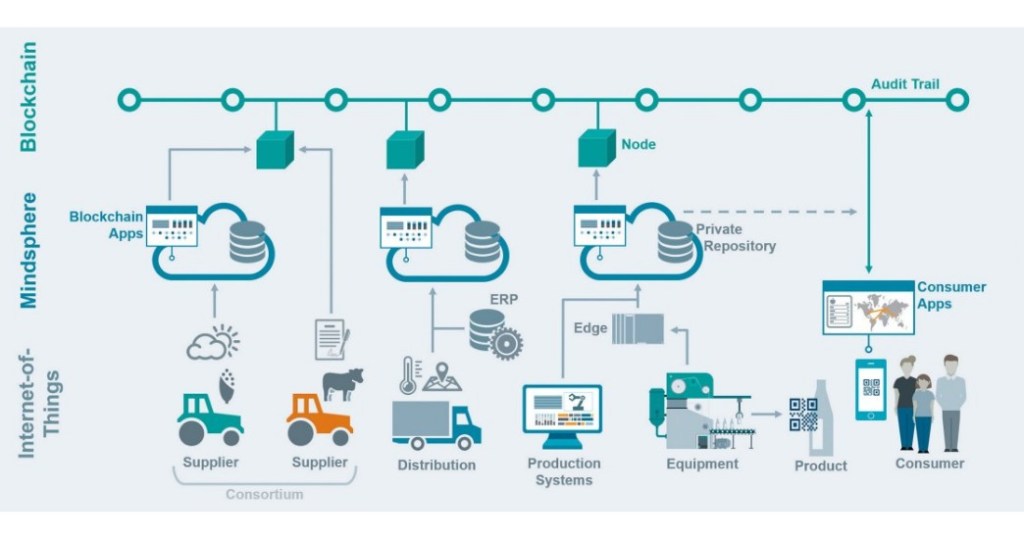
Blockchain adds an essential layer of trust to this system. Unlike traditional databases, blockchain technology is inherently secure, creating an unchangeable record of every step in a product’s journey. From raw materials in British Columbia to manufacturing in Ontario, each stage is logged and verified. In an age where consumers demand proof of sustainability and ethical practices, blockchain offers the credibility that builds trust and eliminates doubt.

For shoppers, the benefits of this system are clear. It provides a powerful tool for identifying Canadian-made goods, particularly in tariff-sensitive sectors like food, textiles, and electronics. When trade restrictions drive prices higher, consumers could actively choose local, tariff-free products, keeping money in Canada while avoiding inflated costs. Retailers, in turn, could spotlight these products as premium, ethical choices, differentiating them from imports.

From a business perspective, adopting traceability technology is more than a tool for compliance—it’s a way to build brand loyalty. Shoppers are more likely to trust and return to brands that are transparent about their supply chains. Companies investing in traceability could also attract eco-conscious and ethically driven consumers, both domestically and internationally, creating new opportunities to expand market share.

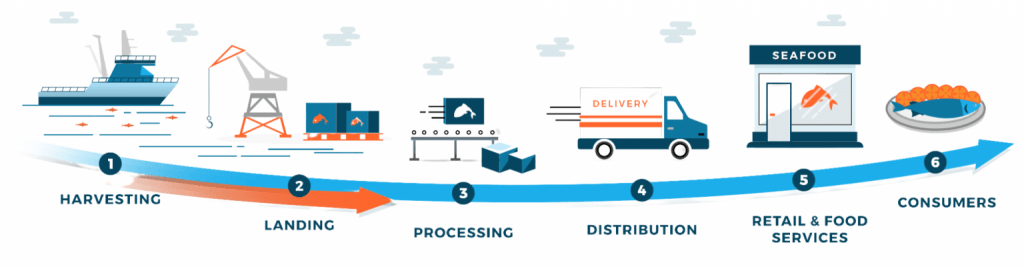
This technology is real today, and ready to use. Japan has been a pioneer in retail traceability, leveraging advanced technology to ensure transparency and quality in its supply chains. From QR codes on produce that detail farm origins to blockchain systems tracking seafood to combat fraud, Japan’s focus on traceability reflects its commitment to consumer trust, food safety, and sustainable practices.

The Canadian government has a role to play in fostering this transformation. Policymakers could accelerate adoption through regulations requiring supply chain transparency, and by offering tax incentives to early adopters. Public campaigns could educate consumers about the benefits of traceability, while certification programs could establish recognizable “Made in Canada” labels, further encouraging local pride and support.

While small businesses may face challenges in adopting this technology, such as costs and competition concerns, these barriers can be addressed through subsidies, partnerships, and thoughtful frameworks. By striking a balance between transparency and proprietary protections, Canada can ensure accessibility while preserving competitive advantages.
This system isn’t just about tariffs—it’s about redefining how Canadians shop and consume. Traceability technology positions Canada as a leader in ethical, sustainable retail practices. It empowers consumers with unprecedented insight into the products they buy, while strengthening the economy through local innovation and production.

Ultimately, this approach reinforces what makes Canadian products stand out. Whether it’s sustainability, fair labor practices, or national pride, traceability ensures that “Made in Canada” is more than just a label—it’s a commitment to quality, transparency, and trust.

The Cost of Innovation: How the Ordnance Survey’s 1990s Financial Model Created Competition

When I arrived at Durham University in 1985 to begin my PhD research, I was given an office once occupied by David Rhind, a leading figure in geomatics. Professor Rhind passed away this month at 81, following a distinguished career in geomorphology, geomatics and cartography. Two of his most notable contributions were to the Chorley Committee’s 1987 report on the “Handling of Geographical Information” and his leadership of the Ordnance Survey (OS) as Director General from 1992 to 1998; a position I once aspired to.

In the early 1990s, the UK Ordnance Survey transitioned from offering maps at cost to a commercially-driven model aimed at reducing taxpayer dependence. Spearheaded by Rhind, this shift was intended to generate new revenue streams by charging commercial rates, fostering innovation in the private sector, with this change occurring during John Major’s continuation of Margaret Thatcher’s free-market Conservative government.

On the surface, the strategy seemed a logical response to the digital age, but its impact on the OS’s client relationships raised concerns. A prime example was the UK Automobile Association (AA), which had long relied on OS maps. As the OS raised prices, the AA, caught between increasing costs and the need to maintain affordable services, began developing its own mapping solutions. This shift, prompted by Rhind’s commercial model, mirrored a broader industry trend where rising prices forced organizations to explore alternatives.

The AA’s move away from OS data highlighted a flaw in the OS’s strategy: by prioritizing revenue, the OS alienated loyal clients and opened the door for competitors offering cheaper or more specialized services. This weakened OS’s market dominance and contributed to the rise of private mapping services, eroding its monopoly.

This shift also sparked debate about public ownership of data. Mapping data, funded by taxpayers, had once been made available at cost to ensure equitable access. Rhind’s commercialization, while financially successful, seemed to contradict this principle, favoring revenue over the broader public good.

In hindsight, the transition to a commercial model raised important questions about the long-term sustainability of the OS. While it aimed to modernize the service and ensure financial self-sufficiency, it fragmented the market, driving clients to develop in-house solutions and creating competition. The AA’s departure underscores the risks of prioritizing profit over accessibility.

Today, the OS operates on a mixed-cost model, offering both free OpenData and premium products sold based on usage. This model aims to balance public access with financial sustainability, generating revenue for ongoing data maintenance. However, the legacy of the commercialization strategy persists, and the question remains whether the OS can maintain its mission of serving the public good while ensuring its financial independence. The challenge is finding a balance that doesn’t drive clients away or erode public access.

It’s interesting to note that the U.S. Geological Survey (USGS) continues to distribute a significant amount of its data free to the public including topographical map, earthquake and water data along with Landsat imagery. While the USGS does offer some cost-recovery and subscription-based data sets, the vast majority of its data holdings are still freely available, but I wonder how long this financial model will be in place under the second Trump administration. 

Breaking Barriers: How DeepSeek is Redefining AI Innovation and Costs

I didn’t write this blog, except the wrapper. I was curious about how AI would respond to the emergence of yet another rival, so this morning I asked ChatGPT “Tell me about DeepSeek, and how it’s shaking up the AI market?”, and this is the result.  Please forgive the AI’s standard formatting and poor punctuation. 

“DeepSeek, a Chinese artificial intelligence (AI) startup founded in 2023 and backed by the hedge fund High-Flyer, has recently made significant waves in the AI industry with its latest model, DeepSeek-R1. This model has demonstrated capabilities comparable to leading AI systems, such as OpenAI’s o1, but was developed at a fraction of the cost – approximately $6 million – without relying on advanced semiconductor chips.  

The efficiency of DeepSeek-R1 is attributed to a technique known as the “mixture of experts,” which activates only the necessary computing resources for a given task. This approach not only enhances performance but also significantly reduces energy consumption.  

The emergence of DeepSeek has had immediate and profound effects on the global tech market. Major U.S. tech companies, including Nvidia, Microsoft, and Tesla, experienced substantial declines in their stock values, collectively losing nearly $1 trillion. Nvidia, in particular, saw a record 17% drop in its market capitalization.  

DeepSeek’s advancements challenge the prevailing notion that leading-edge AI development is confined to U.S. tech giants. By open-sourcing its models under an MIT license, DeepSeek is promoting a more accessible and collaborative approach to AI development. This move could disrupt existing pricing models and democratize access to advanced AI technologies.  

However, the rise of DeepSeek also raises concerns about the geopolitical implications of powerful AI technologies being developed outside the U.S., particularly in China. Issues such as potential censorship and the strategic use of AI are now at the forefront of discussions among policymakers and industry leaders.  

In summary, DeepSeek’s innovative approach and rapid progress are reshaping the AI landscape, prompting both excitement and caution as the global community navigates this new era of technological advancement.”

This potential disruption in the US domination of AI should be a wake up call to governments and investors alike, when buying into any “best of breed” scenarios, put before them. Governments rarely seem to understand that the industry-requested programs they fund, are really operational and capital subsidies, rather than accelerators or innovation catalysts. Watch this space as the story develops over the next few months. 

Technofeudalism: The Tyranny of Algorithms

Technofeudalism is a fitting term for the digital dystopia we find ourselves in, where the lords of Silicon Valley have effectively swapped medieval castles for server farms and algorithms. These tech overlords – Google, Amazon, Meta, and their ilk – don’t just run companies; they dominate entire ecosystems. Their platforms are the new fiefdoms, and whether you’re a gig worker delivering takeout or a small business trying to stay afloat, you’re shackled to their rules. In this brave new world, control over data has replaced land as the ultimate source of power, and boy, do they exploit it.

Your data, your clicks, your time – it’s all harvested, packaged, and sold with the precision of a factory assembly line, and you don’t see a dime of it. Meanwhile, the CEOs of these tech behemoths are catapulted to absurd levels of wealth, flaunting their fortunes with space joyrides and vanity projects while the rest of us are left wondering why gig workers can’t get healthcare or basic rights. Let’s not sugarcoat this: it’s feudalism 2.0, and instead of serfs toiling in fields, we have content creators hustling for likes, delivery drivers racing against the clock, and an entire workforce that’s disposable, replaceable, and utterly dependent on the platforms that exploit them.

And the surveillance – oh, the surveillance! If medieval lords wanted to know who was sneaking into the village at night, they had to send out a scout. Today, Big Tech knows what you’re buying, watching, and thinking before you do. Every app, every platform, every innocuous “I agree to the terms” click is another layer of the panopticon. These companies don’t just watch – they nudge, manipulate, and control. The algorithm decides what you see, what you believe, and ultimately, what you become. Your freedom of choice is an illusion, dressed up in a sleek interface and a cheery “personalized for you” tagline.

Technofeudalism also serves up a double punch to democracy and culture. Remember when the internet was supposed to be a democratizing force? Instead, it’s become a breeding ground for misinformation and extremism, all in the name of “engagement.” The platforms profit off chaos while the rest of us drown in it. And culturally, they’ve managed to homogenize global expression to such a degree that smaller voices and alternative perspectives are buried under the algorithm’s relentless drive for profit. TikTok and Instagram aren’t cultural platforms; they’re content factories, churning out trends as disposable as the devices they run on.

Even the environment isn’t safe from this digital serfdom. Those shiny data centers? They guzzle energy like medieval feasts guzzled wine. The constant churn of new devices fuels e-waste mountains that rival any landfill, and yet the tech titans insist that we upgrade, consume, and keep feeding the machine. Sustainability is a footnote in their quest for endless growth.

The cracks, though, are beginning to show. From antitrust lawsuits to grassroots movements demanding labor rights and data privacy, resistance to this technofeudal nightmare is growing. But let’s not kid ourselves – it’s an uphill battle. The digital lords aren’t going to give up their power without a fight, and governments are often too slow, too timid, or too compromised to rein them in.

So here we are, the serfs of the digital age, working tirelessly for the enrichment of a few tech barons who don’t just own the platforms – we live on them. It’s a system rigged to serve their interests, and unless we start breaking their monopolies and demanding a digital economy that works for everyone, technofeudalism will continue to tighten its grip. This isn’t the future we signed up for, but it’s the one we’re stuck with – for now.

Do Dyed Blondes Have More Fun?

Ah, the age-old question: are blondes really living in a world of carefree bliss, or are we all just projecting our insecurities onto peroxide and highlights? Writing about this without sounding like an incel, a beta male, or someone too deeply invested in hair dye chemistry is no small feat. Yet, here we are, embarking on what might be less a quest for answers, and more an exercise in rhetorical hair-splitting.

Let’s start with dating apps – a modern battlefield of swipes and signals. Among the throngs of thumbnails, dyed blondes seem to project an aura of exclusivity, their profiles brimming with criteria that could rival a job application. Are they filtering for quality, or are we mere mortals simply grappling with a complex about their sun-kissed manes? If my success rate at guessing their dating parameters is any indication – 19 out of 20, for those keeping score – it’s safe to say there’s a pattern. Dyed blondes often seek monogamous, long-term relationships with a healthy side of yoga, financial security, and vacation photos fit for Instagram.

But here’s the real question: does their hair color influence their attitude? Are dyed blondes subconsciously channeling the remnants of Hollywood’s golden era when Marilyn reigned supreme? Or is blonde ambition simply a reflection of modern dating demands? Personally, I’ll take a redhead – natural or otherwise – any day, or even a creative shade of green, purple, or the noble dignity of natural gray.

Social media, of course, only stirs the pot. Take the “relationship expert” I’ve been observing—a dyed blonde, single mom in her early 30s, who doles out mononormative dating advice with the fervor of a self-proclaimed guru. Her brand is a blend of retrograde toxic masculinity, and transactional dating. With her newly enhanced assets, and a steady stream of high-profile suitors, she’s a case study in leveraging appearance for clout. It’s a spectacle to watch her bounce from Latin entrepreneurs to American bankers, her love life resetting every six to eight weeks. One wonders if she’s truly looking for love, or just excellent brand engagement.

Which brings us back to the blonde mystique: is there really a hierarchy of hair color? And if blondes are at the top, why aren’t they everywhere? While living in California, I was often asked by European friends, “Where are all the leggy blondes from the movies?” The reality, in tech-heavy Silicon Valley, leaned brunette, due mainly to the large Asian and Latin presence, with blonde sightings limited to the occasional intellectual property lawyer who, interestingly, also subscribed to the “if you want my time, pay for it” school of thought.

A friend in Montreal read an early draft of this piece and called me out for not showcasing my feminist credentials. She reminded me of her gray-haired friend, who used to be a dyed blonde, who faced male criticism for the change, but received overwhelming support from women for embracing her natural look. She also highlighted the rise of transactional dating, where “gold digging” is less taboo, and more a strategic career choice.

So, perhaps I’ve had this all wrong. Maybe it’s not that dyed blondes feel superior, but that men create the demand by fetishizing the hair color. Women, ever the astute adapters, respond accordingly. If dyed blondes are the aspirational choice for Alpha males chasing society’s markers of success, they’re simply playing to the market. And if, as a self-declared Sigma male, I prefer intelligence and curiosity over Instagram-ready jet-setting, I should be grateful for the self-selection happening on dating sites.

As for our social media influencer, she’s gone chestnut red since her latest breakup. Perhaps she’s starting her own rebellion against the hierarchy, or maybe she’s just running an A/B test on hair color ROI. Either way, it seems dyed blondes are navigating a complex world of expectations – just like the rest of us.

Stay tuned for the next post, where we tackle transactional dating, shifting power dynamics, and the role of social media in modern romance. For now, let’s toast to the dyed blondes, of all genders, who keep the world guessing – and swiping.

Replacing Canada’s Aging Submarine Fleet

Canada is currently debating whether to invest in a new fleet of submarines to replace its aging Victoria-class vessels, which were purchased second-hand from the United Kingdom in the 1990s. These submarines, while functional, are nearing the end of their service life and face increasing maintenance challenges.

With Canada’s Arctic becoming more geopolitically significant due to climate change, which is opening new shipping lanes and increasing resource exploration; submarines capable of operating under ice are crucial for maintaining sovereignty in this region. Without them, Canada risks falling behind nations like Russia and the United States, which have invested heavily in Arctic-capable fleets.

Modern submarines, such as those with Air Independent Propulsion (AIP) or nuclear capabilities, offer enhanced endurance, stealth, and operational flexibility compared to the diesel-electric Victoria-class. Investing in these technologies would modernize Canada’s navy and ensure operational relevance.

The German Type 212CD (Common Design) submarine, developed by ThyssenKrupp Marine Systems, represents a modern and highly capable class of diesel-electric submarines with Air Independent Propulsion (AIP). These submarines are designed for stealth, endurance, and multi-role capabilities, and as a NATO platform, the Type 212CD would seamlessly integrate with allied operations, thus strengthening Canada’s contributions to NATO’s underwater defense network. Germany has a proven track record of delivering submarines on time and within budget. Partnering with an experienced supplier like ThyssenKrupp could help Canada avoid some of the delays and cost overruns seen in its previous defense procurement projects.

The operational performance of the Type 212CD remains speculative until it enters service. However, the proven track record of the Type 212A, combined with the extensive research and development efforts behind the CD variant, suggests it will be a reliable and capable platform for NATO-aligned navies.

With Canada’s “Sea to Sea to Sea” responsibilities, they really need a fleet of nine boats (operations, training, maintenance), but I think they would likely procure six over a decade timeframe. Ultimately, the decision will hinge on Canada’s strategic priorities, financial constraints, and Arctic sovereignty goals. If Canada prioritizes cost-efficiency and rapid acquisition, the Type 212CD could emerge as a leading choice, provided it meets specific Arctic and endurance requirements. 

Why my ‘70s NAIM Audio HiFi still Hits the Right Notes

In an age of slick streaming platforms and high-tech gadgets, I’m still loyal to my ‘70s NAIM Audio stereo system. This vintage setup, revered for its unmatched sound and no-nonsense durability, delivers a listening experience that many modern systems struggle to emulate. That warm, enveloping sound pulls me into the heart of every track, making even the simplest songs feel like intimate performances.

The beauty of my NAIM system, a NAC 12 pre-amp, coupled with a NAP 120 power amp, lies in its timeless craftsmanship. Built with meticulous care and engineered for longevity, it has weathered decades of use without faltering. While today’s tech often succumbs to planned obsolescence, my NAIM stereo just keeps on going, proving that true quality never goes out of style. This philosophy reflects the legacy of Julian Vereker, NAIM Audio’s founder and the mastermind behind the brand’s commitment to capturing the soul of music.

Vereker wasn’t just an engineer; he was a passionate music lover. His mission? To craft audio gear that faithfully preserves the emotion of a performance. This ethos, rooted in what audiophiles call the “British hi-fi sound,” eschews flashy effects in favor of clarity, precision, and fidelity. Listening to my NAIM system feels authentic – no overhyped bass or unnecessary frills, just the music as it was meant to be heard.

There’s also something irresistibly nostalgic about spinning my favorite albums on this classic setup. The tactile joy of turning physical dials and the sleek, minimalist design of the components make the experience as much about connection as it is about sound. In a world that often prioritizes convenience over quality, my NAIM system serves as a reminder of an era when hi-fi wasn’t just gear – it was an art form.

Yet even as I revel in my vintage setup, I can’t help but admire NAIM’s latest creation: the NAIT 50 anniversary system. Launched to celebrate the company’s 50th year, it blends NAIM’s rich heritage with modern upgrades, staying true to Vereker’s vision while embracing contemporary tech. It’s a perfect nod to the past and a bold step forward, proof that the brand’s dedication to excellence hasn’t wavered.

For me, my 1970s NAIM stereo is more than equipment – it’s a time machine and a testament to enduring craftsmanship. It proves that some things really do get better with age, and it reminds me that investing in quality always pays off. With the NAIT 50 carrying Vereker’s legacy into the future, NAIM continues to show that great sound is, and always will be, timeless.

Hydrogen Vehicles will Win the Day in Canada

While Electric Vehicles (EVs) are currently leading in urban and passenger markets for green energy cars, hydrogen is going to be the future in heavy-duty transport and regions, like Canada, where cold weather, and long distances make battery limitations more apparent.  Government policies and subsidies in Canada, in an effort to address climate change, have prioritized EV adoption, yet there are already rumblings that Canada’s aging electrical distribution grid does not have the capacity to support a growing population of EVs. 

Hydrogen Fuel Cell Vehicles (FCEVs) perform well in cold climates, as their energy systems are not as affected by extreme temperatures. Unlike EV batteries, which lose efficiency and range in sub-zero conditions, FCEVs maintain consistent performance. Hydrogen vehicles can be refueled in minutes, similar to gasoline cars, making them more convenient than EVs, which can take hours to charge, especially at home.

Hydrogen refueling stations could be strategically placed along highways, eliminating the need for dense urban networks that EVs require, which use highly valued real estate. Perhaps this is an opportunity for the traditional gas station chains, especially if future vehicles use the hydrogen portable cartridges or onboard tanks currently being tested. As of today, there are very few such stations in Canada compared to the expanding EV charging network, but this might quickly change as commercially available vehicles enter the market.  

It’s clear that industry believes that there is a growing market for FCEVs. Toyota, Hyundai and Honda all have commercially available hydrogen-fuelled cars, while BMW, General Motors, and Land Rover are test piloting such vehicles. Other specialist manufacturers including Nikola and Riversimple are focused on the logistics and freight sectors. 

Currently, producing green hydrogen (from renewable energy) is expensive, and most hydrogen today is derived from fossil fuels, reducing its environmental benefit, yet as the market grows, the cost of green hydrogen will decrease. 

The future of FCEVs looks promising as advancements in hydrogen fuel cell technology, infrastructure, and manufacturing continue to evolve. With global commitments to reduce carbon emissions, FCEVs offer a clean and efficient solution for both personal and commercial transportation, especially for long-range and heavy-duty applications. 

As governments and industries collaborate to overcome these challenges, FCEVs are poised to play a significant role in the transition to sustainable mobility.

Finally, I do wonder if anyone is looking at the issue of water, which is the only waste product of FCEVs, pouring onto our winter roads? 

We Need A Hard Keyboard iPhone 

Confession time – I love my Apple products. The smooth integration of data across devices, and the consistency of the user interface offsets the small number of negatives for me, such as the fixed memory size, yet I still miss my BlackBerry’s hard keyboard.  Even today, with all the capabilities available, I tend to use my phone for messaging and transactions, while my tablet is for content creation and consumption.

The success of BlackBerry in the early 2000s demonstrated the appeal of a mobile phone with a hard keyboard. At that time, BlackBerry dominated the business and professional markets, not to mention the U.S. Congress, partly because its physical keyboard provided users with unparalleled accuracy, along with its encrypted messaging via dedicated servers. 

There was a time when I used two BlackBerrys, one on each hip, a personal unit and a client phone sitting in their hard shell holsters, and I truly miss the feel of the keys rocking under my thumbs, so I wonder whether it’s time to bring a physical keyboard back? 

Like many iPhone users, I have not really been impressed with yearly upgrades in the cameras, or a slightly faster CPU, although I do welcome the USB type C connector. I have seen the new ‘Clicks’ protection cases with integrated hard keyboard, selling for around $150, and I have yet to meet anyone who is using them. I feel the Clicks design, while a novel concept, makes the phone too long and unbalanced.

With BlackBerry long gone from the smartphone market, and I don’t count the current Indian knock offs as they only support 3G, Apple has an opportunity to fill this void by introducing an iPhone with a hard keyboard in 2025.

Such a move would not only appeal to former BlackBerry users, who value the productivity benefits of a physical keyboard, but also to professionals, older users, and those with accessibility needs. Apple’s design expertise could transform the concept while enhancing its functionality. By tapping into this market, Apple could differentiate itself from its competitors and offer a product that caters to an underserved client base.

I, for one, will be putting my hand into my pocket for a future hard keyboard iPhone!