Ottawa’s Quiet Revolution: The 15-Minute City and the Rise of Local Commerce on Residential Lots

The City of Ottawa is in the midst of a bold, transformative journey; one that’s reshaping how we live, move, and connect. It’s called the “15-minute neighbourhood,” a simple idea with radical potential.  What if everything you need; groceries, a decent cup of coffee, childcare, your barber, a pharmacy, were just a short walk from your front door? No car required. No long bus rides, just a neighbourhood that works for you.

Ottawa’s New Official Plan, approved in 2021, plants the seeds for this future. At its heart is a commitment to building inclusive, sustainable, and healthy communities. The plan explicitly prioritizes 15-minute neighbourhoods across urban areas, and even pushes for better access to local services in suburban and rural villages. That’s right, this isn’t just a downtown pipe dream. This is city-wide policy.

What’s especially exciting is the quiet, determined push to overhaul the zoning rules that have long governed what can (and can’t) exist in our neighbourhoods. The city is in the thick of writing a new Zoning By-law, and the early drafts reveal a big shift. Residents may soon be able to host small-scale businesses on their own properties. Imagine that, a ground-floor bakery under your neighbour’s apartment, a tiny yoga studio two blocks over, a tailor or vintage shop tucked into a backyard laneway suite. This is no longer just theoretical, it’s in the works.

Ottawa planners are calling these new “Neighbourhood Zones,” and they reflect a sea change in how we think about land use. Rather than rigidly separating residential, commercial, and institutional uses, the city is beginning to embrace a more flexible, mixed-use vision; one that makes space for life to happen more organically. And yes, that means you might be able to open that little business you’ve always dreamed of, without needing to rent expensive storefront space on a commercial strip.

It’s not all roses yet. The first draft of the new by-law has been published, and city staff are collecting public feedback. A second draft is expected in spring 2025, with final council approval tentatively set for fall of the same year. Until then, existing zoning remains in place, but if the final version holds true to its promise, we’ll see the biggest zoning reform Ottawa has seen in decades.

Of course, this kind of change raises questions. Will small businesses in residential zones create noise or traffic? How will parking be handled? Will local character be preserved or diluted? These are fair concerns—and ones the city must address carefully. But the potential benefits are enormous: stronger local economies, reduced car dependency, and vibrant, human-scaled communities.

My regular readers will know that I am a supporter of the 15-minute community. I grew up in NE England where nearly everything we needed on a daily basis was within a 15 min walk, and so I am happy to see that for Ottawa this isn’t just a slogan here, it’s becoming real. And if we get this zoning update right, we may just find ourselves living in a more neighbourly, resilient, and walkable city than we ever imagined.


Ontario’s Healthcare Evolution: From Health Links to Ontario Health Teams

Over the past decade, Ontario’s healthcare system has undergone a quiet, but profound transformation, one that started with a promising pilot, and has grown into a full-scale shift in how care is coordinated and delivered. For those of us watching the system evolve, it’s been a journey from Health Links to Ontario Health Teams (OHTs), with important lessons, growing pains, and renewed hope for more client-centered care.

Back in 2012, the province launched Health Links, a program designed to tackle one of our most pressing challenges: the care of patients with complex, multiple health conditions. These individuals, often seniors, frequently moved between hospitals, doctors’ offices, and community services, repeating their stories at every turn. Health Links aimed to change that by bringing local healthcare providers together to create a single, coordinated care plan for each patient. As part of this program, I co-chaired a Champlain Local Health Integration Network (LHIN) client committee for the region from Arnprior – Ottawa West & South – North Grenville, and we produced a number of strategic presentations, and patient-focused papers that were used to help transform healthcare delivery.  

The Health Links mandate was clear; improve the quality of care, reduce unnecessary hospital use, and make the system more efficient. It worked, at least in part. Coordinated Care Plans (CCPs) helped reduce emergency room visits and made transitions between care settings smoother. Patients reported feeling more supported, and providers began to see the value of collaboration, but as the program grew, so did its limitations. Implementation varied across regions, digital systems didn’t always connect, and Health Links lacked the scale or structure to truly transform the system.

The lessons from Health Links laid the foundation for something bigger. In 2019, Ontario began rolling out Ontario Health Teams, a bold reimagining of how care is delivered. OHTs bring together hospitals, family doctors, long-term care homes, mental health agencies, and other providers under one umbrella. They share budgets, goals, and responsibility for the health of their local populations, and they aim to do what Health Links started, only broader and more sustainably.

As of April 2025, there are 58 OHTs operating across Ontario, each tailored to the needs of its community. Their vision is simple, but ambitious; to offer fully integrated care, where patients don’t fall through the cracks, don’t have to chase paperwork, and don’t have to navigate a fragmented system alone.

Where does Home and Community Care Support Services (HCCSS) fit into all this? As the LHINs were dismantled, their care coordination functions transitioned to HCCSS, which continues to support patients, especially seniors, at home or after hospital discharge. For many, the face of home care hasn’t changed much, and that’s a good thing, as continuity matters.

For Ontarians, especially older adults or those caring for aging loved ones, these changes hold real promise. If your parent is discharged from hospital with a coordinated plan, supported by a team that talks to each other, that’s the system working. If you no longer have to explain your health history to five different providers, that’s integration in action.

Of course, not every region is there yet. Some OHTs are more advanced, some systems still don’t share data well, and some patients are still lost in the shuffle, but the trajectory is promising, and the intent is clear; a more connected, compassionate healthcare experience for everyone.

Ontario has moved from a patchwork of pilot projects, such as the one I was involved with, to a province-wide commitment to collaboration. As we look ahead, the hope is that we not only build on these reforms,but also hold the system accountable to the values that started it all; access, dignity, and care that truly wraps around the patient.

Building the Future: Kemptville’s Affordable Housing Vision

In communities across Canada, the housing crisis has become more than a policy debate, it’s a daily struggle. While costs rise and waitlists grow, the Municipality of North Grenville, just south of Ottawa, is offering a bold response. Its $25 million proposal to convert Bell Hall, a vacant dormitory on the Kemptville Campus, into more than 60 affordable rental units is both practical and symbolic, a microcosm of what’s possible when local governments lead.

The campus itself is a 630-acre hub of community, education, and sustainability activities. Once part of the University of Guelph’s agricultural network, it’s now owned by the municipality and governed by a 2021 master plan that prioritizes adaptive reuse, environmental responsibility, and deep community engagement. Bell Hall fits that vision precisely; a municipally owned, appropriately zoned, fully serviced building, already standing and waiting to be converted.

This is not a speculative plan. Developed over months with input from senior staff and not-for-profit partners, the Bell Hall project targets the real needs of North Grenville’s most vulnerable; seniors, veterans, and working families being priced out of their hometown. It offers not just housing, but stability, dignity, and a sense of belonging.

And yet, despite being shovel-ready, the proposal remains stalled in a growing backlog at the Canada Mortgage and Housing Corporation (CMHC). It’s a familiar story for municipalities across the country, many of whom are reporting delays due to limited federal processing capacity, particularly in underwriting. As federal priorities shift with the political winds, viable projects are left in limbo.

Mayor Nancy Peckford recently sounded the alarm in the Ottawa Citizen, arguing that the issue is not preferential treatment, but systemic inefficiency. Her call for transparency and faster turnaround is resonating with other small communities also ready to build. In an age where housing need is immediate, the logic is simple: when a plan meets all the criteria, and the groundwork is laid, it should move forward.

Some critics are suggesting that municipalities are just now “stepping up” on housing, but local governments have long managed zoning and development approvals. What’s new is the scale and pace of their engagement, assembling land, forming partnerships, applying for federal tools, and leading where senior governments lag.

North Grenville’s approach is part of a broader shift in small-town Canada, where pressures once confined to major cities are now spreading. The housing crisis isn’t urban anymore, it’s national. In this context, Bell Hall becomes more than a local project. It’s a test of the federal-municipal partnership that modern housing policy demands.

There’s also economic logic behind the urgency. A 2023 Deloitte report estimated that expanding community housing could add $70 billion to Canada’s GDP over five years. In places like Kemptville, where growth is manageable and materials can be sourced locally, the multiplier effects are significant with jobs, procurement, community stabilization, and reduced strain on health and social services.

And this is just one community. Rural municipalities across Eastern Ontario are facing similar challenges – aging populations, limited rental stock, and infrastructure that hasn’t kept pace. A regional alliance, or even a coordinated appeal, could elevate the urgency of rural housing and draw more attention to what’s at stake.

North Grenville is ready. Bell Hall is ready. The question is whether the federal system is ready to respond with the speed and seriousness the moment demands. If the next government wants to prove its commitment to housing, here is the perfect place to start.

Identity, Governance, and Privacy: The Controversy Over National IDs

The question of whether governments should mandate compulsory citizen photo identification is a complex one, balancing concerns over security, efficiency, privacy, and civil liberties. Proponents argue that such a system strengthens national security by reducing identity fraud, streamlining public services, and ensuring greater integrity in processes such as voting and law enforcement. Opponents, however, raise concerns about privacy risks, potential discrimination, and the financial and administrative burdens associated with implementation.

One of the strongest arguments in favor of compulsory identification is its role in preventing fraud and enhancing security. A standardized ID system makes it easier to verify identities in a wide range of scenarios, from accessing government benefits to conducting financial transactions. Proponents argue that this not only reduces the risk of identity theft but also ensures that public services reach their intended recipients without duplication or misuse. In the realm of law enforcement, such a system can help police quickly verify identities, track criminals, and even assist in locating missing persons. A national ID could also facilitate international travel within certain regions and improve border security by preventing unauthorized entries.

From a governance perspective, a universal identification system can improve the efficiency of public administration. Countries with well-integrated ID systems often experience fewer bureaucratic hurdles in service delivery, whether in healthcare, taxation, or social welfare. Standardizing identity verification can also strengthen the electoral process by reducing the potential for voter fraud and ensuring that only eligible citizens participate. Advocates suggest that, in an increasingly digital world, a government-issued ID could serve as a foundational tool for secure online verification, further modernizing access to services.

Concerns about privacy and government overreach remain central to opposition arguments. Critics warn that a compulsory ID system could expand state surveillance, allowing authorities to track individuals in ways that may infringe on civil liberties. The centralization of personal data also raises the risk of misuse, whether through state overreach or cyberattacks that compromise sensitive information. Given the increasing sophistication of cyber threats, a national ID database could become a high-value target for hackers, putting millions of people at risk of identity fraud.

Social equity is another significant concern. Some populations, including the homeless, elderly, and marginalized communities, may face barriers in obtaining and maintaining identification, potentially excluding them from essential services. If not carefully designed, an ID requirement could reinforce systemic inequities, disproportionately affecting those who already struggle with bureaucratic processes. Additionally, there is a risk of such a system being used to justify racial profiling or discrimination, particularly in law enforcement contexts.

Beyond ethical considerations, the financial cost of implementing and maintaining a compulsory ID program is substantial. Governments would need to invest in secure infrastructure, database management, and ongoing monitoring to prevent fraud or duplication. Citizens might also bear financial burdens in obtaining and renewing their identification, making it a potential source of economic hardship for some. Critics argue that as digital identification methods become more sophisticated, traditional photo IDs may soon become obsolete, making such an investment unnecessary.

The debate over compulsory citizen photo identification ultimately hinges on whether the benefits of security and efficiency outweigh the risks to privacy, civil liberties, and social equity. Any government considering such a system would need to address these concerns through clear legal safeguards, accessible implementation strategies, and a careful assessment of technological advancements. While a well-designed ID system could offer significant advantages, it must be developed in a way that protects citizens’ rights and ensures broad inclusivity.

Reviving Voices: How Canada is Fighting to Save Indigenous Languages

Each year on March 31, Canada pauses to recognize National Indigenous Languages Day, a moment to reflect on the state of Indigenous languages across the country. For many, this is not just a symbolic date on the calendar; it is a call to action, a reminder of both the fragility and resilience of the more than 70 Indigenous languages spoken in Canada today. These languages, rooted in the land, carrying centuries of knowledge, culture, and identity, have survived despite relentless attempts to erase them. Now, communities are fighting to bring them back to life.

The weight of history is impossible to ignore. For generations, Indigenous children were taken from their families and placed in residential schools, where speaking their native language was strictly forbidden. The goal was assimilation, the devastating impact still felt today. Some languages have been lost entirely, while others teeter on the edge of extinction, with only a handful of fluent speakers left. Yet, amid this painful legacy, a quiet, but determined movement is growing, breathing new life into words and phrases once whispered in secret.

In 2019, Canada passed the Indigenous Languages Act (ILA), recognizing Indigenous languages as fundamental to identity and committing to their protection. This legislation also led to the creation of the Office of the Commissioner of Indigenous Languages, tasked with supporting revitalization efforts. Government funding has followed, helping to sustain language programs across the country, though many communities argue that the support remains inconsistent and insufficient. Real change, they insist, must come from within, driven by those who have lived the loss and are determined to reclaim what was stolen.

One of the most promising efforts has been the growth of language immersion programs, where young learners are surrounded by their ancestral language from an early age. In places like Kahnawake, Mohawk immersion schools have become a beacon of hope, proving that with dedication and resources, language revival is possible. Universities and colleges have also stepped in, offering courses in Cree, Inuktitut, and other Indigenous languages, ensuring that the next generation of educators is equipped to pass on these traditions.

Beyond the classroom, technology has emerged as an unexpected ally. Apps like Duolingo, have introduced Indigenous languages such as Ojibwe and Michif, while YouTube channels and TikTok creators are making language learning accessible in ways that previous generations never could have imagined. Even radio and television stations, including the Aboriginal Peoples Television Network (APTN), continue to broadcast in Indigenous languages, reinforcing the presence of these voices in mainstream media.

Recently, Manitoba took a bold step in expanding the role of Indigenous languages in government. The province announced a pilot project to translate Hansard, the official transcript of legislative proceedings, into Indigenous languages. This project, starting with Anishinaabemowin, is expected to generate a wealth of linguistic material, supporting both language learners and artificial intelligence researchers; working to integrate Indigenous languages into modern technology. It also creates new jobs, with Manitoba actively recruiting Indigenous translators to bring this initiative to life.

Despite these efforts, challenges remain. Some Indigenous languages have so few speakers that urgent action is needed to prevent their disappearance. Others struggle with finding enough fluent teachers to meet demand. And while federal funding exists, it is often tied to bureaucratic processes that slow progress rather than support it.

Yet, if there is one thing that history has shown, it is that Indigenous languages, like the people who speak them, are resilient. National Indigenous Languages Day is more than just a commemoration; it is a reminder that these languages are still here, still fighting to be heard, and that their survival is a testament to the strength of the communities that cherish them.

Greedy, Clueless, and Out of Touch: Toronto Councillors Debate a Disgraceful Pay Hike

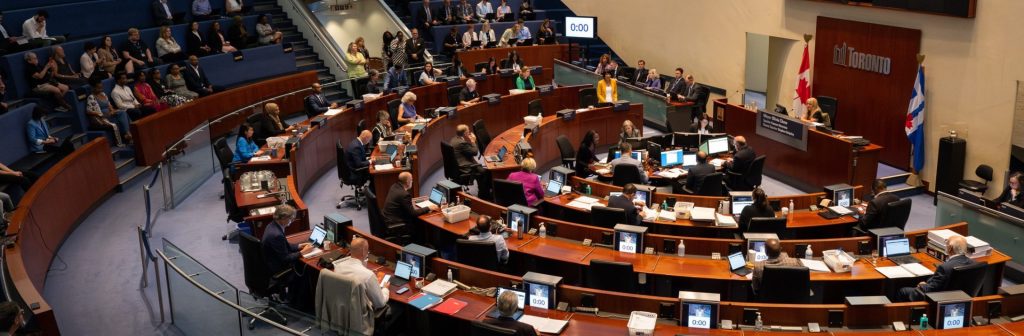
Toronto politicians are completely out of touch with reality. At a time when the city is drowning in unaffordable rents, soaring food prices, and a crumbling public transit system, these councillors have the audacity to debate giving themselves a 24% pay raise—a jaw-dropping $33,000 increase—while ordinary Torontonians struggle to make ends meet.

This isn’t just tone-deaf; it’s selfish, unthinking stupidity. People across the city are losing their homes, skipping meals, and watching their quality of life deteriorate, but instead of focusing on fixing the city, these politicians are focused on fixing their own bank accounts. They already make $137,537 a year—more than enough to live comfortably—but apparently, that’s not enough for them. They want to pad their pockets while the people they’re supposed to serve scrape by.

And their excuse? That they haven’t had a significant raise since 2006? Cry me a river. Most workers in this city haven’t seen real wage growth in years, and many are stuck in precarious jobs with no benefits, yet councillors think now—in the middle of an affordability crisis—is the right time to fatten their wallets? It’s disgraceful.

If these politicians had even an ounce of integrity, they’d reject this outrageous raise outright. Instead, they’re actually debating it, proving once again that they are more concerned with their own wealth than with the suffering of the people they claim to represent.

The Ottawa Amalgamation Failure

The amalgamation of the 13 municipalities into the single-tier City of Ottawa in 2001 was touted as a transformative move. It was expected to streamline governance, reduce redundancy, and create financial efficiencies. Promises of improved municipal services and lower taxes were at the forefront of the pitch made by the Harris government in Ontario. However, in practice, the amalgamation has faced widespread criticism for its failure to fulfill these expectations. I worked as a member of a geospatial applications team to support evidence-based decision making during this transition, and it soon became clear that politics rather than data and community requirements was driving the bus. 

Improved Services
One of the primary promises of amalgamation was to standardize and enhance municipal services across all former municipalities. However, this promise has not been fully realized, particularly for rural and suburban areas, which have often felt left behind. Several key issues have been noted:

Prior to amalgamation, smaller municipalities had tailored services suited to their unique needs. Post-amalgamation, rural areas, such as West Carleton and Rideau-Goulbourn, have voiced concerns over reductions in services like road maintenance, snow clearing, and public transit availability. Urban-centric planning has often overshadowed rural priorities. Rather than simplifying governance, the larger bureaucratic structure of the amalgamated city has at times hindered efficient decision-making. Residents have reported delays in service delivery and inefficiencies in resolving local issues.

One of the most visible struggles has been with Ottawa’s public transit system, particularly with the Ottawa Light Rail Transit (LRT) project. This has been plagued by cost overruns, operational challenges, and inadequate service in suburban and rural areas. Residents question whether the amalgamated city’s centralization has exacerbated these issues.

Lower Taxes
Another major promise was the reduction of property taxes due to economies of scale and centralized administration. However, this has not materialized, and in many cases, taxes have increased. Many residents of rural and suburban areas have seen tax hikes without proportional improvements in services. Before amalgamation, smaller municipalities often operated with lower budgets and tax rates tailored to their limited scope. Amalgamation brought uniform tax rates, which disproportionately impacted these regions.

Amalgamation created unforeseen administrative and operational costs. For example, the integration of different IT systems, payroll structures, and service contracts has led to ballooning expenses. These costs have been passed on to residents through higher taxes. The perception that rural residents are subsidizing urban infrastructure projects, such as the LRT, has deepened dissatisfaction. Rural areas often feel they are paying higher taxes for services that primarily benefit the urban core.

Loss of Local Control
Another often-overlooked consequence of amalgamation has been the loss of local decision-making. Smaller municipalities had more control over their budgets, development priorities, and service delivery. Post-amalgamation, these decisions are centralized, often resulting in policies that do not reflect the needs of individual communities. This has alienated many residents and fostered distrust in the amalgamated city’s leadership.

Evaluation and Criticism
Critics argue that amalgamation prioritized financial theories over the realities of local governance. While some benefits of centralization, such as unified planning and a larger economic development strategy, have been achieved, the overall failure to deliver on improved services and lower taxes has undermined public confidence. Amalgamation’s implementation lacked sufficient consultation with residents and did not adequately address the diverse needs of Ottawa’s urban, suburban, and rural communities.

The amalgamation of Ottawa’s 13 municipalities was envisioned as a way to create efficiencies and deliver better services at lower costs. However, the reality has been far more complex, with significant gaps between promises and outcomes. The perceived failure to deliver on these promises has left many residents, particularly in rural and suburban areas, feeling underserved and overtaxed. This has sparked ongoing debates about whether the amalgamation truly benefited the diverse communities it was meant to unite or whether it simply centralized problems under a single, unwieldy structure.

The Social and Financial Case Supporting Independent Community Hospices

When it comes to end-of-life care, the importance of community hospices cannot be overstated. These facilities offer patient-centered care that prioritizes comfort, dignity, and the autonomy of individuals nearing the end of life. Historically, religious and hospital-affiliated hospices have played significant roles in providing this care. However, these institutions often come with ideological or institutional restrictions that can limit patients’ options, especially for those seeking Medical Assistance in Dying (MAID). Independent community hospices fill this crucial gap, offering inclusive, secular, and comprehensive services that respect the diverse needs and choices of patients.

The growing divide between hospitals and hospices highlights the critical role that independent hospices play in our healthcare system. While hospitals are designed to handle acute medical needs, they are often ill-equipped to provide the holistic, compassionate care that terminal patients require. This mismatch puts a strain on both the hospital system and patients. When hospices are underfunded or unavailable, hospitals become overburdened, diverting resources from acute care and struggling to meet the specialized needs of terminally ill patients. Independent community hospices help alleviate this burden by providing dedicated, specialized care for end-of-life patients, allowing hospitals to focus on their primary mission of acute care.

A key issue that continues to hinder hospice care is funding. In Ontario, the cost of operating a hospice bed is far less than that of a critical care hospital bed, reflecting the differences in care intensity and resource demands. The daily cost of a hospice bed ranges from $439 to $628, a price that is subsidized through community donations, as government funding typically covers only 60% of expenses. This is a stark contrast to the significantly higher costs of hospital care. For instance, an ICU bed in Canada averages around $3,500 per day, while the cost of a general hospital ward ranges from $850 to $1,100 per day. This significant financial disparity underscores the cost-effectiveness of hospice care, which offers a more home-like environment at a fraction of the expense associated with hospital-based critical care.

In Ontario, many palliative care patients still die in hospitals, with over 52% of deaths occurring in hospital settings in 2017/18. The average length of stay for palliative patients in these settings is around 13.5 days. If a significant portion of these patients were transitioned to independent hospices, the potential cost savings could be substantial – reaching millions of dollars annually. This not only speaks to the financial efficiency of hospices, but also to the human side of the equation: patients would have the opportunity to spend their final days in a setting that better aligns with their personal values and comfort.

Another compelling reason to support independent hospices is their commitment to inclusivity. Religious-affiliated facilities, while providing valuable care, may impose beliefs that do not align with all patients’ values, potentially alienating those from different backgrounds. Independent hospices, however, embrace Canada’s rich cultural and spiritual diversity, ensuring that all patients receive care that is free of judgment and tailored to their personal wishes. For rural and underserved populations, these hospices help reduce barriers to access, ensuring that equitable care is available to those who may otherwise face challenges in receiving it due to geographic or institutional constraints.

The case for investing in independent community hospices is both an economic and moral imperative. Not only do these facilities provide compassionate, patient-centered care, but they also offer a more affordable alternative to hospital-based care, ease the strain on hospitals, and ensure that patients’ right to choose is respected. It is essential for both governments and communities to prioritize the development and funding of independent hospices, ensuring that end-of-life care remains dignified, accessible, and inclusive for all Canadians.

The Cost of Innovation: How the Ordnance Survey’s 1990s Financial Model Created Competition

When I arrived at Durham University in 1985 to begin my PhD research, I was given an office once occupied by David Rhind, a leading figure in geomatics. Professor Rhind passed away this month at 81, following a distinguished career in geomorphology, geomatics and cartography. Two of his most notable contributions were to the Chorley Committee’s 1987 report on the “Handling of Geographical Information” and his leadership of the Ordnance Survey (OS) as Director General from 1992 to 1998; a position I once aspired to.

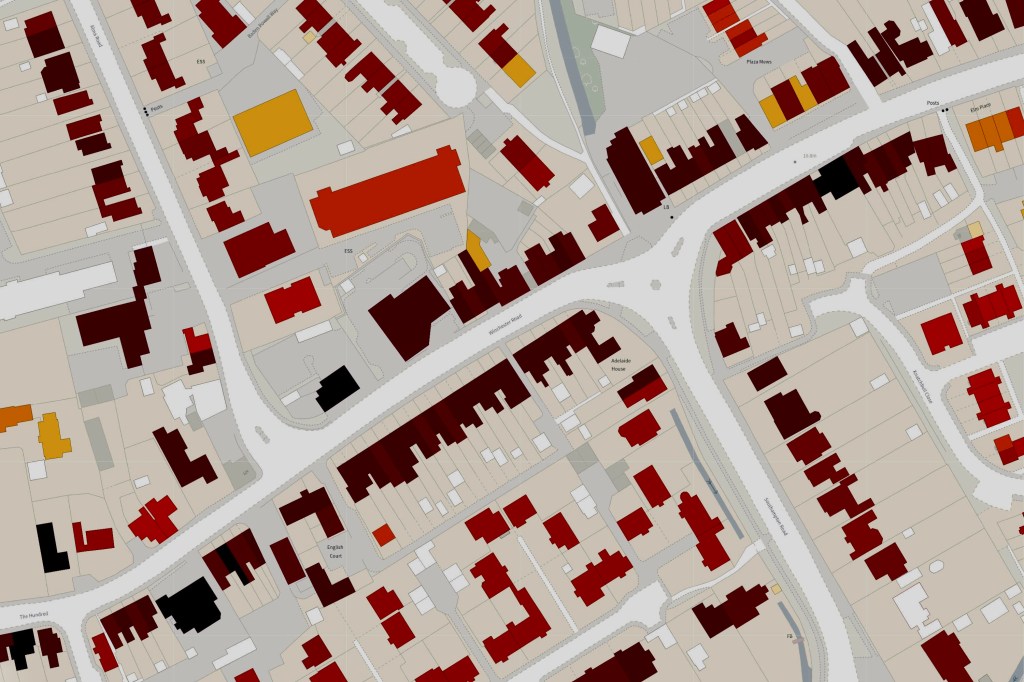
In the early 1990s, the UK Ordnance Survey transitioned from offering maps at cost to a commercially-driven model aimed at reducing taxpayer dependence. Spearheaded by Rhind, this shift was intended to generate new revenue streams by charging commercial rates, fostering innovation in the private sector, with this change occurring during John Major’s continuation of Margaret Thatcher’s free-market Conservative government.

On the surface, the strategy seemed a logical response to the digital age, but its impact on the OS’s client relationships raised concerns. A prime example was the UK Automobile Association (AA), which had long relied on OS maps. As the OS raised prices, the AA, caught between increasing costs and the need to maintain affordable services, began developing its own mapping solutions. This shift, prompted by Rhind’s commercial model, mirrored a broader industry trend where rising prices forced organizations to explore alternatives.

The AA’s move away from OS data highlighted a flaw in the OS’s strategy: by prioritizing revenue, the OS alienated loyal clients and opened the door for competitors offering cheaper or more specialized services. This weakened OS’s market dominance and contributed to the rise of private mapping services, eroding its monopoly.

This shift also sparked debate about public ownership of data. Mapping data, funded by taxpayers, had once been made available at cost to ensure equitable access. Rhind’s commercialization, while financially successful, seemed to contradict this principle, favoring revenue over the broader public good.

In hindsight, the transition to a commercial model raised important questions about the long-term sustainability of the OS. While it aimed to modernize the service and ensure financial self-sufficiency, it fragmented the market, driving clients to develop in-house solutions and creating competition. The AA’s departure underscores the risks of prioritizing profit over accessibility.

Today, the OS operates on a mixed-cost model, offering both free OpenData and premium products sold based on usage. This model aims to balance public access with financial sustainability, generating revenue for ongoing data maintenance. However, the legacy of the commercialization strategy persists, and the question remains whether the OS can maintain its mission of serving the public good while ensuring its financial independence. The challenge is finding a balance that doesn’t drive clients away or erode public access.

It’s interesting to note that the U.S. Geological Survey (USGS) continues to distribute a significant amount of its data free to the public including topographical map, earthquake and water data along with Landsat imagery. While the USGS does offer some cost-recovery and subscription-based data sets, the vast majority of its data holdings are still freely available, but I wonder how long this financial model will be in place under the second Trump administration. 

A Path to Sustainable and Inclusive Urban Living

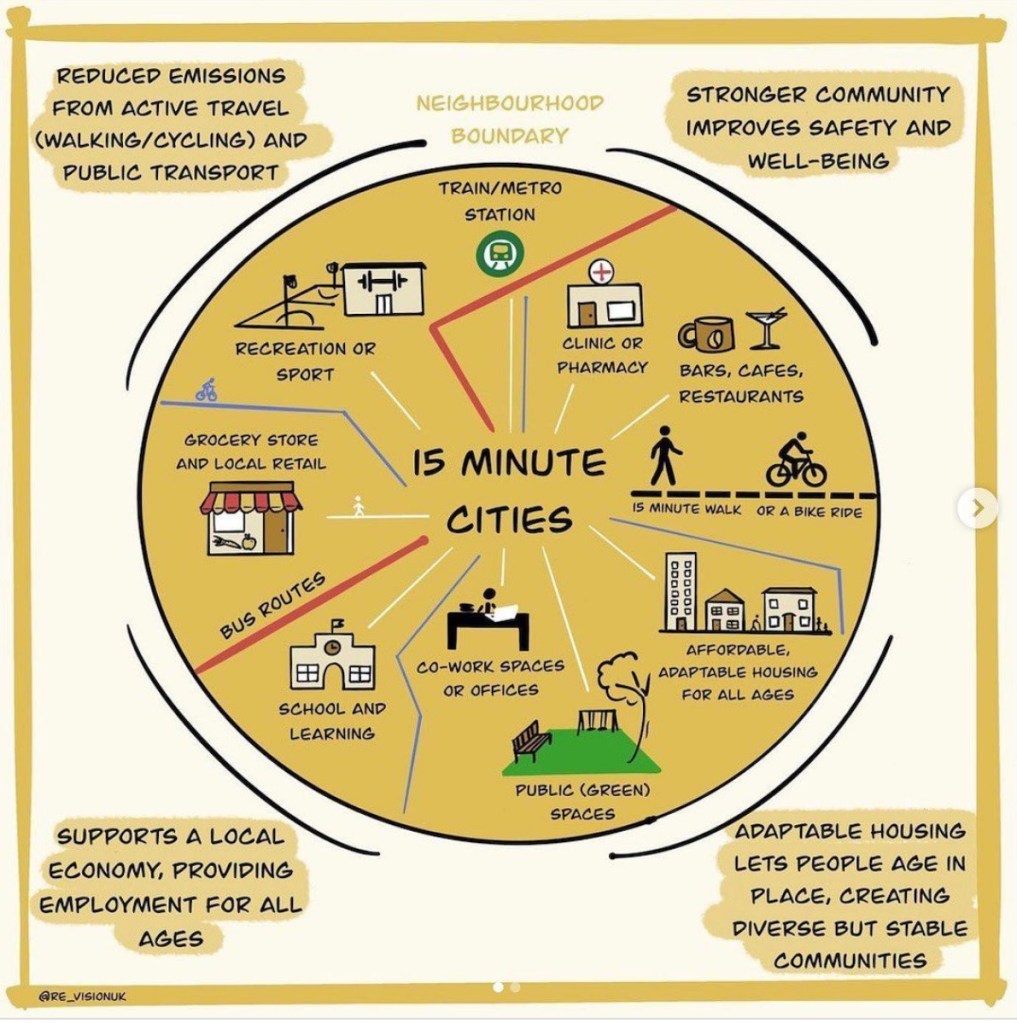
The 15-minute city concept is redefining urban planning by creating neighborhoods where residents can access essential services and amenities—such as schools, grocery stores, healthcare, parks, and cultural hubs—within a short walk or bike ride from their homes. This approach enhances livability, promotes sustainability, and fosters vibrant communities. While cities like Montreal and Vancouver are often highlighted as Canadian pioneers of this model, the concept has significant potential to transform smaller cities and suburban areas as well.

Modern suburban developments, with their sprawling layout, lack of sidewalks, and reliance on car travel, often isolate families and increase stress. Parents find themselves spending hours shuttling children to school, sports, and activities, leaving less time for connection with neighbors or the community. By contrast, the 15-minute city offers a remedy: neighborhoods designed for convenience, where daily needs are within walking distance, eliminating the dependency on cars and fostering tighter-knit communities.

Montreal’s Plateau-Mont-Royal exemplifies the 15-minute city with its dense urban fabric and mixed land use. The neighborhood integrates residential spaces with vibrant local businesses, green parks, and pedestrian-friendly streets. Residents can easily walk or bike to markets, cafes, schools, and public transit, making car ownership unnecessary for most. The Plateau demonstrates how retrofitting existing neighborhoods with human-scale design can create thriving, sustainable communities.

While Vancouver’s downtown core is often cited as a model of accessibility and vibrancy, Victoria has also embraced the 15-minute city concept through its commitment to walkable neighborhoods and cycling infrastructure. Areas like Fernwood and James Bay offer compact communities where residents can access markets, local cafes, healthcare, and schools without needing a car. The city’s investment in bike lanes and mixed-use development showcases how smaller cities can lead the way in creating vibrant, sustainable urban environments.

Stratford, a small Ontario city known for its arts and theater scene, has leveraged its human-scale design to embody the principles of the 15-minute city. Residents of Stratford can easily walk to schools, grocery stores, parks, and cultural venues. The city’s focus on local businesses and accessible public transit demonstrates how smaller municipalities can create thriving, close-knit communities while reducing environmental impact.

Growing up in Newcastle-upon-Tyne, I experienced firsthand the benefits of a 15-minute city before the term existed. Everything we needed—food shopping, schools, parks, and even the local fish-and-chip shop—was within walking distance. Pubs and restaurants were truly “local,” and an affordable public transit system connected us to the wider city. This lifestyle fostered independence, social connections, and a sense of belonging—qualities that modern urban planning seeks to replicate.

The 15-minute city has sparked debate, with critics fearing it may restrict personal freedom or create isolated “bubbles.” However, proponents argue that the model enhances choice by making essential services more accessible while reducing reliance on cars. Rather than limiting mobility, it offers more options for transportation, including walking, cycling, and transit. This model also aligns with public health goals, reducing long commutes and encouraging active lifestyles.

Danish urbanist Jan Gehl emphasizes designing cities around people, not cars. His research underscores the economic, social, and environmental benefits of walkable neighborhoods, from improved mental health to strengthened community bonds. By investing in pedestrian infrastructure and mixed-use development, cities can become more sustainable and equitable.

As Canadian cities grow, the 15-minute city offers a roadmap for livable, sustainable urban living. By prioritizing human-scale design and reducing car dependency, communities of all sizes can embrace this transformative model. Whether in a bustling metropolis or a small city like Stratford, the principles of the 15-minute city promise a more inclusive, resilient future for urban living.