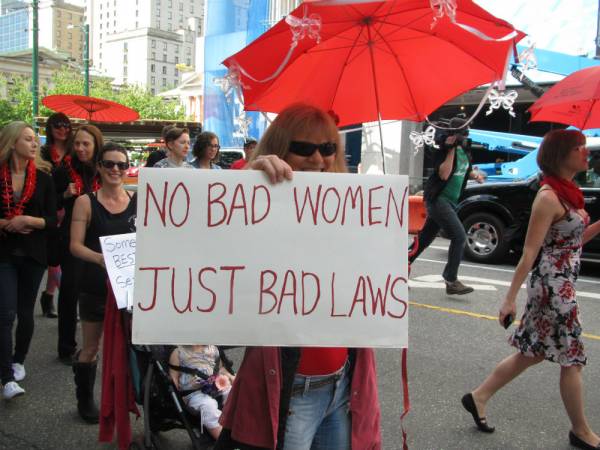
Canada Post’s Red Flag Fumble: Why “Clarifications” Can Backfire

Canada Post has a knack for finding itself in the headlines for all the wrong reasons. This week’s rural delivery flap (pun intended) has all the makings of another avoidable PR bruise. The issue? Mail carriers in rural areas have been told not to raise the red flag on mailboxes to signal incoming mail. According to Canada Post, the flag’s intended use has always been one-way: customers put it up to show there’s outgoing mail for pickup. The new instruction, they insist, is simply a “clarification” of longstanding policy, not a change in service.

For many rural residents, especially those with long driveways or mobility challenges, that little red flag has been a simple, effective communication tool for decades. It’s the rural equivalent of the notification icon on your phone – no need to trek through the snow or heat just to find an empty mailbox. Taking that away may align with corporate guidelines, but it’s a practical step backward in terms of customer experience.

Canada Post’s position is that the flag’s misuse by some carriers created inconsistency across the country. Some postal workers raised the flag for incoming mail, others didn’t, and now they’re enforcing a uniform standard. That sounds fine in a policy manual, but in real life, it translates into removing a service habit people value, without offering a replacement. And while this might be a small operational tweak from their perspective, it has outsized symbolic weight in the communities it affects.

The reaction has been swift and pointed. Rural customers, already feeling underserved compared to their urban counterparts, see this as yet another example of Ottawa making decisions without understanding life outside the city. The Canadian Union of Postal Workers says it wasn’t even consulted before the clarification went out. That’s not just a failure of courtesy; it’s a failure of internal communication that risks alienating frontline staff, the very people who are the public face of Canada Post.

For a federal agency that has spent years trying to modernize its image and service model, this is a curious hill to die on. Public trust in Canada Post has already been dented by service delays, price hikes, and reduced delivery frequency in some areas. Now, they’ve added a decision that feels to many, like a needless reduction in convenience. The optics are terrible: instead of talking about new rural service improvements, the conversation is about a flag on a box.

Good public relations isn’t just about press releases and branding campaigns. It’s about anticipating how policy changes, even small ones, will land with the people you serve. A true customer-first approach would have looked for alternatives: maybe a text notification service for rural deliveries, or an opt-in program where carriers could continue flag use. Instead, Canada Post has doubled down on the technical definition of a mailbox flag, while ignoring the human element of how that signal has been woven into daily routines.

The irony is that the red flag rule may be correct in theory, but in practice, it’s a perfect example of winning the policy argument while losing the public. For rural Canadians, this feels like one more example of an institution not listening. And for Canada Post, it’s another case of stepping on their own toes – this time, with both boots planted firmly in the gravel of a country driveway.

Sources: CP24Halifax CityNewsCJDC TV

Beyond the Speed Camera: A Cultural Shift for North American Traffic Enforcement

North America’s deeply ingrained car culture has long embraced speed as a symbol of freedom and autonomy. High-horsepower vehicles dominate the market, and speed limits are often treated as negotiable suggestions. This cultural perspective undermines enforcement efforts: motorists slow only when cameras are visible and accelerate the moment they’re out of sight. As a result, stealth enforcement tactics – unmarked police vehicles, hidden speed traps – have become widespread, but they foster mistrust and do little to change underlying behaviour.

The Pitfalls of Stealth Enforcement

Municipalities across Canada and the United States have become reliant on stealth tactics and revenue‑driven ticketing. Cameras and unmarked units generate significant income, yet they fail to instil lasting compliance. In some US jurisdictions, removing speed cameras produced no long-term decline in collisions – drivers simply reverted to previous behaviours. Meanwhile, a survey of Queensland drivers found that self-reported speeding compliance was significantly higher in the presence of overt enforcement compared to covert operations – even when mobile.

European Approach: High Visibility and Trust

Contrary to the stealth model, many European nations embrace overt enforcement supported by community engagement and road design:

  • Marked police vehicles and speed display signs
    Well-lit patrol vehicles provide visual deterrence. Radar speed signs in the UK, US, and Canada consistently reduce average speeds by 2–6 mph among speeding vehicles (source).
  • Transparent automated enforcement
    In the UK, camera sites reduce injury collisions by 22% and fatalities by 42% (source). LSE researchers estimated that adding 1,000 more cameras could save nearly 200 lives annually (same source).
  • Data-backed strategy
    France’s speed camera expansion between 2000–2010 led to a 75% drop in violations and a 51% reduction in road deaths (source). In British Columbia, enforcement yielded a net annual social benefit of CAD 109 million (same source).

North American Challenges & Mixed Results

North American experience remains inconsistent:

  • Chicago’s camera deployment (2015–2017) yielded a 12% reduction in injury and fatal crashes.
  • Edmonton saw a 33% reduction in violations and a 16% decline in crashes (source).
  • New York City’s 24/7 school zone camera monitoring reduced speeding violations by 72% and injuries by 8%, with revenue hitting USD 187 million in 2020 (source).

Data‑Driven Enforcement: Best Practices

  • Fixed cameras reduce injury crashes by 20–25% and total crashes by 11–44% (source).
  • In South Australia, intersection cameras cut casualty crashes by up to 21% (same source).
  • New South Wales saw a 40% drop in casualty crashes, saving over USD 500 million in societal costs (source).
  • Visible enforcement in London and Queensland yields longer-lasting compliance (source).

A Safer-Culture Roadmap

Focus AreaEuropean‑Style MeasuresAnticipated Impact
Enforcement StyleUse marked patrol cars; deploy visible speed displaysSustained behaviour change
Automated CamerasInstall with clear signage; data-led site selectionInjury crashes ↓ 20–25%
Road DesignAdd roundabouts, narrow lanes, digital speed alertsPassive speed reduction
Community RelationRedirect fine revenues to road safety; publish statsTrust and buy-in
Driver EducationEmphasize harm prevention in campaignsImproved risk perception

Cultural Shift: From Contest to Collaboration

Instead of positioning motorists as adversaries, a preventive and empathetic approach invites collaboration. The objective shifts from catching rule-breakers to fostering shared responsibility: communities and authorities work together to create safer streets. Sweden’s Vision Zero, which places corrective road design and visible enforcement at its core, demonstrates what is possible when responsibility is shared across systems – not relegated to individual error.

Conclusion: Road Safety Through Culture

North America’s car culture elevates speed as a value – reinforced by stealth enforcement and revenue-driven policing. European-style, overt policing, paired with transparent automated systems and smart infrastructure, yield measurable reductions in speeding and crashes, while fostering public trust. Clear data from Chicago, Edmonton, New York City, and international studies support the transition: visibility and prevention work, in both behaviour and safety impacts.

To truly transform driving culture, municipalities must align enforcement, education, and engineering toward a shared goal: safer roads. While hidden cameras and unmarked units might bolster short-term revenue, only a visible, accountable system will inspire lasting compliance – and save lives.

When a Sex Worker Calls a Lawyer a Whore: Feminism, Hypocrisy, and the Weight of Words

I recently witnessed a moment that was, in equal measure, jarring, ironic, and deeply revealing: a sex worker called a lawyer a whore. The word hit the air like a slap, not just because of who said it, but because of what it exposed. This wasn’t just a spat. It was a cultural moment that pulled back the curtain on how we still weaponize language soaked in misogyny, even among those who should, by all rights, know better.

Now, let’s pause here. The term whore has long been used to shame, control, and degrade women, especially those who dare to transgress sexual norms. Yet, in recent years, many sex workers have reclaimed it, asserting their agency and challenging the stigma. To hear someone from within that world hurl it as an insult is, on the surface, ironic. But beneath that irony lies something far more complex: a commentary on respectability, power, and the hypocrisy that still riddles both feminist and professional spaces.

When a sex worker calls a lawyer a whore, they’re not talking about sex. They’re talking about compromise, about selling out, about being willing to do anything for money or power while cloaking it in the illusion of respectability. It’s a sharp dig at the moral contradictions we tolerate in professional life. After all, lawyers and especially those in corporate or political circles, are often paid handsomely to defend the indefensible. They play the game in tailored suits and courtrooms, while sex workers do it in ways society still deems unacceptable. Yet only one of them gets a LinkedIn profile and a pension.

This, to me, is the hypocrisy at the heart of modern feminism. Too often, it uplifts professional women while distancing itself from those who work outside “respectable” labour categories. Mainstream feminism has made great strides, but it still struggles to make room for those whose empowerment doesn’t come with a university degree or a boardroom badge. Sex workers, domestic labourers, and other marginalized women are too often left out of the conversation, unless they serve as cautionary tales or symbols to be rescued.

And this is why the insult stung so sharply. The word “whore” still holds power, not because of what it means, but because of the shame we still attach to it. When used against a lawyer, it highlights the deep discomfort we have with the idea that all labour, whether it involves a courtroom or a bedroom, is transactional. That both women may be “selling themselves” in some fashion, but only one gets to pretend it’s noble.

Feminism, if it means anything today, must confront this hypocrisy head-on. It must stop drawing lines between the respectable and the reviled, the educated and the erotic. It must challenge the systems that make one woman a whore and another a hero, when both may be navigating the same capitalist dance – just with different music.

In that sense, maybe the insult wasn’t ironic at all. Maybe it was deadly accurate.

Why I Always Start With Quebec When Researching Canadian Federal Projects

After decades of consulting across Canada on everything from agri-food frameworks to integrating geomatics into healthcare systems, I’ve developed a habit: whenever I’m tasked with researching a new federal project, my first instinct is to see what Quebec is doing. It’s not just a reflex; it’s a practical strategy. Time and again, Quebec has shown itself to be a few steps ahead of the rest of the country, not by accident, but because of how it approaches policy, innovation, and institutional design.

Let me explain why, using a few concrete examples that illustrate how Quebec’s leadership offers valuable lessons for any serious federal undertaking.

A Culture of Long-Term Planning and Strong Public Institutions
One of Quebec’s greatest strengths lies in its culture of policy sovereignty combined with a deep commitment to long-term planning. Unlike the often reactive or fragmented approaches seen elsewhere, Quebec’s government institutions are built with foresight. Their mandates encourage anticipating future challenges, not just responding to current problems.

Take water management, for instance. When federal policymakers started talking about a national water agency, Quebec already had a robust system in place, the Centrale de Suivi Hydrologique. This province-wide network connects sensors, real-time data, and forecasting tools to monitor freshwater systems. It’s a sophisticated marriage of geomatics, technology, and environmental science that functions as an operational model rather than a concept.

For consultants or project managers tasked with building a national water infrastructure or climate resilience framework, Quebec’s example isn’t just inspirational; it’s foundational. You start there because it shows you what is possible when policy vision meets institutional commitment.

Integration Across Sectors: Health, Geography, and Data
Quebec’s approach goes beyond individual projects. It’s about integration, the seamless connection between government ministries, academia, and industry research. This “triple helix” collaboration model is well developed in Quebec and is crucial when addressing complex, cross-sectoral challenges.

A case in point is CartoSanté, Quebec’s health geography initiative. By linking demographic data with healthcare service delivery, spatial planning, and public health metrics, this platform creates a living map of healthcare needs and capacities. It is precisely this kind of data integration that federal agencies seek today as they try to bring geomatics and health information systems together at scale.

Starting a federal health-geomatics project without examining CartoSantéwould be like trying to build a house without a foundation. Quebec’s work offers a tested blueprint on data interoperability, system architecture, and stakeholder coordination.

Agri-Food Resilience as a Model of Regional Sovereignty
While Canada has traditionally focused on food safety and quality, Quebec has been pioneering food security and sovereignty strategies for years. Its Politique bioalimentaire 2018–2025 is a comprehensive framework that stretches beyond farming techniques to include local processing, distribution, and regional branding.

During the COVID-19 pandemic, the federal government’s interest in “food sovereignty” suddenly became a priority. Quebec was already there, with initiatives like Zone Agtech that connect innovation hubs, farmers, and distributors to strengthen local food systems. Their experience provides invaluable insight into how to balance global markets with local resilience.

For any consultant or policymaker working on national agri-food strategies, Quebec offers a real-world laboratory of what works, from land-use policy to market development, rather than abstract policy drafts.

An Intellectual Independence That Drives Innovation
One factor often overlooked is Quebec’s distinct intellectual culture shaped by its French language and European influences. This has fostered a different approach to systems-thinking, less tied to U.S.-centric models and more open to integrated, interdisciplinary frameworks.

The Ouranos Consortium is a prime example. Long before climate adaptation became a nationwide buzzword, Ouranos was advancing applied climate services by blending meteorology, municipal planning, and risk insurance. Their work has influenced not just provincial but global climate resilience strategies.

This intellectual independence means Quebec often anticipates emerging challenges and responds with unique, well-rounded solutions. When federal agencies look for tested climate data platforms or governance models, Ouranos is frequently the starting point.

Institutional Continuity and Data Stewardship
Finally, Quebec benefits from a more stable and professionalized civil service in key areas like environmental monitoring and statistical data management. This continuity allows Quebec to maintain extensive, clean, and spatially tagged historical data sets, a rarity in many jurisdictions.

For example, when Meteorological Service of Canada sought to modernize weather station instruments metadata standards, Quebec’s Centre d’Expertise Hydrique stood out for its meticulously curated archives and consistent protocols. This institutional memory isn’t just a bureaucratic nicety; it’s critical infrastructure for evidence-based policy.

Starting federal projects by engaging with Quebec’s institutional frameworks means tapping into decades of disciplined data stewardship and knowledge management.

Quebec’s leadership in areas like agri-food resilience, climate and water data, and health geomatics is no accident. It’s the product of a distinct political culture, strong public institutions, integrated knowledge networks, and intellectual independence. When you’re consulting or managing complex federal projects, recognizing this is key.

By beginning your research with Quebec’s frameworks and models, you gain access to tested strategies, operational systems, and a vision for long-term resilience. While other regions may still be drafting proposals or testing pilots, Quebec is often already producing data and outcomes.

So the next time you embark on a new federal initiative, whether it’s improving food security, building climate-adaptive infrastructure, or integrating spatial data into healthcare, remember this: start with Quebec. It’s where the future of Canadian innovation often begins.

Time for a Change: Rethinking Canada’s Outdated School Calendar

For generations, Canadian schools have followed a familiar rhythm: two long semesters separated by a ten-week summer break. This model, which mirrors the American academic calendar, has been treated as a given, but as family structures, work patterns, and educational needs evolve, cracks are beginning to show in this once-stable system. Increasingly, educators, parents, and community leaders are asking whether it still serves students well, or whether Canada should adopt a more balanced approach to the school year, such as the three-term model used in the United Kingdom.

The long summer break is a historical holdover from an agrarian society. At a time when most families worked the land, it made sense to release children from classrooms during planting and harvest seasons. In modern Canada, where the vast majority of children live in urban or suburban areas and are no longer expected to work the land, that rationale has faded. What remains is a tradition that no longer aligns with today’s educational or social realities.

One of the most significant drawbacks of the extended summer holiday is the well-documented problem of “summer slide”, a regression in academic achievement that occurs when students are away from structured learning for too long. This effect is especially pronounced among students from low-income families, who may have fewer opportunities for summer enrichment such as camps, travel, or private tutoring. Research by the Brookings Institution and other educational bodies has shown that summer learning loss can account for up to two-thirds of the achievement gap between students from different socioeconomic backgrounds by the time they reach high school. Compressing the summer break and redistributing time off across the year could help mitigate this decline and promote more equitable learning outcomes.

This is where the UK model offers a compelling alternative. British schools typically divide the academic year into three terms: the Autumn term, the Spring term, and the Summer term. Each term lasts roughly 12 to 13 weeks and is separated by a one- or two-week “half-term” break in the middle, as well as a longer holiday between terms. Specifically, the Autumn term runs from early September to mid-December, with a one-week break in late October and a two-week Christmas holiday. The Spring term resumes in early January and runs to Easter, with a mid-February break. The Summer term begins after Easter and ends in mid- to late July, with a break in late May and then a final six-week summer holiday.

This structure creates a school calendar that is more evenly distributed across the year. The frequent breaks reduce the mental and emotional fatigue that can accumulate over long semesters. Students benefit from regular intervals of rest and reset, which helps maintain focus and engagement. Teachers, too, report reduced burnout, and a greater ability to manage workloads and lesson planning. The predictability of this system also makes it easier for families to plan holidays, arrange childcare, and balance work obligations.

In Canada, there are already signs of a shift. Some schools have experimented with balanced-year calendars, particularly in Ontario and British Columbia. These models usually feature a shortened summer break, typically five to six weeks, and more frequent breaks during the school year. Feedback from these pilot programs has been largely positive. Students return from breaks more refreshed and are better able to retain information across the academic year. Educators note a smoother teaching rhythm with fewer interruptions caused by fatigue or disengagement. Families appreciate the greater flexibility in scheduling vacations and the reduced pressure to fill an entire summer with costly activities.

Beyond the educational and practical benefits, rethinking the school year is also a matter of social equity. When only a portion of the population can afford enriching summer experiences, gaps in learning and personal development inevitably widen. A more evenly spaced calendar can create more frequent and accessible opportunities for intervention, support, and enrichment that are available to all students, not just the most privileged.

Of course, change will not be without challenges. Teachers’ unions, school boards, and provincial ministries would need to collaborate closely to implement new calendars. Working parents would require advance notice to plan around a revised schedule. But these challenges are not insurmountable. Other countries, including Australia and Germany, have successfully adopted modified calendars that better suit modern life while preserving high educational standards.

Canada has a proud tradition of public education that adapts to meet the needs of its citizens. The time has come to revisit the structure of the academic year. Updating the calendar to reflect 21st-century realities would not mean abandoning heritage, but rather honoring the purpose of education itself: to provide all students with the best possible chance to learn, grow, and succeed. A shift toward a term-based calendar, inspired by models like that of the UK, could be a transformative and forward-looking step in that direction.

Sources
• Brookings Institution: “Summer learning loss – what is it, and what can we do about it?” (2020) — https://www.brookings.edu/articles/summer-learning-loss-what-is-it-and-what-can-we-do-about-it/
• EdCan Network (Canadian Education Association): “Rethinking the School Calendar” (2014) — https://www.edcan.ca/articles/rethinking-the-school-calendar/
• Public Health Ontario: “Balanced School Day: Literature Review” (2015) — https://www.publichealthontario.ca/-/media/documents/b/2015/balanced-school-day.pdf

Billionaires Shouldn’t Exist – And Here’s Why That’s Not Radical

When New York State Assemblymember Zohran Mamdani recently declared, “I don’t believe we should have billionaires,” he wasn’t indulging in empty populism, he was articulating a moral position whose time has come. The existence of billionaires, in an era defined by mass homelessness, food insecurity, and climate collapse, is not merely unfortunate, it is an ethical indictment of the systems that allowed them to exist in the first place.

Mamdani joins a growing chorus of progressive thinkers, economists, and ethicists who argue that no individual should have the right, or the capacity, to accumulate and hoard a billion dollars or more. This isn’t about envy or political expediency. It’s about the increasingly clear understanding that billionaire wealth isn’t just excessive, it’s extractive, destabilizing, and morally indefensible.

Billionaire Wealth Is Built on Exploitation
To amass a billion dollars, one must either inherit extreme wealth or systematically profit from the undervalued labour of others. Most billionaires, especially those in tech and finance, profit not through invention or hard work, but through ownership of capital, tax avoidance, and labor suppression. As economist Thomas Piketty demonstrated in Capital in the Twenty-First Century, returns on capital consistently outpace economic growth, meaning that wealth accumulates faster than wages rise, thus enriching the few while immiserating the many (Piketty, 2014).

This is not a bug in capitalism; it’s a feature. While billionaires build personal rockets and collect rare yachts, tens of millions lack clean water, reliable housing, or access to medical care. The wealthiest 1% of the global population now owns nearly half of the world’s wealth, while the bottom 50% hold just 2% (Credit Suisse Global Wealth Report, 2022).

Morality Demands Redistribution, Not Charity
Some argue that billionaires are philanthropists who “give back.” But ethical redistribution is not about generosity, it’s about justice. Charity, even when well-intentioned, is discretionary. It allows the wealthy to decide which causes are “worthy,” often with tax write-offs and public accolades. It is fundamentally undemocratic.

As philosopher Peter Singer wrote in his essay Famine, Affluence, and Morality, if we can prevent something bad from happening without sacrificing anything of comparable moral importance, we are morally obligated to do so (Singer, 1972). Billionaires could eradicate global hunger, fund universal education, and fight climate change many times over. That they do not is a moral failure, one built into the very logic of their class interests.

The Billionaire Class Undermines Democracy
More than just a matter of inequality, billionaires represent a profound threat to democracy. They use their wealth to shape elections, control media narratives, lobby governments, and suppress movements that challenge their power. As Mamdani put it, they spend “millions of dollars” to influence outcomes that serve their continued dominance. That’s not civic participation, it’s oligarchy.

This is evident in the staggering political spending from figures like Elon Musk, Jeff Bezos, and the Koch brothers, whose influence often counters popular will on issues like climate regulation, taxation, and labor rights. When money becomes speech, those with the most money speak loudest, and everyone else is drowned out.

Making Billionaires Illegal Is Not Extremism – It’s Ethics
To say that billionaires should be “illegal” is not to suggest rounding them up and seizing their mansions. It means creating systems in which it is structurally impossible to accumulate wealth beyond a certain point. This might include steeply progressive taxation, strict inheritance limits, and aggressive corporate regulation. As proposed by economists like Gabriel Zucman and Emmanuel Saez, a global wealth tax would not only generate trillions in public funds, but also dismantle the foundations of permanent wealth aristocracy (Zucman & Saez, 2019).

When Mamdani says billionaires “shouldn’t exist,” he invites us to imagine a society where wealth is shared, not hoarded; where innovation is public, not privatized; and where dignity isn’t auctioned to the highest bidder. This vision isn’t utopian, it’s already partly realized in countries with higher levels of equality and lower poverty rates, such as Norway, Denmark, and the Netherlands.

A Future Without Billionaires Is a Future With Hope
We are standing at a crossroads: ecological collapse looms, fascism festers, and inequality grows by the hour. Allowing the existence of billionaires in this context is more than complacent, it’s complicit. As the climate crisis worsens and democratic institutions strain under the weight of elite influence, we must ask: how much longer can we afford billionaires?

The answer, increasingly, is: not one more day.

Sources
• BBC News. (2025). Zohran Mamdani says he doesn’t believe that we should have billionaires. https://www.bbc.com/news/articles/cvge57k5p4yo
• Piketty, T. (2014). Capital in the Twenty-First Century. Harvard University Press.
• Credit Suisse. (2022). Global Wealth Report 2022. https://www.credit-suisse.com/about-us/en/reports-research/global-wealth-report.html
• Singer, P. (1972). Famine, Affluence, and Morality. Philosophy & Public Affairs.
• Zucman, G., & Saez, E. (2019). The Triumph of Injustice: How the Rich Dodge Taxes and How to Make Them Pay. W.W. Norton & Company.

A Turning Point for Democrats: Embracing or Repelling the Mamdani Moment

As I write this, I’m still struck by the fact that this is even a controversy. The policies Zohran Mamdani is proposing: free public transit, universal childcare, publicly owned services, are standard practice across much of Europe and other G7 nations, yet many Democrats are voicing concern that New Yorkers, and perhaps Americans more broadly, still aren’t ready to embrace what they call “socialist” ideas.

In June 2025, New York voters spoke clearly. Fifty-six percent of Democratic primary voters chose Zohran Mamdani, a 33-year-old democratic socialist, to carry the party’s nomination for mayor. His platform includes free public transit, universal childcare, rent freezes, and publicly owned grocery stores. To many, this was a breath of fresh air in a city suffocating under the weight of rising costs and entrenched inequality. To others, it was a red flag waving at the edge of a cliff. Now, Democrats face a decision that could define the party for years to come.

Mamdani’s victory was not a fluke. His campaign, reportedly the largest volunteer mobilization in the city’s history, reached over 750,000 doors with 30,000 committed canvassers. He ran on small donations and working-class energy, uniting activists, renters, and disaffected youth. Against him stood Andrew Cuomo, backed by unions, wealthy donors, and a legacy machine. Yet Cuomo could not withstand the wave of grassroots momentum.

The question now facing Democrats is not only how Mamdani won, but what they should do about it. Cuomo is already considering an independent run. Mayor Eric Adams, expelled from the Democratic fold, is still in the race and is quietly collecting business support. This sets up a potential three-way general election, one that could split the left-leaning vote and throw the door open for the candidate who best reassures moderate, outer-borough voters. Democrats must decide if Mamdani’s energy is transferable to the broader electorate or if his policies will cost them the mayoralty.

Mamdani offers a bold, future-oriented vision. He speaks of climate policy not as abstraction but as urban necessity. His platform calls for retrofitting buildings, expanding transit access, and protecting tenants, all framed as investments in equity and resilience. He proposes paying for this with new taxes on the wealthy and on corporations that profit from the city’s infrastructure and labour. For progressives, he represents hope. For moderates, he presents risk.

Critics argue that Mamdani’s platform is more idealism than governance. Taxing millionaires at the city level is legally complex and politically fragile. Governor Hochul has already signaled opposition to any such proposal. Implementing rent freezes and creating city-owned grocery stores would require significant legislative cooperation and administrative capacity. There are also concerns about whether such sweeping programs are financially viable under New York City’s budget constraints.

National Republicans have already begun to label Mamdani as a communist, a charge that PolitiFact has debunked. He is a democratic socialist, not a revolutionary. He believes in using democratic institutions to expand access to public goods and services. Nevertheless, the right will use his image to galvanize resistance, not only in New York but nationwide. Democrats, particularly those eyeing swing districts in 2026, will be watching closely.

The party also faces internal tensions. Some centrist Democrats worry about alienating suburban and immigrant voters who may view Mamdani’s platform as radical. Others remember Buffalo in 2021, when India Walton won the Democratic primary only to be defeated in the general election by a write-in campaign for incumbent Byron Brown. Business leaders in New York have already begun organizing to prevent a Mamdani administration. They are joined by conservative Democrats and Republicans who see this as an existential challenge.

Mamdani’s base, however, is broader than many expected. He performed well not only in left-leaning Brooklyn neighborhoods but also in parts of Queens, the Bronx, and Staten Island. He attracted support from Hispanic, Black, and Asian voters, many of whom feel excluded from the city’s economic gains. Still, his positions on Israel, elite school admissions, and Indian politics have alienated parts of the Jewish, Korean, and Hindu communities. Holding this coalition together in the general election will be a test of political skill and message discipline.

This race is not just about New York City. It is a referendum on the direction of the Democratic Party. After disappointing results in 2024, especially in swing districts and rural areas, Democrats are torn between a progressive future and a centrist past. Mamdani’s success presents a new model: bold ideas, grassroots energy, and unapologetic populism. If he wins in November, the party may shift permanently. If he loses, the lesson may be that ideology cannot overcome institutional resistance and suburban caution.

Democrats now face three decisions. First, whether to support Mamdani fully or distance themselves from his agenda. Second, whether to adopt parts of his platform as a new standard or treat it as a local anomaly. Third, how to communicate his vision without triggering a backlash that could hurt candidates elsewhere.

In many ways, the choice has already been made. Mamdani is now the party’s nominee in the country’s largest and most diverse city. Whether his campaign signals renewal or foreshadows division will depend on the next five months. The general election in November will not just determine who leads New York, but what kind of party the Democrats want to be.

Canada Day 2025: We the Land, We the People, We the Future

Each year, as summer settles across this vast country, Canada Day offers more than a pause to celebrate; it becomes a mirror. It reflects where we’ve been, how far we’ve come, and what still lies ahead. In 2025, that mirror shows a country in motion: humbled by hard truths, energized by change, and cautiously hopeful about its collective future.

Canada’s greatest strength has always been its people, more specifically, the way those people form communities, across difference, distance, and time. Whether it’s neighbourhoods organizing around mutual aid during crises, newcomers finding belonging through language and culture, or Indigenous and non-Indigenous Canadians working to build bridges of understanding, the story of Canada has always been about finding common cause in uncommon diversity.

A Country That Listens
The last decade has been a time of awakening. We have begun, in earnest, to face the truths long buried beneath the official narratives. The unmarked graves at residential school sites shook the conscience of the nation. The calls to action from the Truth and Reconciliation Commission and the National Inquiry into Missing and Murdered Indigenous Women and Girls have challenged us to move beyond apologies; to action, to justice, and to shared governance.

This year, as we mark Canada Day, many communities will fly the flag not just alongside fireworks, but beside Indigenous symbols and ceremonies. This is not tokenism, it is a recognition that Canada cannot be whole until its relationship with First Nations, Inuit, and Métis peoples is grounded in truth, respect, and partnership. We are not “including” Indigenous peoples in Canada. They are foundational to it. The land we gather on, from coast to coast to coast, has always been home to Indigenous Nations whose stewardship, governance, and wisdom predate Confederation by millennia.

Art by Mervin Windsor

Building Communities Worth Belonging To
Canada is changing, and so too is our idea of what belonging looks like. From the refugee who opens a bakery in a prairie town, to the queer teen finding affirmation in a Pride flag at city hall, to the elder reconnecting with their Anishinaabe language after decades of suppression, these are the quiet revolutions that define who we are becoming.

What binds us is not sameness, but a shared commitment to live well together. In our towns and cities, on reserves and in rural areas, Canadians are building communities that emphasize care, inclusion, and responsibility to one another. That might mean ensuring affordable housing, supporting local food systems, protecting public health care, or reimagining schools and services that honour different ways of knowing and being.

This is no small task in an era of global uncertainty, but across Canada, there is a growing understanding that prosperity isn’t measured solely in GDP, but in how well we support one another, and how wisely we care for the land we share.

A Collective Future Rooted in Respect
Canada Day is no longer a day of uncritical pride. It has become a space of reflection; of mourning, of gratitude, and of possibility. That shift is healthy. It shows maturity. It means we are ready to move past mythologies and start shaping a future based on partnership and mutual responsibility.

We must reject any vision of Canada that seeks to divide, exclude, or erase. Instead, we can choose a model of governance that is not merely tolerant, but collaborative. One where Indigenous laws sit alongside Canadian law, where treaties are living agreements, not dusty documents, and where decisions about land, water, and resources are made together, with full consent and shared benefit.

This is already happening. Across the North, in B.C., in the courts and in the communities, new models of co-governance are emerging. Indigenous youth are leading language revitalization and climate action. Urban reserves are revitalizing local economies. Land acknowledgements are being matched with land back initiatives. These are not threats to Canada, they are Canada’s best chance at becoming whole.

Choosing Hope
As we gather this Canada Day; on picnic blankets, around bonfires, in ceremonies, and in celebrations, let us remember that patriotism need not mean perfection. It can mean care. It can mean commitment. And it can mean an unwavering belief that we can do better – together.

The maple leaf is not just a symbol of peace and modesty. It’s a living thing, growing, branching, changing with the seasons. So too is this country.

Let us plant our feet not in nostalgia, but in the present. Let us honour the ancestors, Indigenous and settler alike, whose sacrifices shaped this land. Let us listen deeply to the truths we once ignored, and let us walk, side by side, into a future that is more just, more joyful, and more deeply rooted in shared respect.

Happy Canada Day – to the land, to the people, and to the promise of what we can build, together.

Why Mamdani’s “Democratic Socialist” Label Is a Strategic Win in the NYC Mayoral Race

In a city where political identities are often blurred by the pragmatism of urban governance, the decision by New York City mayoral candidate Zohran Mamdani to brand himself as a Democratic Socialist rather than the more conventional Social Democrat is not just a semantic flourish, it is a calculated and resonant act of political self-definition. With this move, Mamdani has signaled both clarity of purpose and a refusal to soften the ideological edges that increasingly define contemporary progressive movements.

The term “Social Democrat” has long carried the weight of historical compromise. It evokes images of European-style welfare capitalism: generous but measured; systemic but rarely disruptive. In the American context, it has often been used to describe politicians whose policies emphasize equity within capitalism without directly challenging its underlying structures. This has made it a safe label, palatable to centrists and progressives alike, but also, increasingly, a vague one. In contrast, “Democratic Socialist” offers sharper contours. It suggests not merely redistribution, but reimagination: of public housing as a universal right, of transit as a decommodified public service, and of the city itself as a collective endeavor rather than a marketplace.

Mamdani’s use of the term places him firmly in the lineage of figures like Bernie Sanders and Alexandria Ocasio-Cortez, both of whom have successfully mainstreamed democratic socialism in American electoral politics. In doing so, he taps into an energized political current, particularly among younger voters, renters, union members, and New Yorkers disillusioned by the city’s deepening inequality and chronic dysfunction. For a generation raised amid austerity, pandemic precarity, and climate anxiety, the usual reformist language has begun to ring hollow. Mamdani’s brand of politics, by contrast, offers a promise of structural transformation, not just technocratic adjustment.

Importantly, this positioning also exerts strategic pressure on the rest of the field. In a crowded race where multiple candidates will profess progressive values, Mamdani’s unambiguous ideological label sets a benchmark. It forces other candidates to articulate whether their vision for the city includes systemic change or simply more efficient management. It also inoculates Mamdani from accusations of policy inconsistency or opportunism, his brand is explicit, unapologetic, and tied to a coherent political tradition.

The risks are not insignificant. “Socialism” remains a loaded term in American discourse, and Mamdani’s opponents will undoubtedly attempt to weaponize it. Yet recent electoral cycles suggest that voters, especially in urban areas, are increasingly unmoved by such attacks. If anything, they may interpret them as evidence that the candidate is willing to speak uncomfortable truths. In this context, reclaiming the term “Democratic Socialist” is not a liability, but an asset; a demonstration of conviction in an era fatigued by ideological hedging.

In choosing that label, Mamdani has not only clarified his own platform but reshaped the ideological stakes of the mayoral race. It is a move that marks him not merely as a candidate of the left, but as one committed to a transformative vision of what New York City could be.

Pride Without the Glitter: Why Canada’s Queer Community is Reclaiming Its Roots

There’s a quiet, but growing conversation taking place within Canada’s queer communities, one that asks whether it might be time to scale back the spectacle of Pride, and get back to what it was really about in the first place. The parades are still colourful, the parties still loud, but something’s shifting. With corporate sponsorship drying up and the political climate growing colder, many in the 2SLGBTQIA+ community are rethinking what Pride should look like in this new era.

For years, Pride events in cities like Toronto, Vancouver, and Montreal have felt less like grassroots activism, and more like mobile advertising campaigns. Walk down the route and you’ll see branded floats from banks, telcos, and beer companies. TD Bank, to name just one example, once earned applause for being an early supporter of queer inclusion, but these days, its giant green float can feel more like marketing than allyship. Many of us, especially those who’ve been around long enough to remember when participating in a Pride parade involved appreciable risk, can’t help but feel the soul has been somewhat bleached out of the rainbow.

Image source: Catalina Vásquez on Behance

Part of the shift is financial. With the Trump-era backlash and culture wars bleeding across the border, some corporations, particularly U.S.-based multinationals, are scaling back their public-facing support of Pride. In 2024, Reuters reported that global brands have “significantly reduced” their LGBTQ-themed campaigns in markets like Canada to avoid conservative backlash. These decisions affect more than just parade floats; they impact grants, community programming, and the broader financial ecosystem that’s supported major Pride festivals for years.

Yet, this isn’t necessarily bad news. In fact, many long-time activists see it as an opportunity to re-centre Pride around the people it’s meant to serve. Before there were glitter canons and wristbands with logos, Pride was a protest. The first Canadian marches, in the wake of the 1981 Toronto bathhouse raids, were acts of raw defiance, calling out police brutality and demanding civil rights. Nobody was handing out swag. No corporations were clambering to associate their brand with queer people. That history matters.

Now, with funding drying up and public support shifting, a new generation of organizers is looking backward to move forward. Smaller Pride celebrations are cropping up across the country that focus less on parade floats and more on community picnics, protest marches, zine fairs, and teach-ins. In places like Peterborough and Hamilton, organizers have made the deliberate choice to scale down the main event in favour of something that feels more connected, less commercial.

We’re at a cultural crossroads. Pride doesn’t need to be louder to be more meaningful. In fact, the moment may call for exactly the opposite. There’s power in returning to the grassroots, not out of nostalgia, but out of necessity. If Pride becomes less about the glitter and more about the grit again, that might just be the most radical thing we’ve done in decades.

Sources
• CBC News (June 2024): “Pride organizers across Canada reassess role of corporate sponsorship”
• Reuters (June 2024): “Global brands rethink LGBTQ marketing amid backlash”
• Xtra Magazine (May 2023): “The Fight Over Pride: Protest or Party?
• The Canadian Encyclopedia (2022): “How the Bathhouse Raids Sparked Toronto Pride”