Beyond the Speed Camera: A Cultural Shift for North American Traffic Enforcement

North America’s deeply ingrained car culture has long embraced speed as a symbol of freedom and autonomy. High-horsepower vehicles dominate the market, and speed limits are often treated as negotiable suggestions. This cultural perspective undermines enforcement efforts: motorists slow only when cameras are visible and accelerate the moment they’re out of sight. As a result, stealth enforcement tactics – unmarked police vehicles, hidden speed traps – have become widespread, but they foster mistrust and do little to change underlying behaviour.

The Pitfalls of Stealth Enforcement

Municipalities across Canada and the United States have become reliant on stealth tactics and revenue‑driven ticketing. Cameras and unmarked units generate significant income, yet they fail to instil lasting compliance. In some US jurisdictions, removing speed cameras produced no long-term decline in collisions – drivers simply reverted to previous behaviours. Meanwhile, a survey of Queensland drivers found that self-reported speeding compliance was significantly higher in the presence of overt enforcement compared to covert operations – even when mobile.

European Approach: High Visibility and Trust

Contrary to the stealth model, many European nations embrace overt enforcement supported by community engagement and road design:

  • Marked police vehicles and speed display signs
    Well-lit patrol vehicles provide visual deterrence. Radar speed signs in the UK, US, and Canada consistently reduce average speeds by 2–6 mph among speeding vehicles (source).
  • Transparent automated enforcement
    In the UK, camera sites reduce injury collisions by 22% and fatalities by 42% (source). LSE researchers estimated that adding 1,000 more cameras could save nearly 200 lives annually (same source).
  • Data-backed strategy
    France’s speed camera expansion between 2000–2010 led to a 75% drop in violations and a 51% reduction in road deaths (source). In British Columbia, enforcement yielded a net annual social benefit of CAD 109 million (same source).

North American Challenges & Mixed Results

North American experience remains inconsistent:

  • Chicago’s camera deployment (2015–2017) yielded a 12% reduction in injury and fatal crashes.
  • Edmonton saw a 33% reduction in violations and a 16% decline in crashes (source).
  • New York City’s 24/7 school zone camera monitoring reduced speeding violations by 72% and injuries by 8%, with revenue hitting USD 187 million in 2020 (source).

Data‑Driven Enforcement: Best Practices

  • Fixed cameras reduce injury crashes by 20–25% and total crashes by 11–44% (source).
  • In South Australia, intersection cameras cut casualty crashes by up to 21% (same source).
  • New South Wales saw a 40% drop in casualty crashes, saving over USD 500 million in societal costs (source).
  • Visible enforcement in London and Queensland yields longer-lasting compliance (source).

A Safer-Culture Roadmap

Focus AreaEuropean‑Style MeasuresAnticipated Impact
Enforcement StyleUse marked patrol cars; deploy visible speed displaysSustained behaviour change
Automated CamerasInstall with clear signage; data-led site selectionInjury crashes ↓ 20–25%
Road DesignAdd roundabouts, narrow lanes, digital speed alertsPassive speed reduction
Community RelationRedirect fine revenues to road safety; publish statsTrust and buy-in
Driver EducationEmphasize harm prevention in campaignsImproved risk perception

Cultural Shift: From Contest to Collaboration

Instead of positioning motorists as adversaries, a preventive and empathetic approach invites collaboration. The objective shifts from catching rule-breakers to fostering shared responsibility: communities and authorities work together to create safer streets. Sweden’s Vision Zero, which places corrective road design and visible enforcement at its core, demonstrates what is possible when responsibility is shared across systems – not relegated to individual error.

Conclusion: Road Safety Through Culture

North America’s car culture elevates speed as a value – reinforced by stealth enforcement and revenue-driven policing. European-style, overt policing, paired with transparent automated systems and smart infrastructure, yield measurable reductions in speeding and crashes, while fostering public trust. Clear data from Chicago, Edmonton, New York City, and international studies support the transition: visibility and prevention work, in both behaviour and safety impacts.

To truly transform driving culture, municipalities must align enforcement, education, and engineering toward a shared goal: safer roads. While hidden cameras and unmarked units might bolster short-term revenue, only a visible, accountable system will inspire lasting compliance – and save lives.

The Global Food Supply Chain Is Shifting – And Canada Must Be Ready

The global food supply chain is undergoing a period of extraordinary change, driven by a volatile blend of climate instability, geopolitical realignment, digital transformation, and shifting consumer expectations. For Canada, a country both reliant on agricultural exports and dependent on imports to feed its population, these changes represent both a serious threat and a historic opportunity.

The most immediate and destabilizing force is climate change. Across the globe, extreme weather events are disrupting food production and transportation infrastructure. Prolonged droughts in the United States and Brazil, floods in South Asia, and wildfires across the Mediterranean have all contributed to rising food prices and shortages of staple goods. In 2024 and early 2025, the prices of cocoa, coffee, and vegetable oils more than doubled in global markets, illustrating how climate-linked shocks in one region can rapidly ripple across supply networks. Analysts expect this volatility to become the new normal, not an exception.

Geopolitical tensions are compounding these risks. The ongoing consequences of the Russia–Ukraine war continue to affect global grain and seed oil availability, particularly in Africa and the Middle East. Meanwhile, China’s imposition of new tariffs on Canadian agricultural products – part of a tit-for-tat trade war triggered by Canadian duties on Chinese electric vehicles and steel, has jeopardized billions in exports. Canadian pork and canola producers are among the hardest hit. In a trade landscape increasingly shaped by protectionism, food is becoming both a diplomatic tool and a strategic vulnerability.

At the same time, the global food system is entering a period of accelerated digitalization. Technologies such as blockchain, artificial intelligence, and real-time logistics platforms are now being deployed to manage traceability, reduce waste, and predict bottlenecks. From major logistics hubs in Rotterdam and Singapore to field trials in Alberta and Manitoba, data is becoming as essential as soil and seed. For Canada, which has long relied on traditional supply chain models and seasonal rhythms, there is growing pressure to integrate these tools more aggressively.

This digital shift is mirrored by a rising emphasis on sustainability. Multinational retailers and food companies are increasingly turning to regenerative agriculture and eco-friendly logistics. In North America, McDonald’s has begun pilot programs supporting rotational grazing and soil health restoration across its supply network, including with Canadian producers. Meanwhile, packaging waste, energy usage, and transportation emissions are now key metrics for investors, regulators, and consumers alike.

All of these shifts have profound implications for Canada’s agri-food sector. In the face of increasingly fragile international supply routes, there is a renewed focus on domestic resilience. A recent report from KPMG Canada recommends a more self-sufficient food system built around regional logistics hubs, shared storage infrastructure, and enhanced collaboration between producers, distributors, and retailers. The goal is not isolationism, but redundancy – a system better able to absorb shocks without collapsing.

This necessity for resilience also aligns with an emerging opportunity. As supply routes between Asia and the United States become less predictable, Canadian ports, particularly in British Columbia and Atlantic Canada, stand to gain. Shipping rerouted to avoid U.S. tariffs or congestion may open new pathways for Canadian grain, seafood, and value-added agri-food exports. However, capitalizing on this requires investment in cold chain logistics, port capacity, and integrated digital customs processes.

There is also a growing consensus that Canada must move up the value chain. For too long, the country has exported raw commodities – wheat, canola, pulses, only to buy back processed goods at higher prices. In a more competitive and unstable global market, the future lies in branding, processing, and differentiated products. Whether it is high-protein pasta made from prairie durum or oat beverages from Manitoba, value-added agri-food is increasingly seen as the path to long-term competitiveness and economic security.

Another critical challenge is food waste. Canada loses an estimated 35 million tonnes of food annually, roughly 58 percent of all produced, with a combined value of $21 billion. Much of this is the result of poor cold chain management, especially in the face of climate disruption. Heatwaves and floods damage infrastructure, interrupt power supply, and compromise the safety of perishable goods. Strengthening the cold chain, from rural harvest sites to urban distribution centres, will be essential in adapting to a warming climate and preventing unnecessary losses.

At the consumer level, expectations are changing quickly. Demand for traceable, ethically produced, and environmentally sustainable food is no longer limited to niche markets. From compostable packaging to plant-based proteins, Canadian shoppers are pushing producers and retailers to adopt new standards. In response, supply chain managers are planning major shifts toward sustainable logistics, predictive inventory systems, and just-in-time models that minimize waste and maximize transparency.

Taken together, these global supply chain shifts mark a turning point. Canada can either cling to legacy systems and find itself squeezed by rising volatility, or it can invest boldly in infrastructure, innovation, and regional self-sufficiency. The case for action is clear. A resilient, technologically advanced, and sustainable food system is not only possible, it is becoming necessary for the country’s economic and social well-being.

Sources:
• KPMG Canada, Building a More Resilient Food System in Canada (June 2025): https://kpmg.com/ca/en/home/insights/2025/06/building-a-more-resilient-food-system-in-canada.html
The Guardian, “Extreme Weather to Cause Further Food Price Volatility,” (Feb 2025): https://www.theguardian.com/environment/2025/feb/15/extreme-weather-likely-to-cause-further-food-price-volatility-analysts-say
Business Insider, “Fresh Chinese Tariffs on Canadian Agricultural Products,” (Mar 2025): https://www.businessinsider.com/fresh-chinese-tariffs-canada-open-new-front-trade-war-2025-3
Reuters, “McDonald’s Shifts to Regenerative Agriculture,” (Apr 2025): https://www.reuters.com/sustainability/land-use-biodiversity/no-lettuce-no-big-mac-why-beth-hart-is-steering-mcdonalds-towards-regenerative-2025-04-14
• National Collaborating Centre for Environmental Health, Climate Change Impacts on Canada’s Food Cold Chain: https://ncceh.ca/resources/evidence-reviews/climate-change-impacts-canadas-food-supply-cold-chain
• Eastern College, “Supply Chain Trends in 2025”: https://easterncollege.ca/blog/supply-chain-trends-in-2025-what-canada-needs-to-know

A Virtual Satellite for the World: Understanding the Promise and Limits of AlphaEarth

Geomatics, as my regular readers know, is a field in which I have worked for over four decades, spanning the intelligence community, Silicon Valley technology firms, and the geomatics private sector here in Ottawa. I’ve seen our discipline evolve from analog mapping and painstaking photogrammetry to real‑time satellite constellations and AI‑driven spatial analytics. This post marks the first in a new series exploring AI and geospatial data modeling, and I thought it fitting to begin with AlphaEarth Foundations – Google DeepMind’s ambitious “virtual satellite” model that promises to reshape how we approach broad‑area mapping and analysis.

Last week, Google DeepMind publicly launched AlphaEarth Foundations, its new geospatial AI model positioned as a “virtual satellite” capable of mapping the planet in unprecedented analytical form. Built on a fusion of multi-source satellite imagery, radar, elevation models, climate reanalyses, canopy height data, gravity data, and even textual metadata, AlphaEarth condenses all of this into a 64‑dimensional embedding for every 10 m × 10 m square on Earth’s land surface. The initial public dataset spans 2017 to 2024, hosted in Google Earth Engine and ready for direct analysis. In one stroke, DeepMind has lowered the barrier for environmental and land‑cover analytics at continental to global scales.

The value proposition is as much about efficiency as it is about accuracy. Google claims AlphaEarth delivers mapping results roughly 16 times fasterthan conventional remote sensing pipelines while cutting compute and storage requirements. It’s also about accuracy: in benchmark comparisons, AlphaEarth shows about 23–24% improvement over comparable global embedding models. In a field where percent‑level gains are celebrated, such a margin is significant. This efficiency comes partly from doing away with some of the pre‑processing rituals that have been standard for years. Cloud masking, seasonal compositing, and spectral index calculation are baked implicitly into the learned embeddings. Analysts can skip the pixel‑level hygiene and get straight to thematic mapping, change detection, or clustering.

That acceleration is welcome in both research and operational contexts. Environmental monitoring agencies can move faster from data ingestion to insight. NGOs can classify cropland or detect urban expansion without building a bespoke Landsat or Sentinel‑2 pipeline. Even large corporate GIS teams will find they can prototype analyses in days instead of weeks. The model’s tight integration with Google Earth Engine also means it sits within an established analytical environment, where a community of developers and analysts already shares code, workflows, and thematic layers.

Yet, as with any sensor or model, AlphaEarth must be understood for what it is, and what it is not. At 10 m ground sample distance, the model resolves features at the meso‑scale. It will confidently map an agricultural field, a city block, a wide river channel, or a forest stand. But it will not resolve a single vehicle in a parking lot, a shipping container, a rooftop solar array, or an artisanal mining pit. In urban contexts, narrow alleys vanish, backyard pools disappear, and dense informal settlements blur into homogeneous “built‑up” pixels. For tactical intelligence, precision agriculture at the plant or row scale, cadastral mapping, or detailed disaster damage assessment, sub‑meter resolution from airborne or commercial VHR satellites remains indispensable.

There’s also the mixed‑pixel problem. Each embedding represents an averaged, high‑dimensional signature for that 100 m² cell. In heterogeneous landscapes, say, the interface between urban and vegetation, one dominant surface type tends to mask the rest. High‑entropy pixels in peri‑urban mosaics, riparian corridors, or fragmented habitats can yield inconsistent classification results. In intelligence work, that kind of ambiguity means you cannot use AlphaEarth as a primary targeting layer; it’s more of an AOI narrowing tool, guiding where to point higher‑resolution sensors.

Another operational constraint is temporal granularity. The public dataset is annual, not near‑real‑time. That makes it superb for long‑term trend analysis: mapping multi‑year deforestation, tracking city expansion, monitoring wetland loss, but unsuitable for detecting short‑lived events. Military deployments, rapid artisanal mine expansion, seasonal flooding, or ephemeral construction activity will often be smoothed out of the annual composite. In agricultural monitoring, intra‑annual phenology, crucial for crop condition assessment, will not be visible here.

Despite these constraints, the model has clear sweet spots. At a national scale, AlphaEarth can deliver consistent, high‑accuracy land‑cover maps far faster than existing workflows. For environmental intelligence, it excels in identifying broad‑area change “hotspots,” which can then be queued for targeted VHR or drone collection. In humanitarian response, it can help quickly establish a baseline understanding of affected regions – even if building‑by‑building damage assessment must be done with finer resolution imagery. For climate science, conservation planning, basin‑scale hydrology, and strategic environmental monitoring, AlphaEarth is an accelerant.

In practice, this positions AlphaEarth as a mid‑tier analytical layer in the geospatial stack. Below it, raw optical and radar imagery from Sentinel‑2, Landsat, and others still provide the source pixels for specialists who need spectral and temporal precision. Above it, VHR commercial imagery and airborne data capture the sub‑meter world for operational and tactical decisions. AlphaEarth sits in the middle, offering the efficiency and generality of a learned representation without the cost or data‑management burden of raw imagery analysis.

One of the less‑discussed but important aspects of AlphaEarth is its accessibility. By releasing the embeddings publicly in Earth Engine, Google has created a shared global layer that can be tapped by anyone with an account: from a conservation biologist in the Amazon to a municipal planner in East Africa. The question is how long that access will persist. Google has a mixed track record in maintaining long‑term public datasets and tools, and while Earth Engine has shown staying power, analysts in mission‑critical sectors will want to maintain independent capabilities.

For the geomatics professional, AlphaEarth represents both a new capability and a familiar trade‑off. It accelerates the broad‑area, medium‑resolution part of the workflow and lowers the barrier to global‑scale thematic mapping. But it is no substitute for finer‑resolution sensors when the mission demands target‑scale discrimination or rapid revisit. As a strategic mapping tool, it has immediate value. As a tactical intelligence asset, its role is more about guidance than decision authority. In the right slot in the geospatial toolkit, however, AlphaEarth can shift timelines, expand analytical reach, and make broad‑area monitoring more accessible than ever before.

From Limehouse to Left Populism: Why Corbyn’s New Party Feels Different

Last week, I wrote a general interest piece on the Corbyn–Sultana initiative to launch a new grassroots political party in the UK. After posting it, I realised I had a more personal connection, and a story worth telling.

I was there in 1981.

When the “Gang of Four” – Roy Jenkins, Shirley Williams, David Owen, and Bill Rodgers – strode out of Labour’s crumbling broad church and declared the need for a new political home, it felt like a break with the grey inevitability of two‑party Britain. Labour, under Michael Foot, was veering sharply left; the Conservatives, under Margaret Thatcher, were galloping into free‑market dogma. In between stood millions of voters – decent, pragmatic, social democrats, who wanted neither hard socialism nor hard monetarism.

Along with my girlfriend, I joined the Social Democratic Party because we thought it would be the vehicle for a new progressive realignment. The SDP promised modernisation, pro‑European internationalism, civil liberties, and a politics of reason over dogma. I chatted with David Owen when he visited Durham’s Student Union, and we discussed European integration and mixed economic models. We were going to break the mould.

Of course, the mould didn’t break.

The SDP, despite polling in the mid‑20s, was mugged by Britain’s electoral system. In 1983 we won 25% of the vote but just 23 seats. My girlfriend ran in that election as the SDP candidate in a London constituency and came in second. The Liberal Alliance gave us numbers, but also blurred the brand. By 1988, the merger into the Liberal Democrats marked the end of the experiment. David Owen kept a “continuing SDP” alive for a few more years, but it dwindled into irrelevance. The lesson seemed clear: you can’t break the mould if you can’t break first‑past‑the‑post.

Fast‑forward four decades.

Jeremy Corbyn, a figure I would once have dismissed as unelectable, has just launched a new left‑wing party with Zarah Sultana. The working title is “Your Party” –  a placeholder until the members choose the real name. It’s a start‑up political force aimed squarely at the people Starmer’s Labour has abandoned: young, working‑class voters, trade unionists, Muslim communities, tenants trapped by spiralling rents, and those appalled by Britain’s foreign policy silence over Gaza.

This is not a replay of the SDP. In fact, it is almost its mirror image. Where Owen’s SDP was a break from Labour’s leftward drift toward a moderate centre, Corbyn’s break is from Labour’s retreat to cautious centrism. The SDP sought to cool the fires of Bennite socialism; Corbyn wants to rekindle them, but with 21st century energy, and an unapologetic moral clarity.

The early signs suggest an appetite for it. Within hours of launch, the new party reportedly gained 80,000 sign‑ups. Early polling shows it could attract up to 10% of the national vote and, strikingly, over 30% of voters aged 18 to 24. That’s not a niche; that’s a generation.

The platform is unashamedly radical: public ownership of rail, mail, and energy; wealth taxes; rent controls; and a foreign policy grounded in human rights, starting with an arms embargo on Israel. It’s the politics Labour once flirted with under Corbyn’s own leadership but has now buried under Starmer’s managerialism.

Of course, the familiar spectre of the electoral system looms over this effort too. Under first‑past‑the‑post, 10% of the vote without concentrated geographic strength delivers little in the way of seats. The same mechanics that kneecapped the SDP will bite here as well. Worse, the vote‑splitting effect could deliver seats to the Conservatives or Reform UK that might otherwise go Labour.

This is the main line of attack from Starmer loyalists, that Corbyn is dividing the left and letting the right in. I’ve heard this argument before. In the early ’80s, Labour accused the SDP of doing Thatcher’s bidding. And yes, in some seats we did make a Tory win easier, but that’s the nature of political pluralism: no party owns your vote.

The truth is that Labour in both eras created the conditions for a breakaway. In 1981, Labour’s embrace of unilateralism, its hostility to Europe, and its tolerance of factional extremism drove moderates away. In 2025, Labour’s embrace of fiscal caution, its refusal to reverse austerity, and its complicity in moral abdications on foreign policy have alienated a swathe of the progressive left.

There’s also a difference in energy. The SDP’s strength came from defecting MPs and respected establishment figures. That gave us media credibility, but also made us a party of insiders in exile. Corbyn’s movement is almost the opposite: driven by grassroots organisers, youthful energy, and activist networks built over years in Momentum, trade unions, and anti‑war campaigns. He’s starting with a mass base the SDP never had.

That matters.

Politics in 2025 is not politics in 1981. Social media can turn a well‑phrased message into a viral moment that reaches millions without needing permission from Fleet Street. Independent fundraising platforms can keep a party afloat without deep‑pocket donors. Organised communities can be mobilised quickly in ways we could barely imagine in the early ’80s.

But the hurdles remain. Charisma and clarity are not enough. Organisation, discipline, and a credible electoral strategy are vital. The SDP faltered because we could not translate national polling into local machinery that could deliver seats. If Corbyn wants to avoid our fate, he will need to learn that lesson quickly, and perhaps swallow the bitter pill of electoral pacts with the Greens and others in key marginals.

What draws me, a lapsed social democrat, to this project is the moral clarity. The SDP believed in decency and moderation; Corbyn’s party believes in justice and equality. The former was about making the system work better; the latter is about making a different system altogether. In an age of deepening inequality, climate emergency, and political cynicism, moderation feels inadequate.

In 1981, I thought the centre could hold. In 2025, I’m no longer so sure. The forces pulling Britain apart are not ideological factions in parliament but the grinding realities of low pay, unaffordable housing, public services on their knees, and a political class that treats foreign policy as an exercise in selective morality.

So yes, I will be watching Corbyn’s new party with hope, and with the long memory of someone who’s seen idealism crash against electoral reality before. The challenge will be to harness the passion without losing strategic focus, to avoid the trap of purity politics that comforts the faithful but leaves power to the enemy.

The SDP set out to break the mould and failed. Corbyn’s party may be trying to remould it entirely. If he can unite the moral urgency of the left with the organisational savvy of a winning campaign, this time might be different. And after forty years, I’d like to think the mould is already cracking.

Professor Michele Dougherty: Breaking a 350‑Year Barrier in British Astronomy

When King Charles II created the post of Astronomer Royal in 1675, alongside the founding of the Royal Observatory at Greenwich, it was more than just a courtly appointment. The role was charged with solving one of the most pressing scientific problems of the age: finding longitude at sea. Over the centuries, its holders have included some of the most brilliant minds in science. John Flamsteed, the first Astronomer Royal, painstakingly mapped the stars to guide navigation. Edmond Halley predicted the return of his famous comet. Nevil Maskelyne brought precision to seafaring with The Nautical Almanac. Sir George Biddell Airy fixed Greenwich as the Prime Meridian. In the 20th century, Sir Frank Watson Dyson’s solar eclipse observations confirmed Einstein’s General Relativity, and Martin Rees became one of the world’s most eloquent science communicators.

For 350 years, however, the title, one of the most prestigious in British science, was held only by men. That changed on 30 July 2025, when His Majesty King Charles III appointed Professor Michele Dougherty as the 16th Astronomer Royal, making her the first woman ever to hold the office.

Dougherty’s appointment was no token gesture. Born in South Africa and now Professor of Space Physics at Imperial College London, she has built an extraordinary scientific career. She led the magnetometer team on NASA’s Cassini–Huygens mission, which revealed towering plumes of water erupting from Saturn’s icy moon Enceladus; findings that ignited the search for life beyond Earth. Today, she leads the magnetometer investigation for ESA’s JUICE mission to Jupiter’s moons, launched in 2023, and bound for Ganymede to probe its suspected subsurface ocean.

Her leadership extends well beyond planetary science. Dougherty is Executive Chair of the UK’s Science and Technology Facilities Council, overseeing major research infrastructure and funding. She is also the President‑elect of the Institute of Physics. In each of these roles, she has championed ambitious science, argued for investment in research, and worked to make science accessible to the public.

Asked about her appointment, Dougherty expressed both surprise and pride. She acknowledged the symbolic significance of being the first woman in a position historically reserved for men, while insisting her selection was based on the strength of her record, not her gender. Still, she hopes her visibility in such a revered role will inspire girls and young women to pursue careers in STEM.

The Astronomer Royal no longer runs an observatory; the role is now honorary, a recognition of exceptional achievement and a platform for public engagement. Holders advise the monarch on astronomical matters and serve as ambassadors for British science. It is a role steeped in history and weighted with symbolic gravitas.

In that context, Dougherty’s appointment is more than a personal accolade. It signals the enduring relevance of astronomy in the 21st century and Britain’s commitment to scientific leadership. She inherits a legacy stretching from the age of sail to the age of space exploration. As she takes up the mantle, she has said her mission is clear: to enthuse the public about the wonders of the universe and to show how space science enriches life here on Earth.

When a Sex Worker Calls a Lawyer a Whore: Feminism, Hypocrisy, and the Weight of Words

I recently witnessed a moment that was, in equal measure, jarring, ironic, and deeply revealing: a sex worker called a lawyer a whore. The word hit the air like a slap, not just because of who said it, but because of what it exposed. This wasn’t just a spat. It was a cultural moment that pulled back the curtain on how we still weaponize language soaked in misogyny, even among those who should, by all rights, know better.

Now, let’s pause here. The term whore has long been used to shame, control, and degrade women, especially those who dare to transgress sexual norms. Yet, in recent years, many sex workers have reclaimed it, asserting their agency and challenging the stigma. To hear someone from within that world hurl it as an insult is, on the surface, ironic. But beneath that irony lies something far more complex: a commentary on respectability, power, and the hypocrisy that still riddles both feminist and professional spaces.

When a sex worker calls a lawyer a whore, they’re not talking about sex. They’re talking about compromise, about selling out, about being willing to do anything for money or power while cloaking it in the illusion of respectability. It’s a sharp dig at the moral contradictions we tolerate in professional life. After all, lawyers and especially those in corporate or political circles, are often paid handsomely to defend the indefensible. They play the game in tailored suits and courtrooms, while sex workers do it in ways society still deems unacceptable. Yet only one of them gets a LinkedIn profile and a pension.

This, to me, is the hypocrisy at the heart of modern feminism. Too often, it uplifts professional women while distancing itself from those who work outside “respectable” labour categories. Mainstream feminism has made great strides, but it still struggles to make room for those whose empowerment doesn’t come with a university degree or a boardroom badge. Sex workers, domestic labourers, and other marginalized women are too often left out of the conversation, unless they serve as cautionary tales or symbols to be rescued.

And this is why the insult stung so sharply. The word “whore” still holds power, not because of what it means, but because of the shame we still attach to it. When used against a lawyer, it highlights the deep discomfort we have with the idea that all labour, whether it involves a courtroom or a bedroom, is transactional. That both women may be “selling themselves” in some fashion, but only one gets to pretend it’s noble.

Feminism, if it means anything today, must confront this hypocrisy head-on. It must stop drawing lines between the respectable and the reviled, the educated and the erotic. It must challenge the systems that make one woman a whore and another a hero, when both may be navigating the same capitalist dance – just with different music.

In that sense, maybe the insult wasn’t ironic at all. Maybe it was deadly accurate.

Five Things We Learned This Week

Here’s your freshly updated “Five Things We Learned This Week” feature for July 26 – August 1, 2025 – all events are entirely new, fall within that window, and didn’t appear in previous editions:

⚖️ 1. Trump Signs Sweeping Tariffs Affecting ~70 Countries

• On July 31, President Trump signed a tariff package that imposes levies on imports from approximately 70 countries – tariffs now range from 15% (EU, Japan) up to 35% (Canada) and 50% (copper), with new duties on India, Vietnam, and others. This move intensifies trade tensions and raises inflation concerns.  

🛰️ 2. Asteroid 2025 OW Flies Safely Past Earth

• On July 28, near-Earth asteroid 2025 OW, roughly the size of an airplane (~210 ft wide), passed at ~393,000 miles away – one and a half times the distance to the Moon – and was harmless, though scientists emphasize the importance of continued monitoring.  

🏛️ 3. UN Urges Humanitarian Aid for Gaza Amid Rising Casualties

• Throughout late July, UN officials and NGOs highlighted worsening famine and civilian suffering in Gaza, pressing for expanded aid corridors and increased access as international concern grew.  

📉 4. Fed Holds Rates Steady, But Dissent Grows Over Future Cuts

• At its July 30 meeting, the U.S. Federal Reserve kept interest rates at 4.25–4.50%, yet two board members dissented – signaling readiness for a rate cut later in 2025 if data worsens, especially amid trade-driven uncertainty.  

🌍 5. Ukraine Reports Major Russian Advances & High Drone, Missile Attacks

• Between July 26–31, Russia reportedly advanced in eastern towns like Vovchansk and Maliivka; meanwhile Ukraine’s air defenses shot down 309 of 324 drones and 2 of 7 missiles in one night. Recent strikes killed dozens including at a hospital and correctional facility, raising concerns of potential war-crime investigations.  

These developments cover trade policyplanetary defensehumanitarian crisescentral banking, and conflict escalation – all firmly within the current week’s timeframe. Let me know if you’d like full article links or deeper breakdowns on any topic.

Highschool History Textbook from 2050

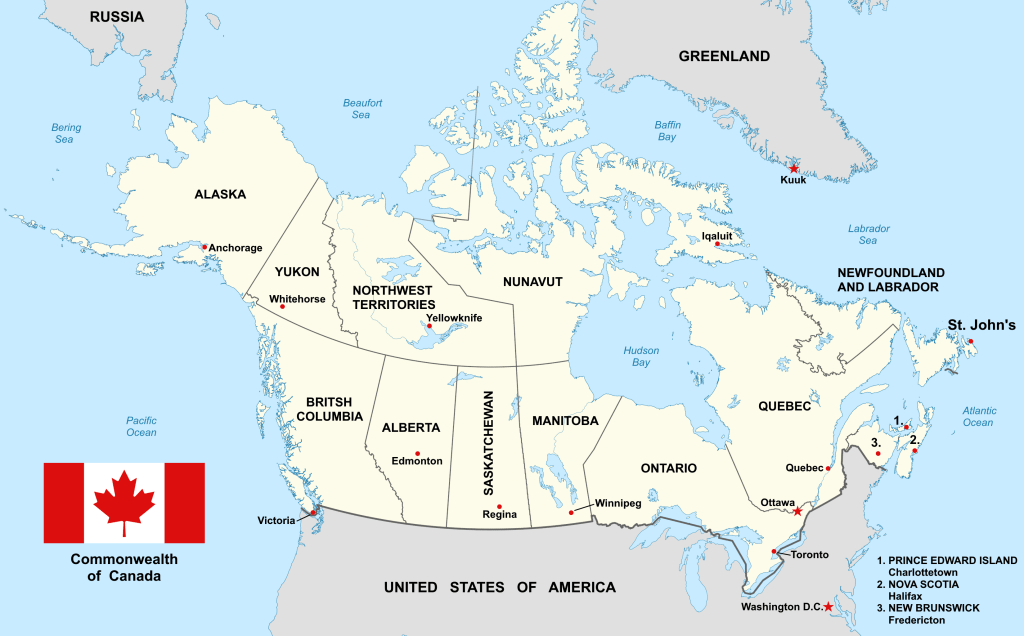
Today, I stumbled across an old Canadian high school history textbook from 2050 in a used bookstore. Chapter 14 tells the story of the Canada-US War of 2026–2028, what we now call The War for the North. I thought I’d share how, twenty years ago, young Canadians were being taught about the war I fought in to keep our country strong and free. – William McIntosh, July 2070

🇨🇦 Chapter 14: The War for the North (2026–2028) and the Rise of a New Canadian Identity

“We were underestimated. But we had history on our side, the land beneath our feet, and the will of a people who knew the difference between conquest and home.”
Élise Fontaine, Prime Minister of Canada, Address at the Treaty of Yellowknife, March 4, 2028.

🔍 Introduction

By the mid-2020s, the global order was under pressure from resource scarcity, climate change, cyber warfare, and political polarization. Few imagined that the world’s longest undefended border would become the front line of the first major conflict between two G7 democracies. The U.S. invasion of Canada in 2026 marked the most profound crisis since Confederation.

⚠️ 14.1 Preludes to Invasion: Political Tensions and Resource Nationalism

In 2024, the U.S. re-elected a nationalist populist government amid unrest and ecological collapse. Canada’s resources and Arctic stability became targets.

  • 💧 Resource envy: Canada held 20% of global freshwater, lithium reserves, and Arctic access.
  • 🔥 Domestic distraction: The U.S. struggled with protests and secessionist movements.
  • 📣 Militarized rhetoric: “Reunifying the continent” became a nationalist slogan.

The trigger event was a false-flag explosion near Sault Ste. Marie in June 2026, used to justify Operation Northern Unity.

💣 14.2 Invasion and Occupation: The First Six Months

July 4, 2026: U.S. airstrikes hit Canadian bases at Trenton, Bagotville, and Cold Lake. By day’s end:

  • 🛣️ Crossings in Ontario, Manitoba, and BC were seized.
  • 🏭 SW Ontario: Hamilton, London, Windsor, Kitchener – was occupied.
  • 🏙️ Toronto was surrounded but held out with civilian resistance.

🛡️ 14.3 Canada Fights Back: Asymmetric Warfare and National Unity

Civilian Resistance

  • 🔧 Grassroots militias and defence networks formed rapidly.
  • 🪶 Indigenous groups, including the Gwich’in and Cree, used terrain mastery to disrupt U.S. troops.
  • 🏙️ Cities resisted with sabotage, information warfare, and protests.

Military Strategy

  • 🏔️ Canadian command regrouped in northern bunkers near Sudbury, Labrador, and the Yukon.
  • 💻 Cyber teams at CSIS and DND disrupted U.S. logistics.
  • 🌍 International volunteers arrived from Europe, Australia, and even the U.S.

🌐 14.4 Global Realignment and Rising Costs

As the war dragged on, geopolitics shifted:

  • 🇨🇳 China and 🇷🇺 Russia armed Canadian resistance.
  • 🇮🇳 India signed new defence and trade pacts with Canada.
  • 🇪🇺 The EU imposed sanctions on the U.S.

By 2027, the U.S. was facing:

  • ☠️ 40,000+ military casualties
  • 💥 Domestic unrest and economic collapse
  • 🛑 Cyberattacks targeting U.S. energy and finance sectors

🕊️ 14.5 The Treaty of Yellowknife (March 4, 2028)

With global pressure rising, peace talks began. Canada’s demands included:

  1. Total U.S. withdrawal
  2. Restoration of all borders
  3. Transfer of Alaska to Canada
  4. War crimes tribunal
  5. Reparations for civilian and infrastructure damage

Treaty Terms:

  • 🇨🇦 U.S. withdrawal in 90 days
  • 🇨🇦 Alaska becomes a Canadian territory (province by 2035)
  • 🚢 Joint Arctic monitoring established
  • 💵 CAD $750B in reparations over 15 years

🌲 14.6 The War’s Legacy: 2028–2050

  1. Canadian Identity: National unity strengthened. Indigenous leadership elevated.
  2. Global Power: Canada joined the Global Forum Bloc and Arctic Security Council.
  3. U.S. Decline: NATO collapsed; the U.S. turned inward. A new North American Council formed.
  4. Alaska’s Future: Self-Governing in 2030, full Canadian province by 2035.

👤 Key Figures

NameRole
Élise FontaineCanadian PM-in-exile, architect of the Treaty
Michael HerreraU.S. interim president who signed the peace accord
Elder Noah KaskamanCree strategist from the Shield region
Brigadier Rachel AubéLed Canadian cyber defence
Emma SinghHamilton resistance leader, first MP for postwar Alaska

✍️ Primary Source

“We did not ask for this war. But we rose to it, not with hatred, but with the firm conviction that home must never be handed over. And now, from the Northwest Passage to the shores of Lake Erie, this land stands free, and forever ours.”

📝 Review Questions

  • What were the main strategic motivations behind the U.S. invasion of Canada in 2026?
  • How did geography and asymmetric tactics aid Canadian resistance efforts?
  • What global events influenced the outcome of the conflict?
  • Discuss the significance of Alaska’s integration into Canada.
  • How did this war change Canada’s role in the world order?

📚 Further Reading

  • From Shield to Sovereignty: Indigenous Leadership in the Canadian Resistance (Carla Tuniq, 2040)
  • Northern Stars: Canada and the Arctic Century (Brandon Lee-Sommers, 2045)
  • The Collapse of Empire: America’s Lost War in the North (James Kilpatrick, 2039)

The Political Earthquake Few Saw Coming

The United Kingdom’s political landscape is about to receive its most significant jolt in years. Former Labour leader Jeremy Corbyn, alongside independent MP Zarah Sultana, has confirmed the launch of a new grassroots political party, one that aims to occupy the political space Labour has steadily abandoned. Announced on July 24, 2025, the initiative has already attracted tens of thousands of supporters within hours, signalling a deep hunger for a bolder, unapologetically left‑wing alternative to the status quo. While the official name has yet to be chosen, the movement’s intent is unmistakable: to offer a platform rooted in social justice, economic fairness, and genuine community democracy.

From the outset, the project is being framed not as another Westminster‑centric vehicle, but as a federation of locally empowered organisations with a national vision. Core principles include wealth redistribution, ending austerity, public ownership of essential services, and a decisive foreign policy stance that rejects arms sales to Israel while affirming support for a free and independent Palestine. These are policies designed to galvanise the disillusioned, voters alienated by Labour’s cautious centrism and the stagnation of Britain’s two‑party stalemate.

The momentum is real. Reports vary, but early estimates suggest between 80,000 and 500,000 sign‑ups within the first day, an extraordinary show of energy for a movement still without a name. For Corbyn and Sultana, this is not simply a bid to reclaim the past, but an attempt to forge a coalition that can speak to the country’s present and future needs. The party’s inaugural conference, scheduled for later in 2025, will be a decisive moment. It will set the tone for how the organisation functions internally, what it will be called, and how it plans to compete in local and national elections.

Politically, the implications are substantial. Labour, under Keir Starmer, has bet heavily on attracting centrist swing voters, a strategy that risks alienating its traditional base. Corbyn’s party could become the rallying point for those who believe Labour has compromised too far, offering a home for trade unionists, younger voters, anti‑war campaigners, and those seeking transformative economic policy. The risk of splitting the progressive vote is real, but so too is the possibility of reshaping the national conversation, and forcing a recalibration of priorities within Labour itself.

Much will depend on the movement’s ability to convert enthusiasm into infrastructure. Building candidate pipelines, securing funding, and sustaining grassroots organisation will be critical. Corbyn’s long‑standing connection with activist networks and Sultana’s resonance with younger progressives provide a promising foundation. If that energy translates into effective campaigning, the party could make its mark far sooner than expected.

This is not just another fringe protest party emerging from the political wilderness. It is the crystallisation of years of grassroots frustration, now given structure, leadership, and the potential for scale. While sceptics will point to the electoral system’s unforgiving nature, history shows that determined movements with a clear moral compass can shift the terrain in surprising ways.

The UK is entering a period where political certainties no longer hold. In this volatile climate, new actors with courage and clarity can have an outsized impact. The Corbyn‑Sultana initiative is still in its infancy, but it has already tapped into a deep well of popular discontent. Watch this space – the story is only just beginning.

Retreat from the Final Frontier: The Cost of Cutting NASA’s Core

A sweeping wave of senior personnel departures at NASA, triggered by a White House, mandated austerity campaign, has raised deep concern across the U.S. space community. According to documents obtained by Politico, 2,145 employees in GS-13 through GS-15 roles have accepted early retirement, buyouts, or agreed to leave within the year. These roles include scientists, engineers, policy professionals, and program managers. The departures are concentrated in mission-critical areas and threaten to erode NASA’s ability to deliver on its bold human spaceflight agenda.

The cuts affect all ten of NASA’s major centers. Goddard Space Flight Center is taking the hardest hit, losing 607 senior staff. Johnson Space Center, which manages astronaut operations, will lose 366. Kennedy Space Center in Florida is losing 311. The pattern reflects a widespread drawdown of institutional leadership and technical depth at a time when the agency is navigating some of its most ambitious objectives since Apollo.

NASA spokesperson Bethany Stevens has maintained that the agency remains committed to its mission while adapting to a more streamlined budget. However, the White House’s proposed FY 2026 budget includes a 25 percent cut and envisions the elimination of more than 5,000 total positions across the agency. If implemented, the reductions would return NASA’s staffing levels to those of the early 1960s, a time when the agency had a far smaller mandate and fewer active programs.

The loss of senior talent poses a direct threat to several cornerstone programs. NASA is aiming to return humans to the Moon by mid-2027, followed by a crewed mission to Mars. Both missions rely on deep systems knowledge, inter-agency coordination, and seamless execution. The departure of experienced staff, especially from the Artemis and Gateway teams, could delay or destabilize these plans. Casey Dreier, chief of space policy at The Planetary Society, has warned that losing the managerial and technical expertise of this magnitude undermines execution across the board.

One particularly alarming detail in the Politico reporting is the loss of five of 35 employees in NASA’s legislative affairs office. This unit handles critical interactions with Congress and federal appropriators. Reducing its capacity at this moment could damage NASA’s ability to secure future funding and defend its strategic priorities. Even if Congress acts to restore some of the proposed funding cuts, the loss of institutional knowledge and political navigation skills cannot be replaced overnight.

Leadership instability compounds the challenge. Janet Petro, director of Kennedy Space Center and the first woman to serve as acting NASA Administrator, stepped down on July 9. The Trump administration appointed Transportation Secretary Sean Duffy to serve concurrently as acting head of NASA. Duffy, known for his background in reality television and conservative media, lacks direct aerospace or scientific experience. His appointment follows the White House’s withdrawal of Jared Isaacman’s nomination for the permanent role, reportedly due to tensions between Trump and SpaceX founder Elon Musk.

Duffy’s tenure at the Department of Transportation has already been marked by disputes with Musk, particularly over aviation safety concerns tied to SpaceX’s Starlink network. His assumption of the top NASA post may deepen those conflicts. Critics are skeptical that Duffy can effectively lead NASA through this period of transformation and retrenchment while also fulfilling his duties as Secretary of Transportation.

This leadership vacuum arrives as the Trump administration implements a broader program of federal workforce reduction. Earlier efforts to force mass departures at NASA were temporarily stalled after a court challenge. The current wave, conducted through buyouts and early retirements, has proven more effective and legally resilient. But the long-term damage may be even greater. NASA is losing not only numbers but also wisdom, mentorship, and the kind of tacit knowledge that cannot be replaced by hiring alone.

There is a real risk that these departures will permanently weaken NASA’s capacity. As staff leave, many are likely to be absorbed by the commercial space sector, which offers more competitive compensation and greater job security. NASA’s ability to attract top-tier scientific and engineering talent could be undermined for years. Even if the political winds shift, rebuilding the internal expertise lost during this period will be a generational task.

International competitors stand to benefit. China’s space program continues to grow rapidly and with clear state support. While NASA retrenches, China has announced new plans for lunar bases and expanded operations on Mars. If the United States chooses to scale back its space ambitions, other nations will fill the void. The result could be a rebalancing of global leadership in space exploration and innovation.

Key milestones loom ahead. The FY 2026 budget process will reveal whether Congress is willing to override the White House’s cuts. NASA center directors must now adjust internal plans to account for shrinking staff and shifting leadership. The deferred resignation program runs through July 25. Whether those numbers hold or expand will be an early signal of just how deep this institutional rupture goes.

What is at stake is not just one agency’s future. NASA remains a cornerstone of American scientific achievement and global leadership. A loss of this scale, at this moment, could push the agency into long-term decline. The damage may not be visible immediately, but it will be felt acutely in missed missions, cancelled programs, and a reduced national presence in space. These are not just retirements. They are resignations from the frontier.

Sources
• Politico: https://www.politico.com/news/2025/07/09/nasa-staff-departures-00444674
• Reuters: https://www.reuters.com/sustainability/sustainable-finance-reporting/more-than-2000-senior-employees-expected-depart-nasa-politico-reports-2025-07-09
• The Daily Beast: https://www.thedailybeast.com/trump-hands-musk-nemesis-sean-duffy-big-new-interim-job-in-charge-of-nasa
• The Planetary Society
• Eos: https://eos.org/research-and-developments/2145-senior-level-staff-to-leave-nasa
• Indian Narrative: https://www.indianarrative.com/world-news/nasa-set-to-lose-2100-senior-staff-members-as-trump-looks-to-slash-agencys-fund-report-172472.html