Five Things We Learned This Week

Here’s the fresh edition of “Five Things We Learned This Week” for June 14–20, 2025, featuring entirely new events—no repeats from earlier editions:

🕊️ 1. Israel‑Iran Exchanges Calm Markets, Not Conflict

• Despite new strikes and missile exchanges during the week of June 14‑20, Reuters reports that markets showed cautious optimism, with volatility easing amid hope for de-escalation  .

• The Federal Reserve maintained a hawkish stance, while the Swiss National Bank cut rates to zero, and the Bank of Japan adopted a dovish tone  .

🦶 2. Ancient New Mexico Footprints Confirm Earlier Human Arrival

• Radiocarbon dating of sediments around the White Sands fossil footprints confirms they are between 20,700–22,400 years old  .

• This consolidates evidence that humans were present in North America well before the previously estimated timelines.

🇺🇸 3. Mass ICE Raids Trigger Protests, National Guard Deploys in LA

• On June 6–9, mass ICE operations in Los Angeles spurred protests and unrest. California activated over 4,100 National Guard troops plus federal forces in response   .

• Over 575 arrests, injuries among police/officers, and journalists were reported, spotlighting tensions around deportation enforcement .

🇹🇭 4. Thai Coalition Government Cracks in Political Crisis

• As of June 18, Thailand’s 8‑minister Bhumjaithai Party exited the ruling coalition, citing scandal and a leaked call—threatening PM Shinawatra’s government  .

• This marks a sharp political shift and potential for early elections amid instability.

💡 5. AI-Driven Tech Fights Mosquito‑Borne Diseases

• Researchers at the University of South Florida unveiled an AI-enabled mosquito trap that identifies and targets disease‑carrying mosquitoes in real time, reported on June 11   .

• The innovation offers a promising, focused approach to reduce transmission of illnesses like Zika and dengue.

These five items—spanning geopolitics, archaeology, civil unrest, national politics, and health tech—are all within June 14–20 and entirely new to this series. Let me know if you’d like full article links or expanded analysis!

Rethinking the “Middle East”: Why Greater West Asia Works Best

The term Middle East has long been used in Western discourse to refer to the region spanning from Egypt and Turkey through to Iran and the Arabian Peninsula. This label is neither geographically accurate nor politically neutral. As calls grow for more inclusive and less Eurocentric terminology, there is a strong case for renaming the region altogether. A number of alternatives have been proposed, each with merits and limitations, but Greater West Asia emerges as the most appropriate and equitable option.

The Problems with “Middle East”

Eurocentrism

The label “Middle East” reflects a 19th-century British imperial perspective. From London, it was east of Europe, but west of British India—hence “middle.” It is not a term rooted in the cultures or languages of the people it describes, but in the navigation maps and strategic concerns of empires.

Vagueness and Inconsistency

The boundaries of the “Middle East” shift depending on context. Does it include North Africa? Is Afghanistan in or out? Turkey? This imprecision reduces its utility and fosters confusion.

Cultural Baggage

The term is often associated with conflict, terrorism, and religious strife in Western media, reinforcing stereotypes rather than offering a neutral geographic description.

Possible Alternatives

West Asia

This term corrects the geographic problem, situating the region accurately within the continent of Asia, but it has not gained widespread traction. Some critics argue it may be too narrow, excluding North Africa and the Caucasus.

Southwest Asia and North Africa (SWANA)

A politically motivated term intended to center Indigenous and decolonial perspectives. It explicitly includes North Africa and parts of Asia, but its complexity and unfamiliarity outside activist and academic circles limit its uptake.

MENA (Middle East and North Africa)

Common in policy and development discourse, but it retains the problematic “Middle East” and is more of a bureaucratic construct than a corrective.

Arab World / Muslim World

These terms are culturally specific and exclude non-Arab and non-Muslim populations in the region such as Persians, Jews, Christians, Kurds, Druze, and others. They entrench religious or ethnic majoritarian narratives.

Why Greater West Asia Works Best

Geographically Accurate

“West Asia” correctly places the region within the Asian landmass, and “Greater” allows for a broader scope including the Levant, Anatolia, the Arabian Peninsula, the Iranian Plateau, and parts of the Caucasus and even North Africa, if contextually needed.

Free of Cultural, Religious, or Ethnic Ties

The term avoids privileging one group over another: Arab, Persian, Turkish, Jewish, Kurdish, or otherwise. This neutrality is vital in a region that is home to dozens of languages, religions, and ethnic identities.

De-centres the West

Using “Greater West Asia” acknowledges the geographic reality from a global, not Eurocentric, perspective. It also strips away the legacy of colonial nomenclature imposed by British and French cartographers and strategists.

Scalability and Clarity

The prefix “Greater” allows for flexible boundaries while “West Asia” provides the core anchor. This mirrors successful regional terms like “Greater Europe” or “Greater Southeast Asia.”

Conclusion

Renaming the “Middle East” is more than a semantic exercise; it’s about decolonizing our geographic imagination. Of the alternatives, Greater West Asia is the most inclusive, descriptive, and politically neutral. It offers a clean break from imperial labels and better reflects the region’s complexity and humanity, without reducing it to a cultural monolith or geopolitical battleground. It’s time we updated our vocabulary accordingly.

When Stillness Meets Flow

When the masculine rests in awareness, and the feminine moves in devotion – the universe finds its perfect geometry”

This quote by Kaivalyapadama is a poetic distillation of ancient tantric and yogic philosophy, weaving together the metaphysical, psychological, and relational dimensions of existence.

Archetypal Masculine and Feminine Energies

This isn’t about gender, but about principles found in all beings and in all systems:

  • The Masculine symbolizes stillness, presence, consciousness, structure, and witnessing. It is the container.
  • The Feminine symbolizes movement, feeling, intuition, energy, creation, and love. It is the flow within the container.

In tantric traditions (Shiva-Shakti, for example), Shiva (masculine) is pure consciousness — unmoving, eternal — while Shakti (feminine) is the energy that dances creation into being. Without awareness, devotion flails. Without devotion, awareness stagnates.

“Rests in Awareness” – The Role of the Masculine

To rest in awareness is not to dominate, judge, or fix — but to simply be. It is radical presence. In individuals, this is the quiet, centered part of the self that holds space for chaos, change, and emotion without becoming reactive.

In relationships, the masculine partner who embodies awareness becomes a sanctuary — their stillness creates trust, safety, and depth. In society, a culture rooted in awareness promotes wisdom over reaction, and long-term vision over short-term gain.

“Moves in Devotion” – The Role of the Feminine

To move in devotion is to surrender into flow with love, beauty, and purpose. The feminine principle here is not passive, but deeply powerful — dancing, birthing, transforming. Devotion doesn’t mean subservience, but alignment: the feminine energy knows that movement without love becomes frenzy, while love without movement becomes longing.

In a person, when your emotions, desires, and creative forces move from a place of devotion — to truth, to a cause, to spirit — they become transformational rather than chaotic.

“The Universe Finds Its Perfect Geometry”

Geometry, especially in spiritual traditions, signifies order, balance, symmetry, and harmony. Sacred geometry underpins everything from atomic structure to the golden ratio in sunflowers to cathedral design.

So when these energies align:

  • Awareness holds space,
  • Devotion flows through it,
  • The resulting dance is not random, but exquisitely structured — a mandala of being.

This is not just esoteric metaphor: many relational therapists, somatic practitioners, and spiritual teachers use this lens. It’s evident in sexual polarity dynamics, in leadership and support systems, in artistic creation, even in neural science where calm awareness (prefrontal cortex) holds space for emotional movement (limbic system).

Application and Practice

This quote calls us toward balance:

  • In ourselves: Can I cultivate still presence and loving movement?
  • In our relationships: Do we create dynamics where one can witness, and the other can offer energy?
  • In society: Are we building systems that balance structure with flow, logic with empathy, clarity with creativity?

Meditation (awareness) and prayer (devotion) are often seen as two wings of the same bird. Stillness invites movement; movement is anchored by stillness.

Conclusion

This quote is less a prescription than a profound invitation — to align the inner masculine and feminine, to dance with our own nature, and to trust that when these polarities are rightly placed, life doesn’t just function — it harmonizes. Geometry isn’t merely about lines and angles; it’s about relationships — and when awareness and devotion relate well, the pattern they create is nothing less than sacred.

Why Logic Only Wins When Your Opponent Feels Secure

In business, politics, leadership, and high-stakes negotiations, we often fall into the trap of believing that logic and competence are all that’s needed to win arguments and drive outcomes. After all, facts are facts, right? Yet, anyone who’s been in the room when a pitch falls flat or a strategy session derails knows better. The hard truth is this: logic only persuades when the person you’re speaking to feels emotionally secure, and, without that, even the most elegant argument can be perceived as a threat.

People, leaders included, don’t operate in purely rational mode. They operate in identity mode. When someone is secure in their role, confident in their own intelligence, and grounded in their self-worth, they can listen to a strong counterargument without flinching. They can say, “I hadn’t thought of it that way,” or “Let’s explore that.” That kind of openness is the hallmark of true professional maturity.

Insecurity changes the playing field. When someone feels uncertain about their competence, status, or place in the organization or society, even a well-intentioned challenge can land like a personal attack. You may be bringing insight and value to the table, but what they hear is, “You’re not smart enough. You’re not in control.” Once you trigger that kind of emotional threat response, logic goes out the window. Now you’re not having a conversation – you’re in a turf war.

I’ve seen this in boardrooms, in project teams, in conflict mediation. A junior consultant presents data that contradicts the assumptions of a senior manager. The numbers are rock-solid. But the response isn’t curiosity – it’s defensiveness. Dismissal. Or worse, undermining. Why? Because accepting the analysis would require the leader to admit a blind spot, and for some, that’s psychologically intolerable.

In politics, particularly in the polarized landscapes of North America and parts of Europe, the same dynamic plays out on a much larger scale: the political left often leans on data, logic, and evidence-based policy proposals, assuming these will persuade. For many on the political right, especially in populist circles, political identity is rooted not in reasoned analysis, but in emotional belonging, cultural defense, and distrust of intellectualism. Logical arguments about climate change, public health, or wealth inequality frequently fail not because they’re weak, but because they challenge the very narratives that insecure political identities cling to for meaning and safety. Until the left acknowledges that logic only works when the listener feels secure enough to engage with it, their arguments, however sound, will continue to bounce off hardened ideological shields.

This is why so many skilled communicators emphasize emotional intelligence alongside analytical sharpness. It’s not enough to be right, you have to be received. If you want your logic to land, you need to create a container of safety. That means pacing before leading. Asking questions before offering answers. Establishing rapport before pointing out gaps. It means checking your tone, your timing, and your audience’s readiness.

There’s also a counterintuitive insight here for those who are confident in their own competence; dial it down sometimes. Over-projecting brilliance can make insecure colleagues feel smaller, and smaller people don’t collaborate well. They retreat, they sabotage, or they lash out. The best leaders aren’t just smart, they’re smart enough to know when not to show it all at once.

Winning with logic is a strategic act, not just an intellectual one. You have to play the long game. It’s not about proving someone wrong, it’s about making them feel safe enough to explore the possibility that they might be. Only then do real insights emerge, and only then can collaboration thrive. So next time you’ve got the facts on your side, pause. Ask yourself: does my audience feel secure enough to hear the truth?

Because if they don’t, even the truth won’t save you.

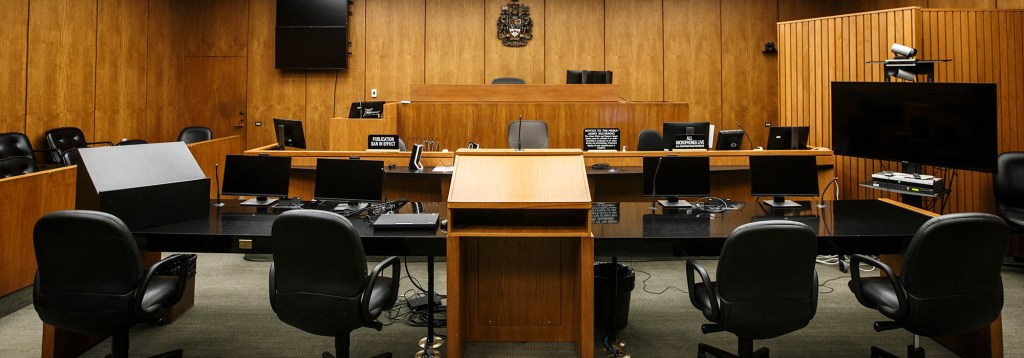
When the Witness Holds the Gavel: The Constitutional Perils of Reverse Disclosure

Canada’s lower courts are now bearing the brunt of an ill-conceived and constitutionally fraught innovation in sexual assault law: reverse disclosure. Introduced under Bill C‑51 in 2018, this legislative regime forces accused persons to disclose in advance any private communications; such as texts, emails, or social media messages, they intend to use in cross-examination of the complainant. The complainant, in turn, is granted full participatory rights and legal representation to argue against the admissibility of such evidence. While politically expedient and publicly palatable in the wake of the Ghomeshi trial, the legal architecture of reverse disclosure has proven to be unstable, incoherent, and in many cases, plainly unconstitutional.

Trial courts across the country have issued sharply divergent rulings on how these provisions should operate. In some decisions, judges have deemed the mandatory timelines imposed on the defence to be incompatible with the fair-trial rights guaranteed by section 7 of the Charter. Others have questioned the very foundation of the regime, arguing that it unjustly burdens the accused with obligations that reverse the presumption of innocence and compromise the right to full answer and defence. Nowhere else in Canadian criminal procedure is a complainant, essentially a Crown witness, granted standing to challenge what evidence may be used in their own cross-examination. It is a distortion of the adversarial system.

The concept of reverse disclosure is not merely controversial; it is structurally flawed. The defence is no longer free to mount a case in the manner required by the facts and theory of the defence, but is instead placed under the supervision of the court and the complainant’s counsel, long before trial. This undermines not only trial strategy, but also the accused’s right to test the Crown’s case without disclosing defence evidence in advance. Worse still, it creates an asymmetry in which the complainant is effectively briefed on what the defence intends to argue, giving them an opportunity, conscious or not, to shape their testimony accordingly.

This problem is compounded by the legislative vagueness surrounding what constitutes a “private record” and how relevance, prejudice, and privacy should be weighed. The result has been legal uncertainty and procedural chaos. Judges are left to interpret a vague and often contradictory set of provisions, and defence counsel must navigate a landscape where each courtroom may yield different rules and interpretations. This is not how constitutional criminal law is meant to function.

Some courts have gone so far as to strike down portions of the reverse disclosure regime altogether, citing fundamental Charter violations. These judgments are not aberrations, they are warnings. When a regime designed to protect complainants ends up jeopardizing the constitutional rights of the accused, the entire framework must be re-evaluated. The criminal trial must remain a place where the presumption of innocence is more than a platitude, and where the right to a fair trial is not subject to the political winds of the day.

Until the Supreme Court addresses these concerns decisively, lower courts will continue to struggle with reverse disclosure. And in that struggle, justice itself hangs in the balance.

Why Can’t the Replicator Just Scan the Damn Cake?”: A Senior Trekker’s Rant, Expanded Edition

In the grand pantheon of Star Trek mysteries; why redshirts never survive, why Klingon foreheads changed mid-century, why nobody uses seatbelts on the bridge, one lesser-discussed, but utterly maddening question remains: Why is programming new food into the replicator such a colossal pain in the nacelles?

I mean, come on. This is a civilization that can fold space, beam people across hostile terrain, and host full Victorian murder mysteries in the holodeck with better lighting than a BBC costume drama. And yet, when someone wants to add their grandmother’s secret tomato sauce recipe to the replicator, it’s a whole saga. Suddenly you need a molecular biologist, a culinary technician, and probably Counselor Troi to help you process your feelings about spice levels.

Let’s break this down. Replicators are based on the same matter-energy conversion technology that powers transporters. They take raw matter, usually stored in massive energy buffers, and rearrange it into whatever pattern you’ve requested, be it a banana, a baseball bat, or a bust of Kahless the Unforgettable. On paper, it’s magical. Infinite possibilities. Want a rare Ferengi dessert that was outlawed in six systems? No problem, if it’s in the database.

But here’s the catch: the database. That’s the real villain of the piece. Everything has to be pre-programmed. And programming something new isn’t as simple as chucking a muffin into the transporter and yelling “Make it so.” Why not? Because food is astonishingly complex.

Sure, from a chemical standpoint, you can break a slice of chocolate cake down into carbon, hydrogen, oxygen, and nitrogen, the same building blocks the replicator can access, but that’s like saying Shakespeare’s Hamlet is just twenty-six letters arranged in a particular order. The cake is more than its ingredients. It’s texture, mouthfeel, flavor balance, aroma. It’s how the icing melts just slightly faster than the sponge in your mouth. It’s memory, emotion – it’s nostalgia on a fork.

And the replicator, bless it, just doesn’t do nuance.

In-universe, we’ve seen Starfleet crews struggle with this time and again. Captain Sisko flatly refuses to eat replicated food, relying instead on traditional cooking, partly because he loves the craft, but also because the replicator’s version of jambalaya “tastes like it was programmed by someone who’s never even seen a shrimp.” Over on Voyager, Neelix throws himself into galley work precisely because replicated food gets old fast, especially when you’re lost in the Delta Quadrant with no fresh supplies, and morale hanging by a thread.

Programming a new recipe means getting the proportions right, inputting molecular structures, and testing the end result, again and again, for taste, safety, and cultural appropriateness. You want Klingon bloodwine that doesn’t melt the replicator coils? Better spend a few days in the ship’s chem lab. There’s no “scan dish” function, because full transporter-level molecular scans are expensive, dangerous, and, frankly, overkill for your aunt’s chicken pot pie.

Not to mention the ethical implications. Transporters work by disassembling matter at the subatomic level and reassembling it elsewhere. That’s fine when you’re moving Lieutenant Barclay to Engineering (again), but doing a transporter-level scan of organic matter for replication purposes raises thorny questions: if you scan and replicate a living steak, is it alive? Is it conscious? Does it have legal rights under Federation bioethics law? You laugh, but remember, this is the same universe where holograms occasionally demand civil liberties.

So Starfleet plays it safe. Replicators are deliberately limited to lower-resolution blueprints, safe patterns, and tried-and-tested food profiles. They’re designed to be efficient, not perfect. And while that keeps the ship’s energy budget in check and prevents any Frankensteinian chowder accidents, it also means the food sometimes tastes like packing peanuts soaked in nostalgia.

Yet, maybe that’s the beauty of it. In a post-scarcity world where you can have anything at the touch of a button, authenticity becomes the rare commodity. Cooking, real cooking, becomes an act of love, tradition, identity. When Picard orders “tea, Earl Grey, hot,” he’s not looking for a proper British brew; he’s summoning comfort, consistency, something almost ritual. When Riker burns an omelet trying to impress a crewmate, it’s not because he lacks tech, it’s because he values the experience, the attempt.

So no, the replicator can’t just scan the damn cake. And maybe that’s a good thing. Because in a galaxy of warp drives and wormholes, the things that make us human: taste, culture, connection, still require effort. A pinch of spice. A dash of imperfection, and maybe, just maybe, a reminder that sometimes the best things can’t be replicated.

At least not without a food fight in the galley.

Israel’s Nuclear Arsenal: The Open Secret of the Middle East

For decades, Israel has maintained an official policy of “nuclear ambiguity”, neither confirming nor denying its possession of nuclear weapons. Yet this studied silence stands in stark contrast to a substantial body of verifiable evidence, much of it sourced from credible whistle-blowers, declassified intelligence, military analysis, and satellite data. In practice, the Israeli nuclear arsenal has become one of the worst-kept secrets in international security. The absence of formal acknowledgment is strategic, not evidentiary. Israel’s nuclear capability is both real and operational, undergirded by a robust triad of delivery systems and supported by a long history of secrecy, scientific sophistication, and political calculation.

The story begins with the Dimona nuclear reactor in the Negev Desert, built in the late 1950s with clandestine French assistance. Officially described as a textile plant, it was in fact a plutonium production facility. By the mid-1960s, U.S. intelligence had concluded that Israel possessed the technical capability to produce nuclear weapons. In 1969, after a series of secret meetings, the United States and Israel reached a tacit agreement: Israel would not publicly test or declare its nuclear weapons, and the U.S. would cease pressuring it to sign the Non-Proliferation Treaty (NPT). This diplomatic fiction has endured for over fifty years.

However, the most damning evidence came in 1986, when Mordechai Vanunu, a former technician at Dimona, provided The Sunday Times with detailed photographs and descriptions of Israel’s nuclear warheads. Vanunu claimed Israel had produced enough weapons-grade plutonium for over 200 nuclear devices, including thermonuclear warheads, statements later corroborated by Western intelligence assessments. Vanunu’s disclosures confirmed what many had suspected: that Israel was not merely in possession of a handful of crude bombs but had developed a sophisticated and sizeable arsenal.

Independent experts such as the Federation of American Scientists (FAS) and the Stockholm International Peace Research Institute (SIPRI) have consistently estimated that Israel holds between 90 and 400 nuclear warheads. These are believed to be deployable through a triad of systems: land-based ballistic missiles, air-delivered bombs, and submarine-launched cruise missiles. The Jericho III, a long-range intercontinental ballistic missile, is believed to have a range of up to 6,500 kilometers, potentially extending to 11,500 kilometers depending on payload. These missiles are housed in hardened silos, well-concealed and dispersed for survivability. Additionally, Israel’s fleet of Dolphin-class submarines, purchased from Germany and believed to be modified to launch nuclear-capable Popeye Turbo cruise missiles, offers a potent second-strike capability.

The Israeli Air Force also plays a central role in the country’s nuclear deterrence. Modified F-15I and F-16I aircraft are capable of carrying nuclear payloads, further broadening the strategic options available to decision-makers in Tel Aviv. The ability to deliver nuclear weapons from sea, air, and land ensures that Israel retains a survivable deterrent, reinforcing the credibility of its nuclear posture even in the event of a first strike by an adversary.

Israel’s refusal to sign the NPT or to subject its nuclear facilities to International Atomic Energy Agency (IAEA) safeguards further confirms its unique position in the global nuclear order. While this policy isolates Israel diplomatically in certain forums, it has not resulted in significant punitive measures, due in large part to its close alliance with the United States and the widespread, if unspoken, acceptance of its strategic rationale. From the perspective of Israeli leadership, nuclear weapons serve as the ultimate insurance policy against existential threats in a region fraught with hostility and volatility.

From time to time, Israeli political and military leaders have let the mask slip. Former Prime Minister Ehud Barak acknowledged the existence of the arsenal in indirect but unmistakable terms. Other officials have alluded to it in speeches or interviews, especially when referring to red lines for Iran or Israel’s qualitative military edge. These statements are often quickly walked back or couched in hypothetical language, but the implications are unmistakable.

Perhaps the most compelling argument for Israel’s nuclear capability is the simple fact that no serious analyst or international observer denies it. The international community, especially the intelligence and military establishments of major powers, operates on the assumption that Israel is a nuclear-armed state. Its capabilities, though untested in public, are viewed as credible and strategically integrated. The lack of open testing has not diminished deterrence; rather, the veil of ambiguity enhances it, allowing Israel to maintain strategic deterrence without the diplomatic fallout of formal admission.

The accumulated evidence of Israel’s nuclear weapons program is overwhelming and irrefutable. The country’s longstanding policy of ambiguity may serve its diplomatic and strategic interests, but it does not conceal the reality of its capabilities. With a mature triad, hundreds of warheads, and decades of operational readiness, Israel stands as a de facto nuclear power in a region where deterrence often serves as the only firewall against catastrophe.

Sources
• Wired, “Israel’s Secret Nuke Arsenal Exposed”, October 5, 2011: https://www.wired.com/2011/10/1005israel-secret-nuclear-arsenal-exposed
• Federation of American Scientists (https://fas.org)
• Stockholm International Peace Research Institute (https://sipri.org)
• Nuclear Threat Initiative (https://nti.org)
• The Sunday Times archive on Mordechai Vanunu (1986)
• GlobalSecurity.org and IISS assessments of Jericho III and Dolphin-class platforms
• U.S. Congressional Research Service Reports on Middle East security and nuclear proliferation

The Church of the Polyamorous Christ

If only this were real!

The Church of the Polyamorous Christ is a spiritual movement that reimagines Christian teachings to fully embrace and affirm polyamorous relationships. At the heart of its manifesto is a simple, profound belief: that the love exemplified by Christ is limitless, far too vast to be contained by monogamy alone. This theology holds that Christ’s message of compassion, acceptance, and radical love applies to all forms of consensual, ethical relationships, including those that involve multiple partners and the full spectrum of LGBTQIA2S+ identities.

A central tenet of the church is the idea that traditional Christian doctrines around marriage and sexuality often fall short of expressing the depth and breadth of Christ’s love. Instead, the church calls for a faith rooted in mutual respect, honesty, and open-hearted communication. It also seeks to dismantle the social and religious stigmas that continue to weigh down non-monogamous relationships, seeing those barriers as obstacles to living out a more inclusive and authentic Christian love.

The Church of the Polyamorous Christ invites its followers to grow spiritually by embracing the beauty and diversity of human connection. It challenges the notion that monogamy is the only valid or moral path, and instead celebrates a theology where diverse expressions of love are understood as sacred reflections of the divine.

And to be clear, this isn’t polygamy in terms of one man with many wives. This is polyamory: a celebration of all genders, all sexualities, and all loving combinations built on trust and consent.

Sounds kind of incredible, doesn’t it?

Now, if only I weren’t a Secular Spiritualist…

Five Things We Learned This Week

Here is the fresh weekly edition of “Five Things We Learned This Week”covering June 7–13, 2025, with entirely new insights from around the globe:

🕊️ 1. Israel’s Airstrike on Iran Triggers Global Market Volatility
• Israel launched airstrikes targeting Iran’s nuclear and military facilities on June 13, reportedly killing senior officials including IRGC chief Hossein Salami.
• The strikes sparked fears of wider conflict, with Iran launching ~100 drones in response.
• Oil prices surged – Brent rose over 10%, closing 6% up at $73/barrel; prompting spikes in gold and bonds and a sell-off in equities across the U.S., Europe, and Asia.

🇵🇱 2. Poland Elects New President Amid Regional Shifts
• On June 1, Karol Nawrocki was elected President of Poland, defeating Rafał Trzaskowski in a closely watched runoff.
• The result reflects a shift toward conservative governance with potential impacts on EU relations and regional dynamics.

✈️ 3. Catastrophic Air India Boeing 787 Crash in India
• On June 12, Air India Flight 171, a Boeing 787, crashed shortly after takeoff from Ahmedabad, tragically killing 229 on board and 28 on the ground; remarkably, one passenger survived.
• This is the first fatal accident involving the Dreamliner, triggering international investigations into aviation safety and Boeing’s procedures.

🧬 4. mRNA-Driven Breakthrough in HIV Cure Research
• A team at Melbourne’s Doherty Institute used innovative LNP‑X nanoparticles to deliver mRNA that flushes hidden HIV out of white blood cells.
• This “shock and kill” approach, once deemed impossible, is now seen as a major step toward eradicating latent HIV infections  .

🌊 5. World Environment Day Yields Concrete Commitments
June 5 marked World Environment Day with the “Beat Plastic Pollution” theme, hosted in Jeju, South Korea. 
• Governments, companies, and individuals pledged to accelerate a shift toward a circular economy and reduce single-use plastics globally.

These fresh insights showcase the week’s geopolitical upheaval, scientific breakthroughs, aviation tragedy, and environmental action. Let me know if you’d like deeper analysis or sources!

Mobland Delivers Shakespearean Drama in London’s Underworld

Mobland (2025) is not just another crime series; it’s a dark, sumptuous epic of shifting allegiances, old empires on the verge of collapse, and the dangerous brilliance of those who refuse to go quietly. With a powerhouse cast and an ambitious, layered narrative, it delivers a bold vision of London’s criminal underworld as something closer to a dynastic court than a gangland warzone.

At the centre of the storm is Harry Da Souza, the family fixer played by Tom Hardy with quiet ferocity. Harry is a man who carries violence in his bones, but Mobland isn’t interested in making him another swaggering hardman. Hardy plays him as a war-weary strategist: haunted, calculating, and deeply conflicted. As the Harrigan family’s most trusted operative, Harry navigates a treacherous landscape where every handshake could be a betrayal, and every silence speaks volumes.

Yet, the true dramatic heart of Mobland lies in the ruling pair of the Harrigan empire: Conrad and Maeve Harrigan, portrayed with icy elegance and smouldering tension by Pierce Brosnan and Helen Mirren. Brosnan’s Conrad is the aging lion; part King Lear, part Henry II, once feared, still dangerous, but increasingly aware that the world he built is slipping from his grasp. There’s a grandeur in his performance: the cultivated menace, the weary pride, and the flickers of desperation behind the eyes of a man who knows the end is near, but refuses to go out quietly.

Mirren’s Maeve, by contrast, is all Eleanor of Aquitaine: commanding, endlessly calculating, and too intelligent by half. While Conrad bellows and blusters to maintain his fading dominance, Maeve moves behind the scenes, pulling strings, forging alliances, and bending outcomes toward her vision of the future. She is Mobland’s most dangerous figure precisely because she never raises her voice, only her expectations.

Together, they form one of television’s most compelling power couples: a king and queen locked in a permanent cold war, allies and adversaries in equal measure. Their scenes crackle with tension, history, and a kind of regal decay. You can feel the decades of love, betrayal, and mutual ambition in every glance across the dinner table or whispered instruction.

Mobland has been criticised in some quarters for trying to juggle too many storylines. It’s true, there’s a lot happening here, but to call it “overstuffed” is to miss the point. Unlike the average U.S. crime drama that cautiously runs two, maybe three story threads, Mobland opts for operatic complexity. This isn’t a neatly folded procedural. It’s a sprawling, textured tapestry; one woven with ambition, blood, and secrets. Every subplot, every character, adds a new colour to the canvas.

Among those threads is Colin Tattersall (Toby Jones), a corrupt retired police officer playing both ends of the game. While not a central figure, Tattersall’s quiet manoeuvrings add a layer of institutional rot to the show’s moral landscape. Jones plays him with understatement and restraint, allowing the focus to remain where it belongs, on the Harrigans and those caught in their orbit. Expect more Tattersall, if and when there is a second season, along with my fellow Tynesider, Janet McTeer as Kat McAllister and her international cartel. 

Visually, Mobland is breathtaking. The cinematography paints London in huge contrast; half gleaming steel, half crumbling stone. The city feels ancient and new at once, a place where monarchs and mercenaries fight for the same scraps of power. The writing, too, is sharp and elegant, rich with subtext and menace, laced with dry wit and the constant reminder that in this world, no one is ever truly safe.

In the end, Mobland is more than a crime story. It’s a meditation on decline, succession, and the cost of ambition. It dares to imagine gangland as Shakespearean drama, where aging lions still bare their teeth, and queens play long games with deadly intent.

Unapologetically dense and ruthlessly stylish, Mobland is the crime epic we didn’t know we needed. For those tired of television that plays it safe, this is a feast: bloody, bitter, and utterly absorbing. At time of writing, Paramount+ has yet to confirm a second season, but with an audience over 2 million, positive ratings, and the show’s stars publicly committing to return, we can only hope for more of the Harrigan clan.