As I wrote a month ago, I was ready to move on from this show, and then Davies throws us a huge twisted surprise in the form of Billie Piper!
The Doctor Who fandom is on fire following the explosive twist in the Season 2 finale, The Reality War. Just when we thought we had a grasp on where Russell T Davies was taking us, Ncuti Gatwa’s Fifteenth Doctor regenerated… into Billie Piper. Yes, that Billie Piper. The Rose Tyler. The Bad Wolf. The Moment. And now, potentially, the Doctor herself.
This isn’t just a stunt, it’s a paradigm shift. Never before in the show’s 60+ year history has a former companion become the Doctor. And Piper’s return, announced with a cheeky “Introducing Billie Piper” credit, has launched Doctor Who into completely uncharted territory.
🌀 So What Could This Mean?
She’s the actual Sixteenth Doctor. The regeneration was legit, the torch has been passed, and Billie Piper now holds the keys to the TARDIS. Her earlier role as The Moment in The Day of the Doctor showed she can embody Time Lord gravitas with ease — now we get the full dose.
She’s a Doctor from an alternate universe or timeline. We’ve seen how messy reality can get when timelines converge (hello, Reality War), and this could be a brilliant multiversal twist.
She’s a projection, interface, or psychic echo. Could the Doctor have splintered himself across reality, creating a version that looks like his most iconic companion? The symbolism would be rich and emotionally resonant.
A new regeneration cycle entirely. With the lore expanding since The Timeless Child, the idea of new rules, new forms, and new faces makes Billie Piper’s presence feel like the launch of a bold new era, not just a casting surprise.
❤️ Fans Are Loving It
Across Reddit, Twitter, and fan forums, the excitement is electric. Longtime fans see this as a poetic full-circle moment: the return of one of NuWho’s founding stars, not as a memory, but as the next incarnation of the Doctor. New viewers get a twist that redefines the show’s boundaries and potential. And Billie? She’s clearly thrilled to be back, calling the role “irresistible” and promising something unlike anything we’ve seen before.
✨ Final Take
This move by Davies is genius-level showrunning: nostalgic, surprising, and bold. Billie Piper as the Doctor could mean a full season of unpredictable energy, cosmic-scale storytelling, and emotional depth, all anchored by one of Doctor Who’s most beloved performers.
At the beginning of Pride month, I thought I would write about how the gender revolution continues to challenge the patriarchy.
Transgender, non-binary, and intersex individuals are at the forefront of dismantling the patriarchy by challenging the rigid binary system of gender that has long served as a foundation for patriarchal control. Their very existence calls into question the assumption that gender is biologically fixed and limited to male and female, revealing instead that gender is a spectrum shaped by culture, society, and personal identity. By stepping outside these traditional categories, they expose the arbitrary nature of the binary and the oppressive structures that enforce it.
This disruption strikes at the heart of patriarchy, which relies on the dominance of men and the subjugation of women, while erasing those who exist outside these categories. Trans, non-binary, and intersex people decenter masculinity as the default and destabilize the hierarchy that assigns privilege based on adherence to rigid gender roles. By refusing to conform, they challenge the power structures that define worth and authority through this binary lens, opening the door to more equitable understandings of identity and power.
Their visibility also reshapes the cultural landscape, introducing new norms that value authenticity and inclusivity over conformity. The push for gender-neutral pronouns, inclusive policies, and equitable representation shifts societal expectations and disrupts patriarchal systems that thrive on control and standardization. These changes are not superficial; they represent a fundamental reimagining of how society organizes itself, centering individuality and respect over outdated binaries.
Furthermore, the activism of trans, non-binary, and intersex people often intersects with other struggles, including race, class, and disability justice. Their work highlights the interconnectedness of oppressive systems, fostering solidarity across movements and reinforcing the need for an intersectional approach to dismantling patriarchy. By challenging the binary, they do more than fight for their own liberation; they open pathways for others to envision a world free from the constraints of outdated gender norms.
In living authentically and advocating for change, trans, non-binary, and intersex individuals offer a radical critique of the status quo and a hopeful vision for the future. Their courage and resilience are reshaping how we think about gender, identity, and power, and in doing so, they are helping to dismantle one of the most deeply entrenched frameworks of oppression.
The integration of police officers into Ontario schools, primarily through School Resource Officer (SRO) programs, has been a contentious issue for decades. Initially introduced in the early 1990s, these programs aimed to foster positive relationships between students and law enforcement, deter criminal behavior, and enhance school safety. Over time, however, concerns about their effectiveness and impact on marginalized communities have led to widespread reevaluation and, in many cases, the termination of such programs.
One of the most comprehensive evaluations of an SRO program in Ontario was conducted by Carleton University, focusing on Peel Region’s initiative. The study reported several benefits, including reduced crime and bullying, improved mental health among students, and a significant return on investment, estimating $11.13 in social and economic benefits for every dollar spent. Notably, students who had experienced bullying or violence reported feeling significantly safer after five months of the program. School staff also benefited, spending less time on disciplinary matters due to the support of SROs.
Despite these findings, the presence of police in schools has faced mounting criticism. Critics argue that SRO programs disproportionately affect racialized and marginalized students, contributing to a school-to-prison pipeline. For instance, the Toronto District School Board (TDSB) implemented its SRO program in 2008, but terminated it in 2017 after a review revealed that some students felt intimidated by the presence of officers, particularly Black students who expressed fear related to armed officers in schools.
Similarly, the Peel District School Board ended its SRO program in 2020, acknowledging that it had a negative impact on segments of the student population and citing concerns about systemic racism and the disproportionately punitive effects of such programming. The Ottawa-Carleton District School Board followed suit in 2021, with trustees voting to end participation in the SRO program and issuing a formal apology for any harm experienced by students or community members.
The Ontario Human Rights Commission (OHRC) has also weighed in, emphasizing the need to consider terminating SRO programs in light of existing research and meaningful community consultation. The OHRC highlighted that while some students may feel safer with police presence, others, particularly those from marginalized communities, may feel unsafe or targeted, which can negatively impact their educational experience.
Given this historical context, reintroducing police into Ontario schools raises significant concerns. While studies like the one conducted in Peel Region suggest potential benefits, they often fail to adequately address the experiences of marginalized students who may feel alienated or criminalized by police presence. The risk of exacerbating systemic inequalities and undermining the educational environment for these students outweighs the purported advantages.
Instead of reinstating SRO programs, resources should be allocated to initiatives that promote equity and inclusivity within schools. This includes investing in mental health services, hiring more guidance counselors, and implementing restorative justice practices that address behavioral issues without resorting to punitive measures. By focusing on these alternatives, Ontario can create a safer and more supportive educational environment for all students, particularly those who have historically been marginalized.
While the intention behind placing police officers in schools may be to enhance safety and build community relations, the evidence suggests that such programs can have detrimental effects on marginalized student populations. Ontario’s educational institutions should prioritize inclusive and supportive measures that address the root causes of behavioral issues without contributing to systemic disparities.
Here is the latest edition of “Five Things We Learned This Week” for May 24–30, 2025, highlighting significant global developments across various sectors.
⸻
🧠 1. AI Threatens to Displace Half of White-Collar Jobs
Dario Amodei, CEO of AI firm Anthropic, has warned that artificial intelligence could eliminate up to 50% of entry-level white-collar jobs within the next five years. Tasks such as document summarization, report analysis, and computer coding are increasingly being performed by AI at levels comparable to a smart college student. Amodei predicts that U.S. unemployment rates could reach 20% by 2030 if proactive measures aren’t taken. He advocates for policy interventions, including taxing AI labs, to mitigate potential economic disruptions.
⸻
🏗️ 2. Kmart Announces $500 Million Fulfillment Center in Australia
Kmart has unveiled plans to invest $500 million in constructing a new 100,000 square meter Omnichannel Fulfillment Centre at ESR’s Intermodal Precinct in Moorebank, Australia. Scheduled for completion by the end of 2027, the facility aims to modernize logistics, enhance supply chains, and support Kmart’s $20 billion revenue goal over the next decade. The project is expected to create over 1,300 jobs during its construction and operational phases.
⸻
🇲🇳 3. Political Turmoil Escalates in Mongolia
Mid-May saw the onset of sustained protests in Ulaanbaatar, Mongolia, with demonstrators calling for the resignation of the prime minister over corruption allegations involving his family. On May 21, the ruling Mongolian People’s Party expelled the Democratic Party from the coalition government after several of its lawmakers supported the protests, effectively dissolving the coalition less than a year after its formation.
⸻
🎶 4. Rio de Janeiro Hosts Massive Free Music Festival
The “Todo Mundo no Rio” (Everyone in Rio) music festival transformed Copacabana Beach into a massive stage, attracting over 2.1 million attendees. The event featured performances by international artists and is part of a series of annual megashows promoted by the City of Rio de Janeiro to establish May as a month of cultural celebration.
⸻
🧬 5. Advancements in Gene Editing with CRISPR 3.0
Scientists have developed CRISPR 3.0, a new gene-editing technique that allows for highly precise DNA edits without causing unintended mutations. This advancement holds promise for curing genetic disorders and advancing personalized medicine by enabling more accurate and safer genetic modifications.
⸻
Stay tuned for next week’s edition as we continue to explore pivotal global developments.
Back in 2010-2012, I was working with clients such as the Canadian Model Forest Network, Agriculture and Agri-Food Canada, and Natural Resources Canada to help define and develop this industry. I thought it was time to update myself on its progress.
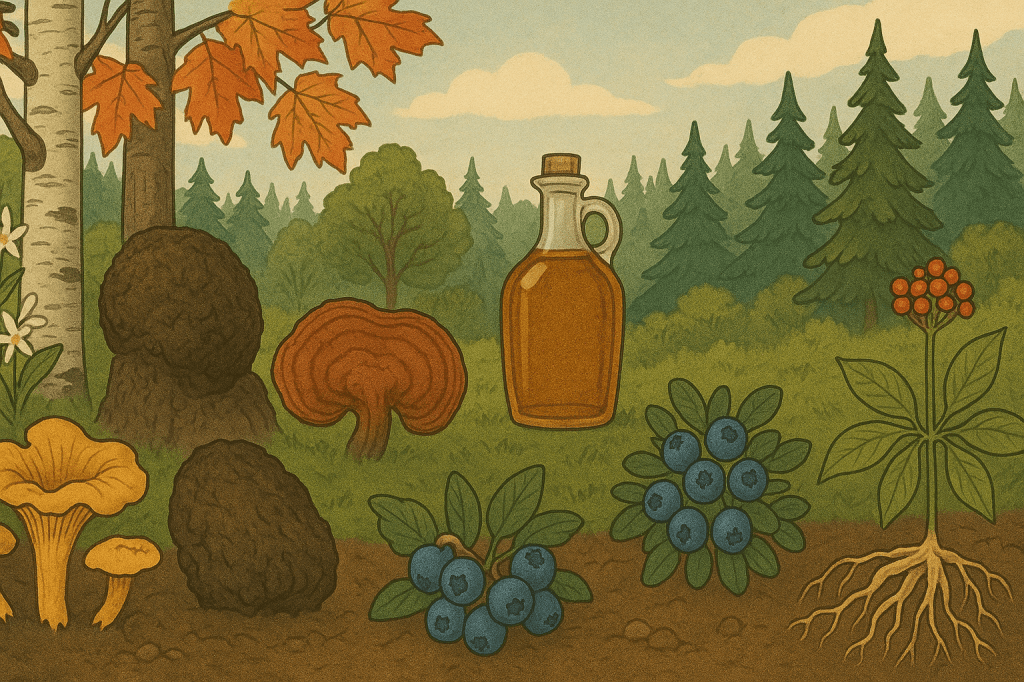
When Canadians think of forests, they typically picture lumber, pulp, and paper. Yet, beyond the timber trade lies an equally vital and dramatically underdeveloped resource sector: non-timber forest products (NTFPs). These include wild mushrooms, berries, medicinal herbs, tree saps, florals, and natural resins; goods that have been harvested for centuries by Indigenous peoples and rural communities, but remain economically marginal in modern Canada. As the agrifood sector seeks to diversify income sources, adapt to climate risks, and respond to consumer demand for sustainable and culturally authentic products, NTFPs represent an untapped reservoir of opportunity.
Canada, after all, is one of the most forested countries on Earth, with over 347 million hectares of forest covering approximately 38% of its landmass. Within these ecosystems is a treasure trove of bioresources, many of which are already enjoying renewed interest in global markets: from functional foods and nutraceuticals to cosmetics and natural health products. The challenge is not whether Canada has the raw materials. It is whether the country can align policy, investment, and Indigenous partnerships to turn these undervalued goods into robust regional economies.
At present, the NTFP sector is dominated by one clear leader: maple syrup. Worth over $1 billion annually, and with Quebec supplying more than 70% of the world’s maple syrup, this industry is the flagship of Canada’s non-timber forest economy. Wild blueberries, predominantly from Quebec, Nova Scotia, and New Brunswick, form another lucrative market, with production values exceeding $300 million in 2023. Yet outside of these headline commodities, the remaining NTFP sector is diffuse, localized, and largely informal. Wild mushrooms like morels, chanterelles, and lobster mushrooms are harvested across British Columbia, Ontario, and the Maritimes, often exported to European and Asian buyers, but little coordinated infrastructure exists to support consistent volumes or traceable quality. Medicinal plants such as chaga, Labrador tea, and devil’s club are well known to Indigenous communities, but underutilized in formal markets.
The potential for growth in this sector is significant. Globally, the market for natural health and functional food products is expanding rapidly. Medicinal mushrooms, in particular, are on track to reach $19 billion by 2030, according to 2024 projections by Global Market Insights. Canada’s forests host many of these species, including chaga, reishi, lion’s mane, and turkey tail, all of which are in high demand in wellness and integrative medicine circles. Similarly, birch sap, a staple in parts of Eastern Europe and Russia, is beginning to attract attention in North America as a low-sugar, antioxidant-rich beverage. There is considerable room for Canadian producers to position their NTFPs in these emerging global niches, especially if backed by origin branding, sustainability certification, and cultural narratives that resonate with eco-conscious consumers.
Despite this promise, the NTFP sector remains constrained by structural barriers. Chief among these is the fragmented and often inconsistent regulatory environment across provinces. Many NTFPs fall outside the scope of forestry tenure agreements and agricultural marketing boards, leaving harvesters in a grey zone with unclear land access rights or commercialization protocols. In some provinces, the rules for harvesting and selling wild mushrooms or herbal plants vary from one jurisdiction to another, complicating efforts to build coordinated value chains. The lack of aggregation infrastructure and cold storage capacity further limits the ability of small-scale producers to move beyond seasonal, informal markets.
Another limiting factor is the scarcity of applied research and product development capacity tailored to NTFPs. Few Canadian universities or government research agencies have dedicated programs for wild plant or fungal product development, and even fewer link with Indigenous knowledge systems in ways that are respectful, reciprocal, and rights-based. Traditional knowledge about the ecological cycles, medicinal uses, and sustainable harvest of forest plants remains vastly underrecognized in Canada’s commercial landscape. Until this knowledge is better integrated and protected through co-management and intellectual property frameworks, the sector will remain vulnerable to exploitation and underperformance.
Equity and land tenure issues must also be addressed. Indigenous communities are among the most active stewards and knowledge-holders of NTFPs, yet they often face structural barriers to entering or scaling in commercial markets. The promise of NTFPs as a tool for Indigenous economic development is well documented, but to realize that potential, governments must ensure clear access rights, provide targeted funding for Indigenous-led enterprises, and support co-governance models that reflect Indigenous sovereignty over forest resources.
Looking ahead, the Canadian NTFP sector needs a concerted strategy. This means intergovernmental coordination to harmonize regulations, investment in processing and aggregation infrastructure, and the development of national standards for quality assurance. Just as importantly, there must be a storytelling effort, one that situates NTFPs not merely as exotic forest goods, but as emblematic of Canada’s commitment to sustainable agriculture, reconciliation, and regional resilience. Products like Labrador tea, spruce tips, and wild fiddleheads should not be relegated to niche farmers’ markets; they should be among Canada’s most proudly exported biocultural goods.
If Canada is to meet its agrifood diversification and climate adaptation goals, the time has come to give non-timber forest products their due. The market is maturing, the environmental case is strong, and the social and economic benefits, particularly for Indigenous and rural communities, are substantial. We must move beyond pilot projects and showcase stands. With vision and investment, Canada’s NTFP industry could blossom from a peripheral activity into a pillar of the national agrifood economy.
Canada is finalizing a long-term commitment to its next-generation fighter fleet. While the Lockheed Martin F-35A Lightning II has dominated the headlines and procurement process, many analysts and defence strategists continue to argue for a more balanced approach that reflects Canada’s non-aggressive, defence-oriented military posture. Enter the JAS 39 Gripen E, Sweden’s cost-effective and resilient multirole fighter.
In this article, we compare the F-35A and Gripen E across key domains, and propose a strategic mixed-fleet solution tailored to Canada’s unique geography, alliances, and policy values.
F-35A vs Gripen E: A Comparative Analysis
Feature
F-35A Lightning II
JAS 39 Gripen E
Origin
United States
Sweden
Role
Stealth multirole strike & ISR
Agile, cost-effective air defense
Stealth
5th-gen stealth with internal weapons bays
Low-observable 4.5-gen fighter; external weapons only
Sensors
Fusion: AESA radar, DAS, EOTS, HMD
AESA radar, IRST, electronic warfare suite
Speed & Agility
Mach 1.6, less agile
Mach 2.0, supercruise, high agility
Operating Cost
~$35,000/hr
~$8,000 – $10,000/hr
Maintenance
Complex, centralized logistics
Modular, road-capable, easy maintenance
Interoperability
Deep NATO/NORAD integration
Flexible, sovereign-capable system
Best Suited For
High-end coalition warfare
Domestic sovereignty & intercept missions
The F-35A excels in stealth, sensor fusion, and networked warfare. It’s optimized for first-strike and multi-domain operations in complex allied theatres. The Gripen E, by contrast, is designed for national airspace protection, low-cost deployment, and high survivability through speed and agility.
For most countries, the choice between them is binary. But for Canada, a mixed fleet provides the best of both worlds.
Sovereignty protection, particularly in the Arctic
Fulfillment of NORAD and NATO responsibilities
Commitment to peacekeeping and allied security, not aggression or projection
This makes a single-type, stealth-heavy force both expensive and strategically limiting. The F-35A’s sophistication comes with high costs and logistical burdens. The Gripen’s versatility and affordability make it ideal for Canada’s domestic priorities, especially Arctic response and cost-effective patrols.
The Ideal Fleet Mix: 48 F-35A + 36 Gripen E
A proposed balanced force of 84 aircraft could look like this:
48 F-35A Lightning II – Two combat squadrons for NATO/NORAD + First-strike SEAD missions
36 JAS 39 Gripen E – Two intercept/sovereignty squadrons for Cold Lake & Bagotville + Pilot training
This mix satisfies Canada’s allied obligations while keeping operational costs under control and increasing resilience and redundancy.
Mission-by-Mission Alignment
Mission Type
Aircraft Best Suited
NATO expeditionary combat
F-35A
Arctic sovereignty patrols
Gripen E
NORAD intercepts
Gripen E (routine), F-35A (high threat)
Peacekeeping air policing
Gripen E
First-strike SEAD missions
F-35A
Pilot training
Gripen E (cost-effective)
Additional Benefits of a Mixed Fleet
Economic efficiency: Gripen costs 3–4x less to operate, allowing more flying hours and Arctic readiness.
Strategic autonomy: Saab offers greater technology transfer and offset potential, unlike the F-35 program.
Operational resilience: Gripens can operate from rural or improvised runways in the North.
Supplier diversification: Reduces geopolitical and logistical risk from relying on a single supplier (U.S.).
Potential Challenges & Mitigations
Concern
Mitigation
Dual logistics systems
Segmented basing and dedicated maintenance crews
Interoperability
Gripen is NATO-compatible and can integrate via standard datalinks
Training duplication
Gripen used for advanced pilot training and tactical development
Final Word
A dual-fighter strategy is neither nostalgic nor redundant, it is forward-thinking. By balancing cutting-edge stealth with efficient sovereignty defence, Canada can build an air force that is:
Strategically aligned with its defensive posture
Economically sustainable over decades
Technologically capable of high-end conflict
Operationally flexible across vast geography
This isn’t just a compromise, it’s a model of how Canada can lead by example in blending technology, sovereignty, and peacekeeping into a cohesive air defence strategy.
It is a curious feature of Canadian political discourse that every few years, the spectre of Alberta separatism re-emerges, driven largely by feelings of Western alienation or perceived federal overreach. Yet few of its proponents seem to understand the constitutional, historical, and moral terrain on which they stake their claims.
Most glaringly, the notion that Alberta could legally or legitimately secede from Canada ignores the foundational reality that this province exists entirely upon Indigenous treaty land: Treaties 6, 7, and 8, signed decades before Alberta was even established.
Treaty Obligations: The Legal Bedrock Treaties 6 (1876), 7 (1877), and 8 (1899) are not quaint relics of the colonial past. These were solemn nation-to-nation agreements made between the British Crown and various Indigenous nations; primarily Cree, Dene, Blackfoot, Saulteaux, Nakota, and others. The Crown, not the provinces, is the party to these treaties. This distinction matters enormously: Alberta, created in 1905, was superimposed upon lands already bound by legal and moral obligations that persist to this day.
Treaty nations agreed to share the land, not to surrender it to a future province. Indigenous consent was given to the Crown, not to the provincial governments that came later. As such, Alberta’s claims to land, resources, and governance are valid only to the extent that they flow through the Crown’s treaty responsibilities, not through any inherent sovereignty.
The Supreme Court Speaks: Secession Is Not a Unilateral Act This legal landscape was sharply clarified in the Supreme Court of Canada’s landmark Reference re Secession of Quebec (1998). The Court ruled decisively that no province has a unilateral right to secede. Any attempt at secession would require negotiations with the federal government and with other provinces and, crucially, with Indigenous peoples.
The Court emphasized that Indigenous peoples have rights protected under Section 35 of the Constitution Act, 1982, and that their consent is a necessary component of any major constitutional change. As the ruling states:
“The continued existence of Aboriginal peoples, as well as their historical occupancy and participation in the development of Canada, forms an integral part of our constitutional fabric.” (Secession Reference, [1998] 2 S.C.R. 217)
This is not simply a legal technicality. It is a reaffirmation of the reality that Canada is a nation founded not just through British and French settler traditions, but through treaties with Indigenous peoples, treaties that are still very much alive in constitutional law.
Indigenous Sovereignty and the Fallacy of Secession The idea that Alberta could leave Canada while continuing to govern Indigenous treaty land is untenable. Indigenous peoples were never consulted in the creation of Alberta, and any attempt by the province to secede would, by necessity, face resistance from Indigenous governments asserting their own sovereignty.
During the Quebec referendum in 1995, the Cree and other First Nations asserted that they would remain in Canada regardless of Quebec’s decision. They argued, correctly, that their treaty relationships were with the Crown, not the province of Quebec. The same principle applies here: Treaty First Nations in Alberta are under no obligation to follow a secessionist provincial government. In fact, they would have a powerful legal and moral claim to reject it.
Furthermore, the United Nations Declaration on the Rights of Indigenous Peoples (UNDRIP), which Canada has committed to implement, recognizes the inherent right of Indigenous peoples to self-determination. Any secession that disregards that right would contravene both domestic and international law.
No Secession Without Consent In short, Alberta cannot separate from Canada without first navigating the constitutional reality of treaties, Indigenous sovereignty, and the Supreme Court’s own binding interpretation of secession. The land on which Alberta stands is not Alberta’s to take into independence. It is treaty land, Indigenous land, shared under solemn agreement with the Crown.
Alberta exists because those treaties allowed Canada to exist in the West. To attempt secession without Indigenous consent is to ignore the very foundations of the province itself.
If separatist advocates wish to have a serious conversation about Alberta’s future, they must first understand its past, and the enduring obligations it entails.
Sources: Supreme Court of Canada. Reference re Secession of Quebec, [1998] 2 S.C.R. 217 Constitution Act, 1982, Section 35 United Nations Declaration on the Rights of Indigenous Peoples (UNDRIP), 2007 Indigenous and Northern Affairs Canada. “Treaties 6, 7, and 8.” Royal Commission on Aboriginal Peoples, Volume 1 (1996) Borrows, John. Recovering Canada: The Resurgence of Indigenous Law (2002)
In an era marked by political turmoil, populism, and polarized electorates, the emergence of two distinctly technocratic leaders, Canada’s Mark Carney and the United Kingdom’s Keir Starmer, signals a subtle, but significant shift in governance. Both men have stepped into their roles as Prime Ministers in the last year, bringing with them a pragmatic, policy-driven style that eschews grandstanding for steady, results-oriented leadership.
Mark Carney’s ascension to the Canadian premiership in March 2025 was, by many measures, unconventional. Known primarily for his extraordinary track record as an economic steward, having helmed two of the world’s most influential central banks, Carney entered politics without prior elected office experience. Yet this outsider status may be his greatest asset. Carney’s approach is quintessentially technocratic: data-driven, nuanced, and focused on long-term stability rather than short-term political gain.
Early in his tenure, Carney moved decisively, but quietly to abolish the consumer carbon tax, a move that was politically contentious, but signaled his willingness to recalibrate policies based on public sentiment and economic realities. Simultaneously, he maintained other industrial carbon levies, showing a measured balancing act between environmental priorities and economic concerns. His focus on national sovereignty, especially in the context of complex geopolitical pressures from the United States, demonstrates his comfort in navigating both domestic and international arenas with calculated precision.
Across the Atlantic, Keir Starmer’s rise to UK Prime Minister in mid-2024 was accompanied by a return to a more traditional, sober style of governance after over a decade of Conservative rule. Starmer’s background as a human rights lawyer and former Director of Public Prosecutions clearly informs his methodical and legalistic approach to leadership. His government has tackled thorny domestic challenges, from public sector strikes to immigration policy reform, without resorting to populist rhetoric or headline-grabbing gestures.
Starmer’s pragmatism is evident in his recent reforms: ending winter fuel payments for millions, launching an early prisoner release scheme to reduce overcrowding, and instituting new border security measures. These decisions, while controversial, reflect a focus on institutional reform and social justice framed within achievable policy frameworks. Unlike more flamboyant predecessors, Starmer projects a sense of quiet competence, aiming to rebuild public trust through consistency and fairness rather than drama.
What unites Carney and Starmer is their shared embrace of technocratic governance, an approach that values expertise, incremental progress, and policy refinement over ideological battles or media theatrics. Both leaders seem intent on “getting on with the job,” navigating complex political landscapes with a steady hand. This approach is particularly noteworthy given the current political climate, where many leaders lean heavily on spectacle or populist appeals.
Their quiet competence is not without risks. Technocratic leaders can be perceived as detached or insufficiently charismatic, which can make it challenging to galvanize broad popular enthusiasm. Yet, for electorates fatigued by volatility and crisis, Carney and Starmer offer a reassuring alternative: governance that promotes substance over style and incremental progress over sweeping promises.
The early months of Mark Carney’s and Keir Starmer’s premierships illustrate the power of quiet, data-driven leadership in modern politics. Their technocratic approaches may not dominate headlines, but they offer a compelling model for steady, pragmatic governance in an era that sorely needs it.
Because love is wild, weird, and occasionally involves group calendars.
Welcome, curious traveler. If you’ve stumbled upon this guide, it likely means someone you know: your co-worker, yoga teacher, ex, cousin, or that barista with the undercut and a quiet glow, has outed themselves as polyamorous. And you? You’re confused, intrigued, possibly mildly panicked. Never fear! This field guide will gently walk you through the exotic, misunderstood, and thoroughly lovable creature that is the polyamorous human – so, let’s begin.
🧭 Species Overview: What Even Is a Polyamorous Person? Scientific name: Homo relatus plurimus Common name: “Poly person,” “Polycule member,” “My girlfriend’s girlfriend’s boyfriend”
These marvelous mammals form consensual, often complex, romantic or emotional bonds with more than one partner at a time, and they do it on purpose. This is not cheating, drama, or a mid-life crisis wrapped in a dreamcatcher. This is a relationship orientation, NOT a lifestyle, based on honesty, consent, and surprisingly detailed calendar invites.
🔍 Identification Tips: How to Spot a Polyamorous Person Poly people often blend in with the general population, but subtle signs include: • An uncanny fluency in emotional vocabulary (“We’re having a boundaries conversation later tonight!”). • Casual references to more than one romantic partner without a trace of scandal. • Slightly glazed eyes when explaining relationship structures to their monogamous friends. • A tote bag with a slogan like “Love is not a limited resource,” or “Jealousy is a feeling, not a crime scene.”
🛠️ Care and Handling: Interacting With a Polyamorous Person ✅ DO: • Ask questions respectfully if you’re curious. • Understand that their love life isn’t about you. • Remember that polyamory is about choices, not deficiencies. • Recognize that it’s not “open season” on their relationship.
❌ DO NOT: • Say, “I could never do that” as if it’s a moral high ground. • Ask, “Which one is your real partner?” • Suggest therapy unless they’ve asked you for referrals. • Assume they’re hitting on you. Seriously. They’re busy.
📅 Mating Rituals and Social Habits Polyam folks engage in a variety of rituals, including: • Metamour brunches (bonding with their partner’s partner over pancakes and mutual respect). • Group text diplomacy, where emotional logistics rival that of small governments. • Cuddle piles – think platonic affection meets adult slumber party. • Relationship check-ins that sound like performance reviews, but with more hand-holding.
They are generally very adept at managing emotional needs, being transparent, and decolonizing their expectations of romance. Wild, I know.
🧠 Cognitive Traits: What’s Going On in Their Big Open Minds? Common traits include: • A belief in abundance over scarcity. • A deep commitment to radical honesty. • Advanced communication skills developed through trial, error, and books with titles like The Ethical Slut, polysecure, and More Than Two (we don’t talk about the drama around that one). • Often hold the revolutionary idea that different people meet different emotional needs, and that’s… fine?
🦺 Safety Precautions Approaching a polyamorous person does not put you at risk of: • Losing your spouse (unless you’re already halfway there). • Being dragged into a cult (unless it’s the cult of clear communication). • Having to talk about your feelings (okay, maybe a little).
🗣️ Frequently Asked Questions (FAQ) Q: So do you all just sleep together? A: Sometimes! But also sometimes we just eat noodles and talk about boundary renegotiation. It’s not a porno, Karen.
Q: What if you fall in love with someone else? A: That’s kind of the idea. Love isn’t subtraction – it’s multiplication.
Q: Isn’t it just a phase? A: So is high school. Doesn’t mean it wasn’t real.
Q: Can I be poly too? A: Of course! If you’re willing to unpack your social conditioning, communicate honestly, and manage three anniversaries, a birthday, and a shared Google Doc titled “Feelings.”
🎉 Conclusion: Love Is Weird. That’s the Point. At the end of the day, polyamory isn’t about being cooler, smarter, or more emotionally evolved than anyone else. It’s just one way, among many, to approach human connection. So if you meet a polyamorous person, don’t panic. Don’t assume. Just listen. They’re not here to convert you. They’re just living a life that works for them.
And in the grand safari of love, that’s something to admire, even if you prefer your own cozy monogamous tent. Now if you’ll excuse us, we’ve got a potluck at 7pm, and a relationship summit at 9pm.
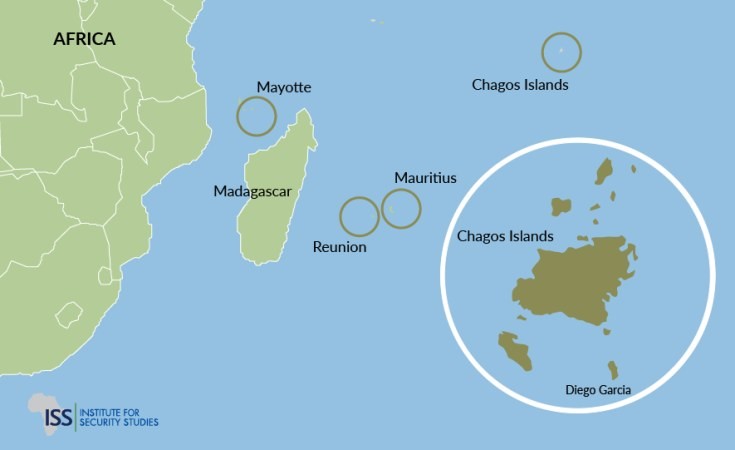
In a rare moment of geopolitical clarity and moral courage, the United Kingdom has agreed to transfer sovereignty of the Chagos Islands to Mauritius while securing a 99-year lease on Diego Garcia, the region’s pivotal military base. The agreement, unveiled by Prime Minister Keir Starmer’s government, is both a forward-looking strategic arrangement and a long-overdue act of historical redress.
At the heart of the deal is a pragmatic security arrangement: the UK will retain uninterrupted access to Diego Garcia, which hosts vital joint operations with the United States. In return, it will pay £101 million annually to Mauritius. This ensures that Britain continues to anchor its defence capabilities in the Indo-Pacific; a region where rival powers like China, Russia, and Iran are rapidly expanding their influence.
From a fiscal standpoint, the agreement is well within reason. Defence Secretary John Healey rightly pointed out that the annual lease cost is comparable to operating a single aircraft carrier. In fact, the payment constitutes just 0.15% of the UK’s £67.7 billion annual defence budget—a fraction of the cost for maintaining global readiness and a meaningful presence in one of the world’s most strategically significant regions. For a modest financial outlay, the UK preserves its operational edge, cements a critical alliance with the US, and reinforces its relevance in global affairs.
Yet the agreement is more than a security calculation. It also addresses one of Britain’s most painful colonial legacies. In 1965, the UK controversially separated the Chagos Archipelago from Mauritius, evicted the native Chagossians, and facilitated the construction of the Diego Garcia military base. These actions, condemned by the International Court of Justice and the UN General Assembly, have weighed heavily on the UK’s international standing.
The return of sovereignty to Mauritius is therefore a landmark act of accountability. It signals that Britain is willing to engage honestly with its imperial past, even when doing so involves diplomatic and political complexity. This is a step not just toward reconciliation with Mauritius, but also toward reasserting the UK’s commitment to international law and human rights.
Still, the success of this agreement must be judged not only by its geopolitical merit, but also by how it serves the people most affected: the Chagossians. The agreement allows Mauritius to implement a resettlement plan across the archipelago, excluding Diego Garcia. While this represents progress, it does not fully resolve the aspirations of Chagossians who long to return to their ancestral home.
As Bernadette Dugasse, a displaced Chagossian, movingly put it: “I don’t belong in the UK, I don’t belong in Mauritius, I don’t belong in the Seychelles. I belong in Diego Garcia.” These voices must not be sidelined. It is imperative that the UK and Mauritius ensure that Chagossians are not only consulted but empowered in shaping the future of the islands.
This deal is a model of how a former colonial power can act responsibly in today’s world, by marrying strategic foresight with moral responsibility. Britain has taken a step forward, not just in securing its defence, but in doing justice. Now, it must ensure that the Chagossian people are treated with the dignity they have long been denied.







 The Rowanwood Chronicles