
Donald Trump’s suggestion that Canada could become the 51st state not only reveals a lack of understanding of Canadian sovereignty and identity, but also exposes a broader motivation; the United States’ desire to access Canada’s vast natural resources. Canada is rich in essential resources like fresh water, minerals, oil, and lumber, all of which are increasingly valuable as global demand rises and environmental pressures grow.
Fresh water, in particular, has become a critical resource as many U.S. states face drought and water scarcity. Canada holds about 20% of the world’s freshwater supply, making it an attractive target for U.S. interests. Similarly, Canada’s mineral wealth, including critical minerals like nickel, lithium, and cobalt used in renewable energy technologies, is vital for the U.S. as it seeks to secure supply chains for its green economy. Lumber from Canada’s vast forests has also long been a point of contention, with ongoing trade disputes reflecting the U.S.’s reliance on Canadian wood for construction and manufacturing.
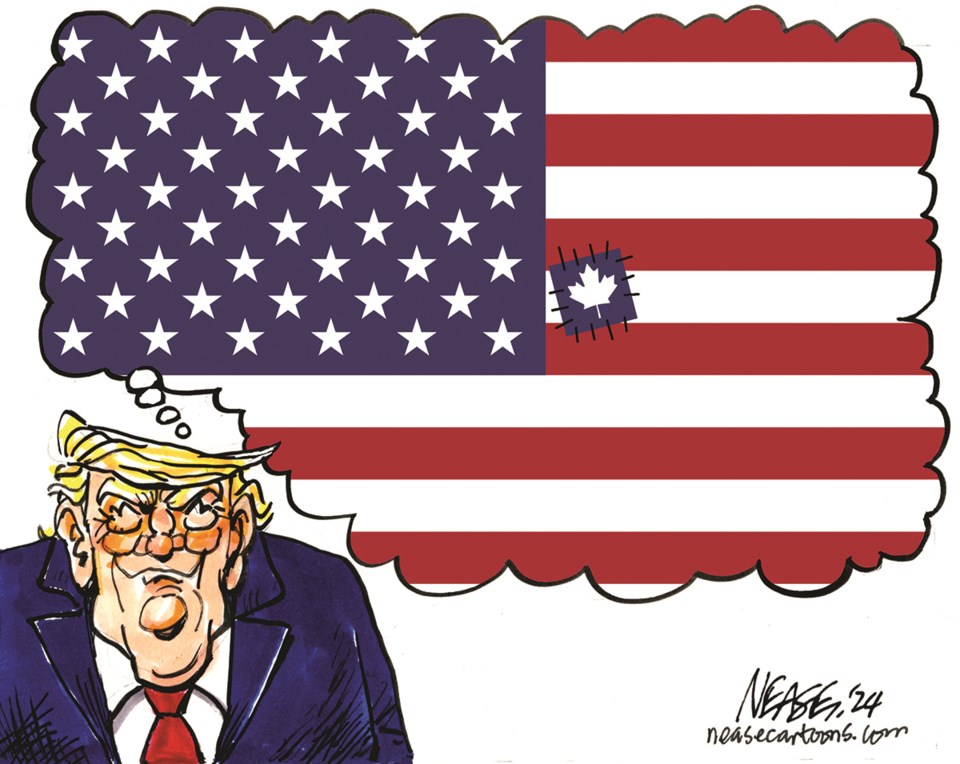
Trump’s suggestion disregards over 150 years of Canadian self-governance, and the deep cultural and political differences between the two nations. Canadians take immense pride in their independence, multicultural heritage, and distinct political system, which are starkly different from those of the U.S. Such remarks alienate an important ally, ignore history and diplomacy, and trivialize the unique relationship between the two countries.
Ultimately, this kind of rhetoric attempts to undermine Canada’s sovereignty, and risks being perceived as a veiled attempt to exploit its natural wealth, rather than as a serious or respectful political proposition. It underscores a broader need for Canada to remain vigilant in safeguarding its resources and asserting its independence on the global stage.
 The Rowanwood Chronicles