
The Future of Museums, Part Two: Digitization, Repatriation, and the New Cultural Commons

If the first step in the ethical evolution of museums is reckoning with the origins of their collections, the second must be reimagining how cultural treasures can be shared, studied, and celebrated without being hoarded. Fortunately, the 21st century offers tools our forebears could only dream of. Digital technology, particularly high-resolution 3D scanning, modeling, and immersive virtual platforms, is rewriting the rules of preservation and access. When used with cultural sensitivity and ethical intention, these tools allow us to honour ownership, facilitate repatriation, and still nourish a global commons of cultural knowledge.

Take 3D scanning: what was once an expensive novelty is now a powerful instrument of restitution and democratization. Museums can now create hyper-detailed digital replicas of artifacts, capturing every chisel mark, brushstroke, or weave of fabric. These models can be studied, shared online, integrated into augmented or virtual reality tools, or even 3D printed, all without requiring the physical artifact to remain on display in a distant capital city. This changes the equation. The original object can go home, back to the community or country from which it was taken, while its likeness continues to serve educational and scientific purposes worldwide.
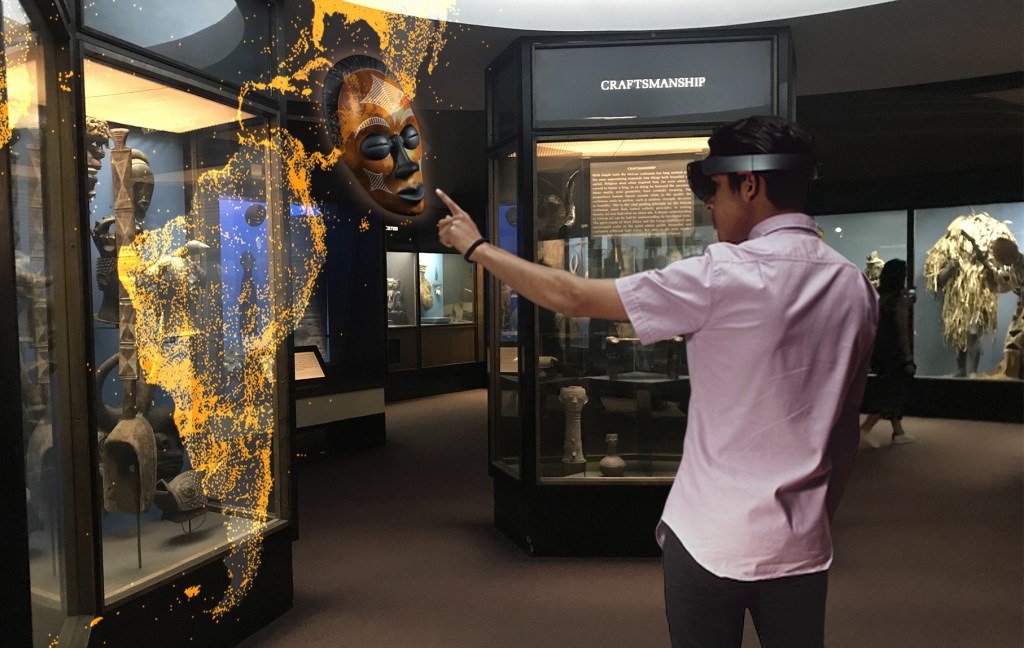
There is a quiet but profound dignity in this digital compromise. It allows for the physical return of heritage to those to whom it belongs, not just legally, but spiritually and historically, while also supporting the broader mission of museums to educate and inspire. And in many cases, the digital version can do things the original never could. Scholars can examine its dimensions in microscopic detail. Teachers can beam it into classrooms. Visitors can manipulate it, interact with it, and even walk through the worlds from which it came.

Yet let’s not pretend digital tools are a panacea. A scan cannot replicate the scent of parchment, the weight of a carved idol, or the sacredness of a funerary mask imbued with ancestral memory. Creating these models demands money, time, and skilled technicians, resources that smaller institutions may lack. But for those who can muster them, the return is substantial: ethical legitimacy, global engagement, and future-proof access to cultural heritage.

Enter the virtual museum, a concept whose time has truly come. With internet access now ubiquitous in much of the world, online museum platforms are exploding. Whether it’s the British Museum’s virtual galleries or the immersive tours of the Louvre, these digital spaces offer a new kind of cultural experience: borderless, accessible, and unconstrained by bricks, mortar, or geopolitics. For those unable to travel, due to distance, disability, or cost, virtual museums are not just convenient; they are transformational.

These platforms do more than display scanned objects. They weave in video, sound, oral histories, and expert commentary. They let users “handle” objects virtually, walk through reconstructions of lost cities, or compare artworks from across time zones and traditions. And crucially, they offer a space where repatriated artifacts can remain visible to the world. A sculpture returned to Nigeria or a mask restored to a Pacific island doesn’t need to vanish from global consciousness. Its story, and its scanned image, can be co-curated with local voices, shared respectfully, and kept safe in the digital domain.

This co-curation is vital. A truly decolonized digital strategy doesn’t just upload images, it shares authority. It ensures that the descendants of artifact-makers help decide how those objects are described, displayed, and interpreted. Digital museums can become sites of collaboration, not appropriation; places where cultural equity is baked into the code.

And then there’s the sustainability argument. Virtual museums dramatically reduce the environmental costs of international exhibitions, staff travel, and artifact shipping. They offer resilience against disaster, a fire, flood, or war may destroy a gallery, but not its digital twin. In a world of increasing instability, that matters.

So where does this leave us? It leaves us at the edge of something hopeful. The combination of digital modeling and virtual museums does not replace the need for physical repatriation, it complements and strengthens it. It allows us to move beyond the binary of “ours” versus “theirs,” and into a more nuanced, shared stewardship of humanity’s treasures.

The museum of the future is not a fortress. It is a node in a network, a partner in a dialogue, and a bridge across histories. If museums can embrace this vision, ethical, inclusive, and digitally empowered, they can transform from institutions of possession to institutions of connection. And that, perhaps, is the most valuable exhibit of all.

The Future of Museums, Part One: Reckoning with the Past

Museums occupy a cherished yet complicated place in our cultural landscape. They are, at their best, sanctuaries of human achievement and memory; places where we marvel, learn, and connect. They are guardians of our collective stories, offering glimpses into lives, ideas, and aesthetics across time and geography. Yet increasingly, those guardianship roles are being scrutinized. In this post, the first of a two-part reflection, I want to explore how museums must reckon with their past in order to remain relevant, ethical, and inspirational institutions in a post-colonial world.

Modern museums serve multiple purposes. They are educators, preserving and interpreting both natural and human histories. Through exhibitions, talks, and online media, they help us understand not only what came before us, but also how those pasts continue to shape the present. They are also preservers of culture, entrusted with tangible and intangible heritage, from tools and textiles to oral traditions and sacred rites. Increasingly, they are also spaces of community engagement and social inclusion. The best of today’s museums are no longer content to speak about people; they strive to speak with them, creating room for conversations around identity, migration, environment, and justice. And let’s not forget their economic impact: museums draw visitors, support local artisans, and boost cultural tourism. Their value is not only educational, but civic and economic.

And yet, many of the very objects that give museums their gravitas are also at the heart of a profound ethical challenge. Too many were acquired in contexts of coercion, extraction, or outright theft during the height of imperial expansion. The British Museum’s possession of the Elgin Marbles or the Rosetta Stone, icons of antiquity mired in controversy, is not exceptional; it is emblematic. These artifacts, however artfully displayed, carry the invisible weight of colonial conquest. For many communities of origin, their removal constitutes not just a historical grievance, but an ongoing erasure of identity.

Western museums often point to their capacity to conserve, study, and exhibit these artifacts responsibly. They argue, sometimes sincerely, that global access to human history is a noble goal. But this defense rings hollow in a world where digital preservation is commonplace and where the moral imperative to return stolen cultural property grows louder each year. The question isn’t simply who can care for these artefacts, it’s who should.

Repatriation, the return of cultural property to its place of origin, has shifted from a theoretical debate to a global movement. France’s pledge to return looted artifacts to Benin, Germany’s restitution of the Benin Bronzes, and the Smithsonian’s newly developed ethical return policies are not fringe gestures. They are signals of a deeper cultural shift. Repatriation, after all, is not just about boxes being shipped back across oceans. It’s about truth-telling. It’s about nations acknowledging histories of violence and dispossession, and about institutions committing to restorative justice.

This new ethical landscape demands changes in practice. Provenance research, once an obscure archival task, must now be a public commitment. Shared custodianship models, where institutions collaborate with origin communities to co-curate, rotate, or jointly own artifacts, offer ways forward that don’t sacrifice conservation. And above all, museums must embrace the decolonization of their own internal cultures: rethinking who gets to tell the stories, who sits on the boards, and whose voices shape the narrative.

Museums can still be temples of learning and wonder. But for them to truly serve society in the 21st century, they must relinquish their roles as colonial trophy cases. The future lies in humility, transparency, and cooperation. In part two of this series, I’ll look at how new technologies and evolving curatorial philosophies are helping museums reinvent themselves for the world to come.

Five Things We Learned This Week for April 12 – 18th, 2025

Here’s the inaugural edition of my new weekly segment, “Five Things We Learned This Week,” highlighting significant global events and discoveries from April 12–18, 2025.

🌍 1. Travel Disruptions Across Europe

Travelers in Europe faced significant disruptions due to widespread strikes. In France, the Sud Rail union initiated strikes affecting SNCF train controllers, with potential weekend service interruptions extending through June 2. In the UK, over 100 ground handling staff at Gatwick Airport began a strike on April 18, impacting airlines like Norwegian and Delta. Additionally, approximately 80,000 hospitality workers in Spain’s Canary Islands staged a two-day strike over pay disputes, affecting popular tourist destinations.  

🧬 2. Potential Signs of Life on Exoplanet K2-18b

Astronomers detected large quantities of dimethyl sulfide and dimethyl disulfide in the atmosphere of K2-18b, a planet located 124 light-years away. On Earth, these compounds are typically produced by biological processes, making this the strongest evidence to date suggesting potential life beyond our solar system.  

📉 3. Global Economic Concerns Amid Tariff Tensions

The International Monetary Fund (IMF) and the European Central Bank (ECB) warned of a slowdown in global economic growth due to escalating trade tensions, particularly from recent U.S. tariffs. The ECB responded by reducing its main interest rate for the seventh time this year, citing “exceptional uncertainty.” U.S. markets remain volatile, with the S&P 500 down 14% from February highs.   

🌱 4. Earth Day 2025: “Our Power, Our Planet”

Earth Day on April 22 will spotlight the theme “Our Power, Our Planet,” emphasizing the push for renewable energy to triple clean electricity by 2030. Events worldwide aim to educate and mobilize communities toward sustainable practices and climate action.  

🐺 5. Genetic Revival of Dire Wolf Traits

Colossal Biosciences announced the birth of genetically modified grey wolves named Romulus, Remus, and Khaleesi. These wolves exhibit characteristics of the extinct dire wolf, marking a significant step in de-extinction science and raising discussions about the ethical implications of such genetic endeavors.  

Stay tuned for next week’s edition as we continue to explore pivotal global developments. Question – Should I include a link to some source material with each item or is the summary what you are looking for?