
NATO’s Article Five is often spoken of as if it were a law of nature rather than a political agreement. An attack on one is an attack on all. The phrase is repeated so often that it begins to sound automatic, inevitable, even mechanical. In practice, it is none of those things.
The hypothetical invasion or annexation of Greenland by the United States exposes the limits of Article Five with unusual clarity.
Greenland is an autonomous territory within the Kingdom of Denmark. Denmark is a full NATO member, and Greenland falls within NATO’s geographic scope. If a non NATO power were to land forces there, the alliance’s response would be swift and largely predictable. Consultations would be immediate. Article Five would almost certainly be invoked. Military planning would follow.
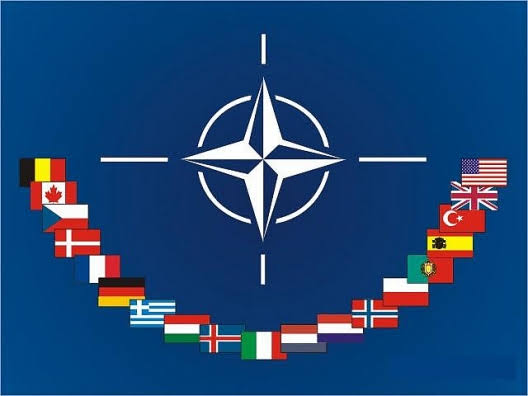
The situation changes fundamentally when the attacker is not outside the alliance, but at its center.
Article Five was never designed to restrain the most powerful member of NATO. It assumes a clear external adversary and a shared understanding of who constitutes a threat. There is no provision in the treaty that explains how to respond when the guarantor of collective defense becomes the source of aggression. NATO is a collective defense alliance, not a system of internal enforcement.
From a legal standpoint, Denmark’s options within NATO would be limited. Article Four consultations would be triggered at once. Emergency meetings of the North Atlantic Council would follow. Strong political statements would likely be issued. What would not follow is a clear, binding obligation for NATO members to take military action against the United States.
Politically, the outcome is even more constrained.
No NATO member would realistically initiate military action against the United States over Greenland. Major European powers would issue forceful condemnations, pursue emergency diplomacy, and press the matter through the United Nations and other multilateral forums. Canada would find itself in a deeply uncomfortable position, alarmed by the Arctic precedent but unwilling to escalate militarily against its closest ally. Smaller NATO members would be privately alarmed, yet publicly cautious, acutely aware that their security against Russia depends on the credibility of the American guarantee.
This is the reality that alliance theory often avoids stating directly. NATO operates by consensus within a structure of profoundly unequal power. The alliance’s credibility rests not only on legal commitments, but on the assumption that its most powerful member will act as a stabilizing force rather than a disruptive one.
An American annexation of Greenland would not trigger a unified military response under Article Five. It would instead produce a severe political crisis. NATO decision making would likely stall. Trust within the alliance would erode rapidly. European efforts toward strategic autonomy would accelerate, not as an abstract ambition but as a practical necessity.
The greatest damage would be neither territorial nor military. It would be institutional. Article Five would be revealed not as a universal shield, but as a conditional promise shaped by power, politics, and restraint. For NATO, the lesson would be stark. Collective defense works only as long as the strongest actor chooses to defend the system itself.
 The Rowanwood Chronicles