What Did You Expect? The Fall of Mill Street and the Fate of Craft Breweries in Corporate Hands

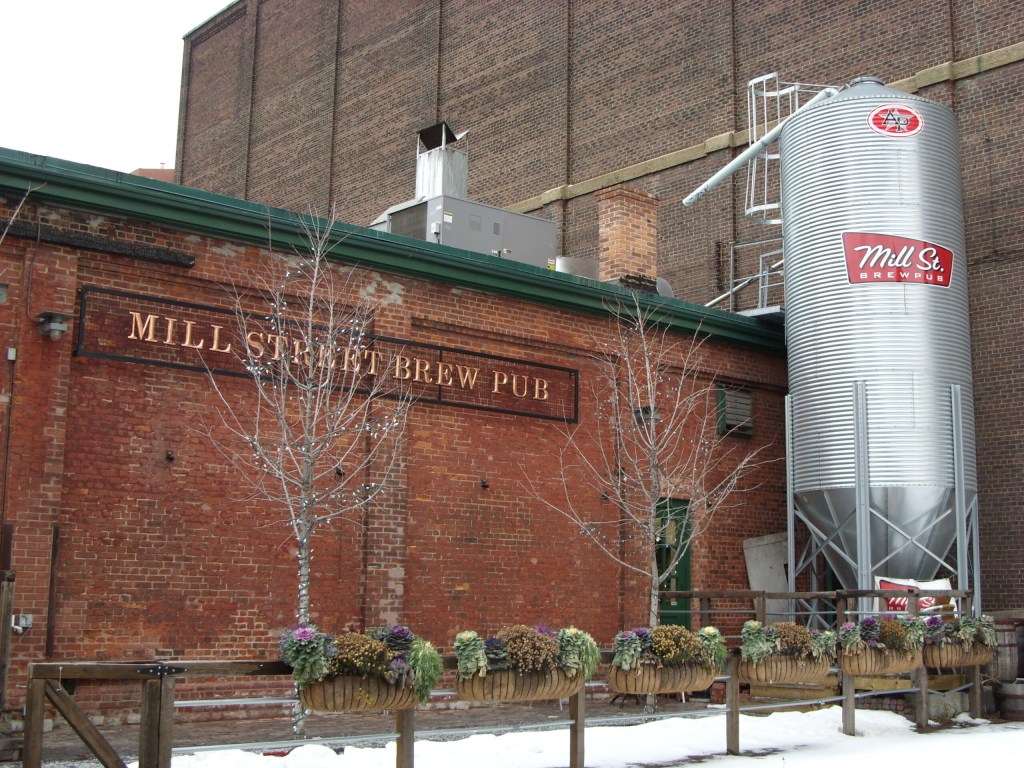
Fans of Mill Street Brewery are in shock after Labatt announced it was shutting down the North York brewery, and shifting production to its industrial-scale facility in London, Ontario. Thirty-nine workers will lose their jobs, and it’s unclear if many of Mill Street’s small-batch beers will survive. The three remaining brewpubs—in Toronto, Ottawa, and Pearson Airport—will continue to operate, but anyone who’s followed the beer industry knows what’s coming next. This is just another chapter in a long and predictable story.

When Labatt, itself owned by global behemoth AB InBev, acquired Mill Street a decade ago, craft beer lovers were divided. Some saw it as an opportunity for Mill Street to grow with the backing of a major player. Others saw it for what it really was: the beginning of the end. This wasn’t a rescue mission—it was an extraction.

We’ve seen this play out before. Lakeport Brewing, once a Hamilton-based success story built on discount beer, was scooped up by Labatt in 2007 for $201 million. Just three years later, Labatt shut down the brewery, put 143 people out of work, and moved production to London. More tellingly, when potential buyers showed interest in taking over the plant, and keeping it running, Labatt refused. The brewing equipment was dismantled, ensuring that no one else could compete.
Sapporo’s 2006 acquisition of Sleeman Breweries led to a similar fate for Sleeman’s Halifax operation, which was shuttered in 2013. The difference? Unlike Labatt, Sapporo allowed the equipment to be sold off, helping fuel the rise of Collective Arts Brewing in Hamilton, but the lesson remains the same: when a craft brewery is acquired by a major player, it’s no longer a craft brewery – It’s a brand.

Mill Street was never going to be an exception. It started with real craft credentials—a small brewery in Toronto’s Distillery District, a reputation for eco-conscious brewing, and flagship beers like Tankhouse Ale and Organic Lager that set it apart in the early 2000s. By the time Labatt took over, it had already expanded significantly, adding brewpubs and scaling up production. That growth made it an attractive acquisition target, but it also meant Mill Street was now operating in the corporate world, where efficiencies trump tradition and scale wins over local identity.

Now, as production consolidates in London, the brewery’s original spirit is all but gone. Sure, the remaining brewpubs will still pour Mill Street beer, just as other corporate-owned brewpubs do with “craft” labels that are little more than marketing exercises. But the North York brewery’s closure isn’t just about job losses—it’s the final confirmation that Mill Street, as craft beer fans knew it, no longer exists.

If you’re surprised, you weren’t paying attention. Once an independent brewery sells to a major corporation, it’s only a matter of time before the “craft” part disappears. This isn’t a betrayal—it’s just business as usual.

A Love Affair in a Glass – LDV Red Rocket Spiced Imperial Espresso Stout

Listen, I’ve been around the craft ale block a few times. I’ve tangoed with Tripels, slow-danced with Sours, and had a downright torrid affair with a English IPA back in ‘98; but let me tell you, Sawdust City’s LDV Red Rocket Spiced Imperial Espresso Stout isn’t just a beer – it’s a sultry, full-bodied seduction in a glass.

From the moment you pour it, you know you’re in for a special treat. That thick, luxurious head – tan, creamy, that’s just begging to be admired, as it settles atop the obsidian body, like a velvet robe slipping from the shoulders of an old Hollywood starlet. You don’t chug a beer like this; You sip it, you savor it, you let it whisper sweet nothings in your ear.

The first taste is an all-encompassing embrace – bold espresso wraps around rich, dark chocolate, like two lovers entangled on a silk sheet of roasted malt. And just when you think you’ve got it figured out, a wicked little cayenne spice sneaks up on you from behind, like a mischievous nibble on your earlobe. It’s just enough heat to wake up your senses without making you regret last night’s life choices.

The mouthfeel? Velvety, thick, indulgent – it doesn’t just coat your tongue, it makes itself at home. This stout has presence – it lingers. It leaves traces of vanilla and cinnamon in its wake, making you question whether it’s a beer, or some kind of dark, boozy necromancy.

At 9% ABV, Red Rocket isn’t just here for a casual chat – it’s leaning in close, making eye contact, and asking if you’d like to see the river deck view. And honestly? You do! 

And as I sit here, utterly bewitched by Red Rocket’s bold embrace, I can’t help, but hope that the fine folks at Sawdust City have had the good sense to tuck some of this delicious liquid away in bourbon barrels, letting it slumber, and soak up the kind of oaky, boozy wisdom that only time can bestow. Because if Red Rocket is already this seductive, imagine what it could become after a slow, patient transformation into something even more decadent – a worthy new incarnation of Titania, their Queenly masterpiece! 

Brewing Success: How Supporting SMEs Can Fuel Ontario’s Economic Growth

In support of my recent posts on Canadian economic sustainability and growth, in the presence of a Trump America, here is a piece about an industry close to my heart. 

The story of craft brewing in Ontario is one of evolution, passion, and the persistent balancing act between government support and industry challenges. What began as a niche market for independent brewers has grown into a thriving sector that contributes significantly to the province’s economy. In 2023, Ontario’s craft brewing industry was estimated to be worth over $2 billion annually, with more than 270 craft breweries operating across the province. Despite already capturing approximately 10% of Ontario’s beer market, analysts suggest the industry has the potential to grow even further as consumers increasingly prioritize local, high-quality, and innovative products.

Ontario’s journey with craft beer began in the early 2000s when the government recognized the potential of small breweries to contribute to local economies and create jobs. The establishment of the Ontario Craft Brewers (OCB) association in 2003 marked a turning point. It provided a collective voice for independent brewers, allowing them to advocate for policies and resources that could help them compete with multinational corporations dominating the beer market. A few years later, the provincial government launched the Ontario Craft Brewers Opportunity Fund, a bold $8 million investment aimed at giving small breweries a much-needed leg up. This fund allowed many breweries to upgrade their equipment, improve packaging, and expand their marketing efforts. For many brewers just starting out, these investments were not only helpful; they were essential.

Beyond direct funding, tax incentives played an important role in shaping the industry’s early years. Breweries producing under a certain volume threshold benefitted from reduced excise duties, enabling them to reinvest savings into their operations. These measures helped level the playing field, allowing smaller breweries to compete in a market dominated by large-scale producers.

As the industry grew, so too did the government’s approach to supporting it. By the 2010s, Ontario’s craft beer market was booming, and policies shifted to focus on accessibility and expansion. One of the most significant changes came in 2015, when the province modernized beer retailing laws to allow sales in grocery stores. This move not only increased consumer access to craft beer, but also mandated that 20% of shelf space in participating stores be reserved for Ontario’s craft brewers. This was a game-changer for visibility, allowing small brewers to reach a broader audience, and compete more directly with large brands.

The government’s involvement didn’t stop there. In 2019, as part of the Canadian Agricultural Partnership (CAP), federal and provincial governments allocated over $1 million to help craft brewers adopt cutting-edge technologies, expand their production facilities, and tap into international markets. Rural breweries in particular benefitted from these programs, which often included support for tourism development, event spaces, and collaborations with local farmers. By emphasizing sustainable growth, these initiatives also supported environmental goals, such as reducing energy consumption and waste during brewing.

Despite these successes, government policies have not always aligned with the realities of small breweries. The “Buck-a-Beer” initiative introduced in 2018 is a prime example. While the program aimed to make beer more affordable for consumers by encouraging brewers to sell bottles for $1, it was widely criticized by craft brewers. For most, the economics simply didn’t work: producing high-quality beer at that price point would mean sacrificing either their profits or their standards. Instead, many brewers pushed for continued support in the form of grants and investments that prioritized long-term sustainability over short-term cost-cutting.

Today, Ontario’s craft beer industry is at an exciting crossroads. It has firmly established itself as a key economic driver, employing thousands of people and supporting local supply chains, from hop growers to independent retailers. With its current market size valued at over $2 billion, the sector has significant room to grow. Export programs are helping brewers break into international markets, while domestic consumers continue to seek out innovative, locally-produced beers. There’s also increasing interest in sustainable brewing practices, which could open up new opportunities for breweries willing to invest in eco-friendly technologies.

Still, challenges remain. Many small brewers are calling for expanded distribution infrastructure, particularly in rural areas, and more funding to support water conservation and waste management in brewing processes. Others advocate for greater access to affordable financing for equipment upgrades and facility expansions, arguing that these investments are critical to scaling up production to meet demand.

Ontario’s craft beer industry is a testament to what can be achieved when passion meets strategic support. From humble beginnings to a multi-billion dollar sector, it has proven its resilience and capacity for innovation. With thoughtful policies, ongoing investments, and a continued emphasis on quality and sustainability, the potential for future growth is as bright as the golden ales lining the shelves of Ontario’s breweries.