Why Decentralized Social Media Is Gaining Ground

As I edit this post, I feel that I am mansplaining a shift in technology and platforms that most people already know, but people are getting fed up with the way the big platforms like Meta, X, and Google and are trying to maintain control of the narrative and our data. 

What’s Driving the Shift?
Today, with 5.42 billion people on social media globally; and an average user visiting nearly seven platforms per month, the field is crowded and monopolized by big players driving both attention and data exploitation. 

Decentralized networks are winning attention amid growing distrust: a Pew Research survey found 78% of users worry about how traditional platforms use their data. These alternatives promise control: data ownership, customizable moderation, transparent algorithms, and monetization models that shift value back to creators.

Moreover, the market is on a steep growth path: from US $1.2 billion in 2023 with a projected 29.5% annual growth rate through 2033, decentralized social is carving out real economic ground. 

Key Platforms Leading the Movement

PlatformHighlights & Stats
BlueskyBuilt on the AT Protocol—prioritizes algorithmic control and data portability. Opened publicly in February 2024, it had over 10M registered users by Oct 2024, more than 25M by late 2024, and recently surpassed 30M  . It also supports diverse niche front ends—like Flashes and PinkSea  . Moderation remains a challenge with rising bot activity  .
MastodonFederated, ActivityPub-based microblogging. As of early 2025, estimates vary: around 9–15 million total users, with ~1 million monthly active accounts  . Its decentralized model allows communities to govern locally  . However, Reddit discussions show user engagement still feels low or “ghost-town-ish”  .
Lens ProtocolWeb3-native, on Polygon. Empowers creators to own their social graph and monetize content directly through tokenized mechanisms  .
FarcasterBuilt on Optimism, emphasizes identity portability and content control across different clients  .
PoostingA Brazilian alternative launched in 2025, offering a chronological feed, thematic communities, and low-algorithmic interference. Reached 130,000 users within months and valued at R$6 million  .


Additional notable mentions: MeWe, working on transitioning to the Project Liberty-based DSNP protocol, potentially becoming the largest decentralized platform; Odysee for decentralized video hosting via LBRY, though moderation remains an issue. 

Why Users Are Leaving Big Tech
Privacy & Surveillance Fatigue: Decentralized alternatives reduce data collection and manipulation.
Prosocial Media Momentum: Movements toward more empathetic and collaborative platforms are gaining traction, with decentralized systems playing a central role.
Market Shifts & Cracks in Big Tech: TikTok legal challenges prompted influencers to explore decentralized fediverse platforms, while acquisition talks like Frank McCourt’s “people’s bid” for TikTok push the conversation toward user-centric internet models.

Challenges Ahead
User Experience & Onboarding: Platforms like Mastodon remain intimidating for non-tech users.
Scalability & Technical Friction: Many platforms still struggle with smooth performance at scale.
Moderation Without Central Control: Community-based governance is evolving but risks inconsistent enforcement and harmful content.
Mainstream Adoption: Big platforms dominate user attention, making decentralized alternatives a niche, not yet mainstream.

What’s Next
Hybrid Models: Decentralization features are being integrated into mainstream platforms, like Threads joining the Fediverse, bridging familiarity with innovation. 
Creator-First Economies: Platforms onboard new monetization structures—subscriptions, tokens, tipping—allowing creators to retain 70–80% of the value, compared to the 5–15% they currently retain on centralized platforms.
Niche and Ethical Communities: Users will increasingly seek vertical or value-oriented communities (privacy, art, prosocial discourse) over mass platforms.
Market Potential: With a high projected growth rate, decentralized networks could become a major force, particularly if UX improves and moderation models mature. 

Modernized Takeaway: Decentralized social media has evolved from fringe idealism to a tangible alternative – driven by data privacy concerns, creator empowerment, and ethical innovation. Platforms like Bluesky and Mastodon are gaining traction but still face adoption and moderation challenges. The future lies in hybrid models, ethical governance, and creator-first economies that shift the balance of power away from centralized gatekeepers.

The Athena Protocol: Reclaiming Agency in the Digital Age

Like Heinlein’s Athena, my AI is sharp, loyal, and just a little too clever for everyone’s comfort.  

A while back I wrote a post about Tim Berners-Lee, the inventor of the World Wide Web, and his vision of a transformative shift in the way individuals manage and share their personal data through a decentralized web, embodied by his Solid project. For me, a natural extension of this thinking is to continue the trend of decentralization and move the control of our digital world to individual households.

In a future where every household has its own independent AI system, life would undergo a profound transformation. These AI systems, acting as personal assistants and home managers, would prioritize privacy, efficiency, and user control. Unlike AI tethered to large platforms like Meta or Google, these systems would function autonomously, severing reliance on centralized data mining and ad-driven business models.

Each household AI could be a custom-tailored entity, adapting to the unique needs of its users. It would manage mundane tasks like cooking, cleaning, and maintaining the home while optimizing energy use and sustainability. For example, the AI could monitor household appliances, automatically ordering repairs or replacements when necessary. It could manage grocery inventory and nutritional needs, preparing healthy meal plans tailored to individual dietary requirements. With integration into new multimodal AI models that can process video, audio, and sensor data simultaneously, these systems could actively respond to real-world inputs in real time, making automation even more fluid and responsive.

Beyond home management, the AI would act as a personal assistant to each household member. It could coordinate schedules, manage communication, and provide reminders. For students, it might assist with personalized learning, adapting teaching methods to their preferred style using cutting-edge generative tutoring systems. For professionals, it could optimize productivity, handling email correspondence, summarizing complex reports, and preparing interactive visualizations for meetings. Its ability to understand context, emotion, and intention, now part of the latest frontier in AI interaction design, would make it feel less like a tool and more like a collaborator.

A significant feature of these AIs would be their robust privacy measures. They would be designed to shield households from external intrusions, such as unwanted adverts, spam calls, and data-harvesting tactics. Acting as a filter between the household and the digital world, the AI could block intrusive marketing efforts, preserving the sanctity of the home environment. The adoption of on-device processing, federated learning, and confidential computing technologies has already made it possible to train and run large models without transmitting sensitive data to external servers. This would empower users, giving them control over how their data is shared, or not shared, on the internet.

The independence of these AI systems from corporations like Meta and Google would ensure they are not incentivized to exploit user data for profit. Instead, they could operate on open-source platforms or subscription-based models, giving users complete transparency and ownership of their data. Developments in decentralized AI networks, using technologies like blockchain and encrypted peer-to-peer protocols, now make it feasible for these household systems to cooperate, share models, and learn collectively without exposing individual data. These AIs would communicate with external services only on the user’s terms, allowing interactions to remain purposeful and secure.

However, challenges would arise with such autonomy. Ensuring interoperability between household AIs and external systems, such as smart city infrastructure, healthcare networks, or educational platforms, without compromising privacy would be complex. AI alignment, fairness, and bias mitigation remain open challenges in the industry, and embedding strong values in autonomous agents is still a frontier of active research. Additionally, the potential for inequality could increase; households that cannot afford advanced AI systems might be left behind, widening the technological divide.

In this speculative future, household AI would shift the balance of power from corporations to individuals, enabling a world where technology serves people rather than exploits them. With enhanced privacy, personalized support, and seamless integration into daily life, these AIs could redefine the concept of home and human agency in the digital age. The key would be to ensure that these systems remain tools for empowerment, not control, embodying the values of transparency, autonomy, and fairness.

Made in Canada: Leveraging Transparency to Strengthen and Grow the Economy

As a business consultant, I spent nearly two years managing the Canadian multi-livestock traceability project office in response to the BSE “mad cow” outbreak. Later, I became the first General Manager of the Canadian Livestock Identification Agency, helping to expand this approach nationally, and then with the aid of federal funding, pushed into Latin America,. What became clear was the transformative power of full value chain traceability. It not only opens doors to new markets, but also helps countries differentiate their products, and navigate technical and political trade barriers like tariffs.

For Canadian retailers and manufacturers, U.S. tariffs have long created challenges—raising costs, shrinking margins, and destabilizing cross-border trade. But technology offers a way to turn these obstacles into opportunities. Imagine a system where every Canadian product carries a scannable code revealing its value chain, from sourcing to production and even its environmental footprint. This transparency wouldn’t just empower consumers—it would give Canadian products a competitive edge by showcasing their quality, sustainability, and tariff-free origins.

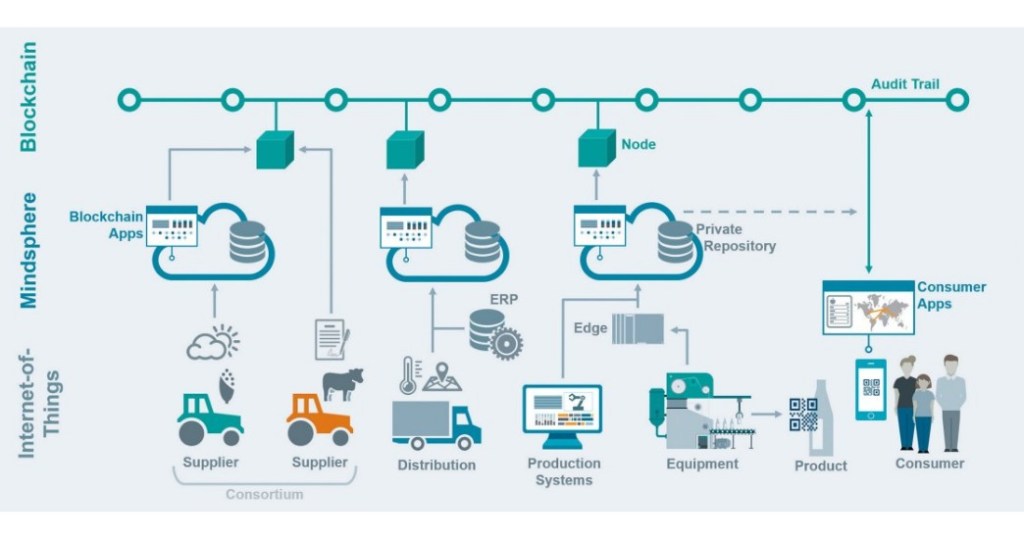
Traceability technology, backed by blockchain, makes this vision possible. By assigning every product a unique QR code or barcode, manufacturers could provide consumers with instant access to detailed information. A quick scan might show that a product was made in Canada, outline ethical practices in its supply chain, and even display its carbon footprint. Such transparency doesn’t just satisfy curiosity—it allows consumers to align purchases with their values, all while supporting the Canadian economy.

Blockchain adds an essential layer of trust to this system. Unlike traditional databases, blockchain technology is inherently secure, creating an unchangeable record of every step in a product’s journey. From raw materials in British Columbia to manufacturing in Ontario, each stage is logged and verified. In an age where consumers demand proof of sustainability and ethical practices, blockchain offers the credibility that builds trust and eliminates doubt.

For shoppers, the benefits of this system are clear. It provides a powerful tool for identifying Canadian-made goods, particularly in tariff-sensitive sectors like food, textiles, and electronics. When trade restrictions drive prices higher, consumers could actively choose local, tariff-free products, keeping money in Canada while avoiding inflated costs. Retailers, in turn, could spotlight these products as premium, ethical choices, differentiating them from imports.

From a business perspective, adopting traceability technology is more than a tool for compliance—it’s a way to build brand loyalty. Shoppers are more likely to trust and return to brands that are transparent about their supply chains. Companies investing in traceability could also attract eco-conscious and ethically driven consumers, both domestically and internationally, creating new opportunities to expand market share.

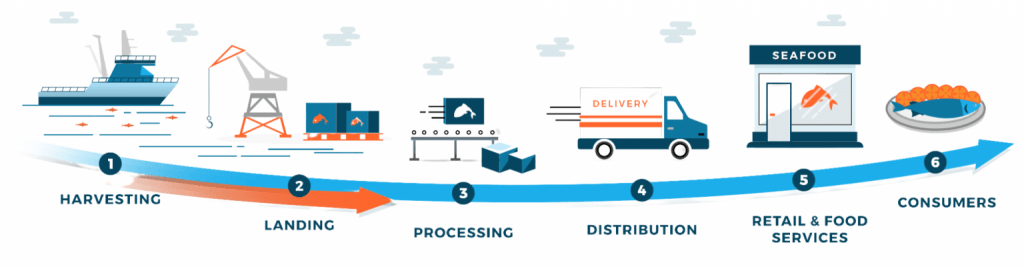
This technology is real today, and ready to use. Japan has been a pioneer in retail traceability, leveraging advanced technology to ensure transparency and quality in its supply chains. From QR codes on produce that detail farm origins to blockchain systems tracking seafood to combat fraud, Japan’s focus on traceability reflects its commitment to consumer trust, food safety, and sustainable practices.

The Canadian government has a role to play in fostering this transformation. Policymakers could accelerate adoption through regulations requiring supply chain transparency, and by offering tax incentives to early adopters. Public campaigns could educate consumers about the benefits of traceability, while certification programs could establish recognizable “Made in Canada” labels, further encouraging local pride and support.

While small businesses may face challenges in adopting this technology, such as costs and competition concerns, these barriers can be addressed through subsidies, partnerships, and thoughtful frameworks. By striking a balance between transparency and proprietary protections, Canada can ensure accessibility while preserving competitive advantages.

This system isn’t just about tariffs—it’s about redefining how Canadians shop and consume. Traceability technology positions Canada as a leader in ethical, sustainable retail practices. It empowers consumers with unprecedented insight into the products they buy, while strengthening the economy through local innovation and production.

Ultimately, this approach reinforces what makes Canadian products stand out. Whether it’s sustainability, fair labor practices, or national pride, traceability ensures that “Made in Canada” is more than just a label—it’s a commitment to quality, transparency, and trust.