Here’s the inaugural edition of my new weekly segment, “Five Things We Learned This Week,” highlighting significant global events and discoveries from April 12–18, 2025.
🌍 1. Travel Disruptions Across Europe
Travelers in Europe faced significant disruptions due to widespread strikes. In France, the Sud Rail union initiated strikes affecting SNCF train controllers, with potential weekend service interruptions extending through June 2. In the UK, over 100 ground handling staff at Gatwick Airport began a strike on April 18, impacting airlines like Norwegian and Delta. Additionally, approximately 80,000 hospitality workers in Spain’s Canary Islands staged a two-day strike over pay disputes, affecting popular tourist destinations.
⸻
🧬 2. Potential Signs of Life on Exoplanet K2-18b
Astronomers detected large quantities of dimethyl sulfide and dimethyl disulfide in the atmosphere of K2-18b, a planet located 124 light-years away. On Earth, these compounds are typically produced by biological processes, making this the strongest evidence to date suggesting potential life beyond our solar system.
⸻
📉 3. Global Economic Concerns Amid Tariff Tensions
The International Monetary Fund (IMF) and the European Central Bank (ECB) warned of a slowdown in global economic growth due to escalating trade tensions, particularly from recent U.S. tariffs. The ECB responded by reducing its main interest rate for the seventh time this year, citing “exceptional uncertainty.” U.S. markets remain volatile, with the S&P 500 down 14% from February highs.
⸻
🌱 4. Earth Day 2025: “Our Power, Our Planet”
Earth Day on April 22 will spotlight the theme “Our Power, Our Planet,” emphasizing the push for renewable energy to triple clean electricity by 2030. Events worldwide aim to educate and mobilize communities toward sustainable practices and climate action.
⸻
🐺 5. Genetic Revival of Dire Wolf Traits
Colossal Biosciences announced the birth of genetically modified grey wolves named Romulus, Remus, and Khaleesi. These wolves exhibit characteristics of the extinct dire wolf, marking a significant step in de-extinction science and raising discussions about the ethical implications of such genetic endeavors.
⸻
Stay tuned for next week’s edition as we continue to explore pivotal global developments. Question – Should I include a link to some source material with each item or is the summary what you are looking for?
Back in the late ‘80s, while waiting for my security clearance, the UK government put me through a variety of training courses – everything from project management and information technology to people skills. One of the more intriguing courses focused on building a library-style memory palace, a way to organize and recall information by mentally structuring it like a library. The idea of turning my mind into a well-ordered archive fascinated me – each piece of knowledge neatly stored and easily retrievable.
This technique has deep historical roots. It’s often traced back to Simonides of Ceos, a Greek poet from the 5th century BCE. According to legend, Simonides was called outside during a banquet, and while he was away, the building collapsed, killing everyone inside. The bodies were unrecognizable, but he realized he could recall exactly where each guest had been seated. This discovery led to the idea that spatial memory could be used as a structured recall system. The method was later refined by Roman orators like Cicero, who mentally placed key points of their speeches within familiar spaces and retrieved them by “walking” through those locations in their minds. Monks and scholars in the Middle Ages adapted the technique for memorizing religious texts and legal codes, and today, it’s still widely used – by memory champions, actors, lawyers, and even fictional detectives like Sherlock Holmes.
Inspired by this, I built my own mental library. I imagined a grand study—towering bookshelves, stained-glass windows, and a long oak table at the center. To stay organized, I divided it into sections: science, history, philosophy, personal experiences, and creative ideas. Each book represented a concept, placed where I could easily “find” it when needed.
At first, it felt awkward, like navigating an unfamiliar house. To train myself, I spent a few minutes each day mentally walking through the space, reinforcing connections. I used vivid imagery – a glowing tome for quantum physics, a worn parchment for ancient history. Storytelling also helped. I imagined Einstein seated in the physics section, Shakespeare near literature, and a wise, hooded monk in philosophy. When I struggled to recall something, I’d “ask” them, making the process more interactive.
Before long, the system became second nature. When writing, I could mentally browse my research shelves without flipping through endless notes. Before discussions, I’d “walk” through key sections to refresh my memory. Even decision-making improved – I’d place pros and cons in different areas and “see” them from multiple perspectives before making a choice.
The best part? My library keeps evolving. I add new shelves, reorganize sections, and revise old knowledge as I learn. It’s a living system, shaping the way I think and process information.
This isn’t a technique reserved for scholars or memory champions. Anyone can build a mental library, whether for learning, storytelling, or just keeping thoughts in order. With a little practice, it becomes second nature – a space you can visit anytime, where knowledge is always at your fingertips.
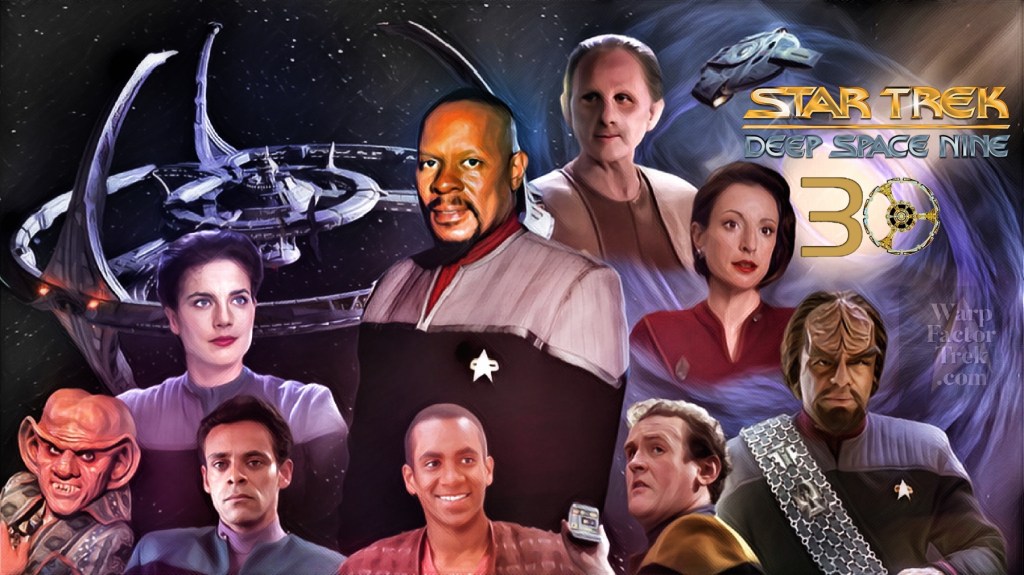
Star Trek: Deep Space Nine (DS9) is widely regarded as the most complex and compelling series in the Star Trek franchise, setting itself apart through its intricate storytelling, morally gray characters, and bold exploration of themes that challenge traditional Star Trek optimism. Unlike the more episodic nature of The Original Series and The Next Generation, DS9 adopts a serialized approach, allowing for deeply interconnected story arcs that resonate on a larger scale. The Dominion War, a centerpiece of the series, stands as a testament to this approach, offering a gritty, multi-season exploration of warfare, diplomacy, and the ethical dilemmas faced by individuals and governments during times of crisis.
One of DS9’s greatest strengths is its cast of richly developed characters. Benjamin Sisko, played masterfully by Avery Brooks, is a layered protagonist who balances the responsibilities of a Starfleet officer with his personal struggles as a father, widower, and religious figure to the Bajoran people. Sisko’s arc as the Emissary of the Prophets adds a spiritual dimension to his leadership, making him one of the most complex captains in the franchise. Characters like Kira Nerys, a former Bajoran resistance fighter, and Garak, a Cardassian tailor and ex-spy, further highlight DS9’s ability to delve into morally ambiguous territories. Kira’s journey from hardened freedom fighter to a diplomat striving for peace underscores the personal cost of resistance and rebuilding, while Garak’s layers of deceit and loyalty make him one of the most fascinating secondary characters in Star Trek history.
The series also excels in its exploration of darker and more controversial themes. For instance, the occupation of Bajor by the Cardassians serves as a thinly veiled allegory for real-world historical atrocities, such as colonialism and genocide. Episodes like “Duet” and “The Siege of AR-558” confront the horrors of war and occupation head-on, forcing both the characters and viewers to grapple with uncomfortable truths about morality and justice. The Dominion War arc, spanning multiple seasons, brings these themes to a head, portraying the Federation in its most vulnerable state. Through this, DS9 challenges the idealism that defined earlier Star Trek series, asking whether the Federation’s values can endure in the face of existential threats.
DS9’s stationary setting on a space station near a strategic wormhole allows it to explore interpersonal dynamics and long-term political relationships more deeply than its predecessors. The station serves as a cultural melting pot, fostering interaction between species like the Bajorans, Cardassians, Ferengi, and Dominion. This unique setup creates a backdrop for stories that delve into diplomacy, trade, and cultural tensions. Episodes such as “In the Pale Moonlight”, where Sisko manipulates events to bring the Romulans into the Dominion War, exemplify the show’s willingness to confront moral ambiguity.
Moreover, DS9 embraces diversity and representation. It features one of the first Black leads in sci-fi television and presents LGBTQ+ themes subtly through characters like Jadzia Dax, whose experiences challenge traditional notions of identity and love.
By combining rich storytelling, profound character arcs, and a willingness to push boundaries, Deep Space Nine remains not only the best Star Trek series, but also one of the most thoughtful and impactful sci-fi shows ever created.
I wrote this piece almost two years ago, and I have been holding off publishing. Why? Strange New Worlds, that’s why! I have been totally taken with this series, and yet for me, it’s needs a little more longevity before I am going to change my mind – just saying!
I read a fair amount of science fiction, as can clearly be seen from the content of this blog. My first introduction to speculative fiction, beyond C.S. Lewis, was the works of E.E. “Doc” Smith, loaned to me by a fellow classmate during my early teens. I devoured every book by this author I could find, reading without judgement, just enjoying the galactic adventure. Like I have said many times about my annual reading of Frank Herbert’s Dune, it’s not the story that changes, but the perspective that the additional year gives me.
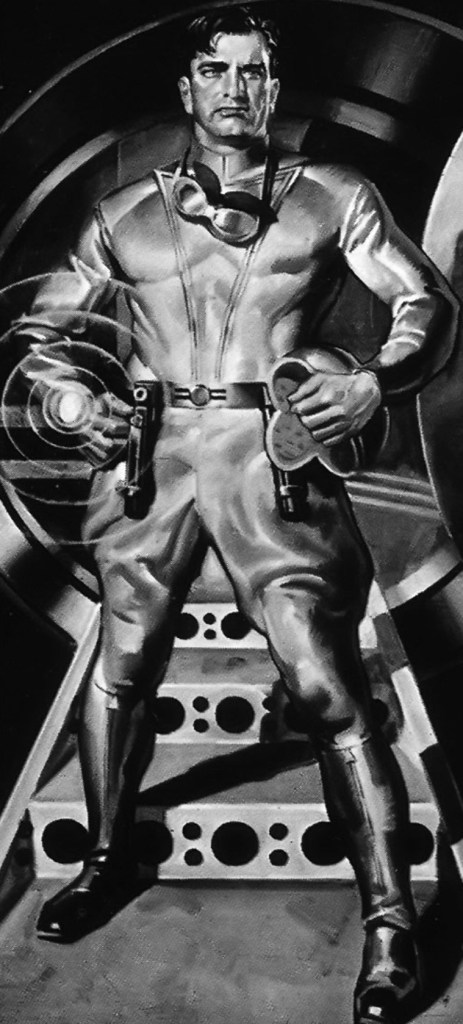
E.E. “Doc” Smith is an undeniable cornerstone of science fiction, particularly in shaping the grand, sweeping narratives of the space opera subgenre. His works, from the Lensman to the Skylark series, established many of the storytelling conventions that would define science fiction for generations. Yet, these same works are deeply entwined with the patriarchal and often misogynistic norms of their time, offering a fascinating lens through which to examine the cultural attitudes of the early-to-mid 20th century. Smith’s legacy is both a celebration of speculative ambition, and a study in the limitations of its era.
The Lensman series, perhaps Smith’s most iconic work, epitomizes the space opera’s blend of high-stakes interstellar conflict and moral idealism. Published between 1934 and 1950, these novels follow the genetically perfected heroes of the Galactic Patrol, led by the stalwart Kimball Kinnison, in their battle against the shadowy forces of Boskone. While the series broke ground in envisioning a universe of sprawling galactic civilizations, its treatment of gender roles reveals a narrower imagination. Female characters, such as Clarissa MacDougall, are largely confined to nurturing or supportive roles, their significance often framed in relation to male protagonists. Even Clarissa’s ascension to the ranks of the Lensmen – a notable exception – feels more like a narrative anomaly than a redefinition of gender dynamics. The series reflects its time, portraying men as protectors and leaders while relegating women to emotional or domestic spheres.
Similarly, the Skylark series, begun in 1928, offers an early blueprint for the modern space opera, chronicling the scientific and exploratory exploits of Richard Seaton and his morally ambiguous rival, Marc “Blackie” DuQuesne. Once again, women – characters like Dorothy Seaton and Margaret Spencer – are predominantly relegated to roles as love interests, hostages, or secondary figures. Though occasionally resourceful or intelligent, their contributions are overshadowed by the male protagonists’ heroics. These dynamics reinforce traditional gender hierarchies, with men as agents of innovation and action while women serve as symbols of emotional stability or moral guidance.
In the Family d’Alembert series, co-written with Stephen Goldin during the 1960s and 1970s, there is a slight shift in representation. Yvette d’Alembert, part of a circus-trained secret agent duo, emerges as a rare competent female protagonist. Yet even her capabilities are often contextualized by her physical appeal and partnership with her brother Jules. By this time, feminist movements were beginning to reshape societal norms, but science fiction, especially that rooted in the pulp tradition, lagged in reflecting these changes. Yvette’s portrayal, while an improvement, still clings to the vestiges of earlier patriarchal frameworks.
Smith’s later works, such as Subspace Explorers (1965), continue to explore grand themes like telepathy, space exploration, and societal advancement, but the underlying gender dynamics remain unchanged. Female characters with psychic abilities feature in the narrative, yet their roles are secondary, reinforcing the notion that leadership and innovation are male domains.
These patterns are not mere quirks of individual stories but reflections of a broader societal framework. Smith’s fiction mirrors the rigid gender roles of early-to-mid 20th-century society, a time when women were often confined to domestic or secondary positions. His male protagonists, embodying traits of strength, rationality, and dominance, contrast sharply with the nurturing and emotional roles assigned to women. While Smith does not explicitly demean women, the systemic sidelining of female characters speaks to the cultural misogyny of the era. His works helped establish many tropes that would define space opera, but they also reinforced a male-centric vision of the genre that took decades to challenge.
Despite these limitations, Smith’s influence on science fiction is profound. His imaginative depictions of intergalactic civilizations, advanced technologies, and epic storytelling inspired luminaries such as Isaac Asimov, Arthur C. Clarke, and even George Lucas. Modern readers, however, often critique his works for their outdated gender dynamics and lack of diversity. These critiques, while valid, do not diminish the historical significance of his contributions. Instead, they offer an opportunity to reevaluate his legacy in light of the genre’s ongoing evolution.
E.E. “Doc” Smith’s works remain a double-edged artifact of science fiction history: a testament to the boundless creativity of speculative fiction, and a reminder of the cultural constraints of its time. By recognizing these dual aspects, we can celebrate his role in shaping the genre while continuing to push for more inclusive and equitable narratives in speculative storytelling.
I usually think of myself as a modern man, fully bought into our digital world, and then I wander into the farmhouse library, and I realize that this space is a place outside of time, and I remember my ongoing love affair with hardback books. As I first wrote and edited this piece, I found myself switching back and forth between hardcover and hardback, mixing as I often do my British and Canadian English. Rather than going with a uniform approach, I left the nouns and adjectives as I found them on the page.
Screenshot
I still to this day buy hardback books because they embody something rare in our fast-paced, ephemeral world: permanence. There’s a kind of quiet romance to their weight in my hands—a grounding reassurance that I’m holding more than just paper and ink. Each hardcover feels like a promise, an intimacy that won’t vanish with the swipe of a screen or a fleeting notification. They are timeless, like the lingering warmth of a lover’s voice after they’ve left the room, soft yet unwavering.
On my shelves, their spines stand like steadfast sentinels, guarding fragments of my life. Each book holds a memory: a novel devoured on a long train ride, a cookbook sprawled across the counter on a rainy Sunday, a travel guide flipped through during quiet nights when the world outside was covered with snow. Their dust jackets, often worn and peeling at the edges, only make them dearer. Like laughter lines etched on a familiar face, they tell stories of years well-lived and hands well-loved.
Hardback books are resilient in ways I admire. Their pages hold firm, their spines don’t surrender, and their beauty only deepens with age. When I open one, the faint creak of the binding feels like the exhale of a secret shared just between us. The embossed covers beg to be touched, as though inviting me to connect not just with the words within, but with the countless others who’ve held the same book. In their permanence, I find companionship—kindred spirits who, like me, sought solace or joy in those very same pages.
My collection is a reflection of who I am. Beloved fiction titles transport me to worlds where I’ve found companionship in characters who now feel like lifelong friends. Illustrated cookbooks add bursts of color and life, inspiring meals that have punctuated moments of celebration, comfort, and discovery. And then there are my permaculture and agroforestry guides, rooted in a deep love for the earth and a longing to live in harmony with its rhythms. Together, they form an eclectic tapestry of passions that, when viewed as a whole, feel like an unspoken autobiography.
Perhaps, above all, I buy hardbacks for the future they promise. I picture someone I care for—perhaps a partner, or one of their children—one day standing before my shelves. They’ll trace the spines, pull a book down, and find my notations in the margins or a bookmark still tucked between the pages. Those scribbles and marks, though small, will be echoes of me—a life lived in dialogue with stories, recipes, and ideas.
Hardback books, like love, aren’t always practical, but they are endlessly worth it. They ask for time, for care, for patience. And in return, they give so much more—a place to lose myself, to learn, to dream, and, more often than not, a place to be found.





 The Rowanwood Chronicles