
North America’s Strategic Choice: Integration or Irrelevance in a Multipolar World

As the global trade landscape shifts, alliances such as BRICS and infrastructure developments like the International North-South Transport Corridor (INSTC) are redrawing the map of commerce. These projects are not just economic arrangements, they are strategic assertions of a multipolar world, where emerging economies are building financial systems and trade networks that bypass traditional Western-dominated institutions. In this changing environment, deeper integration across North America is no longer just desirable, it is essential. The United States, Canada, and Mexico share geography, economic interdependence, and complementary strengths. But instead of leaning into this partnership, the U.S. has at times acted in ways that undermine its closest allies, and in doing so, it is undercutting its own long-term strategic interests.

BRICS, now expanded to include nations like Egypt and the UAE, is working toward reducing reliance on the U.S. dollar and building alternative financial infrastructure. Simultaneously, the INSTC, a 7,200-kilometre multimodal corridor linking India, Iran, Russia, and Europe, offers a faster and cheaper trade route than the Suez Canal. These shifts are enabling new alignments between Asian, Eurasian, and Global South nations. In contrast, the U.S. risks being left behind unless it reinvests in its regional relationships. North America, bound by the Canada-United States-Mexico Agreement (CUSMA), already possesses a solid legal and regulatory foundation. What is missing is the political will to push that foundation into a fully integrated economic zone.

Closer North American integration could strengthen supply chains, enhance competitiveness, and boost regional innovation. Mexico’s manufacturing power, Canada’s resource wealth and technological expertise, and the U.S.’s financial and consumer might together could create a resilient and globally influential economic bloc. However, protectionist impulses from Washington, such as tariffs on Canadian aluminum, trade disputes over softwood lumber, and threats against Mexican imports, erode trust. These actions push Canada and Mexico to expand trade elsewhere, increasing their engagement with China, the EU, and the Asia-Pacific. While diversification is strategically wise, a fragmented North America plays directly into the hands of BRICS and INSTC-aligned actors.

Still, for Canada and Mexico, investing further in North American integration remains the most strategically sound choice. Despite political turbulence, the U.S. offers unmatched access to capital, consumer markets, and legal protections. CUSMA provides a rules-based framework that supports long-term stability more effectively than newer or looser trade deals. And while deeper trade ties with China or Europe may offer short-term gains, they cannot replicate the geographic, cultural, and logistical synergies of the North American relationship. Rather than turning outward in frustration, Canada and Mexico can use their economic leverage to influence U.S. trade policy from within, helping to shape a trilateral vision rooted in shared democratic values and mutual prosperity.

The U.S., for its part, must recognize that its global position depends not just on military strength or Silicon Valley innovation, but on the strength of its closest partnerships. The path forward lies not in undermining allies, but in building with them a regional powerhouse capable of competing with the rising multipolar world. Failing to do so means ceding both economic and geopolitical ground – to rivals who are already moving with speed and purpose.

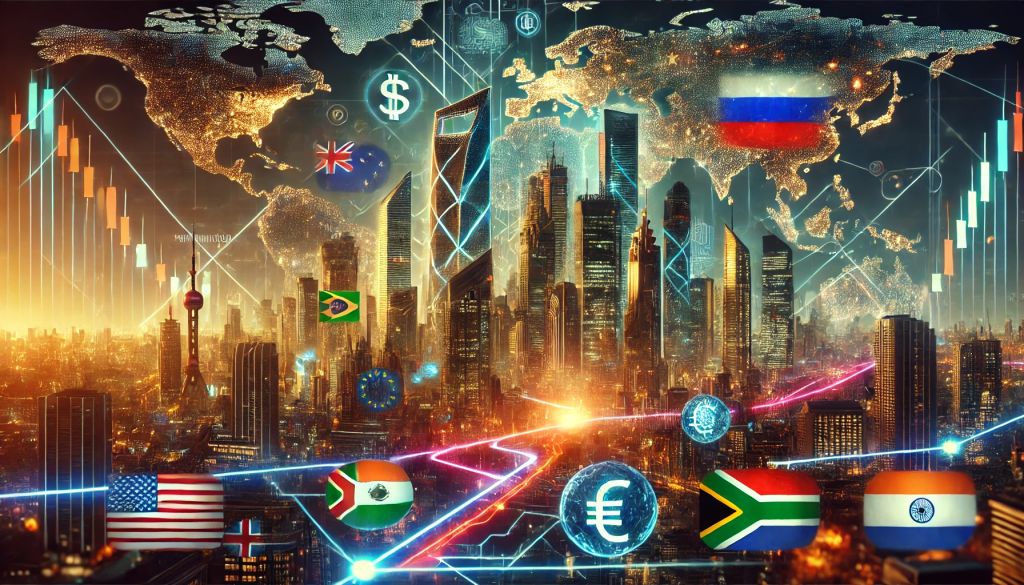
The BRICS Strategy in 2025: From Dialogue to Direction

In July 2025, the BRICS nations – Brazil, Russia, India, China, South Africa, and an expanded circle now including Egypt, Ethiopia, Iran, Saudi Arabia, the UAE, and Indonesia, met in Rio de Janeiro for their 17th annual summit. The gathering marked a decisive shift from rhetorical ambition to institutional strategy, as the bloc attempts to redefine global governance, build financial alternatives to the West-led systems, and frame itself as the political voice of the Global South. While the summit was shaped by ongoing geopolitical crises and internal contradictions, it revealed a maturing vision that extends far beyond its original economic coordination mandate.

At the core of this year’s summit was a demand for structural reform in global governance. BRICS leaders called for the United Nations Security Council to be expanded and for the voting structure of institutions such as the International Monetary Fund (IMF) and World Bank to be reweighted to better reflect the global South’s demographic and economic realities. This long-standing frustration with Western-dominated institutions has now sharpened into a diplomatic agenda. What was once a diffuse critique has evolved into coordinated proposals, particularly on the economic front.

One of the summit’s central themes was the steady progress toward de-dollarization. While calls for a BRICS common currency were conspicuously downplayed in Rio, leaders focused instead on more pragmatic steps: local-currency trade settlements, expanded use of central bank digital currencies (CBDCs), and the interoperability of national payment systems through the still-developing BRICS Pay infrastructure. A new cross-border clearing and settlement framework, informally called BRICS CLEAR, was introduced to complement these efforts. These initiatives are designed not only to bypass the U.S. dollar in bilateral and multilateral trade, but also to shield BRICS economies from the volatility and political conditionality associated with Western sanctions and SWIFT-based systems.

To support these ambitions, the New Development Bank (NDB), already capitalized with billions of dollars from member states, is being repurposed. A guarantee facility is in development, modeled loosely on the World Bank’s Multilateral Investment Guarantee Agency (MIGA), to underwrite public and private projects across member states. This is particularly relevant for emerging markets seeking infrastructure finance without the governance conditions typically imposed by the IMF or World Bank. With these tools, the bloc seeks to develop its own version of Bretton Woods-style architecture, updated for multipolar geopolitics.

Climate and sustainability also featured heavily on the summit agenda. Brazil, as host, proposed the “Tropical Forest Forever Facility,” a $125 billion climate financing mechanism aimed at conserving rainforest regions across Latin America, Africa, and Asia. The proposal is a direct challenge to Western narratives that have often placed environmental responsibility solely on the shoulders of developing nations without matching financial commitments. The initiative also serves as a preview of the Global South’s priorities heading into COP30, which will also be hosted by Brazil.

Sustainable development received structural attention beyond climate. The BRICS Business Council and Women’s Business Alliance jointly launched a 2025–2030 action plan focused on strengthening small and medium-sized enterprises (SMEs) across member states. This includes access to digital markets, cross-border licensing, and gender-equity strategies in entrepreneurship. The bloc appears intent on grounding its geopolitical ambitions in concrete developmental outcomes at the community and enterprise level.

Notably, the summit also launched a framework for artificial intelligence governance. Although still in early stages, the agreement seeks to establish common principles around transparency, ethical use, and protection against algorithmic bias. This aligns with recent UN discussions and serves to position BRICS as a rule-setting body rather than just a rule-taking coalition. With China and India both advancing in AI development, and with Brazil and South Africa playing increasing roles in data regulation, this initiative represents an important test of cross-ideological cooperation in technology governance.

Despite these achievements, internal tensions were evident. Neither President Xi Jinping nor President Vladimir Putin attended in person. India’s leadership walked a diplomatic tightrope, supporting reformist language while resisting deeper integration that might conflict with its ties to the West. Brazil, under President Lula, tempered the bloc’s anti-Western tone, particularly around tariffs and NATO criticism, wary of provoking trade retaliation. These divergences underscore the coalition’s central contradiction: it is an alliance of ambition, not ideology.

Nonetheless, BRICS continues to expand. Indonesia became a full member in January 2025, joining Iran, Egypt, Ethiopia, and others admitted in the prior year. Observers note that the group’s size risks diminishing its coherence, yet the appeal of a multipolar forum remains strong. As the G7 struggles with internal disunity and the Western alliance faces political upheaval, BRICS offers a platform that aligns with the aspirations of many developing nations, even if it cannot yet match Western institutions in capacity or cohesion.

Looking ahead, the bloc’s short-term focus will be on operationalizing its financial and development tools, settlement systems, climate funds, SME supports, and asserting diplomatic pressure for reform in global governance bodies. Over the medium term, its success will depend on the extent to which it can balance economic pragmatism with political heterogeneity. While its vision of a multipolar world is not universally embraced, BRICS has matured into a serious force in global affairs, one increasingly capable of setting its own agenda.

BRICS Rising: The Challenge to Western Dominance in a Multipolar World

BRICS has evolved from an economic alliance into a geopolitical force challenging Western dominance. Originally conceived as a framework for cooperation among emerging markets, the bloc now pursues a strategic agenda that threatens the global order long shaped by Europe and North America. By fostering economic interdependence, promoting financial independence, and expanding its diplomatic influence, BRICS is positioning itself as a counterweight to Western-led institutions like the IMF, World Bank, and NATO. Its rise signals a shift toward a multipolar world where U.S. and European dominance is no longer assured.

At the core of BRICS’ strategy is economic cooperation aimed at reducing reliance on Western markets and financial institutions. Trade agreements and joint investment projects among Brazil, Russia, India, China, and South Africa strengthen internal resilience while offering developing nations an alternative to the West’s economic model. The New Development Bank (NDB) plays a key role, financing infrastructure and sustainability projects without the political conditions often attached to Western aid. This economic realignment is further reinforced by BRICS’ push to de-dollarize global trade, insulating its members from U.S. financial influence and sanctions. By increasing the use of local currencies and developing alternatives to SWIFT, BRICS is actively undermining the dollar’s global dominance. If oil-producing nations like Saudi Arabia shift toward BRICS’ financial system, the petrodollar system could face serious disruption, weakening the U.S. economy and limiting Washington’s ability to leverage economic power as a foreign policy tool.

For Europe, BRICS represents a different kind of challenge. While not as dependent on the dollar, the EU’s economic model relies on stable access to global markets, raw materials, and energy. BRICS’ growing control over critical resources—such as rare earth minerals, oil, and food supplies—poses risks to European industry. Russia and China have already demonstrated a willingness to use trade as a geopolitical weapon, and as BRICS strengthens its economic ties, European access to these resources could become more costly and politically conditional. Additionally, BRICS’ growing influence in Africa, Latin America, and the Middle East threatens Europe’s traditional soft power approach in these regions. By providing loans and investments without Western-style conditions, BRICS is offering an appealing alternative to nations wary of IMF-imposed austerity. This shift weakens Europe’s ability to shape international policies and erodes its influence in regions it has long considered strategic.

Beyond economics, BRICS is reshaping global diplomacy by advocating for a multipolar world. The bloc frequently aligns its positions in the UN, G20, and WTO, pushing for reforms that reduce Western dominance. By expanding its membership to include emerging economies across the Global South, BRICS is creating a parallel alliance network that enables countries to resist Western pressure. The potential inclusion of Iran and other anti-Western regimes raises concerns about a new axis of influence that could counterbalance NATO and other Western-led security alliances. While BRICS is not yet a military pact, growing defense cooperation—particularly between Russia and China—suggests that security coordination could become more structured over time.

Technology is another battleground where BRICS threatens Western leadership. China and India are emerging as global tech powerhouses, while Russia excels in cybersecurity and artificial intelligence. If BRICS nations successfully develop independent digital ecosystems—ranging from payment systems to semiconductor industries—Western tech companies may lose access to key markets. The push for BRICS-led internet infrastructure could also fragment global digital governance, reducing the West’s ability to shape online policies and monitor cyber threats. Meanwhile, BRICS’ emphasis on state sovereignty and non-interference in domestic affairs provides an ideological alternative to the Western model of governance. As more nations align with this approach, the ability of the U.S. and Europe to promote democracy, human rights, and free-market policies could diminish.

BRICS is not just an economic alliance, but a structural challenge to the Western-led world order. By advancing financial independence, expanding geopolitical influence, and fostering technological self-sufficiency, the bloc is steadily eroding the dominance of Western institutions. While internal divisions and logistical hurdles remain, BRICS’ trajectory suggests that Europe and North America must adapt to a world where their influence is no longer guaranteed. Whether the West engages with BRICS on more equal terms or resists and risks further global fragmentation will determine the shape of international relations in the years to come.