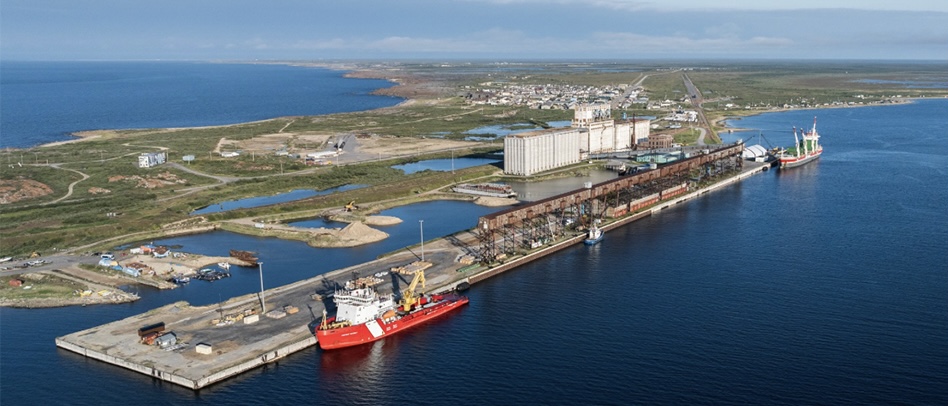
The Port of Churchill has long occupied an awkward place in Canadian economic geography. On the conventional map it appears remote, almost stranded on the western shore of Hudson Bay, far from the industrial corridors that dominate North American trade. For decades this visual impression shaped policy assumptions. Churchill was treated as a marginal northern outpost rather than a serious transportation node.
Yet the assumptions embedded in flat maps are often misleading. Global shipping follows the curvature of the Earth rather than the straight lines suggested by atlases. Vessels travel along great-circle routes, the shortest distance between two points on the globe. When the North Atlantic is viewed through this lens, Churchill occupies a far more interesting position than commonly assumed.
Measured along great-circle routes, Churchill sits almost directly across the North Atlantic from northern Europe. The sailing distance between Churchill and the Port of Antwerp-Bruges is roughly 3,900 nautical miles. This is only modestly longer than the distance from Montreal to the same destination and dramatically shorter than the route from Vancouver, which requires passage through the Panama Canal and spans more than 8,000 nautical miles. The northern geography therefore aligns Churchill naturally with European markets rather than Asian ones.
Rail geography reinforces this logic. A significant portion of Canadian agricultural production lies across the northern Prairie belt, including regions surrounding Saskatoon, Prince Albert, and northern Alberta. From several of these areas, the rail distance to Churchill is comparable to, and in some cases shorter than, the distance to southern export ports. The Hudson Bay Railway links the port directly into the North American rail network, creating a corridor that runs from the Prairie interior to Hudson Bay without crossing an international border.
For bulk commodities, this alignment of rail and maritime geography carries practical implications. Commodities such as grain, potash, fertilizer inputs, and mineral concentrates are routinely transported in large volumes on specialized bulk carriers. These cargoes are far less dependent on the rigid scheduling demanded by container shipping. As a result, they can tolerate seasonal shipping windows more easily than high-frequency container trade. The economics of bulk logistics therefore fit more comfortably with Churchill’s operating conditions.
At the same time, it is important to recognize the limits of the model. Churchill cannot realistically compete with Vancouver for Asian trade. Shipping routes from the Pacific coast to East Asia are among the shortest and most efficient maritime corridors in the world. Attempting to replicate that role through northern Arctic routes, including the Northwest Passage, remains impractical due to ice conditions, insurance risks, and limited infrastructure. Churchill’s comparative advantage lies in the opposite direction, toward Europe.
This is where the strategic logic of recent international partnerships begins to emerge. Europe is seeking diversified supplies of agricultural commodities, fertilizer inputs, and critical minerals as part of broader efforts to reduce reliance on politically sensitive supply chains. Western Canada possesses many of these resources in abundance. A seasonal but direct corridor from the Prairie interior to northern Europe therefore holds a certain economic symmetry.
In this context, Churchill need not aspire to the scale of Vancouver or Montreal to justify renewed attention. The port’s potential lies in a more specialized role: a northern export valve connecting Western Canada to European markets. Grain shipments during the late summer and autumn harvest period, mineral concentrates moving from northern mining regions, and fertilizer products destined for European agriculture all fit naturally within this model.
The concept is neither revolutionary nor unprecedented. Numerous ports in northern Europe and the Baltic already operate with seasonal or semi-seasonal ice conditions. Their viability rests not on year-round container traffic but on carefully planned flows of bulk cargo coordinated with shipping seasons.
Viewed through this lens, the geography of Churchill becomes less perplexing. The port does not sit at the edge of Canada’s transportation system. Rather, it occupies a hinge between the Prairie interior and the North Atlantic. The distances involved, the alignment of rail infrastructure, and the nature of bulk commodity trade combine to create a narrow but potentially meaningful logistical niche.
Such a niche would never transform Churchill into a mega-port. Yet it could allow the harbour on Hudson Bay to serve a quiet but strategically useful role within Canada’s evolving northern economy. In an era when climate change, resource development, and geopolitical realignment are drawing attention toward the Arctic, that role may prove more relevant than earlier generations of policymakers assumed.
There are political decisions that change a nation’s trajectory, and then there are political decisions that change the clock on the microwave twice a year.
British Columbia’s long-gestating move to end seasonal time changes belongs to the second category. And yet, like so many small administrative reforms, it reveals more about governance, coordination, and federalism than its modest subject suggests.
When David Eby says the issue is about “making life easier for families” and “reducing disruptions for businesses,” he is not wrong. Twice a year, millions of people reset schedules, disrupt sleep cycles, confuse meeting times, and briefly destabilize routines. The economic cost is diffuse but real. The human irritation is universal.
But the British Columbia story is not simply about clocks. It is about interdependence.
A Province Ready, A Continent Not British Columbia passed legislation in 2019 to adopt permanent daylight saving time. The public consultation showed strong support. The mechanics were prepared. The legal framework exists. Yet implementation stalled because BC tied its decision to the U.S. Pacific Northwest, particularly Washington, Oregon, and California.
Why? Because Vancouver and Seattle function less like distant cities and more like adjacent economic zones. A two-hour time gap for part of the year would complicate trade, transportation, markets, and daily cross-border life. So BC waited on American congressional action that never arrived.
That is the quiet absurdity of modern federalism. A provincial legislature can pass a law. A neighbouring state legislature can pass a similar law. And both remain inert because a third legislative body, thousands of kilometres away in Washington, D.C., controls the clock.
BC’s renewed political framing signals impatience with that paralysis.
Canada’s Patchwork Time Regime Canada does not have a single national time policy. Provinces decide.
Saskatchewan effectively does not change clocks. Yukon moved to permanent time in 2020. Ontario passed legislation that would end seasonal changes, but only if Quebec and New York follow suit. Nova Scotia has debated similar moves.
In other words, the legislative scaffolding already exists across multiple provinces. What is missing is synchronization.
This is the core tension. Canadians dislike changing clocks. Legislatures have responded. Yet every province that is economically entangled with a neighbour hesitates to move unilaterally.
BC’s decision, if implemented regardless of U.S. action, would break that coordination norm. It would demonstrate that a province can absorb the temporary inconvenience of cross-border time divergence in exchange for internal consistency.
That matters.
The Real Policy Question No One Likes to Debate There is also a deeper issue that remains politically underexplored. Ending clock changes is popular. Choosing which time to keep is less so.
Permanent daylight saving time means brighter winter evenings and darker winter mornings. In northern latitudes, those mornings become very dark indeed. Sleep researchers often argue permanent standard time aligns better with human circadian rhythms. Politicians prefer the marketing appeal of longer evening light.
BC chose permanent daylight saving time.
The choice is not trivial. It reflects a cultural preference for after-work daylight over morning biological alignment. It favours consumer time over solar time.
That debate is barely visible in the political messaging, but it exists beneath the surface.
What This Means for Canada If BC proceeds, several things follow.
First, Ontario’s conditional legislation becomes harder to justify. The argument that “we must wait for everyone” weakens once one major province decides not to.
Second, public debate will intensify in provinces that have already prepared legislative tools but lack political momentum.
Third, the federal government may find itself facing pressure for coordination, even if timekeeping remains a provincial power. A national conversation could emerge not because Ottawa initiated it, but because provincial asymmetry forces it.
Will the rest of Canada follow immediately? No.
Will BC’s move increase the probability of broader change within five years? Very likely.
Clock policy is rarely transformative. But it is revealing. It exposes how deeply integrated provincial economies are with the United States. It demonstrates the limits of legislative autonomy in a continental marketplace. And it shows that even mundane administrative reforms require geopolitical choreography.
In the end, this is not about daylight. It is about governance friction.
And as with so many small reforms, once one jurisdiction proves that the sky does not fall when the clocks stop changing, others tend to follow.
Trade agreements are rarely about trade alone. They are instruments of strategic positioning, domestic reassurance, and geopolitical signaling. The proposed Comprehensive Economic Partnership Agreement between Canada and India sits squarely at this intersection. It is less a conventional tariff-cutting exercise than a test of whether two pluralistic democracies with complicated domestic politics can construct a durable economic relationship in a fragmenting global order.
For Canada, the motivation is increasingly structural rather than opportunistic. An export economy anchored overwhelmingly to the United States faces persistent vulnerability to policy shifts south of the border. The impulse to diversify markets is not new, but recent protectionist currents and the volatility of U.S. trade policy have transformed diversification from aspiration into necessity. India, with its scale, growth trajectory, and relative institutional stability, represents one of the few markets capable of absorbing Canadian exports at meaningful volume while also offering reciprocal opportunities.
India’s motivation is different. New Delhi seeks capital, technology, energy security, and access to advanced services while preserving policy autonomy and protecting domestic producers. Indian trade strategy has historically favored gradualism, selective liberalization, and strong safeguards for agriculture and small industry. Any agreement with Canada will therefore reflect asymmetry not only in economic structure but also in negotiating philosophy.
The present talks must also be understood as a recovery operation. Bilateral relations were deeply strained by political tensions and security allegations in recent years. The resumption of negotiations signals a pragmatic decision on both sides that economic interests outweigh diplomatic estrangement. However, the shadow of mistrust has not disappeared. Trade negotiators may speak the language of tariffs and regulatory alignment, but political leaders must manage constituencies that view the other country through a lens of suspicion. This complicates ratification even if technical negotiations succeed.
Structural Complementarities and Frictions At first glance, the Canadian and Indian economies appear complementary. Canada is resource-rich, capital-intensive, and export-oriented in commodities and advanced services. India is labor-abundant, manufacturing-aspiring, and consumption-driven. In theory, this creates a classic pattern of mutually beneficial exchange: resources and expertise flowing one way, manufactured goods and services the other.
Agriculture illustrates both promise and tension. Canada is a major exporter of pulses, grains, and oilseeds that India periodically requires to stabilize domestic food prices. Yet India also protects its farmers aggressively for social and political reasons. Tariffs, quotas, and sudden regulatory changes are common policy tools in New Delhi’s domestic management of food security. Canadian producers seek predictable access; Indian policymakers seek flexibility. Reconciling these priorities will be among the most technically complex elements of any agreement.
Manufactured goods pose a different challenge. India wants improved access for its industrial exports, particularly in sectors where it aims to move up the value chain. Canadian industry, smaller in scale and already exposed to U.S. competition, may resist additional pressure from lower-cost producers. Trade agreements often redistribute opportunity within economies as much as between them, creating domestic winners and losers whose political influence shapes final outcomes.
Energy, Minerals, and the Strategic Core If there is a single domain capable of anchoring a durable Canada–India partnership, it is energy and critical resources. India’s economic expansion will require enormous quantities of fuel, electricity generation capacity, and raw materials for infrastructure and technology. Canada possesses many of these in abundance, from hydrocarbons to uranium to battery minerals.
Uranium cooperation is particularly significant. India’s nuclear energy program is expanding as part of its strategy to reduce carbon intensity while maintaining baseload power. Canadian uranium, already exported to several countries under strict safeguards, could become a cornerstone of this effort. Such trade is not merely commercial; it embeds long-term strategic interdependence through supply contracts, regulatory oversight, and technological cooperation.
Critical minerals represent another convergence point. The global transition toward electrification and digital infrastructure has elevated materials such as lithium, nickel, and cobalt from niche commodities to strategic assets. Canada seeks reliable buyers and investment in extraction and processing. India seeks secure supply chains independent of geopolitical rivals. Agreements in this domain may proceed faster than broader trade liberalization because both sides perceive them as mutually reinforcing national priorities.
Energy exports more broadly face logistical constraints. Canada’s infrastructure has historically been oriented toward the U.S. market. Expanding shipments to Asia requires pipelines, liquefaction facilities, and port capacity that take years to build and are subject to domestic environmental debates. Thus, even if market access improves on paper, physical delivery capabilities will shape the real economic impact.
Services, Mobility, and the Human Dimension Trade in the twenty-first century increasingly involves services, knowledge, and people rather than goods alone. Canada’s strengths in education, finance, engineering, and digital industries align with India’s demand for advanced expertise. Conversely, India’s vast pool of skilled professionals seeks opportunities abroad, including temporary work arrangements and educational pathways.
Mobility provisions are therefore likely to be politically sensitive but economically important. Canadian policymakers must balance labor market needs with public concerns about immigration levels. Indian negotiators view mobility as a central benefit of any agreement. Achieving equilibrium may require targeted programs for specific sectors rather than broad liberalization.
Educational links deserve special attention. India is one of the largest sources of international students in Canada, generating both economic activity and long-term people-to-people ties. Regulatory changes affecting student visas have already demonstrated how quickly this channel can expand or contract. A trade framework that stabilizes educational cooperation would have effects far beyond tuition revenues, influencing innovation networks and diaspora relations.
Political Economy and Ratification Risks Even the most carefully negotiated agreement must survive domestic politics. In Canada, provinces hold significant authority over areas such as natural resources and procurement. Their support is essential. Agricultural regions, manufacturing hubs, and energy-producing provinces will evaluate the deal through different lenses, potentially producing a fragmented national consensus.
In India, federal structures and state-level interests also complicate implementation. Agricultural policy in particular is intertwined with regional politics and rural livelihoods. National leaders may sign agreements that require delicate internal balancing to enforce.
Public perception will matter as much as economic modeling. Trade deals are often judged not by aggregate gains but by visible disruptions. Industries facing adjustment costs mobilize more effectively than diffuse beneficiaries. A government that frames the agreement as part of a broader strategy for economic resilience rather than a narrow commercial bargain stands a better chance of sustaining support.
Timeline Realities and the Meaning of “Signing” Predictions that a comprehensive agreement could be concluded within a single year should be treated cautiously. Modern trade agreements are sprawling legal instruments covering intellectual property, digital governance, investment rules, dispute settlement mechanisms, and environmental standards. Negotiating these provisions typically requires years.
A more plausible scenario involves a staged process. An initial framework agreement or “early harvest” package could address less contentious areas such as investment facilitation, cooperation on energy and minerals, and selected tariff reductions. This would allow political leaders to demonstrate progress while leaving more difficult issues for subsequent rounds.
Such incrementalism aligns with India’s negotiating tradition and Canada’s desire for tangible diversification gains. It also reflects the reality that trust, once damaged, must be rebuilt gradually.
Strategic Significance Beyond Commerce Ultimately, the importance of a Canada–India partnership extends beyond bilateral trade statistics. It represents a recalibration of middle-power diplomacy in an era when the global system is increasingly defined by great-power rivalry and economic fragmentation. For Canada, engagement with India signals participation in the Indo-Pacific’s economic architecture. For India, deeper ties with a G7 country reinforce its status as a central actor rather than a peripheral one.
The agreement, if realized, would not replace Canada’s relationship with the United States, nor would it transform India into Canada’s primary market. Its value lies in diversification, resilience, and optionality. In a world where supply chains can be weaponized and alliances can shift abruptly, having multiple reliable partners is itself a form of economic security.
Whether the deal is signed this year or several years hence, the direction of travel is clear. Both countries perceive that disengagement carries higher long-term costs than cooperation, even when cooperation is difficult. Trade agreements often emerge not from optimism but from recognition of shared necessity. The Canada–India negotiations appear to fit this pattern precisely.
For most of the postwar era, Canada treated defence dependence on the United States not as a vulnerability but as a convenience. Geography, shared language, integrated command structures, and the comforting mythology of permanent alignment made it easy to believe that continental security was a solved problem. The bill would always be paid in Washington. The industrial base would always be American. Canadian sovereignty, in practical terms, would be exercised mainly through polite consultation. That arrangement delivered peace dividends, but it also produced a quiet atrophy of national capability.
The emerging shift associated with Mark Carney signals a different mood. Not anti-American, not theatrical, simply overdue. Strategic adulthood rarely arrives with fanfare. It arrives when a country realizes that dependence is not the same thing as partnership, and that insurance policies only work if one can pay the premium personally when required.
Canada is not uniquely weak, nor uniquely trapped. It is simply a medium-sized power that spent three decades optimizing for efficiency instead of resilience. Defence procurement favored off-the-shelf purchases from the largest supplier. Supply chains stretched across borders because accountants, not strategists, set the terms. Domestic production became episodic, revived only when a crisis or regional jobs program demanded it, then allowed to fade again. None of this was irrational. It was merely short-sighted.
Yet history offers a reminder that capability can be rebuilt when a state decides it matters. During the Second World War, Canada transformed itself into one of the world’s major industrial producers almost overnight, constructing ships, aircraft, vehicles, and munitions at a scale wildly disproportionate to its population. The lesson is not that such mobilization should be repeated, but that industrial capacity is not a natural resource. It is a political decision sustained over time.
Aerospace as Proof of Latent Capacity Canada’s aerospace sector demonstrates what consistent investment can achieve. Firms such as Bombardier, Pratt & Whitney Canada, Bell Textron Canada, and CAE occupy world-class positions in their niches. Engines designed in Quebec power aircraft on every continent. Flight simulators built in Montreal train pilots from dozens of air forces. These are not symbolic achievements. They are the infrastructure of modern military power, even when marketed as civilian products.
What is striking is not that Canada lacks expertise, but that it rarely organizes this expertise toward sovereign capability. The country produces components for other nations’ systems while importing finished platforms for its own forces. It is the industrial equivalent of exporting lumber and importing furniture. Economically sensible in peacetime, strategically questionable in an era defined by contested supply chains.
Shipbuilding and the Slow Return of Patience Naval construction tells a similar story. After decades of decline, Canada chose to rebuild shipyards through long-term programs rather than one-off contracts. Irving Shipbuilding and Seaspan are now producing vessels again, slowly reconstituting skills that had nearly vanished. The process has been expensive, imperfect, and frequently criticized. It is also precisely how industrial capacity is restored: by accepting that competence cannot be purchased instantly from abroad.
The deeper lesson is psychological. A country accustomed to buying finished products must relearn how to tolerate development risk, schedule overruns, and the political discomfort of long timelines. Sovereignty is not a subscription service with monthly billing. It is capital expenditure.
None of this implies a clean break from the United States, nor should it. The continental defense relationship is anchored in geography and mutual interest, not sentimentality. Integrated warning systems, intelligence sharing, and joint planning are rational responses to a shared landmass facing the Arctic. What changes is the assumption that Canada must therefore remain permanently industrially subordinate. Allies can cooperate without one being structurally dependent on the other’s factories.
Critics often argue that Canada lacks the scale to sustain a full defense industry. The argument is only half true. No middle power produces everything domestically, including the United States, which relies on global supply chains despite its rhetoric of self-reliance. The real question is not whether Canada can be fully independent. It is which capabilities are too important to outsource indefinitely. Ammunition, surveillance systems, cyber tools, Arctic infrastructure, and logistics resilience fall into that category far more than prestige platforms designed primarily for alliance interoperability.
Economic logic alone will never justify these investments. Autonomy is inefficient by design. Domestic production costs more than bulk purchasing from a superpower. Redundant supply chains look wasteful until the moment they become essential. The decision to proceed anyway reflects a shift from peacetime accounting to strategic accounting, where resilience has value even when it sits idle.
There is also a quiet geopolitical realism behind the change. The United States itself has become less predictable, not necessarily hostile, but increasingly focused on internal priorities and great-power competition elsewhere. Allies are being encouraged, sometimes bluntly, to shoulder more responsibility. Taking that message seriously is not disloyalty. It is compliance.
From this perspective, the move toward greater Canadian defence autonomy feels less like a bold new doctrine and more like catching up with the obvious. A wealthy G7 country with vast territory, critical resources, and Arctic frontage should not rely on external production for core security needs. That it has done so for so long reflects historical good fortune as much as strategic wisdom.
The transition will be slow, uneven, and occasionally frustrating. Procurement systems will resist change. Budgets will provoke domestic debate. Some projects will fail. Others will succeed quietly and receive little attention because resilience rarely makes headlines. Over time, however, a more balanced posture can emerge: one in which Canada remains a committed ally while also possessing the means to act when alliance consensus falters.
In that sense, the prevailing attitude of “about time” is not triumphalism but relief. A mature state does not measure sovereignty by how loudly it proclaims independence, but by how calmly it prepares for the possibility of standing on its own. Moving in that direction now, before necessity turns into crisis, is not alarmism. It is prudence finally outrunning complacency.
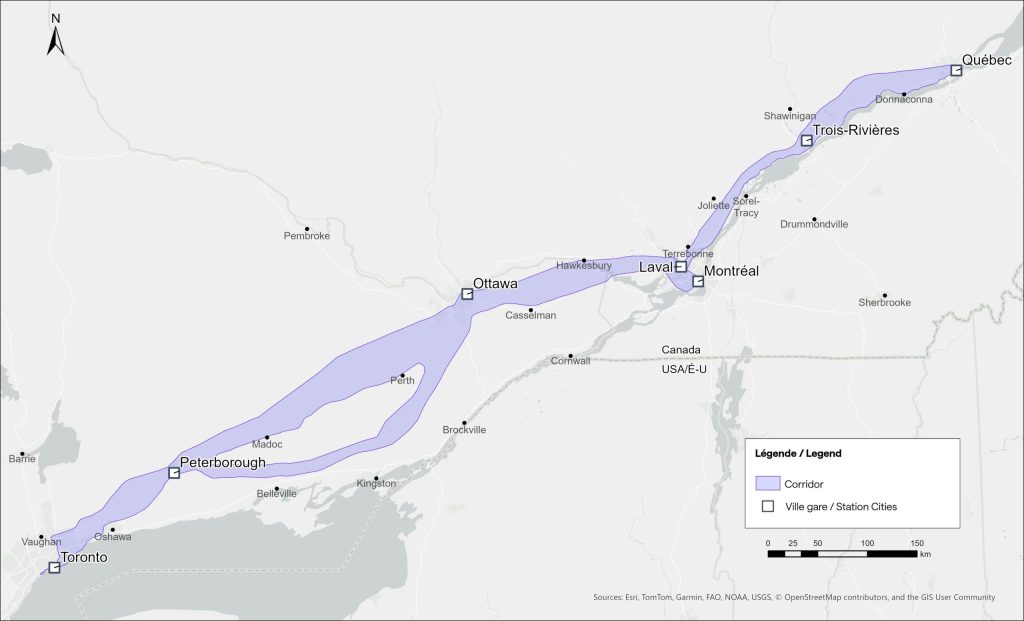
Canada faces a pivotal moment in defining the future of intercity rail. The introduction of a high-speed Altos service presents an opportunity to transform long-distance travel between major metropolitan centers, but its success hinges on the careful delineation of its corridor. Too often, proposals conflate high-speed ambitions with the realities of existing rail service, risking operational compromise. A northern alignment for Altos, distinct from the established southern VIA Rail corridor, represents the most effective solution for both speed and regional accessibility.
High-speed rail and conventional intercity service serve fundamentally different purposes. Altos is designed to connect major urban anchors directly, minimizing travel time through long, straight alignments, gentle curves, and full grade separation. Introducing intermediate stops at towns such as Belleville, Kingston, or Brockville would impose braking and acceleration penalties, schedule complexity, and infrastructure constraints that erode the system’s core value proposition. High-speed rail cannot achieve transformative travel times if it is forced to behave like conventional regional service.
The southern VIA Rail corridor, by contrast, exists to serve the communities that rely on rail for connectivity rather than speed. VIA Rail’s mandate is not to compete with high-speed intercity travel, but to provide reliable, frequent service linking smaller towns and cities to major urban centers. Belleville, Kingston, Brockville, and other communities depend on these connections for economic, social, and educational purposes. By maintaining the southern corridor for VIA, the service can focus on its core function: ensuring that smaller communities remain linked to metropolitan hubs, rather than attempting to serve as a high-speed through-route that would compromise both speed and accessibility.
Quantitative projections reinforce the strategic logic of a dedicated high-speed alignment. The planned Alto network between Toronto and Quebec City is expected to reach speeds up to 300 km/h, potentially reducing the current Montreal–Toronto rail journey from more than five hours to approximately three hours on high-speed track, a reduction of over 40 percent in travel time. Such reductions are a key driver of modal shift, since international evidence finds that high-speed rail that cuts travel times can attract a large share of travelers from road and air, significantly boosting ridership compared with conventional rail. In Canada’s case, future high-speed service could carry tens of millions of passengers annually, far exceeding the ridership of existing VIA Rail services, while generating an estimated $15 billion to $27 billion in economic value over decades through time savings, productivity gains, and reduced congestion. These figures underscore the economic rationale for building a system capable of truly high-speed operation rather than one constrained by mixed-traffic regional service.(altotrain.ca)
Routing Altos along a northern corridor also presents broader economic and developmental opportunities. A dedicated alignment can open new nodes of growth, stimulate investment in previously underserved areas, and create jobs in planning, construction, and operations. At the same time, VIA Rail can concentrate on fulfilling its statutory mandate: providing essential rail service to smaller communities, improving reliability, frequency, and accessibility along the southern corridor without interference from high-speed trains. This dual approach maximizes the overall utility of Canada’s rail network, ensuring that both large and small communities benefit.
Ultimately, the future balance of intercity rail depends on recognizing the distinct roles of each service. Altos should focus on moving cities closer together, achieving rapid, reliable intercity travel. VIA Rail should remain the backbone of regional connectivity, serving intermediate towns with frequent, accessible service that links them effectively to major urban centers. By allowing each system to fulfill its intended function, Canada can achieve a rail network that is both fast and inclusive, transformative yet equitable.
In the old rhythms of Canadian public service, the federal workplace was always Ottawa. Parliament Hill, rising above the banks of the Ottawa River, anchored not just governance, but geography itself. For decades, the logic was simple. If government work was done in one place, then the people who did that work would go there.
That logic no longer fits the country we live in.
What is often framed as an “Ottawa problem” – empty office towers, struggling downtown businesses, and debates about return-to-office mandates – is in fact a regional and national economic issue. The conversation has focused narrowly on the capital’s core, while ignoring the quieter, more fragile economies that surround it.
Small towns and villages do not have the economic buffers that large cities enjoy. They do not have diversified commercial districts, deep tourism markets, or the ability to absorb sudden shocks. When people leave town every weekday morning and return only to sleep, the effects are immediate and visible. Cafés close. Retail shrinks. Volunteer organizations struggle. Municipal tax bases flatten. One employer leaving, one policy shift, one lost opportunity can tip the balance.
And yet, this is where population growth is increasingly happening.
Across Eastern Ontario and much of Canada, families are choosing towns like Kemptville not because they are cheaper versions of cities, but because they offer something cities increasingly cannot. Space. Community. A sense of belonging. The growth is not speculative. It is real, measurable, and ongoing. The problem is that economic policy, particularly federal workplace policy, has not kept pace with that shift.
This is why North Grenville Mayor Nancy Peckford’s proposal to establish a federal remote work hub in Kemptville deserves to be understood as more than a local initiative. It is a response to a structural imbalance. Peckford pointed to the Kemptville Campus as an ideal off-site federal workspace, with secure buildings, high-speed internet, and flexible co-working space. Its location, she noted, offers a practical alternative to grinding commutes and limited parking in downtown Ottawa.
But the deeper argument is economic.
When federal employees work where they live, money circulates locally. Lunch is bought on Main Street, not in a food court. Childcare is local. Errands happen mid-day. The economic multiplier effect in a small town is outsized because the base is smaller. A handful of stable, well-paid jobs can sustain multiple businesses. The presence of daytime professionals supports services that would otherwise be unviable.
Large cities, including Ottawa, undoubtedly face challenges, yet they are resilient in ways small towns are not. They attract private investment. They adapt. They reconfigure. Small towns rarely get that luxury. Growth may be happening there, but it is fragile growth, easily reversed if policy decisions treat these places as peripheral rather than integral.
There is also the environmental dimension, one that aligns neatly with federal climate commitments. Long daily commutes from surrounding communities into Ottawa generate emissions that are entirely avoidable. Distributed work hubs reduce traffic congestion, lower greenhouse gas output, and do so without massive infrastructure spending. This is climate policy that improves lives rather than restricting them.
Mayor Peckford framed her proposal in terms of quality of life and community sustainability, emphasizing the importance of keeping people close to their families and rooted in their towns. That framing matters. It acknowledges that public servants are not abstract units of labour. They are neighbours, parents, volunteers, and taxpayers.
Ottawa will always matter. Parliament Hill will always be the symbolic heart of federal governance. But a modern public service does not need to be physically concentrated in one city to remain effective, coherent, or accountable.
If anything, the legitimacy of federal institutions is strengthened when they are visibly embedded across the regions they serve.
Kemptville’s proposal points toward a future where federal employment supports not just a capital city, but an entire constellation of towns and villages that are quietly doing the work of growing Canada. It is not about taking something away from Ottawa. It is about recognizing where the country already is – and where it is going.
A fair reading is that a significant share of Alberta’s current complaints function as sideshows, but not empty ones. They are distractions with a purpose, and that purpose is political rather than policy-driven.
At the federal level, the Carney government’s real files are structural and unforgiving: restoring long-term productivity, managing a fragile transition to a low-carbon economy without regional collapse, stabilizing housing and infrastructure finance, and navigating a volatile global trade and security environment. None of those problems yield to symbolic confrontation. They require boring competence, capital discipline, and political stamina. Against that backdrop, disputes over judicial appointments, equalization rhetoric, or procedural grievances are comparatively low-impact on Canada’s material trajectory.
From Alberta’s perspective, however, these conflicts are useful theatre. They re-center politics on identity, grievance, and sovereignty rather than on questions where provincial governments have fewer clean answers of their own. A public argument about judges, Ottawa elites, or federal overreach is easier to sustain than a hard conversation about Alberta’s economic diversification, fiscal exposure to commodity cycles, or long-term labour force constraints. These fights allow provincial leaders to frame themselves as defenders rather than managers.
For the Carney government, the danger is not that these complaints derail core policy, but that they consume political oxygen. Every hour spent responding to performative ultimatums is an hour not spent building coalitions around housing finance reform or industrial strategy. The risk is cumulative. A steady drip of constitutional agitation can distort the agenda, forcing Ottawa into a reactive posture that favours short-term messaging over long-term statecraft.
That said, dismissing the disputes entirely would be a mistake. Sideshows still shape public mood. They erode trust in institutions, normalize the idea that core democratic guardrails are negotiable, and create a climate where substantive reform becomes harder to explain and sell. The judicial appointment fight matters less for what it changes immediately than for what it signals: a willingness to challenge institutional norms to score political points.
In the bigger picture, then, Alberta’s complaints are not the main story of Canada’s moment, but they are part of the background noise that can either be managed or allowed to metastasize. The test for the Carney government will be whether it can keep its focus on the genuinely consequential files while refusing to let performative conflict define the national agenda. Governments lose momentum not when they face opposition, but when they mistake noise for substance.
The announcement by Premier Danielle Smith that Alberta will withhold funding for new judicial appointments unless the federal government gives the province a formal role in selecting those judges has jolted political observers across Canada. The premier’s letter to Prime Minister Mark Carney makes explicit what had previously been a background tension in Canadian federalism: provincial frustration with the federal judicial appointment process and an insistence that courts reflect local values and expectations. Smith argues that this reform would “strengthen public confidence in the administration of justice, promote national unity within Alberta and ensure judicial decision-making reflects the values and expectations of Albertans.” Her government has proposed an advisory committee with equal representation from Alberta and the federal government to assess and recommend candidates.
The direct Alberta issue is almost simple to state and glaringly complex to resolve. Superior court judges who serve in Alberta are appointed by the federal government and paid by Ottawa, while the province bears the cost of court infrastructure and support staff. Under Canada’s current judicial appointment system the federal government relies on independent advisory committees that include representatives appointed by provinces and law societies, but ultimate appointment power rests with the federal cabinet and prime minister. Fraser’s office has pushed back firmly against Smith’s ultimatum, underscoring that the existing process is designed to preserve judicial independence by keeping appointments “at arm’s length from political influence.” In rejecting Alberta’s call for change, the federal justice minister emphasized that judges need to make decisions “without fear and without seeking the favour of those who have power over appointments” and cautioned that threats tied to funding could undermine democratic norms.
This dispute resonates far beyond courtrooms. At its heart is an age-old constitutional question about the separation of powers and the boundary between political authority and judicial independence. Democracies rest on the premise that the judiciary should act as a check on executive and legislative power, not as an extension of it. The Canadian model tries to balance federal appointment authority with advisory input from provinces, but it deliberately avoids direct political control at the provincial level. By threatening to leverage provincial funding to gain influence, Smith’s government crosses into a zone that legal experts and critics argue already risks encroaching on judicial neutrality. The federal government’s emphasis on maintaining the current process without succumbing to political pressure underscores the idea that judicial appointments should not be bargains to be struck in the course of intergovernmental brinkmanship.
The wider context in which this debate unfolds reflects broader tensions in Canadian politics. Across Western liberal democracies, debates over judicial review, “activist” judges, and institutional legitimacy have become flashpoints in partisan discourse. The insistence that judges “reflect local values” can be read as part of a populist challenge to established institutions, one that demands greater control by elected governments over courts seen as aloof or counter-majoritarian. Yet the counter-argument — articulated by judicial leaders and constitutional scholars — is that treating courts as political prizes erodes the very safeguards that protect minority rights and hold governments accountable to law rather than political expediency. Maintaining the independence of the judiciary is not an abstract procedural goal but a foundational element of a functioning constitutional order.
The choice facing Canadian democracy, therefore, is not merely one of process reform or intergovernmental negotiation. It is a question of how a mature democratic system balances competing imperatives: responsiveness to provincial concerns, unity within a federated polity, and the insulation of core legal institutions from the pressures of partisan contestation. Premier Smith’s initiative invites a national conversation about these imperatives, but it also highlights the risks inherent in coupling financial leverage to demands for political influence over courts. History offers cautionary examples of how populist challenges to judicial autonomy can spiral into broader constitutional crises when governments seek control over the arbiters of legal disputes. The stakes, in Canada’s case, are not limited to Alberta’s courts but extend to the very integrity of judicial independence and the confidence citizens place in the rule of law.
Canada’s recent announcement of an enhanced grocery-focused tax credit represents a fiscal effort to address household affordability pressures, yet it stops well short of tackling the underlying drivers of elevated food prices. The Canada Groceries and Essentials Benefit expands the existing Goods and Services Tax (GST) credit by roughly 25% for five years and includes a one-time 50% top-up payment in 2026. This adjustment aims to put additional cash into the hands of low- and modest-income families facing grocery price inflation, particularly in urban centres where household budgets are already stretched. [Source]
Estimated Annual Benefit under Canada Groceries and Essentials Benefit, 2026
Household Type
Approx. Eligible Population
Current GST Credit (CAD)
Proposed Credit Increase (%)
Estimated Annual Benefit (CAD)
Single adult
3.2 million
443
25%
554
Couple, no children
2.5 million
566
25%
708
Single parent, 1 child
1.4 million
575
25%
719
Single parent, 2 children
0.8 million
765
25%
956
Couple, 2 children
2.1 million
1,512
25%
1,890
While additional income support can indeed help households cope with higher nominal grocery bills, it does not alter the prices displayed on supermarket shelves. Grocery stores set prices based on a complex array of supply-side factors that lie outside direct consumer control: global commodity costs, transportation and fuel expenses, labour and packaging inputs, and competitive dynamics among retail chains. The benefit’s design boosts purchasing power without addressing these structural determinants of food prices, meaning that support can be absorbed by continued price increases rather than translating into lower costs at the till.
The policy’s focus on cash transfers also leaves out many of the indirect pressures on affordability. Rising energy prices, fluctuations in the Canadian dollar, and climate-related impacts on domestic agriculture have contributed to a higher cost base for essential foods. While the government intends the credit to be a temporary buffer, households may continue to feel the pinch if structural cost drivers are not addressed simultaneously.
Recent Food Price Inflation by Category (Canada)
Category
Year-over-Year Change
Grocery overall
+4.7% (Nov 2025)
Fresh or frozen beef
+17.7% (Nov 2025)
Coffee
+27.8% (Nov 2025)
Fresh vegetables
+3.7% (Apr 2025)
Eggs
+3.9% (Apr 2025)
Bakery products
+2.1% (Oct 2025)
Dairy
+1.4% (Oct 2025)
Economic evidence from the last several quarters shows that grocery inflation in Canada has consistently outpaced general inflation, intensifying concerns about affordability. Certain staples, such as beef and coffee, have experienced particularly sharp increases due to both international market volatility and domestic supply constraints. Meanwhile, vegetables, eggs, and dairy, while increasing at a slower pace, contribute to the cumulative pressure on household budgets. The uneven nature of these price increases highlights the limitations of a single cash transfer in addressing widespread cost pressures. [Source]
Critics of the grocery tax credit correctly note that without accompanying measures to control prices or enhance competition, the benefit functions primarily as a transfer payment rather than a price-stabilization mechanism. If households receive more after-tax income but supply bottlenecks or concentrated market structures enable retailers to maintain high markups, the net effect on real affordability may be muted. Economists caution that demand-side fiscal support can, in certain contexts, perpetuate inflationary pressures if it is not paired with supply-side reforms that ease cost pressures or intensify competition.
Structural reforms could take several forms. Stronger enforcement of competition law to reduce the market power of dominant grocery chains could increase pricing discipline. Targeted subsidies for producers or investments in logistics could help lower costs upstream, which may eventually be reflected in lower retail prices. Carefully calibrated price controls, while politically sensitive, could provide temporary relief for essential goods. Each option carries trade-offs, including potential impacts on supply reliability and long-term market incentives, but all address the fundamental drivers of high prices in ways that cash transfers alone cannot.
While the enhanced GST credit may help buffer household budgets in the short term, it is not a substitute for policies that alter the economics of food pricing. Without interventions that directly address supply constraints, market concentration, or cost pressures, consumer relief will depend on continued transfers rather than a fundamental correction of price dynamics. Future discussions on food affordability would benefit from integrating demand support with concrete strategies to increase supply efficiency, foster competition, and reduce the cost of essential goods. [Source]
In recent weeks, two moments involving Rosemary Barton have sharpened a long-simmering concern about the state of Canadian political journalism. Taken together, they invite a serious question about boundary discipline, not at the margins of commentary, but at the very centre of institutional authority. When the senior political correspondent at a public broadcaster appears uncertain about where journalism ends and punditry begins, the issue is no longer personal style. It is structural.
The most telling example came during Barton’s criticism of Mark Carney for publicly pushing back against Donald Trump. Carney’s assertion that Canadians are strong was met not with a question about strategy or consequences, but with a rebuke. Barton suggested that he should not “talk like that” while negotiations with the United States were ongoing. This was not interrogation. It was correction. The distinction matters. Journalism tests claims and identifies risks. Punditry adjudicates what ought to be said and enforces preferred norms of behaviour. In this case, the journalist stepped into the role of strategic adviser.
That intervention rested on an unstated, but powerful assumption. It treated rhetorical restraint toward the United States as the only responsible posture and framed public assertiveness as diplomatically naïve or reckless. Yet this is not a settled fact. It is a contested theory of power. For many Canadians, public expressions of confidence and sovereignty are not obstacles to negotiation, but instruments of democratic legitimacy. By presenting elite caution as self-evident realism, Barton transformed a debatable worldview into an implied journalistic standard.
This moment did not stand alone. It echoed a broader pattern in which certain political choices are framed as inherently reasonable while others are treated as violations of an unwritten rulebook. Barton’s interviews frequently embed normative assumptions inside ostensibly neutral questions. The effect is subtle, but cumulative. Political actors who align with institutional orthodoxy are invited to explain. Those who depart from it are warned, corrected, or disciplined. Over time, skepticism becomes asymmetrical, and audiences begin to sense that the field of legitimate debate is being quietly narrowed.
The problem is compounded by Barton’s position. A senior political correspondent does not merely report events. The role carries symbolic weight. It signals what seriousness looks like, what competence sounds like, and which instincts are deemed responsible. When that authority is used to police tone or enforce elite etiquette, it reads not as opinion, but as instruction. Viewers are not encountering a commentator among many. They are encountering the voice of the institution.
This is particularly consequential at a public broadcaster. CBC’s democratic legitimacy depends on its ability to distinguish clearly between explanation and advocacy. When journalists appear more concerned with managing political risk on behalf of elites than with illuminating choices for the public, trust erodes. Citizens do not feel informed. They feel managed. That erosion rarely arrives as a scandal. It accumulates through moments that feel small, instinctive, even well intentioned, yet consistently tilt in the same direction.
The Carney episode also revealed a deeper misalignment of priorities. Carney’s remarks were aimed at Canadians, not at Trump. They functioned as reassurance and civic affirmation in a moment of external pressure. Barton’s response implicitly subordinated domestic democratic speech to foreign sensibilities. That is a value judgment about whose audience matters most. It may be a defensible argument in a column. It is not a neutral premise for an interview.
None of this requires imputing bad faith or crude partisanship. The issue is not ideology so much as role confusion. Contemporary political media increasingly collapses reporting, analysis, and commentary into a single on-air persona. The incentives reward strong takes and strategic framing. Over time, journalists can begin to experience elite consensus as common sense and dissent as irresponsibility. The line does not disappear all at once. It fades.
At the senior level, however, that line must be actively maintained. Journalism asks why choices are made and what consequences follow. Punditry advises, corrects, and enforces norms. When a journalist tells a political actor what should or should not be said, the boundary has been crossed. When that crossing becomes habitual, it reshapes the institution’s relationship with the public.
The question, then, is not whether Rosemary Barton is tough enough or fair enough in any single exchange. It is whether she still recognizes the limits of her authority. A senior political correspondent is not a shadow negotiator, a risk manager, or a guardian of elite comfort. The role is to clarify politics, not to perform it.
If that distinction is lost at the top, the consequences cascade downward. Journalism becomes strategy. Explanation becomes correction. And the public broadcaster, slowly and without declaration, ceases to act as a referee and begins to play the game itself.









 The Rowanwood Chronicles