Crown and Country: King Charles’s Visit Tests Canada’s Unity

King Charles III is scheduled to open Canada’s Parliament on May 27, 2025, an event of considerable constitutional and political significance. It will be the first time a reigning monarch has performed this ceremonial role since Queen Elizabeth II in October 1977, during her Silver Jubilee tour. The announcement, made jointly with Prime Minister Mark Carney, carries symbolic weight and calculated political intent. As Canada contends with renewed provocations from U.S. President Donald Trump, including veiled economic threats and rhetoric that edges toward neo-imperial posturing, the Carney government appears to be leveraging the royal visit as a demonstration of constitutional resilience and international dignity. The moment is carefully staged to evoke continuity, stability, and institutional maturity in a time of cross-border unpredictability.

Yet there is a deeper strategic layer to this decision. Donald Trump has, in recent months, made no secret of his admiration for the British monarchy. He has praised royal decorum as a model of “true leadership” and even quipped during a campaign rally in Ohio that the United States “might do better in the Commonwealth.” While intended as theatre, the remark underscores Trump’s peculiar reverence for monarchical symbolism, a reverence that contrasts sharply with his often dismissive tone toward democratic norms. By welcoming King Charles into such a central role in Canadian political life, Carney may be sending a coded diplomatic signal to Washington: Canada, unlike its southern neighbour, is grounded in institutions that project both dignity and endurance. If Trump is moved by monarchy, then Carney is speaking a language he understands.

Domestically, however, the political optics are more complicated. While the Crown remains Canada’s formal head of state, public sentiment toward the monarchy is lukewarm at best. Recent polling suggests that 67 percent of Canadians were indifferent to Charles’s accession, and more than 80 percent described themselves as personally disconnected from the institution. For many, the monarchy feels like a vestige of another era, more relevant to history books than to modern governance. Carney’s gamble, then, is that the ceremonial gravitas of a royal visit will outweigh the public’s prevailing sense of apathy or irrelevance.

That apathy becomes pronounced opposition in Quebec, where nationalist sentiment remains particularly resistant to symbols of British authority. Quebec’s sovereigntist movements have long framed the Crown as emblematic of colonialism and cultural erasure. During King Charles’s coronation, the Société Saint-Jean-Baptiste de Montréal sent a telegram to Buckingham Palace declaring him “not welcome” in the province. The message was more than rhetorical: it echoed a deep-rooted political ethos that has challenged Canada’s constitutional architecture since the Quiet Revolution. In 2022, Premier François Legault’s government moved to eliminate the requirement that members of the National Assembly swear allegiance to the monarch, a pointed gesture of institutional defiance. For Quebec nationalists, the King’s presence in Ottawa may not symbolize unity, but rather federal tone-deafness.

Yet even as the visit stirs unease in some quarters, it presents a lesser-discussed opportunity: to reimagine the role of the Crown in Canada’s ongoing reconciliation with Indigenous peoples. The monarchy is, historically and legally, a signatory to many of the foundational treaties that continue to define the relationship between Indigenous nations and the Canadian state. For many Indigenous leaders, the Crown is not merely a colonial artifact, but also a legal partner whose standing can be invoked to press for the recognition of rights, lands, and sovereignty. If handled with humility and commitment, the King’s visit could serve as the opening of a new chapter, one in which the Crown renews its role not through symbolic visits alone, but through meaningful engagement with treaty obligations. Such a move would not erase historical wrongs, but it could elevate the discourse from ceremonial niceties to active responsibility and mutual respect.

In this light, the King’s appearance is more than a formal gesture. It is a high-stakes exercise in multi-layered symbolism, directed outward to a volatile American neighbour, inward to a fragmented federation, and downward through the strata of Canada’s colonial legacy. Carney is clearly betting that monarchy, however ambivalently received, can still serve as a unifying force if cast with the right mixture of diplomacy, gravity, and forward-looking intent. The risk is that in attempting to speak to all Canadians, the gesture may resonate with too few people. On the other hand, if successful, it could lay the foundation for a reimagined relationship between Canada and its institutions, one that asserts sovereignty, invites reconciliation, and strategically reclaims tradition in a turbulent geopolitical moment.

Pierre Poilievre and the Perils of a Political Retreat: Alberta as Safe Harbour or Symbol of Stubbornness?

At time of publication, there are no hard facts that support the notion that Mr. Poilievre will be standing in an Alberta by-election to regain a parliamentary seat. Prime Minister Mark Carney has stated that if this happens he has told Mr. Poilievre that he will trigger a by-election as soon as possible, “with no games, nothing.” 

Update
Within an hour of my publishing this post, Conservative MP-elect Damien Kurek says he will resign his Alberta seat so Conservative Leader Pierre Poilievre can run in a forthcoming by-election.

With the dust barely settled on the 2025 federal election; an election that saw Pierre Poilievre’s Conservatives fall short of forming government, new political tremors are already stirring on the Prairies. In a move that has stunned even some within his party, a newly elected Alberta Conservative MP is reportedly prepared to resign their seat to make way for Poilievre to run in a by-election.

This extraordinary gesture, while perhaps well-intentioned, forces Canadians to confront uncomfortable questions about leadership, legitimacy, and political culture. When a party leader is rejected by the country, what message does it send when they attempt to cling to power through a political back door?

A federal by-election in Alberta might appear, at first glance, like a logical next step for a leader whose personal popularity in that province remains high. Yet politics is not merely about numerical safety; it’s about national optics, political narrative, and public trust. This latest development is not just a test of Pierre Poilievre’s judgment; it’s a test of how far Canadian political norms can stretch before they snap.

What Happens When the Nation Says “No”?
Poilievre led the Conservatives through a campaign in which he promised transformation, fiscal discipline, and a crusade against what he called the “gatekeepers” of Canada’s institutions. The message, while resonant with segments of the electorate, ultimately fell short. He lost not just the confidence of Parliament, but of the majority of Canadians. In Canadian political culture, such a loss carries a clear implication: it’s time to step aside.

History provides no shortage of examples. Stéphane Dion resigned promptly after the Liberals’ dismal 2008 result. Michael Ignatieff, after the Liberal collapse in 2011 and the personal loss of his own seat, departed politics altogether. Andrew Scheer, who arguably performed better by winning the popular vote in 2019, still stepped down under pressure. Erin O’Toole, ousted by caucus after a 2021 campaign that yielded no significant breakthroughs, made no attempt at a comeback.

In each of these cases, the defeated leader recognized an essential political truth: leadership legitimacy comes not just from internal loyalty, but from external validation. Without a mandate from voters, remaining at the helm, or re-entering the ring, can seem more like ego than service.

Alberta as Sanctuary or Sideshow?
Poilievre’s political instincts have long found fertile ground in Alberta. His messages about oil, taxes, and personal freedom resonate strongly in a province often at odds with the federal government. A by-election there would almost certainly be safe terrain.

But that very safety raises difficult questions. Is the goal to represent the people of Alberta, or to use them as a political life raft? Reports that a newly elected MP, who just earned the trust of their constituents, might step aside to create space for Poilievre do not sit well with everyone. It smacks of backroom deal-making at a time when Canadians are demanding transparency and authenticity.

Alberta is no longer a monolith. Calgary and Edmonton have shown a consistent willingness to elect Liberals and New Democrats, especially in urban ridings. The electorate is younger, more diverse, and increasingly skeptical of overt political opportunism. A by-election staged to rehabilitate a failed leader could risk turning a Conservative stronghold into a national conversation about political entitlement.

The Constituency Question: Representation or Rehabilitation?
At its core, a by-election is a local exercise in democracy. Constituents elect someone to speak for their needs, not to serve as a stepping stone in a national chess match. If Poilievre proceeds with this path, it raises the question: who is the by-election really for?

Canadians are not blind to political calculation. They understand strategy, but they also understand sincerity. A leader who has been rejected nationally, yet insists on staying in the House of Commons via a seat that wasn’t theirs to begin with, risks being seen as more focused on personal relevance than party renewal.

This dynamic becomes even more delicate when local party members, many of whom fought hard to win a close race, are told to stand down or step aside. A backlash could erupt not just among voters, but within the Conservative grassroots. The image of parachuting a defeated leader into a riding might not sit well in the era of decentralized political engagement and hyper-local activism.

Internal Divisions and Leadership Overhang
Poilievre’s leadership was always going to be a high-risk, high-reward proposition. His populist rhetoric electrified many disaffected voters, but alienated others, including centrist swing voters in Ontario and British Columbia. That coalition wasn’t enough to win in 2025, and now, it may not be enough to secure his continued relevance.

Within the party, the response to the by-election rumour has been mixed. Some insiders, eager for continuity, view it as a practical step. Others see it as a dangerous delay to a necessary leadership transition. A successful by-election campaign might embolden Poilievre’s loyalists, but it won’t erase the larger strategic failures of the campaign. Worse, it may divide caucus between those pushing for reform and those clinging to the status quo.

If Poilievre wins a seat, but not a second chance, the Conservative Party risks entering a prolonged period of drift, neither fully post-Poilievre nor able to rebrand under new leadership. It’s the political equivalent of suspended animation.

What Kind of Political Culture Do We Want?
At a deeper level, the question is not just about Pierre Poilievre. It’s about the kind of political culture Canadians want. Do we reward resilience at any cost, or do we expect our leaders to recognize when their time is up?

Canadian political history has respected those who step aside with dignity after defeat. They may later return, as Jean Chrétien did after a long opposition tenure, but they do so only after earning back the trust of the public and their party. A quick return via a strategically engineered by-election feels more like a workaround than a comeback.

A Moment of Reckoning
Poilievre’s possible bid to return to the House of Commons via a by-election in Alberta, on the heels of a national rejection, could set a precedent, but it may be one the country comes to regret. He may win the seat, but lose the opportunity to be remembered as a leader who put country and party renewal ahead of personal ambition.

In that sense, this is no ordinary by-election rumour. It is a moment of reckoning, for a leader, a party, and a political culture that must decide whether to move forward or loop endlessly around the gravitational pull of defeat.

About Alberta: A Personal Perspective on Culture, Conversation, and Contribution

After more than 25 years as a business consultant, I’ve been fortunate to work across continents, meeting people, solving problems, and learning from cultures far from home. Yet, one of the most eye-opening cultural journeys I’ve taken has been much closer to home, right here in Canada.

In the early 2000s, I married a university professor from Alberta. With that union came a second family: ranchers, farmers, nurses, and small business owners from the Prairies. They welcomed me warmly, and over time, I found myself immersed in a culture both deeply Canadian and distinctly Albertan. What I discovered challenged assumptions I didn’t even know I had, and continues to shape how I think about communication, leadership, and nation-building.

Alberta isn’t just a place. It’s a way of being.

Like all Canadian regions, Alberta’s culture is shaped by its geography, economy, and history, but what stands out most is its ethos: plain speaking, hard work, and a fierce belief in self-reliance. This is a province built on the backs of people who tamed land, raised cattle, built farms, extracted energy, and raised families while weathering the booms and busts of resource cycles. It’s no surprise that such a setting produces a political and social landscape that leans more conservative, values independence, and tends to be skeptical of centralized authority, especially from Ottawa.

Yet, it’s also a province of surprising complexity. Urban centres like Calgary and Edmonton are home to vibrant, diverse communities. There’s deep thoughtfulness here, too, but it often takes a different form than what some Central Canadians might expect. Alberta’s discourse is grounded in lived experience, not theory. “Common sense” matters. So does speaking your mind, and when someone feels unheard, it’s often not about a lack of airtime, but about the feeling that their reality is being brushed aside.

One phrase I’ve heard countless times in Alberta is, You’re not listening to me. Sometimes, that’s not a literal complaint, it’s a coded way of saying, You’re not agreeing with me. In Alberta, where beliefs are often forged in the furnace of real-world outcomes, farming yields, small business margins, frontline nursing shifts, disagreement can feel like dismissal. If someone tells you a policy won’t work, it’s probably because they’ve lived through something similar. Ignoring that isn’t just impolite, it’s a denial of experience.

This is where conversations between Alberta and other parts of Canada can break down. We confuse disagreement with disrespect. We treat pragmatism as resistance to progress, and we forget that emotional intelligence requires listening to not just what is being said, but why it matters to the speaker.

My Alberta family holds views that might make some urban Central Canadians bristle. They question bureaucratic red tape. They prize personal responsibility. They believe in earning what you get, and yet these are the same people who will pull over in a snowstorm to help a stranger, or give you the shirt off their back if they think you need it. They don’t expect perfection, but they expect fairness, honesty, and above all, effort.

So how do we move forward, together?

First, we stop talking about Alberta and start talking with Albertans. We acknowledge the tensions, but we also recognize the province’s extraordinary contributions: to our economy, to our energy independence, to our national character. As we help Alberta navigate economic transformation, from oil to innovation, we must do so with respect for the culture that built this place.

That means understanding that communication here is not always couched in policy language or academic nuance. It’s plain. It’s passionate. It’s personal. And it deserves to be met with the same.

If we want a better Canada, we need a better conversation with Alberta, not just about it. That begins with listening not just to words, but to the values and experiences behind them. When we do that, we’ll find that Alberta doesn’t need to be changed, it needs to be understood.

First Past Its Prime: Rethinking Canada’s Voting System

It’s not every day a country is offered the chance to fix the structural rot in its democracy, but with frustration mounting across regions and communities, especially in Western and Indigenous Canada, the time for piecemeal reform is over. Canada stands at a crossroads, and the best path forward is the boldest one: comprehensive, simultaneous democratic renewal.

There is a rumour that a new white paper is now circulating among policy wonks, not just another tired commission report, but a blueprint for electoral and parliamentary transformation. It proposes we do four things at once: implement Proportional Representation (PR) in the House of Commons; guarantee Indigenous representation in both the House and Senate; elect our Senators instead of appointing them; and impose term limits across the board.

These are not radical ideas on their own, they’ve each been discussed, and in some cases even promised, by federal governments past. What’s radical, and deeply necessary, is the insistence that these reforms be pursued together. Not piecemeal. Not sequential. Together. Why? Because they reinforce each other, and together they promise a Canadian democracy that finally reflects our values, population, and future.

Let’s start with the cornerstone: Proportional Representation. The problems with first-past-the-post (FPTP) are well known. Governments get majority power with minority support. Voters in large swaths of the country, the Prairies, Northern Ontario, Atlantic Canada, feel their votes don’t count if they aren’t aligned with the winning party. Entire political movements, including Greens and Indigenous-led initiatives, are kept to the margins, not because people don’t support them, but because the system locks them out.

Under PR, the number of seats a party wins would actually reflect the votes it gets. It levels the playing field, encourages cooperation, and disincentivizes the hyper-partisanship we’ve seen grow in recent years. It also makes space for new voices, and that’s where the next reform matters deeply.

Indigenous peoples, who comprise nearly 5% of Canada’s population, are still structurally underrepresented in federal governance. Beyond symbolic appointments, there’s no permanent Indigenous voice in our institutions. That’s not reconciliation. That’s exclusion. The rumoured white paper proposes 10–17 guaranteed Indigenous seats in both the House and Senate, elected by Indigenous voters through systems that reflect their distinct traditions and nationhood. This is a direct response to the Truth and Reconciliation Commission’s call for political inclusion and UNDRIP’s principles of Indigenous self-determination.

Imagine, for a moment, a federal legislature where Indigenous nations hold formal, guaranteed space, not as guests or advisors, but as constitutional partners. That’s what real nation-to-nation dialogue would look like.

Then there’s the Senate, long the source of regional resentment and democratic embarrassment. An institution that holds legislative power, but whose members are appointed for life (until age 75). It’s no wonder people west of the Ottawa River roll their eyes. Reform here is overdue. The proposal calls for elected Senatorsterm limits, and regional balance, meaning each province and territory gets a fair say, regardless of population size. It also insists on something else: guaranteed Indigenous seats in the Senate, a chamber designed in part to protect minority interests and prevent majoritarian overreach.

And finally, term limits. Canadians respect experience, but they’re tired of career politicians clinging to power for decades. Democracy thrives when it breathes, when new leaders emerge, when old ideas are challenged, when public service is temporary and accountable. A 12-year limit for MPs and Senators allows plenty of time for impact, but makes space for renewal. It reduces the likelihood of political entrenchment, encourages succession planning, and invites more diverse participation, especially from younger generations and underrepresented communities.

Now, critics will argue this is too much at once. That we need to tread carefully. That the constitutional path is hard, and it is, but incrementalism is how we got here: decades of broken promises, failed referenda, and half-measures. The public is smarter than our politics. Canadians understand that systems matter, and that systems built in the 19th century can’t solve 21st-century problems.

By tackling PR, Senate reform, Indigenous representation, and term limits together, we don’t just update old institutions. We rebalance power. We rebuild trust. We open the doors to millions of people who have been shut out, by geography, by heritage, by design.

This isn’t about partisan advantage. It’s about democratic legitimacy. Every vote should count. Every region should matter. Every people should be heard.

This is Canada’s moment for democratic reckoning. Let’s not waste it. Let’s do it all at once.

I may/or may not have started the rumour about this so called white paper, and we all know it’s out there. 

Public Broadcasting is Democratic Infrastructure: It’s Time We Treated It That Way

A healthy democracy doesn’t just depend on free elections or a functioning parliament, it requires a well-informed public. And that, in turn, depends on public media. Yet, while countries like Norway, Switzerland, and Germany invest heavily in their national broadcasters, Canada lags behind, spending just $32 per capita on the CBC. The average among comparable nations? $82 per person, over two and a half times as much. These aren’t obscure outliers. They are the very countries we hold up as models of good governance and enviable quality of life.

The implications of this underfunding are profound and dangerous.

For starters, let’s be clear about what a strong national broadcaster provides: verified, fact-checked information; in-depth investigative reporting; representation for marginalized communities; cultural production that reflects national identity; and local coverage that commercial networks consider financially unviable. It produces journalism and storytelling not because it will sell ads, but because the public needs to hear it. In short, a national broadcaster is not just media, it’s civic infrastructure.

And like all infrastructure, when it’s neglected, the cracks begin to show. Coverage gets thinner. Journalists are laid off. Investigative units are cut back. Cultural programming disappears. Public trust erodes. This is not some abstract danger. We’re already seeing it. In many rural and northern communities, CBC/Radio-Canada is the only news outlet on the ground. If we let it wither, those Canadians lose their voice.

Some critics argue that the CBC is biased or outdated. Others go further, calling for its privatization or outright abolition, but calls to defund the CBC aren’t coming from a place of principle, they’re coming from political convenience. The CBC’s critics are often those who fear being held to account. The very fact that it makes governments uncomfortable is proof of its relevance. A neutered or commercialized broadcaster wouldn’t challenge power. It would amplify it.

That’s why funding isn’t the only issue. Independence matters just as much.

Right now, the CBC depends on annual allocations from the federal government—allocations that can be increased, frozen, or cut depending on the political mood. That dynamic creates an impossible tension: how can journalists freely investigate the very politicians who control their budgets? To resolve this, Canada should follow the lead of countries like the UK and Germany, where national broadcasters are governed by arms-length boards and funded through fixed, long-term mechanisms like licence fees or parliamentary endowments.

We don’t just need to preserve the CBC, we need to drastically increase its funding. Canada should not be spending less than a dollar a week per citizen on one of its most vital democratic institutions. A national broadcaster must be robust, resilient, and equipped to compete in a rapidly changing media landscape. That takes serious investment. The federal Liberal government has acknowledged this, pledging in successive platforms to increase funding to the CBC and Radio-Canada; but pledges are not progress. What’s needed now is political will to deliver not just marginal boosts, but transformational support, the kind that allows the CBC to rebuild local newsrooms, expand digital services, and commission bold, public-interest journalism across all regions and communities in Canada.

We must also abandon the false binary that public media is either pro-government or obsolete. Neither is true. A public broadcaster does not exist to defend the state, it exists to inform the public. In an age when foreign disinformation campaigns, clickbait economics, and algorithmic echo chambers dominate, a trusted public voice is not a relic of the past. It’s an essential defense against manipulation and ignorance.

In fact, defunding public media doesn’t reduce bias, it opens the door to greater corporate influence. When information is treated solely as a commodity, public interest takes a back seat to private profit. Stories that matter but don’t sell, like Indigenous issues, climate policy, or rural healthcare, vanish from the airwaves. And the stories that do remain are curated not for accuracy or balance, but for engagement, outrage, and revenue.

We know where that leads. We’ve seen it south of the border.

So let’s learn the right lesson. Let’s fund the CBC, not as a cultural subsidy, but as a democratic necessity. Let’s enshrine its editorial independence in law. Let’s give it the tools to innovate, expand, and thrive in the 21st century. And let’s stop pretending that cutting public media is some kind of populist virtue.

Supporting a national broadcaster is not a left-wing or right-wing issue. It’s a civic one. And at $32 per Canadian per year, it’s also a bargain.

We don’t need less CBC. We need more of it, improved and independent.

TVO’s The Agenda to Wrap After 19 Seasons: What’s Next for Steve Paikin?

In a move that marks the end of an era in Canadian public broadcasting, TVO has announced it will sunset its flagship current affairs program, The Agenda with Steve Paikin, after an impressive 19-season run. The final broadcast is set for June 27, 2025, and for many Ontarians, it will feel like saying goodbye to a trusted dinner guest—one who always brought facts, balance, and an impressive Rolodex of guests to the table.

Since its launch in 2006, The Agenda has been a cornerstone of civic discourse in Ontario. It emerged from the ashes of Studio 2, with Paikin at the helm, guiding viewers through complex political, social, economic, and cultural landscapes. Whether you agreed with his guests or not, you knew you’d come away smarter for having watched.

But fear not, public affairs junkies—TVO isn’t abandoning the field. Come fall 2025, a new show, The Rundown, will take its place. While details remain sparse, TVO promises it will carry on the tradition of thoughtful journalism that The Agenda embodied. One notable change: The Rundown will not be hosted by Steve Paikin.

The Paikin Legacy: A Journalist’s Journalist
For those unfamiliar with Steve Paikin’s long and storied career (where have you been?), the man is a broadcasting institution. Before The Agenda, he co-hosted Studio 2 and anchored Diplomatic Immunity, showcasing his deft moderation skills and encyclopedic knowledge of politics and international affairs. His journalistic journey began in the 1980s, with stints at CHCH-TV in Hamilton and CBC Newsworld, and he even authored several books exploring Canadian politics and leadership.

Paikin’s interviewing style—unfailingly polite, often probing, never performative—earned him accolades and respect from all corners of the political spectrum. He doesn’t shout, he doesn’t sensationalize. He listens. And in today’s media landscape, that’s become a rare and precious commodity.

What’s Next for Steve Paikin?
Though he’s stepping back from full-time hosting duties, Steve Paikin isn’t exactly riding off into the sunset. TVO has confirmed he will remain part of the team in a part-time capacity. He’ll co-host the weekly political podcast #onpoli, continue as a columnist on the TVO website, and lead Ontario Chronicle, a history-focused series on YouTube. He’ll also serve as a host for public events—likely to be as packed as his Twitter mentions during election nights.

So, while The Agenda may be coming to a close, the Paikin chapter in Canadian journalism is far from over.

The goodbye may be bittersweet, but it’s also a reminder of what good, measured, insightful media can look like, and if the past is any indication, Paikin’s next act will be worth watching too. 

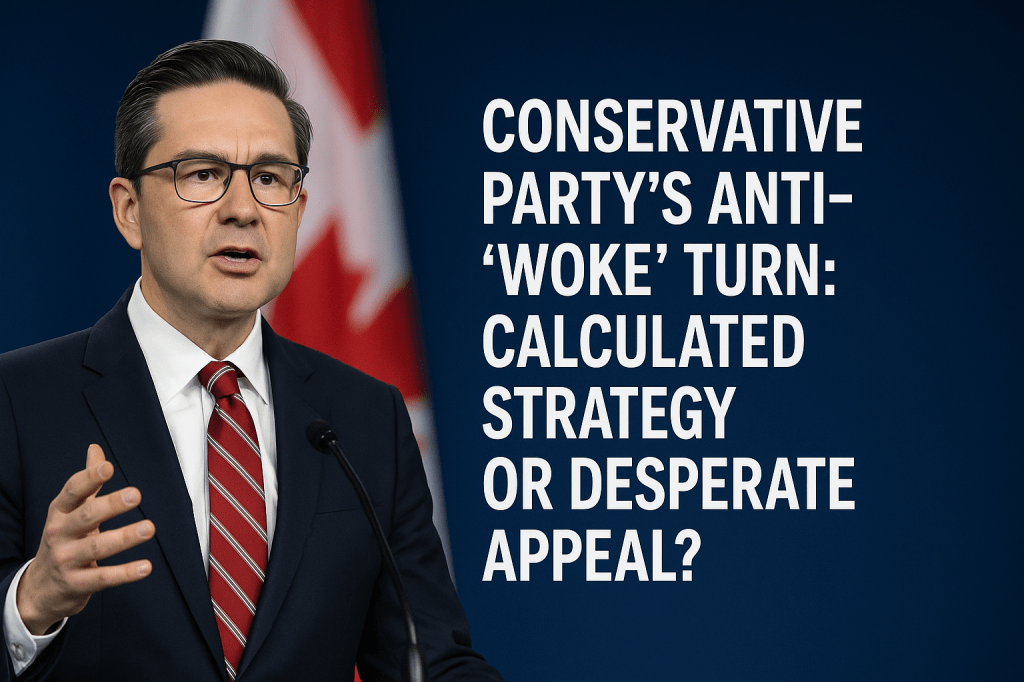
Conservative Party’s Anti-“Woke” Turn: Calculated Strategy or Desperate Appeal?

The Conservative Party of Canada has quietly republished the English-language version of its platform to reinsert a plank that had been conspicuously absent; a pledge to crack down on so-called “woke ideology” within the federal public service, and in university research funding. Described as a “publishing oversight,” this addition raises far more questions than it answers, particularly about Pierre Poilievre’s political calculus as the next election draws closer.

First, let’s interrogate the substance. “Woke ideology,” while undefined in the platform, is often shorthand on the political right for progressive stances on diversity, inclusion, gender identity, anti-racism, and decolonization efforts. To include language targeting these frameworks suggests the Conservatives are not just passively uncomfortable with current equity-focused public policy, they’re actively preparing to dismantle it. But why now?

One possible explanation is strategic: this is a deliberate overture to Canada’s emergent far-right electorate. While still fringe in some parts of the country, this voter segment has grown increasingly vocal, particularly on social media, and within alternative media ecosystems. By tapping into their grievances, against public sector DEI programs, gender-inclusive language, or research funding tied to Indigenous reconciliation, the Conservatives may be attempting to consolidate a reliable, energized bloc of voters.

Another interpretation is more inward-facing: Poilievre is shoring up his base, not for the election, but for what comes after. Should the Conservatives form government, he may face internal fractures between establishment conservatives and newer ideological hardliners. This platform language signals allegiance to the latter, potentially ensuring his continued leadership in a post-election caucus that could be divided on everything from fiscal policy to foreign affairs.

There’s also the broader issue of timing. The re-publication came after criticism that the party had been “softening” to appeal to moderate or urban voters, many of whom are uncomfortable with overt culture war rhetoric. By reaffirming this pledge, the party might be trying to reassure its core that the campaign’s centrist gestures are mere optics, not policy commitments.

But this move is not without risks. Canada’s public service is one of the most diverse and professionalized in the world. Federal civil servants are unlikely to respond positively to a government that frames their professional values as ideological threats. Likewise, university researchers who rely on federal grants will see this as a chilling signal that academic freedom could be compromised by political litmus tests.

And then there’s the broader electorate. While “anti-woke” politics have gained traction in the U.S. and U.K., Canadian voters have historically been more moderate. The risk for Poilievre is that in appealing to a narrow base, he alienates the swing voters he’ll need to actually win. Recent polling shifts, driven in part by U.S. President Donald Trump’s aggressive new tariffs on Canadian goods and Liberal leader Mark Carney’s boost in credibility, suggest the tide may already be turning against Poilievre’s hard-right gambit.

The re-insertion of this controversial language into the Conservative platform isn’t a glitch, it’s a signal. The question now is whether it’s a strategic masterstroke aimed at cementing a new ideological alignment in Canada, or a desperate hedge against the possibility that Poilievre wins the election, but loses control of his own party.

Pierre Poilievre’s Fear Tactics: A Betrayal of Canadian Values

This is the first of hopefully many guest posts for this blog.

I have been heartened by the civility characterizing the 2025 Canadian Federal Election Campaign. Amid global unrest, our nation’s commitment to respectful discourse has been a beacon of hope. Until today.

Today, Pierre Poilievre crossed a line. He didn’t just resort to name-calling; he employed fear on a scale that is both alarming and disheartening.

Leadership demands vision, a comprehensive plan, and the ability to inspire confidence. A true leader assesses situations holistically, allocates resources wisely, and maintains composure under pressure.

However, Mr. Poilievre chose a different path. He took a speculative report, designed to explore potential future scenarios, and distorted its findings to paint a dystopian narrative. This manipulation wasn’t just misleading; it was a calculated attempt to exploit Canadians’ emotions for political gain.

The report in question, published by Policy Horizons Canada, is intended to inform policymakers about possible future challenges and opportunities. It’s a tool for strategic foresight, not a definitive prediction. By presenting its content as an imminent threat, Mr. Poilievre has not only misrepresented the report, but also undermined the very purpose of such forward-thinking analyses.

This approach is not just a deviation from responsible leadership; it’s a betrayal of the trust Canadians place in their elected officials. It sows unnecessary fear and distracts from constructive dialogue about our nation’s future.

I urge every Canadian to read the report themselves at Policy Horizons Canada. Understand its intent, and see through the fear-mongering.

https://horizons.service.canada.ca/en/2025/01/10/future-lives-social-mobility/index.shtml

Our future is ours to shape. Let’s base our decisions on facts, not fear.

About the Author

Angela is a Canadian veteran who was honoured to be part of the first class of women at Collège militaire royal de Saint-Jean and retired from the Canadian Forces in 1991. Since then, she has built a diverse career in industry and has owned and operated small businesses for over two decades. Her lifelong commitment to service, leadership, and community informs her thoughtful perspective on Canada’s future.

The Quiet Leader: Alberta’s Hidden Role in North America’s Prosperity

In an era of mounting economic uncertainty, geopolitical tension, and post-pandemic recovery, Alberta has quietly emerged as North America’s top subnational performer in a critical and often overlooked metric: the Human Development Index (HDI). For policy watchers and socio-economic analysts, this isn’t just a number to file under “interesting trivia.” Alberta’s position at the top of the HDI rankings among all Canadian provinces, American states, and Mexican territories marks a significant case study in the relationship between natural resource wealth, public policy, and long-term human development outcomes.

As of the most recent figures, Alberta boasts an HDI score of 0.947, narrowly edging out perennial Canadian leaders like British Columbia and Ontario, and standing shoulder to shoulder with wealthy U.S. states like Massachusetts (0.956). The HDI, developed by the United Nations, is a composite measure of life expectancy, education, and per capita income. It is often used as a more holistic gauge of prosperity than GDP alone, as it reflects not only how much wealth a region generates, but how that wealth translates into actual well-being.

Alberta’s strong showing may come as a surprise to some, especially given the narrative often pushed about the province being overly reliant on fossil fuels or politically out of step with the rest of the country, but the truth is more nuanced. Alberta’s prosperity, particularly in the past two decades, has allowed it to make significant investments in healthcare, education, and infrastructure. Its high-income levels have supported strong public services, when policy has aligned with long-term development goals, and its young, well-educated workforce has given the province a demographic advantage. This is not to ignore Alberta’s volatility or the challenges of a boom-and-bust economy, but rather to acknowledge that, when things align, the outcomes can be extraordinary.

Education is a particular strength. Alberta consistently ranks among the top in Canada, and even internationally, in literacy, math, and science scores, according to the OECD’s PISA results. Its public healthcare system, while strained like others across Canada, remains broadly effective and accessible. Meanwhile, high wages, especially in the energy and trades sectors, boost the per capita income metric significantly, even when adjusted for cost of living.

Of course, HDI doesn’t capture everything. Alberta’s Indigenous communities, rural populations, and recent immigrants often experience very different outcomes than the provincial average. Income inequality, climate vulnerability, and questions around economic diversification remain pressing concerns, but as an overall measure of human potential realized, Alberta’s HDI score offers a compelling counter-narrative to those who dismiss it as a one-note petro-state.

The implications of Alberta’s top-tier HDI rating should not be understated. For federal policymakers, it underscores the importance of regional economic engines in lifting national development indicators. For other provinces and territories, it poses a question: what mix of resources, governance, and vision leads to sustained human flourishing? And for Alberta itself, it’s a reminder that the province’s legacy need not be only pipelines and politics, it can also be about how to build a society where people truly thrive.

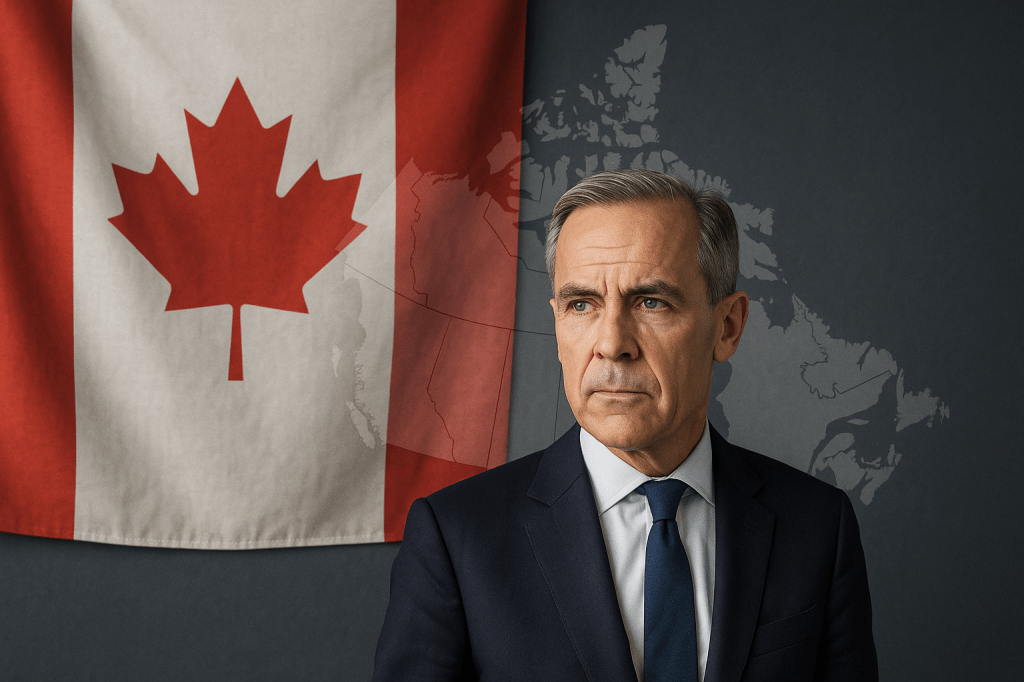
Mark Carney’s Canada: One Economy, Thirteen Obstacles

Mark Carney’s call for “one Canadian economy, not thirteen” isn’t just the idle musing of a former central banker with time on his hands, it’s the warning shot of a man who has sat at the helm of two of the world’s most powerful financial institutions and seen, up close, how countries succeed and fail. Carney’s frustration with Canada’s fragmented economic landscape is both practical and philosophical. He knows the potential this country holds – vast natural resources, educated people, global ties, but he also sees how much of it is squandered by a patchwork system where ten provinces and three territories act like neighbouring fiefdoms instead of building blocks of a common national purpose.

The problem, as Carney lays it out, is that Canada often behaves more like a loose confederation of mini-economies, than a modern unified state. Each region guards its turf: labour standards vary wildly, professional credentials don’t always carry across provincial lines, and tax regimes are a bureaucratic maze. Even something as basic as securities regulation, the rules that govern how companies raise money and protect investors, is balkanized, with no single national regulator, making Canada unique among developed nations in all the wrong ways. This isn’t just inefficiency; it’s economic self-sabotage.

Carney has always had a policy wonk’s precision, but in recent years he’s added the rhetorical flair of someone preparing to step onto the political stage. When he talks about the climate transition, for example, he doesn’t mince words: Canada will fail to meet its emissions targets if each province charts its own course. British Columbia might be ahead on carbon pricing, while Alberta and Saskatchewan cling to fossil fuels, and Quebec stands off in its own hydro-powered world. Without a shared strategy, Carney argues, we’re running thirteen separate races instead of pulling together in the global marathon toward sustainability.

Underlying Carney’s vision is a call for greater productivity and global competitiveness. He sees a Canada that could lead in clean energy, advanced manufacturing, digital innovation, but only if it acts in concert. That means building national infrastructure, fixing interprovincial trade barriers (which some federal estimates say cost the economy up to $130 billion a year), and aligning provincial policies on education, investment, and labour force development. It’s not just about growing the economy, it’s about making sure that growth is fair, inclusive, and forward-looking.

Of course, Carney knows the hurdles. This is Canada, after all. The constitution gives provinces enormous authority over key economic levers like natural resources and education. Regionalism runs deep, from the grievances of Western alienation to the distinct society of Quebec. Even the idea of a national strategy can provoke suspicion, seen less as vision and more as Ottawa’s overreach. And the political will to forge consensus is in short supply, especially in an age where short-term gains too often outweigh long-term planning.

Still, Carney keeps beating the drum. His is a voice urging Canada to get serious about itself. To stop coasting on inherited wealth and institutional stability, and start acting like a country that actually wants to lead in the 21st century. Whether as a private citizen, a public thinker, or elected Prime Minister, Carney is pushing us to imagine what Canada could become if it truly operated as one economy, not thirteen.

Sources:
Mark Carney, Value(s): Building a Better World for All (Knopf Canada, 2021)
Government of Canada – Interprovincial Trade Barriers: https://www.canada.ca/en/intergovernmental-affairs/services/barriers-interprovincial-trade.html
Canadian Securities Administrators: https://www.securities-administrators.ca/