
December 25th, the Dies Natalis Solis Invicti or “Birthday of the Unconquered Sun,” has long been associated with cosmic renewal and light’s triumph over darkness, aligning with the winter solstice. Its significance may stretch back to ancient Persia and found deep resonance in Roman religion, particularly within the mystery cult of Mithras.
Mithraism flourished in the shadowy corners of Roman society, appealing to soldiers, merchants, and officials. Mithras, a god of light and justice, was central to a complex mythology that emphasized cosmic order and renewal. His worship featured the tauroctony, a scene depicting Mithras slaying a sacred bull in a cave, from whose blood life and fertility emerged. This act symbolized victory over chaos and the cycles of life and death, themes reinforced by Mithras’ divine “rock birth” (Petra Genetrix), which emphasized his eternal and unshakable essence.
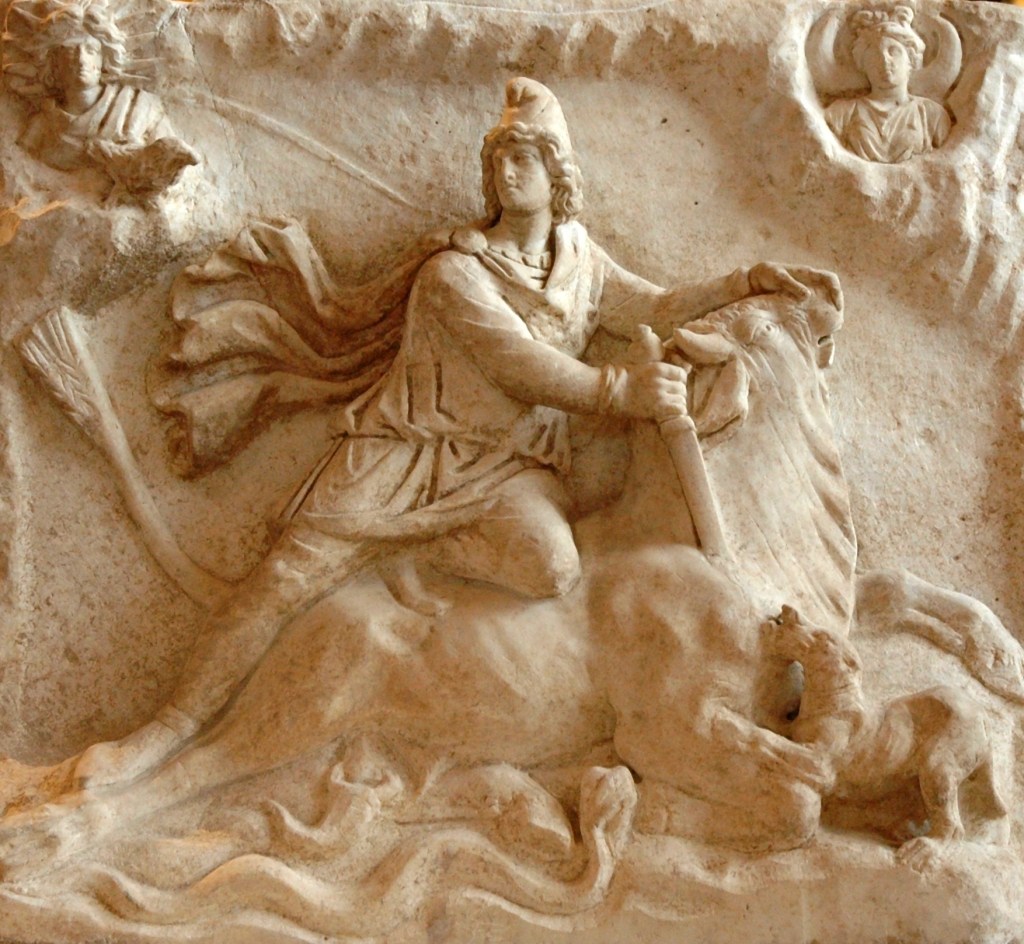
Mithras’ bond with Sol Invictus, the Roman solar deity, was central to his worship. Together, they were shown feasting after the bull’s defeat, celebrating cosmic renewal and the return of light. This connection tied Mithras to the December 25th celebration, when the days began to grow longer, signifying hope and rebirth for his followers. Worship took place in cave-like Mithraea, where initiates advanced through seven secretive ranks, fostering bonds of loyalty and discipline, particularly among Roman soldiers.
Christianity rose alongside Mithraism, drawing parallels with Mithras in themes of salvation, sacrifice, and divine light. Jesus Christ, like Mithras, came to symbolize victory over darkness, spiritual rebirth, and eternal life. By aligning Christ’s nativity with December 25th, Christianity absorbed and redefined the pagan imagery of the “unconquered sun,” positioning Jesus as the true “light of the world.” This synthesis appealed to Mithraic followers and others drawn to sun worship, securing Christianity’s dominance within the empire.
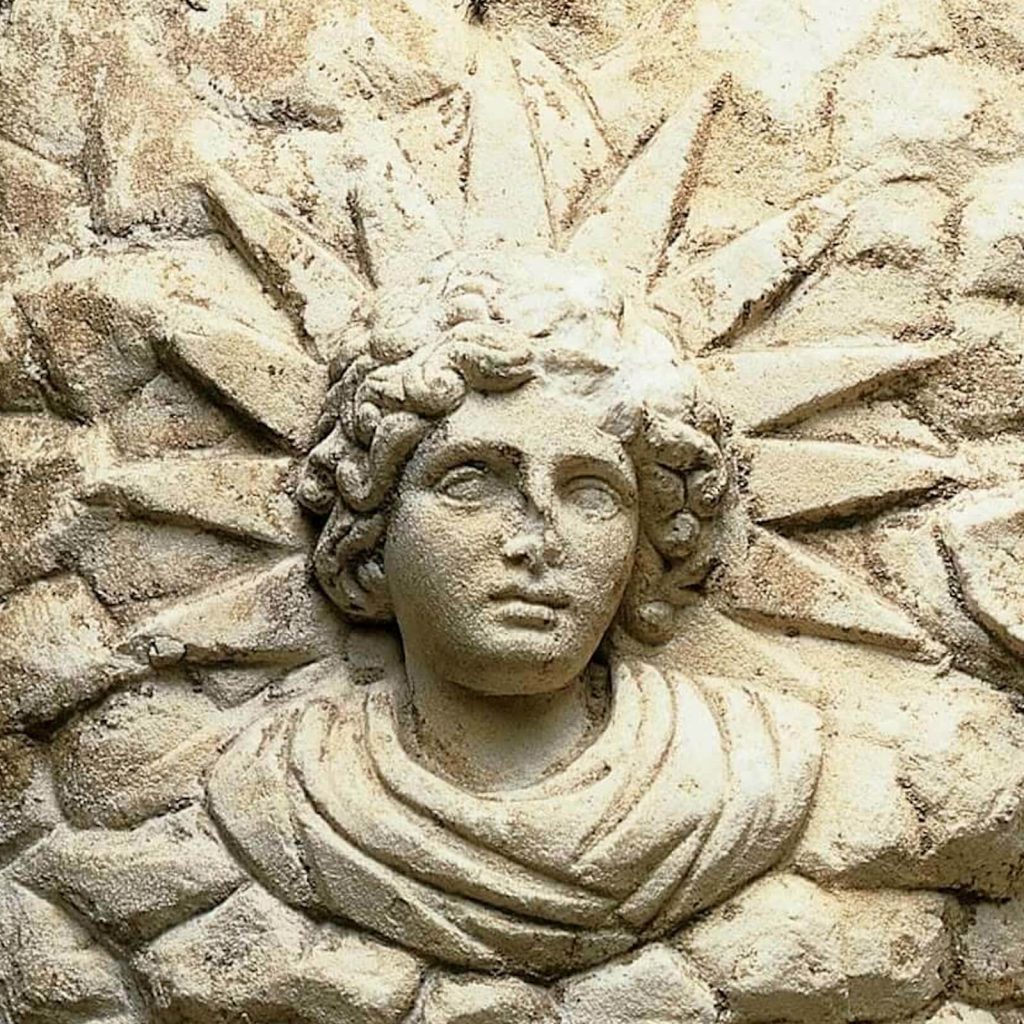
Mithras endures as a figure of cosmic mystery, his story largely conveyed through art and ritual. From his rock birth to his symbolic feast, he remains a mediator between worlds, forever linked to humanity’s quest for order and light in the face of darkness.
 The Rowanwood Chronicles