We Are “So Fucked”: Suzuki’s Stark Warning and What Comes Next

David Suzuki, Canada’s most revered environmental voice, has issued a warning with unusual bluntness and finality: “We are so fucked.” Speaking in recent weeks, Suzuki declared that “it’s too late,” stating that the global fight to halt climate catastrophe is effectively lost. His comments have rippled through climate policy circles, activist communities, and public discourse alike, not because the science has changed, but because the candour of the message has stripped away any remaining illusions of gradualism or incremental change.

The context is clear. Extreme weather events are no longer exceptions, they are becoming the rule. July 2024 was the hottest month in recorded human history, and 2025 is on track to exceed it. Wildfires, floods, droughts, and mass displacement now dominate the headlines with increasing regularity. Against this backdrop, Suzuki’s declaration is not a shock, it is confirmation of what many already fear: that mitigation may no longer be enough.

Beyond Optimism: A Shift to Resilience
Suzuki’s words – “we are so fucked” – were not made in jest or despair, but as an urgent call to face reality. He argued that society must now “hunker down”, a phrase that signals a strategic pivot from prevention to adaptation. The idea is not to give up, but to regroup, reorganize, and prepare. In doing so, he joins a growing body of thinkers who have moved past the assumption that global climate agreements or consumer-level behavior changes will be enough to stave off the worst.

Suzuki pointed to places like Finland as examples of what adaptive resilience might look like. Communities there are being asked to prepare for regular power outages, floods, and food shortages by mapping vulnerable neighbours, sharing equipment, and establishing local escape routes and resource stockpiles. In Suzuki’s view, this is no longer the work of fringe preppers, but essential civil preparedness.

Systemic Failure, Not Personal Blame
Central to Suzuki’s critique is the idea that responsibility has been wrongly placed on individuals, rather than on systems. “The debate about climate change is over,” he has said repeatedly. “The science is clear that it’s happening and that humans are causing it.” But rather than empower collective transformation, that clarity has been dulled by decades of delay and deflection. The culprits, he asserts, are fossil fuel companies and the political classes that have shielded them.

These industries, Suzuki argues, have spent years spreading misinformation, lobbying against meaningful legislation, and greenwashing their activities to appear sustainable. The result is a global response that has been far too slow, too fragmented, and too compromised by economic interests to meet the scale of the challenge. While citizens have been urged to recycle and reduce air travel, oil and gas production continues to expand in many countries.

This misdirection has helped create a false narrative that consumer choices alone can avert disaster. Suzuki, echoing many climate scientists and activists, argues that such messaging amounts to a deliberate “psy-op”, a strategic effort to protect entrenched power and profit by scapegoating the individual.

Hunkering Down Is Not Surrender
To “hunker down,” in this context, means to accept what is now inevitable while fighting to minimize further harm. It is a call to prepare for climate impacts that will affect infrastructure, food systems, migration, and public health. This includes planning for power disruptions, ensuring access to potable water, decentralizing food systems, and rebuilding communities to be less reliant on fragile supply chains.

Resilience at the local level becomes critical: communities need to inventory their own vulnerabilities, understand who is most at risk, and develop coordinated mutual-aid structures. Governments will need to lead this transition by investing in renewable grids, disaster planning, urban cooling infrastructure, and community-based health services. And crucially, they must stop subsidizing the very industries responsible for the crisis.

From Climate Denial to Climate Delay
One of the more insidious barriers to action today is not outright denial, but climate delay, a subtle but pervasive tactic that gives the appearance of action while deferring the difficult decisions. Suzuki has long warned against this. The danger now lies not in ignorance, but in political cowardice and corporate co-option. Net-zero pledges decades into the future are meaningless without immediate action. What’s needed is not just a plan, but a reckoning.

Brutal Clarity, Not Despair
Suzuki’s warning may sound like defeat, but it is more accurately described as a turning point. When he says, “We are so fucked,” it is not an invitation to despair, but a demand to confront reality without euphemism or illusion. Hope remains, but it must be grounded in preparedness, in systemic change, and in solidarity. Communities, governments, and institutions must move with the urgency that this moment demands.

The time for optimism as a communications strategy has passed. What remains is action, rooted in clear-eyed honesty and collective survival.

Sources
·      Suzuki, David. “We are so fucked.” Comment posted to X (formerly Twitter), June 2025. https://x.com/mmofcan/status/194218398403468527
·      Reddit Discussion Thread: “It’s too late: David Suzuki says the fight against climate change is lost.” r/CanadaPolitics. July 2025. https://www.reddit.com/r/CanadaPolitics/comments/1lr0xxj
·      David Suzuki Foundation Facebook Page: “The science is clear that it’s happening and that humans are causing it.” https://www.facebook.com/DavidSuzukiFoundation/posts/1157838186389129
·      CBC News. “Climate crisis beyond tipping point? David Suzuki warns of need for local survival plans.” June 2025.
·      IPCC Sixth Assessment Report. Intergovernmental Panel on Climate Change. 2021–2023. https://www.ipcc.ch/ar6/
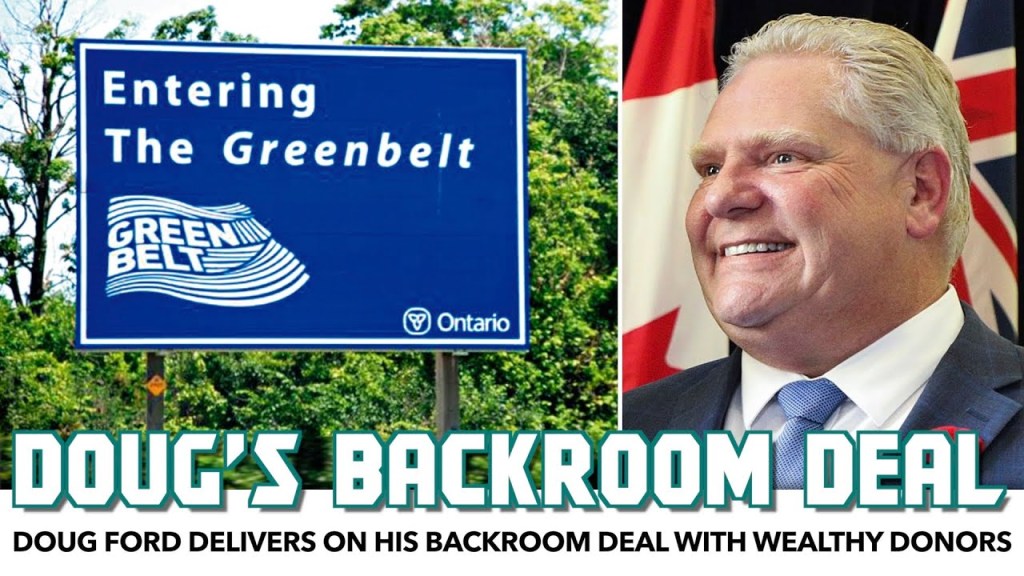
Backroom Ontario: How the Ford Government Governs in the Shadows

The Ford government’s recent actions paint a troubling portrait of a leadership increasingly comfortable with obfuscation, procedural shortcuts, and performative consultation. Across multiple files, from environmental policy to Indigenous relations, Queen’s Park has displayed a consistent pattern of backhanded governance, marked by secrecy, evasion, and a disregard for both democratic norms and legal obligations.

The Greenbelt scandal exemplifies this tendency in sharp relief. Ontario’s Information and Privacy Commissioner recently condemned the Ford government for deliberately making it difficult to track internal decision-making on land development. Staff used code words such as “GB,” “special project,” and most egregiously, “G*” in email subject lines, deliberately sabotaging searchability within the government’s own filing systems. Coupled with the use of private email accounts and a notable absence of meeting minutes or documentation, the evidence suggests not mere carelessness, but a concerted effort to obscure deliberations over one of the province’s most politically explosive issues.

This level of secrecy isn’t just bureaucratic mismanagement, it’s political damage control in real time. The government’s reversal of Greenbelt development plans did little to reassure the public, especially in the absence of any credible explanation or documentation as to how those decisions were made in the first place. When even watchdogs with statutory authority can’t access the paper trail, public accountability becomes a hollow phrase.

Meanwhile, Bill 5, part of the so-called “Unleashing the Economy Act”, reveals an equally unsettling willingness to bypass consultation and oversight in the name of economic development. This omnibus legislation fast-tracks industrial and mining projects across northern Ontario, including the ecologically sensitive Ring of Fire region, by reducing or eliminating requirements for municipal and environmental approvals. Most critically, it sidelines the constitutional duty to consult Indigenous communities.

First Nations leaders, particularly in Treaty 9 territory, were quick to denounce the bill. Chiefs burned environmental documents in protest and staged rallies in Thunder Bay, accusing the province of engaging in “consultation theatre”, informing communities of decisions only after they were made. Even a last-minute amendment to include optional post-passage consultations did little to mollify concerns. The government’s approach sends a clear message: consultation is something to be endured, not engaged.

What ties the Greenbelt and Bill 5 controversies together is not just their shared disregard for transparency and inclusion, but the mechanisms used to enforce that disregard. Whether through technical manipulation of record-keeping systems, suppression of documentation, or legislative sleight-of-hand, the government repeatedly avoids open debate and sidesteps legal and ethical responsibilities. It’s a governance style rooted in control, not collaboration.

These are not isolated incidents. The Ford administration has shown a consistent pattern of centralizing power through Minister’s Zoning Orders (MZOs), a tool meant for rare and urgent cases. Since 2019, the Premier has issued MZOs at an unprecedented rate, frequently overriding municipal decisions, and benefiting well-connected developers. Auditor General reports have raised red flags, and opposition parties have warned that such orders erode local democracy and set dangerous precedents. Still, the pattern continues, unimpeded.

Other examples confirm the trend. In 2018, the Ford government launched a controversial “snitch line” encouraging parents to report teachers who used an updated sex-ed curriculum, a move widely condemned as punitive and authoritarian. In 2019, sudden changes to autism services blindsided thousands of families, leading to mass protests and eventual policy reversals. Yet, even in those reversals, the government refused to acknowledge fault, framing retreats as “adjustments” rather than admissions of flawed policy-making.

This is politics by backchannel, a deliberate erosion of democratic norms dressed in the language of efficiency. Public engagement is reduced to afterthought; opposition voices are ignored or demonized; and when watchdogs raise the alarm, they are met with silence or spin. In each case, the common denominator is the Ford government’s willingness to weaponize the machinery of governance against transparency.

The implications are serious. Trust in institutions erodes when those in power show contempt for the very mechanisms designed to hold them accountable. The duty to consult Indigenous communities is not an optional courtesy, it is a constitutional requirement. Environmental stewardship and municipal autonomy are not bureaucratic hurdles, they are democratic protections. To dismiss them is not just arrogant, but reckless.

Unless reined in, this mode of governance threatens to become normalized. The lesson emerging from Queen’s Park is clear: when political expedience trumps process, communities lose their voice, environmental safeguards are gutted, and Indigenous sovereignty is sidelined. This should alarm all Ontarians, regardless of political stripe.

The Ford government’s backhanded approach may win short-term headlines or developer applause, but the long-term costs, to transparency, legitimacy, and public trust, are steep. If Ontario is to retain even the appearance of responsible government, it must reject this cynical model and restore meaningful consultation, clear record-keeping, and respect for constitutional obligations as non-negotiable principles of provincial governance. Anything less is a betrayal of public service.

Harvesting the Sun Twice: The Rise of Agrivoltaics in Canada

In the ever-evolving landscape of Canadian agriculture, a quiet revolution is taking place; one that blends innovation, resilience, and sustainability. At the heart of this shift is agrivoltaics, the practice of integrating solar energy production with agricultural activities on the same land. In a country where arable land is precious and climate resilience is no longer optional, agrivoltaics offers a compelling vision of how farmers can feed both people and power grids. And unlike many experimental technologies, agrivoltaics is already proving itself on the ground, from Alberta’s prairies to Ontario’s rolling farmland.

The principle behind agrivoltaics is deceptively simple. Instead of choosing between land for crops or solar panels, farmers are using both, strategically placing elevated or spaced-out solar panels to allow for the continued cultivation of crops or the grazing of livestock beneath them. The benefits are multifaceted: improved land-use efficiency, supplemental income from energy generation, lower evaporation rates, enhanced biodiversity, and in some cases, even better crop yields. What once might have seemed like a fringe idea is now a serious pillar in the conversation about Canada’s agricultural and energy future.

Alberta, often associated with its energy sector, has become a surprising hotspot for agrivoltaic innovation. In Strathmore, east of Calgary, a project involving Beecube, UKKO, and local landowners demonstrates how solar farms can coexist harmoniously with apiculture. Here, solar panels provide shelter for bees while the surrounding wildflowers benefit from reduced water loss thanks to the panel shade. This model is not only sustainable but financially shrewd; the land generates solar income while continuing to support honey production, which in turn supports pollination in surrounding agricultural operations.

Meanwhile, in Bon Accord, Alberta, sheep graze under solar panels installed by the municipality. This partnership reduces the need for mechanical mowing, cutting emissions and maintenance costs, while simultaneously supporting local agriculture. Although challenges such as predator management and animal health persist, the project has shown that dual land-use can be both productive and community-minded.

Further south in Lethbridge, the Davidson family farm installed a 2 MW solar array over four hectares of their land. Their early results are promising: water use decreased, yields of shade-tolerant crops like lettuce and spinach improved, and the system helped buffer temperature extremes; an increasingly important advantage as Alberta experiences hotter, drier summers. The financial returns from the energy production are steady and predictable, offering farmers some insulation from commodity price swings.

Ontario has also emerged as a stronghold of agrivoltaic leadership, particularly in the east of the province. At Kinghaven Farms, a thoroughbred horse breeding operation near King City, solar panels quietly generate over 1.8 MW of energy across five different installations. Yet the land remains active agriculturally, supporting bees and pasture for livestock. This is no boutique operation, it’s a model of scalable, pragmatic sustainability, supported in part by Ontario’s long-standing feed-in-tariff and net metering frameworks.

Arnprior’s solar project, spearheaded by EDF Renewables, adds another layer of ecological complexity. The site combines solar power generation with pollinator-friendly vegetation and sheep grazing. With over 50 sheep maintained on-site, the project saves upwards of $30,000 annually on vegetation management. Moreover, the carefully chosen native flora creates a haven for butterflies, bees, and other beneficial insects, turning what could have been a sterile industrial site into a vibrant ecosystem.

The push for agrivoltaics has even begun to intersect with reconciliation and Indigenous economic development. In Perth, Ontario, Golden Leaf Agrivoltaics has launched a partnership with local Indigenous communities to design systems that blend traditional agricultural knowledge with renewable energy. This initiative is as much about cultural renewal as it is about sustainability, offering a space where land stewardship and technological advancement meet on equal footing.

Across these projects, several themes emerge. First, agrivoltaics is not a one-size-fits-all solution. What works in the dry expanses of southern Alberta may not translate directly to the wetter, colder climates of northern Ontario or Quebec. The underlying philosophy, making land work smarter, not harder, holds universal appeal. Second, success depends on collaboration: between farmers and engineers, municipalities and private firms, and, increasingly, energy utilities and Indigenous governments. Agrivoltaics is as much about social innovation as it is about technical design.

Critically, agrivoltaics helps solve one of the thorniest problems in modern planning: land-use conflict. As pressure mounts to deploy renewable energy at scale, particularly in provinces phasing out coal or expanding electric vehicle infrastructure, prime farmland is at risk of being repurposed for solar and wind farms. Agrivoltaics offers a middle ground, enabling land to serve multiple purposes without sacrificing food security.

There are challenges, of course. Start-up costs can be high, regulatory frameworks inconsistent, and skepticism remains among some traditional growers. Yet as demonstration projects continue to yield data, and dollars, those barriers are gradually eroding. Agrivoltaics is no longer a theoretical solution; it is a practical, proven tool for a climate-challenged, energy-hungry world.

In Canada, where vast geography too often isolates best practices, agrivoltaics represents a unifying opportunity. It merges rural and urban priorities, economic pragmatism with ecological restoration. With the right policies, education, and incentives, Canada could lead the world in this field, not just in acreage, but in imagination.

Sources
CBC News – BeeCube/UKKO agrivoltaics project
Organic Agriculture Centre of Canada – Renewable Energy Integration
Compass Energy Consulting – Agrivoltaics in Ontario
Sun Cycle Farms – Agrivoltaic Demonstration Projects
Golden Leaf Agrivoltaics – Community and Indigenous Engagement

Alberta at the Crossroads: Resource Sovereignty and Federal Cohesion

It began with a simple yet startling poll result: one‑third of Albertans said they would consider leaving Canada if the next federal government were Liberal, a figure up from 25 percent in 2001 and drawn from a 219 Ipsos survey that found 33 percent of respondents believing Alberta would be better off as a separate country. In the same year, an Angus Reid Institute study reported that half of Albertans saw separation as a “real possibility,” even if the practical likelihood was judged low. Other surveys have shown support fluctuating between 23 percent and 33 percent, but the headline number – one in three – captured the public imagination, and became shorthand for a deep provincial malaise.

That malaise has its roots in a storied history of perceived federal overreach. Albertans, and Western Canadians more broadly, still speak in hushed tones of the National Energy Program of 1980, when Ottawa’s sudden push to capture a greater share of oil revenues felt like an economic and cultural assault. Recent Liberal governments, with their emphasis on carbon pricing (the “carbon tax”), tighter environmental assessments through Bill C‑69, and tanker bans under Bill C‑48, have reawakened memories of Pierre Trudeau’s NEP and convinced many that, once again, the province’s lifeblood industry is under siege.

Yet the idea of actually breaking away faces almost insurmountable constitutional and practical barriers. The Supreme Court of Canada’s 1998 Reference re Secession of Quebec made clear that any province seeking to leave must first secure a “clear expression” of the popular will through a referendum on a clear question, and then negotiate terms of separation with Ottawa, and the other provinces, no small feat under Canada’s amending formula, which generally requires approval by Parliament plus seven provinces representing at least 50 percent of the national population. Indigenous nations in Alberta, whose treaty rights are with the Crown, would also have to be brought into the process, introducing further complexity and potential legal challenges.

Contrasting sharply with this looming constitutional labyrinth is the decade of Stephen Harper’s Conservative government (2006–2015), celebrated in Alberta as “our decade.” Under Harper who, though born in Ontario, was politically shaped in Calgary, Alberta’s oil patch felt valued rather than vilified. Pipelines advanced, carbon pricing was minimal, and fiscal transfers were viewed as fair. When Harper left office, Alberta enjoyed low unemployment, a booming energy sector, and a sense of national relevance seldom felt under Liberal administrations.

That stark contrast helps explain why talk of a fourth Liberal mandate elicits such fury.  It’s not just a change of political party, but a reopening of old wounds. Many Albertans feel that, under Liberal governments, their province unwittingly subsidizes federal programs and public services elsewhere, amid equalization debates, even as Ottawa imposes restraints on drilling and export infrastructure. Yet when Alberta needs federal support, whether for pipeline approvals through British Columbia, bailouts of orphaned wells (some $1.7 billion in 2020), or trade negotiations, it turns to the very same system it denounces.

At the heart of this contradiction lies a fundamental misunderstanding on both sides of the debate. Constitutionally, Alberta does own the oil and gas beneath its soil: Section 92A of the Constitution Act, 1982 grants provinces exclusive resource management powers. But that ownership comes with responsibilities and shared consequences. Oil and gas development contributes to national greenhouse‑gas targets, affects international trade obligations (e.g., under CUSMA), and relies on pipelines, rail lines, and workforce mobility that cross provincial boundaries and fall under federal jurisdiction.

This “siege mentality” sees only extraction and profit, ignoring that Alberta’s prosperity is woven into the Canadian federation: workers from Ontario and the Maritimes staff the oil sands; revenues fund national research and infrastructure; federal courts enforce property and contract law; and Ottawa’s diplomatic channels open markets abroad. The province’s economy is both “ours” and “Canada’s,” yet too often the narrative paints Alberta as a cash cow and Ottawa as a meddling bureaucrat.

Should Albertans ever find themselves voting for separation, they would quickly learn that the question is only the beginning. A referendum, no matter how decisive, would simply trigger constitutional negotiations. Debates over dividing federal debts and assets, the fate of interprovincial infrastructure, the status of Indigenous treaties, and even Canada’s seat at the United Nations would follow, all under the watchful eyes of domestic courts and foreign governments skeptical of a rump Canada and a new oil‑rich microstate.

In this light, the polling spikes in separatist sentiment reflect more than a serious bid for nationhood, they signal profound alienation. Up to 33 percent talking of leaving, up to 50 percent seeing separation as possible, and around 23 percent saying they would vote “yes” in a referendum are metrics of anger rather than blueprints for new borders. They underscore a demand for respect, recognition, and real partnership with the federal government, an insistence that Alberta’s economic contributions be matched with political influence and cultural validation.

Ultimately, Alberta’s future lies not in walking away from Canada, but in finding a new equilibrium within it. That requires:
1. Acknowledging interdependence: Alberta must recognize that its resource wealth, workforce, and infrastructure exist because of—and for—the Canadian market and legal framework.
2. Embracing diversification: Beyond oil and gas, investments in hydrogen, clean technology, and critical minerals can reduce the economic anxiety that fuels separatist talk.
3. Renewing federalism: Ottawa needs to move beyond top‑down policies and engage province‑by‑province on environmental and economic goals, respecting regional realities while upholding national standards.

The story woven by those polls, legal analyses, and emotional testimonies is not one of imminent breakup but of a province at a crossroads. The choice before Alberta, and Canada, is whether to deepen the divide into a chasm of mistrust, or to build new bridges of collaboration that honor both provincial autonomy and federal unity.

How a 15-Acre Hobby Farm Near Ottawa Is Helping To Save the World

Tucked into the gently rolling landscape near Ottawa, where Canadian Hardiness Zone 5 cradles forests through cold winters and warm, green summers, a 15-acre hobby farm hums with quiet purpose. At first glance, it seems like a peaceful retreat, 11 acres of mixed forest, 4 acres of open land, but beneath the stillness lies a powerful, invisible engine of climate action.

This isn’t just a hobby farm. It’s a carbon sink, a micro-forest sanctuary, and a quietly defiant response to the global climate crisis.

The land is a mosaic of native species, maple, black cherry, beech, oak, and poplar stand shoulder to shoulder with pine, fir, and spruce. Half the forest is allowed to run wild, a dense tangle of trees and undergrowth where time and nature make their own rules. The other half is gently managed with selective thinning and nurturing to promote health and resilience. Together, they form a thriving biome that plays a vital role in absorbing and storing carbon dioxide from the atmosphere.

In a world scrambling to limit greenhouse gas emissions, this modest forest is making a real difference.

Tree Math: Carbon Accounting for a Better Future
According to forest carbon research by Natural Resources Canada and other experts, mixed temperate forests like this one can sequester between 2.5 and 6.0 tonnes of CO₂ per acre per year, depending on age, species, and management.

Here, the forest has been evaluated more precisely:
• The 5.5 acres of managed forest, with its encouraged regrowth and carefully tended canopy, sequesters an estimated 5.5 tonnes of CO₂ per acre per year.
• The 5.5 acres of wild, dense forest, with its thick stands of aging trees and self-regulating ecosystems, sequesters a more modest, but still powerful 3.5 tonnes of CO₂ per acre.

Together, that means this forest is pulling approximately 49.5 tonnes of CO₂ out of the atmosphere every year. That’s not just a number – it’s a force.

It’s the equivalent of:
• Offsetting the annual carbon emissions of 10 passenger vehicles
• Neutralizing the electricity use of about 7 Canadian homes
• Canceling out the emissions of nearly 250 propane BBQ tanks or over 110,000 smartphone charges

Each year, the trees breathe in carbon, storing it in wood, roots, and soil. They do this without fanfare. They don’t ask for credit, but they are doing the slow, essential work of saving the planet – tree by tree.

Rooted in Regeneration: Permaculture and Agroforestry
Beyond the forest, the remaining four acres of the property form a living laboratory for regenerative land use, guided by the principles of permacultureand agroforestry.

Here, perennial fruit and vegetable beds are woven through flowering hedgerows and small windbreaks of nut and berry trees. Apple, plum, and pear trees grow beside hardy perennial crops like rhubarb, asparagus, and sun chokes. Herbs spiral outward in patterns that mimic natural ecosystems, encouraging pollinators and providing continuous yield with minimal intervention.

This is no ordinary garden, it’s a climate-positive food forest in the making. Carefully designed guilds of plants mimic the structure of natural woodland ecologies. Deep-rooted plants draw nutrients from the subsoil. Groundcovers protect against erosion. Legumes fix nitrogen. Every element supports another. Even fallen branches and leaf mulch are repurposed into hugelkultur mounds, which retain water and build soil carbon over time.

Together, the forest and farm create a system that captures carbon, regenerates soil, and produces food, not in spite of nature, but in deep collaboration with it.

A Local Action With Global Implications
Climate action often feels like something that happens elsewhere, in government chambers, UN conferences, or corporate boardrooms. But on this hobby farm, the frontlines are right here, in bark and branches, under loamy soil and perennial cover. While politicians debate net-zero goals and global emissions caps, these 15 acres are already doing their part.

And the story doesn’t end with sequestration. The whole property becomes a model, not of scale, but of intentionality. It proves that one person, on one piece of land, can be part of the solution.

A Blueprint for the Future
If every small landowner in Ontario set aside just part of their land for forest preservation, regenerative farming, or agroecological food production, the collective carbon sink would grow exponentially. The 49.5 tonnes of CO₂ absorbed here could be multiplied by thousands of similar efforts. This hobby farm is not just saving the world, it’s showing others how to do it too.

So next time someone says the climate crisis is too big for individuals to affect, point them to this patch of trees and garden beds outside Ottawa. Tell them about the forest that quietly pulls nearly 50 tonnes of CO₂ from the sky every year. Tell them about the permaculture orchard that feeds people and soil alike. Tell them about the hobby farm that’s making a difference.

Because real change doesn’t always look like a protest march or a giant wind turbine. Sometimes, it looks like a sapling taking root in Zone 5, and being given the time and space to grow.

Bridging the Water Divide: Inequality in Access to Potable Water

In this second of four articles on water, I want to explore the social inequalities that surround access to potable water. 

Access to clean drinking water should be a given, not a privilege. Yet across the world, millions are denied this most basic human right. The problem isn’t simply about scarcity—there’s enough water on the planet to sustain everyone. The real issue lies in the deep-seated inequalities that dictate who gets reliable access and who doesn’t. Socioeconomic status, geography, and government priorities all play a role in determining whether a community has safe drinking water or must rely on unsafe sources. These disparities create ripple effects, fueling public health crises, widening economic gaps, and deepening gender inequalities.

The divide between urban and rural communities in access to potable water is particularly glaring. In many developing countries, large cities have water infrastructure in place, but those living in informal settlements or on the outskirts often lack access to piped water. Meanwhile, rural populations—especially Indigenous communities and those in remote areas—are frequently left behind due to chronic underfunding and government neglect. In Canada, for example, dozens of First Nations communities have been under long-term boil-water advisories, some for decades. Despite the country’s wealth and technological capacity, these communities remain without the infrastructure needed to ensure safe drinking water. It’s a stark reminder that systemic inequality, not just technical limitations, drives the crisis.

Rapid urbanization is making things even worse. Cities are growing faster than their water infrastructure can keep up, leading to supply shortages, contamination from aging pipes, and increasing pressure on surrounding water sources. In places like Cape Town and Chennai, urban water crises have shown that even major metropolitan areas are vulnerable to running dry when poor planning and climate pressures collide. When water becomes scarce, it’s always the poorest communities that suffer the most—forced to wait in long lines, pay inflated prices, or rely on unsafe alternatives. Meanwhile, industries and wealthier neighborhoods often find ways to secure their supply, reinforcing the divide.

Gender inequality is another hidden consequence of water scarcity. In many parts of the world, the burden of collecting water falls almost entirely on women and girls. This often means walking for hours each day just to fetch a few buckets, time that could be spent in school, at work, or simply resting. The physical toll is immense, leading to long-term health issues, and the journey itself can be dangerous, exposing women to the risk of violence and harassment. The consequences extend far beyond individual hardship. When girls miss out on education because they have to collect water, their future economic opportunities shrink, trapping them—and their families—in cycles of poverty.

Solving these problems isn’t just a matter of engineering better water systems; it’s about rethinking how we value and distribute water. Governments and international organizations must prioritize investment in water infrastructure, not just in major cities but in the rural and marginalized communities that have been neglected for too long. Local communities need to be empowered to manage their own water resources, with access to the funding and technology necessary to implement sustainable solutions. At the policy level, water governance needs to be strengthened to prevent exploitation by corporations that see water as a commodity rather than a human right. And if we’re serious about addressing gender inequality, ensuring closer access to safe water sources must be a top priority.

At its core, the water crisis is a justice issue. It’s not just about pipes and treatment plants—it’s about power, inequality, and whose needs are prioritized. The good news is that solutions exist, and they’re entirely within our reach. The question is whether we have the political will and collective determination to make safe water a reality for everyone, not just those fortunate enough to be born in the right place.

Securing the Future of Freshwater

This is the first in a series of articles on freshwater—our most essential and increasingly fragile resource. Potable water is the foundation of any thriving community, yet it faces mounting threats from rising demand, population growth, mismanagement, and climate change. Water scarcity is no longer a distant concern; it is a present reality affecting billions worldwide, including regions of the United States. The urgent challenge is to adopt sustainable practices and modern infrastructure to ensure long-term water security.

The widening gap between supply and demand is at the heart of the global water crisis. Expanding urban populations and agriculture—by far the largest consumer of freshwater—are pushing resources to their limits. This strain is worsened by inefficiencies such as outdated irrigation techniques and aging, leaky infrastructure that wastes millions of gallons daily. Industrial and domestic waste further degrade freshwater sources, as pollutants like heavy metals, pesticides, hydrocarbons, and microplastics seep into rivers and lakes, transforming them from lifelines into health hazards.

Groundwater depletion is an equally pressing concern. Aquifers, the vast underground reserves that sustain millions, are being extracted at unsustainable rates, often faster than they can naturally recharge. In many regions, these reserves are the sole source of drinking water, making their preservation critical. Overpumping leads to land subsidence, ecosystem damage, and in coastal areas, saltwater intrusion, rendering once-pure water undrinkable. Without intervention, many communities risk losing their most reliable water source.

Climate change amplifies these threats. Shifting precipitation patterns disrupt the natural replenishment of freshwater supplies, while glacier retreat and prolonged droughts further reduce available water. The consequences are most severe in arid and semi-arid regions, where communities already struggle with limited access to clean water. Extreme weather events, such as hurricanes and floods, can also overwhelm infrastructure, contaminating water supplies with pollutants and pathogens.

Addressing these challenges requires a fundamental shift in water management. Advanced technologies such as drip irrigation, wastewater recycling, and desalination offer viable solutions to improve efficiency and expand supply. Equally important is public engagement—education and incentives can promote conservation at the household and community levels. Governments, industries, and local communities must work together to develop policies that prioritize equitable water distribution, pollution control, and long-term sustainability.

Freshwater is our most valuable natural resource, yet it is treated as an afterthought. Without immediate action, shortages will become more frequent and severe, threatening food production, public health, and economic stability. In the coming articles, we will explore the key dimensions of this crisis in greater depth, examining solutions that can secure a sustainable water future.

A Tale of Two Resource Economies: Alberta vs. Norway 

When it comes to managing the wealth derived from oil and gas, two regions stand out for their contrasting approaches: Norway (pop. 5.5million) and Alberta (pop. 4.9million). Both have harnessed their natural resources for economic growth, yet their strategies for licensing and managing these resources couldn’t be more different. The way each has handled its wealth offers key lessons in resource management, long-term planning, and the risks of relying too heavily on finite resources.

Norway: A Model of Prudence and Vision
Norway’s approach to managing its oil wealth is often hailed as a textbook example of responsible governance. Since the discovery of significant offshore oil reserves in the 1960s, Norway has been careful in extracting and managing its resources. Central to its success is the Government Pension Fund Global (GPFG), established in 1990 to invest surplus oil revenues for future generations. The Norwegian government adopted the principle of saving the vast majority of oil revenues, putting them into a sovereign wealth fund, which today is worth over $1.5 trillion USD.

But the key to Norway’s success is not just the size of its fund—it’s the disciplined, long-term vision that drives its policy. The fund is managed independently of the national budget, with only around 3% of its value being used each year to support government spending. The idea is to use oil wealth as a means to stabilize the economy, particularly during times of volatility in oil prices, while preserving it for future generations. The fund is diversified across global markets, ranging from equities and bonds to real estate, and is governed by a strict set of ethical guidelines that ensure investments align with environmental and social responsibility.

What stands out most about Norway’s resource licensing is its careful approach to development. The government has been strategic in its licensing policies, issuing permits in a way that balances long-term sustainability with economic growth. By managing resource extraction with an eye on long-term returns, Norway has avoided the so-called resource curse, a phenomenon that has plagued other oil-rich nations.

Alberta: A Cautionary Tale
Alberta, on the other hand, has taken a much less consistent approach to its oil and gas revenues. Since the 1970s, Alberta has been a major player in the global energy market, thanks to its vast reserves of oil sands. The province established the Heritage Savings Trust Fund in 1976, with the goal of saving a portion of its oil wealth for future generations. However, Alberta’s approach to managing this fund has been less disciplined than Norway’s.

The fund, now valued at around $19 billion CAD, has seen inconsistent contributions and, more often than not, withdrawals to cover the province’s operating expenses. This lack of long-term planning has led to missed opportunities for growth. When oil prices have been high, Alberta has relied heavily on resource revenue to fund public services, rather than investing for the future. This short-term approach has left the province vulnerable to the fluctuations in oil prices, with little in the way of a financial cushion to soften the blow during downturns.

Alberta’s resource licensing policies have also been marked by political expediency. The province has often prioritized immediate economic growth over long-term sustainability, leading to environmental concerns and a boom-bust economic cycle. Unlike Norway, which has been cautious in licensing new projects, Alberta has pushed forward with aggressive development, particularly in its oil sands sector. While this has spurred economic activity, it has also raised questions about the environmental costs and the wisdom of rapid, large-scale extraction.

Key Takeaways
The differences between Alberta and Norway are stark. Norway’s long-term vision, driven by a carefully managed sovereign wealth fund, stands in sharp contrast to Alberta’s more reactive, short-term approach. While both have abundant natural resources, it is Norway’s commitment to future generations, disciplined fund management, and cautious resource licensing that has helped it build a sustainable economic model. Alberta, in contrast, offers a cautionary tale of how reliance on resource wealth without long-term planning can leave a province exposed to the volatility of the global energy market.

As the world’s energy landscape continues to evolve, Alberta would do well to study Norway’s example—not just in terms of saving oil wealth but also in fostering a more sustainable approach to resource extraction and development. The future of resource economies will depend on the choices made today.