
When discussing the European Union, especially in British or nationalist-leaning media, the usual tropes are economic red tape, democratic deficits, and faceless bureaucrats imposing uniformity. What is strikingly underappreciated is the EU’s role as a tireless and strategic supporter of Europe’s regional cultures: its languages, music, visual arts, literature, and festivals. Far from being a homogenising force, the EU acts as a cultural confederation, empowering the peripheries and amplifying diversity through centralised frameworks and substantial funding.
The legal foundation for this approach is enshrined in Article 167 of the Treaty on the Functioning of the European Union, which commits the EU to respect its members’ national and regional diversity, and to promote the common cultural heritage. This commitment is not symbolic, it’s operationalised through policies and investment tools that strengthen cultural ecosystems often neglected by national governments. A striking example is the Creative Europeprogramme, with a budget of over €2.44 billion for 2021–2027. This fund supports regional festivals, translation projects, heritage preservation, and artistic mobility, placing local cultures on a continental stage.
Let’s consider some examples. In the north of Sweden, Sámi artists and musicians have received EU support to maintain traditional music forms like joik, while also experimenting with modern fusion styles. In the Basque Country, EU funding has gone into language revitalisation efforts, helping schools, theatres, and broadcasters produce content in Euskara, a language that for decades was banned under Franco’s Spain. In Friesland, the Netherlands, similar funding has supported children’s books, cultural programming, and visual arts in the Frisian language – another minority tongue that survives today in part because of EU cultural policy.
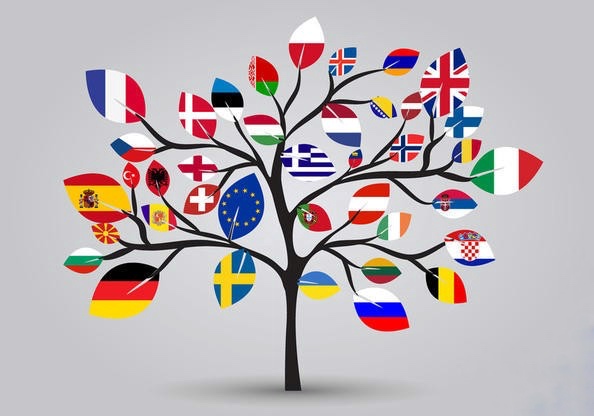
Beyond the arts, the EU’s European Regional Development Fund (ERDF) and European Social Fund (ESF) have proven vital in building cultural infrastructure in economically disadvantaged areas. For example, in Maribor, Slovenia, once a declining industrial town, ERDF funds helped regenerate derelict buildings into art spaces and performance venues during its tenure as European Capital of Culture in 2012. This led to a flourishing of local art initiatives, job creation in the creative sector, and a renewed sense of community identity. Similar transformations have occurred in Plzeň, Czech Republic and Matera, Italy, cities that gained international cultural status thanks to EU support.
One of the EU’s most visionary initiatives is the European Capitals of Cultureprogramme. This initiative does more than bring tourism; it energises local traditions and gives underrepresented regions international attention. Košice, a Slovak city with a rich but lesser-known cultural history, used its 2013 designation to invest in a multicultural arts centre in a former barracks, host Roma music festivals, and highlight the region’s Jewish and Hungarian heritage. Galway, in Ireland, similarly used its 2020 status to foreground Irish-language poetry, traditional music, and storytelling – even if the pandemic altered some of its plans. In each case, the EU served as both patron and platform.
Language diversity is another cornerstone of EU cultural engagement. Though language policy is largely a national prerogative, the EU reinforces regional and minority languages through programmes linked to the European Charter for Regional or Minority Languages. While this charter operates under the Council of Europe, EU institutions work to align policies that protect language rights and support educational initiatives. The Multilingualism Policy, the Erasmus+ programme, and Creative Europe’s translation grants all contribute to preserving Europe’s linguistic diversity.
Furthermore, the EU promotes intercultural exchange and mobility. Through Culture Moves Europe and Erasmus+, thousands of young artists, musicians, writers, and curators have studied, collaborated, and performed across borders. A young fiddler from Brittany can now collaborate with an Estonian folk singer or a Roma dancer from Hungary. These encounters not only enrich the individuals involved but also build cultural bridges that counter xenophobia and nationalist retrenchment.
Critics argue that the EU’s involvement in culture infringes on national sovereignty or encourages a superficial “Euro-culture.” But this misunderstands the structural genius of the EU’s approach. Rather than imposing cultural norms, the EU centralises support mechanisms while decentralising access, ensuring local actors are the ones defining, producing, and showcasing their culture. In effect, the EU empowers regions to bypass national gatekeepers and express their identities on their own terms.
This model has also proven resilient in times of crisis. Following Russia’s invasion of Ukraine, the EU mobilised cultural solidarity quickly, supporting Ukrainian artists and cultural heritage sites both inside and outside the country. Cross-border cooperation projects in Poland, Slovakia, and Romania sprang into action, demonstrating how EU cultural infrastructure can respond nimbly to geopolitical emergencies.
In a world where many nations are becoming more inward-looking and where minority cultures are under threat from political centralisation, the EU stands as a rare example of a supranational body committed to diversity in action, not just in rhetoric. It is not perfect. Bureaucratic hurdles remain, and access to funding can be unequal. But the direction of travel is clear: support local, fund the fringe, and celebrate the plural.
If the soul of Europe lies in its mosaics of culture, then the EU, quietly, consistently, and strategically, acts as its curator.
Sources:
European Commission – Creative Europe
European Commission – Regional Policy
Council of Europe – European Charter for Regional or Minority Languages
European Commission – European Capitals of Culture
European Commission – Culture Moves Europe
European Commission – Multilingualism and Language Policy


 The Rowanwood Chronicles