Non-Hierarchical Polyamory Requires Strong Personal Boundaries

Polyamory, when practiced without hierarchy, can be liberating.
No primaries calling the shots. No pecking order. Just grown-up humans building intentional relationships.

But freedom doesn’t mean chaos. And connection doesn’t require constant visibility.

This is a guide to practicing non-hierarchical polyamory with strong personal boundaries – for people who believe in honesty, not overexposure; in love, not surveillance; and in building sustainable relationships that don’t burn everyone out.


🔸 Truth Is Enough

“No, I’m not available tonight.”
That’s the truth. Full stop. It doesn’t need a follow-up essay.

In a culture that glorifies radical transparency, there’s pressure to explain yourself constantly –
❓Who you’re with
❓What you’re doing
❓Why someone else got your time

That’s not truth. That’s emotional bookkeeping.

In this model, truth means what someone needs to understand you – not every detail of your personal life. You are not a contestant in someone’s ranking system. You’re a whole person. Privacy is not betrayal.

🔸 Honesty Isn’t a Weapon

Honesty matters – but, not all honesty is created equal.

Too often, “radical honesty” becomes an excuse to dump emotional weight without care.
Let’s call it what it is: emotional discharge without consent.

Instead, ask:

  • Is this honest and kind?
  • Is the timing respectful?
  • Has the other person consented to this level of openness?

🗝 Good honesty is relational, not performative.
If it’s not asked for, or if it’s about your anxiety more than their needs, maybe it’s not time to say it.

🔸 Transparency Is a Choice, Not a Virtue

In some poly circles, transparency becomes a tool for control:

  • 🗓 Shared calendars turned into scoreboards
  • 🕵️ “Open access” used to snoop
  • 📢 Disclosures demanded to prove loyalty

This isn’t transparency. It’s surveillance.

In this framework, transparency is always opt-in and consent-based.
It’s a tool, not a virtue. Use it where it builds connection – not resentment.

🔸 Discretion Is an Act of Love

Discretion doesn’t mean secrecy. It means respecting privacy with care.

  • 💬 Not everyone wants to know everything.
  • 👂 Not every detail needs to be shared.
  • 🛡 And not all relationships want to be laid bare.

Discretion is choosing grace over total access.
It’s knowing how to protect dignity while staying honest.

🔸 Boundaries Make Freedom Sustainable

In non-hierarchical poly, where nothing is pre-defined, boundaries are your framework.
They’re not about control. They’re about clarity.

✒️ Examples of healthy boundaries:

  • “I need 24 hours’ notice before committing to plans.”
  • “I don’t share who I’m seeing unless it’s relevant.”
  • “I’m not available for emotional processing late at night.”

A boundary is how you take care of yourself – and tell others how to love you well.
🛠 It’s not a wall. It’s a tool.

🔸 Emotional Self-Regulation: Your Feelings, Your Job

You will feel things: jealousy, rejection, insecurity. That’s real.
But what you do with those feelings? That’s what makes or breaks your dynamic.

💡 Emotional self-regulation means:

  • Not reacting from your most triggered state
  • Asking for support, not compliance
  • Taking responsibility for your emotional landscape

Instead of:
❌ “Why didn’t you choose me?”
Try:
✅ “I’m feeling vulnerable – could we plan some time together?”

You’re allowed to feel. You’re just not entitled to offload your reaction onto someone else.

🔸 You Don’t Owe 24/7 Access

Say it again:
You don’t owe constant availability.

You can:

  • Say no
  • Ask for time
  • Turn off your phone
  • Decline a request without guilt

Your value doesn’t come from how available you are.
It comes from how authentic you are – even in saying no.

🔸 Build the Polyamory You Can Sustain

This is non-hierarchical polyamory for grown-ups.
It works best when it’s:

  • ✨ Rooted in respect
  • 🛠 Framed with boundaries
  • ❤️ Practiced with care
  • 🕊 Protected with discretion

You don’t need more rules. You need more self-awareness.

And if you’re constantly explaining yourself, justifying your schedule, or sharing things just to soothe someone else’s anxiety –
That’s not polyamory. That’s a pressure cooker.


🖋 Final Thought

You can choose transparency.
You can practice honesty.
You can love widely and deeply.

But only if those things are in service of connection – not control.

This is the polyamory of people who know themselves.
People who protect their peace.
People who choose love, and freedom, with care.

Polyamory: The Questions That Never Go Away

The other day, I found myself having a familiar conversation with a friend, the kind I’ve had countless times with people curious about my relationship orientation and wondering if it might be a fit for them. It struck me that I’ve been here before, walking through the same starting points, answering the same questions. So I decided to put my thoughts into a reference piece. That way, when the topic comes up again, we can skip the “Polyamory 101” stage and dive straight into the richer, deeper conversations that matter most. With that all said, here’s how I think about the moral, ethical, and societal questions people often ask me about polyamory.

I’ve been openly polyamorous for decades now. Long enough to have seen the word move from whispered corners of niche communities into mainstream conversations, long enough to have been called both a dangerous libertine and a brave pioneer. And no matter how many workshops, blog posts, and late-night kitchen-table talks we have, the same core questions always seem to come back: Is this right? Is this fair? And what does it mean for the world we live in?

These are the moral, ethical, and societal questions about polyamory. I’ve lived with them, wrestled with them, and come to see them not as irritants, but as invitations to think more deeply about love, freedom, and responsibility.

The Moral Questions: Is It Right?
The first challenge people throw at polyamory is moral. We’ve been raised in a culture that equates “true love” with exclusive love. From fairy tales to wedding vows, monogamy is painted as the gold standard of moral romance. So when I say I love more than one person, and mean it, some people hear betrayal or moral failure.

But morality isn’t just about what’s familiar. It’s about how we treat people. I’ve always believed that love is not a finite resource; my love for one person doesn’t diminish my love for another any more than loving one child means I love the others less. In my experience, the moral litmus test for polyamory isn’t “one or many”, it’s whether everyone involved is respected, valued, and cared for.

Jealousy often gets cast as a moral signpost too. In monogamous thinking, if you’re jealous, it must mean something wrong is happening, or that love is being stolen away. In poly life, jealousy is a signal, not a verdict. It asks: What do I need? What am I afraid of? Can we talk about this? It’s uncomfortable work, but it’s moral work, the kind that builds rather than breaks trust.

The Ethical Questions: Is It Fair?
Even when people accept that polyamory can be moral, they ask about ethics, the fairness and integrity of the thing. And here, I’ll be the first to admit: it’s easy to get this wrong.

Polyamory rests on the foundation of informed consent. That’s not just a buzzword. It means that every partner knows the full truth of the relationship structure and has genuinely chosen it without manipulation or coercion. If someone’s “agreeing” because they fear losing their partner, that’s not consent, that’s survival.

It also means telling the truth even when it’s messy. Ethical polyamory is radical honesty in action: “Yes, I have feelings for someone else.” “Yes, I’m sleeping with them.” “Yes, I want to go deeper with them.” That kind of disclosure can sting, but it’s the only way this works without slipping into betrayal.

Then there’s the question of power. In polyamory, mismatched emotional maturity, financial independence, or social status can easily tilt the playing field. I’ve seen relationships where one partner held the “permission card”, and the other lived in quiet resentment. I’ve also seen polycules where new partners were treated like secondary accessories rather than full human beings. Ethical polyamory demands constant checking of those dynamics, because it’s all too easy for someone to feel trapped in what was meant to be a consensual, liberating arrangement.

The Societal Questions: What Does It Mean for the World?
Even if you sort out the personal morality and the interpersonal ethics, polyamory still sparks societal questions. Should we, as a culture, recognise polyamorous families in law? What would that mean for marriage, for inheritance, for child custody? These aren’t abstract questions when you’re raising kids with multiple committed partners, or when a hospital only recognises one “next of kin.”

There’s also the matter of public perception. Polyamory still carries stigma, enough that people can lose jobs, face custody challenges, or be ostracised from their communities if they’re open about it. That stigma bleeds into how we’re portrayed in media: either as exotic free-love rebels or as moral cautionary tales. Rarely as ordinary, loving, responsible adults living in families that just happen to be larger than average.

Public health debates make an appearance here too. Some assume that more partners mean more risk, full stop. The truth is more nuanced. In my experience, poly people, because we have to talk about sexual health with multiple partners, are often more rigorous about testing, safer sex practices, and ongoing health conversations than many monogamous folks.

And then there’s the question of the next generation. What does it mean for kids to grow up in polyamorous households? I can only speak from my own circle, but the kids I’ve seen raised in poly families tend to understand diversity in relationships from a young age. They learn that love can take many forms, that honesty matters, and that family is defined by care and commitment rather than a strict headcount.

Living the Questions
I don’t pretend polyamory is for everyone. It’s not morally superior to monogamy; it’s simply another valid form of relationship, one that requires its own skills, boundaries, and resilience. But I’ve learned that these moral, ethical, and societal questions are not hurdles to clear once and forget. They’re a constant part of the landscape.

Every time I commit to someone new, I’m asking myself: Is this right? Is this fair? What will this mean for the web of relationships I’m part of? Those questions don’t weaken my relationships, they strengthen them. They keep me honest. They keep me accountable.

Polyamory, at its best, isn’t just about loving more than one person. It’s about loving with more integrity, more awareness, and more intention. And in that sense, the questions aren’t a problem to solve. They’re the very thing that keeps the love alive.

A Polyamory Field Guide for Confused Monogamists

Because love is wild, weird, and occasionally involves group calendars.

Welcome, curious traveler. If you’ve stumbled upon this guide, it likely means someone you know: your co-worker, yoga teacher, ex, cousin, or that barista with the undercut and a quiet glow, has outed themselves as polyamorous. And you? You’re confused, intrigued, possibly mildly panicked. Never fear! This field guide will gently walk you through the exotic, misunderstood, and thoroughly lovable creature that is the polyamorous human – so, let’s begin.

🧭 Species Overview: What Even Is a Polyamorous Person?
Scientific name
Homo relatus plurimus
Common name
: “Poly person,” “Polycule member,” “My girlfriend’s girlfriend’s boyfriend”

These marvelous mammals form consensual, often complex, romantic or emotional bonds with more than one partner at a time, and they do it on purpose. This is not cheating, drama, or a mid-life crisis wrapped in a dreamcatcher. This is a relationship orientation, NOT a lifestyle, based on honesty, consent, and surprisingly detailed calendar invites.

🔍 Identification Tips: How to Spot a Polyamorous Person
Poly people often blend in with the general population, but subtle signs include:
• An uncanny fluency in emotional vocabulary (“We’re having a boundaries conversation later tonight!”).
• Casual references to more than one romantic partner without a trace of scandal.
• Slightly glazed eyes when explaining relationship structures to their monogamous friends.
• A tote bag with a slogan like “Love is not a limited resource,” or “Jealousy is a feeling, not a crime scene.”

🛠️ Care and Handling: Interacting With a Polyamorous Person
 DO:
• Ask questions respectfully if you’re curious.
• Understand that their love life isn’t about you.
• Remember that polyamory is about choices, not deficiencies.
• Recognize that it’s not “open season” on their relationship.

 DO NOT:
• Say, “I could never do that” as if it’s a moral high ground.
• Ask, “Which one is your real partner?”
• Suggest therapy unless they’ve asked you for referrals.
• Assume they’re hitting on you. Seriously. They’re busy.

📅 Mating Rituals and Social Habits
Polyam folks engage in a variety of rituals, including:
Metamour brunches (bonding with their partner’s partner over pancakes and mutual respect).
Group text diplomacy, where emotional logistics rival that of small governments.
Cuddle piles – think platonic affection meets adult slumber party.
Relationship check-ins that sound like performance reviews, but with more hand-holding.

They are generally very adept at managing emotional needs, being transparent, and decolonizing their expectations of romance. Wild, I know.

🧠 Cognitive Traits: What’s Going On in Their Big Open Minds? 
Common traits include:
• A belief in abundance over scarcity.
• A deep commitment to radical honesty.
• Advanced communication skills developed through trial, error, and books with titles like The Ethical Slut, polysecure, and More Than Two (we don’t talk about the drama around that one).
• Often hold the revolutionary idea that different people meet different emotional needs, and that’s… fine?

🦺 Safety Precautions
Approaching a polyamorous person does not put you at risk of:
• Losing your spouse (unless you’re already halfway there).
• Being dragged into a cult (unless it’s the cult of clear communication).
• Having to talk about your feelings (okay, maybe a little).

🗣️ Frequently Asked Questions (FAQ)
Q: So do you all just sleep together?

A: Sometimes! But also sometimes we just eat noodles and talk about boundary renegotiation. It’s not a porno, Karen.

Q: What if you fall in love with someone else?
A: That’s kind of the idea. Love isn’t subtraction – it’s multiplication.

Q: Isn’t it just a phase?
A: So is high school. Doesn’t mean it wasn’t real.

Q: Can I be poly too?
A: Of course! If you’re willing to unpack your social conditioning, communicate honestly, and manage three anniversaries, a birthday, and a shared Google Doc titled “Feelings.”

🎉 Conclusion: Love Is Weird. That’s the Point.
At the end of the day, polyamory isn’t about being cooler, smarter, or more emotionally evolved than anyone else. It’s just one way, among many, to approach human connection. So if you meet a polyamorous person, don’t panic. Don’t assume. Just listen. They’re not here to convert you. They’re just living a life that works for them.

And in the grand safari of love, that’s something to admire, even if you prefer your own cozy monogamous tent. Now if you’ll excuse us, we’ve got a potluck at 7pm, and a relationship summit at 9pm.

A Gentleman’s Guide to Fostering Love

At this point in my life, I’ve figured out who I am, and what I bring to the table. I’m not here for grand romantic illusions, nor am I fumbling through awkward first dates trying to impress anyone. No, what I do is far more refined – I teach, I mentor, I foster.

I provide a comfortable, well-appointed sanctuary for remarkable women in their 30s and 40s who are figuring out their next steps. They come into my life, full of ambition, wit, and occasionally a deep frustration with men who still haven’t mastered basic emotional intelligence. They stay for a while, we share some incredible experiences, and eventually, they find their forever home; sometimes with another partner, sometimes in a new adventure, and sometimes still with me, just in a different way.

Now, before you assume I’m some kind of wandering sage, let me be clear; I’m not a lonely old monk dispensing wisdom and jazz records. I’ve got a full, dynamic love life of my own. My partner in her 60s keeps me on my toes, challenging me in ways only someone who’s been around long enough to take no nonsense can. She’s my equal, my match, and my co-conspirator in navigating a life filled with love, humor, and a shared appreciation for craft ale, especially stouts. And then there are my younger partners, fiercely independent, brilliantly talented, and unwilling to settle for anything less than what they deserve.

I’m not collecting people; I’m building connections. And fostering isn’t about temporary fixes or waiting for someone to move on. It’s about appreciating the time we have together, without needing to force it into a predefined shape. Some partners stay in my orbit for years, others drift in and out, and it all works because honesty, respect, and a shared love of good conversation make everything smoother.

People often assume polyamory is chaotic, but that’s only if you’re doing it wrong. For me, it’s about balance. It’s about offering and receiving care without ownership. It’s about knowing that love isn’t a finite resource, and that just because someone moves on to another stage of their life doesn’t mean what we had wasn’t real.

And while I’ve fostered many wonderful women through various chapters of their journeys, let’s not forget, I’m a bit of a rescue myself. My partners challenge me, push me to grow, and occasionally force me to retire my outdated pop culture references. They bring new energy, new perspectives, and new reasons to keep up with life’s ever-changing rhythms.

So no, I don’t date in the traditional sense. I create space for extraordinary women to thrive, sometimes with me, sometimes elsewhere. And if that means I get to spend my years surrounded by sharp minds, quick wit, and an ever-expanding appreciation for different ways of loving? Well, I’d say that’s a pretty great forever home of my own.

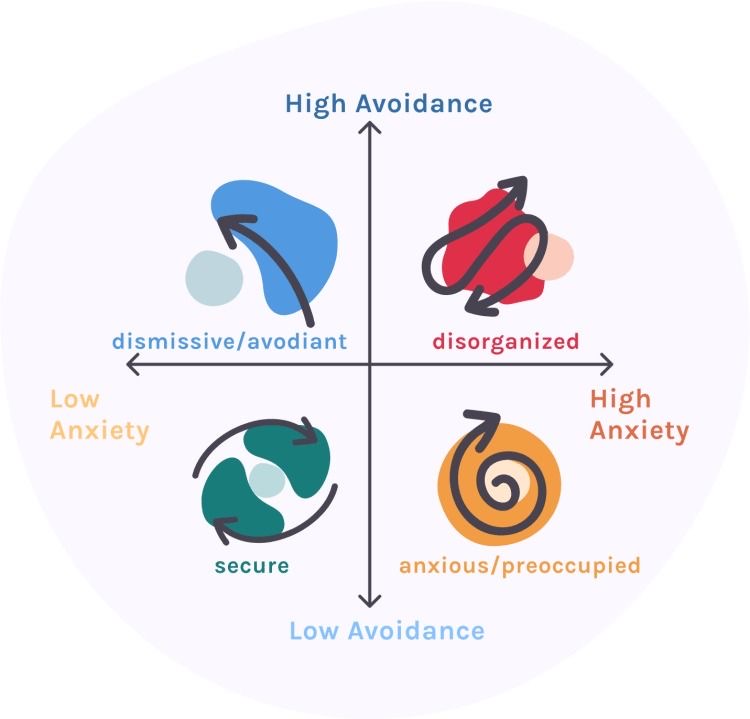
Why Your Dismissive-Avoidant Partner Loves You From Across the Room (With the Door Slightly Ajar)

Ah, the dismissive-avoidant attachment style. The human equivalent of a cat: they might love you, they might not, but either way, they’re going to knock your emotional mug off the table just to see what happens.

Dismissive-avoidants are the folks who will cuddle you on the couch and then, without warning, evaporate like steam in a British mystery novel. You think things are going great, you’re texting every day, you’ve met each other’s pets, you’ve even shared fries. Suddenly, they’re “just really needing some space” and have gone to “work on themselves” in the wilderness with no signal and no return date.

Now, don’t get me wrong, they’re not bad people. They just learned, somewhere along the way, that feelings are kind of like bees: unpredictable, swarming, and best avoided if possible. These folks often grew up in homes where vulnerability was about as welcome as a raccoon at a wedding. So, they built themselves emotional panic rooms and installed locks with 87-digit codes.

Dating a dismissive-avoidant can be a little like dating a haunted house. There’s a lot going on inside, but they don’t want you poking around in the attic. Ask them how they feel, and they’ll either crack a joke or vanish in a puff of logic. “I don’t need to talk about feelings. Feelings are just electrical impulses. You know what else are electrical impulses? Traffic lights. And I don’t cry at those, do I?”

These are the champions of “I’m not really looking for anything serious” and “I just want to see where this goes”, which is often directly into a brick wall labeled unavailable. But don’t let that deter you, because dismissive-avoidants do fall in love. It just takes a while. And by a while, I mean longer than it takes for an avocado to go from rock-hard to brown mush.

They actually value connection deeply, but only if it doesn’t interfere with their need for independence, alone time, or the ability to escape through a metaphorical skylight at any moment. They’re like emotional ninjas: stealthy, elusive, and weirdly attractive.

If you’re dating one, the key is patience, and a good sense of humor. Celebrate the small wins: they made eye contact while discussing their emotions? Break out the champagne. They admitted they missed you (after a three-week silence)? Start planning the wedding.

Just remember: when they say, “I don’t really do emotions,” what they mean is, “Emotions are terrifying and I don’t know how to do them without short-circuiting like a 1996 printer.”

So love them gently, laugh a lot, and maybe invest in a nice doormat that says “Welcome-ish.”, because with a dismissive-avoidant, you never know when they’ll show up, but when they do, it’s almost always in their own charming, weirdly tender way. Just don’t ask them to define the relationship too soon. That’s how you get ghosted via interpretive dance.

Living the SoPoRA Life: A Light-Hearted Take on Choosing Autonomy

Ever feel like your life is an endless RSVP? Invitations roll in: “Come to this event! Join me for that activity! Let’s grab a drink!” It’s lovely to be included, truly. But what’s less lovely are the interrogations that follow when I politely decline.

“What are you doing instead?”
“Are you feeling okay?”
“Wait… who’s more important than me?”

Ah, the joys of boundary-setting in a world that thrives on FOMO and social expectations.

This isn’t my first rodeo with the honesty vs. transparency debate, but today I want to shift the focus. It’s not about what I say to others – it’s about how I choose to live my daily life. For me, it’s far simpler (and far more satisfying) to opt in when I genuinely want to connect than to constantly opt out to preserve my space.

If the world were a little more straightforward, I’d label my lifestyle as that of a Solo Polyamorous Relationship Anarchist (or SoPoRA for short). What does that mean? It’s a big mouthful, sure, but at its core, it’s a fancy way of saying I value my autonomy and independence while cherishing meaningful, non-hierarchical connections with others.

Solo Polyamory is all about embracing the beauty of being my own primary partner, while maintaining multiple, consensual relationships. It’s not about having less love – it’s about loving without turning my life into a game of musical chairs, where one partner automatically claims the “primary” seat.

And Relationship Anarchism? That’s the freedom to reject societal scripts about how relationships should work. No automatic rankings of romantic partners above friends. No forcing connections into neat little boxes labeled “partner,” “friend,” or “fling.” Instead, each relationship is uniquely crafted based on mutual agreement and organic growth.

Now, before you picture me as some lone wolf prowling around in emotional isolation, let me clarify: this choice doesn’t mean I don’t value connection – it just means I thrive on creating it without compromising my independence. 

But what this looks like practically, I hear you ask? Well, I love my space – my home is my sanctuary, and it’s where I recharge. I set firm personal boundaries to maintain my autonomy – this isn’t selfish – it’s self-care. Communication is my superpower – I prioritize honesty, consent, and mutual understanding with anyone I’m involved with.

Solo Polyamory and Relationship Anarchism require a level of self-awareness and emotional intelligence that can feel like a full-time job some days. But the rewards? Oh, they’re worth it. There’s a joy in living authentically, in crafting connections that adapt as people grow, and in knowing every “yes” you give is genuine.

So, the next time I politely decline an invitation, know this: it’s not about you. It’s about me choosing to live a life that feels full, free, and fulfilling – one beautifully crafted, consensual connection at a time.

How to Not Scare Potential Matches: The Blogger’s Guide to Online Dating Profiles

Ah, online dating—a wondrous digital land where love blossoms, hearts are broken, and oh no, not another dead fish photo. If you’re dipping your toe into the wild waters of matchmaking apps, let me help you avoid the missteps that send people running for the hills (or just swiping left faster than you can say, “partner in crime”).

Your Kids: The Little Darlings Who Don’t Belong in Your Profile
Look, I’m sure your children and dare I say grandchildren are angels (or at least occasionally). But posting their photos in your dating profile—especially as your main picture—can make a potential match think, “Am I auditioning to be a romantic partner or a nanny?” Keep your kids out of the spotlight for now. This is your moment to shine, not theirs.

And while we’re on the topic: if your bio starts with “My kids are the loves of my life,” it’s sweet… but also a bit of a mood-killer. Potential partners might wonder, “Where does that leave room for me?” Save the love declarations for the people swiping right on you.

Stop Copy-Pasting “Hey Beautiful”
When someone receives “Hey beautiful” for the 47th time that day, it doesn’t feel special—it feels like a generic coupon for romance. Try something more creative, like referencing their profile. Trust me, “Hey, I see you’re into paddleboarding—do you have a shark-escape plan?” will get you further than bland flattery.

Let Go of the Clichés
Speaking of originality, if your bio includes “looking for a partner in crime,” you may as well add, “and I moonlight as a walking, talking dating stereotype.” Everyone’s seen it. Everyone’s rolled their eyes. Be specific about what you want—something that feels uniquely you.

Negativity Is a Buzzkill
“Drama-free.” “No toxic baggage.” “Sick of games.” Okay, we get it, you’ve been hurt—join the club! But plastering this all over your profile reads like a giant neon sign flashing BITTER, PARTY OF ONE. Instead, focus on the positives: what you’re looking forward to, what you value, what excites you about the idea of meeting someone new. Optimism is sexy.

“A Nice Lady” (or Gentleman)
Requesting a “nice lady” makes you sound like you’re ordering at a diner: “I’ll have the nice lady with a side of vanilla, please.” Instead, describe the qualities that light you up—compassion, humor, confidence, whatever it is. Trust me, nobody’s pining to be described as “nice.”

Let’s Talk About That Fish
Unless you’re starring in a reality show called The Bait Whisperer, it’s time to put the bass down and back away slowly. Dead fish photos are a universal “ugh” moment. If you love fishing, mention it in your profile, but swap the fish for a photo of you looking happy and rugged by a lake.

“I’m an Open Book, Just Ask”
This one screams lazy. A dating profile is your chance to give people a taste of who you are—not to set them up for a pop quiz. Share a few fun tidbits about yourself. Think of it like leaving breadcrumbs, not a scavenger hunt.

Your Pets Are Cute, But…
We all love a good dog or cat pic (seriously, who doesn’t?), but if your entire bio reads like an ode to Fluffy, potential matches may think they’re competing with your fur baby. Keep it balanced—show you have room in your life for both your beloved pets and a partner.

Your Photos Need to Spark Joy
If your profile photos include frowning selfies, dimly lit shots, or your ex cropped out of the frame (we can tell, by the way), it’s time for a refresh. Aim for friendly, well-lit, and authentic photos that make people want to grab a coffee with you—or at least swipe right.

Friends or Lovers? Pick a Lane
“Looking for friendship first” is like saying, “I’m browsing, not buying.” It’s fine to want to take things slow, but if romance is on the table, don’t bury it under disclaimers. Be clear about your intentions.

Avoid the Pitfalls, Embrace the Possibilities
Your online dating profile should feel like a teaser trailer to a movie people actually want to see. Be authentic, positive, and approachable. And above all, remember: the goal is to attract the right match, not scare them off with fish, frowns, or fatal clichés. Now, go forth and swipe wisely!

Why Every Woman Should Have a FWB While Hunting for Mr. Right (Or Maybe Just Mr. Not-So-Wrong)

Let’s cut to the chase, ladies. Finding “The One” in today’s dating hellscape is like trying to find a decent avocado at a big-box grocery store—rare, questionable, and often too much effort. While you’re out there swiping, mingling, and dodging unsolicited shirtless selfies, there’s a case to be made for keeping a trusty friend-with-benefits (FWB) in the picture. Now hear me out, and don’t judge until I finish. 

The Safety Net of Sanity
Dating is stressful. The constant parade of first dates, awkward small talk, and deciding whether “I’m an entrepreneur” means he has an actual job or just resells sneakers on eBay can leave even the most composed among us clutching our wine glasses like life rafts. A good FWB is like the emotional support animal of modern dating: no drama, no long-term expectations, just reliable comfort. You don’t have to wonder if he’ll text back because, frankly, you don’t care. You’re not analyzing his Instagram likes. He’s just… there. Like your favorite pair of yoga pants—comfy, reliable, and never demanding more than you’re willing to give.

Keeping the Spark Alive
So, let’s get real, everyone deserves a little intimacy while waiting for love to show up (if it ever does). And the FWB arrangement lets you bypass all the nonsense. There’s no need to impress him with your career achievements or flawless skincare routine because he’s already in on the secret: you’re human, and you both know what you’re there for. Bonus points if your FWB is a decent conversationalist who actually laughs at your jokes instead of pretending he’s too cool to find you funny.

The Ego Boost
Nothing will remind you of how fabulous you are like having someone who’s more than happy to meet you for late-night “Netflix and chill.” Sure, he’s not offering moonlit strolls or deep discussions about your childhood dreams, but sometimes all you need is someone to make you feel sexy while Mr. Right is busy ghosting you after three weeks of excellent banter.

Practical Considerations
You know what’s great about an FWB? They don’t monopolize your weekends. They don’t care if you’re out dating other people. And they sure as hell aren’t asking why you haven’t introduced them to your parents yet. It’s a low-maintenance situation that leaves you with plenty of bandwidth to focus on swiping left on anyone who lists “alpha male” in their bio.

The Rules of Engagement
Now, before you dive in, let’s be clear: this isn’t a Hallmark movie where you and your FWB accidentally fall in love and spend eternity baking cookies together. That’s rom-com nonsense, and we’re too grown for that. Keep it casual. Keep it light. And for heaven’s sake, pick someone who knows the difference between FWB and BF, as well being skilled and experienced enough to guide you to climax! If he starts bringing you flowers or asking about your five-year plan, it’s time to cut him loose.

When Mr. Right Appears
Ah, but what happens when your dreamboat finally sails into view? Simple: you retire your FWB like an old pair of running shoes. Sure, it was fun, but the relationship was built on convenience, not forever. Thank him for his service and move on. If he’s really your friend, he’ll understand—and probably applaud your upgrade.

Ladies, life is too short to wait around with an empty dance card. A good FWB can be the perfect stopgap while you’re searching for your great love—or at least a guy who doesn’t text “u up?” at 3 a.m. So go ahead, embrace the arrangement. After all, it’s your world—he’s just visiting.

My Favourite Polyamory Quotes

I am polyamorous, and have been for many a year. I cultivate and maintain a network of secure attachment relationships with people who are also polyamorous, who often have multiple partners of their own.  I prefer to date and partner with experienced poly people, and occasionally someone crosses my path that feels so aligned that this policy goes out the window, and I get to date a polynewbie.  

There will be many more posts on relationships in the 21st Century, and in the meantime, this one is where I will be sharing some of my favourite poly quotes, adding to it as the months go by. 

Please be aware, while I am happy to discuss relationship dynamics, I am not interested in any negative commentary, and will block any source of unthinking, rude or obnoxious messages. 

I hope you enjoy these thoughts. I tend to use the Canadian English spelling of polyamorous, but when posting quotes I use exactly what and how it was published. 

The quality of a polycule is directly proportional to the communication skills of its least emotionally secure member.
Or, if you prefer something gentler, less absolute, more accepting.
A polycule’s health depends less on its most skilled communicator, than on how well its least secure member feels heard.
” – @chrismcbean.bsky.social

Polyamory (noun): when multiple people are plotting to care about you, a wholesome conspiracy” – @PolydotLand

Polyamory is NOT endless orgies, nor is it cuckoldry with extra steps.

Polyamory is two idiots walking down the street holding hands debating with one another about how each of them should ask out their respective crushes, and then neither of them following through.” – @5aximus

Solo polyamory helps me go at a comfortable pace. Now that I’m no longer entering relationships with a particular goal in mind, like marriage or cohabitation, I’m not in a rush to find out whether a partner can give me those traditional markers of relational success/fulfilment.” – @unapolygetic

Your significant other is allowed to have meaningful relationships with other people. Your significant other is allowed to get things from those relationships that they don’t get from you. Demanding you be the only source of pleasure and support in their life is possessive and toxic.” –  @LadylsAVamp_

 “I was asked, ‘who is your best friend?’ I don’t know. I don’t use language like that anymore. It doesn’t fit. I have friends that hold the keys to different doors of my personality. And some open my heart. Some my laughter. Some my sin. Some my civic urgency.” – @abgljoe 

One of my favourite challenges posed by polyamory lies in its potential to undermine the idea that women are ‘rivals’ for the attentions of men. Hey, what if we are ‘collaborators’ in loving and supporting our mutual partners? I know, wild eh …” – @carriejenkins 

Solo polyamory is finding it more enjoyable to opt in to spending time with people as opposed to opting out to get my own space.” – @PolyamAwareness

Relationships fail when people take their own insecurities and project them as their partner’s flaws.”- @stevemaraboli 

Pints, Paint, and Purple Hair: Dating a Grandma Who’s Anything But Grey

Dating a 60 year old, grey-haired grandma with bold blue and purple streaks is like sipping a craft beer flight; unexpected, full of flavor, and just the right amount of fizz! She’s not your average semi-retiree. She’s an artist and crafter, forever turning everyday items into masterpieces. A walk with her through a thrift shop feels like wandering through the Louvre, as she marvels at the potential in old buttons, battered picture frames, and yarns in colors you didn’t even know existed.

Her sense of humor? Sharp and sparkling, much like the IPA she insists you try (even if you’re feeling like a stout). She doesn’t just drink craft beer; she lives it, savoring every sip while recounting stories of road trips to microbreweries, where she once debated hops with a bearded brewer half her age. Spoiler: She won the argument! 

And let’s not forget the adventures – oh, the adventures! When she says, “Let’s go on a road trip,” she doesn’t mean a simple weekend getaway. No, no, she’s planning a pilgrimage to every quirky art gallery and secret beer garden she’s bookmarked over the years. You’ll find yourself lost in a small town you’ve never heard of, surrounded by nothing but cows, and the distant hum of a local jazz band, all because she read about it in an obscure art magazine from 1982. You’ll try to keep track of her “I have an idea” moments, but with her creativity, you’ll likely end up in a pottery class at midnight, shaping clay while sipping on a hopped cider she personally picked out, because she knows you’ll love it. It’s an unexpected, whirlwind romance, and every minute is a colorful surprise you’ll never forget. Just don’t ask about the glitter, it gets everywhere.

This grandma doesn’t just have stories; she is a story. She’ll teach you the art of weaving one minute, and how to bake gingerbread the next. Dating her is like being with a vibrant human kaleidoscope; colorful, surprising, and endlessly fascinating. Sure, you might struggle to keep up as she paints landscapes by day and hosts beer tastings by night, while cooking a North African meal, but isn’t that the fun of it? She’s proof that life, love, and art only get better with age, especially with a splash of teal. If you’re lucky enough to be dating her, cheers to you! Just remember, don’t touch her yarn stash without asking.