
Pints, Paint, and Purple Hair: Dating a Grandma Who’s Anything But Grey

Dating a 60 year old, grey-haired grandma with bold blue and purple streaks is like sipping a craft beer flight; unexpected, full of flavor, and just the right amount of fizz! She’s not your average semi-retiree. She’s an artist and crafter, forever turning everyday items into masterpieces. A walk with her through a thrift shop feels like wandering through the Louvre, as she marvels at the potential in old buttons, battered picture frames, and yarns in colors you didn’t even know existed.
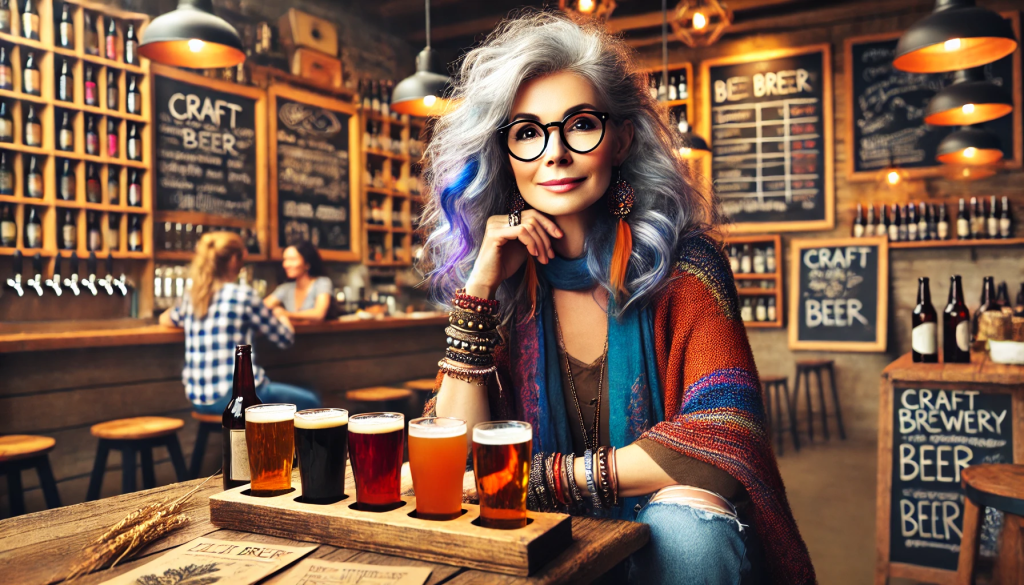
Her sense of humor? Sharp and sparkling, much like the IPA she insists you try (even if you’re feeling like a stout). She doesn’t just drink craft beer; she lives it, savoring every sip while recounting stories of road trips to microbreweries, where she once debated hops with a bearded brewer half her age. Spoiler: She won the argument! 

And let’s not forget the adventures – oh, the adventures! When she says, “Let’s go on a road trip,” she doesn’t mean a simple weekend getaway. No, no, she’s planning a pilgrimage to every quirky art gallery and secret beer garden she’s bookmarked over the years. You’ll find yourself lost in a small town you’ve never heard of, surrounded by nothing but cows, and the distant hum of a local jazz band, all because she read about it in an obscure art magazine from 1982. You’ll try to keep track of her “I have an idea” moments, but with her creativity, you’ll likely end up in a pottery class at midnight, shaping clay while sipping on a hopped cider she personally picked out, because she knows you’ll love it. It’s an unexpected, whirlwind romance, and every minute is a colorful surprise you’ll never forget. Just don’t ask about the glitter, it gets everywhere.

This grandma doesn’t just have stories; she is a story. She’ll teach you the art of weaving one minute, and how to bake gingerbread the next. Dating her is like being with a vibrant human kaleidoscope; colorful, surprising, and endlessly fascinating. Sure, you might struggle to keep up as she paints landscapes by day and hosts beer tastings by night, while cooking a North African meal, but isn’t that the fun of it? She’s proof that life, love, and art only get better with age, especially with a splash of teal. If you’re lucky enough to be dating her, cheers to you! Just remember, don’t touch her yarn stash without asking.

The Transactional Nature of Modern Dating: How Apps Have Changed the Search for Connection

In the age of digital connectivity, dating has been revolutionized by community websites, social media, and a growing number of dating apps. While the convenience and access these platforms provide are undeniable, they’ve also redefined romance in ways that feel increasingly transactional. The pursuit of meaningful relationships has often been reduced to a series of swipes, clicks, and algorithm-driven decisions—shifting the way people view love, intimacy, and human connection.

Dating apps such as Tinder, Bumble, and Hinge have adopted a gamified approach to romance. Their swipe-based mechanics mimic the reward systems of video games, offering quick hits of validation or rejection with every right or left swipe. Like pulling the lever of a slot machine, the instant gratification these apps deliver often prioritizes surface-level judgments, such as physical appearance, over meaningful compatibility. Finding a partner becomes a numbers game, where the goal is less about connection and more about who can “win” the next match.

This gamification feeds into a consumer-market mindset, where potential partners are treated as products to browse, evaluate, and discard. Profiles are carefully curated advertisements, each bio or photo a sales pitch for attention. Users scroll through these digital shelves, comparing options and weighing perceived value, much like shopping for goods. This commodification of dating fosters a transactional approach—relationships are often pursued based on what someone offers, rather than a foundation of mutual emotional investment.

Behind the scenes, the algorithms that drive dating apps reinforce this dynamic. Designed to prioritize efficiency, they aim to generate quick matches at scale. The sheer volume of options, while seemingly beneficial, creates the illusion of endless possibilities. For many, this fuels the “paradox of choice,” a phenomenon where too many options lead to indecision and dissatisfaction. A lingering sense that someone “better” might be just one swipe away can prevent users from committing, encouraging them to chase an ideal match rather than nurture real, imperfect relationships.

Adding to this transactional nature are the apps’ monetized features—premium subscriptions that promise greater visibility, unlimited swipes, or the ability to filter matches with precision. Dating, in many cases, has literally become pay-to-play. Users can boost their profiles to gain attention or unlock exclusive tools to “optimize” their romantic prospects. These features further commodify dating, making connections feel like purchases rather than organic discoveries.

Beyond the structural elements of these platforms, dating apps have also reshaped cultural attitudes toward intimacy. While they have opened doors to more diverse forms of relationships, they’ve also normalized casual connections and short-term encounters. In many cases, relationships are treated as temporary exchanges—sources of companionship, validation, or physical intimacy with little emphasis on long-term commitment. This casualization aligns perfectly with a transactional mindset: relationships are only as valuable as what they provide in the moment.

The consequences of this shift are significant. Emotional detachment has become more common, as relationships are often viewed as fleeting and disposable. Genuine effort and emotional depth can take a backseat when a quick match requires less investment. Treating people as profiles to be judged can lead to objectification, reducing empathy and human connection. Meanwhile, the impersonal and competitive nature of dating apps can take a toll on mental health. Users may experience burnout, rejection, or feelings of inadequacy as they navigate an endless cycle of swipes and shallow interactions.

Still, dating apps are not inherently harmful—they are tools that reflect and amplify existing cultural values. They have made meeting new people easier than ever and have connected individuals across geography, lifestyles, and interests. Yet their emphasis on efficiency and superficial traits has undeniably shaped modern relationships into transactional exchanges.

If dating is to become more meaningful again, it will require intention—both from the platforms and their users. Rather than surrendering to the gamified, commodified nature of these apps, individuals must approach them with mindfulness, prioritizing depth and authenticity over convenience and quantity. In doing so, there may still be hope to restore romance to something deeper than just another transaction.