Nuremberg Revisited: A Timely Warning to the Trump Administration

The forthcoming film Nuremberg, slated for release on November 7th, 2025, offers more than just a historical drama, it arrives at a moment in time that invites reflection on the nature of authoritarian power, the fragility of democratic institutions, and the price paid when societies fail to hold tyranny to account. In publishing a cinematic depiction of the post-World-War II trials of Nazi war criminals, the film sends a pointed message, especially to the current U.S. administration, about the consequences of unrestrained power and the urgent need for vigilance in protecting democratic norms.

First, the timing of the release is significant: over eighty years since the original Nuremberg Trials of 1945–46, when the victors of the war sought to ensure that those responsible for crimes against humanity would be held to account. The film’s arrival at this milestone moment suggests that the lessons of that era are not mere relics, but living admonitions. For a present-day administration facing pressures from populist rhetoric, democratic back-sliding, or executive overreach, the film signals that the world remembers what unchecked power is capable of. The very act of dramatizing how the Nazi regime’s leaders were judged and how justice was pursued underscores that history is watching.

Second, by focusing on the moral, psychological and institutional dimensions of tyranny through characters such as Hermann Göring and the American psychiatrist mesmerized by his charisma, the film reminds us that dictators do not always rule by brute force alone, they often wield legitimacy, manipulation and institutional subversion. In a modern context, this is a cautionary tale. When a government begins undermining norms, bypassing checks and balances, or valorizing strong-man tactics, it is not merely a political condition, it echoes the first steps of authoritarianism. The release of this film invites the Trump administration (and by extension any power-consolidating regime) to reflect: the fate of dictatorships is grim, and history does not neglect them.

Third, the timing signals an admonition that accountability matters. The heroes of the film are not the dictators themselves, but the institutions and individuals who insisted on judgment, on due process, on shining light into darkness. That message runs counter to any present-day posture that seeks to evade responsibility or diminish oversight. For the U.S. administration, which holds itself up (and is held up by others) as a model for rule-of-law governance, the film is a reminder that even victors in war cannot sidestep justice: they must build systems that can stand scrutiny. The release date thus communicates that the film is more than entertainment – it is timely commentary.

By arriving in late 2025, a time when global politics are turbulent and the boundaries of democratic norms are under pressure, the film functions as a mirror. It asks: What happens when the “good guys” forget that the preservation of democracy requires constant vigilance? The implication for the Trump administration is subtle but unmistakable: look at the outcome of authoritarianism in the 20th century; learn from the decay of institutional safeguards; and recognize that public memory and moral judgment endure long after the regimes have fallen.

Nuremberg does more than retell a famous trial, it sends a message to the present: authoritarianism isn’t just history’s problem, it is today’s risk. By releasing now, the film invites the Trump administration to see itself in the narrative, one where the rule-of-law must be defended, where power must be constrained, and where the cost of forgetting is steep.

A Dangerous Symbol: Why Alberta’s Citizenship Marker Is a Badge of Exclusion

A government that tattoos its citizens with a loyalty stamp is not protecting democracy. It is manufacturing division.

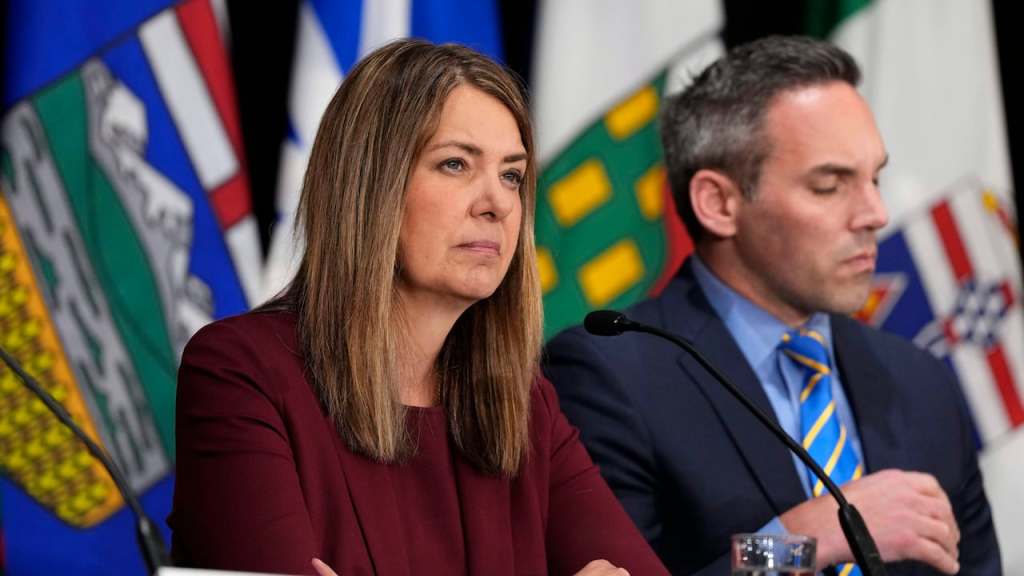
Alberta’s plan to add a visible Canadian citizenship marker to driver’s licences and provincial photo IDs is sold as a pragmatic fix for administrative headaches, and a modest boost to election integrity. In reality it is a blunt instrument that will stigmatize newcomers, invite profiling, escalate privacy risks, and do virtually nothing to solve the narrow problems the government points to. This policy is not about efficiency. It is about visibility, and visibility in this case is a tool for exclusion.

Start with the claim that this will protect elections. The province has pointed to a handful of isolated incidents to justify a universal treatment of every person who carries a licence in Alberta. The scale does not remotely justify the sweep. Elections Alberta has not identified a systemic problem that requires permanently marking who is a citizen on the everyday card that everyone carries. There are far less intrusive ways to strengthen the integrity of the ballot than turning driver’s licences into a public ledger of status. If the problem is rare, the solution should be targeted, not universal.

Now consider the everyday, lived consequences of adding a visible citizenship marker. A small tag on a card is not a neutral bureaucratic convenience. It is a social signal that will be read within seconds by a wide range of people who exercise power over daily life: police officers, service providers, employers, landlords, front-line staff in health clinics and banks. The absence of that tag is, in practice, the same as a visible mark. When a human scans an ID and sees no “CAN” or similar symbol, they will know the person is likely not a citizen. That knowledge will change behavior.

The harm here is predictable. Racialized and immigrant communities will carry this burden disproportionately. Citizenship status correlates strongly with place of birth, language, and race. Policies that place a visible marker on status therefore do discrimination by another name. The Alberta Human Rights Act protects characteristics such as race, colour, ancestry and place of origin. A policy that has the predictable effect of singling out people because of those characteristics should be treated with deep suspicion. The government’s design converts private legal status into a public marker that will be used, intentionally or not, to exclude, interrogate and penalize.

Privacy is another casualty. Adding more personal data to a card that lives in pockets and purses increases the risk of misuse and error. The same announcement that proposed the citizenship marker also proposed including health numbers on the same cards. Those are sensitive identifiers. Combining multiple markers and numbers into a single, widely used document creates a tempting target for fraud and function creep. Once institutions are accustomed to seeing citizenship on an ID, the line between appropriate use and mission creep becomes dangerously thin. History shows that extra data on everyday documents rarely stays limited to the original, narrow purpose.

There is also the basic problem of accuracy. Mistakes happen. Bureaucratic records are imperfect. Imagine being wrongly marked, or left unmarked, and then facing a delay in accessing health care, government supports, or a job because an overworked clerk or a skeptical stranger read your card and assumed something about your rights. Fixing those mistakes takes time, money and dignity that many people cannot spare. That risk is not hypothetical. Governments themselves admit to data mismatches and unexplained records when they discuss the systems they use. We should not make people pay for a government’s sloppy data by making their legal status visible on a daily basis.

Finally, consider the chilling effect. Communities that feel targeted withdraw. They stop reporting crime. They stop seeking services. They withdraw from civic life. That is a perverse outcome for a democratic society. If the government’s aim is social cohesion and civic participation, stamping people’s IDs with a citizenship marker pushes in precisely the opposite direction.

There are sensible alternatives that protect both security and dignity. Back-end verification systems allow agencies to check status when the law requires it without turning every encounter into a status interrogation. Voluntary proof-of-citizenship cards could be issued for the small number of people who want a single card for passport office interactions or specific benefits applications. Strengthening poll-worker training and refining procedures at the point of service can shore up election integrity without branding the population. A proper privacy impact assessment and an independent human-rights review should be prerequisites for any change that touches identity.

This is not merely a policy error. It is a marker of values. Do we want a province that solves narrow administrative problems by creating new, visible categories that will be used to sort people? Or do we want a province that insists on privacy, on minimizing state visibility into people’s legal status, and on solving problems with proportionate measures?

If Alberta proceeds, expect legal pushback. Policies with predictable discriminatory effects should, and will, be challenged. Human-rights law recognizes that discrimination can occur through effects rather than explicit language. A seemingly neutral policy that disproportionately burdens persons who belong to protected groups will not withstand careful legal scrutiny.

The loudest argument for the citizenship marker is convenience. Convenience is not a trump card when human dignity hangs in the balance. We can tidy up administrative processes without creating a social scoring system that singles people out in grocery stores, hospitals, and bus stations. We can secure ballots without making identity a visible badge of belonging.

The test for public policy is simple. Does it solve the problem at hand with the least intrusion necessary? Adding citizenship to everyone’s everyday ID fails that test. It substitutes spectacle for problem solving, visibility for nuance, and bluntness for proportionality.

Alberta should drop this plan, sit down with civil-society groups, privacy experts and human-rights lawyers, and design targeted, less intrusive solutions. Failing that, opponents should prepare for court, for public protest and for relentless political pressure. Democracies survive on inclusion, not on visible lists of who belongs. If we care about the health of our civic life we should resist anything that turns identity into a signal for exclusion.

Sources: 
Global News, “Alberta adding proof of Canadian citizenship to provincial driver’s licences”, Jack Farrell and Lisa Johnson, Sept 15, 2025.
CityNews Edmonton, “Immigration lawyer, critics raise concerns about citizenship marker on Alberta ID”, Sept 16, 2025.
Statement from Premier Danielle Smith, official announcement posts, Sept 2025.
Institute for Canadian Citizenship commentary, reaction coverage, Sept 2025.
Alberta Human Rights Act commentary and analysis, relevant legal background.

The Quiet Rebirth: Canada’s Path to a Parliamentary Republic

With the King and Queen in Ottawa, I thought I might just post this small Republican fantasy, laid out for all to read. 

Prologue: The End of the Crown
In the year 2032, following a decade of public debate, constitutional conferences, and grassroots engagement, Canada formally transitioned from a constitutional monarchy to a parliamentary republic. The catalyst was a national referendum, driven by rising republican sentiment in Quebec, a resurgent Western populism demanding proportional representation, and an Indigenous-led movement for political sovereignty within the Canadian state.

The result was overwhelming: 68% of Canadians voted in favour of replacing the monarchy with a democratically elected head of state, establishing a fully Canadian republic with a new constitution rooted in reconciliation, regional balance, and democratic renewal.

A President for All Canadians
The new President of Canada is elected by ranked-choice ballot every seven years, with a non-renewable term. The position is ceremonial, but symbolically powerful: a national unifier who replaces the King and Governor General, chosen by the people rather than inherited title. Quebec supported the reform overwhelmingly. For the first time, the Canadian state acknowledged its dualistic identity: one anglophone and one francophone society within a shared democratic framework. Official bilingualism was strengthened. The first President, a Métis jurist from Saskatchewan, addressed the country in Cree, French, and English during their inaugural speech.

The Two Houses of Parliament
A. The House of Commons

Reformed to use Mixed Member Proportional Representation (MMP):
• 60% of MPs are elected directly in ridings.
• 40% are elected from regional party lists to reflect actual vote share.

This addressed a central grievance of Western provinces, especially Alberta and Saskatchewan, who had long seen their votes “wasted” under the old system. Under MMP:
• Western-based parties gained consistent, proportional representation.
• Coalition governments became the norm, requiring negotiation and respect across regions.

B. The Senate of Canada
Recast as an Elected Council of the Federation:
• Each province and territory elects equal numbers of Senators, regardless of population, to ensure regional parity.
• Senators serve staggered eight-year terms.
• Legislation must pass both Houses, but the Senate cannot permanently block Commons bills, only delay and revise.

Crucially, Indigenous Peoples were granted 20 permanent Senate seats:
• These seats are chosen by First Nations, Métis, and Inuit national councils, not political parties.
• Their mandate: to protect Indigenous rights, oversee federal treaty obligations, and act as stewards of land, climate, and cultural legislation.

Indigenous Representation in Governance
For the first time in Canadian history, Indigenous Nations are formally recognized as constitutional partners. Their rights are not granted by the Crown, they are affirmed by co-sovereignty agreements embedded in the Constitution.
Twenty seats in the House of Commons are permanently reserved for national Indigenous representatives, elected by pan-Indigenous vote.
Twenty Senate seats, as noted, are selected by national Indigenous councils and rotate among Nations.
• All legislation affecting land, language, or treaty obligations must be reviewed by an Indigenous-Led Standing Committee.

This gave concrete form to the nation-to-nation vision long promised under UNDRIP.

Quebec’s Role in the Republic
• With the monarchy gone, Quebec’s national identity was affirmed in law: it was recognized as a distinct society, with its own civil code, cultural protections, and immigration quotas.
• French became the co-equal language of the state, not merely a translation.
• The Republican Constitution of Canada acknowledged the right of Quebec to self-determination, but also embedded it in a new federal partnership of equals, making secession less urgent and less attractive.

Quebec found itself more powerful inside the republic than outside the monarchy-bound confederation it had long resented.

A More Responsive and Inclusive Democracy
The post-monarchy Canada is:
More representative, with diverse voices in Parliament.
More cooperative, with minority governments requiring negotiation.
More just, with Indigenous peoples at the table, not petitioning from the outside.
More regionally balanced, with the West and Quebec no longer sidelined.
More future-focused, with a Senate that values long-term planning over short-term headlines.

A Canada Reimagined
By 2040, the republican Canada is no longer simply a continuation of its colonial past. It is a democratic partnership of peoples, Indigenous, settler, immigrant, Quebecois, and regional, bound not by allegiance to a Crown, but by shared stewardship of land, rights, and future generations.

It was not a revolution. It was a quiet rebirth, a new chapter written in many voices, with none silenced, and none above the law.

First Past Its Prime: Rethinking Canada’s Voting System

It’s not every day a country is offered the chance to fix the structural rot in its democracy, but with frustration mounting across regions and communities, especially in Western and Indigenous Canada, the time for piecemeal reform is over. Canada stands at a crossroads, and the best path forward is the boldest one: comprehensive, simultaneous democratic renewal.

There is a rumour that a new white paper is now circulating among policy wonks, not just another tired commission report, but a blueprint for electoral and parliamentary transformation. It proposes we do four things at once: implement Proportional Representation (PR) in the House of Commons; guarantee Indigenous representation in both the House and Senate; elect our Senators instead of appointing them; and impose term limits across the board.

These are not radical ideas on their own, they’ve each been discussed, and in some cases even promised, by federal governments past. What’s radical, and deeply necessary, is the insistence that these reforms be pursued together. Not piecemeal. Not sequential. Together. Why? Because they reinforce each other, and together they promise a Canadian democracy that finally reflects our values, population, and future.

Let’s start with the cornerstone: Proportional Representation. The problems with first-past-the-post (FPTP) are well known. Governments get majority power with minority support. Voters in large swaths of the country, the Prairies, Northern Ontario, Atlantic Canada, feel their votes don’t count if they aren’t aligned with the winning party. Entire political movements, including Greens and Indigenous-led initiatives, are kept to the margins, not because people don’t support them, but because the system locks them out.

Under PR, the number of seats a party wins would actually reflect the votes it gets. It levels the playing field, encourages cooperation, and disincentivizes the hyper-partisanship we’ve seen grow in recent years. It also makes space for new voices, and that’s where the next reform matters deeply.

Indigenous peoples, who comprise nearly 5% of Canada’s population, are still structurally underrepresented in federal governance. Beyond symbolic appointments, there’s no permanent Indigenous voice in our institutions. That’s not reconciliation. That’s exclusion. The rumoured white paper proposes 10–17 guaranteed Indigenous seats in both the House and Senate, elected by Indigenous voters through systems that reflect their distinct traditions and nationhood. This is a direct response to the Truth and Reconciliation Commission’s call for political inclusion and UNDRIP’s principles of Indigenous self-determination.

Imagine, for a moment, a federal legislature where Indigenous nations hold formal, guaranteed space, not as guests or advisors, but as constitutional partners. That’s what real nation-to-nation dialogue would look like.

Then there’s the Senate, long the source of regional resentment and democratic embarrassment. An institution that holds legislative power, but whose members are appointed for life (until age 75). It’s no wonder people west of the Ottawa River roll their eyes. Reform here is overdue. The proposal calls for elected Senatorsterm limits, and regional balance, meaning each province and territory gets a fair say, regardless of population size. It also insists on something else: guaranteed Indigenous seats in the Senate, a chamber designed in part to protect minority interests and prevent majoritarian overreach.

And finally, term limits. Canadians respect experience, but they’re tired of career politicians clinging to power for decades. Democracy thrives when it breathes, when new leaders emerge, when old ideas are challenged, when public service is temporary and accountable. A 12-year limit for MPs and Senators allows plenty of time for impact, but makes space for renewal. It reduces the likelihood of political entrenchment, encourages succession planning, and invites more diverse participation, especially from younger generations and underrepresented communities.

Now, critics will argue this is too much at once. That we need to tread carefully. That the constitutional path is hard, and it is, but incrementalism is how we got here: decades of broken promises, failed referenda, and half-measures. The public is smarter than our politics. Canadians understand that systems matter, and that systems built in the 19th century can’t solve 21st-century problems.

By tackling PR, Senate reform, Indigenous representation, and term limits together, we don’t just update old institutions. We rebalance power. We rebuild trust. We open the doors to millions of people who have been shut out, by geography, by heritage, by design.

This isn’t about partisan advantage. It’s about democratic legitimacy. Every vote should count. Every region should matter. Every people should be heard.

This is Canada’s moment for democratic reckoning. Let’s not waste it. Let’s do it all at once.

I may/or may not have started the rumour about this so called white paper, and we all know it’s out there. 

Preferential Revolt: How Australia’s Voting System Is Breaking the Mould

As Australia prepares for the 2025 federal election on May 3, the national mood carries a distinctly restive undercurrent. While the major parties, the governing Labor Party under Anthony Albanese and the Liberal-National Coalition led by Peter Dutton, continue to dominate the headlines and stage debates, there is an unmistakable stir among the electorate. It’s not just about who will win, but about how Australians want to be represented in the years ahead. And this year, more than any in recent memory, the answer may lie in a growing movement determined to disrupt the traditional two-party stranglehold on power.

This discontent didn’t arise overnight. Over the past two decades, the combined vote share for Labor and the Coalition has gradually eroded. In the 2022 election, only 15 of the 150 seats in the House of Representatives were won on first preferences, down significantly from 46 in 2019. This decline in first-choice support reflects a broadening desire for alternatives, and the cracks in the old foundations have only widened since then. Australians are increasingly looking beyond the major parties to a field of independents and minor parties who promise to speak to the concerns long ignored: climate change, political integrity, housing, Indigenous rights, and gender equity among them.

At the forefront of this insurgency are the so-called “teal” independents, many of whom are professional women with strong credentials, campaigning for climate action and a more accountable, less adversarial form of politics. In 2022, they claimed several safe Liberal seats in wealthy urban electorates, sending a clear signal that voters were no longer content with business as usual. Now, in 2025, these candidates and their supporters are back, energized and better organized, facing off not only against the majors, but also against newly formed, sometimes opaque groups like “Repeal the Teal” and “Better Australia.” These groups claim neutrality, but have drawn scrutiny for shadowy funding, and messaging strategies that mirror traditional conservative talking points.

What makes this electoral fluidity possible is Australia’s unique and, in some ways, underappreciated voting system. In the House of Representatives, voters use preferential voting, where they rank candidates in order of preference rather than picking just one. If no candidate achieves a majority in the first count, the one with the fewest votes is eliminated and their ballots redistributed based on second choices, and so on, until someone crosses the 50 percent threshold. This system rewards candidates who may not be first on everyone’s list but are broadly acceptable to most voters, an ideal scenario for strong independents or minor party contenders.

The Senate, meanwhile, uses proportional representation via the single transferable vote. Voters can either rank individual candidates or select a party group, and the allocation of seats is determined by how many votes each candidate or party garners relative to a calculated quota. This system allows smaller parties, be they progressive Greens, libertarian groups, or issue-focused movements, to punch above their weight. It’s why the Senate has consistently been more diverse and less dominated by the major parties, and it’s increasingly becoming a model for what many Australians would like the lower house to reflect as well.

The major parties are far from blind to these shifts. Both Labor and the Coalition are attempting to reframe themselves in ways that respond to this moment of political flux, but their efforts are often read as reactive rather than visionary. Labor has enjoyed diplomatic and trade wins in its relationship with China, but is grappling with domestic fatigue around housing and healthcare. The Coalition, for its part, has doubled down on culture war rhetoric, and economic orthodoxy, hoping to rally its base. In taking this approach, it risks looking out of touch with a population more worried about rising rents than ideological crusades.

Nowhere is this tension more visible than in Australia’s growing Chinese-Australian communities, whose votes may swing marginal electorates. Both major parties are courting this demographic carefully. The ALP points to its restored ties with Beijing as a diplomatic success; the Coalition pushes national security fears. Yet neither approach may be enough to capture the full complexity of voter identity and aspiration in a country as diverse, and as impatient for change, as modern Australia.

A hung parliament is not only possible; many analysts consider it likely. If that happens, power will shift dramatically toward the crossbench: the independents and minor parties who are no longer content to be “preferences”, but now aspire to real leverage. For some, this signals instability. For others, it is a long-overdue correction, a rebalancing of a political system that has for too long treated voter discontent as an aberration instead of a force.

In the end, the 2025 election will be more than just a contest of parties. It will be a referendum on a political system straining under the weight of modern expectations. Voters are not just deciding who governs, they’re redefining howAustralia should be governed. If the results reflect the momentum of the past three years, then the two-party system may not collapse overnight, but it will be forced to make room for a future that looks far more plural, more negotiated, and perhaps, finally, more representative.

Forget the Third Term—Trump’s True Threat to Democracy Is Happening Now

Donald Trump’s recent statements about serving a third term should not be taken at face value. Instead, they are likely a deliberate red herring, designed to dominate the news cycle and distract the public from the real threats to democracy that his administration and allies are pursuing. This is a classic Trump strategy; make an outrageous claim, provoke an intense reaction, and while everyone is busy debunking it, work quietly in the background to consolidate power.

The reality is that a third term is constitutionally impossible without an amendment, which would require overwhelming congressional and state-level support; something Trump does not have. So why bring it up? Because it forces Democrats, legal scholars, and the media to focus on an imaginary crisis rather than the real one. While everyone is busy arguing about whether he “means it” or if there’s a legal loophole he could exploit, the actual threats to democracy, attacks on voting rights, the erosion of institutional checks and balances, and the installation of loyalists in key positions, go largely unchecked.

We’ve seen this playbook before. Throughout his first presidency, Trump used inflammatory rhetoric to create chaos and dominate media coverage, distracting from the structural changes his administration was making behind the scenes. His lies about a “stolen election” consumed public discourse, but the real story was the groundwork being laid for legal challenges, voter suppression laws, and, ultimately, the violent January 6th insurrection. His latest comments about a third term could serve a similar function, keeping his base engaged and enraged while drawing attention away from his administration’s more immediate moves.

The most dangerous aspect of this tactic is that it works. Every time Trump makes an outrageous claim, it forces his opponents to play defense, scrambling to explain why his idea is unconstitutional or unworkable. Meanwhile, his supporters rally around him, buying into the narrative that he is the only one who can “save” the country. This shift in focus allows him to continue his real mission; undermining democratic institutions to ensure his grip on power extends far beyond 2029, even if he never officially serves a third term.

Democrats and the media must recognize this strategy for what it is. Instead of getting caught up in the spectacle, they must stay laser-focused on what Trump is actually doing. The real story isn’t whether he can serve a third term, it’s how he is working right now to weaken democracy so that he won’t have to leave power in the first place.

The Failing Republic: Why the U.S. is Losing Its Separation of Powers

The United States was designed as a carefully balanced system, drawing from Polybius’ theory of anakyklosis, the ancient idea that governments cycle through different forms of rule as they degenerate. The Founders sought to prevent this cycle from repeating in America by creating a mixed government – a system that combined elements of monarchy (the presidency), aristocracy (the Senate and judiciary), and democracy (the House of Representatives and popular elections). This balance was supposed to be maintained through separation of powers and checks and balances, preventing any single branch from becoming dominant. However, over time, this system has eroded, leading to political dysfunction, growing authoritarian tendencies, and an increasing sense that American democracy is failing to sustain itself.

One of the most obvious signs of this breakdown is the expansion of executive power. The U.S. presidency, originally designed to be a limited office constrained by Congress, has grown into an institution that wields enormous influence over both domestic and foreign policy. Congress’ constitutional power to declare war has been effectively ignored for decades, with presidents engaging in military actions without formal approval. Executive orders, once meant for administrative matters, now serve as a way for presidents to bypass legislative gridlock and unilaterally shape national policy. Emergency powers, originally intended for genuine crises, have been used to consolidate authority, further tipping the balance away from Congress and toward the executive. What was once a system of monarchy constrained by law is increasingly resembling the early stages of tyranny, where power becomes concentrated in the hands of a single leader.

Meanwhile, the institutions meant to act as a wise, stabilizing force, the Senate and the judiciary, have themselves become distorted. The Senate, originally designed to serve as a check on populist excess, has become a bastion of partisan gridlock, where legislative action is often blocked not through debate and compromise but through procedural loopholes like the filibuster. The Supreme Court, meant to provide legal stability, has evolved into a de facto policymaking body, issuing rulings that shape national laws based on the ideological leanings of its justices rather than broad democratic consensus. The fact that justices serve lifetime appointments ensures that political biases from decades past continue shaping the present, often overriding the will of the electorate. Rather than serving as an aristocratic check on instability, the judiciary and Senate have increasingly acted as oligarchic strongholds, where entrenched power resists democratic accountability.

At the same time, the democratic elements of the system have begun to decay into their own worst tendencies. Gerrymandering has allowed political parties to carve up districts in ways that virtually guarantee electoral outcomes, stripping voters of meaningful representation. Populist rhetoric has taken over political campaigns, where leaders appeal not to reasoned debate but to emotional manipulation and fear-mongering. The rise of social media-driven outrage politics has further fueled division, turning every issue into an existential battle where compromise is seen as betrayal. The January 6th attack on the Capitol was not just an isolated event but a symptom of a deeper problem, the slide of democracy into oligarchy, or mob rule, where decisions are no longer made through structured governance but through force, intimidation, and the manipulation of public anger.

This erosion of balance has led to a state of chronic political paralysis. Congress, once the heart of American governance, now struggles to pass meaningful legislation, forcing presidents to govern through executive action. Public trust in institutions is collapsing, with many Americans believing that elections, courts, and government bodies are rigged against them. And looming over it all is the increasing potential for authoritarianism, as political leaders, on both the left and right, flirt with the idea that democratic norms can be bent, ignored, or rewritten to serve their interests. This is precisely the pattern that anakyklosis predicts: when democracy becomes too unstable, people turn to strong leaders who promise to restore order, often at the cost of their freedoms.

If the United States is to avoid falling deeper into this cycle, it must take deliberate action to restore the balance of power. Congress must reclaim its authority over war, legislation, and oversight. The judiciary, particularly the Supreme Court, may need reforms such as term limits to prevent long-term ideological entrenchment. Electoral integrity must be strengthened, ensuring fair representation through independent redistricting commissions and protections against voter suppression. And perhaps most importantly, the American public must become more politically literate, resisting the pull of demagoguery and demanding a return to governance based on reason, debate, and compromise.

Without these changes, the U.S. risks following the path of so many republics before it, where democracy fades, power consolidates, and the cycle of anakyklosis completes its turn once again.

Does National Service Strengthen Democracy?

Over the decades, my views on national service have shifted in ways I never anticipated. In the 1970s, I opposed it as a right-wing strategy to control young people. By the 1990s, after working in military settings that fostered aggressive elitism, I argued that civilians should remain separate from the patriarchal uniformed culture. Then, in the 2010s, I found myself engaged in change management projects within uniformed teams plagued by misogyny and racism. Now, after six decades of reflection, I find myself reconsidering my stance yet again.

National service has long been debated as a tool for unity, civic responsibility, and military readiness. But its potential to erode military elitism and foster a stronger connection between soldiers and society is often overlooked. Professional militaries, especially in nations where service is voluntary, tend to cultivate exclusivity—a culture where soldiers see themselves as distinct, even superior, to the civilians they serve. This divide reinforces the notion of the military as a separate class, rather than an integrated part of society. National service disrupts this dynamic by compelling a broader cross-section of the population to serve, reshaping military identity from an elite institution to a shared civic duty.

In voluntary systems, the military often attracts those who seek discipline, structure, or prestige—creating an insular culture with its own rigid hierarchy. Civilians, in turn, either glorify or distance themselves from this world, reinforcing the idea that service is for a dedicated few rather than a collective obligation. By contrast, when participation is mandatory across social classes and career paths, the military becomes more representative of society. The uniform is no longer a symbol of an exclusive warrior class, but a temporary role worn by people from all walks of life.

This integration fosters deeper civilian-military interaction. In countries like Switzerland and Israel, where service is universal, military experience is common rather than exceptional. Nearly everyone has served or knows someone who has, preventing the formation of a professional military caste detached from the society it protects. In contrast, nations with fully voluntary forces risk developing a military with its own insular traditions and perspectives, further widening the civilian-military gap.

Scandinavian countries offer compelling examples of how national service can shape military culture. Norway introduced gender-neutral conscription in 2015, significantly increasing female participation and reinforcing the country’s commitment to equality. Sweden, after briefly abolishing conscription, reinstated a selective system in 2017 to address recruitment shortages. While both countries prioritize inclusivity, Norway enforces universal service more strictly, while Sweden selects only those necessary for military needs. These models highlight how national service can be adapted to different societal priorities while still promoting integration.

This shift from exclusivity to civic duty is essential for preventing an isolated, professionalized force with an “us vs them” mentality. In a national service system, military service is just one form of contribution, alongside disaster relief, infrastructure projects, and community assistance. This broader framework erodes the idea that military life is inherently superior, reinforcing the principle that national service—whether military or civilian—is about collective responsibility, not personal status.

The benefits of this integration extend beyond military culture. Veterans who return to civilian life find themselves in a society where their experience is widely shared, reducing post-service isolation and preventing the hero-worship that can distort public perceptions of the military. When nearly everyone has served in some capacity, soldiers are seen not as a privileged class, but as fellow citizens fulfilling a duty like everyone else.

Perhaps most importantly, national service strengthens democracy itself. By grounding military power in the citizenry, it prevents the rise of a professional warrior class detached from national values. It ensures that defense, like governance, remains a shared responsibility rather than the domain of a select few. In this way, national service transforms military duty from an elite pursuit into a universal expectation—one that keeps soldiers connected to, rather than separate from, the society they serve.

16 Year Olds Should Be Allowed to Vote in Canada

I firmly believe in the right of 16 and 17 year old Canadians to vote. They are more than ready to shoulder this responsibility, and society already entrusts them with far greater challenges. Here’s why I support enfranchising them.

The Responsibilities They Already Bear
At 16, young Canadians can obtain a driver’s license, manage the responsibilities of operating a vehicle, and comply with traffic laws. Many also join the workforce, contributing taxes that fund services without having a say in how those funds are spent. This taxation without representation runs counter to the principles of fairness in a democratic society.

Some 16 year olds live independently, taking full responsibility for their finances, households, and futures. These young people already make life-altering decisions, proving their ability to assess and manage complex situations.

They also have the legal right to make important healthcare decisions without parental consent in most provinces. From mental health treatments to reproductive choices, they show the capacity to evaluate critical issues. Moreover, the age of consent in Canada is 16, and in some cases, they can even join the military, committing themselves to a life of service and sacrifice. If we trust them with these decisions, why not trust them with a vote?

Their Political Awareness
Critics say 16 year olds lack the maturity to vote, but that argument doesn’t hold water. Today’s youth are incredibly engaged with issues like climate change, education, and social justice. They organize protests, sign petitions, and participate in grassroots movements. They are not just passive observers; they are active participants in shaping their world.

Civics education in Canadian schools equips them with the knowledge to understand governance and the electoral process. Giving them the vote would deepen their connection to democracy, encouraging lifelong participation.

Looking at Other Democracies
Canada wouldn’t be breaking new ground here. Countries like Austria, Brazil, and Scotland already allow 16 year olds to vote, and studies show these younger voters are as thoughtful and engaged as older ones. Early enfranchisement fosters a lifelong habit of voting, strengthening democratic systems for everyone.

A Voice for the Future

The decisions made today—on climate policy, education, and job creation—will define the futures of these young Canadians. Denying them a voice in these matters is short-sighted. They are the generation that will live with the long-term consequences of today’s elections.

It’s time we acknowledge the responsibilities and contributions of 16 year olds and empower them with the right to vote. They have proven their maturity and commitment to society. Including them in the democratic process would make Canada’s democracy stronger, more inclusive, and better prepared for the future.

Is USA a Fascist State Struggling with Democracy? 

Is America flirting with fascism, or are such claims the product of alarmist hyperbole? It’s a question that divides dinner tables, social media feeds, and even academic circles. Some argue that the United States is a democracy fighting for its soul; others see it as a country standing perilously close to authoritarian rule. But to call America fascist – or even on the road to it – requires a careful unpacking of what fascism truly entails, and how it might resonate within the American political landscape.

Let’s be clear: fascism isn’t a vague insult for policies we don’t like. It’s an authoritarian ideology with specific hallmarks. Think Mussolini’s Italy, Hitler’s Germany – regimes steeped in violent nationalism, the suppression of dissent, and a drive to create a monolithic cultural identity. Robert Paxton, one of the leading scholars on the subject, described fascism as thriving on crises, exalting the group over the individual, and depending on a strong leader to restore a supposedly decaying nation. So, how does America stack up against these criteria? Let’s dig deeper.

Nationalism and Authoritarian Rhetoric
Nationalism is the drumbeat of every fascist regime, and it’s undeniable that America has had its moments of chest-thumping pride. But the “America First” rhetoric of recent years has pushed nationalism to a different level, stirring debate about its compatibility with democratic ideals. Take the Trump administration, where slogans like “Make America Great Again” dovetailed with a barrage of attacks on immigrants, minorities, and even the democratic process itself. Muslim travel bans, family separation policies at the southern border, and the vilification of immigrants as existential threats bear a troubling resemblance to the exclusionary policies of fascist regimes.

And then there’s the attack on the press—“the enemy of the people,” as Trump called it. Fascism thrives on controlling narratives, suppressing inconvenient truths, and manufacturing enemies to unite the populace. These tactics were echoed in efforts to discredit media outlets, undermine trust in elections, and dismiss dissenting voices. While America still enjoys a free press and opposition parties, these tactics are red flags in any democracy.

Civil Liberties Under Pressure
A free society requires robust protections for civil liberties, yet the U.S. has shown cracks in its foundation. Think about the use of force against peaceful protesters during the George Floyd demonstrations, or the revelations of mass surveillance by whistleblower Edward Snowden. Then there are laws in certain states aimed at curbing protests – an unsettling echo of fascist regimes that treated dissent as treason.

Still, America hasn’t crossed the line into wholesale repression. Dissent exists, opposition thrives, and courtrooms regularly challenge abuses of power. These are democratic lifelines, but they must be safeguarded vigilantly.

Corporate Power and Economic Control
Fascism often entails a symbiotic relationship between the state and corporations, where economic power is wielded for nationalist purposes. In America, the government doesn’t control corporations outright, but the influence of corporate money in politics is undeniable. Lobbying, dark money in elections, and the revolving door between big business and government raise questions about whether democracy is being eroded by oligarchic forces.

Economic inequality is another point of tension. Policies favoring the wealthy over the working class may not fit the fascist mold exactly, but they exacerbate social divisions, fueling the kind of crises that fascism preys upon.

Racial and Cultural Tensions
A defining feature of fascism is the enforcement of a singular racial or cultural identity, often to the detriment of minorities. The U.S. has a long history of systemic racism, from slavery and segregation to redlining and mass incarceration. Contemporary issues – like police brutality and racial inequality – continue to expose deep wounds in the fabric of American democracy.

White nationalist groups, emboldened in recent years, represent another disturbing trend. The normalization of their rhetoric in certain political spaces harks back to fascist tendencies to scapegoat minorities for societal woes. Yet, these groups remain fringe elements rather than central powers, and their rise has been met with strong opposition from civil society.

America’s Democratic Struggle
Despite these troubling signs, it would be a mistake to paint America as fully fascist. The U.S. retains institutions that fascist regimes dismantle: a separation of powers, an independent judiciary, and regular elections. Social movements – from Black Lives Matter to grassroots environmental campaigns – demonstrate that the democratic spirit is alive and well.

America’s story is not one of fascism triumphant, but of democracy under pressure. Its history is riddled with contradictions, from its founding on ideals of liberty while maintaining slavery, to its championing of free speech while tolerating systemic inequality. Yet, those contradictions are precisely why it remains a battleground for change.

So, Is America Fascist?
Not yet – and perhaps not even close. But the warning signs are there. The flirtation with authoritarianism, the normalization of exclusionary rhetoric, and the entrenchment of corporate influence all demand vigilance. America isn’t Mussolini’s Italy or Hitler’s Germany, but it is a nation grappling with the forces that could pull it in that direction. The question isn’t just “Is America fascist?” – it’s “What are we doing to ensure it never becomes so?”

Americans must keep democracy’s flame alive by holding power to account, protecting civil liberties, and fighting for the inclusive ideals the country was built on. After all, democracy isn’t just a system – it’s a struggle. And that struggle is theirs to win.