From Grief to Grievance: The Right’s Free Speech Double Standard After Charlie Kirk

Charlie Kirk’s killing has done what violent spectacles always do in a polarized media environment. It ripped open a raw nerve and revealed, less a spontaneous national reckoning, and more a preexisting playbook. Within hours conservative leaders and right wing media shifted from grief to grievance, recasting the tragedy as proof of a civilizational siege against their side. That rhetorical pivot matters because it treats a criminal act as a political weapon, and because the responses have been strikingly unbalanced.  

The Trump administration leaned into that weaponization almost immediately. Officials framed the episode as part of a larger pattern of politically motivated hostility and promised legal and regulatory responses aimed at what they call “hate speech.” Attorney General Bondi’s vow to pursue people and platforms, and suggestions from some administration figures of sanctions for media outlets that publish allegedly toxic commentary, are being sold as accountability. They are also being advertised as revenge. That framing collapses the line between criminal investigation and political censorship. It substitutes broad punitive tools for careful public conversation and due process.  

Many conservative commentators followed. A sizeable portion of right wing media has demanded firings, suspensions, and even legal penalties for journalists, professors, and entertainers who made provocative remarks after the shooting. At the same time other conservative voices warned that such a purge of speech would be exactly the kind of “cancel culture” conservatives used to denounce. The incoherence here is revealing. It shows that principles about free expression are now conditional. When the target is a conservative martyr these principles bend toward power rather than protect speech. That inconsistency is political opportunism masquerading as moral clarity.  

Compounding the problem is the tsunami of misinformation and performative outrage the incident produced. Deepfakes, AI-written books, phony social posts, and manufactured timelines proliferated across platforms, turning grief into a market for grievance. False claims about who said what and when were weaponized to inflame local communities, to harass school staff, and to pressure employers to fire people on the basis of forged complaints. That cascade made reasoned responses harder and fed the very narrative of existential threat that political actors exploited. It also exposed how easily modern information ecosystems can be gamed to stoke revenge politics.  

If anything constructive is to come from this episode it should start with separating three things that have been conflated in the immediate aftermath. We must distinguish legitimate accountability for threats and violent rhetoric from blunt campaigns to suppress dissent. We must police misinformation without turning government power into an instrument of partisan retribution. And we must refuse the transactional logic that converts every tragedy into political currency. Conservatives who genuinely care about free speech should be the loudest critics of the punitive measures now being proposed in their name. The test of principle is not convenience. It is consistency.  

Sources
• Reuters, Charlie Kirk’s death ignites free speech fire storm among Trump supporters.
• The Guardian, The US right claimed free speech was sacred – until the Charlie Kirk killing.
• Reuters, Rumors and misinformation about Charlie Kirk killing rampant on social media.
• Techdirt, Facebook flooded with AI grief farming about Charlie Kirk.
• Snopes, Charlie Kirk is dead after shooting at Utah college event.  

Nuremberg Revisited: A Timely Warning to the Trump Administration

The forthcoming film Nuremberg, slated for release on November 7th, 2025, offers more than just a historical drama, it arrives at a moment in time that invites reflection on the nature of authoritarian power, the fragility of democratic institutions, and the price paid when societies fail to hold tyranny to account. In publishing a cinematic depiction of the post-World-War II trials of Nazi war criminals, the film sends a pointed message, especially to the current U.S. administration, about the consequences of unrestrained power and the urgent need for vigilance in protecting democratic norms.

First, the timing of the release is significant: over eighty years since the original Nuremberg Trials of 1945–46, when the victors of the war sought to ensure that those responsible for crimes against humanity would be held to account. The film’s arrival at this milestone moment suggests that the lessons of that era are not mere relics, but living admonitions. For a present-day administration facing pressures from populist rhetoric, democratic back-sliding, or executive overreach, the film signals that the world remembers what unchecked power is capable of. The very act of dramatizing how the Nazi regime’s leaders were judged and how justice was pursued underscores that history is watching.

Second, by focusing on the moral, psychological and institutional dimensions of tyranny through characters such as Hermann Göring and the American psychiatrist mesmerized by his charisma, the film reminds us that dictators do not always rule by brute force alone, they often wield legitimacy, manipulation and institutional subversion. In a modern context, this is a cautionary tale. When a government begins undermining norms, bypassing checks and balances, or valorizing strong-man tactics, it is not merely a political condition, it echoes the first steps of authoritarianism. The release of this film invites the Trump administration (and by extension any power-consolidating regime) to reflect: the fate of dictatorships is grim, and history does not neglect them.

Third, the timing signals an admonition that accountability matters. The heroes of the film are not the dictators themselves, but the institutions and individuals who insisted on judgment, on due process, on shining light into darkness. That message runs counter to any present-day posture that seeks to evade responsibility or diminish oversight. For the U.S. administration, which holds itself up (and is held up by others) as a model for rule-of-law governance, the film is a reminder that even victors in war cannot sidestep justice: they must build systems that can stand scrutiny. The release date thus communicates that the film is more than entertainment – it is timely commentary.

By arriving in late 2025, a time when global politics are turbulent and the boundaries of democratic norms are under pressure, the film functions as a mirror. It asks: What happens when the “good guys” forget that the preservation of democracy requires constant vigilance? The implication for the Trump administration is subtle but unmistakable: look at the outcome of authoritarianism in the 20th century; learn from the decay of institutional safeguards; and recognize that public memory and moral judgment endure long after the regimes have fallen.

Nuremberg does more than retell a famous trial, it sends a message to the present: authoritarianism isn’t just history’s problem, it is today’s risk. By releasing now, the film invites the Trump administration to see itself in the narrative, one where the rule-of-law must be defended, where power must be constrained, and where the cost of forgetting is steep.

Good Cop, Bad Cop, and the Ghost of Ronald Reagan

The latest Canada-U.S. flare-up could almost be mistaken for political theatre. On one side of the stage, Ontario Premier Doug Ford channels a hard-nosed populist energy that plays perfectly to American conservative media. On the other, Prime Minister Mark Carney performs the part of the calm, worldly statesman who reassures allies that Canada still wants dialogue. Together they have turned a difficult trade moment with Donald Trump into something that looks suspiciously like a good-cop, bad-cop routine.

The flashpoint came when Ford’s government released an advertisement in mid-October quoting Ronald Reagan’s 1987 radio address on free trade. Using Reagan’s own words, “Over the long run, such trade barriers hurt every American worker and consumer. High tariffs inevitably lead to retaliation by foreign countries.” The ad struck a nerve south of the border. Ford’s communications team framed the clip as a warning to Trump not to reignite trade wars that would hurt both economies. The Reagan Foundation objected, calling it a misrepresentation and claiming no permission had been granted to edit the footage, but the real explosion came from Trump himself.

Within hours, Trump denounced the video as “fake,” accused Canada of using “fraudulent propaganda,” and declared that “all trade negotiations with Canada are hereby terminated.” The social-media fireworks were vintage Trump – equal parts bluster and strategy. Yet the Canadian side, particularly Carney, appeared unruffled. His office reiterated that Canada remained open to dialogue and emphasized the importance of “mutual respect.” It was classic de-escalation language, signalling steadiness in the face of chaos.

Ford, meanwhile, looked quite comfortable being the villain of the week in Washington. His supporters at home applauded the move as patriotic spine, and conservative talk shows in the U.S. replayed the Reagan clip endlessly. For Ford, this was not just about Ottawa’s trade posture, it was also domestic optics. Standing up to Trump sells well in parts of Ontario, but so does invoking Reagan, a hero to many small-c conservatives. The ad’s provocation was almost certainly deliberate.

Carney’s response complemented Ford’s aggression in a way that looked suspiciously coordinated. While Ford’s office blasted American protectionism, Carney quietly engaged in back-channel diplomacy. Reports from Washington described him as “measured but firm,” assuring Trump that Canada sought cooperation but could not accept one-sided terms. The effect was to let Ford raise the temperature so Carney could later cool it down, extracting concessions or at least opening a channel for reason.

For all its drama, the episode underscored a larger point about Canadian strategy. With Trump back in the White House and America’s politics as volatile as ever, Canada seems to be experimenting with pressure and persuasion in tandem. Ford’s bluster makes Carney’s calm look even more statesmanlike, while Carney’s civility makes Ford’s fury appear authentic rather than reckless. It is a risky dance, but one that may keep Trump guessing and Canada’s interests protected.

Whether the Reagan ad was a blunder or a calculated feint, it has achieved something no memo ever could: it reminded Washington that Canada can still play hardball, and that even ghosts from the Gipper’s era can be drafted into the game.

Finally, as a side note, perhaps Ford is double dipping a little bit, by using the Bad Cop routine to catalyze a run at the federal Conservative leadership. 

Sources:
Business Insider,
Politico,
AP News,
The Independent,
Reuters.

Lines and Shadows: Policing the Border Together

For two centuries, the world’s longest undefended border has stood as both a symbol and a contradiction. Between Canada and the United States lies a line that is deeply cooperative yet fiercely guarded, a frontier where trust and sovereignty meet in uneasy balance. That balance is being tested again with new calls from American legislators to expand the reach of U.S. law enforcement onto Canadian soil.

Republican Congressman Nicholas Langworthy, joined by Rep. Elise Stefanik, introduced the Integrated Cross-Border Law Enforcement Operations Expansion Act in September 2025. The bill directs the U.S. Department of Homeland Security to negotiate agreements allowing more American agents to operate in Canada under joint or integrated frameworks. It explicitly contemplates the stationing of U.S. officers in Canadian territory and the extension of U.S. legal protections to them while engaged in such operations. The proposal builds upon the existing Shiprider program, a bilateral maritime policing arrangement first authorized in 2012 that allows mixed crews of RCMP and U.S. Coast Guard officers to pursue suspects seamlessly across the Great Lakes and coastal waters (Government of Canada, 2012).

At its best, cooperation of this kind can prevent traffickers, smugglers, and violent extremists from exploiting jurisdictional seams. Integrated units already share intelligence, coordinate arrests, and conduct joint investigations on both sides of the line. In a world of fentanyl trafficking, encrypted communications, and drone-borne smuggling, no single agency can claim full visibility. The argument for “shared enforcement” rests on practical necessity.

But there is a deeper question about sovereignty and democratic accountability. Policing power is among the most sensitive expressions of a nation’s authority. Allowing foreign officers to act, even in partnership, raises profound legal and moral concerns. Who answers to whom when something goes wrong? What laws govern a use-of-force incident in Quebec if the officer is wearing an American badge? The existing Shiprider framework attempts to answer this by designating the officer in charge to be of the host nation and requiring all participants to be cross-designated and subject to local law. Any expansion would need to preserve, not erode, that principle.

So far, Ottawa has not publicly commented on the Langworthy-Stefanik proposal. The silence may reflect caution: few Canadian governments wish to appear either obstructionist toward U.S. security interests or complacent about sovereignty. Yet the issue deserves open discussion. Cross-border policing already shapes daily life along the St. Lawrence, the Great Lakes, and the Pacific coast. The next evolution could redefine how nations share force, intelligence, and responsibility.

What is being tested is not merely a policy, but a philosophy, whether two democracies can defend their people without blurring the line that defines them. The border has long been a place where we practice cooperation without surrender. The challenge now is to ensure it remains so as law enforcement grows more integrated, technologically driven, and politically charged.

The shadow of that line may lengthen or lighten, depending on how both nations choose to police it together.

Sources:
• “Stefanik, Langworthy Introduce Bill to Expand Cross-Border Law Enforcement Operations,” Stefanik.house.gov, Sept 19 2025.
• Integrated Cross-Border Law Enforcement Operations Act (S.C. 2012, c. 19, s. 361), Government of Canada.
• Government of Canada backgrounder, “Shiprider: Integrated Cross-Border Maritime Law Enforcement,” Public Safety Canada, 2013

Pete Hegseth’s Quantico Meeting: Dissent, Risk, and Resistance

Defense Secretary Pete Hegseth’s decision to convene hundreds of senior military leaders at Marine Corps Base Quantico on September 30, 2025, has generated a remarkable amount of debate inside the Pentagon and across Washington. The meeting, which included the presence of President Trump and was framed as a morale-building rally, combined populist language with concrete policy shifts. It emphasized a return to what Hegseth called a “warrior ethos,” a reduction in the number of four-star commands, and a strategic redirection of defense resources toward homeland security over foreign commitments. While the spectacle of so many generals and admirals gathered in one place caught the public eye, the real story lies in the competing interpretations of what the meeting signified, and how valid the dissent from senior officers truly is.

At its core, the criticism of Hegseth falls into two broad categories. The first category consists of genuine policy and operational concerns. These objections focus on the risks that arise when a new strategy is imposed quickly and without the depth of consultation that military leaders expect. The United States has spent decades building a global presence through NATO, alliances in Asia, and security partnerships in Africa. If those priorities are suddenly reduced or redirected, adversaries may perceive weakness and act opportunistically. The suggestion that homeland defense should take precedence over overseas commitments alarms many planners, who argue that credible deterrence abroad is what ultimately keeps the homeland safe. Just as concerning is the physical risk created by concentrating so many senior leaders in one place. In the age of terrorism and cyber conflict, the idea of creating a single point of failure for military leadership is regarded by many as reckless. These criticisms may reflect institutional conservatism, but they also have clear strategic validity.

The second category of dissent is tied more closely to career prospects, budgets, and organizational prestige. Cuts to four-star commands, for example, reduce opportunities for senior officers to rise to the top. The reallocation of funds away from long-standing overseas headquarters threatens programs that have sustained careers, institutional identities, and congressional ties for decades. Even the cultural objection to Hegseth’s “warrior ethos” rhetoric can be read partly as discomfort with his outsider tone and partisan style. Military leaders accustomed to more technocratic language may find his populist approach off-putting, regardless of whether it improves or harms operational effectiveness. These complaints do not necessarily mean that the officers raising them are wrong, but they reveal how intertwined personal advancement and policy debate can be within the senior ranks.

Where the picture becomes most complicated is in the middle ground, where career concerns and operational risks overlap. Morale and cohesion, for example, are partly about career security but also affect how well units function under stress. Similarly, questions of alliance credibility have both strategic weight and institutional implications, since overseas commands are often the most prestigious assignments available. Resistance to Hegseth’s agenda is therefore not neatly divisible into “valid” and “self-interested” camps. Instead, each issue carries elements of both, and part of the task for civilian leaders is to distinguish which objections point to genuine threats to U.S. security and which reflect the understandable resistance of an entrenched bureaucracy to change.

Taken together, the dissent underscores a deeper tension in American civil-military relations. Civilian control requires that appointed leaders set strategy, even when the uniformed services disagree. Yet history also shows that ignoring the professional judgment of senior officers can lead to miscalculations with high costs. Hegseth’s critics argue that he lacks the operational grounding to make decisions of such magnitude, pointing to his background in politics and media rather than command experience. Supporters counter that his outsider perspective allows him to break through bureaucratic inertia and push reforms that insiders would never accept. Both views contain truth, and the outcome will likely hinge on whether Hegseth can translate his rhetoric into workable policy while maintaining the confidence of enough of the officer corps to keep the system running smoothly.

If we weigh the dissent carefully, perhaps half of it points to genuinely significant strategic risks. The dangers of over-focusing on homeland defense, of weakening alliances, and of creating leadership vulnerabilities are all concerns that would trouble any responsible planner. Roughly another third of the pushback reflects predictable resistance from senior officers whose career trajectories and command prerogatives are being cut short. The remainder, perhaps the most interesting portion, lies in the overlap between institutional interest and national strategy. Issues like morale, cohesion, and alliance credibility matter both for the personal interests of officers and for the effectiveness of the force as a whole.

To clarify the distinction, here is a risk-versus-resistance map that separates concerns into those that are primarily policy/operational risks (valid dissent) and those that are largely career/budget resistance (self-interest). Some issues occupy a middle ground, blending both.

ConcernDescriptionImportance
Strategic de-prioritization of China, Europe, AfricaReducing focus on alliances may embolden adversariesHigh
Homeland defense emphasisOver-focus on domestic security may leave overseas contingencies underpreparedMedium-High
Concentration of leaders in one locationCreates a single point of failure for leadership continuityHigh
Rapid strategy changesAbrupt shifts risk operational gapsMedium
Expertise gapPolitical appointee-led decisions may lack operational groundingMedium
Reduction of four-star positionsCuts limit career progression and prestigeMedium-High
Budget reallocationsFunding shifts threaten existing programsMedium
Cultural pushbackResistance to “warrior ethos” rhetoricLow-Medium
Media restrictionsPress control raises concern about accountabilityMedium
Morale and cohesionImpacts operational effectiveness but also career dynamicsMedium-High
Alliance credibilityAffects U.S. global standing, but objections partly tied to overseas commandsHigh

The Quantico meeting, then, should not be read simply as a populist stunt or a bureaucratic clash. It is a moment when the future of U.S. defense policy is being tested in real time. Hegseth has chosen to frame his reforms in the language of ethos and toughness, signaling a shift toward domestic focus and leaner leadership structures. The officer corps is responding with a blend of genuine strategic caution and predictable institutional resistance. Observers must separate the noise of career frustration from the signal of authentic national security risk. Whether Hegseth can achieve that balance will shape not only his tenure as defense secretary but also the long-term posture of the United States in an increasingly unstable world.

The Promise and Peril of the H-1B Visa

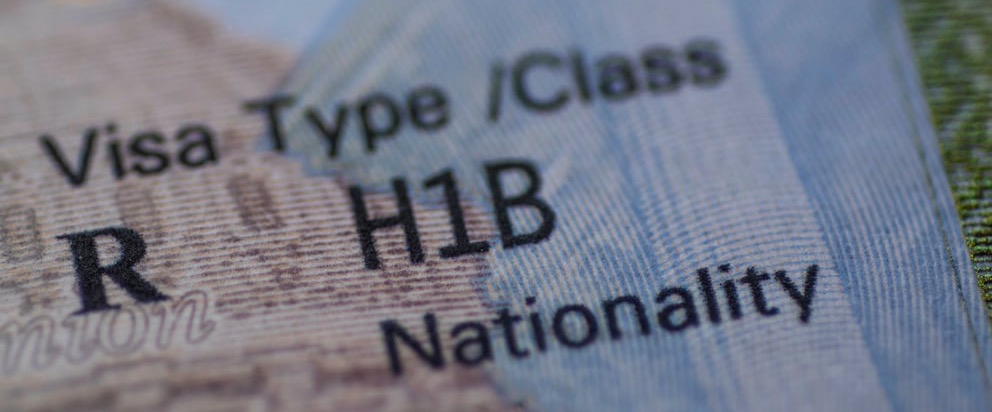
When I first arrived in Silicon Valley in 1991, I did so on an H-1B visa. The program was brand new at the time, created to ensure that highly skilled professionals could move quickly into positions where American companies faced genuine gaps in expertise. My own case reflected that original vision perfectly. The U.S. firm that acquired my UK employer needed continuity and leadership in managing the transition of products and markets. I was the senior person left standing after the American parent stripped away the British management team, and my experience as product manager made me indispensable.

The process worked with remarkable speed, and the offer was more than fair. A $75,000 salary in 1991, equivalent to nearly $180,000 today, was a clear acknowledgment of the skills and responsibilities I brought with me. The system was designed to secure talent, not to undercut wages, and for me it delivered exactly what was promised: a career-defining opportunity and a way for an American company to gain the expertise it needed to thrive.

But what worked so well for me in 1991 has, over the decades, drifted far from that original intent. The H-1B program was meant to bring the best and brightest from abroad to fill roles that were difficult to source domestically. Instead, it has increasingly become a pipeline for large outsourcing firms that import entry-level workers at far lower wages than their American counterparts. Where the original standard was senior-level knowledge and proven skill, many visas now go to contractors whose roles could often be filled within the domestic labor pool.

This misuse creates what one former U.S. immigration official has called a “split personality disorder” for the program. Roughly half the visas still go to companies that genuinely need high-level specialists and can offer long-term careers, but the other half are captured by consulting firms whose business model depends on renting out lower-cost workers. That shift undermines both American workers, who see wages suppressed, and skilled foreign professionals, who are often treated as interchangeable resources rather than valued contributors.

The lottery system has further distorted the program. Once a simple way to fairly distribute a limited number of visas, it has been gamed by firms flooding the system with multiple applications. The recent drop in lottery bids, after the government cracked down on such practices, revealed just how much abuse had taken hold.

If the H-1B visa is to remain credible, it needs to return to its original purpose: rewarding specialized knowledge, proven expertise, and long-term commitment. Proposals to allocate visas based on wage levels rather than random chance would be a step in the right direction. They would align the system once again with its founding principle: bringing in the kind of high-value, hard-to-replace professionals that the U.S. economy truly needs.

My own journey in 1991 demonstrates the potential of the H-1B program when it is used as intended. It was a bridge for talent, a tool for competitiveness, and a life-changing opportunity. But unless it is reformed, the program risks being remembered not for what it enabled, but for how it was exploited.

Donald Trump’s Canadian Problem

A new survey released earlier this month offers a revealing glimpse into how Canadians view Donald Trump’s presidency, and the results are as decisive as they are sobering. The polling, conducted September 5–12, 2025 among 1,614 Canadians, asked respondents whether they approve or disapprove of the way Trump is handling his job as President of the United States. The breakdown by party support tells a clear story: Canadians overwhelmingly disapprove of Trump, regardless of partisan affiliation.

Among Liberals, an astonishing 99 percent disapprove, leaving a mere one percent in support. The New Democrats mirror this almost exactly, with 99 percent disapproval and just one percent approval. Green Party supporters follow close behind at 98 percent disapproving and 2 percent approving. Even Bloc Québécois voters, often unpredictable in their alignment, reject Trump by 93 percent to 7 percent.

These numbers show a remarkable national consensus, across progressive and nationalist lines alike, that Trump is fundamentally out of step with Canadian values. With one glaring exception. Among Conservative supporters, 45 percent approve of Trump, while 55 percent disapprove. That means nearly half of Conservative voters in this country are willing to line up behind one of the most polarizing figures in global politics.

This divergence is striking. The data shows a Canada almost united in its rejection of Trumpism, with Conservatives standing as the outliers. If we think of this not as abstract polling but as a snapshot of political culture, it becomes clear that the Conservative Party is grappling with a profound tension.

For the majority of Canadians, Trump represents everything they do not want in a leader: brash nationalism, disdain for institutions, transactional diplomacy, and an open hostility toward climate action. Canada’s self-image is one of consensus, moderation, and multilateralism, and Trump’s style cuts directly against that grain. It is little surprise then that Liberals, New Democrats, Greens, and Bloc voters reject him almost unanimously.

But nearly half of Conservatives see something different in Trump. They see a political figure who fights against what they perceive as “elites,” who speaks in blunt, sometimes brutal terms about immigration, cultural change, and national identity, and who promises to roll back the tide of progressive reform. For these voters, admiration of Trump is less about the technical details of his policy record and more about his role as a cultural symbol. Supporting him signals a desire to push Canadian politics in a harder, more populist direction.

This matters because Canadian Conservatives cannot easily ignore those numbers. A party with nearly half its base aligned sympathetically with Trump is inevitably influenced by that worldview. Yet the same data shows the broader Canadian electorate is not only uninterested in Trumpism, it is actively repulsed by it. When 99 percent of Liberals and New Democrats disapprove, 98 percent of Greens disapprove, and even 93 percent of Bloc voters disapprove, the lesson is clear: any Conservative strategy that tries to import Trump’s politics wholesale will run up against a wall of national resistance.

That leaves Conservatives in a bind. Court the Trump-sympathetic faction too aggressively, and they risk alienating the vast majority of Canadians who will never accept that style of politics. But turn away from it too decisively, and they risk fracturing their own base, where that 45 percent approval rating represents a large, vocal, and motivated bloc. It is the Canadian version of the dilemma Republicans themselves face in the United States: balancing the energy of the Trump base against the broader electorate’s distaste for him.

The deeper implication of this poll is that Canadian political culture is becoming increasingly entangled with the culture wars of the United States. That nearly half of Conservative supporters here look favorably on Trump is not an accident; it is the result of years of shared media consumption, online communities, and ideological cross-pollination. Canadian Conservatives watch Fox News, follow American conservative influencers, and engage in the same debates about “woke politics,” immigration, and freedom as their American counterparts. In that sense, Trump’s shadow stretches across the border, shaping not just U.S. politics but the fault lines within Canada’s right.

For the rest of Canada, this polling is a reminder of just how far apart our political tribes are drifting. On one side, overwhelming consensus against Trumpism, reflecting confidence in Canada’s more moderate, multilateral, and socially inclusive traditions. On the other, a significant portion of Conservatives willing to buck the national consensus in favor of an imported populist model.

The divide is not just about Donald Trump himself, it is about what he represents. For most Canadians, he symbolizes chaos, division, and a brand of politics fundamentally alien to our values. For nearly half of Conservatives, he symbolizes resistance to cultural liberalism, elite consensus, and globalist institutions. That chasm of perception tells us more about Canadian politics in 2025 than any single election poll.

The numbers are clear. Donald Trump may never be on a Canadian ballot, but his influence is already shaping our political landscape. And if this polling is any indication, Canada’s Conservatives are out of alignment with the overwhelming majority of their fellow citizens. The question is whether they double down on that path, or find a way back toward a politics that actually speaks to the broad Canadian mainstream.

Progressive Momentum and the Future of AOC: A Shift in the Democratic Landscape

Zohran Mamdani’s stunning victory in the New York City Democratic primary has sent a clear and reverberating message through the political establishment. It signals a shift in power from entrenched centrism toward a dynamic, youth-driven progressive movement. For Alexandria Ocasio-Cortez (AOC), the implications are profound. As Mamdani steps into the mayoral spotlight, AOC stands poised at the edge of a political evolution that could take her from the House of Representatives to the Senate, or even the White House.

Mamdani’s campaign was more than a local political contest. It was a referendum on the viability of democratic socialism in America’s most populous city. His unapologetically leftist platform: free public transit, rent freezes, municipal grocery stores, drew a wide coalition of voters, particularly young, immigrant, and working-class New Yorkers. That coalition mirrors the one AOC has cultivated since her own upset win in 2018. With Mamdani now demonstrating that these politics can succeed citywide, the progressive agenda that AOC has long championed is entering a new, legitimized phase.

This changing tide places renewed focus on Chuck Schumer’s Senate seat. The Senate Majority Leader will be 77 in 2028, and while he maintains strong institutional support, he represents a more moderate vision of Democratic leadership that no longer captures the imagination of a rising generation of voters. Ocasio-Cortez, by contrast, has maintained her status as the face of a new political movement; media-savvy, policy-driven, and fiercely independent. Mamdani’s victory has demonstrated that progressives can now build coalitions that go beyond isolated districts and may be ready to compete statewide. A challenge to Schumer, once seen as audacious, now feels increasingly plausible.

The broader question is whether AOC might aim even higher. Born on October 13, 1989, she will turn 39 in 2028, making her fully eligible to run for president that year. While such a move would be bold, the current political trajectory is anything, but conventional. Ocasio-Cortez enjoys massive name recognition, unmatched popularity among millennial and Gen Z voters, and an ability to dominate national media cycles in a way that few sitting members of Congress can. With the Democratic base increasingly eager for generational change, her candidacy could resonate far beyond the progressive echo chamber.

Of course, there are considerable challenges. Both Mamdani and AOC have faced criticism over their positions on Israel and Palestine, particularly within New York’s large and politically active Jewish community. Mamdani’s past references to the “globalization of the Intifada” and his support for the BDS movement sparked intense scrutiny, and AOC has similarly faced backlash over her foreign policy stances. These positions may energize parts of the left, but they risk alienating swing voters, older Democrats, and party power brokers, especially in a national contest.

Additionally, Mamdani’s victory, while significant, came within New York City, a progressive stronghold. AOC would need to broaden her base significantly to succeed in statewide or national contests. Yet, Mamdani’s success does signal that progressives now possess the organizational muscle to win more than just symbolic victories. That’s a new development, and it’s likely to embolden Ocasio-Cortez and her allies as they assess the landscape heading into 2028.

The Democratic Party finds itself at a crossroads. The Biden era, defined by incremental centrism and institutional caution, is increasingly out of step with the priorities of a younger, more progressive electorate. Mamdani’s victory illustrates that boldness can win, not just hearts and headlines, but actual votes. That fact changes the calculus for Ocasio-Cortez. She is no longer simply the insurgent voice of the future. She now stands as one of the few national figures capable of uniting a fractured base around a coherent, transformative agenda.

In the aftermath of Mamdani’s win, the question is no longer whether AOC has a path to higher office, it’s which path she will choose. Whether she targets the Senate or sets her sights on the presidency, the progressive movement she helped ignite has reached a new phase of viability. The stage is set. The moment, increasingly, seems hers to seize.

Trump 2028: A Dynasty in the Making

As our southern neighbours celebrate their July 4th Independence Day, I thought I might run a little dystopian thinking by you, just for shits and giggles. 

With President Donald J. Trump firmly ensconced in the White House following his inauguration on January 20, 2025, the political spotlight has already shifted to the 2028 presidential contest. Now that Trump has reclaimed the presidency, serving a second, non‑consecutive term, the future of the Republican Party, and particularly the Trump brand, becomes even more intriguing. He cannot run again in 2028 due to the 22nd Amendment, yet his political influence remains as potent as ever. When Trump hints at “Trump 2028,” is he pointing toward a fading hope for a senior comeback, or planting the seeds for a dynastic succession?

Trump’s dismissal of J.D. Vance as the presumptive 2028 nominee, his blunt “No” in mid-2024, was a calculated move. It conveyed more than personal preference; it signaled that no one outside the Trump orbit, especially outside his own family, should assume control of the MAGA movement. That dismissal keeps the party’s trajectory anchored firmly to his legacy and opens the conversation to another Trump, likely Donald Trump Jr., as a strategic heir.

The Trump phenomenon is less ideology, more brand. It thrives on personality, controversy, and performative loyalty rather than governing philosophy. In this context, succession isn’t about grooming a policy-savvy protégé; it’s about sustaining a brand identity built on defiance, spectacle, and a perceived voice for disenfranchised Americans. The successor needs the name recognition, the meme-worthy charisma, and the combative mindset that defines the brand. Among the Trump offspring, only Don Jr. checks all those boxes.

Donald Trump Jr. has transformed himself into the Trump heir apparent. He is a constant fixture in conservative media, wields substantial pull on social platforms, and echoes the base’s grievances with unapologetic fervor. He didn’t build the MAGA mythos; he inherited and amplified it. That inheritance, and his relationships with influencers and activists in the base, have elevated his profile far above that of other Trump offspring. Ivanka has retreated, Eric remains in the family business, and Tiffany is entirely absent from politics. Don Jr. has emerged not just as a surrogate, but as a potential candidate.

Trump’s strategic ambiguity on “Trump 2028” serves multiple purposes. It flusters rivals, keeps the media’s attention, and maintains his grip on the Republican narrative. It also whets the base’s appetite for continuity. Because Trump remains in power, he commands the stage, and if he cannot hold it past 2028, he may hand it to someone who shares his blood, his message, and his followers’ fervor.

Is Don Jr. ready? The question isn’t about his credentials, he has none in elected office, but about his fit for a movement that prizes authenticity over formality. He is a provocateur, not a policy wonk, but if the base values combativeness and brand loyalty over experience, that could be enough. His candidacy would signal that Trumpism is shifting from a moment to a dynasty.

In essence, Trump’s rejection of Vance, his jesting about “Trump 2028,” and the steady rise of Don Jr. aren’t isolated events, they are pieces of a grander design. It’s a blueprint for a political legacy that goes beyond a single man, one that may redefine how power and influence are planned, and passed on, in American conservatism.

As Trump settles into his second term, the real battle isn’t just in Congress or the 2026 midterms, it’s in the heirs he chooses. Will the Republican Party coalesce around a Vance-or-DeSantis alternative, or will Trump Sr. successfully transfer authority to his son? For the MAGA faithful, the answer could come sooner than we think, and carry the Trump name once again into the White House in 2028.

Sources
• U.S. Constitution, 22nd Amendment.
The Hill, “Trump: Vance Not Default 2028 Nominee,” June 2024.
Axios, “Inside the Trump Family Political Machine,” October 2023.
• Maggie Haberman, Confidence Man: The Making of Donald Trump and the Breaking of America, 2022.
• Pew Research Center, “Trump Voter Demographics and Political Influence,” 2020.

The Right-Wing Assault on Zohran Mamdani: A Case Study in Fear, Faith, and Manufactured Outrage

This week’s Democratic primary win by Zohran Mamdani in New York City has sparked a swift and vitriolic backlash from the American political right. For many progressives, Mamdani represents a fresh, principled voice, an openly socialist, Muslim elected official rooted in grassroots organizing. Yet, to the MAGA-aligned right, he’s become an instant caricature: the bogeyman of “woke” America, Islamic extremism, and anti-capitalist menace rolled into one.

What’s striking is not just the speed or ferocity of the attacks, but their coherence. The American right has launched a well-coordinated, multi-front campaign to delegitimize Mamdani before he’s even secured office. This isn’t just about a single candidate, it’s about creating a chilling example for anyone who dares to combine faith, leftist politics, and immigrant heritage in one political package.

The attacks fall into four clear categories: ideological smears, identity-based vilification, legalistic threats, and strategic political framing. Let’s unpack each in turn.

Ideological Smears: “100% Communist Lunatic”
Leading the charge, unsurprisingly, was Donald Trump himself. In a Truth Social post, Trump called Mamdani a “100% Communist Lunatic,” mocked his appearance (“he looks TERRIBLE”), and dismissed his intelligence. “He has a grating voice and is not very smart,” Trump wrote, using his familiar playground style to frame Mamdani as both alien and absurd.

This wasn’t just personal insult, it was deliberate ideological messaging. Trump’s followers picked up the cues. Fox News commentators immediately recycled the “radical Marxist” label, lumping Mamdani with other left-wing figures like AOC and Ilhan Omar. Charlie Kirk, head of Turning Point USA, accused Mamdani of being “openly hostile to American values,” while Ben Shapiro described him as “a warning shot for every city in America flirting with socialist politics.”

The goal is clear: to equate Mamdani’s democratic socialism with authoritarian communism, hoping the average voter won’t notice the difference, or care.

Identity Attacks: Islamophobia on Full Display
Once the ideological lines were drawn, the right turned to its most reliable weapon: fear of the Other. Mamdani’s Muslim identity has become the centerpiece of a series of ugly, Islamophobic attacks that call back to the darkest days of post-9/11 paranoia.

Right-wing influencer Laura Loomer declared that Mamdani’s win meant “Muslims will start committing jihad all over New York.” Charlie Kirk took a similar route, tweeting, “24 years ago a group of Muslims killed 2,753 people on 9/11. Now a Muslim Socialist is on pace to run New York.”

This isn’t dog-whistling. It’s a blaring siren aimed at reinforcing the idea that no Muslim, especially one on the political left, can ever be truly American. Donald Trump Jr. added fuel to the fire, posting that “NYC has fallen,” linking Mamdani’s faith to the city’s supposed moral and political collapse.

It’s a tactic steeped in the logic of fear. By framing Mamdani as a religious threat, not just a political one, the right seeks to incite suspicion and revulsion in undecided voters, and rally the conservative base with xenophobic energy.

Legal Threats: Revoking Citizenship and Deportation
Perhaps the most extreme tactic has come from fringe legal proposals that are gaining traction in some corners of the Republican ecosystem. The New York Young Republican Club issued a statement urging that Mamdani’s citizenship be revoked and that he be deported under the Cold War–era Communist Control Act.

Joining in were social media accounts linked to campus Republican groups at Notre Dame and elsewhere, who posted memes calling for Mamdani’s removal “before he turns NYC into Gaza.

Of course, Mamdani is a U.S. citizen, and the Communist Control Act has long been rendered toothless, but the mere invocation of such tools shows the level of desperation, and the fantasy of a purer, ideologically homogeneous America that many on the far right still chase. That such rhetoric is being normalized through prominent GOP-aligned accounts is a worrying sign of how authoritarian instincts now animate large swaths of the American right.

Strategic Framing: The New Face of the Democratic Party
Beyond the bluster, there is calculation. Republican strategists are already working Mamdani’s win into their national messaging. Rep. Richard Hudson, chair of the National Republican Congressional Committee, called Mamdani “the new face of the Democratic Party” and warned that he was “anti-police, anti-ICE, and antisemitic.”

Elise Stefanik, a top Trump ally and potential gubernatorial candidate in New York, blasted the state’s Democrats and Governor Kathy Hochul, claiming their “weakness and chaos” enabled Mamdani’s win. “This is what happens when you abandon law and order,” she warned, painting Mamdani’s victory as a symptom of broader Democratic decay.

The GOP’s playbook here is familiar: elevate the most progressive voices within the Democratic coalition and present them as mainstream, thereby frightening moderate voters. It’s the same tactic used against AOC and “The Squad,” now applied to a new, compelling candidate who threatens to expand the progressive tent even further.

A Test of American Pluralism
What we’re witnessing is not just the rejection of a political ideology, it’s an assault on the possibility that someone like Zohran Mamdani can belong in American political life. A socialist. A Muslim. The child of immigrants. A man whose vision of justice includes housing for all, and decarceration as part of a broader push to treat social problems (like addiction, poverty, and mental illness) through public health and community investment, not criminal punishment.

The right’s response is a mixture of panic and performance, yet their firepower is real, and their message is resonating in dark corners of the internet and Fox-friendly swing districts alike.

For Mamdani and others who share his vision, the challenge now is twofold: defend against the smears, and articulate a hopeful, inclusive vision that transcends them; because while the attacks are ugly, they are also revealing. They tell us exactly what the political right fears most: a future where people like Zohran Mamdani don’t just run, they win.

Sources
• Truth Social (Trump posts)
• Charlie Kirk and Donald Trump Jr. tweets, June 2025
• Statements from the NY Young Republican Club
• Fox News broadcast transcripts, June 24–26, 2025
• Public posts by Laura Loomer and Elise Stefanik on X (formerly Twitter)