The Right-Wing Assault on Zohran Mamdani: A Case Study in Fear, Faith, and Manufactured Outrage

This week’s Democratic primary win by Zohran Mamdani in New York City has sparked a swift and vitriolic backlash from the American political right. For many progressives, Mamdani represents a fresh, principled voice, an openly socialist, Muslim elected official rooted in grassroots organizing. Yet, to the MAGA-aligned right, he’s become an instant caricature: the bogeyman of “woke” America, Islamic extremism, and anti-capitalist menace rolled into one.

What’s striking is not just the speed or ferocity of the attacks, but their coherence. The American right has launched a well-coordinated, multi-front campaign to delegitimize Mamdani before he’s even secured office. This isn’t just about a single candidate, it’s about creating a chilling example for anyone who dares to combine faith, leftist politics, and immigrant heritage in one political package.
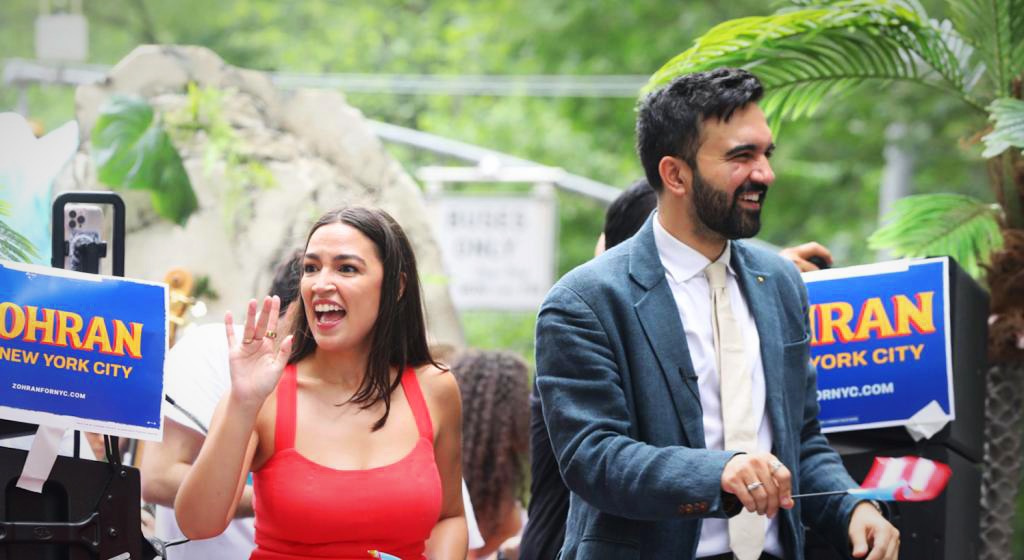
The attacks fall into four clear categories: ideological smears, identity-based vilification, legalistic threats, and strategic political framing. Let’s unpack each in turn.

Ideological Smears: “100% Communist Lunatic”
Leading the charge, unsurprisingly, was Donald Trump himself. In a Truth Social post, Trump called Mamdani a “100% Communist Lunatic,” mocked his appearance (“he looks TERRIBLE”), and dismissed his intelligence. “He has a grating voice and is not very smart,” Trump wrote, using his familiar playground style to frame Mamdani as both alien and absurd.

This wasn’t just personal insult, it was deliberate ideological messaging. Trump’s followers picked up the cues. Fox News commentators immediately recycled the “radical Marxist” label, lumping Mamdani with other left-wing figures like AOC and Ilhan Omar. Charlie Kirk, head of Turning Point USA, accused Mamdani of being “openly hostile to American values,” while Ben Shapiro described him as “a warning shot for every city in America flirting with socialist politics.”

The goal is clear: to equate Mamdani’s democratic socialism with authoritarian communism, hoping the average voter won’t notice the difference, or care.

Identity Attacks: Islamophobia on Full Display
Once the ideological lines were drawn, the right turned to its most reliable weapon: fear of the Other. Mamdani’s Muslim identity has become the centerpiece of a series of ugly, Islamophobic attacks that call back to the darkest days of post-9/11 paranoia.

Right-wing influencer Laura Loomer declared that Mamdani’s win meant “Muslims will start committing jihad all over New York.” Charlie Kirk took a similar route, tweeting, “24 years ago a group of Muslims killed 2,753 people on 9/11. Now a Muslim Socialist is on pace to run New York.”

This isn’t dog-whistling. It’s a blaring siren aimed at reinforcing the idea that no Muslim, especially one on the political left, can ever be truly American. Donald Trump Jr. added fuel to the fire, posting that “NYC has fallen,” linking Mamdani’s faith to the city’s supposed moral and political collapse.

It’s a tactic steeped in the logic of fear. By framing Mamdani as a religious threat, not just a political one, the right seeks to incite suspicion and revulsion in undecided voters, and rally the conservative base with xenophobic energy.

Legal Threats: Revoking Citizenship and Deportation
Perhaps the most extreme tactic has come from fringe legal proposals that are gaining traction in some corners of the Republican ecosystem. The New York Young Republican Club issued a statement urging that Mamdani’s citizenship be revoked and that he be deported under the Cold War–era Communist Control Act.

Joining in were social media accounts linked to campus Republican groups at Notre Dame and elsewhere, who posted memes calling for Mamdani’s removal “before he turns NYC into Gaza.

Of course, Mamdani is a U.S. citizen, and the Communist Control Act has long been rendered toothless, but the mere invocation of such tools shows the level of desperation, and the fantasy of a purer, ideologically homogeneous America that many on the far right still chase. That such rhetoric is being normalized through prominent GOP-aligned accounts is a worrying sign of how authoritarian instincts now animate large swaths of the American right.

Strategic Framing: The New Face of the Democratic Party
Beyond the bluster, there is calculation. Republican strategists are already working Mamdani’s win into their national messaging. Rep. Richard Hudson, chair of the National Republican Congressional Committee, called Mamdani “the new face of the Democratic Party” and warned that he was “anti-police, anti-ICE, and antisemitic.”

Elise Stefanik, a top Trump ally and potential gubernatorial candidate in New York, blasted the state’s Democrats and Governor Kathy Hochul, claiming their “weakness and chaos” enabled Mamdani’s win. “This is what happens when you abandon law and order,” she warned, painting Mamdani’s victory as a symptom of broader Democratic decay.

The GOP’s playbook here is familiar: elevate the most progressive voices within the Democratic coalition and present them as mainstream, thereby frightening moderate voters. It’s the same tactic used against AOC and “The Squad,” now applied to a new, compelling candidate who threatens to expand the progressive tent even further.

A Test of American Pluralism
What we’re witnessing is not just the rejection of a political ideology, it’s an assault on the possibility that someone like Zohran Mamdani can belong in American political life. A socialist. A Muslim. The child of immigrants. A man whose vision of justice includes housing for all, and decarceration as part of a broader push to treat social problems (like addiction, poverty, and mental illness) through public health and community investment, not criminal punishment.

The right’s response is a mixture of panic and performance, yet their firepower is real, and their message is resonating in dark corners of the internet and Fox-friendly swing districts alike.

For Mamdani and others who share his vision, the challenge now is twofold: defend against the smears, and articulate a hopeful, inclusive vision that transcends them; because while the attacks are ugly, they are also revealing. They tell us exactly what the political right fears most: a future where people like Zohran Mamdani don’t just run, they win.

Sources
• Truth Social (Trump posts)
• Charlie Kirk and Donald Trump Jr. tweets, June 2025
• Statements from the NY Young Republican Club
• Fox News broadcast transcripts, June 24–26, 2025
• Public posts by Laura Loomer and Elise Stefanik on X (formerly Twitter)
From Reformist to Foot Soldier: The Political Evolution of Marco Rubio

For a time, Marco Rubio seemed to embody the hope that the Republican Party might modernize without losing its ideological spine. Young, charismatic, and the son of Cuban immigrants, he was hailed in the early 2010s as a conservative who could articulate traditional Republican values in a way that spoke to a broader, more diverse America. When he launched his presidential campaign in 2015, he positioned himself as a candidate of the future, one who could move past the culture wars and appeal to younger voters. To many in the media and even among some Democrats, Rubio seemed reasonable, serious, and, crucially, not dangerous.

This perception was always something of a projection. While Rubio carried himself with more polish and optimism than the emerging populist wing of the party, his actual positions were firmly in line with movement conservatism: staunchly anti-abortion, fiscally hawkish, anti-union, and reflexively interventionist on foreign policy.  Yet, because he wasn’t loud or cruel about it, and because he occasionally flirted with bipartisan gestures, most notably as a member of the 2013 “Gang of Eight” that attempted to pass comprehensive immigration reform, he was miscast as a moderate. The immigration effort was perhaps the high-water mark of his reputation as a bridge-builder, but the vicious backlash from conservative media and grassroots activists forced him into retreat. Rubio didn’t defend the bill; he distanced himself from it. This was an early sign of a pattern that would define his political choices; say the right thing when it’s safe, but retreat when it’s not.

Rubio’s realignment became undeniable with the rise of Donald Trump. In 2016, he famously called Trump a “con artist,” mocking his hands and personal behavior in an unusually caustic exchange; but after dropping out of the presidential race, he quickly endorsed Trump and began the long process of political adaptation. By the time Trump had cemented his control over the GOP, Rubio had made his peace with the new order. He supported Trump through both impeachment trials, echoed his talking points about “election irregularities” in 2020 without directly endorsing false claims, and has steadily absorbed the rhetoric and priorities of the MAGA movement, particularly on issues like “wokeism,” China, and the weaponization of federal institutions.

What surprises many observers now is not so much Rubio’s positions, many of which he has held, if more quietly, for years, but how fully he has embraced the tone and sensibility of the MAGA worldview. The man once billed as a “next-generation Republican” has become another foot soldier in the party’s turn toward grievance politics, culture war maximalism, and a brand of authoritarian-adjacent populism that defines today’s GOP. His evolution is not unique. It mirrors that of a party whose internal incentives now reward loyalty to Trump and punishment for dissent. Rubio is not leading that transformation; he’s adapting to it, and perhaps surviving because of it.

In truth, the notion that Rubio was ever a centrist or a true reformer was a comforting myth told by centrists and pundits who longed for a less chaotic Republican Party, but Rubio was never that man. He was always a disciplined conservative with big ambitions, more fluent in elite political language than many of his peers, but no less ideologically committed. The real shift, then, is not in Rubio’s principles, but in the conditions under which he operates. The surprise people express today is less about his transformation, and more about our own willingness to believe he was something else.

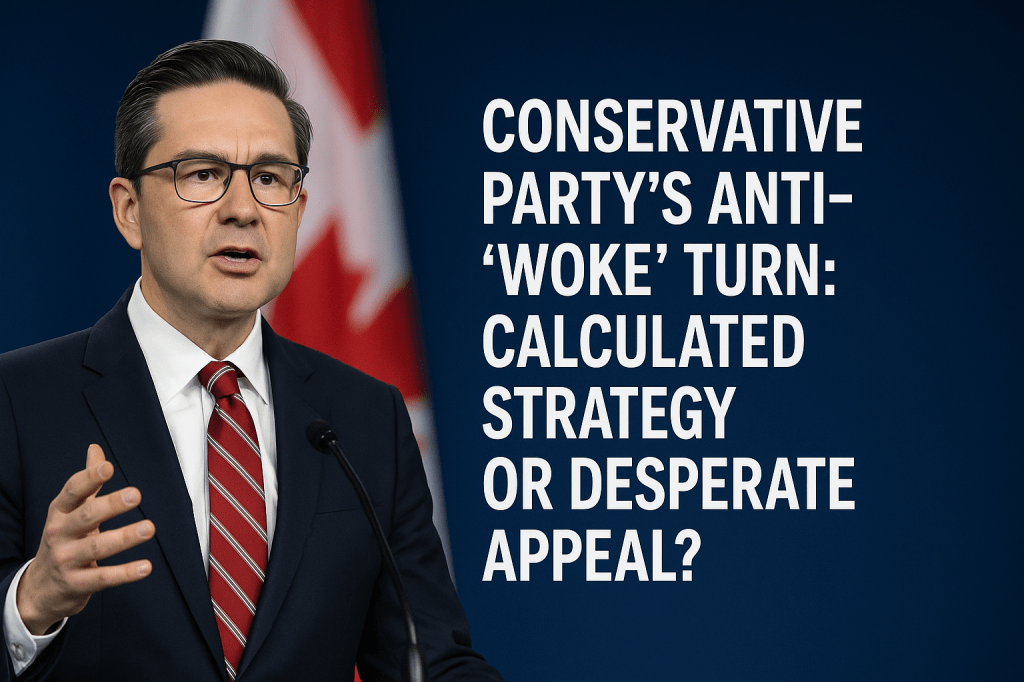
Conservative Party’s Anti-“Woke” Turn: Calculated Strategy or Desperate Appeal?

The Conservative Party of Canada has quietly republished the English-language version of its platform to reinsert a plank that had been conspicuously absent; a pledge to crack down on so-called “woke ideology” within the federal public service, and in university research funding. Described as a “publishing oversight,” this addition raises far more questions than it answers, particularly about Pierre Poilievre’s political calculus as the next election draws closer.

First, let’s interrogate the substance. “Woke ideology,” while undefined in the platform, is often shorthand on the political right for progressive stances on diversity, inclusion, gender identity, anti-racism, and decolonization efforts. To include language targeting these frameworks suggests the Conservatives are not just passively uncomfortable with current equity-focused public policy, they’re actively preparing to dismantle it. But why now?

One possible explanation is strategic: this is a deliberate overture to Canada’s emergent far-right electorate. While still fringe in some parts of the country, this voter segment has grown increasingly vocal, particularly on social media, and within alternative media ecosystems. By tapping into their grievances, against public sector DEI programs, gender-inclusive language, or research funding tied to Indigenous reconciliation, the Conservatives may be attempting to consolidate a reliable, energized bloc of voters.

Another interpretation is more inward-facing: Poilievre is shoring up his base, not for the election, but for what comes after. Should the Conservatives form government, he may face internal fractures between establishment conservatives and newer ideological hardliners. This platform language signals allegiance to the latter, potentially ensuring his continued leadership in a post-election caucus that could be divided on everything from fiscal policy to foreign affairs.

There’s also the broader issue of timing. The re-publication came after criticism that the party had been “softening” to appeal to moderate or urban voters, many of whom are uncomfortable with overt culture war rhetoric. By reaffirming this pledge, the party might be trying to reassure its core that the campaign’s centrist gestures are mere optics, not policy commitments.

But this move is not without risks. Canada’s public service is one of the most diverse and professionalized in the world. Federal civil servants are unlikely to respond positively to a government that frames their professional values as ideological threats. Likewise, university researchers who rely on federal grants will see this as a chilling signal that academic freedom could be compromised by political litmus tests.

And then there’s the broader electorate. While “anti-woke” politics have gained traction in the U.S. and U.K., Canadian voters have historically been more moderate. The risk for Poilievre is that in appealing to a narrow base, he alienates the swing voters he’ll need to actually win. Recent polling shifts, driven in part by U.S. President Donald Trump’s aggressive new tariffs on Canadian goods and Liberal leader Mark Carney’s boost in credibility, suggest the tide may already be turning against Poilievre’s hard-right gambit.

The re-insertion of this controversial language into the Conservative platform isn’t a glitch, it’s a signal. The question now is whether it’s a strategic masterstroke aimed at cementing a new ideological alignment in Canada, or a desperate hedge against the possibility that Poilievre wins the election, but loses control of his own party.

Forget the Third Term—Trump’s True Threat to Democracy Is Happening Now

Donald Trump’s recent statements about serving a third term should not be taken at face value. Instead, they are likely a deliberate red herring, designed to dominate the news cycle and distract the public from the real threats to democracy that his administration and allies are pursuing. This is a classic Trump strategy; make an outrageous claim, provoke an intense reaction, and while everyone is busy debunking it, work quietly in the background to consolidate power.

The reality is that a third term is constitutionally impossible without an amendment, which would require overwhelming congressional and state-level support; something Trump does not have. So why bring it up? Because it forces Democrats, legal scholars, and the media to focus on an imaginary crisis rather than the real one. While everyone is busy arguing about whether he “means it” or if there’s a legal loophole he could exploit, the actual threats to democracy, attacks on voting rights, the erosion of institutional checks and balances, and the installation of loyalists in key positions, go largely unchecked.

We’ve seen this playbook before. Throughout his first presidency, Trump used inflammatory rhetoric to create chaos and dominate media coverage, distracting from the structural changes his administration was making behind the scenes. His lies about a “stolen election” consumed public discourse, but the real story was the groundwork being laid for legal challenges, voter suppression laws, and, ultimately, the violent January 6th insurrection. His latest comments about a third term could serve a similar function, keeping his base engaged and enraged while drawing attention away from his administration’s more immediate moves.

The most dangerous aspect of this tactic is that it works. Every time Trump makes an outrageous claim, it forces his opponents to play defense, scrambling to explain why his idea is unconstitutional or unworkable. Meanwhile, his supporters rally around him, buying into the narrative that he is the only one who can “save” the country. This shift in focus allows him to continue his real mission; undermining democratic institutions to ensure his grip on power extends far beyond 2029, even if he never officially serves a third term.

Democrats and the media must recognize this strategy for what it is. Instead of getting caught up in the spectacle, they must stay laser-focused on what Trump is actually doing. The real story isn’t whether he can serve a third term, it’s how he is working right now to weaken democracy so that he won’t have to leave power in the first place.

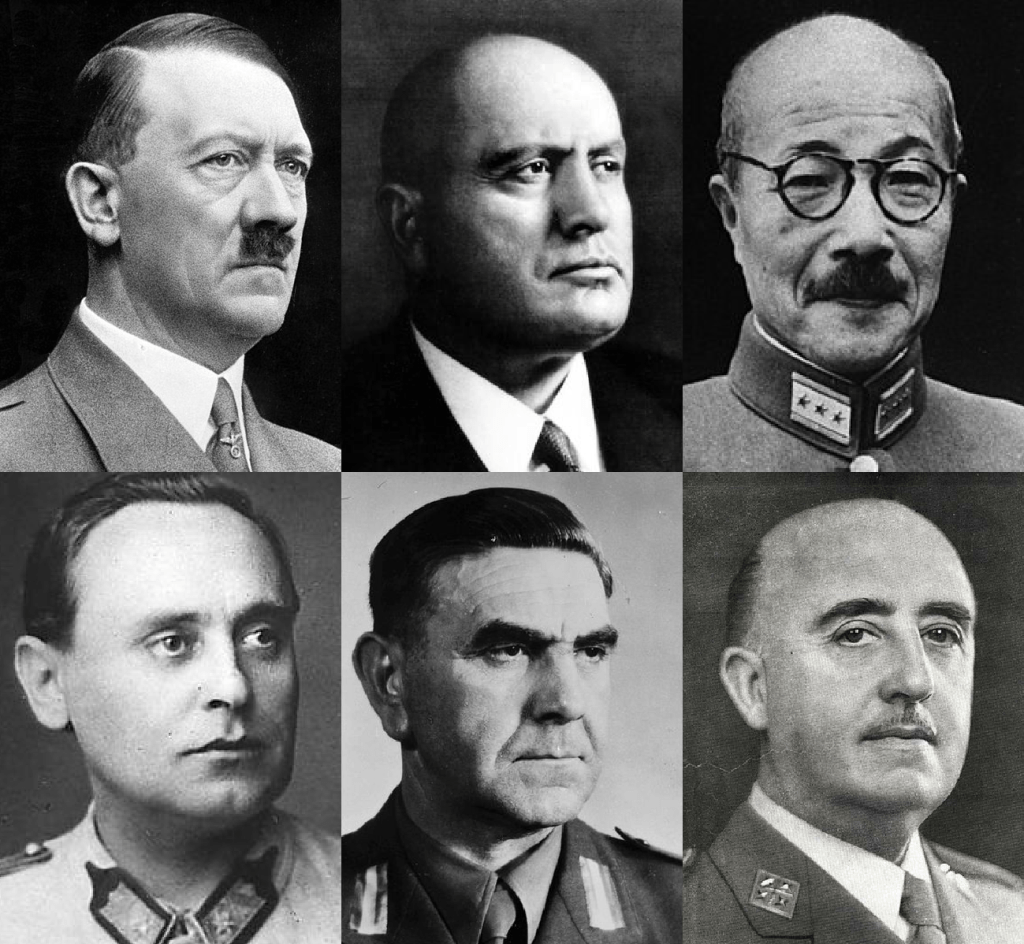
The Delusions of Authoritarians: Why it never ends well for Fascist Leaders

Fascist and authoritarian leaders rarely see themselves as doomed figures in history. On the contrary, they often believe they are exceptional – capable of bending the course of history to their will. Whether through the cult of personality, the rewriting of historical narratives, or sheer force, they assume they can control how they will be remembered. This delusion has led many to catastrophic ends, yet new generations of authoritarians seem undeterred, convinced that they will be the ones to succeed where others failed. Trump and his allies fit squarely into this pattern, refusing to believe that history might judge them harshly or that their actions could lead to their own downfall.

Mussolini provides one of the most vivid examples of this phenomenon. He envisioned himself as a modern-day Caesar, reviving the grandeur of the Roman Empire through Fascism. His brutal repression of dissent, his alliance with Hitler, and his reckless military ambitions ultimately led to disaster. When the tide of World War II turned, Mussolini found himself abandoned, hunted, and finally executed by his own people; his corpse hung upside down in Milan as a stark rejection of his once-grandiose vision. And yet, to the very end, he believed he was the victim of betrayal rather than the architect of his own demise.

Hitler, too, was utterly convinced of his historical greatness. He meticulously curated his own image, producing propaganda that cast him as Germany’s savior. Even as the Third Reich collapsed around him, he ranted in his bunker about how the German people had failed him rather than the other way around. His ultimate act, suicide rather than surrender, was an attempt to control his narrative, ensuring he would never be paraded as a prisoner. But history did not grant him the legacy he sought. Instead of being remembered as a visionary, he became the ultimate symbol of genocidal tyranny.

The pattern continued into the later 20th century. Nicolae Ceaușescu, the Romanian dictator, had convinced himself that his people adored him. He built extravagant palaces while his citizens starved, crushed opposition, and developed a personality cult that portrayed him as a paternal figure of national strength. When the moment of reckoning arrived in 1989, he seemed genuinely shocked that the crowd in Bucharest turned on him. Within days, he and his wife were tried and executed by firing squad, their supposed invincibility revealed as an illusion.

Even those who manage to hold onto power longer do not always escape history’s judgment. Augusto Pinochet ruled Chile through terror for nearly two decades, believing that his iron grip would secure him a revered place in history. But his crimes – torture, executions, forced disappearances eventually caught up with him. Though he escaped trial for most of his life, his reputation was destroyed. His legacy became one of shame rather than strength.

Trump, like these figures, operates in a world where loyalty and spectacle take precedence over reality. He dismisses mainstream historians as biased, preferring the adulation of his base over any broader judgment. He likely assumes that as long as he can retain power, whether through elections, legal battles, or intimidation, he can dictate how history views him. But history has a way of rendering its own verdict. Those who believe they can shape their own myth while trampling on democratic institutions, rule of law, and public trust often find themselves remembered not as saviors, but as cautionary tales.

America’s Arrogance Knows No Bounds: Trump’s 51st State Fantasy as repeated by Rubio is an Insult to Canadian Sovereignty

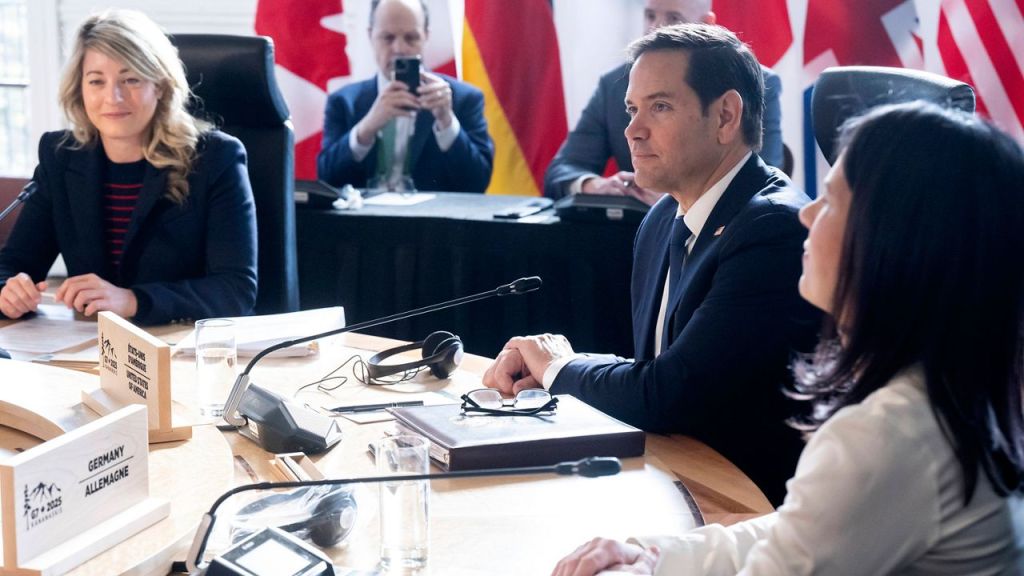
Marco Rubio, speaking after the G7 foreign ministers’ summit in Charlevoix, had the gall to suggest that Trump’s annexation fantasy was just an “economic argument” that “stands for itself.” Really? An economic argument? As if Canada’s entire existence hinges on whether the U.S. slaps a few tariffs on our exports.

When pressed about Trump’s repeated claims that the Canada-U.S. border is an “artificial line,” Rubio shrugged it off. According to him, there’s merely a “disagreement” between Trump and the Canadian government. No, Marco, it’s not a “disagreement.” It’s an outrageous, imperialist insult that no Canadian should tolerate.

Apparently, this all started back in December 2024 when then-Prime Minister Justin Trudeau met with Trump at Mar-a-Lago. Rubio claims Trudeau said Canada couldn’t survive if the U.S. imposed tariffs, and Trump, ever the megalomaniac, took that as an opening to suggest annexation. Now, let’s be clear: Trudeau has never confirmed saying anything remotely like that. But Trump, in his usual dishonest fashion, took it and ran – repeating the “51st state” nonsense so many times that even Trudeau, at first dismissing it as a joke, was forced to take it seriously.

Fast forward to today, and we have Trump sitting in the Oval Office with NATO Secretary-General Mark Rutte, once again declaring that Canada “only works as a state.” And what did Rutte, representing one of the world’s most powerful alliances, say? Nothing. Not a word. That’s NATO for you – silent when it comes to one of its founding members being treated like an American colony-in-waiting.

Thankfully, our new Prime Minister, Mark Carney, didn’t mince words. His response? “We will never, ever in any way, shape, or form be part of the United States.” Simple, direct, and exactly what needed to be said.

The sheer arrogance of Trump and his lackeys is breathtaking. Canada is a sovereign nation. We are not some economic vassal of the United States, nor are we waiting around for Washington to “save” us. The idea that our country exists only at the whim of American economic policy is an insult to everything we stand for.

Germany’s Foreign Minister, Annalena Baerbock, voiced strong support for Canada in response to U.S. President Donald Trump’s economic threats and remarks about making Canada an American state. She emphasized that sovereign borders must be respected, including those of Ukraine, Greenland, and Canada, and reaffirmed Germany’s close friendship with Canada. 

Make no mistake – this is not about economics. It’s about power, control, and America’s delusional belief that it can swallow up anything it wants. Canada has fought too hard, for too long, to let some washed-up real estate con artist and his yes-men dictate our future.

America can keep its chaos, its dysfunction, and its toxic brand of politics. Canada is, and always will be, its own nation. And the sooner Washington gets that through its thick skull, the better.

An Alternative North American Future?

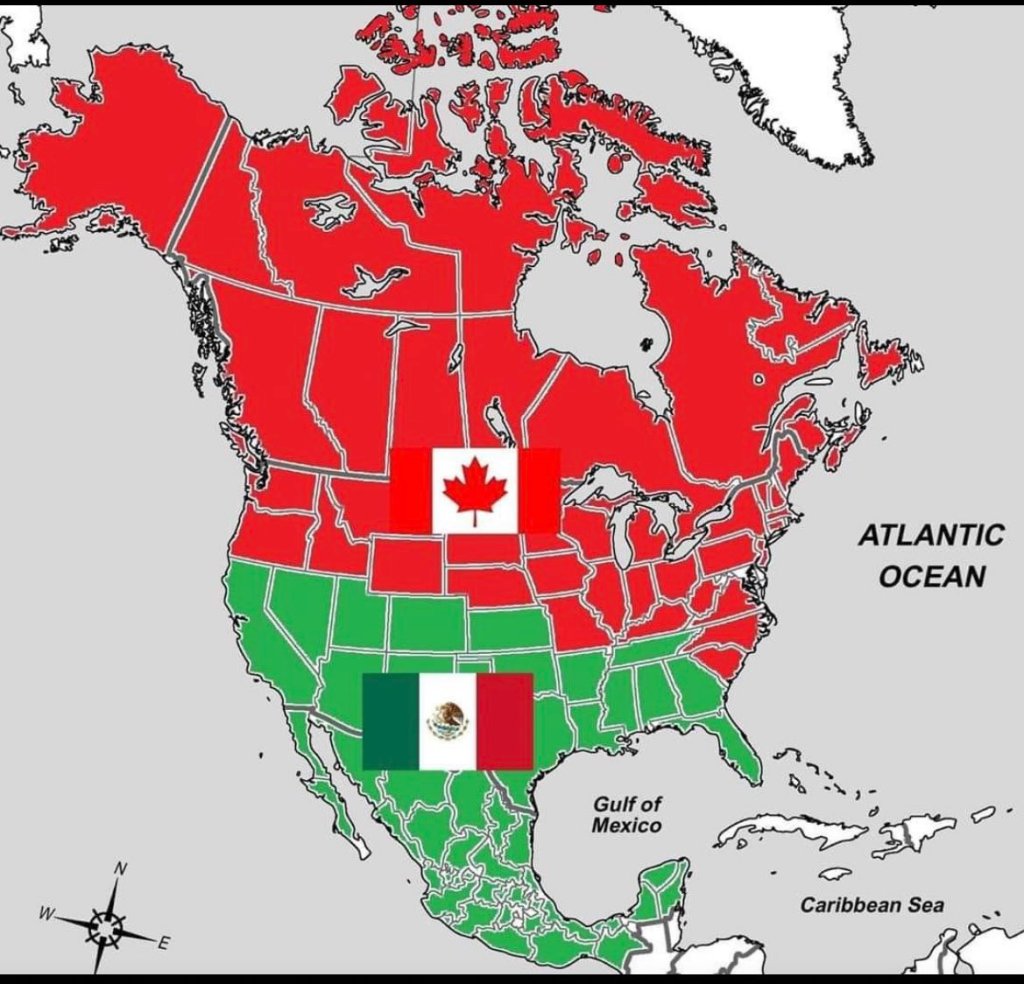
It began in the aftermath of the Trump years – a nation divided, fractured at its very core. The United States, once a symbol of strength and unity, had unraveled under the weight of its own polarization. Years of escalating political infighting, economic instability, and growing regional tensions had pushed the great experiment of American democracy to its breaking point. When the collapse came, it was not with a bang, but with a slow, inevitable unraveling.

In the early 2030s, the federal government, weakened by years of partisan gridlock and financial crises, failed to contain the growing unrest. States, long at odds over issues of governance, resources, and ideology, began asserting their independence. California, Texas, and other powerful states declared their sovereignty, severing ties with Washington, D.C., and leaving the remnants of the federal government powerless. What was once a union of fifty states dissolved into chaos.

As the world watched in shock, two nations quietly stepped forward: Canada and Mexico. Both had been America’s neighbors and partners, but now, they saw an opportunity, and a necessity, to reshape the continent.

The Canadian Annexation
To the north, Canada extended a cautious but determined hand to the crumbling states along its border. The former states of Michigan, Minnesota, North Dakota, and Montana, facing economic collapse and a bitter winter with no central government to guide them, sought refuge under Ottawa’s governance. Canada, ever pragmatic, offered them integration in exchange for loyalty to its parliamentary system and adoption of its healthcare and social policies.

The Pacific Northwest—Washington, Oregon, and northern California—quickly followed. Their progressive politics and environmental priorities aligned well with Canada’s ethos. Vancouver and Seattle became twin metropolises, and the region flourished under Canadian stewardship. The newly expanded Canada, now stretching as far south as the Sierra Nevada, became an economic powerhouse, blending American innovation with Canadian stability.

Mexico’s Revival
To the south, Mexico reclaimed lands it had lost centuries earlier. Texas, Arizona, New Mexico, and southern California were among the first to fall into its orbit. For these states, heavily influenced by Hispanic culture and history, the transition was both practical and symbolic—a return to roots.

Mexico, long underestimated on the global stage, rose to meet the challenge. The integration of these territories revitalized its economy, spurred technological innovation, and solidified its status as a regional superpower. Cities like Los Angeles and Austin, while retaining their unique identities, became hubs of a new Mexican-led cultural renaissance. Spanish replaced English as the dominant language in much of the region, and Mexico’s influence spread northward.

A Continent Redefined
By the 2040s, the map of North America had been redrawn. Canada and Mexico had divided the former United States almost evenly, with a handful of independent city-states like New York and Chicago remaining as neutral enclaves. The continent was no longer dominated by a single superpower but by two distinct and rising nations, each shaped by the remnants of the United States they had absorbed.

Canada, now stretching from the Arctic to the Rockies and the Great Lakes to the Pacific, became a beacon of progressive governance and environmental stewardship. Mexico, infused with the energy of its newly integrated territories, grew into a vibrant economic and cultural force, bridging Latin America with the former United States.

The world adapted to this new reality. China and the European Union moved to fill the void left by America’s collapse, but Canada and Mexico ensured North America remained a critical player on the global stage. Though the stars and stripes had fallen, the legacy of the United States lived on—in the governments, cultures, and people of its successor states.

And so, the great American experiment ended, not in triumph or tragedy, but in transformation, a testament to the resilience of a continent and the enduring power of reinvention.

American Strategy or Political Posturing? 

President-elect Donald Trump’s recent comments regarding the Panama Canal, Greenland, Canada, and Iceland have ignited a firestorm of international debate, raising eyebrows across diplomatic circles. Trump’s proposals, which include retaking control of the Panama Canal, purchasing Greenland, and annexing Canada as the 51st state, reflect his “America First” doctrine in its most assertive form. While such rhetoric underscores his ambition to reassert U.S. dominance, it also risks fracturing relationships with allies and reshaping global perceptions of American foreign policy.

At the heart of Trump’s statements lies a vision of expanding U.S. territorial and geopolitical influence. Proposals to acquire territories such as Greenland and Canada would, if realized, redefine America’s strategic footprint. Greenland, with its vast natural resources and critical position in the Arctic, is becoming increasingly vital as climate change opens new shipping routes and untapped reserves of oil, gas, and minerals. Canada, on the other hand, represents an economic and security powerhouse whose integration into the U.S. would consolidate North America into a unified bloc of unparalleled power. While such aspirations might seem fantastical, they align with Trump’s broader ethos of maximizing U.S. leverage on the world stage.

The Panama Canal, another focal point of Trump’s vision, underscores the strategic underpinnings of his proposals. As one of the world’s most vital maritime corridors, the canal serves as a lifeline for global trade, connecting the Atlantic and Pacific Oceans. Regaining control over the canal would enable the U.S. to secure a critical chokepoint in global logistics, ensuring that it serves American economic and military interests. Reclaiming the canal would send a strong message to rival powers, particularly China, whose investments and influence in Latin America have challenged traditional U.S. dominance in the region.

These territorial aspirations can also be interpreted as an attempt to counter Beijing’s growing reach. China’s Belt and Road Initiative and its economic entrenchment in Latin America have heightened concerns in Washington about losing influence in its own hemisphere. By floating the idea of reclaiming the Panama Canal or acquiring new territories, Trump may be signaling a broader strategy to curb China’s ambitions and reaffirm America’s primacy in key geopolitical arenas.

However, these bold declarations have not gone unchallenged. Greenland’s Prime Minister, Múte Egede, quickly dismissed any notion of selling Greenland, calling it an absurd proposal that undermines their sovereignty. In Panama, leaders have emphatically rejected the idea of relinquishing control over the canal, asserting their independence and national pride. Canadian officials, too, have categorically rebuffed Trump’s suggestion of annexation, with some labeling the proposal as both outlandish and offensive. The immediate backlash from these nations highlights the deep diplomatic hurdles that such propositions would face.

Critics argue that Trump’s rhetoric is less about actionable policy and more about playing to his domestic audience. By projecting strength and ambition, he may be attempting to solidify support among his base, which has long embraced his unapologetically nationalistic vision. Yet this approach carries significant risks. Alienating allies, undermining international norms, and sparking diplomatic tensions could damage America’s global standing and limit its ability to build coalitions in an increasingly multipolar world.

Ultimately, Trump’s comments raise questions about the balance between ambition and realism in U.S. foreign policy. While his proposals underscore a desire to redefine America’s role on the world stage, the practical and political barriers to their implementation are immense. The overwhelming opposition from the international community suggests that such ideas, even if pursued, would face insurmountable resistance. Whether these statements reflect genuine intentions or are merely provocative rhetoric, they offer a window into the polarizing and unpredictable foreign policy approach that could define the Trump era

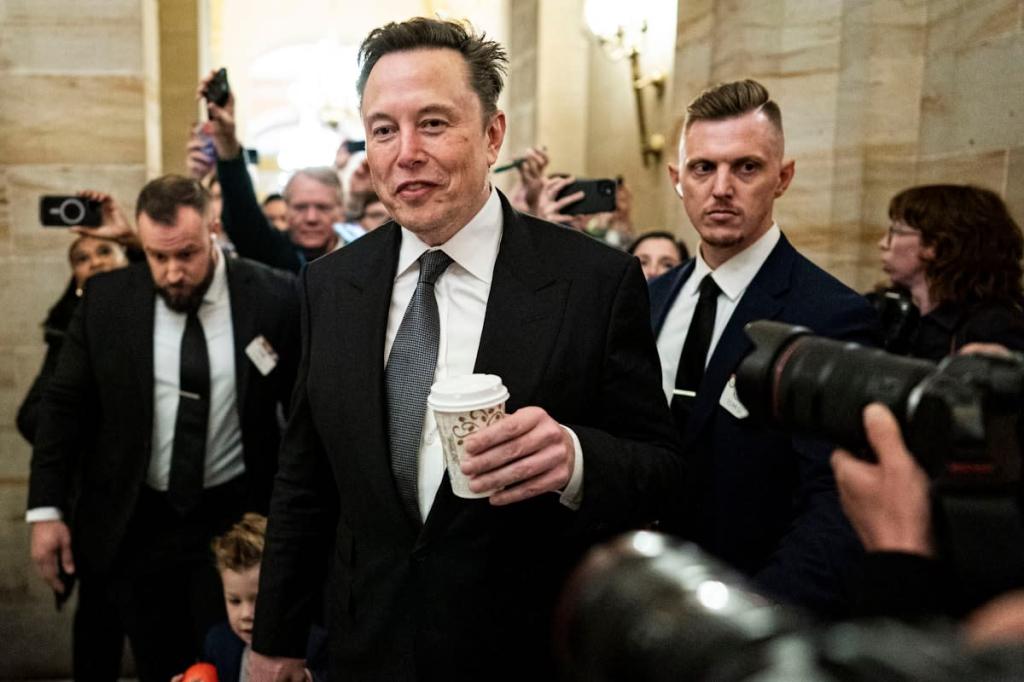
Elon Musk as Speaker of the House? A Fascinating, but Unlikely Scenario

I was just discussing the failed spending bill vote in the House of Representatives with a U.S. acquaintance, and they brought up the possibility of Elon Musk becoming Speaker of the House.  As surprising as this idea might be, it is technically feasible, although surely, highly unlikely? While the Constitution does not require the Speaker to be a sitting member, every Speaker since the role’s creation in 1789 has been an elected representative, and even if Musk was nominated he would still have to receive a majority vote in the House of Representatives.

While this rule opens the door for unconventional candidates, the reality of such a scenario is much more complex. The role of Speaker demands a deep understanding of legislative processes, the ability to manage the intricate dynamics of Congress, and the capacity to build coalitions across a divided political body. Musk, while an innovative entrepreneur, lacks the political and legislative experience traditionally associated with the position.

Even if Donald Trump, or another prominent Republican were to propose Musk as a candidate, achieving majority support would be a monumental task. The House is already deeply divided along partisan lines, and the idea of electing a non-politician to such a critical role would likely face significant resistance from both parties. Additionally, Musk’s outspoken and often polarizing public persona could further complicate efforts to secure widespread support.

Perhaps this is the ultimate FAFO?

Update
Just as I post this short piece, I see that a number of prominent GOP members are being reported as supporting the notion of Musk as Speaker. Representative Marjorie Taylor Greene of Georgia and Senator Rand Paul of Kentucky seem to think it’s a good idea, so I will sit back and enjoy the show.

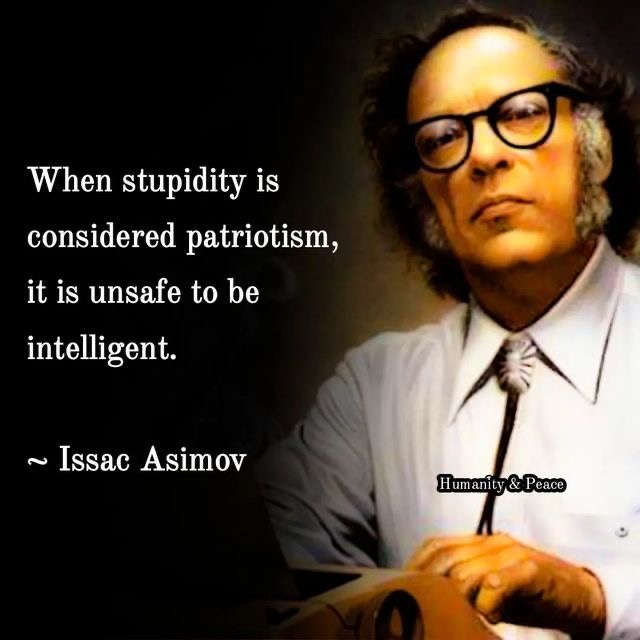
Asimov’s Warning Is Just As Valid Today 

Isaac Asimov’s assertion about the “cult of ignorance” in the United States, where the false equivalence of ignorance and knowledge undermines democracy, is disturbingly evident in many elected U.S. leaders. This trend, marked by anti-intellectualism and the rejection of expertise, is not only a historical thread, but also a contemporary issue with serious consequences. When political leaders prioritize personal beliefs or populist rhetoric over evidence-based decision-making, the nation’s progress is stymied.

One glaring example is the response to the COVID-19 pandemic, during which several federal leaders publicly rejected scientific consensus and medical expertise. President Donald Trump, for instance, consistently downplayed the severity of the virus, promoted unproven treatments like hydroxychloroquine, and suggested bizarre remedies such as injecting disinfectant. His administration’s frequent clashes with public health experts, including Dr. Anthony Fauci, showcased a dangerous preference for misinformation over evidence-based policy. This rejection of expertise delayed critical responses, contributing to the unnecessary loss of lives and eroding public trust in institutions.

Climate change denial is another prominent example of Asimov’s warning in action. Despite decades of scientific research and warnings about the catastrophic effects of global warming, U.S. federal leaders like Senator James Inhofe have openly dismissed the issue. Inhofe’s infamous act of bringing a snowball to the Senate floor in 2015 to mock climate change science epitomized the rejection of intellectual rigor in favor of simplistic and misleading arguments. Under President Trump, the United States withdrew from the Paris Climate Accord in 2017, a decision that disregarded global consensus and expert recommendations. This move not only hampered international climate action, but also showcased a willingness to prioritize political posturing over long-term environmental sustainability.

Education policy also reflects this strain of anti-intellectualism. Federal and state leaders have fueled culture wars over curricula, targeting topics like evolution, climate science, and systemic racism. Florida Governor Ron DeSantis, for example, has led efforts to restrict discussions of race and gender in schools, framing them as “woke indoctrination.” His administration’s actions, including banning Advanced Placement African American Studies, reflect a fear of critical thinking and a broader trend of politicizing education. Such measures not only undermine intellectual growth, but also perpetuate ignorance by denying students access to nuanced perspectives.

Another aspect of this “cult of ignorance” is the weaponization of populist rhetoric. Politicians like Marjorie Taylor Greene and Lauren Boebert frequently champion “common sense” over expertise, dismissing intellectual rigor as elitist. Greene’s baseless claims about space lasers causing wildfires or her rejection of vaccine science exemplify how some leaders amplify misinformation to appeal to their base. This rhetoric undermines trust in institutions, promotes conspiratorial thinking, and fosters a climate where ignorance is celebrated over informed debate.

The Trump administration’s broader approach to governance further illustrates Asimov’s critique. From rejecting intelligence assessments on foreign interference in elections to downplaying the impact of climate policies, the administration often sidelined expertise in favor of politically convenient narratives. This pattern was not limited to one administration. Leaders across political spectrums have, at times, embraced anti-intellectualism, whether through denial of scientific consensus, opposition to educational reform, or a reluctance to address systemic issues.

Asimov’s warning resonates because it touches on the core principle that democracy requires an informed citizenry and leaders willing to engage with complex realities. Yet, when leaders dismiss expertise and elevate ignorance to a virtue, they erode the foundations of democratic governance. The COVID-19 pandemic, climate change denial, and educational censorship demonstrate how the conflation of ignorance with knowledge can have dire consequences for public health, global stability, and intellectual progress.

Reversing this trend demands a renewed commitment to intellectual integrity and informed leadership. Politicians must prioritize evidence-based policymaking, foster trust in expertise, and resist the allure of populist rhetoric that sacrifices long-term progress for short-term gains. Only by respecting knowledge and promoting critical thinking can the United States counteract the “cult of ignorance” Asimov so aptly described and ensure a democratic future guided by reason and understanding.