Economists Are Finally Catching Up – But Will Politicians Listen?

For years, many of us outside the ivory tower have watched economists confidently explain the world using tidy models that don’t quite match reality. Now, it seems even the experts are starting to wake up. Nobel laureate Angus Deaton, a man who has spent over five decades shaping economic thought, recently admitted that he’s rethinking much of what he once believed. In his essay, Rethinking My Economics, he acknowledges something the rest of us have known for a long time; economics, as it has been practiced, has ignored some fundamental truths about power, fairness, and the actual lives of working people.

One of his biggest realizations is that power—not just free markets or technological change—determines wages, prices, and opportunities. The old economic story said that workers got paid what they were worth, and if wages were low, it was because of “supply and demand.” Deaton now recognizes that corporate power has a much bigger role than economists have admitted. Employers dictate pay, not some invisible hand. This is what workers and unions have been saying for generations.

Speaking of unions, Deaton now regrets his past views on them. Like many economists, he once saw unions as a drag on efficiency. Now he sees them as a necessary counterbalance to corporate power. He even links their decline to some of today’s biggest problems—like stagnant wages and the rise of populism. Those of us who watched good union jobs disappear over the decades could have told him that.

Deaton also revisits the supposed wonders of free trade and globalization. He used to believe they were unquestionably good for everyone, lifting millions out of poverty worldwide, and now he wonders if the benefits of global trade have been overstated, especially for North American workers. It turns out that shipping jobs overseas and gutting local industries does have consequences. Again, not news to the factory workers and small-town business owners who saw their livelihoods disappear.

Even on immigration, Deaton has had a rethink. While he still sees its benefits, he admits he hadn’t fully considered its effects on low-wage workers. Many working-class folks—especially in industries like construction and manufacturing—have long argued that an influx of labor can drive down wages. For decades, economists dismissed these concerns as uninformed or even xenophobic. Now, Deaton is realizing that, actually, those workers had a point.

One of the biggest flaws in modern economics, Deaton argues, is its obsession with efficiency. The field has spent too much time focusing on what is “optimal” in theoretical terms while ignoring what is fair. Efficiency is great if you’re a CEO looking at profit margins, but for ordinary people trying to build stable lives, fairness matters just as much—if not more.

Perhaps most importantly, Deaton now believes that economics needs to learn from other disciplines. Historians, sociologists, and philosophers have long been tackling questions about inequality, power, and justice that economists are only now beginning to take seriously. Maybe if more economists had paid attention to those fields earlier, we wouldn’t be in such a mess now.

Which brings us to Mark Carney. Once the golden boy of central banking, Carney is now stepping into the political arena with the Canadian Federal Liberals, promising policies that sound progressive, but still carry the scent of Bay Street. The big question is: will his economic approach reflect the real-world reckoning that Deaton and others are finally having, or will it be more of the same old technocratic tinkering? Carney has talked a lot about inclusive growth and climate action, but will he acknowledge—like Deaton now does—that power imbalances, corporate dominance, and the decline of unions are at the heart of inequality? Will he push policies that actually shift power back to workers, or just dress up neoliberal economics with a few social programs? If Carney truly embraces Deaton’s new thinking, we might see a real departure from the old economic playbook, but if he sticks to the well-worn path of market-friendly “solutions,” it’ll just be another round of the same policies that got us here in the first place.

It’s refreshing to see someone like Deaton openly question his own past beliefs. It’s a rare thing for a leading economist to admit they’ve been wrong, but for those of us who have lived through the consequences of these flawed economic theories, starting with the years of Reagan and Thatcher, the real question is: Why did it take them so long to figure this out? And now that they have—will the politicians actually do anything about it?

Carney’s First Move as Prime Minister: A Smaller, More Focused Cabinet

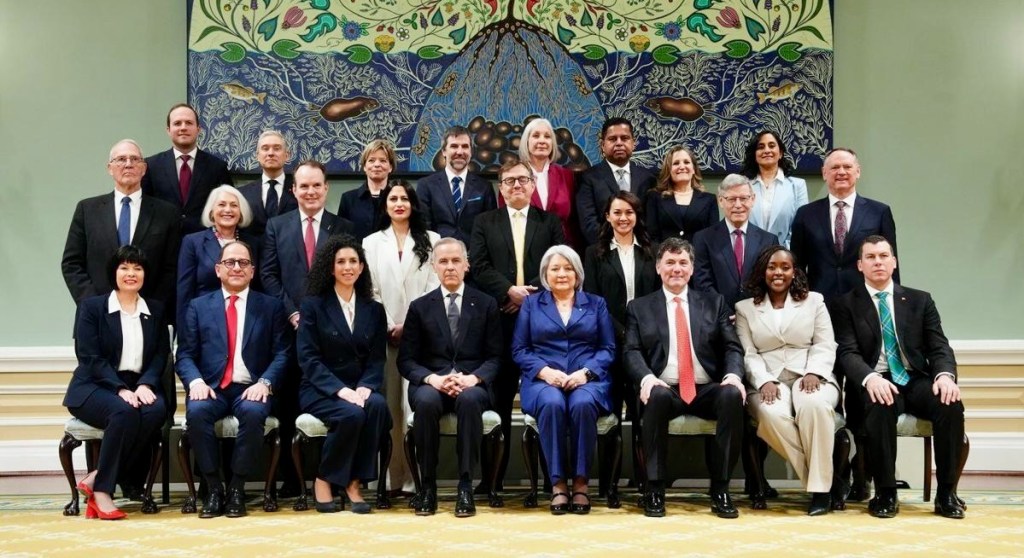
Mark Carney was sworn in as Canada’s 24th Prime Minister during March 2025, taking over from Justin Trudeau at a time of economic uncertainty, and escalating trade tensions with the United States. Carney, the former governor of both the Bank of Canada and the Bank of England, is widely seen as a steady hand in financial matters. His first major move as leader was to restructure the Liberal cabinet, streamlining its size and refocusing its priorities to address the most pressing issues facing the country.

One of the defining characteristics of Carney’s new government is efficiency. The cabinet has been reduced in size, reflecting longstanding calls within the Liberal Party for a more effective governance structure. With no more than 20 ministers, the streamlined approach is meant to improve coordination and decision-making. A key figure in this reshaped cabinet is Dominic LeBlanc, who takes on the powerful role of Minister of International Trade and Intergovernmental Affairs, while also serving as President of the King’s Privy Council. His extensive political experience positions him as a central player in both trade negotiations and federal-provincial relations, two areas where stability will be crucial.

Mélanie Joly retains her role as Minister of Foreign Affairs, but with an expanded focus on international development. At a time of growing global instability, Canada’s diplomatic relationships will be under close scrutiny, particularly as tensions with the United States continue to simmer. Meanwhile, François-Philippe Champagne steps into the critical position of Minister of Finance. His background in trade and innovation makes him well suited to tackle Canada’s economic challenges, especially as the government navigates the fallout of trade disputes, and seeks to bolster domestic investment.

Another notable appointment is Anita Anand, who assumes the role of Minister of Innovation, Science, and Industry. With Canada needing a competitive edge in technology and research, her portfolio will play a key role in shaping the country’s economic future. Bill Blair moves into National Defence, bringing his experience in emergency preparedness and public safety to an increasingly complex security environment. With global conflicts intensifying and Canada’s military commitments under review, Blair’s role will be one of the most closely watched in the new cabinet.

On the domestic front, Carney has signaled a renewed emphasis on Indigenous relations and social equity. Patty Hajdu remains in charge of Indigenous Services, reinforcing the government’s commitment to reconciliation and improved support for Indigenous communities. Jonathan Wilkinson, whose portfolio has been expanded to include both Energy and Natural Resources, will be tasked with balancing Canada’s economic interests with environmental sustainability—a challenge that has long been a point of contention in federal politics.

Chrystia Freeland, one of the government’s most experienced ministers, has taken on the role of Minister of Transport and Internal Trade. Her ability to manage complex negotiations will be key as the government looks to strengthen internal trade and infrastructure development. Meanwhile, Steven Guilbeault has been given a new role overseeing Canadian culture, heritage, and national parks. His appointment suggests a renewed effort to promote national identity and environmental conservation as part of the government’s broader agenda.

Overall, Carney’s cabinet reshuffle reflects a clear strategy: economic resilience, strengthened trade relationships, national security preparedness, social equity, and environmental sustainability. By bringing together experienced political veterans and streamlining decision-making, the new Liberal government is positioning itself to navigate both domestic and global challenges with a renewed sense of purpose. Whether this strategy will prove effective remains to be seen, but for now, Carney’s government appears focused and ready to tackle the road ahead.

BRICS Rising: The Challenge to Western Dominance in a Multipolar World

BRICS has evolved from an economic alliance into a geopolitical force challenging Western dominance. Originally conceived as a framework for cooperation among emerging markets, the bloc now pursues a strategic agenda that threatens the global order long shaped by Europe and North America. By fostering economic interdependence, promoting financial independence, and expanding its diplomatic influence, BRICS is positioning itself as a counterweight to Western-led institutions like the IMF, World Bank, and NATO. Its rise signals a shift toward a multipolar world where U.S. and European dominance is no longer assured.

At the core of BRICS’ strategy is economic cooperation aimed at reducing reliance on Western markets and financial institutions. Trade agreements and joint investment projects among Brazil, Russia, India, China, and South Africa strengthen internal resilience while offering developing nations an alternative to the West’s economic model. The New Development Bank (NDB) plays a key role, financing infrastructure and sustainability projects without the political conditions often attached to Western aid. This economic realignment is further reinforced by BRICS’ push to de-dollarize global trade, insulating its members from U.S. financial influence and sanctions. By increasing the use of local currencies and developing alternatives to SWIFT, BRICS is actively undermining the dollar’s global dominance. If oil-producing nations like Saudi Arabia shift toward BRICS’ financial system, the petrodollar system could face serious disruption, weakening the U.S. economy and limiting Washington’s ability to leverage economic power as a foreign policy tool.

For Europe, BRICS represents a different kind of challenge. While not as dependent on the dollar, the EU’s economic model relies on stable access to global markets, raw materials, and energy. BRICS’ growing control over critical resources—such as rare earth minerals, oil, and food supplies—poses risks to European industry. Russia and China have already demonstrated a willingness to use trade as a geopolitical weapon, and as BRICS strengthens its economic ties, European access to these resources could become more costly and politically conditional. Additionally, BRICS’ growing influence in Africa, Latin America, and the Middle East threatens Europe’s traditional soft power approach in these regions. By providing loans and investments without Western-style conditions, BRICS is offering an appealing alternative to nations wary of IMF-imposed austerity. This shift weakens Europe’s ability to shape international policies and erodes its influence in regions it has long considered strategic.

Beyond economics, BRICS is reshaping global diplomacy by advocating for a multipolar world. The bloc frequently aligns its positions in the UN, G20, and WTO, pushing for reforms that reduce Western dominance. By expanding its membership to include emerging economies across the Global South, BRICS is creating a parallel alliance network that enables countries to resist Western pressure. The potential inclusion of Iran and other anti-Western regimes raises concerns about a new axis of influence that could counterbalance NATO and other Western-led security alliances. While BRICS is not yet a military pact, growing defense cooperation—particularly between Russia and China—suggests that security coordination could become more structured over time.

Technology is another battleground where BRICS threatens Western leadership. China and India are emerging as global tech powerhouses, while Russia excels in cybersecurity and artificial intelligence. If BRICS nations successfully develop independent digital ecosystems—ranging from payment systems to semiconductor industries—Western tech companies may lose access to key markets. The push for BRICS-led internet infrastructure could also fragment global digital governance, reducing the West’s ability to shape online policies and monitor cyber threats. Meanwhile, BRICS’ emphasis on state sovereignty and non-interference in domestic affairs provides an ideological alternative to the Western model of governance. As more nations align with this approach, the ability of the U.S. and Europe to promote democracy, human rights, and free-market policies could diminish.

BRICS is not just an economic alliance, but a structural challenge to the Western-led world order. By advancing financial independence, expanding geopolitical influence, and fostering technological self-sufficiency, the bloc is steadily eroding the dominance of Western institutions. While internal divisions and logistical hurdles remain, BRICS’ trajectory suggests that Europe and North America must adapt to a world where their influence is no longer guaranteed. Whether the West engages with BRICS on more equal terms or resists and risks further global fragmentation will determine the shape of international relations in the years to come.  

Canada’s Potential Economic Transformation: From Raw Commodities to Value-Added Manufacturing

Canada has long been defined by its vast natural resources, exporting raw commodities like oil, lumber, minerals, and agricultural products to its largest trading partner, the United States. This resource-based economy has created prosperity, but left Canada vulnerable to global market fluctuations and overreliance on one major partner. Imagine, however, a seismic shift where Canada halts raw commodity exports to the U.S. and reorients its economy toward value-added manufacturing, inspired by Germany’s renowned industrial model. Such a transformation could redefine Canada’s role in the global economy, fostering innovation, diversification, and resilience.

The cornerstone of this strategy would be transitioning away from the sale of unprocessed resources. Instead of exporting crude oil, Canada could refine it domestically into high-quality petrochemical products, such as plastics and specialty chemicals. Similarly, rather than selling raw lumber, the country could invest in producing engineered wood products, furniture, and prefabricated housing materials. By processing these materials at home, Canada would capture greater value from its resources, create high-skilled jobs, and reduce economic dependency on the United States.

The shift to manufacturing would require a robust focus on innovation, supported by substantial investment in research and development (R&D). Germany’s manufacturing success is largely driven by its Mittelstand—small and medium-sized enterprises specializing in precision engineering, machinery, and high-quality goods. Canada could emulate this approach by fostering clusters of specialized industries in areas such as green energy technology, robotics, and medical devices. Government incentives, tax breaks, and public-private partnerships could nurture these industries and position Canada as a global leader in advanced manufacturing.

Education and workforce development would play a crucial role in this transformation. Canada’s universities and technical colleges would need to prioritize programs in engineering, technology, and applied sciences. Skilled trades would also need to be elevated in prestige and supported through apprenticeships and certification programs, ensuring a steady supply of talent for emerging industries. Drawing inspiration from Germany’s dual education system, which integrates classroom learning with practical experience, Canada could create a workforce tailored to the demands of a high-tech manufacturing economy.

While transitioning to a manufacturing-based economy, Canada would also strengthen its global trade relationships, reducing reliance on the U.S. market. Trade agreements with the European Union, the Comprehensive and Progressive Agreement for Trans-Pacific Partnership (CPTPP) nations, and emerging markets in Africa and Asia would be leveraged to expand exports of Canadian-made goods. This diversification would provide stability in the face of economic or political disruptions in any one region.

Environmental sustainability would underpin this economic transformation. With global demand shifting toward eco-friendly products, Canada’s manufacturing sector could focus on producing green technologies, such as electric vehicles, renewable energy infrastructure, and energy-efficient building materials. These industries would not only align with Canada’s climate commitments but also tap into growing markets worldwide.

However, such a dramatic shift would not be without challenges. Significant upfront investment, trade tensions with the U.S., and resistance from established industries would need to be managed. Yet the long-term benefits—a diversified, innovative, and resilient economy—would far outweigh the short-term obstacles.

By embracing value-added manufacturing, Canada could break free from its resource-dependent past and secure a prosperous, sustainable future. This shift would allow the country to redefine its economic identity, becoming not just a supplier of raw materials but a global leader in high-quality, innovative goods.

Folly at the Border: Why War with Canada is a Losing Game

The idea of the United States invading Canada is pure fantasy – fiction that resurfaces when political tensions rise. History has seen conflict between the two nations, notably the War of 1812, but in modern times, such an invasion is not just improbable – it’s impossible. The recent escalation of trade tensions, triggered by the U.S. threat of 25% tariffs on Canadian imports in February 2025, has renewed debate over the state of relations. But let’s be clear: trade disputes don’t lead to tanks rolling across borders.

Canada and the U.S. share the world’s longest peaceful border (8,890 km) and a deeply intertwined economy. Canada is the U.S.’s second-largest trading partner, with trade worth hundreds of billions annually. A military invasion would shatter this economic relationship, triggering global market chaos, retaliatory tariffs, and crippling sanctions. The U.S.-Mexico-Canada Agreement (USMCA) would collapse, devastating American industries and consumers. Even the mere suggestion of aggression would spook markets and alienate key allies, making it a non-starter for even the most hardline economic nationalists.

Yes, the U.S. has the world’s most powerful military. No, that doesn’t mean invading Canada is feasible. Geography alone makes occupation nearly impossible. Vast forests, prairies, and the Rocky Mountains would bog down any invading force. Even during the War of 1812, when Canada was smaller and less industrialized, American forces struggled to maintain supply lines. Today, with modern infrastructure and a well-equipped Canadian military, the challenge would be exponentially greater.

Canada’s armed forces, though smaller than the U.S. military, are highly professional, technologically advanced, and well-integrated into NATO. The moment American troops crossed the border, global condemnation would be swift, and allies, including European powers, would not tolerate such an egregious violation of international law. The U.S. would find itself isolated and facing retaliatory action.

Invading Canada wouldn’t just be a military disaster, it would make the U.S. a global pariah. Canada is one of the world’s most respected nations, known for diplomacy, peacekeeping, and strong alliances. An unprovoked attack would trigger severe sanctions from the EU, UK, and other key trading partners, crippling U.S. banks and multinational corporations. The diplomatic fallout could even fracture NATO.

At home, the American public would reject such a reckless move. Canadians, fiercely proud of their independence, would mount an unyielding resistance. Any occupying force would face guerrilla warfare, sabotage, and mass civil disobedience – turning Canada into another unwinnable quagmire, like Vietnam or Iraq. The political backlash within the U.S. would be massive, with protests and upheaval against a war that serves no legitimate purpose.

Beyond all this, a war with Canada would be a direct threat to North American security. The U.S. and Canada work together through NORAD, jointly protecting the continent. Disrupting this alliance would leave both nations vulnerable to adversaries like China and Russia. In today’s world, power is determined by cybersecurity, economic influence, and technological dominance – not outdated military conquest.

Even in the heat of a 2025 trade war, where tensions are high, the leap from tariffs to military action is absurd. Trade disputes are fought with economic measures, not invasions. The fact that some even entertain this notion is more a reflection of political hyperbole than any serious strategic consideration.

A U.S. invasion of Canada isn’t just impractical – it’s impossible. The economic fallout, military challenges, guaranteed international backlash, and fierce Canadian resistance make it a non-option. The U.S. and Canada have their disagreements, but history has shown that their relationship is built on cooperation, shared values, and mutual benefit. The current trade war will eventually be resolved through negotiation, not war.

So, let’s put this nonsense to rest. Canada isn’t going anywhere. And if anyone thinks otherwise – think again.

The Brexit Quagmire: Britain’s Long March to Nowhere

I wrote this piece a while back when it became clear that the Labour government wasn’t going to acknowledge the mess that Brexit has left the country, and then planning on doing something about it.  

It’s been more than eight years since the UK voted to leave the European Union, and the country remains tangled in the wreckage of that decision. Those who championed Brexit—promising economic renewal, restored sovereignty, and an end to Brussels’ supposed meddling—have either slunk away from public life or now conveniently blame everything, but Brexit itself, for the country’s dismal state. Meanwhile, the UK economy limps along, its political class is in shambles, and its global standing is diminished.

Let’s start with the economy. The Office for Budget Responsibility (OBR) has repeatedly confirmed that Brexit has shaved at least 4% off the UK’s GDP—a staggering hit equivalent to the cost of COVID-19, but without the excuse of a global pandemic. Investment has stalled, businesses struggle with trade barriers, and the labour market is in disarray. The much-touted trade deals—supposedly the jewels of an independent Britain—have been underwhelming at best. The Australia deal, for example, was so lopsided that even its Conservative architect, George Eustice, admitted it was a mistake.

Meanwhile, Britain’s political leadership is paralysed by the Brexit-induced culture war that still defines Tory policy. Rishi Sunak, the latest in a conveyor belt of weak Conservative prime ministers, finds himself hostage to the hard-right fringes of his party, who still cling to Brexit as a nationalist totem. Labour, under Keir Starmer, tiptoes around the issue, unwilling to reopen old wounds but acutely aware that Brexit is a disaster.

And then there’s Northern Ireland. The supposed “solution” to the Brexit border dilemma—the Windsor Framework—hasn’t ended unionist resentment or calmed the waters. Businesses in Northern Ireland enjoy a unique advantage of dual access to UK and EU markets, but politically, the province remains deeply fractured. The Democratic Unionist Party (DUP) continues to throw tantrums over Brexit’s impact, while the broader UK-EU relationship remains one of managed hostility rather than genuine partnership.

In short, Britain is poorer, politically broken, and increasingly irrelevant on the world stage. The great post-Brexit “Global Britain” experiment has failed, leaving a country adrift, governed by a party unable to admit its mistakes and an opposition too cautious to offer real alternatives. And yet, despite mounting evidence of economic self-harm, Brexit remains a political third rail. No major party dares to say what most people now quietly accept: Brexit was a colossal error, and the UK is paying the price.

Public-Private Partnerships: A Disaster For Tax Payers?  

Public-Private Partnerships (P3) are often presented as an optimal solution for improving public services through private sector efficiency and innovation. However, the reality frequently falls short of this ideal. Critics argue that P3 can lead to a lack of accountability and transparency, increased costs, and social inequality. These issues are not merely theoretical; real-world examples demonstrate the substantial risks and failures associated with the P3 model.

The Public-Private Partnership  between the City of Ottawa and the Ottawa Sports and Entertainment Group (OSEG) concerning the Lansdowne complex has faced criticism over financial, planning, and public engagement issues.

One of the most significant criticisms of P3 is the lack of accountability and transparency. Private companies, driven primarily by profit, may prioritize financial returns over public welfare. This conflict of interest can lead to cost overruns and poor service delivery. The United Kingdom’s National Audit Office (NAO) highlighted this issue in its report on the Private Finance Initiative (PFI) and PF2 projects. According to the NAO, privately financed public projects often result in higher costs and offer less value for money compared to traditional public sector financing. For instance, the NAO found that hospitals built under PFI schemes were significantly more expensive than those funded directly by the government, burdening taxpayers with long-term financial obligations.

PPPs can exacerbate social inequality by shifting the focus from universal access to profitability. In sectors like healthcare, education, and transportation, this shift can lead to the exclusion of low-income populations. A World Bank study on P3s in the health sector in low-income countries revealed that these partnerships often resulted in higher costs for patients. This increase in costs limited access to essential health services for the poorest segments of society. For example, in Lesotho, a P3 hospital project led by a private consortium resulted in costs that were three times higher than those of other public hospitals, severely straining the country’s health budget and limiting access for the poorest citizens.

Another critical issue with P3s is the potential undermining of public sector capabilities. When private companies take over roles traditionally filled by the government, there is a risk of eroding public sector skills and capacities. This dependency can make it difficult for the public sector to resume these roles in the future. The International Monetary Fund (IMF) has warned that P3s, if not carefully managed, can result in significant contingent liabilities for governments, potentially leading to fiscal instability. The case of the Jakarta Water Supply in Indonesia is a prime example. The P3 aimed to improve water services, but led to a deterioration in service quality and increased tariffs, while the private operators failed to meet investment targets. Eventually, the government had to take back control, illustrating the pitfalls of eroded public sector capabilities and the financial burden of failed partnerships.

The long-term contracts typical of P3s can limit future policy flexibility. Governments may find themselves locked into agreements that do not adapt well to changing public needs or economic conditions. This rigidity can stifle innovation and responsiveness, which are essential for effective public service delivery. The Melbourne CityLink in Australia exemplifies this problem. The toll road project involved a long-term contract that included compensation clauses if competing infrastructure reduced toll revenues. This agreement restricted the government’s ability to develop alternative transportation solutions, illustrating how PPPs can constrain public policy and innovation.

While P3s promise increased efficiency and innovation, they often fall short in practice. Higher costs, reduced access to services, diminished public sector capacity, and inflexibility in policy making are common issues. It is crucial to critically assess the implications of P3s before embracing this model for public service delivery, ensuring that public interests remain paramount.

Breaking Down Barriers: The Push for a Truly Unified Canadian Market

Pierre Poilievre has finally proposed a plan to address the Trump administration’s February 2025 tariffs, seemingly based on an International Monetary Fund (IMF) report. This raises the question: what progress has Canada made on internal trade barriers in response to the IMF’s findings, and what still needs to be done?

Over the past five years, Canada has tackled some of the regulatory and geographic hurdles that have long hindered economic efficiency. The 2019 IMF report highlighted these four barriers—regulatory fragmentation, restrictive provincial controls on goods like alcohol, technical inconsistencies in industry standards, and vast geographic challenges. While reforms have occurred, largely under the Canadian Free Trade Agreement (CFTA), major inefficiencies remain.

The COVID-19 pandemic underscored the fragility of Canada’s fragmented market, prompting temporary regulatory flexibility. Licensing restrictions were eased for healthcare workers, and supply chain barriers were lifted to prevent shortages. This period proved that interprovincial trade barriers could be swiftly reduced when necessary. Yet, once the crisis subsided, most provinces reinstated pre-pandemic restrictions, missing an opportunity for lasting reform.

The CFTA, in place since 2017, has encouraged regulatory alignment, particularly in vehicle weight standards, and professional certifications. However, progress has been slow, with key industries such as construction, trucking, and food processing still burdened by differing provincial rules. One of the more visible steps forward has been the relaxation of alcohol trade restrictions. In 2018, provincial premiers agreed to lift some limits on interprovincial alcohol transportation, while trying to address the mixed market of monopolistic liquor boards and private sector businesses. 

The economic potential of eliminating these barriers is staggering. A report commissioned by Alberta’s government found that mutual recognition across provinces could boost GDP by up to 7.9%, adding as much as $200 billion annually. Internal Trade Minister Anita Anand reinforced this in a January 2025 CBC interview, stating that reducing trade barriers “could lower prices by up to 15 per cent, boost productivity by up to seven per cent, and add up to $200 billion to the domestic economy.” Yet, political inertia and regional protectionism have stalled deeper reforms.

In the short to medium term, Canada must prioritize mutual recognition agreements to streamline licensing and regulatory requirements. The construction industry, for example, faces costly delays due to inconsistent building codes across provinces—an easily fixable issue. Beyond regulatory alignment, reducing paperwork and red tape, particularly for small and medium-sized enterprises, would remove unnecessary friction from the system. A Federal-Provincial-Territorial (FPT) taskforce focused on simplifying these processes, combined with digital infrastructure investments for e-licensing, could provide meaningful relief.

Addressing natural barriers is a longer-term challenge, but progress is possible. Expanding interprovincial transportation networks and improving digital connectivity in rural areas would allow businesses to access larger markets more efficiently.

Ultimately, Canada needs sustained political will to drive internal trade reform. While agreements like the CFTA have laid the groundwork, stronger enforcement mechanisms, and a shift away from provincial protectionism are required. If provinces remain uncooperative, federal intervention may become necessary to unlock the full economic potential of a truly open market. Canada cannot afford to let bureaucratic inertia continue to suppress its economic growth.

The Power of AgriFood Supply Management: Protecting Canadian Grocery Costs

Canada’s supply management system for dairy, poultry, and eggs is about to prove its worth as U.S. tariffs threaten to drive up food prices across the country. Unlike the free-market volatility seen in other parts of the grocery sector, supply-managed goods benefit from a carefully controlled production and pricing system that shields both farmers and consumers from external shocks. While some food categories, particularly those reliant on global trade, are expected to see price hikes due to shifting tariff policies, supply management will help ensure that Canadian shoppers don’t feel the full brunt of these disruptions when it comes to staples like milk, cheese, chicken, and eggs. This is part of the reason why the Bloc Québécois has been fighting to protect Canadian agrifood supply management from future trade negotiations with the U.S. 

At the heart of this system is production control, which ensures that Canadian farmers produce only as much as the domestic market demands. This prevents overproduction, which can drive prices down unsustainably, and underproduction, which leads to shortages and skyrocketing costs. By maintaining a predictable balance between supply and demand, Canada avoids the kind of dramatic price swings that often plague food markets when international trade is disrupted. If American producers face steep tariffs on their agricultural exports to Canada and Mexico, they will likely respond by raising production or looking for alternative markets, creating instability in global food supply chains. However, because Canada’s system prioritizes production for domestic consumption, our supply-managed sectors will be largely insulated from this volatility.

Another key advantage of this system is import restrictions, which limit how much foreign dairy, poultry, and eggs can enter the Canadian market. These restrictions act as a buffer, shielding the domestic food supply from sudden external price shocks. If U.S. tariffs make it more expensive for American farmers to produce and export their goods—whether due to higher costs for feed, fertilizers, equipment, or transportation—the price of their products will rise accordingly. But because Canada strictly controls how much foreign dairy and poultry can enter the market, these increases won’t directly impact the availability or affordability of Canadian supply-managed goods. While consumers in the U.S. could see price hikes on essential groceries due to their country’s changing trade policies, Canadian shoppers will find more stability in their supply-managed products.

Perhaps the most critical component of Canada’s approach is price regulation at the farm level, which guarantees that producers receive a fair, cost-based price for their goods. This system prevents the kind of unpredictable swings that occur in unregulated markets, where external factors like trade wars, economic downturns, or climate disruptions can send food prices soaring overnight. By ensuring that Canadian farmers earn a predictable and stable income, the system also reduces the likelihood of sudden price hikes at the grocery store. Even as global food markets react to U.S. tariffs with rising costs, supply-managed products will remain steady, providing much-needed price relief for Canadian households.

That’s not to say that supply management is a perfect shield against inflation. Many inputs required for farming—such as animal feed, fuel, transportation, and packaging—are still subject to global market forces, meaning that rising costs in these areas could indirectly influence retail prices. Additionally, supply management does not cover all food categories. Sectors like beef, pork, grains, and processed foods remain more exposed to international price fluctuations, meaning that consumers will still feel some of the effects of U.S. tariff policies. However, compared to a fully unregulated system, Canada’s approach offers a crucial layer of protection for both farmers and consumers.

As the impact of U.S. tariffs unfolds, Canadians may start to appreciate the stability that supply management provides. While some critics argue that the system limits consumer choice and keeps prices higher than they would be in a fully open market, the reality is that it prevents the extreme price fluctuations that can wreak havoc on household budgets. In uncertain economic times, a reliable and predictable food supply isn’t just a convenience—it’s a necessity. Canada’s supply management system ensures that, at least when it comes to dairy, eggs, and poultry, Canadian shoppers can count on consistent pricing, regardless of what happens in the broader global economy.

Policy Horizons Canada

It’s not my normal practice to praise government agencies, and in this case I am going to make an exception. Policy Horizons Canada, a government organization focused on strategic foresight, plays a critical role in preparing Canada for potential futures through comprehensive research and scenario analysis. Utilizing an interdisciplinary approach, Policy Horizons examines broad socio-economic and technological trends, such as climate adaptation, digital transformation, and biodigital convergence, to help government and society anticipate and plan for long-term changes. This work emphasizes “futures literacy,” equipping policymakers with insights and foresight tools to address complex, emergent issues, such as the integration of AI in workplaces, evolving public health challenges, and climate migration impacts  .

Among Policy Horizons’ notable contributions is its exploration of the “biodigital convergence,” which envisions a future where biological and digital technologies increasingly intersect, creating new possibilities but also ethical and regulatory challenges. This framework considers transformative scenarios, like personalized medicine and bioengineering, which could radically alter healthcare, industry, and even environmental management. These foresight studies are designed to prompt policymakers to evaluate possible outcomes proactively, considering both risks and opportunities. 

Through initiatives like “Futures Week,” Policy Horizons collaborates with global experts, including representatives from the European Commission and other international foresight leaders, to identify common global themes and challenges. Such collaboration highlights the shared nature of many future-oriented issues, from climate resilience to geopolitical shifts, thus facilitating cooperative foresight and solutions. This global engagement is essential for building resilient, sustainable strategies that align with evolving global dynamics. 

Policy Horizons also shares knowledge through accessible formats, including publications and video series on foresight methodologies. For example, they collaborated with the Strategic Innovation Lab at OCAD University to produce educational videos explaining foresight concepts and processes. These resources make complex foresight techniques available to a wider audience, supporting informed engagement on emerging trends.  

Overall, Policy Horizons Canada exemplifies the importance of strategic foresight in governance. By identifying potential disruptors and engaging diverse perspectives, they equip Canadian policymakers with critical insights to navigate the uncertainties of tomorrow, ensuring a more resilient and adaptable society.