
There is a kind of violence that rarely makes headlines. It doesn’t leave bruises or require an alibi, yet it shapes how millions of women move through the world. It lives in tone, expectation, and entitlement: the quiet insistence that a man’s desire constitutes a claim. This is the grammar of entitlement, and it underwrites much of what we call everyday life. When men are taught that kindness, attention, or money are currencies that purchase intimacy, the refusal of that transaction feels like theft. And from that imagined theft, violence grows, not only in action, but in attitude. It becomes the background noise of a culture that still believes women’s bodies are communal property, merely distributed through different forms of politeness.
Entitlement begins in subtle places. It begins in the stories boys are told about conquest, romance, and “getting the girl.” It begins in the way girls are socialized to soften their refusals, to keep themselves safe through diplomacy. This is not simply social conditioning; it is an architecture of expectation built into language itself. In most heterosexual narratives, the man’s desire drives the story. Her consent is not the point of origin but the obstacle, the dramatic tension to be overcome. Even the romantic comedy, that seemingly benign genre, is often structured around a man wearing down resistance until “no” becomes “yes.” The myth of persistence has always been the moral camouflage of entitlement.
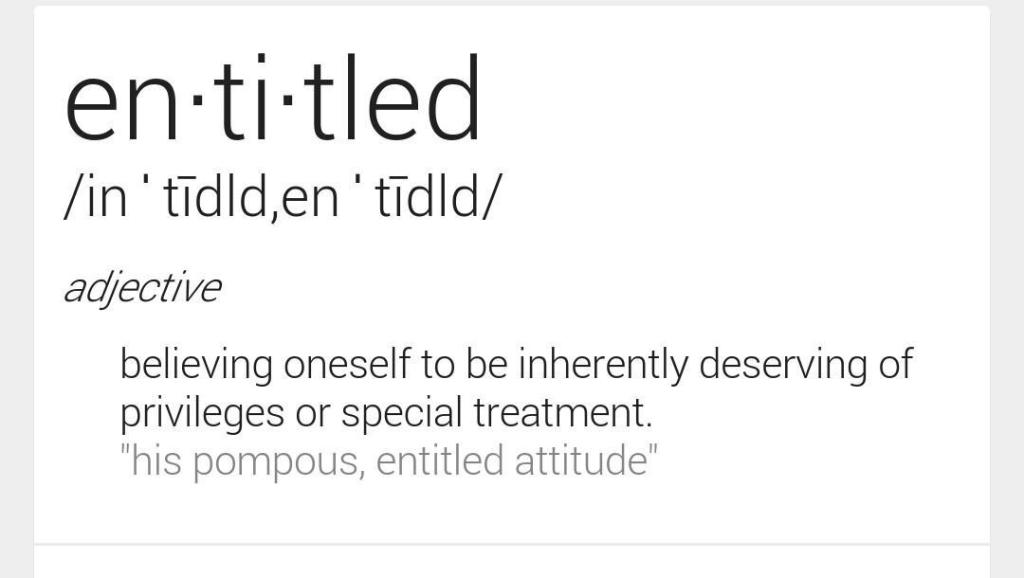
When that persistence is frustrated, resentment follows. We are now witnessing an era where this resentment has become communal, a kind of organized grievance. It tells men that the modern world has conspired to deny them what they were promised: sex, affection, attention, reverence. The rhetoric of the “lonely man” often cloaks this in pathos, but loneliness itself is not the problem. It is the conviction that someone else must be blamed for it that turns grief into hostility. Within that hostility lies the logic of control: if women are free to choose, then men must find ways to reclaim authority over choice itself.
Violence begins there, long before it reaches the body. It begins in words, in the erosion of empathy, in the idea that intimacy is a right to be exercised rather than a gift to be offered. It manifests in the digital sphere where harassment, threats, and objectification form an ambient hum of hostility that too many women learn to normalize. The technology changes, but the dynamic is ancient: a man’s sense of rejection transforms into moral outrage, and his outrage becomes justification. This is why sexual violence cannot be separated from cultural entitlement; they are different verses of the same song.
We have grown used to defining violence by its visibility. We recognize bruises, but not the psychic contortions that come from being reduced to a function. When women describe the exhaustion of navigating entitlement: the emotional labour of softening refusals, the hypervigilance required to stay safe, they are often accused of exaggeration. Yet what they describe is the constant negotiation of ownership: whose comfort matters, whose boundaries are negotiable, whose will defines the encounter. Violence, in this sense, is not the breakdown of civility but its shadow. What civility hides so that power can feel like courtesy.
To name entitlement as violence is to understand that harm is cumulative. A woman who spends years accommodating the moods of men who believe they are owed her body or attention carries a kind of invisible scar tissue. It may never be recorded in police reports, but it shapes her choices, her confidence, her trust. The body remembers what the culture denies. Each unsolicited touch, each angry message, each demand for emotional compliance becomes another layer in a collective memory of threat.
And yet, we are told that men are the ones suffering. The so-called “male loneliness epidemic” has become a rallying cry; less for compassion than for backlash. The argument goes that women’s independence has left men adrift, unwanted, and angry, but this, too, is a distortion. Loneliness deserves empathy; entitlement does not. The problem is not that women refuse to date men, but that so many men interpret refusal as harm. To frame women’s autonomy as cruelty is to invert the moral order entirely, to make self-protection an act of aggression.
What we are witnessing is not a crisis of connection, but a crisis of entitlement. The more women assert boundaries, the more those boundaries are read as insults. The cultural reflex is to soothe male discomfort rather than question its legitimacy, yet a society that prioritizes men’s hurt feelings over women’s safety is not a society in decline, rather it is one in denial.
If there is hope, it lies in unlearning this grammar. In rewriting the story so that desire is not a claim, but a conversation. In teaching boys that intimacy cannot be earned through performance or purchase, only invited through respect. In teaching girls that their boundaries are not provocations, but personal truths. This is the slow, quiet revolution that changes the world not by policy alone, but by perception: the recognition that violence often begins in the stories we tell about what is owed.
The antidote to entitlement is not shame, but empathy. Real empathy, the kind that accepts another’s autonomy as equal to one’s own. To desire without entitlement is to love without domination. It is to see the other as subject, not supply. Until we learn that difference, every act of so-called romance will carry within it the ghost of coercion. Every story that begins with “he wanted” will risk ending with “she feared.”
To unlearn that pattern is the work of generations, but it begins with a simple act of linguistic courage: to name entitlement for what it is, quiet, persistent form of violence.
References:
1. Abbey, A., Jacques-Tapia, A., Wegner, R., Woerner, J., Pegram, S., Pierce, J. (2004). “Risk Factors for Sexual Aggression in Young Men.” Journal of Interpersonal Violence. – The article notes that among perpetrators salient cues include “a sense of entitlement” to sexual access and anger.
2. Jewkes, R., Flood, M., Lang, J. (2015). “New learnings on drivers of men’s physical and/or sexual violence against women.” Global Health Action. – This paper connects patriarchal privilege, gender hierarchy, and entitlement to men’s violence against women.
3. Safer (Australia). “What do we mean by male entitlement and male privilege?” – A practical resource that outlines how male entitlement operates in relationships: e.g., entitlement to sex, entitlement to compliance, entitlement to emotional accommodation.
4. Kelly, I. & Staunton, C. (2021). “Rape Myth Acceptance, Gender Inequality and Male Sexual Entitlement: A Commentary on the Implications for Victims of Sexual Violence in Irish Society.” International Journal of Nursing & Health Care Research. – This article explicitly links ideologies of male sexual entitlement with sexual violence and victim-blaming.
5. Equimundo / Making the Connections. “Harmful Masculine Norms and Non-Partner Sexual Violence.” – Provides global evidence that attitudes of male privilege and entitlement are consistently associated with rape perpetration.
6. Santana, M. C., Raj, A., Decker, M. R., La Marche, A., Silverman, J. G. (2008). “Masculine Gender Roles Associated with Increased Sexual Risk and Intimate Partner Violence Perpetration among Young Adult Men.” Culture, Health & Sexuality. – Links traditional masculine ideologies (including control and entitlement) with sexual violence/partner violence.
7. World Health Organization / United Nations documentation (summarised in various reviews) linking gender inequality, harmful norms, and violence against women: For instance – “The Association Between Gender Inequality and Sexual Violence in U.S. States.” BMC Public Health. – Demonstrates how structural gender inequality correlates with sexual violence prevalence.
 The Rowanwood Chronicles