The Big One Is Not a Metaphor

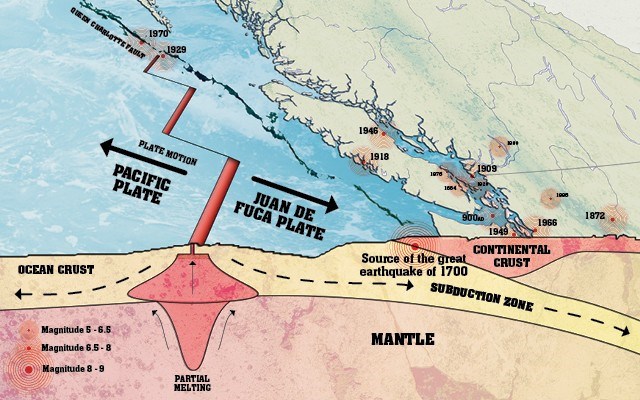
On Canada’s west coast, the phrase “the Big One” has drifted too easily into metaphor. It is used casually, invoked vaguely, and then set aside as a distant abstraction. The most recent British Columbia Disaster and Climate Risk and Resilience Assessment strips that comfort away. What it describes is not speculative catastrophe but a rigorously modelled scenario grounded in geology, history, and infrastructure analysis. A magnitude 9.0 megathrust earthquake off Vancouver Island is not only possible; it is among the more likely high-impact earthquake scenarios facing the province.

The source of the risk is the Cascadia Subduction Zone, where the Juan de Fuca Plate is slowly, but inexorably being driven beneath the North American Plate. This is not a fault that slips frequently and harmlessly. It locks, accumulates strain over centuries, and then fails catastrophically. The last full rupture occurred in January 1700, an event reconstructed through coastal subsidence records in North America and tsunami documentation preserved in Japanese archives. Geological evidence indicates that such megathrust earthquakes recur on timescales of hundreds, not thousands, of years. In emergency management terms, this places Cascadia squarely within the planning horizon.

The provincial assessment models a magnitude 9.0 earthquake occurring offshore of Vancouver Island. The projected consequences are stark. Approximately 3,400 fatalities and more than 10,000 injuries are expected. Economic losses are estimated at 128 billion dollars, driven by the destruction of roughly 18,000 buildings and severe damage to at least 10,000 more. These figures do not rely on worst-case fantasy. They emerge from known building inventories, population distribution, soil conditions, and transportation dependencies. They reflect what happens when prolonged, intense shaking intersects with modern urban density.

Geography shapes the damage unevenly, but decisively. Vancouver Island bears the brunt, particularly along its western coastline, where proximity to the rupture zone amplifies shaking and tsunami exposure. Eastern Vancouver Island, including Victoria, remains highly vulnerable due to soil conditions and aging infrastructure. On the mainland, a narrow, but densely populated band stretching from the United States border through Metro Vancouver to the Sunshine Coast experiences significant impacts, especially in areas built on deltaic and reclaimed land. Liquefaction in these zones undermines foundations, buckles roadways, and fractures buried utilities, compounding the initial damage long after the shaking stops.

The earthquake does not arrive alone. A tsunami follows as an inseparable companion hazard. The assessment projects wave arrival on the west coast of Vancouver Island within 10 to 20 minutes, leaving little time for anything other than immediate self-evacuation. The east coast of Vancouver Island and the Lower Mainland face longer lead times, roughly 30 to 60 minutes, but also greater population exposure. In parallel, major aftershocks, widespread landslides, fires ignited by damaged gas and electrical systems, and flooding from compromised dikes and water infrastructure unfold across days and weeks.

Probability is often misunderstood in public discussion, oscillating between complacency and panic. The assessment estimates a 2 to 10 per cent chance of such an extreme event occurring within the next 30 years. That range may sound small, but emergency management does not measure risk by likelihood alone. It multiplies likelihood by consequence. A low-frequency, ultra-high-impact event demands attention precisely because recovery, once required, will dominate public policy, fiscal capacity, and social stability for decades.

Comparative modelling reinforces this conclusion. United States federal planning scenarios for Cascadia earthquakes project casualty figures in the tens of thousands when the full Pacific Northwest is considered. Insurance industry analyses warn that a major Cascadia rupture would strain or overwhelm existing insurance and reinsurance systems, prolonging recovery and shifting costs to governments and individuals. These are not contradictions of the British Columbia assessment but confirmations of its scale.

What emerges from this body of evidence is not a call for fear, but for seriousness. Preparedness for Cascadia is not primarily about individual survival kits, though those matter. It is about seismic retrofitting of critical infrastructure, realistic tsunami evacuation planning, protection of water and fuel lifelines, and governance systems capable of functioning under extreme disruption. It is also about public literacy: understanding that strong shaking may last several minutes, that evacuation must be immediate and on foot, and that official assistance will not be instantaneous.

The Big One is not an unknowable threat lurking beyond prediction. It is a known risk with defined parameters, measurable probabilities, and foreseeable consequences. The only variable that remains open is how well institutions and communities choose to prepare. History shows that Cascadia will rupture again. Policy choices made before that moment will determine whether the event becomes a national trauma measured in generations, or a severe but survivable test of resilience.

Sources: 
British Columbia Ministry of Emergency Management and Climate Readiness. Disaster and Climate Risk and Resilience Assessment, October 2025, Chapter 5 Earthquake Scenarios. Province of British Columbia.
Yahoo News Canada. “B.C. report warns magnitude 9.0 quake could kill thousands.” 2025.
Geological Survey of Canada. Earthquakes and the Cascadia Subduction Zone. Natural Resources Canada.
U.S. Federal Emergency Management Agency. Cascadia Subduction Zone Earthquake and Tsunami Planning Scenarios.
Wikipedia. “Cascadia Subduction Zone” and “1700 Cascadia Earthquake.”

Empowering Homeowners for a Resilient, Clean Energy Future

As climate change accelerates, extreme weather events are no longer a distant threat, they are a pressing reality affecting our homes, our communities, and our energy systems. Power outages during heat waves, ice storms, or high winds are becoming more frequent and severe. In response, it is time for local government to actively encourage homeowners and cottage owners to take control of their energy future by installing solar panels, small wind turbines, and battery storage.

Distributed generation, the ability for households to produce and store their own electricity, is not just an environmental choice. It is a resilience strategy. When power lines fail during storms, homes with solar panels and batteries can maintain critical functions and even contribute power back to the grid. This reduces stress on centralized utilities and helps keep neighborhoods safe and functional during emergencies. Communities that embrace decentralized energy are less vulnerable and more self-sufficient.

Critics often argue that increasing local generation threatens the revenue of traditional utility companies. While it is true that utilities rely on steady consumption to fund infrastructure, this concern overlooks an opportunity: utilities can evolve by integrating distributed energy into their business models. Programs that pay homeowners for excess energy exported to the grid, time-of-use pricing, and community battery projects all allow utilities to remain profitable while supporting a more resilient and cleaner energy system. Resistance rooted in short-term financial interests should not stand in the way of long-term public benefit.

Encouraging household renewable energy is also an economic investment in our communities. Solar panel and small wind turbine installations create local jobs in manufacturing, installation, and maintenance. Money saved on electricity bills stays in the local economy, supporting small businesses and families. Municipal incentives, such as property tax credits, grants, or low-interest loans, can lower the initial cost barrier, making clean energy accessible to more residents. Over time, these measures pay for themselves in reduced infrastructure strain and a healthier, more sustainable environment.

Practical policy steps can make this vision a reality. Local governments can streamline permitting processes for solar and wind installations, adopt bylaws that encourage battery storage, and explore bulk purchase programs to reduce costs. Public education campaigns can inform residents about how to safely integrate renewable technologies into their homes. Together, these measures signal that the municipality is committed to both climate action and community resilience.

The transition to clean, distributed energy is not optional; it is necessary. By supporting homeowners and cottage owners in adopting solar, small wind, and battery storage, local governments can protect communities, strengthen the economy, and reduce greenhouse gas emissions. The tools are available, the climate urgency is clear, and the time to act is now. Empowering residents to generate and store their own electricity is one of the most effective steps a municipality can take toward a safer, cleaner, and more resilient future.

Ottawa Amalgamation Failures: A Critical Reassessment  

Bigger is not always beautiful, especially when it comes to communities or, more specifically, municipalities. The 2001 amalgamation of Ottawa and its surrounding municipalities was sold as a transformation: a streamlined government delivering better services, greater efficiency, and lower taxes. In practice the results have been far more ambiguous.

Background: What Was Amalgamated – And What Was Promised
On January 1, 2001, the former municipalities that made up the Regional Municipality of Ottawa–Carleton – 11 lower-tier municipalities plus the former City of Ottawa, were merged into a single-tier municipality: the modern City of Ottawa.  

The rationale was that this consolidation would reduce duplication, unify planning and services, and deliver cost efficiencies through economies of scale. The transition cost was estimated at about $189 million, with the province covering $142 million and the City paying roughly $47 million. The projection for savings from personnel reductions was substantial: roughly $30.7 million in the first year, rising to $84 million by 2003.  

Despite these savings projections, the Transition Board did not promise any tax reductions.  

Mixed Outcomes: Services – Gains, Losses, and Uneven Distribution
One of the primary promises was standardized and enhanced municipal services across the entire new city. In many respects there were improvements, but the benefits have been uneven, and in some rural/suburban zones residents still feel left behind.

What improved
• Services such as recreation programming and library access were expanded. After amalgamation, rural areas enjoyed a jump in activity: for example, by 2007 the rural recreation program catalogue offered 444 programs (up from 62 in 2002).
• The unified municipal structure also enabled coordinated economic development efforts. For example, rural-tourism initiatives (like “Ottawa’s Countryside”) and a “Directional Farm Signage Program” helped rural businesses and agriculture get city-wide support.
• In terms of per-household spending, in its early years the amalgamated city kept overall operating spending roughly on par with a seven-city average of Ontario municipalities; only about 4% higher. And compared with a large city like City of Toronto, Ottawa’s spending was about 30% lower.  

But many promises – Especially in rural and suburban zones, fell short
• Rural residents have repeatedly voiced that core municipal services (road maintenance, snow clearing, local transit, policing) received lower priority compared to urban wards. A longstanding sense of alienation persists among many rural communities toward City Hall.
• The transition diluted local, community-by-community decision-making. Individual municipalities had previously tailored services to local needs; under the amalgamated governance many rural or semi-rural concerns are subsumed under city-wide priorities. This resulted in delays and bureaucratic inefficiencies for issues that once had local responsiveness.
• Perhaps most glaring: the city’s signature transit project, the O‑Train / Ottawa LRT system, has been plagued by cost overruns, operational problems and service reliability issues – undermining its value as a major public-transit asset. A public inquiry’s recent report pointed out serious failures in municipal oversight and transparency around the LRT project.

That failure has broader consequences because many suburban and rural residents rely on a single bus line or intermittent routes, but see a disproportionate share of taxes diverted to an increasingly controversial urban rail system.

Taxes and Finances: Savings Promised – But Higher Costs and New Burdens
One of the largest expectations was that amalgamation would lower costs for taxpayers. That premise has proven questionable.
• Although the transition plan forecast substantial savings from staff reductions, the resulting efficiencies did not translate into widespread tax reductions. None were promised.
• From 2001 to 2005, Ottawa’s property-assessment base grew by 11.1%. Over the same period, education-tax levies on residential properties increased by 33.7%, costing Ottawa homeowners roughly $28 million more than in other Ontario municipalities.
• The uniform tax regime (rather than multiple municipal rates) had disproportionate impacts on suburban and rural homeowners. In many cases they faced tax hikes without corresponding improvements to local services.
• Meanwhile, certain structural costs increased: for instance, the cost share owed to the provincial property-assessment authority (Municipal Property Assessment Corporation or MPAC) rose by 25% since amalgamation, about 5% annually, outpacing inflation and municipal tax increases. That cost is borne by taxpayers.
• In more recent years, the city faces major financial stress. The municipal transit system alone is projected to run an annual operating shortfall of $140 million. Policing, infrastructure maintenance and other capital demands contribute to mounting city-wide debt burdens. As one commentary put it, “there was no tangible, financial benefit from amalgamation.”

These fiscal pressures undercut the core argument for amalgamation — that centralization would lead to stable or lower taxes with better services.

Loss of Local Representation and Identity
Amalgamation replaced dozens of municipal councils and local governance structures with a centralized city council responsible for a vastly larger and more diverse geography and population. That shift came with trade-offs.
• Rural and semi-rural communities lost significant political influence once they became part of a larger ward-based structure. Special “area” or “service” rates were introduced for rural areas, reflecting recognition that service needs differed, but also institutionalizing a two-tier system within the same city.
• Local identity and “small-town” character in villages such as Manotick was diluted. For example, development proposals in Manotick in the mid-2000s (for thousands of new homes) sparked strong concern among local residents that the community’s character would disappear under city-wide policies.
• According to early post-amalgamation polling (2002), many rural respondents rated the new city structure poorly. Among rural residents, 38% said services “need improvement” or rated city performance “terrible,” 43% said “OK,” and only 17% rated things “good” or “excellent.”

The sense of local alienation persists decades later: many rural residents still regard themselves as under-represented and overlooked by City Hall. 

Infrastructure, Planning and Transit: Centralization Meets Complexity – And Breakdown
One of the biggest undertakings after amalgamation has been transit and infrastructure. But the centralized city structure has struggled under the weight of that complexity.
• The O-Train / Ottawa LRT project was to be a flagship symbol of a modernized, unified city-wide transit network. Instead it has become a cautionary tale. A recent public inquiry blamed both the managing company and the city’s leadership for “repeated failures and an abrogation of municipal oversight.”
• Financial burdens from large capital projects like LRT expansion have stressed city budgets. After cost overruns for Stage 1 and 2 of the O-Train project, the burden has fallen heavily on Ottawa taxpayers – unlike comparable projects in the Greater Toronto Area, where provincial or federal funding covers a larger share.
• Meanwhile, suburban sprawl and rural-suburban developments, once under small local municipalities, now stretch the city’s infrastructure capacity. Roads, snow clearing, policing and transit are far more challenging to deliver equitably in a sprawling city than in smaller, more compact municipalities.

The core problem is scale: centralizing everything in a single administration has made it difficult to provide suitable, tailored services across widely different communities, from dense downtown to rural farmland.

Governance and Democratic Legitimacy: Promises of Efficiency at the Cost of Democratic Depth
The transition to a mega-city altered not just service delivery but democratic engagement.
•  Pre-amalgamation, many local decisions:  planning, development, budget priorities were made by small municipal councils familiar with the needs of their residents. Post-amalgamation, those decisions occur within a larger, more remote bureaucracy. Many rural residents feel they no longer have a meaningful political voice.
• The centralization also introduced a complexity of governance that can hamper accountability. As seen with the LRT fiasco, oversight over massive capital projects can become diffuse and abstract, weakening the ability of residents to hold decision-makers to account.
• The uniform tax and service model – despite the wildly different needs of urban, suburban, and rural zones, reflects what critics call “one-size-fits-all governance.” That rarely serves any locality optimally, and often disadvantages those outside the urban core.

A Complicated Legacy – Not an Unqualified Disaster, But Far From the Hopes
It would be unfair to paint the amalgamation as an unmitigated catastrophe. Some benefits have accrued: coordinated planning, a unified transit vision (even if imperfect), expanded recreation and library services, economic development strategies that support rural businesses and agriculture, and, in the early years, per-household spending relatively comparable to peer municipalities.

The long-term trade-offs have been steep: higher taxes (particularly education taxes), rising costs for essential services like property-assessment operations beyond inflation, growing debt burdens, inequitable distribution of services across geography, and a weakened sense of local representation, especially in rural and semi-rural areas.

The classic promise of “efficiency through scale” has often collided with the messy reality of delivering diverse, place-specific services across a vast and varied territory.

Centralization as Compromise
The 2001 amalgamation of Ottawa was a bold gamble: a bet that centralization would bring coherence, cost savings, and improved service delivery. Four decades of experience show that the outcome is deeply mixed.

For some residents the transition delivered real benefits: greater access to recreation, library services, coordinated economic strategies, and the possibility of a unified urban vision. For many others, especially outside the downtown core, it meant increased taxes, loss of local autonomy, and a sense of being perpetually overlooked as part of a sprawling bureaucracy.

In the end, amalgamation delivered some of its promises, but at a cost that, for many, outweighs the benefits. Ultimately the experiment reveals a fundamental truth: size and scale alone do not guarantee better governance. Without careful attention to representation, equity, diverse local needs and transparent oversight, centralization too often becomes a compromise, not a solution.

Reshaping Watershed Governance: Evaluating Ontario’s Plan to Merge Conservation Authorities

Background updated to reflect the government announcement of October 31, 2025.

🔎 Background

On October 31, 2025 the Ministry of the Environment, Conservation and Parks announced its intention to introduce legislation to create a new Ontario Provincial Conservation Agency to provide province-wide leadership and oversight of conservation authorities. At the same time the government released a public consultation proposing to consolidate Ontario’s 36 conservation authorities into seven regional, watershed-based authorities.

The stated aims are reducing fragmentation, improving consistency in permitting and services, freeing up resources for front-line conservation work and aligning watershed management with provincial priorities in housing, infrastructure, economic growth and climate resilience.

Note — The proposal retains watershed-based boundaries and envisions seven regional conservation authorities aligned with major watershed systems. Implementation would follow further legislation, regulation and a formal transition period.

✅ Advantages (Pros)

⚖️Consistency and Standardization

  • The current 36-authority system shows significant variation in policies, fees, processes and technical capacity. Consolidation seeks to standardize permitting and reduce duplication.
  • A more consistent system may speed approvals, improve service delivery and align permitting with broader provincial housing and infrastructure goals.

🛠️Scale and Capacity Building

  • Larger regional authorities can pool technical specialists in hydrology, ecology, GIS, modelling and flood forecasting.
  • A single digital permitting platform, improved data management and updated floodplain mapping could strengthen operational efficiency.

🧭Watershed-Scale Management

  • Environmental issues such as flood risk and source protection cross municipal boundaries; watershed-level jurisdictions better reflect ecological realities.
  • Regional governance may improve coordination between upstream and downstream communities and enable restoration at appropriate scales.

📈Uplift in Minimum Service Standards

  • Province-wide minimum standards could reduce disparities between well-resourced and under-resourced conservation authorities.
  • Improved mapping, monitoring and data systems may enhance hazard warnings and risk reduction for communities.

⚠️ Disadvantages (Cons)

🌾Loss of Local Knowledge and Relationships

  • Local conservation authorities often maintain deep, place-based knowledge and long-standing relationships with municipalities, landowners, volunteers and Indigenous communities.
  • Centralization may weaken local responsiveness and reduce the fine-grained understanding needed for small watershed issues.

👥Governance and Accountability Dilution

  • Shifting authority to regional boards or a provincial agency risks reducing municipal voice and local accountability.
  • Changes to levy systems, board appointments or decision-making structures could alter how closely governance reflects community priorities.

🔄Transition Risk, Disruption and Cost

  • Merging organizations requires complicated alignment of IT systems, budgets, staffing, policies and permitting processes.
  • Short-term disruption, backlog growth or staff uncertainty may affect performance even if long-term efficiencies are possible.

🏞️Threat to Locally-Tailored Programs

  • Education programs, stewardship initiatives, volunteer groups and recreation programming may be deprioritized in a larger regional authority.
  • Locally raised funds may be redistributed toward broader regional priorities, limiting community-specific flexibility.

🪶Indigenous Consultation and Place-Based Considerations

  • The restructuring spans multiple Indigenous territories; a one-size-fits-all model risks overlooking local priorities and cultural site protection.
  • Strong Indigenous partnerships are increasingly recognized as essential to watershed management and must be protected during transition.

❓ Key Uncertainties and Implementation Risks

  • How governance structures will be designed, including board composition and municipal representation.
  • How locally-generated funding will be treated and whether it will remain local during and after transition.
  • How IT migration, mapping, staffing and permitting backlogs will be managed to maintain service continuity.
  • How performance standards will be enforced and how regional authorities will be monitored.
  • How Indigenous and local stakeholder engagement will be maintained throughout the transition process.

🛡️ Recommendations and Mitigation Measures

  • Maintain local field offices, technical staff and advisory committees to preserve place-specific knowledge.
  • Ensure meaningful municipal representation on regional boards, including mechanisms for smaller communities’ voices.
  • Protect locally-generated revenues for an initial transition period to safeguard community programs.
  • Publish a transition plan with clear timelines, role protections and service-level guarantees.
  • Establish Indigenous participation protocols and co-governance options where desired.
  • Create province-wide standards with room for regional adaptation based on watershed differences.

🧾 Conclusion

The proposed consolidation provides opportunities to modernize Ontario’s conservation authority system, build technical capacity, improve consistency and align watershed management with provincial priorities. At the same time, the risks are substantial: loss of local stewardship, weakened accountability, transitional disruption and potential erosion of long-standing municipal and Indigenous partnerships.

The outcome will depend on governance design, funding arrangements, transition planning and the strength of public and Indigenous engagement. With appropriate safeguards, the reforms could enhance watershed resilience and public service; without them, consolidation could undermine decades of community-led conservation work and trust.

References

  1. “Proposed boundaries for the regional consolidation of Ontario’s conservation authorities” (ERO 025-1257), Environmental Registry of Ontario.
  2. Ontario Government announcement on conservation authority restructuring, October 31, 2025.
  3. McMillan LLP analysis of proposed consolidation.
  4. Dentons LLP overview of amalgamation and the creation of the Ontario Provincial Conservation Agency.
  5. Reporting and analysis from conservation organizations and independent media regarding risks to local stewardship and watershed management.

Tewin and the Shape of Ottawa’s Future

At the moment, I don’t feel I know enough about this developing issue to take a position, so I plan on monitoring the situation and perhaps look at the bigger picture.  

Four years ago, Ottawa city council voted to expand the urban boundary into lands southeast of the city to create a massive new suburban community called Tewin. The project, a partnership between the Algonquins of Ontario (AOO) and Taggart Group, envisions housing for up to 45,000 people on 445 hectares of land. This expansion was one of the most controversial planning decisions of the last decade, both for its symbolic weight and its long-term implications. Today, councillor Theresa Kavanagh has re-opened the debate, proposing that Tewin be stripped from Ottawa’s Official Plan. Her efforts highlight the difficult choices cities face between growth, climate goals, and Indigenous reconciliation.

The Promise of Tewin
Supporters of Tewin present it as a once-in-a-generation opportunity. For the Algonquins of Ontario, the project represents an unprecedented role in shaping Ottawa’s future. After centuries of dispossession, Tewin offers not only revenue streams and jobs but also visibility in the city’s urban fabric. This symbolic dimension, land not merely ceded or lost, but built upon in partnership, is difficult to dismiss.

Developers and some councillors also argue that Ottawa must accommodate population growth. With Canada’s immigration targets rising, pressure on housing supply is intense. Tewin promises tens of thousands of new homes, potentially designed with modern sustainability standards. Proponents emphasize that large master-planned communities can integrate parks, schools, and infrastructure in ways that piecemeal infill cannot. In this vision, Tewin is not sprawl, but a carefully designed city-within-a-city.

The Cost of Sprawl
Yet the critiques are no less powerful. City staff initially ranked the Tewin lands poorly during their 2020 evaluations, citing soil unsuitability, distance from infrastructure, and limited transit access. Servicing the site: extending water, sewers, and roads will cost nearly $600 million, much of it beyond the city’s 2046 planning horizon. These are funds that could otherwise reinforce existing communities, transit networks, and climate-resilient infrastructure.

Urban sprawl carries environmental and social costs. Tewin sits far from rail lines and job centres, ensuring that most residents will be dependent on cars. This contradicts Ottawa’s stated climate action commitments, which emphasize compact growth and reduced vehicle emissions. Critics also note that adding a massive suburb undermines efforts to intensify existing neighbourhoods, where transit and services are already in place.

Indigenous Voices, Indigenous Divisions
The Indigenous dimension of Tewin complicates the debate. On the one hand, the Algonquins of Ontario have secured a rare position as development partners, advancing reconciliation through economic participation. On the other hand, not all Algonquin communities recognize AOO’s legitimacy, and some argue that consultation has been narrow and exclusionary. The project thus embodies both progress and tension in the city’s relationship with Indigenous peoples. To reject Tewin outright risks appearing to dismiss Indigenous economic aspirations; to proceed with it risks deepening divisions and ignoring long-standing calls for more inclusive engagement.

A City at the Crossroads
Councillor Kavanagh’s push to remove Tewin from the Official Plan is more than a single motion. It reopens a philosophical question: what kind of city does Ottawa wish to become? If it seeks to embody climate leadership, resilient infrastructure, and walkable communities, Tewin appears to be a step backward. If it seeks to honour Indigenous partnership and ensure abundant housing supply, the project has undeniable appeal.

Ultimately, Tewin forces Ottawa to confront a contradiction at the heart of Canadian urbanism. We are a country that has promised climate action, but remains tethered to car-dependent suburbs. We are a nation that aspires to reconciliation, but often struggles to reconcile competing Indigenous voices. To move forward, Ottawa must do more than weigh costs and benefits; it must articulate a vision of growth that is both just and sustainable.

In this sense, Tewin is not merely a development proposal. It is a mirror held up to the city itself, reflecting both its aspirations and its unfinished work.

Sources:
• CTV News Ottawa. “Tewin development project passes latest hurdle but some say it still doesn’t belong.” August 2024. Link
• Ontario Construction News. “Ottawa councillor sparks renewed debate over controversial Tewin development.” April 2025. Link
• CTV News Ottawa. “Councillor withdraws motion to remove 15,000-home development from Ottawa’s Official Plan until after byelection.” April 2025. Link
• Horizon Ottawa. “Stop the Tewin Development.” Accessed October 2025. Link

Building Home and Sovereignty: Indigenous-Led Modular Housing Across Canada

Indigenous-led housing initiatives across Canada are demonstrating how culturally rooted design, workforce development and modular building technology can be combined to produce durable, energy-efficient homes while returning economic agency to Indigenous communities. A clear example is the Keepers of the Circle project in Kirkland Lake, a women-led social enterprise building a 24,000 square foot modular factory to produce prefabricated panels and whole homes for northern communities. The project positions the facility as a year-round training centre focused on Indigenous women and 2SLGBTQQIA+ people and aims to deliver passive, off-grid capable homes that reduce mould, overcrowding and winter construction constraints.  

Modular construction matters in the North because it shifts much of the work indoors, shortens on-site assembly time and allows for higher quality control and better insulation choices than conventional stick-built homes. Projects that couple those technical advantages with local control multiply the social return. For example, NUQO and other Indigenous-owned modular firms emphasize culturally informed design and female leadership in construction, showing that modularity can be adapted to Indigenous aesthetics and community needs rather than imposed as a one-size-fits-all solution.  

At a larger urban scale, the Squamish Nation’s Sen̓áḵw development shows another side of Indigenous-led housing. Sen̓áḵw is an unprecedented City-building project on reserve land in Vancouver that will deliver thousands of rental units while generating long-term revenue for the Nation and reserving units for community members. It signals how Indigenous land stewardship paired with contemporary development can both address housing supply and shift municipal relationships with Nations.

Innovation is not limited to factory scale or towers. Community-driven designs such as Skeetchestn Dodeca-Homes merge Secwepemc cultural principles with modular technology to create homes tailored for rural and on-reserve realities. These initiatives highlight the importance of design sovereignty, where communities set performance, materials and spatial priorities that reflect family structures and cultural practice.  

Practical collaborations are emerging to accelerate delivery. Rapid-response modular programs and partnerships with existing manufacturers have been used to deploy units quickly to remote communities, showing a template for scale if funding, transportation and on-reserve financing barriers are addressed. Yet systemic obstacles remain, including the complex financing rules for on-reserve mortgages, patchwork funding across provinces and the logistics of shipping large components into remote regions.  

Taken together, the landscape suggests a pragmatic pathway: support Indigenous-led factories and design teams to ensure cultural fit and local jobs, expand funding mechanisms and credit products tailored to on-reserve realities, and prioritize modular, high-performance assemblies that cut costs over a building’s life. When Indigenous governance, training and technical innovation work in tandem the result is not just more housing but a model of reconciliation that builds capacity, preserves culture and produces homes that last.

Sources
Keepers of the Circle modular factory page.
NUQO modular housing company.
Squamish Nation Sen̓áḵw project page.
Skeetchestn Dodeca-Homes project page.
ROC Modular rapid-response and modular housing examples.  

Cascadia Rising: Ecology, Identity, Politics

I began this article over a year ago, and at the time my biggest challenge was finding its focus. I wasn’t sure what the central thread should be, so I followed the flow of ideas and shaped it into a summary of recent activities and announcements. In many ways, it became a placeholder; something to capture the moment and hold space until I had the chance to return and explore the subject in greater depth.

1. Bioregional Roots & Indigenous Foundations
The idea of Cascadia springs from the interconnected ecosystems spanning the Cascade Range; anchored by rivers like the Fraser, Columbia, and Snake, a landscape long inhabited by diverse Indigenous nations: Chinook, Haida, Nootka, Tlingit, and dozens more, whose vibrant cultures predate colonial borders by millennia.   

In Indigenous understanding, stewardship over land and salmon-rich waters isn’t just practical; it’s spiritual. Their societies are woven into place, honoring ecosystems as kin. This pre-colonial history sets a vital foundation for any modern Cascadia vision.

Today, Cascadian movements forefront Indigenous sovereignty and truth and reconciliation, advocating for dialogue-led, consensus-based confederation models where First Nations guide governance and cultural revitalization, like restoring Chinuk Wawa as a regional lingua franca.  

2. Bioregionalism & Mapping as Decolonizing Tools
Bioregionalism – which Cascadia champions, breaks from traditional politics, centering its framework on natural boundaries and ecological integrity. Indigenous mapping traditions inform this, such as bioregional atlases by Tsilhqotʼin, Nisga’a, Tsleil-Waututh, and others that helped affirm territorial claims in court.  

Through community-driven cartography, highlighting traditional ecosystems, language, stories; bioregional maps act as instruments of empowerment, healing, and planning rooted in place-based knowledge.  

3. Elizabeth May’s Provocative Invitation & BC’s Identity
In January 2025, Green Party of Canada leader Elizabeth May reignited Cascadian conversation with a striking, partly rhetorical offer: that California, Oregon, and Washington might consider joining Canada; with BC naturally included in the idea, based on shared values like universal healthcare, reproductive rights, and climate justice.  

Her gesture wasn’t an actual policy, but served as an emblematic spark, fueling grassroots discussions across the region; especially in BC, where many already feel culturally closer to the U.S. West Coast than to central Canada. This made the concept of transnational Cascadia feel suddenly plausible.  

4. Governor Newsom & West Coast Climate Leadership
Cascadia’s vision isn’t purely conceptual, it’s grounded in concrete policy collaboration:
• In May 2025Governor Gavin Newsom was appointed co-chair of the U.S. Climate Alliance, joining a bipartisan coalition of 24 governors spearheading high-impact, state-driven climate action, encompassing nearly 60% of the U.S. economy and 55% of its population.
Newsom also announced a major cap-and-invest (formerly cap-and-trade) budget proposal, extending California’s program through 2045 and earmarking billions toward firefighting, high-speed rail, and climate adaptation projects.   
• The three regional partners – California, Québec, and Washington, have also agreed to explore linkage of their carbon markets, signaling potential for a broader, cross-border climate economy.  
• Simultaneously, West Coast governors (Newsom, Oregon’s Tina Kotek, and Washington’s Bob Ferguson) signed a joint statement promising to defend their states’ climate policies against federal rollback, demonstrating regional resolve and cohesion.  

5. Indigenous and Climate Confluence in Cascadia’s Future
Modern Cascadia stands at the intersection of Indigenous resurgence and regional policymaking. Here’s how they converge:
Indigenous frameworks act as ethical and governance cornerstones; urging truth, place-based authority, and cultural restoration, especially in BC where colonial histories persist.
Bioregionalism and community mapping form tools for inclusion and urban planning that honor traditional ecological knowledge.
Cross-border cooperation on climate, via co-carbon markets and alliances, offers practical scaffolding for aligning policy with ecological realities.
Political solidarity, as seen in Newsom’s climate leadership and the West Coast climate defense, underscores Cascadia’s capacity as a functional mega-region, not merely a cultural idea.

Cascadia Reimagined: A Vision of Inclusive, Place-Based Governance
Cascadia today is evolving, not as a secessionist movement, but as an integrated regional model that:
• Places Indigenous sovereignty and ecological connection at its core.
• Encourages cross-jurisdictional collaboration on climate, economy, and culture.
• Utilizes bioregional mapping as a decolonizing and planning tool.
• Builds grassroots resonance through symbols, discourse, and identity.
• Innovates policy frameworks connecting shared values, particularly across BC and U.S. West Coast states.

Elizabeth May’s invitation, Governor Newsom’s climate strategy, and Indigenous leadership together signal a Cascadia imbued with governance relevance, moral thickness, and aspirational scope.

Sources
• Cascadia Bioregional Movement. Indigenous Sovereignties. Cascadia Bioregion. https://cascadiabioregion.org/indigenous-sovereignties
• Cascadia Bioregion. The Cascadia Movementhttps://cascadiabioregion.org/the-cascadia-movement
• Cascadia Bioregion. Independence and Public Opinionhttps://cascadiabioregion.org/independence-2
• CascadiaNow! Building a Resilient Cascadiahttps://www.cascadianow.org
• Brandon Letsinger. It’s Time for a Cascadia Political Movementhttps://brandonletsinger.com/political-movement/its-time-for-a-cascadia-political-movement
• KIRO 7 News. Canadian Lawmaker Offers to Take Washington, Oregon, California as New Provinces. January 10, 2025. https://www.kiro7.com/news/local/canadian-lawmaker-offers-take-washington-oregon-california-new-provinces/LPFT7I4AYBGCLHBKVOB2TIFQOQ
• Cascadia Daily News. Washington Joining Canada? Don’t Bet Your Timbits. January 10, 2025. https://www.cascadiadaily.com/2025/jan/10/washington-joining-canada-dont-bet-your-timbits
• OPB (Oregon Public Broadcasting). West Coast Governors Say They Will Defend Their Climate Policies Against Trump Attack. April 10, 2025. https://www.opb.org/article/2025/04/10/west-coast-governors-we-will-defend-our-climate-policies-against-trump-attack
• Office of Governor Gavin Newsom. Governor Newsom Appointed Co-Chair of U.S. Climate Alliance. May 9, 2025. https://www.gov.ca.gov/2025/05/09/governor-newsom-appointed-co-chair-of-u-s-climate-alliance
• U.S. Climate Alliance. News & Eventshttps://usclimatealliance.org/news-events
• CalMatters. Newsom’s Budget Leans on Cap-and-Invest to Fund High-Speed Rail and Firefighting. May 2025. https://calmatters.org/environment/climate-change/2025/05/california-governor-climate-budget-cap-trade-high-speed-rail
• ClearBlue Markets. California Cap-and-Invest Program: Extension Proposed in California Budget. 2025. https://www.clearbluemarkets.com/knowledge-base/california-cap-and-invest-program-program-extension-proposed-in-california-budget
• Washington Department of Ecology. Shared Carbon Market Agreement between California, Québec, and Washington. March 20, 2024. https://ecology.wa.gov/about-us/who-we-are/news/2024/mar-20-shared-carbon-market

The Regressive Weight of Road and Bridge Tolls

Tolls on bridges and highways are often presented as pragmatic tools of modern infrastructure finance. They provide a clear user-pay model, in which those who drive the road or cross the bridge contribute directly to its upkeep. Yet beneath the tidy arithmetic lies a deeper inequity. Tolling is inherently regressive, disproportionately affecting those least able to shoulder the burden, while leaving the wealthy relatively untouched. In the Canadian context, with a geography that frequently demands travel over water or long stretches of road, tolls create a system where access is rationed by income rather than need.

The Confederation Bridge linking Prince Edward Island to the mainland is an instructive example. Until this summer, Islanders and visitors alike were charged more than $50 per vehicle for the right to leave the province. For many families and small businesses, this was not a casual expense but a recurring cost that shaped economic opportunity and even the rhythm of daily life. Following recent political attention, the toll has been reduced to $20, but the principle remains unchanged. Crossing a bridge that connects one part of the country to another still requires a fee that weighs more heavily on working families than on tourists or affluent professionals. It is not simply a question of price but of fairness in access to mobility. 

Ontario’s Highway 407 tells a similar story, albeit in a different register. Originally built as a public project, the highway was privatized under a 99-year lease in the late 1990s. Since then, tolls have risen sharply, far outpacing inflation, with profits flowing to private shareholders rather than to the public purse. The highway’s users include commuters with little choice but to pay for faster access into Toronto. For higher-income households, the fee is a convenience. For those on modest wages, it can become a recurring penalty that extracts a significant portion of their income simply to get to work on time. The toll structure reinforces a two-tier mobility system, in which efficiency is a privilege purchased rather than a public good ensured. 

Beyond inequity, tolling is also an inefficient means of raising revenue. Collection and enforcement systems consume a substantial share of funds, with studies showing that administrative costs can swallow up to a third of toll revenues. The very act of charging per crossing introduces distortions, encouraging some drivers to divert onto untolled secondary routes, which increases congestion and emissions elsewhere. The costs, both financial and social, ripple outward in ways rarely accounted for in the fiscal logic of tolling schemes. 

If the objective is to ensure that those who benefit from road systems pay a fair share, there are more equitable instruments available. A progressive licensing system that levies higher annual fees on luxury or high-value vehicles would generate steady, predictable revenue without punishing those who rely on basic mobility. Such a measure would align responsibility with capacity to pay, ensuring that the wealthiest drivers contribute more to infrastructure upkeep. At the same time, it would leave ordinary workers and families free from the arbitrary impositions of per-trip tolls.

Canada’s transportation network binds communities, sustains commerce, and enables social life. It should not be carved into segments where access is contingent on one’s bank account. Tolls, whether on bridges or highways, undermine the principle of equitable mobility. A system of progressive licensing fees offers a better path, one that respects both fairness and fiscal responsibility. The country requires infrastructure policies that do not merely balance budgets, but also balance justice.

Sources
• Global News. “Confederation Bridge tolls lowered.” July 28, 2025. https://globalnews.ca/news/11314912/confederation-bridge-tolls-lowered
• Government of Canada. “Canada’s new government cuts transportation costs in Atlantic Canada.” July 28, 2025. https://www.pm.gc.ca/en/news/news-releases/2025/07/28/canada-s-new-government-cuts-transportation-costs-in-atlantic-canada
• Wikipedia. “Ontario Highway 407.” Accessed August 2025. https://en.wikipedia.org/wiki/Ontario_Highway_407
• Institute for Research on Poverty (University of Wisconsin). “Equity Implications of Tolling.” Working Paper 1378-10. https://www.irp.wisc.edu/publications/dps/pdfs/dp137810.pdf

We Are “So Fucked”: Suzuki’s Stark Warning and What Comes Next

David Suzuki, Canada’s most revered environmental voice, has issued a warning with unusual bluntness and finality: “We are so fucked.” Speaking in recent weeks, Suzuki declared that “it’s too late,” stating that the global fight to halt climate catastrophe is effectively lost. His comments have rippled through climate policy circles, activist communities, and public discourse alike, not because the science has changed, but because the candour of the message has stripped away any remaining illusions of gradualism or incremental change.

The context is clear. Extreme weather events are no longer exceptions, they are becoming the rule. July 2024 was the hottest month in recorded human history, and 2025 is on track to exceed it. Wildfires, floods, droughts, and mass displacement now dominate the headlines with increasing regularity. Against this backdrop, Suzuki’s declaration is not a shock, it is confirmation of what many already fear: that mitigation may no longer be enough.

Beyond Optimism: A Shift to Resilience
Suzuki’s words – “we are so fucked” – were not made in jest or despair, but as an urgent call to face reality. He argued that society must now “hunker down”, a phrase that signals a strategic pivot from prevention to adaptation. The idea is not to give up, but to regroup, reorganize, and prepare. In doing so, he joins a growing body of thinkers who have moved past the assumption that global climate agreements or consumer-level behavior changes will be enough to stave off the worst.

Suzuki pointed to places like Finland as examples of what adaptive resilience might look like. Communities there are being asked to prepare for regular power outages, floods, and food shortages by mapping vulnerable neighbours, sharing equipment, and establishing local escape routes and resource stockpiles. In Suzuki’s view, this is no longer the work of fringe preppers, but essential civil preparedness.

Systemic Failure, Not Personal Blame
Central to Suzuki’s critique is the idea that responsibility has been wrongly placed on individuals, rather than on systems. “The debate about climate change is over,” he has said repeatedly. “The science is clear that it’s happening and that humans are causing it.” But rather than empower collective transformation, that clarity has been dulled by decades of delay and deflection. The culprits, he asserts, are fossil fuel companies and the political classes that have shielded them.

These industries, Suzuki argues, have spent years spreading misinformation, lobbying against meaningful legislation, and greenwashing their activities to appear sustainable. The result is a global response that has been far too slow, too fragmented, and too compromised by economic interests to meet the scale of the challenge. While citizens have been urged to recycle and reduce air travel, oil and gas production continues to expand in many countries.

This misdirection has helped create a false narrative that consumer choices alone can avert disaster. Suzuki, echoing many climate scientists and activists, argues that such messaging amounts to a deliberate “psy-op”, a strategic effort to protect entrenched power and profit by scapegoating the individual.

Hunkering Down Is Not Surrender
To “hunker down,” in this context, means to accept what is now inevitable while fighting to minimize further harm. It is a call to prepare for climate impacts that will affect infrastructure, food systems, migration, and public health. This includes planning for power disruptions, ensuring access to potable water, decentralizing food systems, and rebuilding communities to be less reliant on fragile supply chains.

Resilience at the local level becomes critical: communities need to inventory their own vulnerabilities, understand who is most at risk, and develop coordinated mutual-aid structures. Governments will need to lead this transition by investing in renewable grids, disaster planning, urban cooling infrastructure, and community-based health services. And crucially, they must stop subsidizing the very industries responsible for the crisis.

From Climate Denial to Climate Delay
One of the more insidious barriers to action today is not outright denial, but climate delay, a subtle but pervasive tactic that gives the appearance of action while deferring the difficult decisions. Suzuki has long warned against this. The danger now lies not in ignorance, but in political cowardice and corporate co-option. Net-zero pledges decades into the future are meaningless without immediate action. What’s needed is not just a plan, but a reckoning.

Brutal Clarity, Not Despair
Suzuki’s warning may sound like defeat, but it is more accurately described as a turning point. When he says, “We are so fucked,” it is not an invitation to despair, but a demand to confront reality without euphemism or illusion. Hope remains, but it must be grounded in preparedness, in systemic change, and in solidarity. Communities, governments, and institutions must move with the urgency that this moment demands.

The time for optimism as a communications strategy has passed. What remains is action, rooted in clear-eyed honesty and collective survival.

Sources
·      Suzuki, David. “We are so fucked.” Comment posted to X (formerly Twitter), June 2025. https://x.com/mmofcan/status/194218398403468527
·      Reddit Discussion Thread: “It’s too late: David Suzuki says the fight against climate change is lost.” r/CanadaPolitics. July 2025. https://www.reddit.com/r/CanadaPolitics/comments/1lr0xxj
·      David Suzuki Foundation Facebook Page: “The science is clear that it’s happening and that humans are causing it.” https://www.facebook.com/DavidSuzukiFoundation/posts/1157838186389129
·      CBC News. “Climate crisis beyond tipping point? David Suzuki warns of need for local survival plans.” June 2025.
·      IPCC Sixth Assessment Report. Intergovernmental Panel on Climate Change. 2021–2023. https://www.ipcc.ch/ar6/

Backroom Ontario: How the Ford Government Governs in the Shadows

The Ford government’s recent actions paint a troubling portrait of a leadership increasingly comfortable with obfuscation, procedural shortcuts, and performative consultation. Across multiple files, from environmental policy to Indigenous relations, Queen’s Park has displayed a consistent pattern of backhanded governance, marked by secrecy, evasion, and a disregard for both democratic norms and legal obligations.

The Greenbelt scandal exemplifies this tendency in sharp relief. Ontario’s Information and Privacy Commissioner recently condemned the Ford government for deliberately making it difficult to track internal decision-making on land development. Staff used code words such as “GB,” “special project,” and most egregiously, “G*” in email subject lines, deliberately sabotaging searchability within the government’s own filing systems. Coupled with the use of private email accounts and a notable absence of meeting minutes or documentation, the evidence suggests not mere carelessness, but a concerted effort to obscure deliberations over one of the province’s most politically explosive issues.

This level of secrecy isn’t just bureaucratic mismanagement, it’s political damage control in real time. The government’s reversal of Greenbelt development plans did little to reassure the public, especially in the absence of any credible explanation or documentation as to how those decisions were made in the first place. When even watchdogs with statutory authority can’t access the paper trail, public accountability becomes a hollow phrase.

Meanwhile, Bill 5, part of the so-called “Unleashing the Economy Act”, reveals an equally unsettling willingness to bypass consultation and oversight in the name of economic development. This omnibus legislation fast-tracks industrial and mining projects across northern Ontario, including the ecologically sensitive Ring of Fire region, by reducing or eliminating requirements for municipal and environmental approvals. Most critically, it sidelines the constitutional duty to consult Indigenous communities.

First Nations leaders, particularly in Treaty 9 territory, were quick to denounce the bill. Chiefs burned environmental documents in protest and staged rallies in Thunder Bay, accusing the province of engaging in “consultation theatre”, informing communities of decisions only after they were made. Even a last-minute amendment to include optional post-passage consultations did little to mollify concerns. The government’s approach sends a clear message: consultation is something to be endured, not engaged.

What ties the Greenbelt and Bill 5 controversies together is not just their shared disregard for transparency and inclusion, but the mechanisms used to enforce that disregard. Whether through technical manipulation of record-keeping systems, suppression of documentation, or legislative sleight-of-hand, the government repeatedly avoids open debate and sidesteps legal and ethical responsibilities. It’s a governance style rooted in control, not collaboration.

These are not isolated incidents. The Ford administration has shown a consistent pattern of centralizing power through Minister’s Zoning Orders (MZOs), a tool meant for rare and urgent cases. Since 2019, the Premier has issued MZOs at an unprecedented rate, frequently overriding municipal decisions, and benefiting well-connected developers. Auditor General reports have raised red flags, and opposition parties have warned that such orders erode local democracy and set dangerous precedents. Still, the pattern continues, unimpeded.

Other examples confirm the trend. In 2018, the Ford government launched a controversial “snitch line” encouraging parents to report teachers who used an updated sex-ed curriculum, a move widely condemned as punitive and authoritarian. In 2019, sudden changes to autism services blindsided thousands of families, leading to mass protests and eventual policy reversals. Yet, even in those reversals, the government refused to acknowledge fault, framing retreats as “adjustments” rather than admissions of flawed policy-making.

This is politics by backchannel, a deliberate erosion of democratic norms dressed in the language of efficiency. Public engagement is reduced to afterthought; opposition voices are ignored or demonized; and when watchdogs raise the alarm, they are met with silence or spin. In each case, the common denominator is the Ford government’s willingness to weaponize the machinery of governance against transparency.

The implications are serious. Trust in institutions erodes when those in power show contempt for the very mechanisms designed to hold them accountable. The duty to consult Indigenous communities is not an optional courtesy, it is a constitutional requirement. Environmental stewardship and municipal autonomy are not bureaucratic hurdles, they are democratic protections. To dismiss them is not just arrogant, but reckless.

Unless reined in, this mode of governance threatens to become normalized. The lesson emerging from Queen’s Park is clear: when political expedience trumps process, communities lose their voice, environmental safeguards are gutted, and Indigenous sovereignty is sidelined. This should alarm all Ontarians, regardless of political stripe.

The Ford government’s backhanded approach may win short-term headlines or developer applause, but the long-term costs, to transparency, legitimacy, and public trust, are steep. If Ontario is to retain even the appearance of responsible government, it must reject this cynical model and restore meaningful consultation, clear record-keeping, and respect for constitutional obligations as non-negotiable principles of provincial governance. Anything less is a betrayal of public service.