From Theatrical Cuts to Timeless Epics: The Redemption of Ridley Scott’s Films

Ridley Scott’s career stands as a case study in the tension between artistic vision and commercial imperatives. Though widely acclaimed for his mastery of visual storytelling and world-building, from the haunting dystopia of Blade Runner to the gritty historicism of Gladiator, Scott’s films have repeatedly suffered at the hands of financially driven studio interventions. These constraints often result in compromised theatrical releases, only later redeemed through director’s cuts that reveal the depth, complexity, and thematic intent originally envisioned.

Nowhere is this more evident than in Kingdom of Heaven (2005). The theatrical version, running just under 2.5 hours, was significantly truncated by studio pressure to ensure more showtimes and, theoretically, higher box office returns. As a result, essential character development, political nuance, and emotional stakes were lost, leaving critics and audiences with what felt like a hollow epic. The 194-minute Director’s Cut, released later to DVD and Blu-ray, restored key plotlines, including Queen Sibylla’s tragic dilemma regarding her leprous son and Balian’s morally fraught backstory. What emerged was not only a more coherent and moving film, but also one of the most lauded historical epics of the 21st century. The stark contrast between versions illustrates how financial motives can diminish a director’s ability to craft a fully realized narrative.

Blade Runner (1982) provides another striking example. Warner Bros., fearing the film was too slow and cerebral for mainstream audiences, famously added a voice-over and a studio-imposed “happy ending.” These changes undercut the philosophical ambiguity that Scott intended. The subsequent Director’s Cut(1992) and especially the Final Cut (2007) removed these additions, clarified narrative elements, and reinserted key scenes (like the unicorn dream), transforming the film into a dense, meditative exploration of identity and what it means to be human. Today, Blade Runner is considered a science fiction masterpiece, thanks largely to the restoration of Scott’s vision.

Even Legend (1985), Scott’s early fantasy film, suffered studio intervention. The original cut was deemed too long and dark for U.S. audiences, prompting a reduction in runtime and the replacement of Jerry Goldsmith’s evocative score with a more “pop” soundtrack by Tangerine Dream. The restored Director’s Cut, with its full score and character development intact, is now widely preferred and reevaluated as a dark fairy tale with mythic power.

These examples illustrate a consistent pattern: studio efforts to appeal to broad audiences often dilute the very elements that make Ridley Scott’s work enduring: moral ambiguity, visual poetry, and sophisticated storytelling. Director’s cuts, in contrast, serve as redemptive texts, offering deeper emotional resonance and artistic integrity. They suggest that when Scott is allowed the space and time to fully realize his ideas, the results are not only more cohesive but frequently timeless.

In a cinematic landscape increasingly dominated by franchise formulae and market-tested content, Scott’s struggles remind us of the cost of prioritizing short-term profit over long-term artistic legacy. The critical acclaim for his restored works is not merely about better editing, it is a plea for studios to trust the artists they hire.

Rediscovering Jett: A Stylish Neo-Noir Masterpiece

In the crowded landscape of television crime dramas, Jett stands out as a rare gem: an intoxicating blend of sleek visuals, sharp writing, and a powerhouse lead performance. Premiering on Cinemax in 2019, this nine-episode series, created by Sebastian Gutierrez, offers a fresh take on the heist genre, elevating it to an art form. Even on a rewatch, Jett demonstrates a remarkable ability to combine suspense, style, and character depth in ways few contemporary crime dramas achieve.

A Cinematic Aesthetic
From the very first frame, Jett captivates with its bold visual style. Cinematographer Cale Finot crafts a world drenched in neon hues, deep shadows, and rich textures, reminiscent of classic noir films. The lighting and composition are deliberate and cinematic, giving every scene a sense of immediacy and dramatic weight. The use of dynamic camera movements, precise framing, and occasional split-screen storytelling transforms each episode into a visually engaging experience, akin to watching a series of short, high-budget films. This aesthetic sophistication elevates what could have been a standard crime story into a fully immersive world, one that feels both stylish and dangerous at the same time.

A Script That Pops
Gutierrez’s writing is equally compelling, with dialogue that crackles with wit and tension. The series balances dark humor, high-stakes action, and nuanced character moments effortlessly. Every line feels purposeful, every twist is earned, and the pacing maintains a constant edge-of-your-seat energy. The narrative often weaves multiple storylines together, presenting a non-linear structure that rewards careful attention and repeated viewing. It’s a script that respects the audience’s intelligence, offering depth in its characterization while delivering thrills, suspense, and unexpected turns that keep viewers fully engaged.

Carla Gugino: A Tour de Force
At the heart of Jett is Carla Gugino’s mesmerizing performance as Daisy “Jett” Kowalski, a master thief reluctantly pulled back into a world she thought she had left behind. Gugino brings a rare combination of toughness, intelligence, and vulnerability to the role. Her physicality, subtle expressions, and emotional range create a character who is both formidable and relatable. Critics have rightly celebrated her performance as the anchor of the series, noting that Gugino elevates the show with her nuanced portrayal of a woman navigating loyalty, danger, and her own moral code.

A Cult Classic in the Making
Though its single-season run limited its reach, Jett has earned critical acclaim and cultivated a dedicated following. Its combination of visually stunning cinematography, razor-sharp writing, and a lead performance that commands attention makes it stand out in the modern television landscape. For viewers seeking a crime drama that merges style with substance, Jett is a must-watch—a series that proves even a short run can leave a lasting impression.

Why You Should Watch
In a television landscape crowded with crime dramas, Jett refuses to be just another series. Its cinematic flair, razor-sharp script, and Carla Gugino’s commanding performance combine to create a show that is as stylish as it is thrilling. Short, intense, and unforgettable, Jett proves that quality storytelling doesn’t need multiple seasons to make an impact. For fans of smart, edgy, and visually striking crime stories, this series is an absolute must-watch: a pulse-pounding ride that lingers long after the credits roll.

My Favorite Films Part III: Music, Story, and Cinematic Art

This third installment continues my celebration of cinema as a multisensory art form, with music once again our guide. These seven films span epochs, genres, and emotions, from epic battles to transcendent romance, each bound by the way soundscapes enrich story, character, and image. They are films where music isn’t background noise; it’s atmosphere, character, and memory, and I return to them because they resonate as deeply for my ears as they do for my eyes and heart.

12. Kingdom of Heaven (Director’s Cut)
2005 (Director’s Cut 2005) | Director: Ridley Scott | Writer: William Monahan

A blacksmith becomes a knight in Jerusalem, defending the city during the Crusades as faith, politics, and identity clash in epic conflict. The Director’s Cut restores 45 minutes of character depth and narrative clarity.

Why I like it: The Director’s Cut deepens the emotional stakes and moral tension, making every battle and moment of faith feel earned. Harry Gregson-Williams’s score elevates the walls of Jerusalem and the heart of its defenders. It’s a historical epic that resonates emotionally through its music, visuals, and a compassion-filled narrative.

13. Vicky Cristina Barcelona
2008 | Director/Writer: Woody Allen

Two American friends vacation in Barcelona, entangled in romance with a charismatic painter and his unstable ex-wife, a messy, sensual exploration of desire and self.

Why I like it: The vibrant Spanish setting and passionate performances draw me in, and the music, weaving classical and flamenco tones, makes the city sing. It’s playful, messy, and beautiful; like love itself, a collision of impulse, emotion, and art that I find utterly irresistible.

14. Dune: Part One & Part Two
2021 & 2024 | Director: Denis Villeneuve | Writers: Jon Spaihts, Denis Villeneuve, Eric Roth; Frank Herbert for Part Two

Set on the desert planet Arrakis, Paul Atreides becomes the prophesied leader, navigating politics, prophecy, and rebellion. The saga crescendos with alliances, revenge, and evolving destinies amid cosmic danger.

Why I like it: Villeneuve’s vision pairs epic scale with intimate emotion, and Hans Zimmer’s haunting score makes the spice-laden dunes thrum inside me. Part Two’s deeper political and emotional arc, “a love story first” even amid war, anchors its grandeur in human feeling, perfectly in tune with my love of story carried by sound and scope.

15. Across the Universe
2007 | Director: Julie Taymor | Writers: Dick Clement, Ian La Frenais, Julie Taymor

A psychedelic musical romance set against 1960s America, weaving 34 Beatles songs into a story of love, politics, and the counterculture era.

Why I like it: A film where soundtrack is substance – the Beatles’ music tells the emotions of war, youth, and love. Taymor’s visuals are feverish and inventive, and the songs don’t just play – they pulse. It’s a vivid dream of political and romantic energy that lives in my heart like a favorite song.

16. Cairo Time
2009 | Director/Writer: Ruba Nadda

A Canadian woman waiting for her husband in Cairo forms a quiet, unexpected connection with a local friend; an atmospheric film of longing and place.

Why I like it: It’s a film of small moments made powerful, the hush of Cairo mornings, unspoken longing, and ambient sound that’s almost music. Niall Byrne’s score gently underscores longing and cultural nuance. It’s a quiet romance, rich in atmosphere and subtle emotion.

17. Henry V
1989 | Director/Writer: Kenneth Branagh

Shakespeare’s history play brought to cinematic life. King Henry rallies his soldiers against overwhelming odds, blending heroic oratory with battlefield grit.

Why I like it: Branagh’s passionate performance, poetic language, and sweeping visuals are all heightened by Patrick Doyle’s stirring score. It moves me when words alone could not. It’s bravery made beautiful, sound and speech united in grand purpose.

18. Orlando
1992 | Director/Writer: Sally Potter

A gender-fluid soul wanders across centuries, shifting identity and time, in a cinematic ode to self, history, and transformation.

Why I like it: Orlando is visual poetry, and its minimalist, haunting score echoes Woolf’s timelessness. The film flows like a piece of ambient music, dreamlike and meditative, reminding me how cinema can feel like breathing through centuries. It’s as much emotion as art, ebbing in time and sound.

Closing Thoughts
These seven films span conflict, identity, wonder, and connectionyet what binds them for me is the music. Whether epic orchestras, Beatles melodies, ambient ambience, or subtle composition, each soundtrack shapes the story’s soul. They remind me that a film becomes unforgettable not just through how it looks or what happens, but how it feels. In this part of my personal canon, sound is the membrane between scene and heart, and these films resonate there.

My Favorite Films Part II: Music, Story, and Cinematic Art

Continuing my exploration of favorite films, this second collection also celebrates the interplay of music, storytelling, and cinematic artistry. These are films where the soundtrack does more than accompany the action – it shapes every emotion, enhances every character, and magnifies the power of performance and visual design. Each film here is a complete sensory experience, one that I return to because it moves me as much musically as it does narratively.

6. Pride and Prejudice (2005)
2005 | Director: Joe Wright | Writer: Deborah Moggach (from Austen)

Elizabeth Bennet challenges social norms and her own prejudices as she sparrs with Mr. Darcy, finding unexpected love.

Why I like it: Elizabeth’s intelligence, independence, and wit speak to me. Dario Marianelli’s piano-driven score guides every heartbeat, from tension to longing, heightening the romantic and social stakes. I love how the music works with the performances and cinematography to make subtle emotion tangible. It’s a film where intellect, feeling, and music are inseparable, mirroring my own appreciation for stories that engage both mind and heart.

7. Casino Royale
2006 | Director: Martin Campbell | Writers: Neal Purvis, Robert Wade, Paul Haggis (from Fleming)

James Bond earns his license to kill, facing betrayal, love, and his own emotional awakening in a deadly high-stakes game.

Why I like it: I enjoy seeing Bond stripped to his raw humanity, vulnerable yet cunning. The soundtrack – from Chris Cornell’s theme to tense orchestration – heightens every moment of risk and emotion. I love the fusion of storytelling, music, and action: the score amplifies tension and heartbreak alike, letting me experience the stakes as fully as the characters do.

8. Kill Bill Vol. 1 & 2
2003, 2004 | Director/Writer: Quentin Tarantino

A betrayed assassin, the Bride, embarks on a relentless, stylish quest for vengeance and, ultimately, peace.

Why I like it: The film is an operatic spectacle, and the music – spanning Ennio Morricone, Japanese pop, and rock – propels every fight, escape, and revelation. I revel in the intensity, style, and layered storytelling. The Bride’s journey is one of transformation, resilience, and autonomy, and the soundtrack ensures each beat lands with cinematic and emotional precision, making it unforgettable.

9. Possession (2002)
2002 | Director: Neil LaBute | Writers: David Henry Hwang, Laura Jones, Neil LaBute (from A. S. Byatt)

Modern scholars unravel the secret romance of two Victorian poets, uncovering parallels to their own lives and loves.

Why I like it: I love the way intellect, history, and romance intertwine. The haunting, lyrical music echoes the poets’ passion and underscores the emotional resonance across centuries. I’m drawn to stories where words, love, and discovery ripple through time, and the soundtrack ensures that every revelation and longing feels deeply felt.

10. Aliens
1986 | Director: James Cameron | Writers: James Cameron (screenplay); story by Cameron, David Giler, Walter Hill

Ellen Ripley returns to confront the alien menace, finding both terror and her fierce maternal strength.

Why I like it: Ripley’s courage and care inspire me. James Horner’s score heightens every moment of terror, heroism, and triumph. I’m drawn to the tension, the bonds of chosen family, and the way music amplifies every heartbeat, making suspense, action, and maternal devotion resonate with a visceral emotional power.

11. Moulin Rouge!
2001 | Director: Baz Luhrmann | Writers: Baz Luhrmann, Craig Pearce

A tragic love story set in a bohemian Paris cabaret, where art, passion, and sacrifice collide.

Why I like it: I’m swept up by the music, theatricality, and raw emotion. Every mash-up of pop and classical music is a sensory thrill, giving voice to passion and heartbreak. I love how the visuals, performance, and music coalesce, making the spectacle deeply moving and utterly alive, a perfect expression of art as a full-bodied experience.

Closing Thoughts
These films reaffirm my belief that cinema is a holistic art form, where music, narrative, performance, and visuals converse with one another to create a lasting emotional impact. From romance to action, from historical epic to modern tragedy, each selection captivates me through its unique harmony of sound and sight. Together with Part I, they form a personal canon – movies that I return to for inspiration, reflection, and the simple, enduring pleasure of being carried by story and music.

Mobland Delivers Shakespearean Drama in London’s Underworld

Mobland (2025) is not just another crime series; it’s a dark, sumptuous epic of shifting allegiances, old empires on the verge of collapse, and the dangerous brilliance of those who refuse to go quietly. With a powerhouse cast and an ambitious, layered narrative, it delivers a bold vision of London’s criminal underworld as something closer to a dynastic court than a gangland warzone.

At the centre of the storm is Harry Da Souza, the family fixer played by Tom Hardy with quiet ferocity. Harry is a man who carries violence in his bones, but Mobland isn’t interested in making him another swaggering hardman. Hardy plays him as a war-weary strategist: haunted, calculating, and deeply conflicted. As the Harrigan family’s most trusted operative, Harry navigates a treacherous landscape where every handshake could be a betrayal, and every silence speaks volumes.

Yet, the true dramatic heart of Mobland lies in the ruling pair of the Harrigan empire: Conrad and Maeve Harrigan, portrayed with icy elegance and smouldering tension by Pierce Brosnan and Helen Mirren. Brosnan’s Conrad is the aging lion; part King Lear, part Henry II, once feared, still dangerous, but increasingly aware that the world he built is slipping from his grasp. There’s a grandeur in his performance: the cultivated menace, the weary pride, and the flickers of desperation behind the eyes of a man who knows the end is near, but refuses to go out quietly.

Mirren’s Maeve, by contrast, is all Eleanor of Aquitaine: commanding, endlessly calculating, and too intelligent by half. While Conrad bellows and blusters to maintain his fading dominance, Maeve moves behind the scenes, pulling strings, forging alliances, and bending outcomes toward her vision of the future. She is Mobland’s most dangerous figure precisely because she never raises her voice, only her expectations.

Together, they form one of television’s most compelling power couples: a king and queen locked in a permanent cold war, allies and adversaries in equal measure. Their scenes crackle with tension, history, and a kind of regal decay. You can feel the decades of love, betrayal, and mutual ambition in every glance across the dinner table or whispered instruction.

Mobland has been criticised in some quarters for trying to juggle too many storylines. It’s true, there’s a lot happening here, but to call it “overstuffed” is to miss the point. Unlike the average U.S. crime drama that cautiously runs two, maybe three story threads, Mobland opts for operatic complexity. This isn’t a neatly folded procedural. It’s a sprawling, textured tapestry; one woven with ambition, blood, and secrets. Every subplot, every character, adds a new colour to the canvas.

Among those threads is Colin Tattersall (Toby Jones), a corrupt retired police officer playing both ends of the game. While not a central figure, Tattersall’s quiet manoeuvrings add a layer of institutional rot to the show’s moral landscape. Jones plays him with understatement and restraint, allowing the focus to remain where it belongs, on the Harrigans and those caught in their orbit. Expect more Tattersall, if and when there is a second season, along with my fellow Tynesider, Janet McTeer as Kat McAllister and her international cartel. 

Visually, Mobland is breathtaking. The cinematography paints London in huge contrast; half gleaming steel, half crumbling stone. The city feels ancient and new at once, a place where monarchs and mercenaries fight for the same scraps of power. The writing, too, is sharp and elegant, rich with subtext and menace, laced with dry wit and the constant reminder that in this world, no one is ever truly safe.

In the end, Mobland is more than a crime story. It’s a meditation on decline, succession, and the cost of ambition. It dares to imagine gangland as Shakespearean drama, where aging lions still bare their teeth, and queens play long games with deadly intent.

Unapologetically dense and ruthlessly stylish, Mobland is the crime epic we didn’t know we needed. For those tired of television that plays it safe, this is a feast: bloody, bitter, and utterly absorbing. At time of writing, Paramount+ has yet to confirm a second season, but with an audience over 2 million, positive ratings, and the show’s stars publicly committing to return, we can only hope for more of the Harrigan clan. 

Unpopular Opinion: Mission: Impossible 2 Is the Quintessential Ethan Hunt Film

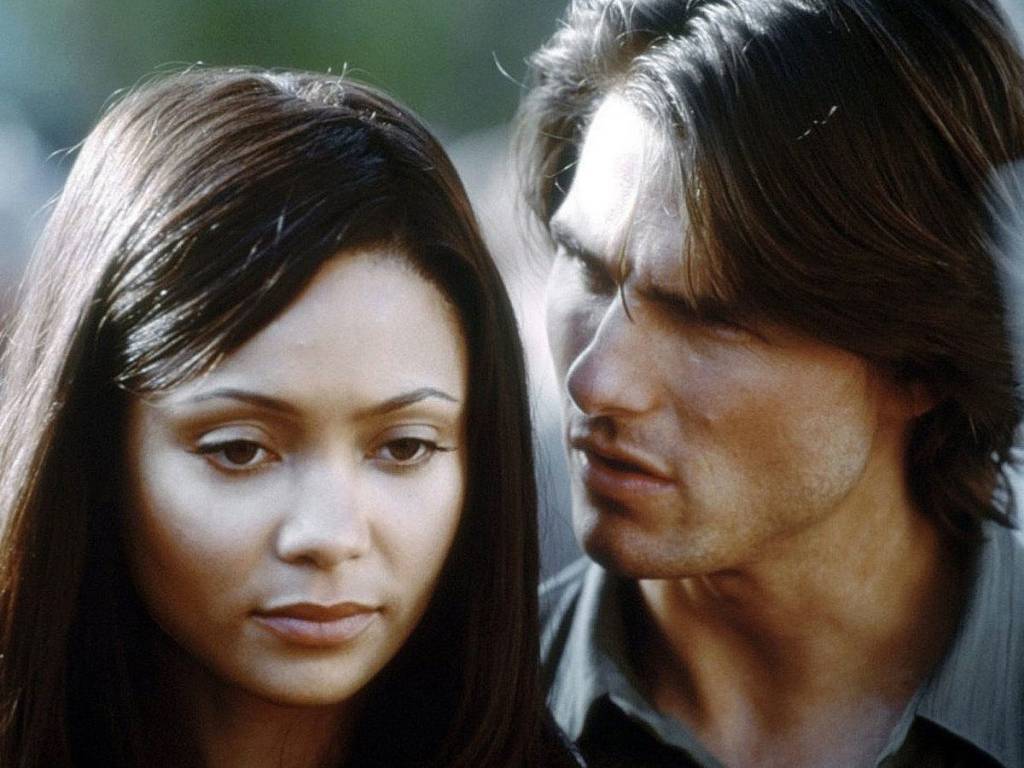
Let’s get this out of the way: my favorite Mission: Impossible movie isn’t FalloutGhost Protocol, or even Brian De Palma’s stylish original. It’s Mission: Impossible 2 – yes, the one with the doves, the slow motion, the leather jackets, and the long-haired Ethan Hunt. Directed by John Woo, MI:2 is often derided as the weakest in the series, but I’m here to make the case that it’s not only misjudged, it’s the most essential Mission: Impossible film ever made.

Why? Because MI:2 dares to be different. It wears its emotions, its aesthetic, and its mythic ambitions on its sleeve. It isn’t trying to be slick and restrained, it’s trying to be opera. While all the following franchise movies blur into one non-stop stream of Ethan, running, jumping and swimming, Woo’s offering stands out with epic, colourful, emotional scenes, even as we ignore the tension between the stars on set.  

John Woo’s Operatic Vision and Mirror Play
John Woo didn’t just direct this movie, he painted it in fire and shadows. Known for his balletic action and emotionally-driven storytelling, Woo transformed the franchise from a Cold War puzzle box into a mythic fable about identity, loyalty, and sacrifice. His signature use of slow motion, dual pistols, and flying doves isn’t just flair – it’s true storytelling. His visuals aren’t grounded in realism, but in emotion, in metaphor, in motion.

Nowhere is this clearer than in the mirrored choreography of the Spanish flamenco scene and the car chase that follows. The flamenco, intense, rhythmic, intimate, sets the stage. Nyah (Thandiwe Newton) is framed in a dance of danger and desire, her fate hanging in every beat. Then comes the high-speed courtship: Ethan and Nyah’s cars spin around each other on a cliffside, their metal dance echoing the flamenco footwork. Tires screech like heels on tile. It’s absurd, yes, but it’s also visual storytelling at its boldest. Love, risk, seduction, all told through spinning machines and glances, not exposition.

Woo is obsessed with duality. Mirrors, masks, doubles – these are his tools. The villain Sean Ambrose isn’t just another bad guy; he’s Ethan’s shadow. Same training, same skills, different soul. Woo externalizes this conflict in every frame: Ethan and Ambrose are fire and ice, destiny and destruction, two sides of a cracked mirror.

Romance as Central Conflict
Unlike the rest of the franchise, where Ethan’s personal life is often secondary, here it’s the engine. Nyah isn’t a plot device, she’s the heart of the story. Her relationship with Ethan isn’t just emotional texture; it’s the moral battlefield. And when she chooses to inject herself with the Chimera virus rather than let Ambrose use her as a pawn, she reclaims her agency in a way few MI women have.

This romance gives MI:2 its soul. The stakes aren’t just global, they’re personal. Ethan isn’t a superspy on autopilot. He’s a man in love, out of control, running toward catastrophe not just to save the world, but to save her. Later Ethan Hunts are defined by loyalty to team and mission. This Ethan is driven by something more elemental: passion.

Set Pieces as Mythic Theatre
MI:2
 is filled with over-the-top set pieces, but each one has a purpose beyond spectacle. The free solo rock climb at the film’s start isn’t just cool – it’s symbolic. Ethan hangs off a cliff, alone, testing his limits. He’s already defying death before the mission even starts. The final motorcycle joust on the beach? Absurd, yes! But also a culmination of the film’s themes: man versus shadow, control versus chaos, love versus fear. Every slow-motion dive, every dove flying through flame, is there to remind us, this isn’t a covert op. It’s a Greek tragedy with motorcycles.

A Stylized, Mythic Ethan Hunt
Cruise leans into this version of Ethan with rare abandon. He’s romantic, cocky, vulnerable. He doesn’t just complete the mission, he bleeds, he burns, he breaks. This is the most emotional Ethan Hunt in the series, and possibly the most human.

Thandiwe Newton brings grace and strength to Nyah, whose sacrifice is the film’s emotional peak. And Dougray Scott, as the villainous Ambrose, is often dismissed but deserves better. He’s not just a bad guy – he’s a cracked reflection of Ethan, a reminder of what power without conscience looks like.

Why It’s Misjudged
Mission: Impossible 2
 came out in a cinematic moment that wasn’t ready for it. Audiences were beginning to crave realism, the Bourne films were about to reset spy cinema, and Woo’s aesthetic – so earnest, so heightened – felt out of step. Critics saw melodrama where they should have seen myth, but time has been kind to MI:2. Rewatch it today, and it’s clear: this is the franchise’s emotional, artistic outlier, and maybe its boldest film.

It’s not the sleekest. It’s not the smartest. But it’s the one that took the biggest swing. In a franchise built around deception, misdirection, and masks, Mission: Impossible 2 may be the only film that dares to show us the face beneath. Not just Ethan’s, but the franchise’s own: ambitious, romantic, operatic, and unapologetically alive.

A Kingdom Reclaimed: Ridley Scott’s Epic at 20

As a huge fan of Ridley Scott’s work, I would place Kingdom of Heaven Director’s Cut in my top 20 movies that I can watch over and over again. 

As Ridley Scott’s Kingdom of Heaven marks its 20th anniversary, the film’s journey from a critically panned theatrical release to a revered director’s cut exemplifies the transformative power of cinematic restoration. Initially released in May 2005, the film was met with lukewarm reception, largely due to its truncated 144-minute runtime that compromised character development and thematic depth. However, the subsequent release of the 194-minute director’s cut unveiled a more nuanced and emotionally resonant narrative, prompting a reevaluation of the film’s artistic merit. 

The theatrical version suffered from significant omissions that diluted the story’s complexity. Key character arcs, such as that of Sibylla (Eva Green), were severely underdeveloped. In the director’s cut, Sibylla’s internal conflict is poignantly portrayed through the inclusion of her son, Baldwin V, who inherits his uncle King Baldwin IV’s leprosy. Faced with the harrowing decision to euthanize her child to spare him from suffering, Sibylla’s character gains profound depth, transforming her from a peripheral figure into a tragic heroine .  

Similarly, the protagonist Balian’s (Orlando Bloom) motivations are more coherently depicted in the extended version. The director’s cut reveals that the priest Balian murders is his half-brother, who desecrated his wife’s corpse, stole her cross, and would inherit his estate if he died without an heir. This context provides a clearer understanding of Balian’s actions, and enriches his character’s moral complexity .  

The director’s cut also restores the film’s thematic exploration of faith, conscience, and the human cost of war. The additional footage allows for a more deliberate pacing, enabling the audience to engage with the philosophical underpinnings of the narrative. The portrayal of King Baldwin IV (Edward Norton) as a leper king striving for peace, and Saladin’s (Ghassan Massoud) honorable conduct, further emphasize the film’s message of religious tolerance and the futility of fanaticism. 

Despite the improvements, it’s noteworthy that an even longer version, reportedly exceeding four hours, remains unreleased. This elusive cut is rumored to contain additional scenes that could further enhance character development and thematic richness. Given the substantial enhancements observed in the director’s cut, the prospect of an extended version is tantalizing for cinephiles and advocates of auteur-driven storytelling. 

In retrospect, Kingdom of Heaven serves as a testament to the importance of preserving directorial vision in filmmaking. The director’s cut not only rehabilitated the film’s reputation, but also underscored Ridley Scott’s prowess in crafting epic narratives that resonate on both emotional and intellectual levels. As the film reaches its two-decade milestone, it stands as a compelling argument for the value of artistic integrity, and the enduring impact of thoughtful storytelling.

Sex, Lies, and Bad Pacing: The Anora Problem

Sean Baker’s Anora may have won over the Oscars, but let’s be honest, this movie is a mess wrapped in neon lights and misplaced enthusiasm. It felt like something Baker wrote during his first year in film school fulfilling his teenage fantasies, and it’s the cinematic equivalent of a dive bar that looks fun from the outside, but reeks of stale beer and regret the moment you step in. Sure, it aims for a gritty, heartfelt take on sex work and the human condition, but what we get instead is a meandering, self-indulgent hormonal dream that confuses excess for artistry.

Let’s start with the so-called plot. Actually, scratch that, let’s start by asking if there even is a plot. The film meanders like a lost tourist on the Vegas Strip, lurching from scene to scene with no clear purpose. Ani, our protagonist, is introduced as a stripper with big dreams and zero depth, and we’re supposed to care about her whirlwind relationship with a clueless Russian heir; but instead of a gripping character study, we get a series of chaotic encounters that amount to little more than an overlong, R-rated sitcom episode where the jokes don’t land and the stakes feel artificial. There is a lack of real violence that we might expect from the henchmen, perhaps to maintain sympathy for both sides of the conflict, but Ani seem to either ignorant of the danger she is in, or a much hardened character than we are led to believe. 

Speaking of artificial, the film’s depiction of sex work is about as grounded as a reality show. While Baker clearly wants to paint a raw, unfiltered portrait, he ends up romanticizing and sanitizing it in a way that feels both naive and irresponsible. The whole thing plays like someone’s edgy fantasy of what the industry might be like rather than a film that has anything meaningful to say. It’s not exactly Pretty Woman, but it’s also nowhere near as insightful as it thinks it is; and it’s certainly nowhere near as nuanced as Wayne Wang’s The Centre of the World

Then there’s the pacing, or rather, the complete lack of it. The movie swings wildly between frantic, high-energy sequences and long, drawn-out moments of supposed introspection. Instead of tension, we get tedium. Instead of depth, we get characters staring off into the distance like they’ve just realized they left the oven on. Sean Baker’s direction, usually sharp and compelling, feels strangely unfocused here, as if he’s trying to recreate the chaotic energy of the Safdie brothers, but forgot to include a sense of purpose.

And let’s not forget the so-called humor. The film has been described as a dark comedy, but the laughs are as rare as a taxi in a rainstorm. What we get instead are awkward, uncomfortable moments that don’t quite land, sometimes because they’re too crude, sometimes because they’re just not funny. It’s like watching someone tell an inside joke to a room full of confused strangers.

By the time the credits roll, Anora feels less like a bold, provocative piece of filmmaking, and more like an experiment that spiraled out of control. The characters are thin, the story is scatterbrained, and the attempts at social commentary barely scratch the surface. It’s a movie that wants to be raw and unflinching, but ends up feeling hollow, like an expensive neon sign with a burnt-out bulb. Sure, some will call it daring, but there’s a fine line between bold and bloated, and Anora trips right over it.