Montreal on Tap: How a Legendary Brewery School Will Shape Canada’s Craft Scene

Since its founding in 1872 in Chicago, the Siebel Institute has stood as a cornerstone of brewing education in North America. Its decision to relocate classroom operations to Montréal beginning January 2026 marks more than the closing of a historic chapter in U.S. brewing history. It signals a shift in where brewing knowledge, innovation, and the future of craft beer will be cultivated.  

At its new address on rue Sainte‑Catherine East, the school will be colocated with a baking and fermentation training facility run by its parent company. The move was explicitly justified by difficulties created by recent U.S. regulatory changes, especially obstacles for international students who, by the Institute’s own account, make up the majority of its student body.  

That this shift is happening now is significant. The Canadian craft beer scene is not fringe or marginal. On the contrary, the market has been growing steadily: in 2024 the Canadian craft beer industry produced about 1.8 million hectolitres, and industry analysts expect output to rise to 2.3 million hectolitres by 2033.  

The arrival of Siebel amplifies several emergent dynamics. First, it will bring a high level of technical brewing education, historically concentrated in the United States, into Canada. For Canadian, Québécois, and even international students, now studying in Montréal rather than Chicago, the barrier to access is lowered. Brewing will become more than an artisanal trade learned on the job; it becomes a discipline taught with academic rigour and breadth.

It reinforces Canada’s growing identity as a brewing hub. Québec already has a deep craft beer tradition, including well‑established brewpubs and microbreweries that trace local heritage while experimenting with modern styles. The consolidation of advanced brewing education in Montréal will likely accelerate innovation, experimentation, and quality, raising the bar for the entire Quebecois brewing community and influencing national trends. Indeed a Montreal brewer described Siebel as “one of the few schools in North America that offers classes on brewing.”  

The timing connects to broader consumer and economic trends. As Canadians increasingly favour locally brewed, artisanal beers; with taste, provenance, and authenticity valued the craft beer segment is poised for expansion.   By anchoring educational infrastructure in Canada, brewing knowledge and technical capacity become part of that expansion rather than imported after the fact.

The relocation underscores a cultural shift: brewing is no longer just a subculture of beer enthusiasts and hobbyists. It is becoming a discipline, a profession, and a pillar of local economies and regional identities. Labour, supply‑chain, agriculture, tourism, and community culture all circle back to the brewery. In that sense, Siebel’s move to Montréal should not be read as the quiet shuttering of a school, but as the planting of a seed: a seed for a more mature, more technically grounded, more globally competitive Canadian brewing industry.

The significance lies not merely in changing postal codes. It lies in the fact that a venerable American institution, one whose graduates helped shape generations of breweries, has chosen to anchor its future within Canada. That choice reflects where the industry sees opportunity, where students now find access, and where brewing’s next generation of artisans and innovators are likely to train.

Maplewashing: The Hidden Deception in Canadian Grocery Aisles

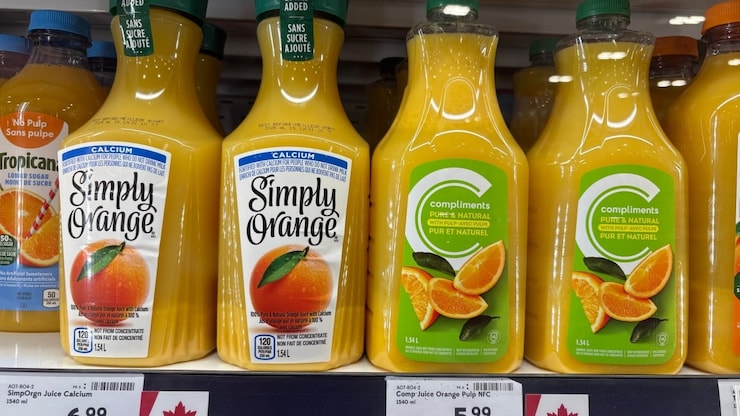
Maple leaves on packaging, “Product of Canada” claims, and patriotic hues of red and white, these symbols of national pride are meant to instill trust and confidence in Canadian consumers. Yet behind some of these labels lies a troubling trend: the misrepresentation of imported food as domestically produced. Known colloquially as “maplewashing,” this practice is drawing increased scrutiny as Canadians seek greater transparency, and authenticity in their grocery choices.

At its core, maplewashing is a form of food fraud. Products sourced from the United States or other countries are being marketed with suggestive imagery or ambiguous labeling that implies Canadian origin. In some cases, food items imported in bulk are processed or repackaged in Canada, allowing companies to legally label them as “Made in Canada” or “Product of Canada” under current regulatory loopholes. This manipulation undermines consumer confidence and disadvantages local producers who adhere strictly to Canadian sourcing standards.

The Canadian Food Inspection Agency (CFIA) defines food fraud as any deliberate misrepresentation of food products, including their origin, ingredients, or processing methods. While the CFIA has made progress in addressing such issues, the agency still faces challenges in policing the retail landscape. Consumers have reported examples of apples from Washington state sold under Canadian branding, and frozen vegetables with packaging that evokes Canadian farms but are sourced entirely from overseas. These practices erode the integrity of the food system and compromise informed consumer choice.

In response to growing concern, some major retailers have attempted corrective measures. Loblaw Companies Ltd., for instance, has piloted initiatives to label tariff-affected American products with a “T” to signal their origin. Other grocers have begun offering clearer signage or dedicated sections for verified Canadian goods. Despite these efforts, enforcement remains patchy, and misleading labels continue to circulate freely on supermarket shelves.

Digital tools have emerged as allies in the fight against maplewashing. Smartphone apps now allow consumers to scan barcodes and trace the country of origin of a product, giving them the ability to verify claims independently. These apps, combined with mounting consumer pressure, are gradually raising the bar for accountability in food labeling.

Still, the systemic nature of the problem requires more than consumer vigilance. Regulatory reform is essential. Advocacy groups have called on the federal government to tighten definitions for what qualifies as “Product of Canada.” Under current guidelines, a product can be labeled as such if 98% of its total direct costs of production are incurred in Canada. Critics argue that this threshold allows too much flexibility for products with foreign origins to slip through.

Maplewashing is not merely a matter of misplaced labels. It is a breach of trust between food producers, retailers, and the Canadian public. As more shoppers demand transparency and local accountability, there is an opportunity to rebuild confidence through clearer standards, stronger enforcement, and a renewed commitment to honest labeling. Food should tell the truth about where it comes from, and no amount of patriotic packaging should be allowed to obscure that.

Sources:
Canadian Food Inspection Agency – Food Fraud
New York Post – Canadian shoppers frustrated at confusing US food labels
Business Insider – Canadian stores labeling American imports to warn consumers
Barron’s – Canadian boycott of American goods

Transparency on Tap: Why All Canadian Cider Should List Sugar Content

Back in December 2024, I wrote about the need for Ontario Cider to be labeled with its sugar content, and now with removal of interprovincial trade barriers there is a more urgent requirement for this change to be implemented nationwide.

As Canada steadily dismantles its long-standing patchwork of interprovincial trade barriers, from wine to eggs to trucking regulations, we must also address the smaller, subtler obstacles to open commerce and informed consumer choice. One such barrier, hidden in plain sight, is the inconsistent requirement for sugar labelling in Canadian craft cider.

Currently, cider producers are not required to list residual sugar content on their bottles or cans: not in Ontario, not in Quebec, not in B.C., or anywhere else in Canada. This lack of transparency undermines both public health goals and consumer trust. It also creates an uneven playing field for craft producers committed to lower-sugar products who must compete in a marketplace where consumers are left guessing.

Sugar Content: A Consumer Right
Residual sugar in cider can vary wildly, from dry, brut-style ciders with under 5 g/L to sweet dessert ciders with over 60 g/L. Yet without disclosure, consumers are flying blind. For diabetics, keto adherents, or simply those who want to monitor their sugar intake, this is more than a minor inconvenience, it’s a barrier to safe and informed consumption.

By contrast, wine labels often include sweetness descriptors like “dry” or “off-dry,” and many producers voluntarily publish grams per litre. Even big-brand soda discloses exact sugar content, so why are fermented apple products exempt?

A Barrier to Fair Trade
The newly energized national push to eliminate interprovincial trade barriers, backed by premiers and the federal government alike, is about more than just moving goods freely. It’s about creating a common regulatory language so producers in Nova Scotia can sell into Alberta without retooling their labels or marketing. If one province (say, Ontario) were to mandate sugar content on cider labels and others did not, that becomes a de facto barrier.

If Health Canada or the Canadian Food Inspection Agency mandated a national requirement for sugar content in grams per litre on all cider products, we’d level the playing field and remove an ambiguity that hinders cross-provincial commerce. More importantly, we’d be empowering Canadian consumers to make more informed decisions in a market that’s become increasingly diverse, from bone-dry craft ciders to syrupy-sweet fruit blends.

The Health Argument Is National Too
According to Statistics Canada, the average Canadian consumes about 89 grams of sugar per day, well above the World Health Organization’s recommended maximum of 50 grams. Alcoholic beverages, especially “alcopops” and flavoured ciders, are a hidden contributor. The federal government has already moved to require nutrition labels on prepackaged foods and some alcohol categories; cider should be next.

A Simple, Feasible Fix
Requiring sugar content on cider labels is not technically difficult. The metric, grams per litre, is already measured during fermentation and used internally by cideries to define style and taste profile. A national labelling requirement would cost little to implement and make a meaningful difference to consumers.

One Label, One Standard
As Canada moves toward true internal free trade, let’s make sure consumer transparency travels alongside it. Listing sugar content on cider labels isn’t just good policy for public health, it’s a smart, simple step toward harmonizing our food and drink economy. When it comes to cider, it’s time Canadians knew exactly what they’re drinking, no matter where it’s made.

On a personal note, my interest goes beyond the health issue, it’s that I much prefer ciders with less than 5 g/L and that currently just because a can or bottle says “Dry” doesn’t mean the cider is actually dry. 

Why Can’t the Replicator Just Scan the Damn Cake?”: A Senior Trekker’s Rant, Expanded Edition

In the grand pantheon of Star Trek mysteries; why redshirts never survive, why Klingon foreheads changed mid-century, why nobody uses seatbelts on the bridge, one lesser-discussed, but utterly maddening question remains: Why is programming new food into the replicator such a colossal pain in the nacelles?

I mean, come on. This is a civilization that can fold space, beam people across hostile terrain, and host full Victorian murder mysteries in the holodeck with better lighting than a BBC costume drama. And yet, when someone wants to add their grandmother’s secret tomato sauce recipe to the replicator, it’s a whole saga. Suddenly you need a molecular biologist, a culinary technician, and probably Counselor Troi to help you process your feelings about spice levels.

Let’s break this down. Replicators are based on the same matter-energy conversion technology that powers transporters. They take raw matter, usually stored in massive energy buffers, and rearrange it into whatever pattern you’ve requested, be it a banana, a baseball bat, or a bust of Kahless the Unforgettable. On paper, it’s magical. Infinite possibilities. Want a rare Ferengi dessert that was outlawed in six systems? No problem, if it’s in the database.

But here’s the catch: the database. That’s the real villain of the piece. Everything has to be pre-programmed. And programming something new isn’t as simple as chucking a muffin into the transporter and yelling “Make it so.” Why not? Because food is astonishingly complex.

Sure, from a chemical standpoint, you can break a slice of chocolate cake down into carbon, hydrogen, oxygen, and nitrogen, the same building blocks the replicator can access, but that’s like saying Shakespeare’s Hamlet is just twenty-six letters arranged in a particular order. The cake is more than its ingredients. It’s texture, mouthfeel, flavor balance, aroma. It’s how the icing melts just slightly faster than the sponge in your mouth. It’s memory, emotion – it’s nostalgia on a fork.

And the replicator, bless it, just doesn’t do nuance.

In-universe, we’ve seen Starfleet crews struggle with this time and again. Captain Sisko flatly refuses to eat replicated food, relying instead on traditional cooking, partly because he loves the craft, but also because the replicator’s version of jambalaya “tastes like it was programmed by someone who’s never even seen a shrimp.” Over on Voyager, Neelix throws himself into galley work precisely because replicated food gets old fast, especially when you’re lost in the Delta Quadrant with no fresh supplies, and morale hanging by a thread.

Programming a new recipe means getting the proportions right, inputting molecular structures, and testing the end result, again and again, for taste, safety, and cultural appropriateness. You want Klingon bloodwine that doesn’t melt the replicator coils? Better spend a few days in the ship’s chem lab. There’s no “scan dish” function, because full transporter-level molecular scans are expensive, dangerous, and, frankly, overkill for your aunt’s chicken pot pie.

Not to mention the ethical implications. Transporters work by disassembling matter at the subatomic level and reassembling it elsewhere. That’s fine when you’re moving Lieutenant Barclay to Engineering (again), but doing a transporter-level scan of organic matter for replication purposes raises thorny questions: if you scan and replicate a living steak, is it alive? Is it conscious? Does it have legal rights under Federation bioethics law? You laugh, but remember, this is the same universe where holograms occasionally demand civil liberties.

So Starfleet plays it safe. Replicators are deliberately limited to lower-resolution blueprints, safe patterns, and tried-and-tested food profiles. They’re designed to be efficient, not perfect. And while that keeps the ship’s energy budget in check and prevents any Frankensteinian chowder accidents, it also means the food sometimes tastes like packing peanuts soaked in nostalgia.

Yet, maybe that’s the beauty of it. In a post-scarcity world where you can have anything at the touch of a button, authenticity becomes the rare commodity. Cooking, real cooking, becomes an act of love, tradition, identity. When Picard orders “tea, Earl Grey, hot,” he’s not looking for a proper British brew; he’s summoning comfort, consistency, something almost ritual. When Riker burns an omelet trying to impress a crewmate, it’s not because he lacks tech, it’s because he values the experience, the attempt.

So no, the replicator can’t just scan the damn cake. And maybe that’s a good thing. Because in a galaxy of warp drives and wormholes, the things that make us human: taste, culture, connection, still require effort. A pinch of spice. A dash of imperfection, and maybe, just maybe, a reminder that sometimes the best things can’t be replicated.

At least not without a food fight in the galley.

The Family Tradition of Rhubarb and Ginger Jam

I first published a version of this post back in June 2011. Sadly, Grandpa is no longer with us, but we are still making this delicious condiment, while the rhubarb patch continues to give generously. 

As a Brit, I’ll admit my palate is rather different from that of many North American friends and family; think Marmite, fish and chips, black pudding, and Indian cuisine, to name a few essential food groups. Over time, some of these traditional flavours have been happily adopted by my Canadian household. The clearest example? A proper roast beef dinner with Yorkshire pudding.

But this time of year brings a particular delight for many Brits: rhubarb season.

It’s the first week of June, and we’re already onto our second, or is it third? rhubarb crumble of the year. The twenty or so crowns in our perennial vegetable and fruit garden just keep on giving. So, as tradition dictates, it’s time to make rhubarb and ginger jam.

Ever since moving into my first flat (that’s “apartment” for my North American readers), I’ve been making preserves of one sort or another. Given my love of Indian food, pickles and chutneys have always topped the list, but when fruit is abundant: strawberries, blackcurrants, rhubarb, out comes the jamming pan.

Yes, I do freeze plenty for later, but there’s something deeply satisfying about having your morning toast slathered in jam you made with your own hands. That simple pleasure, paired with a cup of coffee, is hard to beat.

My all-time favourite preserve book remains The Penguin Book of Jams, Pickles & Chutneys by David and Rose Mabey, first published in 1976. I’ve acquired many others over the years, but this was my first – and I return to it again and again.

One notable difference between UK and North American cookbooks is the way ingredients are measured. North American books use volume – cups, tablespoons, etc., while British texts rely on weight. When I first moved to California, this forced me to buy a set of measuring cups and introduced all sorts of anxiety about measuring chunky foods like beans or cut rhubarb by volume. I’ve since adapted, but my kitchen scales remain front and centre. I still find myself drifting back to the traditional recipes of my twenties.

The Mabeys’ rhubarb and ginger jam recipe is simple and elegant: just rhubarb, sugar, lemon juice, and a muslin bag of bruised root ginger. Over the years, though, my love of that spicy root has led me to make some adjustments. I now chop the fresh ginger directly into the jam and toss in a generous handful of crystallized ginger as well.

The process is straightforward. I layer the rhubarb and sugar in a large ceramic bowl, that once belonged to my grandmother, pour over the lemon juice, and let the mixture sit overnight. The next day, I transfer the resultant syrupy and fruit into my preserving pan, add the fresh and crystallized ginger, and bring it all to a rolling boil. The setting point usually arrives quickly, and the result is twelve 250 ml jars of thick, tart, spicy jam with a texture and flavour unlike anything else.

This family tradition of making and devouring rhubarb and ginger jam may only go back thirty-odd years, but it now spans three generations. Each spring, someone inevitably exclaims, “We have to keep a jar or two back for Grandpa’s visit!” as the breakfast jars begin to empty.

Looks like it’s time to plan a second batch.

I learned over the years to fill a number of 125 ml jars for guests as gifting 250 ml of this delicious manna from the heavens is just too generous, even for visiting family. I was also lucky enough to acquire a hardback copy of the Mabey book a few years ago, and it’s never far from my side.

Five Things We Learned This Week

Here is the latest edition of “Five Things We Learned This Week” for May 24–30, 2025, highlighting significant global developments across various sectors.

🧠 1. AI Threatens to Displace Half of White-Collar Jobs

Dario Amodei, CEO of AI firm Anthropic, has warned that artificial intelligence could eliminate up to 50% of entry-level white-collar jobs within the next five years. Tasks such as document summarization, report analysis, and computer coding are increasingly being performed by AI at levels comparable to a smart college student. Amodei predicts that U.S. unemployment rates could reach 20% by 2030 if proactive measures aren’t taken. He advocates for policy interventions, including taxing AI labs, to mitigate potential economic disruptions.  

🏗️ 2. Kmart Announces $500 Million Fulfillment Center in Australia

Kmart has unveiled plans to invest $500 million in constructing a new 100,000 square meter Omnichannel Fulfillment Centre at ESR’s Intermodal Precinct in Moorebank, Australia. Scheduled for completion by the end of 2027, the facility aims to modernize logistics, enhance supply chains, and support Kmart’s $20 billion revenue goal over the next decade. The project is expected to create over 1,300 jobs during its construction and operational phases.  

🇲🇳 3. Political Turmoil Escalates in Mongolia

Mid-May saw the onset of sustained protests in Ulaanbaatar, Mongolia, with demonstrators calling for the resignation of the prime minister over corruption allegations involving his family. On May 21, the ruling Mongolian People’s Party expelled the Democratic Party from the coalition government after several of its lawmakers supported the protests, effectively dissolving the coalition less than a year after its formation.  

🎶 4. Rio de Janeiro Hosts Massive Free Music Festival

The “Todo Mundo no Rio” (Everyone in Rio) music festival transformed Copacabana Beach into a massive stage, attracting over 2.1 million attendees. The event featured performances by international artists and is part of a series of annual megashows promoted by the City of Rio de Janeiro to establish May as a month of cultural celebration.  

🧬 5. Advancements in Gene Editing with CRISPR 3.0

Scientists have developed CRISPR 3.0, a new gene-editing technique that allows for highly precise DNA edits without causing unintended mutations. This advancement holds promise for curing genetic disorders and advancing personalized medicine by enabling more accurate and safer genetic modifications.  

Stay tuned for next week’s edition as we continue to explore pivotal global developments.

Louisiana: A Tapestry of Cultures and Clashing Politics

Thinking about how the Trump administration targeted Quebec, it’s language and cultural protection laws as a trade issue, makes me wonder about other unique cultures to be found in North America, and how they must be protected and supported so that can thrive. 

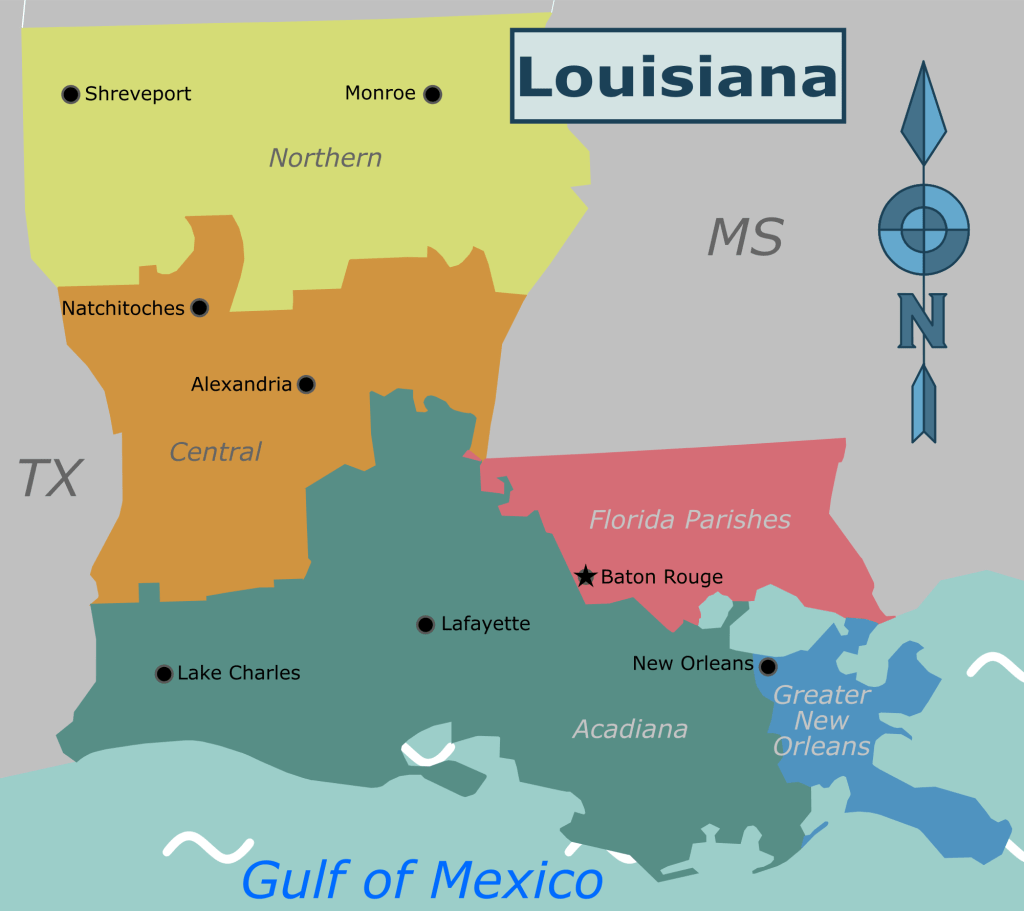
Louisiana is one of the most culturally and politically diverse states in the U.S., shaped by centuries of colonization, migration, and social upheaval. Its identity is a fusion of Indigenous heritage, French and Spanish rule, African influence, and waves of immigrant communities, each leaving an indelible mark on the state’s music, food, language, and traditions. While Louisiana’s reputation often conjures images of jazz-filled streets and spicy Creole dishes, its cultural complexity goes far beyond the postcard version. The same holds true for its politics, which remain as layered and contradictory as the people who call it home.

At the heart of Louisiana’s cultural richness is its history of colonization. Long before Europeans arrived, Indigenous tribes such as the Houma, Chitimacha, and Caddo lived along the state’s bayous and forests, cultivating their own traditions that persist to this day. The arrival of French explorers in the late 17th century set the stage for Louisiana’s deep Francophone roots, later reinforced by Spanish rule and the eventual return to French governance before Napoleon sold the territory to the United States. Unlike other parts of the American South, Louisiana retained much of its European colonial heritage, from its legal system, still based on Napoleonic civil law, to the Catholicism that remains a cultural and religious cornerstone, particularly in the southern part of the state.

The distinct identities of Louisiana’s Creole and Cajun populations further enrich its cultural landscape. The term “Creole” originally referred to people of European descent born in the colony, but over time it expanded to include people of mixed French, Spanish, African, and Indigenous ancestry. Creole culture is inseparable from the rhythms of zydeco music, the spice-laden flavors of gumbo and étouffée, and the linguistic blend of French, Spanish, and West African dialects that still echo in Louisiana Creole speech. Cajuns, on the other hand, descend from Acadian exiles forced out of Canada by the British in the 18th century. They settled in the swamps and prairies of south Louisiana, where they developed a fiercely independent identity rooted in their own dialect of French, fiddle-driven music, and a cuisine that, while similar to Creole food, leans more heavily on rustic ingredients like smoked sausage and crawfish.

The African influence on Louisiana’s culture is profound. Under both French and Spanish rule, enslaved Africans were a critical part of Louisiana’s economy and society, bringing agricultural expertise and spiritual traditions that persist in the region’s religious practices, including voodoo. Unlike in much of the American South, enslaved people in Louisiana had a higher rate of manumission under Spanish rule, leading to a large and influential population of free people of color who contributed to the state’s art, music, and business world. This legacy is most famously seen in New Orleans, where jazz was born in the late 19th century, blending African rhythms, blues structures, and European brass instrumentation into what would become America’s greatest musical export.

Beyond its historic communities, Louisiana continues to be a place of immigration and cultural blending. In the aftermath of the Vietnam War, thousands of Vietnamese refugees settled along the Gulf Coast, where they became an integral part of the seafood industry and introduced new flavors and traditions to the region. Today, their influence is visible in everything from Vietnamese-Cajun crawfish boils to the bustling pho restaurants of New Orleans and Baton Rouge. Other immigrant groups, including Hondurans, Italians, and Croatians, have also left their mark, particularly in Louisiana’s fishing and food industries.

Just as Louisiana’s culture defies easy categorization, so does its politics. Historically, the state was a Democratic stronghold, shaped by its Catholic, agrarian roots, and the populist legacy of figures like Huey Long, who built his career on promises of wealth redistribution, infrastructure development, and defiance of the political elite. Long’s legacy remains deeply embedded in Louisiana’s political DNA, with many politicians still invoking his populist rhetoric even as the state has shifted toward Republican dominance.

Today, Louisiana’s political landscape is sharply divided by geography and demographics. Urban centers like New Orleans and Baton Rouge lean liberal, with strong Black and progressive voting blocs advocating for criminal justice reform, environmental protections, and expanded social programs. In contrast, rural Louisiana, particularly in the north, aligns more closely with the Deep South—socially conservative, evangelical Protestant, and deeply Republican. The Acadiana region, home to the Cajun population, has long maintained a distinct political identity. While once a bastion of working-class Democratic politics, it has increasingly moved to the right, particularly on social issues, though economic populism remains a common theme in local elections.

Louisiana’s racial history continues to shape its political discourse in ways that are often contentious. The long struggle for civil rights, from the desegregation battles of the 1960s to ongoing debates over voting rights and police reform, remains a central issue. Meanwhile, the state’s economic reliance on oil, gas, and fishing means that environmental politics are often fraught, as coastal communities grapple with rising seas and frequent hurricanes while also depending on industries that contribute to these very problems.

Perhaps the most defining feature of Louisiana politics is its enduring embrace of colorful, often scandal-ridden leadership. Corruption has long been a fact of life in the state’s political world, with governors, legislators, and city officials frequently making headlines for bribery, fraud, and backroom deals. Yet, rather than diminish voter engagement, this history has fostered a kind of cynical but amused pragmatism among Louisiana’s residents. People expect their politicians to be flawed, but they also expect them to deliver; whether that means rebuilding roads, cutting through bureaucratic red tape, or simply keeping the good times rolling.

In many ways, Louisiana is a place of contradictions. It is at once fiercely traditional and wildly innovative, politically conservative yet home to some of the most progressive cultural movements in the country. It reveres its past but is constantly reshaped by new influences. This complexity is what makes Louisiana so compelling; a state where history is always present, culture is never static, and politics, for better or worse, is never boring.

Roll Britannia: The Greggs Chronicles

Once upon a time, in the wilds of Tyneside, there emerged a force so powerful, so delicious, that it would one day rival the might of empires. No, not the Romans. We’re talking about Greggs, the humble bakery, turned national obsession that has swept across the UK like gravy on a sausage roll.

It all began in 1939 when a man named John Gregg decided that Newcastle needed something more than coal, fog, and football. So, he did what any visionary would do: he got on a bike and started delivering fresh eggs and yeast to the good people of the North East. Little did he know that his humble yeast rounds would eventually help leaven the British soul.

Fast forward to the 1950s, and the first Greggs shop opened. It sold bread, cakes, and dreams. And by dreams, we mean hot pastries that could scald your mouth, but warm your heart. Greggs soon became a staple of the British high street, which is no small feat considering the fierce competition from fish & chips, kebabs, and aggressive seagulls.

Now, Greggs isn’t just a bakery. It’s a lifestyle. A philosophy. A national institution. While France has the baguette, and Italy has pizza, the UK has the Greggs sausage roll, a flaky, meaty miracle that unites builders, bankers, and students alike. It’s one of the few things in Britain that still works reliably and costs less than a cup of designer coffee.

But let’s not forget innovation. In 2019, Greggs stunned the nation with the Vegan Sausage Roll. Critics laughed. Piers Morgan nearly exploded. But the people? The people lined up. The plant-based pastry launched Greggs into a new orbit, attracting vegans, vegetarians, and confused carnivores who just wanted to see what all the fuss was about.

From there, things escalated. Greggs went viral, won awards, and, brace yourself, teamed up with Primark to launch a fashion line. That’s right: you can now wear your steak bake with pride, even if it’s printed on a hoodie. The combo meal of clothing and carbs is the 21st century’s answer to haute couture.

Let’s be honest: Greggs is taking over the UK one pasty at a time. No town is too small, no train station too remote. There’s probably a Greggs opening inside your kitchen cupboard as we speak. Resistance is futile. You will be fed.

Plans for world domination remain hush-hush, but we all know it’s coming. First, it’ll be Europe, somewhere easy, like Belgium. Then maybe America, where Greggs will stun Starbucks with sausage roll-based frappuccinos. By 2040, the UN will convene in the Greggs Lounge, sipping on baked bean lattes and resolving conflicts over custard slices.

So next time you bite into a cheese & onion bake, know this: you’re not just enjoying a snack. You’re part of a movement. A flaky, buttery, gloriously British movement.

Long live Greggs.

Celebrating the Whimsical Haggis 

The haggis (Haggis scoticus), a mysterious and elusive creature, is said to inhabit the remote Scottish Highlands. Long regarded as a cryptid akin to the Loch Ness Monster, the haggis is believed to be a small, fur-covered mammal uniquely adapted to Scotland’s rugged terrain. Its most distinctive feature is its asymmetrical legs, with one side longer than the other. This adaptation allows it to navigate steep hillsides effortlessly but confines it to running in a single direction around slopes—a limitation that has fueled stories of clever hunters capturing them by startling them into reversing course.

Haggises are thought to dwell in heather-clad hills and secluded glens, blending perfectly with their surroundings. Their diet consists of heather shoots, moss, and grasses, and they are rumored to forage near farms for grains like barley, which connects them to their culinary namesake. Some accounts suggest the haggis is nocturnal, emerging under the cover of darkness to avoid predators and humans.

Sightings of the haggis have been rare, often dismissed as folklore or misidentifications of other animals. Yet, local hunters and Highlanders insist on its existence, with tales of encounters passed down through generations. Scientific expeditions to confirm the haggis’s reality have been inconclusive, adding to its mystique.

The haggis remains an integral part of Scottish identity, celebrated in both folklore and tradition. For many, the creature is a symbol of Scotland’s wild beauty and the enduring mystery of its untamed landscapes.

Brewing Success: How Supporting SMEs Can Fuel Ontario’s Economic Growth

In support of my recent posts on Canadian economic sustainability and growth, in the presence of a Trump America, here is a piece about an industry close to my heart. 

The story of craft brewing in Ontario is one of evolution, passion, and the persistent balancing act between government support and industry challenges. What began as a niche market for independent brewers has grown into a thriving sector that contributes significantly to the province’s economy. In 2023, Ontario’s craft brewing industry was estimated to be worth over $2 billion annually, with more than 270 craft breweries operating across the province. Despite already capturing approximately 10% of Ontario’s beer market, analysts suggest the industry has the potential to grow even further as consumers increasingly prioritize local, high-quality, and innovative products.

Ontario’s journey with craft beer began in the early 2000s when the government recognized the potential of small breweries to contribute to local economies and create jobs. The establishment of the Ontario Craft Brewers (OCB) association in 2003 marked a turning point. It provided a collective voice for independent brewers, allowing them to advocate for policies and resources that could help them compete with multinational corporations dominating the beer market. A few years later, the provincial government launched the Ontario Craft Brewers Opportunity Fund, a bold $8 million investment aimed at giving small breweries a much-needed leg up. This fund allowed many breweries to upgrade their equipment, improve packaging, and expand their marketing efforts. For many brewers just starting out, these investments were not only helpful; they were essential.

Beyond direct funding, tax incentives played an important role in shaping the industry’s early years. Breweries producing under a certain volume threshold benefitted from reduced excise duties, enabling them to reinvest savings into their operations. These measures helped level the playing field, allowing smaller breweries to compete in a market dominated by large-scale producers.

As the industry grew, so too did the government’s approach to supporting it. By the 2010s, Ontario’s craft beer market was booming, and policies shifted to focus on accessibility and expansion. One of the most significant changes came in 2015, when the province modernized beer retailing laws to allow sales in grocery stores. This move not only increased consumer access to craft beer, but also mandated that 20% of shelf space in participating stores be reserved for Ontario’s craft brewers. This was a game-changer for visibility, allowing small brewers to reach a broader audience, and compete more directly with large brands.

The government’s involvement didn’t stop there. In 2019, as part of the Canadian Agricultural Partnership (CAP), federal and provincial governments allocated over $1 million to help craft brewers adopt cutting-edge technologies, expand their production facilities, and tap into international markets. Rural breweries in particular benefitted from these programs, which often included support for tourism development, event spaces, and collaborations with local farmers. By emphasizing sustainable growth, these initiatives also supported environmental goals, such as reducing energy consumption and waste during brewing.

Despite these successes, government policies have not always aligned with the realities of small breweries. The “Buck-a-Beer” initiative introduced in 2018 is a prime example. While the program aimed to make beer more affordable for consumers by encouraging brewers to sell bottles for $1, it was widely criticized by craft brewers. For most, the economics simply didn’t work: producing high-quality beer at that price point would mean sacrificing either their profits or their standards. Instead, many brewers pushed for continued support in the form of grants and investments that prioritized long-term sustainability over short-term cost-cutting.

Today, Ontario’s craft beer industry is at an exciting crossroads. It has firmly established itself as a key economic driver, employing thousands of people and supporting local supply chains, from hop growers to independent retailers. With its current market size valued at over $2 billion, the sector has significant room to grow. Export programs are helping brewers break into international markets, while domestic consumers continue to seek out innovative, locally-produced beers. There’s also increasing interest in sustainable brewing practices, which could open up new opportunities for breweries willing to invest in eco-friendly technologies.

Still, challenges remain. Many small brewers are calling for expanded distribution infrastructure, particularly in rural areas, and more funding to support water conservation and waste management in brewing processes. Others advocate for greater access to affordable financing for equipment upgrades and facility expansions, arguing that these investments are critical to scaling up production to meet demand.

Ontario’s craft beer industry is a testament to what can be achieved when passion meets strategic support. From humble beginnings to a multi-billion dollar sector, it has proven its resilience and capacity for innovation. With thoughtful policies, ongoing investments, and a continued emphasis on quality and sustainability, the potential for future growth is as bright as the golden ales lining the shelves of Ontario’s breweries.