The Grammar of Entitlement

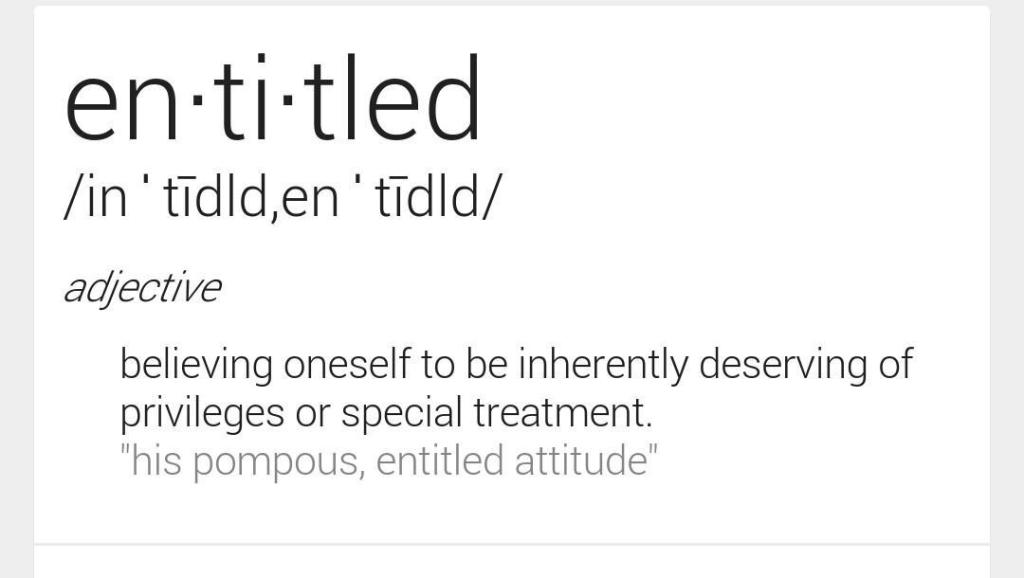
There is a kind of violence that rarely makes headlines. It doesn’t leave bruises or require an alibi, yet it shapes how millions of women move through the world. It lives in tone, expectation, and entitlement: the quiet insistence that a man’s desire constitutes a claim. This is the grammar of entitlement, and it underwrites much of what we call everyday life. When men are taught that kindness, attention, or money are currencies that purchase intimacy, the refusal of that transaction feels like theft. And from that imagined theft, violence grows, not only in action, but in attitude. It becomes the background noise of a culture that still believes women’s bodies are communal property, merely distributed through different forms of politeness.

Entitlement begins in subtle places. It begins in the stories boys are told about conquest, romance, and “getting the girl.” It begins in the way girls are socialized to soften their refusals, to keep themselves safe through diplomacy. This is not simply social conditioning; it is an architecture of expectation built into language itself. In most heterosexual narratives, the man’s desire drives the story. Her consent is not the point of origin but the obstacle, the dramatic tension to be overcome. Even the romantic comedy, that seemingly benign genre, is often structured around a man wearing down resistance until “no” becomes “yes.” The myth of persistence has always been the moral camouflage of entitlement.

When that persistence is frustrated, resentment follows. We are now witnessing an era where this resentment has become communal, a kind of organized grievance. It tells men that the modern world has conspired to deny them what they were promised: sex, affection, attention, reverence. The rhetoric of the “lonely man” often cloaks this in pathos, but loneliness itself is not the problem. It is the conviction that someone else must be blamed for it that turns grief into hostility. Within that hostility lies the logic of control: if women are free to choose, then men must find ways to reclaim authority over choice itself.

Violence begins there, long before it reaches the body. It begins in words, in the erosion of empathy, in the idea that intimacy is a right to be exercised rather than a gift to be offered. It manifests in the digital sphere where harassment, threats, and objectification form an ambient hum of hostility that too many women learn to normalize. The technology changes, but the dynamic is ancient: a man’s sense of rejection transforms into moral outrage, and his outrage becomes justification. This is why sexual violence cannot be separated from cultural entitlement; they are different verses of the same song.

We have grown used to defining violence by its visibility. We recognize bruises, but not the psychic contortions that come from being reduced to a function. When women describe the exhaustion of navigating entitlement: the emotional labour of softening refusals, the hypervigilance required to stay safe, they are often accused of exaggeration. Yet what they describe is the constant negotiation of ownership: whose comfort matters, whose boundaries are negotiable, whose will defines the encounter. Violence, in this sense, is not the breakdown of civility but its shadow. What civility hides so that power can feel like courtesy.

To name entitlement as violence is to understand that harm is cumulative. A woman who spends years accommodating the moods of men who believe they are owed her body or attention carries a kind of invisible scar tissue. It may never be recorded in police reports, but it shapes her choices, her confidence, her trust. The body remembers what the culture denies. Each unsolicited touch, each angry message, each demand for emotional compliance becomes another layer in a collective memory of threat.

And yet, we are told that men are the ones suffering. The so-called “male loneliness epidemic” has become a rallying cry; less for compassion than for backlash. The argument goes that women’s independence has left men adrift, unwanted, and angry, but this, too, is a distortion. Loneliness deserves empathy; entitlement does not. The problem is not that women refuse to date men, but that so many men interpret refusal as harm. To frame women’s autonomy as cruelty is to invert the moral order entirely, to make self-protection an act of aggression.

What we are witnessing is not a crisis of connection, but a crisis of entitlement. The more women assert boundaries, the more those boundaries are read as insults. The cultural reflex is to soothe male discomfort rather than question its legitimacy, yet a society that prioritizes men’s hurt feelings over women’s safety is not a society in decline, rather it is one in denial. 

If there is hope, it lies in unlearning this grammar. In rewriting the story so that desire is not a claim, but a conversation. In teaching boys that intimacy cannot be earned through performance or purchase, only invited through respect. In teaching girls that their boundaries are not provocations, but personal truths. This is the slow, quiet revolution that changes the world not by policy alone, but by perception: the recognition that violence often begins in the stories we tell about what is owed.

The antidote to entitlement is not shame, but empathy. Real empathy, the kind that accepts another’s autonomy as equal to one’s own. To desire without entitlement is to love without domination. It is to see the other as subject, not supply. Until we learn that difference, every act of so-called romance will carry within it the ghost of coercion. Every story that begins with “he wanted” will risk ending with “she feared.”

To unlearn that pattern is the work of generations, but it begins with a simple act of linguistic courage: to name entitlement for what it is, quiet, persistent form of violence.

References:
1. Abbey, A., Jacques-Tapia, A., Wegner, R., Woerner, J., Pegram, S., Pierce, J. (2004). “Risk Factors for Sexual Aggression in Young Men.” Journal of Interpersonal Violence. – The article notes that among perpetrators salient cues include “a sense of entitlement” to sexual access and anger.
2. Jewkes, R., Flood, M., Lang, J. (2015). “New learnings on drivers of men’s physical and/or sexual violence against women.” Global Health Action. – This paper connects patriarchal privilege, gender hierarchy, and entitlement to men’s violence against women.
3. Safer (Australia). “What do we mean by male entitlement and male privilege?” – A practical resource that outlines how male entitlement operates in relationships: e.g., entitlement to sex, entitlement to compliance, entitlement to emotional accommodation.
4. Kelly, I. & Staunton, C. (2021). “Rape Myth Acceptance, Gender Inequality and Male Sexual Entitlement: A Commentary on the Implications for Victims of Sexual Violence in Irish Society.” International Journal of Nursing & Health Care Research. – This article explicitly links ideologies of male sexual entitlement with sexual violence and victim-blaming.
5. Equimundo / Making the Connections. “Harmful Masculine Norms and Non-Partner Sexual Violence.” – Provides global evidence that attitudes of male privilege and entitlement are consistently associated with rape perpetration.
6. Santana, M. C., Raj, A., Decker, M. R., La Marche, A., Silverman, J. G. (2008). “Masculine Gender Roles Associated with Increased Sexual Risk and Intimate Partner Violence Perpetration among Young Adult Men.” Culture, Health & Sexuality. – Links traditional masculine ideologies (including control and entitlement) with sexual violence/partner violence.
7. World Health Organization / United Nations documentation (summarised in various reviews) linking gender inequality, harmful norms, and violence against women: For instance – “The Association Between Gender Inequality and Sexual Violence in U.S. States.” BMC Public Health. – Demonstrates how structural gender inequality correlates with sexual violence prevalence.  

The Gender Revolution: Challenging Patriarchy Through Authenticity and Inclusion

At the beginning of Pride month, I thought I would write about how the gender revolution continues to challenge the patriarchy.

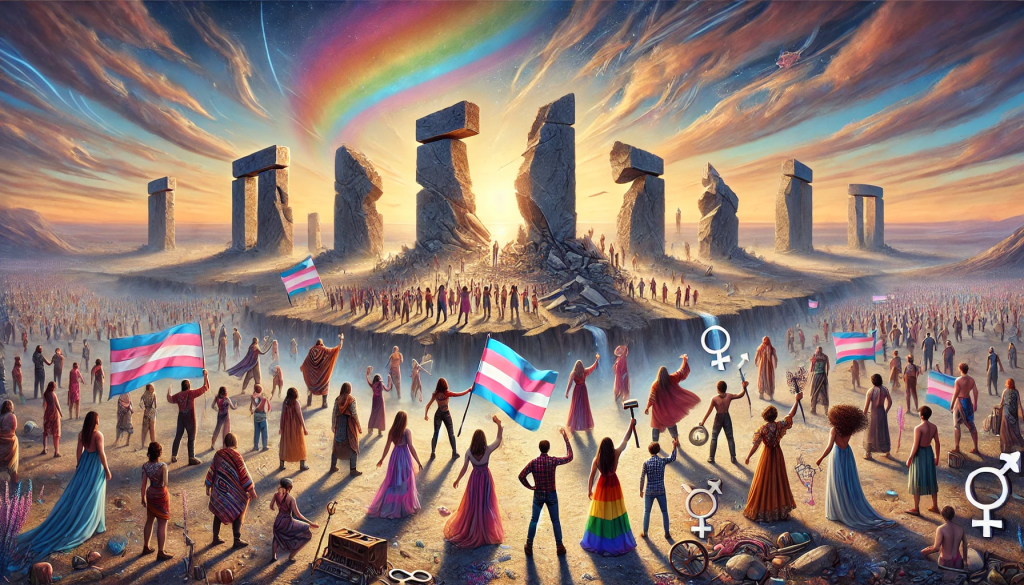
Transgender, non-binary, and intersex individuals are at the forefront of dismantling the patriarchy by challenging the rigid binary system of gender that has long served as a foundation for patriarchal control. Their very existence calls into question the assumption that gender is biologically fixed and limited to male and female, revealing instead that gender is a spectrum shaped by culture, society, and personal identity. By stepping outside these traditional categories, they expose the arbitrary nature of the binary and the oppressive structures that enforce it.

This disruption strikes at the heart of patriarchy, which relies on the dominance of men and the subjugation of women, while erasing those who exist outside these categories. Trans, non-binary, and intersex people decenter masculinity as the default and destabilize the hierarchy that assigns privilege based on adherence to rigid gender roles. By refusing to conform, they challenge the power structures that define worth and authority through this binary lens, opening the door to more equitable understandings of identity and power.

Their visibility also reshapes the cultural landscape, introducing new norms that value authenticity and inclusivity over conformity. The push for gender-neutral pronouns, inclusive policies, and equitable representation shifts societal expectations and disrupts patriarchal systems that thrive on control and standardization. These changes are not superficial; they represent a fundamental reimagining of how society organizes itself, centering individuality and respect over outdated binaries.

Furthermore, the activism of trans, non-binary, and intersex people often intersects with other struggles, including race, class, and disability justice. Their work highlights the interconnectedness of oppressive systems, fostering solidarity across movements and reinforcing the need for an intersectional approach to dismantling patriarchy. By challenging the binary, they do more than fight for their own liberation; they open pathways for others to envision a world free from the constraints of outdated gender norms.

In living authentically and advocating for change, trans, non-binary, and intersex individuals offer a radical critique of the status quo and a hopeful vision for the future. Their courage and resilience are reshaping how we think about gender, identity, and power, and in doing so, they are helping to dismantle one of the most deeply entrenched frameworks of oppression.

From Advocacy to Accountability: Lessons from the Downfall of Male Feminists

My late wife, a post-colonial neo-feminist (her labels, not mine), with both the credentials and attitude to prove it, used to say it was old, grey-haired white men who were the problem. Her solution? “Shoot them. Shoot them all!” As one of two women I’ve partnered with who had fired an AK-47, I took her words seriously.

As an old, grey-haired white man, I often reflect on my role in the feminist conversation. Over decades, I’ve witnessed the shift from overt sexism to today’s more nuanced battles against systemic inequities and performative allyship. Feminism, to me, isn’t a movement for sideline spectators—it demands active, accountable participation from all genders. To create truly equitable spaces, we must engage in open, honest conversations, no matter how uncomfortable, with accountability as the cornerstone.

In recent years, the notion of the male feminist has undergone a reckoning, with the downfall of prominent figures revealing troubling gaps between advocacy and personal conduct. High-profile allegations against men like Jian Ghomeshi, Joss Whedon, Neil Gaiman, and Justin Baldoni have reshaped how we perceive allyship, accountability, and power dynamics. The fallout has had profound effects on relationships—romantic, professional, and platonic—forcing a reevaluation of trust and authenticity in feminist spaces.

Joss Whedon’s case is particularly emblematic. Once lauded as a feminist icon for creating strong female protagonists in Buffy the Vampire Slayer and Firefly, his reputation crumbled as allegations of abusive behavior emerged. Former cast members, including Charisma Carpenter, accused him of cruelty, particularly during her pregnancy, which she claims he mocked and punished her for. These revelations exposed a stark contrast between Whedon’s public image as a champion of women and the private reality of his behavior. His downfall serves as a cautionary tale about conflating progressive rhetoric with genuine integrity. This dissonance erodes trust in relationships, leaving many to question the sincerity of those who claim feminist values.

The case of Jian Ghomeshi, former CBC radio host, highlights another troubling example. Ghomeshi built a career as a liberal, feminist public figure, advocating for progressive causes and portraying himself as an ally to women. However, in 2014, multiple women came forward with allegations of sexual assault and violence, challenging his carefully crafted persona. Though Ghomeshi was acquitted in 2016, the trial revealed troubling patterns of manipulation and abuse of power. The gap between his feminist rhetoric and his behavior served as a stark reminder of how public figures can exploit progressive movements to conceal harmful actions. Ghomeshi’s fall from grace continues to influence discussions about the complexities of consent, power, and the sincerity of those who claim to champion women’s rights.

Neil Gaiman, author of The Sandman and Good Omens, has been accused by multiple women of sexual assault, including non-consensual BDSM activities. Gaiman denies the allegations, claiming all encounters were consensual, but his publicized divorce from Amanda Palmer has sparked debates on power imbalances and performative feminism. Critics have also pointed to recurring patriarchal tropes in his writing. Gaiman’s case shows how those who don’t explicitly identify as feminists can still contribute to harmful dynamics if their work or actions contradict the ideals they seem to represent.

These revelations are part of a broader trend, including figures like Justin Baldoni, who faced allegations of sexual misconduct despite cultivating a feminist persona. Such cases have fostered growing skepticism toward men in feminist spaces, especially those whose advocacy appears more self-serving than sincere. This skepticism has rippled through relationship dynamics, with women increasingly wary of men who leverage feminism for personal gain rather than genuine allyship.

The downfall of the male feminist underscores the danger of prioritizing rhetoric over accountability. For too long, society has lionized men for minimal feminist advocacy, ignoring the gaps between their public personas and private actions. This reckoning reminds us that relationships—romantic, professional, or communal—must be built on mutual respect, honesty, and genuine engagement. By dismantling the myth of the flawless male feminist, we can pave the way for more authentic, equitable partnerships rooted in shared values rather than superficial performances.