Public Drinking: A Study in Trust, Culture, and Control – Ottawa vs. Germany

Public drinking reveals much about how societies balance freedom, responsibility, and trust. The stark contrast between Ottawa’s tentative, tightly-controlled 2025 pilot program for alcohol consumption in municipal parks and Germany’s longstanding acceptance of public drinking illustrates deeper social and cultural divides. In short, while Germans operate under a framework of collective behavioral expectations and trust, Canadians, at least in Ottawa, approach public behavior through a lens of institutional caution and control.

In Germany, it is not only legal, but culturally unremarkable to walk through a park or down a street sipping beer or wine. Public drinking is allowed in virtually all spaces: parks, streets, public transport, so long as behavior remains respectful. There is no need for signage, restricted hours, or opt-in zones. Instead, the rules are social: keep your voice down, clean up after yourself, and don’t cause a disturbance. The assumption is that most people, most of the time, can be trusted to enjoy alcohol in public without devolving into chaos. Enforcement is minimal and focused on conduct rather than consumption. The legal framework reflects this confidence in citizens’ capacity for self-regulation.

Ottawa, by contrast, is poised to take a small, hesitant step into public drinking territory. The 2025 summer pilot, if passed by full council, will allow alcohol in select municipal parks during restricted hours and away from certain facilities. Local councillors must “opt in” their parks, and enforcement mechanisms, signage, and safety protocols are emphasized. The premise is that public drinking is potentially risky, necessitating detailed restrictions and contingency planning. The policy does not presume that residents can handle this responsibility; rather, it cautiously tests whether they might.

This divergence is not simply legal, it is philosophical. German norms lean on a social compact that assumes citizens will behave decently in shared spaces. Canadians, or at least Canadian policymakers, appear to lack such confidence. Public drinking is imagined not as an ordinary act, but as a behavior to be fenced in, bounded, and watched. Ottawa’s delay in launching even a pilot underscores a broader cultural tendency: one that privileges regulation over trust, institutional control over social cohesion.

Underlying this is a question of what kind of public life a society envisions. In Germany, a Feierabendbier (after-work beer) on a park bench is an extension of civil society, part of a shared public realm. In Ottawa, such an act still falls outside acceptable norms, even as urban life becomes denser and more diverse. This points to a lingering paternalism in Canadian municipal governance: the belief that citizens must be managed rather than trusted.

Ultimately, the Ottawa-Germany contrast reveals a deeper social reality. Where Germans assume the public is capable and socialized, Canadians assume the public needs structure and limits. That divergence shapes not just laws, but the very character of public space, and what we are allowed to do within it. Public drinking, then, becomes a proxy for how much a society trusts its own people.

Germany’s Classification of AfD as ‘Extremist’: A Modern Reckoning with a Troubled Past

On May 2, 2025, Germany’s Federal Office for the Protection of the Constitution (BfV) declared the far-right Alternative for Germany (AfD) party a “proven right-wing extremist organization.” This unprecedented designation of a party with seats in both the national and European parliaments is rooted in deep constitutional concern: the BfV’s 1,100-page report outlined how AfD promotes an ethnically defined notion of the German people, dehumanizes migrants, and undermines the dignity of minorities. For Germany, a country still haunted by its 20th-century descent into fascism, the move reflects a renewed commitment to uphold democratic values through preventive vigilance.

Germany’s decision does not exist in a vacuum. Post-war German identity has been shaped by an explicit and institutionalized rejection of Nazism and all forms of authoritarian extremism. The Basic Law—the German constitution—was crafted in response to the collapse of the Weimar Republic and the rise of Hitler’s regime, placing safeguards against the resurgence of anti-democratic ideologies. Within that framework, the BfV is mandated to monitor organizations and parties that threaten the constitutional order. That the AfD, founded in 2013 as a eurosceptic party, has evolved into a vessel for radical nationalism and xenophobia is not a matter Germany can take lightly. With rising electoral support, especially in the former East, AfD has shifted its discourse toward ethnic nativism and authoritarian populism, echoing tropes historically used to dismantle democratic norms.

Internationally, the decision drew immediate and sharp criticism from the United States. Secretary of State Marco Rubio called it “tyranny in disguise,” suggesting that classifying and surveilling a legitimate opposition party undermines democratic pluralism. Vice President JD Vance went further, framing the move as a betrayal of East German voters and likening it to a bureaucratic reconstruction of the Berlin Wall. These comments align with a broader shift in U.S. conservative circles, where cultural affinity with nationalist parties in Europe, including AfD, has grown. Yet, Germany’s Foreign Ministry stood firm, underscoring the independence of its investigative bodies and asserting that the classification was about constitutional defence, not political suppression.

Interestingly, while American officials decried the move, European far-right parties offered a different reaction. France’s National Rally and Italy’s League, both members of the Identity and Democracy (ID) group in the European Parliament, expelled the AfD from their ranks after controversial statements from an AfD leader about the Nazi SS. Marine Le Pen declared it was time to make a “clean break” with the party, suggesting that even among populist allies, AfD’s rhetoric had become too extreme.

The designation is not simply a domestic decision, it is a declaration of principle. Germany is choosing constitutional integrity over political expediency, informed by the weight of its history. In doing so, it opens a conversation about the boundaries of democratic tolerance: how far can free speech and party politics go before they endanger the very freedoms that sustain them?

A Resilient Europe: Why the EU Will Withstand Political Upheaval

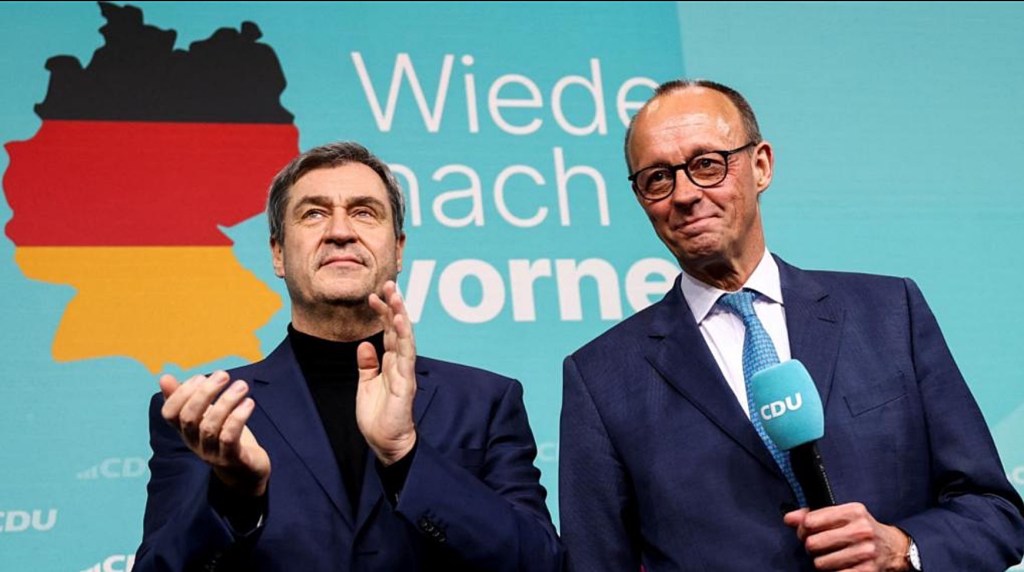
Germany’s federal election has sent ripples across Europe, highlighting both the challenges and the resilience of the continent’s democratic institutions. In a tightly contested race, the conservative CDU/CSU, led by Friedrich Merz, secured a narrow victory, while the far-right Alternative für Deutschland (AfD) achieved its most significant post-war result, gaining nearly 19.5% of the vote. This outcome underscores a growing political divide in Germany, but also reaffirms the enduring strength of its democratic processes. Despite fears of radicalism, mainstream parties have reaffirmed their commitment to upholding democratic norms, with Merz explicitly ruling out any coalition with the AfD.

The election was precipitated by the collapse of Chancellor Olaf Scholz’s coalition government, a victim of economic stagnation and internal disputes. While the Social Democrats (SPD) suffered their worst post-war result, the stability of Germany’s institutions ensures that the country remains a pillar of the European project. The transition to new leadership will undoubtedly come with challenges, but Germany’s role as a leading economic and political force within the EU remains unshaken.

Far-right rhetoric has gained traction in some regions, fueled by concerns over immigration and economic uncertainty. However, this trend is counterbalanced by the resilience of the European Union itself. The EU has repeatedly demonstrated its ability to navigate political turbulence among member states, acting as a stabilizing force that prioritizes economic strength, security, and democratic governance. The Franco-German alliance, while facing strains, remains central to European cohesion, and President Emmanuel Macron has been vocal about the need for stronger European integration to counter populist forces.

Transatlantic relations add another layer of complexity to the European political landscape. The return of Donald Trump to the White House has introduced unpredictability, particularly regarding U.S. support for Ukraine and potential economic policy shifts that could impact European markets. However, rather than weakening the EU, these external pressures have only reinforced the bloc’s determination to assert its independence on key issues such as defense, energy, and trade. Macron and other European leaders have continued to push for greater strategic autonomy, ensuring that Europe is not overly reliant on shifting U.S. policies.

Europe’s path to stability lies in its ability to reinforce its institutions, deepen cooperation among member states, and address the root causes of public discontent. By strengthening the European Commission’s role in economic planning, expanding security initiatives such as PESCO (Permanent Structured Cooperation), and implementing policies that promote inclusive economic growth, the EU can effectively counter the rise of extremism and maintain its position as a global leader in democratic governance.

Update
Since writing this piece, Friedrich Merz has spoken about a stronger, integrated EU, that can look after itself without assistance from the USA, and the possibility of exploring a European Defence Force outside of NATO.