Maplewashing: The Hidden Deception in Canadian Grocery Aisles

Maple leaves on packaging, “Product of Canada” claims, and patriotic hues of red and white, these symbols of national pride are meant to instill trust and confidence in Canadian consumers. Yet behind some of these labels lies a troubling trend: the misrepresentation of imported food as domestically produced. Known colloquially as “maplewashing,” this practice is drawing increased scrutiny as Canadians seek greater transparency, and authenticity in their grocery choices.

At its core, maplewashing is a form of food fraud. Products sourced from the United States or other countries are being marketed with suggestive imagery or ambiguous labeling that implies Canadian origin. In some cases, food items imported in bulk are processed or repackaged in Canada, allowing companies to legally label them as “Made in Canada” or “Product of Canada” under current regulatory loopholes. This manipulation undermines consumer confidence and disadvantages local producers who adhere strictly to Canadian sourcing standards.

The Canadian Food Inspection Agency (CFIA) defines food fraud as any deliberate misrepresentation of food products, including their origin, ingredients, or processing methods. While the CFIA has made progress in addressing such issues, the agency still faces challenges in policing the retail landscape. Consumers have reported examples of apples from Washington state sold under Canadian branding, and frozen vegetables with packaging that evokes Canadian farms but are sourced entirely from overseas. These practices erode the integrity of the food system and compromise informed consumer choice.

In response to growing concern, some major retailers have attempted corrective measures. Loblaw Companies Ltd., for instance, has piloted initiatives to label tariff-affected American products with a “T” to signal their origin. Other grocers have begun offering clearer signage or dedicated sections for verified Canadian goods. Despite these efforts, enforcement remains patchy, and misleading labels continue to circulate freely on supermarket shelves.

Digital tools have emerged as allies in the fight against maplewashing. Smartphone apps now allow consumers to scan barcodes and trace the country of origin of a product, giving them the ability to verify claims independently. These apps, combined with mounting consumer pressure, are gradually raising the bar for accountability in food labeling.

Still, the systemic nature of the problem requires more than consumer vigilance. Regulatory reform is essential. Advocacy groups have called on the federal government to tighten definitions for what qualifies as “Product of Canada.” Under current guidelines, a product can be labeled as such if 98% of its total direct costs of production are incurred in Canada. Critics argue that this threshold allows too much flexibility for products with foreign origins to slip through.

Maplewashing is not merely a matter of misplaced labels. It is a breach of trust between food producers, retailers, and the Canadian public. As more shoppers demand transparency and local accountability, there is an opportunity to rebuild confidence through clearer standards, stronger enforcement, and a renewed commitment to honest labeling. Food should tell the truth about where it comes from, and no amount of patriotic packaging should be allowed to obscure that.

Sources:
Canadian Food Inspection Agency – Food Fraud
New York Post – Canadian shoppers frustrated at confusing US food labels
Business Insider – Canadian stores labeling American imports to warn consumers
Barron’s – Canadian boycott of American goods

Transparency on Tap: Why All Canadian Cider Should List Sugar Content

Back in December 2024, I wrote about the need for Ontario Cider to be labeled with its sugar content, and now with removal of interprovincial trade barriers there is a more urgent requirement for this change to be implemented nationwide.

As Canada steadily dismantles its long-standing patchwork of interprovincial trade barriers, from wine to eggs to trucking regulations, we must also address the smaller, subtler obstacles to open commerce and informed consumer choice. One such barrier, hidden in plain sight, is the inconsistent requirement for sugar labelling in Canadian craft cider.

Currently, cider producers are not required to list residual sugar content on their bottles or cans: not in Ontario, not in Quebec, not in B.C., or anywhere else in Canada. This lack of transparency undermines both public health goals and consumer trust. It also creates an uneven playing field for craft producers committed to lower-sugar products who must compete in a marketplace where consumers are left guessing.

Sugar Content: A Consumer Right
Residual sugar in cider can vary wildly, from dry, brut-style ciders with under 5 g/L to sweet dessert ciders with over 60 g/L. Yet without disclosure, consumers are flying blind. For diabetics, keto adherents, or simply those who want to monitor their sugar intake, this is more than a minor inconvenience, it’s a barrier to safe and informed consumption.

By contrast, wine labels often include sweetness descriptors like “dry” or “off-dry,” and many producers voluntarily publish grams per litre. Even big-brand soda discloses exact sugar content, so why are fermented apple products exempt?

A Barrier to Fair Trade
The newly energized national push to eliminate interprovincial trade barriers, backed by premiers and the federal government alike, is about more than just moving goods freely. It’s about creating a common regulatory language so producers in Nova Scotia can sell into Alberta without retooling their labels or marketing. If one province (say, Ontario) were to mandate sugar content on cider labels and others did not, that becomes a de facto barrier.

If Health Canada or the Canadian Food Inspection Agency mandated a national requirement for sugar content in grams per litre on all cider products, we’d level the playing field and remove an ambiguity that hinders cross-provincial commerce. More importantly, we’d be empowering Canadian consumers to make more informed decisions in a market that’s become increasingly diverse, from bone-dry craft ciders to syrupy-sweet fruit blends.

The Health Argument Is National Too
According to Statistics Canada, the average Canadian consumes about 89 grams of sugar per day, well above the World Health Organization’s recommended maximum of 50 grams. Alcoholic beverages, especially “alcopops” and flavoured ciders, are a hidden contributor. The federal government has already moved to require nutrition labels on prepackaged foods and some alcohol categories; cider should be next.

A Simple, Feasible Fix
Requiring sugar content on cider labels is not technically difficult. The metric, grams per litre, is already measured during fermentation and used internally by cideries to define style and taste profile. A national labelling requirement would cost little to implement and make a meaningful difference to consumers.

One Label, One Standard
As Canada moves toward true internal free trade, let’s make sure consumer transparency travels alongside it. Listing sugar content on cider labels isn’t just good policy for public health, it’s a smart, simple step toward harmonizing our food and drink economy. When it comes to cider, it’s time Canadians knew exactly what they’re drinking, no matter where it’s made.

On a personal note, my interest goes beyond the health issue, it’s that I much prefer ciders with less than 5 g/L and that currently just because a can or bottle says “Dry” doesn’t mean the cider is actually dry. 

Patients Are Not Property: Time to Rethink How We Regulate the Sale and Retention of Primary Care Rosters

In the midst of Canada’s growing primary care crisis, it’s time we take a hard look at how patient rosters are handled, or mishandled, when physicians transition or leave their practices. Across the country, millions of Canadians are without a family doctor. Against this backdrop, we can no longer tolerate a system in which doctors purchase entire rosters of patients only to turn around and drop half of them, not based on clinical need, but lifestyle preference.

This is not a matter of gender. It is a matter of professional accountability and ethical stewardship. Patients are not chattel. They are people, often elderly, immunocompromised, managing multiple chronic conditions, who place their trust in a system that is supposed to protect their continuity of care. When a physician acquires a patient list, they are not buying a gym membership or a book of business. They are assuming responsibility for the long-term health of hundreds, sometimes thousands, of human beings.

Let’s be clear: physicians have every right to structure their practice in a way that supports their well-being. Burnout is real, and work-life balance matters, but that personal balance cannot come at the expense of vulnerable patients being systematically cast adrift.

Professional colleges, including the College of Physicians and Surgeons of Ontario (CPSO), do provide formal mechanisms for a doctor to reduce their patient list. These guidelines exist to allow flexibility, but they were never meant to be a loophole for roster triage based on convenience. If the intention was always to serve only a part-time practice, why was the entire roster purchased? Why was the community not informed in advance? And why are regulatory bodies permitting what amounts to a public harm, wrapped in private contractual terms?

These are not just hypothetical concerns. The abandonment of patients, especially those without alternatives, has ripple effects throughout the entire healthcare system. Walk-in clinics become overwhelmed. Emergency rooms fill with non-emergency cases. Preventable conditions go unmanaged until they become acute, and meanwhile, the public’s trust in the integrity of primary care continues to erode.

If physicians wish to buy a practice, that is a valid path to establishing their career; but there must be clear, enforceable rules to ensure that patient care is not commodified in the process. A few policy options worth considering:

  • Conditional licensing of roster transfers: Require binding disclosure of the incoming physician’s intended working hours and patient capacity before the sale is finalized, with oversight by a neutral third party such as the local health authority.
  • Mandatory transition plans: If a physician intends to offload more than 10% of a newly acquired roster, they should be required to demonstrate how those patients will be supported in finding alternate care – not simply left to fend for themselves – meaning that there is actually an alternative primary caregiver available who is willing and able to add them to their existing roster.
  • Public-interest reviews of large roster changes: Just as utility companies can’t hike rates without justification, physicians shouldn’t be able to restructure public-facing services without transparent public reasoning.

Ultimately, the issue is not about lifestyle choices. It’s about stewardship. Every doctor, upon licensing, accepts a social contract with the people they serve. That contract includes not just the right to treat patients, but the responsibility to do so with equity, consistency, and integrity.

We wouldn’t accept it if a public school principal took over a school and expelled half the students because they only wanted to work mornings. We shouldn’t accept it in primary care either.

Five Things We Learned This Week

Here is the latest edition of “Five Things We Learned This Week” for May 24–30, 2025, highlighting significant global developments across various sectors.

🧠 1. AI Threatens to Displace Half of White-Collar Jobs

Dario Amodei, CEO of AI firm Anthropic, has warned that artificial intelligence could eliminate up to 50% of entry-level white-collar jobs within the next five years. Tasks such as document summarization, report analysis, and computer coding are increasingly being performed by AI at levels comparable to a smart college student. Amodei predicts that U.S. unemployment rates could reach 20% by 2030 if proactive measures aren’t taken. He advocates for policy interventions, including taxing AI labs, to mitigate potential economic disruptions.  

🏗️ 2. Kmart Announces $500 Million Fulfillment Center in Australia

Kmart has unveiled plans to invest $500 million in constructing a new 100,000 square meter Omnichannel Fulfillment Centre at ESR’s Intermodal Precinct in Moorebank, Australia. Scheduled for completion by the end of 2027, the facility aims to modernize logistics, enhance supply chains, and support Kmart’s $20 billion revenue goal over the next decade. The project is expected to create over 1,300 jobs during its construction and operational phases.  

🇲🇳 3. Political Turmoil Escalates in Mongolia

Mid-May saw the onset of sustained protests in Ulaanbaatar, Mongolia, with demonstrators calling for the resignation of the prime minister over corruption allegations involving his family. On May 21, the ruling Mongolian People’s Party expelled the Democratic Party from the coalition government after several of its lawmakers supported the protests, effectively dissolving the coalition less than a year after its formation.  

🎶 4. Rio de Janeiro Hosts Massive Free Music Festival

The “Todo Mundo no Rio” (Everyone in Rio) music festival transformed Copacabana Beach into a massive stage, attracting over 2.1 million attendees. The event featured performances by international artists and is part of a series of annual megashows promoted by the City of Rio de Janeiro to establish May as a month of cultural celebration.  

🧬 5. Advancements in Gene Editing with CRISPR 3.0

Scientists have developed CRISPR 3.0, a new gene-editing technique that allows for highly precise DNA edits without causing unintended mutations. This advancement holds promise for curing genetic disorders and advancing personalized medicine by enabling more accurate and safer genetic modifications.  

Stay tuned for next week’s edition as we continue to explore pivotal global developments.

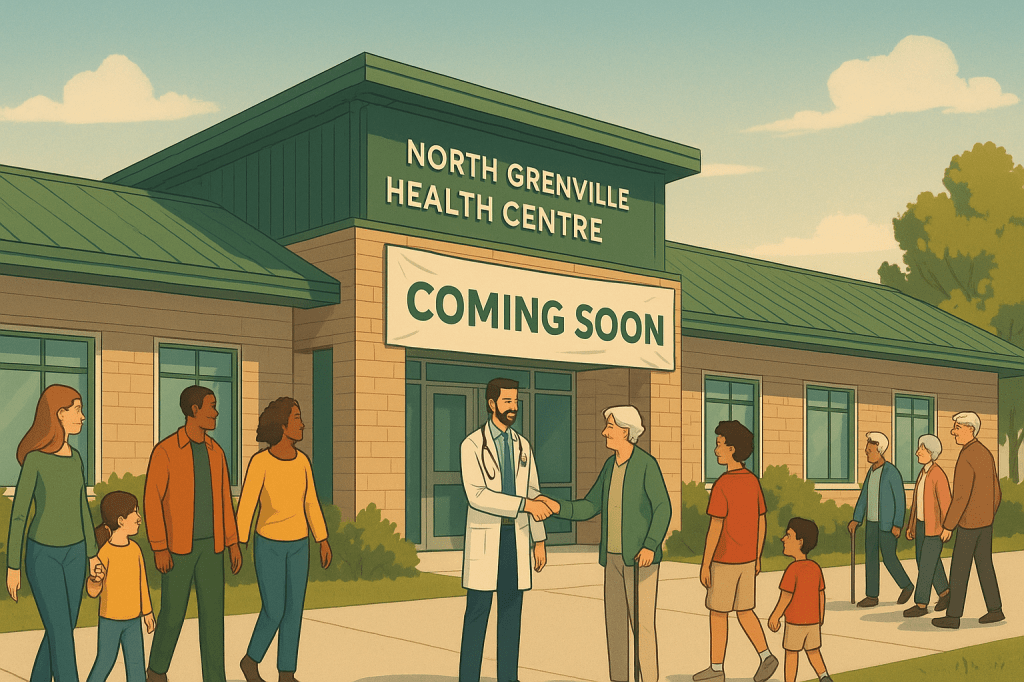
A Municipal Remedy: Why North Grenville Should Open Its Own Healthcare Centre

In North Grenville, the demand for primary healthcare has long outpaced the available supply. While the Rideau Crossing Family Health Clinic has served the community admirably, it seems to have reached its physical and staffing capacity. With a growing population, and increasing concerns over access to primary care, it’s time for the Township of North Grenville to consider a bold, but practical move: establish its own municipally-operated healthcare clinic.

This is not an untested idea. Across Canada, municipalities are taking healthcare into their own hands – literally. In Colwood, British Columbia, the city made headlines in 2023 when it became the first in the country to hire family physicians directly as municipal employees. Offering job stability, pensions, and administrative support, Colwood removed many of the barriers that deter physicians from entering or staying in primary care practice. It wasn’t about competing with existing private clinics, it was about ensuring no resident went without a family doctor.

Orillia, Ontario, is exploring a similar strategy. Recognizing that nearly 25% of the region lacks access to a primary care provider, city councillors there are considering opening a municipal clinic and hiring physicians as city staff. Their aim is to enhance, not undermine, the local healthcare network by filling a gap that traditional models are no longer meeting.

In Manitoba, rural communities like Killarney-Turtle Mountain are actively recruiting international physicians and managing their relocation as part of a municipally driven recruitment strategy. These towns have realized that waiting for provincial solutions is no longer viable. Meanwhile, in Huntsville, Ontario, a physician incentive program funded by the town is already yielding results, with new doctors signing on to help address longstanding shortages.

North Grenville has a chance to follow this growing municipal trend. Simply encouraging more physicians to join the private sector won’t be enough, there’s nowhere for them to go within the Township. A municipally-operated clinic, built with a collaborative mindset, and not as competition, can complement existing services while expanding capacity.

Such a clinic could offer a modern team-based care model that includes nurse practitioners, physician assistants, social workers, and administrative staff, all working under the umbrella of the municipality. With support from provincial and federal programs such as Ontario’s primary care transformation funds or the federal Foreign Credential Recognition Program, North Grenville could create a sustainable and forward-looking solution tailored to its own needs.

How to Move Forward: A Practical Path for the Township
To begin, North Grenville’s municipal council could establish a Healthcare Services Task Force to study local demand, identify gaps in coverage, and recommend a viable service delivery model. This task force should include community health experts, residents, and local politicians.

Next, the Township should apply for funding through Ontario Health’s community-based primary care programs, and the federal government’s health human resources strategy. Partnering with the local hospital, regional health teams, and post-secondary institutions could support the recruitment of new healthcare professionals, including recent graduates and internationally trained physicians.

Land acquisition or repurposing of an existing municipal facility could provide a location, with design input ensuring accessibility, environmental sustainability, and integrated team care. North Grenville does have the amazing resource of the Kemptville Campus, with one of its strategic pillars being “Health and Wellness”. The Township could also offer incentives such as relocation grants, housing support, and flexible hours to make municipal employment attractive to prospective staff.

Finally, a clear communications strategy should be launched to explain that the goal is not to replace or compete with existing providers, but to enhance and expand healthcare access in underserved areas and improve outcomes for all residents.

It’s time to stop waiting and start acting. Our citizens deserve timely, reliable healthcare. Let’s build it, right here at home.

Sources
https://tnc.news/2024/12/26/b-c-city-hiring-family-doctors-as-municipal-government-workers
https://barrie.ctvnews.ca/orillia-could-hire-family-doctors-to-create-municipal-clinic-1.7173907
https://www.winnipegfreepress.com/breakingnews/2024/04/19/diagnosis-critical-desperate-manitoba-municipalities-recruiting-doctors-on-their-own
https://barrie.ctvnews.ca/incentive-program-attracts-new-physicians-to-huntsville-to-address-shortage-in-primary-care-1.7093138
https://www.canada.ca/en/employment-social-development/news/2025/03/the-government-of-canada-is-investing-up-to-143-million-to-help-address-labour-shortages-in-the-health-sector.html

A Welcome with Questions: What Dr. Kaur’s Arrival Reveals About North Grenville’s Physician Incentive Strategy

Ontario is facing a growing shortage of primary care physicians, leaving millions of residents without regular access to a family doctor. This crisis is particularly acute in rural and small-town communities, where aging populations and physician retirements have widened care gaps. In response, municipalities across the province are adopting innovative strategies to attract, recruit, and retain doctors. These include financial incentive programs, housing and relocation support, flexible practice models, and community integration initiatives aimed at making smaller communities more appealing.

So, the arrival of a new physician in a small Ontario town is typically a cause for celebration. Access to primary care is under increasing pressure across the province, and communities like North Grenville work diligently to recruit and retain family physicians. Thus, when Mayor Nancy Peckford announced the addition of Dr. Pawandeep Kaur to the Rideau Crossing Family Health Centre in Kemptville, it was a moment of optimism.

However, a closer examination of the circumstances surrounding Dr. Kaur’s recruitment reveals complexities that warrant further scrutiny, particularly concerning the application and effectiveness of North Grenville’s Family Physician Incentive Program.

Dr. Lavitt’s Brief Tenure
Dr. Samantha Lavitt joined the Rideau Crossing Family Health Centre in June 2024 as part of the municipality’s North Grenville Primary Care Incentive Program. Her arrival was heralded as a significant step forward in enhancing primary care access for the community. However, less than a year into her tenure, Dr. Lavitt announced her departure, effective June 1, 2025. The reasons for her short stay have not been publicly disclosed, but her brief tenure raises questions about the program’s ability to retain physicians in the community. 

A Seamless Transition – But Not an Expansion
To ensure continuity of care, Dr. Kaur will begin transitioning into Dr. Lavitt’s practice starting April 16, 2025, with a full handover by June 1. This overlap aligns with the College of Physicians and Surgeons of Ontario (CPSO) guidelines, which mandate that physicians provide appropriate arrangements for patient care continuity upon leaving a practice.

While this transition is commendable from a patient care perspective, it is important to note that Dr. Kaur is not an addition to North Grenville’s physician roster, but a replacement. The total number of family physicians in the community remains unchanged.

The Optics of Growth
Mayor Peckford’s announcement welcomed Dr. Kaur as “another new family doctor,” a phrase that suggests an increase in the local healthcare workforce. However, this characterization is misleading, as Dr. Kaur is filling the vacancy left by Dr. Lavitt. The use of the term “new” in this context may create a perception of growth where there is none.

Furthermore, Dr. Kaur’s recruitment is again tied to the township’s Family Physician Incentive Program. This raises questions about the program’s application. Designed to attract new physicians to underserved areas, the program appears, in this instance, to be used to maintain existing capacity rather than expand it. 

A Stepping Stone, or a Sustainable Solution?
The brief tenure of Dr. Lavitt and the subsequent recruitment of Dr. Kaur under the same incentive program highlight potential vulnerabilities in the program’s design. If physicians view the program as a short-term opportunity or a stepping stone to other positions, the community may face ongoing challenges in maintaining stable, long-term primary care services. Perhaps the program’s retention strategies may need reevaluation to ensure sustainable healthcare delivery in North Grenville? 

Moving Forward with Transparency
While Dr. Kaur’s arrival ensures that existing patients continue to receive care, the situation underscores the need for transparency in how recruitment programs are utilized. It is essential to assess whether these programs are achieving their intended goals of expanding healthcare access, and to consider adjustments that enhance their effectiveness in both attracting and retaining physicians.

As North Grenville continues to navigate the complexities of healthcare provision, clear communication and strategic planning will be key to ensuring that the community’s needs are met not just today, but in the years to come.

Sources
• Rideau Crossing Family Health Centre. “Practice Update.” rideaucrossingfhc.ca
• My Kemptville Now. “North Grenville welcomes newest physician.” mykemptvillenow.com
• North Grenville. “North Grenville Enhances Primary Care Access with Arrival of Dr. Lavitt.” northgrenville.ca
• College of Physicians and Surgeons of Ontario. “Physician Information.” register.cpso.on.ca

The Language of Care: Why Ontario Needs a Client-Centred Health Model

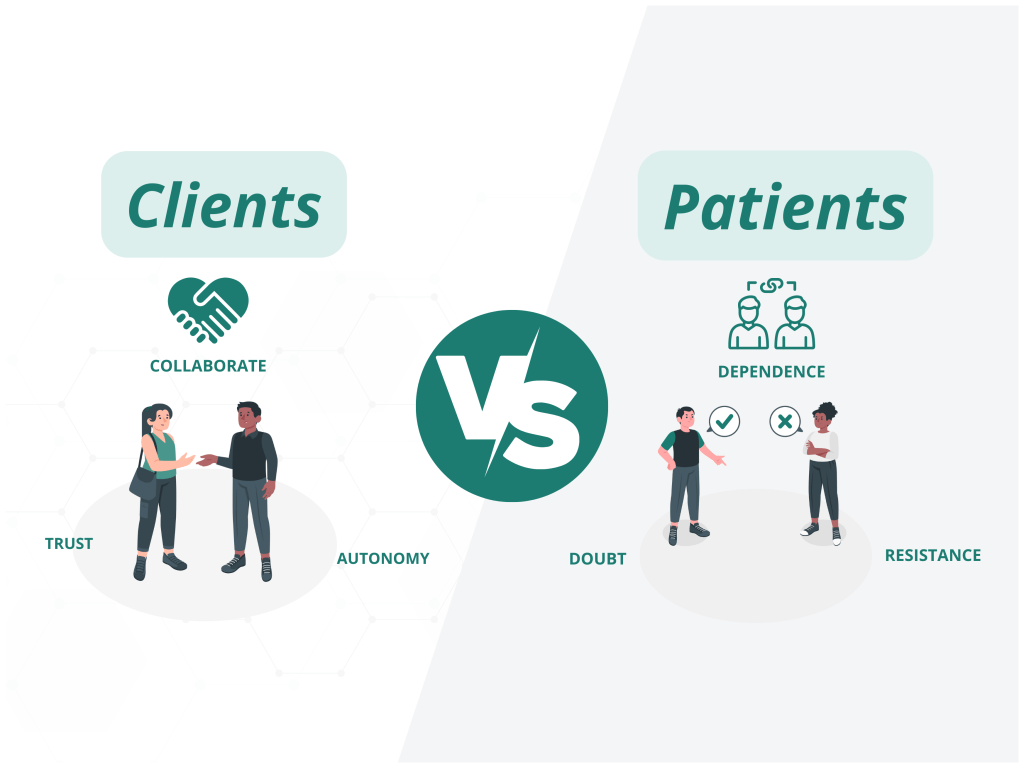
In Ontario, a quiet revolution in healthcare could begin with something as deceptively simple as a change in language. What if, instead of referring to the people they treat as patients, healthcare practitioners embraced the idea that they are working with clients? This shift in terminology is more than cosmetic; it signals a fundamental rethinking of how care is delivered and how relationships between practitioners and the people they serve are structured. Replacing patient with client disrupts the ingrained hierarchy of medicine, and opens the door to a model of care that is more collaborative, respectful, and, ultimately, more effective.

The word patient carries with it centuries of baggage. Rooted in a paternalistic tradition, it positions the healthcare professional as the authority and the person receiving care as a passive recipient. This model might be efficient in a short hospital stay or an emergency room visit, but it often falls short in the real world of chronic illness, mental health, elder care, and preventive services. In these domains, success relies less on technical intervention and more on sustained relationships, shared goals, and mutual trust. Reframing the care recipient as a client changes the dynamic entirely. A client has agency. A client has choices. A client is someone with whom you work, not someone you work on.

This idea is hardly radical in other professions. Lawyers, accountants, architects, and business consultants, all highly educated, tightly regulated professionals serve clients, not patients. These roles are steeped in trust and responsibility, yet they operate from a baseline assumption that the client is an informed actor. Professionals in these fields provide guidance, analysis, and expertise, but they do not presume to make personal decisions on behalf of the people they serve. If such a standard is good enough for legal or financial matters, why should health, arguably the most personal domain of all, be treated differently?

Adopting a client-centred lens has profound implications for healthcare delivery. It reshapes informed consent from a bureaucratic formality into a genuine process of dialogue and understanding. It places a premium on listening, cultural humility, and the social determinants of health. It encourages practitioners to see people not just as carriers of disease or disorder, but as whole individuals navigating complex lives. In Ontario’s increasingly diverse and pluralistic population, this shift is especially urgent. Language, history, trauma, race, and gender identity all influence how people experience healthcare. Treating them as clients creates space for those realities to be acknowledged and respected.

More importantly, research consistently shows that when people are treated as partners in their care, outcomes improve. Chronic disease management, medication adherence, mental health recovery, all benefit from a model in which individuals are active participants rather than passive recipients. Community Health Centres, Nurse Practitioner-Led Clinics, and Indigenous-led health organizations have long embraced this ethos, often with outstanding results. These models recognize that healthcare is not merely about procedures and prescriptions; it’s about relationships and empowerment.

To make this shift from patient to client more than a philosophical exercise, Ontario’s healthcare system must engage in a formal change management process that embeds this transformation into everyday practice. Change at this scale requires more than individual will, it demands structural alignment, leadership buy-in, and sustained cultural development. Medical and nursing schools must be at the forefront, redesigning curricula to emphasize collaborative care, cultural safety, and relational ethics from day one. Teaching hospitals and clinical settings must model this new language and ethos consistently, ensuring that learners observe and internalize client-centred care as the norm, not the exception. Professional colleges, health authorities, and policy-makers need to articulate a unified vision and provide concrete supports; from updated documentation protocols to ongoing professional development. Without a deliberate, system-wide strategy to guide this cultural transition, the risk is that well-meaning practitioners will continue operating in structures that reinforce the very hierarchy we seek to move beyond. True transformation will require education, reinforcement, and accountability across the health system.

Of course, this shift will not be easy. Medical training in Ontario still often reinforces an expert-knows-best mentality. Fee-for-service billing structures reward speed over depth, and systemic pressures, from staffing shortages to rigid bureaucracies, can make relational care feel like a luxury rather than a standard. Some professionals resist the term client, worrying it sounds too commercial or transactional. But in truth, it’s a term of respect. It conveys that the individual has power, and that the practitioner has a duty to serve, not command.

If Ontario is serious about building a more equitable, sustainable, and humane healthcare system, it must begin by reimagining the core relationship between practitioner and person. Words matter. They shape expectations, behaviours, and culture. Shifting from patients to clients could be the first step toward a system that doesn’t just deliver care, but shares it.

Ontario’s Healthcare Evolution: From Health Links to Ontario Health Teams

Over the past decade, Ontario’s healthcare system has undergone a quiet, but profound transformation, one that started with a promising pilot, and has grown into a full-scale shift in how care is coordinated and delivered. For those of us watching the system evolve, it’s been a journey from Health Links to Ontario Health Teams (OHTs), with important lessons, growing pains, and renewed hope for more client-centered care.

Back in 2012, the province launched Health Links, a program designed to tackle one of our most pressing challenges: the care of patients with complex, multiple health conditions. These individuals, often seniors, frequently moved between hospitals, doctors’ offices, and community services, repeating their stories at every turn. Health Links aimed to change that by bringing local healthcare providers together to create a single, coordinated care plan for each patient. As part of this program, I co-chaired a Champlain Local Health Integration Network (LHIN) client committee for the region from Arnprior – Ottawa West & South – North Grenville, and we produced a number of strategic presentations, and patient-focused papers that were used to help transform healthcare delivery.  

The Health Links mandate was clear; improve the quality of care, reduce unnecessary hospital use, and make the system more efficient. It worked, at least in part. Coordinated Care Plans (CCPs) helped reduce emergency room visits and made transitions between care settings smoother. Patients reported feeling more supported, and providers began to see the value of collaboration, but as the program grew, so did its limitations. Implementation varied across regions, digital systems didn’t always connect, and Health Links lacked the scale or structure to truly transform the system.

The lessons from Health Links laid the foundation for something bigger. In 2019, Ontario began rolling out Ontario Health Teams, a bold reimagining of how care is delivered. OHTs bring together hospitals, family doctors, long-term care homes, mental health agencies, and other providers under one umbrella. They share budgets, goals, and responsibility for the health of their local populations, and they aim to do what Health Links started, only broader and more sustainably.

As of April 2025, there are 58 OHTs operating across Ontario, each tailored to the needs of its community. Their vision is simple, but ambitious; to offer fully integrated care, where patients don’t fall through the cracks, don’t have to chase paperwork, and don’t have to navigate a fragmented system alone.

Where does Home and Community Care Support Services (HCCSS) fit into all this? As the LHINs were dismantled, their care coordination functions transitioned to HCCSS, which continues to support patients, especially seniors, at home or after hospital discharge. For many, the face of home care hasn’t changed much, and that’s a good thing, as continuity matters.

For Ontarians, especially older adults or those caring for aging loved ones, these changes hold real promise. If your parent is discharged from hospital with a coordinated plan, supported by a team that talks to each other, that’s the system working. If you no longer have to explain your health history to five different providers, that’s integration in action.

Of course, not every region is there yet. Some OHTs are more advanced, some systems still don’t share data well, and some patients are still lost in the shuffle, but the trajectory is promising, and the intent is clear; a more connected, compassionate healthcare experience for everyone.

Ontario has moved from a patchwork of pilot projects, such as the one I was involved with, to a province-wide commitment to collaboration. As we look ahead, the hope is that we not only build on these reforms,but also hold the system accountable to the values that started it all; access, dignity, and care that truly wraps around the patient.

Your Anti-Vax Opinion Is a Public Health Threat

It’s astonishing, and frankly infuriating, that in 2025 we’re still arguing about the value of the measles vaccine. The data is clear, the science is airtight, and yet somehow, vaccine hesitancy continues to chip away at public health. Let me be blunt: the risk of a vaccine like the MMR is vanishingly small compared to the catastrophic potential of a disease like measles. And if you don’t believe that, then you’re either ignoring the data or falling for misinformation. Either way, lives are at risk.

Measles isn’t just a “harmless childhood illness.” That’s a dangerous myth. Measles is one of the most contagious viruses we know, spread through the air, able to linger for hours, and capable of infecting up to 90% of unvaccinated people exposed to it. In well-resourced countries, about 1 or 2 out of every 1,000 children who get measles will die. That’s not a rounding error. That’s a funeral. And it gets worse in poorer regions where malnutrition and limited healthcare access make mortality rates even higher.

And for the kids who survive? About 1 in 20 ends up with pneumonia, 1 in 10 gets a potentially permanent ear infection, and roughly 1 in 1,000 develops encephalitis, a dangerous brain swelling that can cause lifelong disability. Years later, a rare but fatal condition called SSPE can develop from a childhood measles infection, slowly destroying the brain. No cure. No mercy.

Now contrast that with the MMR vaccine. It has been used globally for decades, and it works. Two doses give you about 97% protection. Most people have no side effects at all. At worst, maybe a fever or a mild rash. Some kids, about 1 in 3,000 to 4,000, might experience a febrile seizure, which is scary for parents, but causes no long-term harm. And the odds of a life-threatening allergic reaction? Less than one in a million. In other words, you’re more likely to be struck by lightning. Twice! 

And we’ve seen what happens when vaccine coverage drops. Samoa in 2019 is a tragic case study. After a decline in vaccine confidence, a measles outbreak swept the islands. Eighty-three people died, mostly young children. In Europe that same year, measles cases exploded. More than 82,000 in the WHO European Region, and 72 people dead. In the U.S., the 2019 outbreak saw over 1,200 cases, largely among unvaccinated individuals, threatening the country’s measles elimination status. This isn’t theoretical. This isn’t debatable. It’s what happens when people stop vaccinating.

It’s no surprise that the World Health Organization named vaccine hesitancy one of the top ten global health threats. And it should be, because when you refuse a vaccine, you’re not just making a decision for yourself, you’re putting babies, cancer patients, and immunocompromised people at risk. You’re weakening herd immunity, which is the only thing standing between them and a virus that doesn’t care about your opinions or your YouTube rabbit holes.

Let’s stop sugarcoating it. Vaccines are safe. Measles is deadly. Choosing not to vaccinate isn’t a personal health decision, it’s a public health threat. We’re not debating anymore. We’re fighting ignorance with facts, and if that offends you, maybe it should.

From Prescriptions to Prevention: The Growing Impact of Canadian Pharmacists

Pharmacists in Canada have become essential pillars of the healthcare system, taking on expanded roles that go far beyond dispensing medications. As our population grows and ages, and as primary care resources become increasingly strained, pharmacists are stepping up to fill critical gaps in care. Their unique combination of accessibility, expertise, and patient trust makes them well-suited to these enhanced responsibilities.

One of the most visible ways pharmacists have broadened their reach is through vaccine administration. It wasn’t so long ago that getting a flu shot or other routine vaccinations required a trip to the doctor’s office or a public health clinic. Now, across Canada, pharmacists play a key role in immunization programs. The COVID-19 pandemic underscored their importance, as pharmacists helped deliver millions of vaccine doses quickly and efficiently, often reaching communities where healthcare access was otherwise limited.

Another area where pharmacists are making a real difference is in treating minor ailments. In many provinces, they are now authorized to prescribe medications for everyday conditions such as urinary tract infections, seasonal allergies, and cold sores. This reduces the need for a lengthy wait at a doctor’s office and allows patients to receive timely treatment. Alberta, for instance, has been at the forefront, granting pharmacists the authority to prescribe independently. It’s a model that has proven effective and is gradually being embraced elsewhere.

Beyond acute issues, pharmacists are increasingly involved in the long-term management of chronic diseases like diabetes, hypertension, and asthma. Their role often includes monitoring patients, adjusting medications, and providing counseling to ensure treatments are followed correctly. Programs like Ontario’s MedsCheck allow pharmacists to conduct thorough reviews of a patient’s medication regimen, helping to prevent complications and improve quality of life. For those managing complex conditions, this kind of hands-on support can be transformative.

Pharmacists have also emerged as key players in addressing Canada’s opioid crisis. Many now provide naloxone kits and training, equipping individuals and families to respond to overdoses. Additionally, they support patients undergoing opioid substitution therapy, such as methadone or buprenorphine treatment, helping to reduce stigma and promote recovery. These services demonstrate the compassion and expertise pharmacists bring to some of the most challenging aspects of healthcare.

Their work extends even further, encompassing point-of-care testing for conditions like strep throat, high cholesterol, or blood sugar levels. By offering immediate results and on-the-spot advice, pharmacists enable patients to make informed decisions without delay. Nova Scotia, for example, has introduced rapid strep throat testing in pharmacies, where patients can receive a prescription on the same visit if necessary.

Mental health care is another area where pharmacists are proving invaluable. They regularly counsel patients on the proper use of psychiatric medications, monitor for side effects, and collaborate with other healthcare providers to ensure effective treatment. Saskatchewan has introduced collaborative care models that empower pharmacists to take a more active role in managing mental health conditions, a critical service given the growing demand for mental health support.

Education and preventive care are also cornerstones of pharmacists’ expanding role. They are often the first point of contact for patients seeking advice on lifestyle changes, smoking cessation, or managing the early signs of chronic illnesses. Programs in provinces like Ontario provide pharmacists with the tools and reimbursement to run smoking cessation clinics, helping countless patients improve their long-term health.

These expanded responsibilities are not without challenges. The scope of practice varies across provinces, and public awareness about what pharmacists can offer remains limited. Additionally, some services lack adequate funding, which can hinder their availability. But the potential is enormous. By empowering pharmacists further—perhaps by granting them authority to prescribe routine medications like birth control—Canada can make significant strides in improving healthcare access and outcomes.

In a system often characterized by long wait times and overstretched resources, pharmacists have emerged as trusted, knowledgeable, and accessible providers. Their ability to combine technical expertise with compassionate care is reshaping how Canadians experience healthcare, proving that pharmacists are much more than dispensers of medications—they are true healthcare partners.