Ottawa at 25: The Amalgamation That Never Delivered

As Ottawa approaches the 25th anniversary of amalgamation this January, the moment invites a frank assessment. In 2001 the provincial government promised that merging 13 municipalities into a single-tier City of Ottawa would streamline governance, cut waste, improve services and stabilize taxes. Amalgamation was sold as modern, efficient and inevitable, a rational response to the untidy patchwork of local governments that once defined the region.

Two and a half decades later the record is far more complicated. Some benefits were real. Many others were aspirational. And for large portions of the city, especially rural and semi-rural communities, amalgamation has been a system that works to them, not for them. Bigger, it turns out, was not better.

The Promise of Better Services – The Reality of Uneven Delivery
The early pitch for amalgamation was simple: unify services and everyone wins. In practice, the outcome has been uneven across geography and income.

Urban residents gained the most. They saw expanded recreation programming, new library access and coordinated planning. Rural areas, by contrast, experienced reduced responsiveness in road maintenance, snow clearing, bylaw enforcement and transit. Communities like West Carleton, Rideau-Goulbourn and Osgoode have spent two decades reminding City Hall that “one size fits all” is not a service model; it is a compromise imposed on communities with profoundly different needs.

The city’s signature public-transit investment – the O-Train LRT system – was supposed to embody the advantages of centralization. Instead it has become a case study in the limits of mega-city governance: severe construction delays, cost overruns, and a nationally publicized public inquiry detailing systemic failures in oversight, transparency and project management. The LRT problems are not merely technical. They illustrate the deeper strain of running a sprawling municipality where accountability is diffused across layers of bureaucracy rather than rooted in local leadership.

The Financial Question: Where Were the Savings?
The financial rationale for amalgamation rested on scale. A bigger city would deliver efficiencies; efficiencies would reduce costs; reduced costs would protect taxpayers.

This never materialized.

Transition costs reached an estimated $189 million. Savings projections were optimistic, not guaranteed. The Transition Board did not promise tax cuts, and indeed taxes did not fall. In many rural and suburban areas they increased sharply, partly due to uniform tax policies that replaced diverse local rates.

Cost pressures accumulated in other ways:
• The city’s share of funding for provincial property-assessment operations has outpaced inflation every year since amalgamation.
• Capital projects, particularly transit, have grown more expensive while their benefits remain unevenly distributed.
• Ottawa now faces an annual transit operating shortfall approaching $140 million, straining a tax base already stretched by road, infrastructure and policing costs.

The efficiencies that were supposed to stabilize municipal finances largely failed to appear. In their place came the financial stresses of a city whose physical footprint rivals Toronto’s but without the provincial funding model Toronto enjoys.

Lost Local Control – And Lost Trust
Perhaps the most significant cost of amalgamation has been the erosion of local governance. Prior to 2001 communities had councils attuned to their unique needs and accountable to residents they lived beside. Today many rural and semi-rural residents feel politically peripheral; listened to, but not heard.

Ward representation cannot replicate local councils. Nor can city-wide policies reflect the distinct rhythms of a village like Manotick, the agricultural economy of Osgoode, or the infrastructure realities of West Carleton. The result has been a steady accumulation of resentment: a sense that rural areas subsidize urban priorities while their own needs remain secondary.

The weakening of local identity has democratic implications. Decision-making concentrated at the centre becomes less transparent, less responsive and harder for residents to influence. The LRT inquiry offered a stark reminder of what can happen when oversight drifts too far from citizens and too far from the specific communities most affected.

A Quarter Century Later: What Has Ottawa Gained – And What Has It Lost?
It would be simplistic to call Ottawa’s amalgamation a failure. Some benefits are undeniable: unified planning, expanded programming, strengthened economic-development strategies and early years of reasonably controlled citywide spending.

But at a structural level, amalgamation has not delivered its central promises. Taxes did not fall. Services did not equalize. Financial pressures did not ease. The governance system is more centralized but not more accountable. And the diversity of Ottawa’s communities – rural, suburban and urban – often exceeds the capacity of a single administrative structure to manage well.

The lesson is not that amalgamation should be reversed. The lesson is that centralized government must be paired with robust local power, transparent decision-making and an honest recognition that “efficiency” cannot override community identity or regional diversity.

As the 25-year mark approaches, Ottawa has an opportunity to look clearly at what was promised, what was delivered and what must change to make this city work fairly for everyone. Amalgamation may be permanent, but its shortcomings do not have to be.

Sources: 
en.wikipedia.org
todayinottawashistory.wordpress.com
app06.ottawa.ca (Rural Affairs Committee reports)
ottawa.ca (Long-Range Financial Plan II and III)
spcottawa.on.ca (WOCRC rural community report)
imfg.org (Single-tier municipal governance studies)
globalnews.ca (Ottawa LRT Public Inquiry)
ottawa.citynews.ca (Transit financial shortfall)
obj.ca (De-amalgamation commentary)

Public Funding for Private Arenas: Economic Realities Behind the Ottawa Senators Proposal

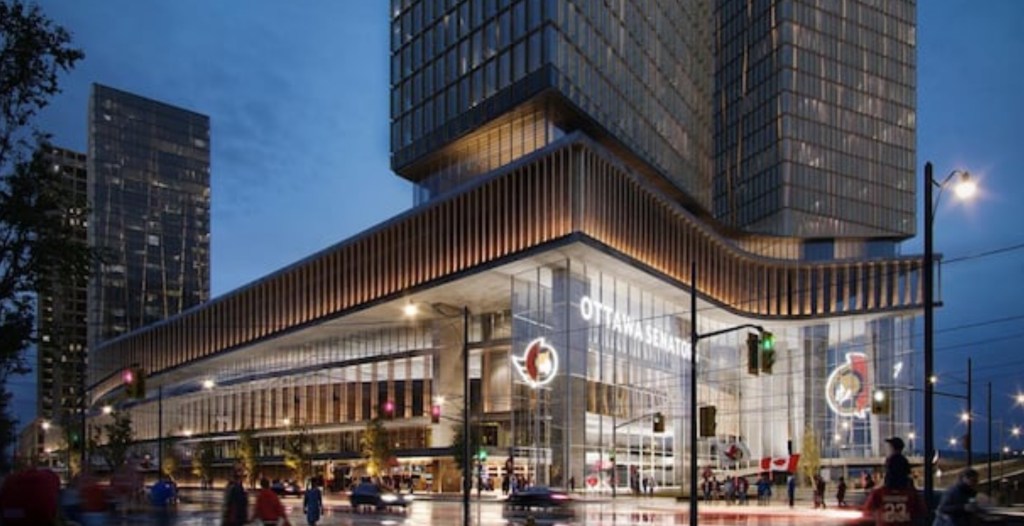
The renewed push for a taxpayer supported arena at Ottawa’s LeBreton Flats arrives at a moment when the economic evidence is clear. Professional sports franchises continue to seek public subsidies while independent academic research demonstrates that taxpayer funded arenas provide little to no measurable economic return to host cities.

The current lobbying effort by Capital Sports Development Inc. mirrors a common strategy in North America: frame the project as an economic generator rather than a private entertainment investment. The empirical data provides a different assessment.

Economic research and city outcomes

Consensus across economic literature is stable. Major reviews and empirical studies show that sports arenas do not create net new economic activity. Spending at arenas typically reallocates existing entertainment consumption within a city. Construction jobs are temporary. Longer term measures such as regional GDP, employment, and household income do not show statistically significant improvement following arena construction.

Representative findings

StudyScopeFinding
Noll & ZimbalistMultiple stadium projectsEconomic effects extremely small or negative
Coates & HumphreysCross city panel analysesNo association between franchises and long term income growth
Bradbury, Coates & Humphreys (2023)Historical reviewLittle to no tangible economic impact from stadium subsidies
Journalist’s Resource (2024)Literature roundupPublic stadium funding rarely produces the projected economic returns

Comparative evidence from recent arena projects

Recent Canadian and North American arena projects reveal the scale of public exposure when municipal and provincial governments participate. The table below summarizes selected examples and a chart illustrates the variation in public contributions.

Arena ProjectApproximate Public Contribution (Millions CAD)Funding Notes
Calgary Event Centre537Municipal and provincial contributions for arena and district infrastructure
Rogers Place, Edmonton226Municipal funding combined with tax increment and CRL mechanisms
UBS Arena, New York0Privately financed on state land lease
T-Mobile Arena, Las Vegas0Privately financed

Why public private partnerships often underperform

Public private partnerships are presented as compromise solutions but frequently shift long term fiscal risk onto taxpayers while securing stable private returns for franchise owners. Cost overruns, maintenance liabilities and revenue shortfalls commonly become municipal obligations. Promised spinoff benefits such as meaningful tourism increases or broad district revitalization are often overstated in proponent studies.

Opportunity cost

Public funds allocated to stadium projects carry opportunity costs. Funds used for an arena are not available for transit, housing, healthcare, climate adaptation or education. These alternatives typically deliver higher social and economic returns than subsidizing privately owned entertainment facilities. Private financing eliminates this trade off.

Policy conclusion

Evidence supports a default policy of requiring private financing for professional sports facilities. Public funds should be reserved for investments that yield broad-based returns and reduce systemic risk for residents. Where public contributions are proposed they should be subject to independent review, enforceable community benefits, strict caps on public exposure and, where appropriate, direct public approval through referendum or legislative vote.

Sources and further reading

  • Bradbury, J C, Coates, D and Humphreys, B R. The economics of stadium subsidies. Policy retrospective. 2023.
  • Coates, D and Humphreys, B R. Do subsidies for sports franchises, stadiums, and mega events work? Econ Journal Watch.
  • Noll, R G and Zimbalist, A. Sports, Jobs and Taxes. Review of economic impacts of sports teams and stadiums.
  • Journalist’s Resource. Public funding for sports stadiums: a primer and research roundup. 2024.
  • Reporting on Ottawa Senators lobbying activity and StrategyCorp engagement. SportsBusiness Journal and national coverage.

For readers seeking original reports and news coverage please consult academic databases and major news outlets for the documents cited above.

Ottawa Amalgamation Failures: A Critical Reassessment  

Bigger is not always beautiful, especially when it comes to communities or, more specifically, municipalities. The 2001 amalgamation of Ottawa and its surrounding municipalities was sold as a transformation: a streamlined government delivering better services, greater efficiency, and lower taxes. In practice the results have been far more ambiguous.

Background: What Was Amalgamated – And What Was Promised
On January 1, 2001, the former municipalities that made up the Regional Municipality of Ottawa–Carleton – 11 lower-tier municipalities plus the former City of Ottawa, were merged into a single-tier municipality: the modern City of Ottawa.  

The rationale was that this consolidation would reduce duplication, unify planning and services, and deliver cost efficiencies through economies of scale. The transition cost was estimated at about $189 million, with the province covering $142 million and the City paying roughly $47 million. The projection for savings from personnel reductions was substantial: roughly $30.7 million in the first year, rising to $84 million by 2003.  

Despite these savings projections, the Transition Board did not promise any tax reductions.  

Mixed Outcomes: Services – Gains, Losses, and Uneven Distribution
One of the primary promises was standardized and enhanced municipal services across the entire new city. In many respects there were improvements, but the benefits have been uneven, and in some rural/suburban zones residents still feel left behind.

What improved
• Services such as recreation programming and library access were expanded. After amalgamation, rural areas enjoyed a jump in activity: for example, by 2007 the rural recreation program catalogue offered 444 programs (up from 62 in 2002).
• The unified municipal structure also enabled coordinated economic development efforts. For example, rural-tourism initiatives (like “Ottawa’s Countryside”) and a “Directional Farm Signage Program” helped rural businesses and agriculture get city-wide support.
• In terms of per-household spending, in its early years the amalgamated city kept overall operating spending roughly on par with a seven-city average of Ontario municipalities; only about 4% higher. And compared with a large city like City of Toronto, Ottawa’s spending was about 30% lower.  

But many promises – Especially in rural and suburban zones, fell short
• Rural residents have repeatedly voiced that core municipal services (road maintenance, snow clearing, local transit, policing) received lower priority compared to urban wards. A longstanding sense of alienation persists among many rural communities toward City Hall.
• The transition diluted local, community-by-community decision-making. Individual municipalities had previously tailored services to local needs; under the amalgamated governance many rural or semi-rural concerns are subsumed under city-wide priorities. This resulted in delays and bureaucratic inefficiencies for issues that once had local responsiveness.
• Perhaps most glaring: the city’s signature transit project, the O‑Train / Ottawa LRT system, has been plagued by cost overruns, operational problems and service reliability issues – undermining its value as a major public-transit asset. A public inquiry’s recent report pointed out serious failures in municipal oversight and transparency around the LRT project.

That failure has broader consequences because many suburban and rural residents rely on a single bus line or intermittent routes, but see a disproportionate share of taxes diverted to an increasingly controversial urban rail system.

Taxes and Finances: Savings Promised – But Higher Costs and New Burdens
One of the largest expectations was that amalgamation would lower costs for taxpayers. That premise has proven questionable.
• Although the transition plan forecast substantial savings from staff reductions, the resulting efficiencies did not translate into widespread tax reductions. None were promised.
• From 2001 to 2005, Ottawa’s property-assessment base grew by 11.1%. Over the same period, education-tax levies on residential properties increased by 33.7%, costing Ottawa homeowners roughly $28 million more than in other Ontario municipalities.
• The uniform tax regime (rather than multiple municipal rates) had disproportionate impacts on suburban and rural homeowners. In many cases they faced tax hikes without corresponding improvements to local services.
• Meanwhile, certain structural costs increased: for instance, the cost share owed to the provincial property-assessment authority (Municipal Property Assessment Corporation or MPAC) rose by 25% since amalgamation, about 5% annually, outpacing inflation and municipal tax increases. That cost is borne by taxpayers.
• In more recent years, the city faces major financial stress. The municipal transit system alone is projected to run an annual operating shortfall of $140 million. Policing, infrastructure maintenance and other capital demands contribute to mounting city-wide debt burdens. As one commentary put it, “there was no tangible, financial benefit from amalgamation.”

These fiscal pressures undercut the core argument for amalgamation — that centralization would lead to stable or lower taxes with better services.

Loss of Local Representation and Identity
Amalgamation replaced dozens of municipal councils and local governance structures with a centralized city council responsible for a vastly larger and more diverse geography and population. That shift came with trade-offs.
• Rural and semi-rural communities lost significant political influence once they became part of a larger ward-based structure. Special “area” or “service” rates were introduced for rural areas, reflecting recognition that service needs differed, but also institutionalizing a two-tier system within the same city.
• Local identity and “small-town” character in villages such as Manotick was diluted. For example, development proposals in Manotick in the mid-2000s (for thousands of new homes) sparked strong concern among local residents that the community’s character would disappear under city-wide policies.
• According to early post-amalgamation polling (2002), many rural respondents rated the new city structure poorly. Among rural residents, 38% said services “need improvement” or rated city performance “terrible,” 43% said “OK,” and only 17% rated things “good” or “excellent.”

The sense of local alienation persists decades later: many rural residents still regard themselves as under-represented and overlooked by City Hall. 

Infrastructure, Planning and Transit: Centralization Meets Complexity – And Breakdown
One of the biggest undertakings after amalgamation has been transit and infrastructure. But the centralized city structure has struggled under the weight of that complexity.
• The O-Train / Ottawa LRT project was to be a flagship symbol of a modernized, unified city-wide transit network. Instead it has become a cautionary tale. A recent public inquiry blamed both the managing company and the city’s leadership for “repeated failures and an abrogation of municipal oversight.”
• Financial burdens from large capital projects like LRT expansion have stressed city budgets. After cost overruns for Stage 1 and 2 of the O-Train project, the burden has fallen heavily on Ottawa taxpayers – unlike comparable projects in the Greater Toronto Area, where provincial or federal funding covers a larger share.
• Meanwhile, suburban sprawl and rural-suburban developments, once under small local municipalities, now stretch the city’s infrastructure capacity. Roads, snow clearing, policing and transit are far more challenging to deliver equitably in a sprawling city than in smaller, more compact municipalities.

The core problem is scale: centralizing everything in a single administration has made it difficult to provide suitable, tailored services across widely different communities, from dense downtown to rural farmland.

Governance and Democratic Legitimacy: Promises of Efficiency at the Cost of Democratic Depth
The transition to a mega-city altered not just service delivery but democratic engagement.
•  Pre-amalgamation, many local decisions:  planning, development, budget priorities were made by small municipal councils familiar with the needs of their residents. Post-amalgamation, those decisions occur within a larger, more remote bureaucracy. Many rural residents feel they no longer have a meaningful political voice.
• The centralization also introduced a complexity of governance that can hamper accountability. As seen with the LRT fiasco, oversight over massive capital projects can become diffuse and abstract, weakening the ability of residents to hold decision-makers to account.
• The uniform tax and service model – despite the wildly different needs of urban, suburban, and rural zones, reflects what critics call “one-size-fits-all governance.” That rarely serves any locality optimally, and often disadvantages those outside the urban core.

A Complicated Legacy – Not an Unqualified Disaster, But Far From the Hopes
It would be unfair to paint the amalgamation as an unmitigated catastrophe. Some benefits have accrued: coordinated planning, a unified transit vision (even if imperfect), expanded recreation and library services, economic development strategies that support rural businesses and agriculture, and, in the early years, per-household spending relatively comparable to peer municipalities.

The long-term trade-offs have been steep: higher taxes (particularly education taxes), rising costs for essential services like property-assessment operations beyond inflation, growing debt burdens, inequitable distribution of services across geography, and a weakened sense of local representation, especially in rural and semi-rural areas.

The classic promise of “efficiency through scale” has often collided with the messy reality of delivering diverse, place-specific services across a vast and varied territory.

Centralization as Compromise
The 2001 amalgamation of Ottawa was a bold gamble: a bet that centralization would bring coherence, cost savings, and improved service delivery. Four decades of experience show that the outcome is deeply mixed.

For some residents the transition delivered real benefits: greater access to recreation, library services, coordinated economic strategies, and the possibility of a unified urban vision. For many others, especially outside the downtown core, it meant increased taxes, loss of local autonomy, and a sense of being perpetually overlooked as part of a sprawling bureaucracy.

In the end, amalgamation delivered some of its promises, but at a cost that, for many, outweighs the benefits. Ultimately the experiment reveals a fundamental truth: size and scale alone do not guarantee better governance. Without careful attention to representation, equity, diverse local needs and transparent oversight, centralization too often becomes a compromise, not a solution.

Lansdowne 2.0: The half-billion-dollar deal that asks Ottawa to trust again

There are moments in a city’s life when the decisions made at council chambers shape not just its skyline, but its soul. The redevelopment of Lansdowne Park has entered such a moment. The City calls it Lansdowne 2.0. Once again we are asked to believe that this time things will finally work out. I am respectfully saying: no thank you.

I support investing in our city’s infrastructure, in affordable housing, and in vibrant community spaces, but I am deeply opposed to the kind of public-private partnership (PPP) model that Ottawa keeps repeating – especially when the affordable housing promise is quietly reduced, when the public carries the risk, and the private partner walks away with much of the upside.

In the case of Lansdowne 2.0, the City and its private partner, Ottawa Sports and Entertainment Group (OSEG), propose to rebuild the north-side stands and arena, build new housing towers, bring retail/condo podiums, and “revitalize” the site. The projected cost is now $419 million, according to City documents. The City’s Auditor General warns the cost could be as much as $74-75 million more and that revenues may fall short by $10-30 million or more. That alone should give us pause, but the real problem goes beyond the balance sheet.

The public-private problem
The idea of PPPs sounds appealing: share risk, leverage private capital, deliver publicly beneficial projects faster. But the repeated pattern in Ottawa is that the public land, public debt and public oversight become the junior partner in the deal. When good times happen, the private side takes the returns; when costs rise or revenues shrink, the City and the taxpayer carry the burden. We know this from Lansdowne 1.0 and from other large projects in the city. The question is not simply “Is this a partnership?” but “Who bears the downside when things go off plan?”

The Auditor General’s review of Lansdowne 2.0 flagged that the City is “responsible for the cost of construction…..and any cost overruns” even though much of the revenue upside depends on later ‘waterfall’ arrivals. If we’re asked to commit hundreds of millions now in the hope of returns later, we must demand transparency, risk caps, guaranteed affordable housing and binding public-benefit commitments. Anything less is not renewal, it’s risk-shifting.

Affordable housing is not optional
At a time when Ottawa faces an acute housing affordability crisis, we are told that “housing towers” are part of the funding model for Lansdowne. But the developer’s track-record of promising affordable units, and then claiming they can’t deliver is worn and familiar. In the updated Lansdowne plan the number of guaranteed affordable units was cut or deferred and shifted toward “air-rights” revenues and condo sales, effectively betting public good on speculative real estate. Affordable housing should not be a line-item to trim when the spreadsheets wobble. It is the social licence that allows private profit on public land. Approving a plan that pares back affordable units yet asks for public exposure is indefensible.

Traffic, transit and neighbourhood liveability
The Lansdowne site sits beside the Rideau Canal, the Glebe and the Bank Street corridor – one of the most traffic-choked corridors in the city. Yet the plan envisions adding 770 new residential units (down from an original 1,200) on top of retail podiums. Meanwhile, the city’s own “Bank Street Active Transportation and Transit Priority Feasibility Study” (June 2024) underlines that Bank Street is already at capacity for cars and buses, that pedestrian and cycling infrastructure is insufficient and that any added vehicle traffic will further degrade mobility.

Without a clear strategy to manage car access, parking, transit loads, cycling/pedestrian safety and construction impacts, this redevelopment risks worsening gridlock and degrading the very neighbourhood livability the project claims to enhance.

Sports tenants and viability
One of the central rationales for Lansdowne 2.0 is that the existing arena and stands are aging and that new facilities will retain sports franchises and major events. Yet the plan, as approved, reduces capacity for hockey to 5,500 seats and concerts to around 6,500 – considerably smaller than many mid-sized arenas. Meanwhile, neighbouring downtown developments such as the proposed new arena for the Ottawa Senators raise questions: what is Lansdowne’s tenant strategy once the major franchise relocates? If the largest anchor tenant leaves, the revenue model collapses. The City is committing hundreds of millions without a transparent long-term sports strategy. Sports teams argue they cannot stay if capacity or amenities shrink. If they depart, the burden falls back on taxpayers.

Commercial podiums and vacant retail
The redevelopment includes a shift from 108,000 square feet of retail to 49,000 square feet; a cut because local business viability was weak in the first phase. Even today many of the commercial units around Lansdowne 1.0 remain vacant because rents are too high for independent businesses and the location’s infrastructure doesn’t support consistent foot traffic outside game days. The plan’s assumption that retail will compensate for public investment is shaky at best. Until we see real evidence of market demand and rental levels that support small business and serve neighbourhoods, not just downtown condo-dwellers, we are betting public money on commercial models that already failed once.

The opportunity cost
Let’s not forget what’s at stake. Nearly half a billion dollars in public exposure. Imagine what that money could do across the city: hundreds of affordable housing units in multiple wards, refurbished community centres, libraries, rinks, park renewal, neighbourhood transit links. Instead, we’re being asked to invest that money in one downtown site, tied to a private partner’s spreadsheet and future real-estate and event-market assumptions. This is a question of equity: do we serve one marquee site or many? Do we favour single big deals or dozens of small, proven community-led investments?

A better path forward
I believe in renewal. I believe Lansdowne and its broader site matter. But I cannot support the current model unless three things change:
1. Full transparency: release the full pro-forma, risk tables, debt-servicing schedules, and waterfall projections.
2. Binding affordable-housing guarantees: not aspirational “10 per cent of air-rights revenue,” but concrete units or legally-binding contributions to affordable-housing stock.
3. An urban-livability strategy: traffic and transit modelling for Bank Street and the Glebe; tenant guarantees for sports franchises; a retail strategy that supports small local business; and a cap on public exposure in cost overruns.

If a deal only works when the public is last in line for returns, when affordable housing is trimmed, when traffic worsens and local business fails, then we shouldn’t do it. That is not civic renewal. It is a subsidy for speculative dysfunction.

Public land, public money, public trust. If those three are not aligned, the right move is not to sign another 40-year partnership and hope for the best. It is to pause, open the books, redesign the deal and ensure the structure serves the city first, not the private partner. Ottawa can build better than this. It just needs to decide whose interests it wants to serve.

Sources:
• CityNews Ottawa: OSEG revamp cost jumps to $419 M.
• City of Ottawa / Engage Ottawa: Lansdowne 2.0 project/funding details.
• Auditor General of Ottawa: cost under-estimation, financial risk.
• Glebe Report: traffic/transportation study on Bank Street.

Lansdowne Park: A Case Study in Public-Private Partnership Failure

In the heart of Ottawa lies Lansdowne Park, a public asset that has undergone over a decade of controversial redevelopment under the banner of public-private partnerships (P3). Initially hailed as a visionary collaboration between the City of Ottawa and the Ottawa Sports and Entertainment Group (OSEG), Lansdowne has instead become a cautionary tale; an emblem of how private interests can hijack public value, with taxpayers left holding the bill. Despite grand promises of economic revitalization, self-sustaining revenues, and community benefit, the Lansdowne project has consistently failed to deliver on its core goals.

The Origins: Lansdowne 1.0 and the Rise of the P3 Model
The current saga began in 2007, when structural concerns forced the closure of Frank Clair Stadium. In response, the City sought partners to reimagine Lansdowne as a revitalized hub for sports, entertainment, and urban life. The resulting Lansdowne Partnership Plan (LPP), approved in 2010, was a no-bid, sole-source agreement with OSEG. It created a 30-year limited partnership through which OSEG would refurbish the stadium, build retail and residential developments, and share profits with the City through a revenue “waterfall” model.

The City’s share of the original $362 million redevelopment was around $210 million, used for stadium upgrades, a new urban park, parking facilities, and relocating the historic Horticulture Building. OSEG contributed roughly $152 million, not as direct capital, but largely through operational losses rolled back into the project in exchange for an 8% return on equity. The land remained public, but OSEG was granted long-term leases for commercial components, at just $1 per year.

A Financial Model Built on Sand
The P3 structure was sold to the public with the assurance that Lansdowne would eventually pay for itself. Early forecasts predicted a $22.6 million net return to the City. In reality, those profits never materialized. Retail revenues rose steadily, but so did costs. By 2016, OSEG was reporting $14.4 million in losses. As of 2023, the partnership had not returned a cent to municipal coffers. The revenue waterfall prioritized OSEG’s return on equity before any surplus could flow to the City, meaning taxpayers bore the financial risk, while private partners had guaranteed returns.

Worse, the project locked the City into a complex financial structure that made renegotiation difficult. The Auditor General of Ottawa has since criticized the model, citing opaque accounting and a lack of oversight over cost estimates and projections.

Lansdowne 2.0: Doubling Down on a Broken System
Rather than reassess the underlying flaws of Lansdowne 1.0, the City has pressed forward with an even more ambitious sequel: Lansdowne 2.0. Approved by Council in 2023, this next phase proposes to demolish and rebuild the north-side stadium stands, construct a 5,500-seat event centre, and erect two residential towers atop a retail podium. The estimated cost is $419 million, with over $300 million of that funded by the City through new debt.

Despite lessons from the past, the same P3 framework persists. The City continues to rely on OSEG’s management and forecasts, despite repeated underperformance. Recent findings from the Auditor General suggest that construction costs may be underestimated by as much as $74.3 million, bringing the actual cost closer to half a billion dollars.

Community Concerns Ignored
One of the most damning aspects of the Lansdowne saga has been its consistent disregard for community needs. Neither Lansdowne 1.0 nor 2.0 includes affordable housing. This, in the midst of a housing crisis, is a glaring omission. Public green space will be reduced by more than 50,000 square feet in Lansdowne 2.0. Traffic and parking concerns persist, especially given the site’s poor access to Ottawa’s light rail system.

Environmental groups have flagged the project for increasing the urban heat island effect and ignoring climate resilience standards. Ecology Ottawa and other watchdogs note that the loss of mature trees, additional hard surfaces, and energy-intensive stadium lighting run counter to the City’s own climate goals.

Public feedback has been overwhelmingly negative. A survey by the advocacy group Better Lansdowne found that 77% of respondents opposed the new plan. Critics have called for a full reassessment, independent cost-benefit analysis, and alternative development models that prioritize public use and affordability.

The Broader P3 Problem
The Lansdowne project exemplifies the risks inherent in the P3 model. When private partners are guaranteed returns and public entities assume the risk, the result is rarely equitable or efficient. While the private sector pursues profit, as it must, government has a duty to prioritize public interest. In this case, the lines blurred, and profit came first.

Public-private partnerships are often promoted as a way to leverage private investment for public good. Yet in practice, they can enable private actors to extract value from public land and public funds, with minimal accountability. Lansdowne is a textbook case of this imbalance.

Time to Reclaim Public Space
As Ottawa moves forward, the Lansdowne experience should serve as a clear lesson: public infrastructure must be publicly driven. The City needs to step back, reassess its relationship with OSEG, and consider alternative models that place public interest at the centre. This could include establishing a municipal development corporation, returning retail management to the City, and mandating affordable housing in all new residential builds.

If Lansdowne Park is truly to be the “people’s place” as once envisioned, it must serve the city, not subsidize private profit. The future of Ottawa’s public assets depends on getting this right.

Sources
• Ottawa City Council Reports, 2023–2025 – ottawa.ca
• Ottawa Auditor General Report, June 2025 – link2build.ca
• Better Lansdowne Community Survey – betterlansdowne.ca
• Ecology Ottawa – ecologyottawa.ca
• Ottawa Business Journal Archives – obj.ca
• Lansdowne Park Redevelopment History – en.wikipedia.org

Ottawa’s Quiet Revolution: The 15-Minute City and the Rise of Local Commerce on Residential Lots

The City of Ottawa is in the midst of a bold, transformative journey; one that’s reshaping how we live, move, and connect. It’s called the “15-minute neighbourhood,” a simple idea with radical potential.  What if everything you need; groceries, a decent cup of coffee, childcare, your barber, a pharmacy, were just a short walk from your front door? No car required. No long bus rides, just a neighbourhood that works for you.

Ottawa’s New Official Plan, approved in 2021, plants the seeds for this future. At its heart is a commitment to building inclusive, sustainable, and healthy communities. The plan explicitly prioritizes 15-minute neighbourhoods across urban areas, and even pushes for better access to local services in suburban and rural villages. That’s right, this isn’t just a downtown pipe dream. This is city-wide policy.

What’s especially exciting is the quiet, determined push to overhaul the zoning rules that have long governed what can (and can’t) exist in our neighbourhoods. The city is in the thick of writing a new Zoning By-law, and the early drafts reveal a big shift. Residents may soon be able to host small-scale businesses on their own properties. Imagine that, a ground-floor bakery under your neighbour’s apartment, a tiny yoga studio two blocks over, a tailor or vintage shop tucked into a backyard laneway suite. This is no longer just theoretical, it’s in the works.

Ottawa planners are calling these new “Neighbourhood Zones,” and they reflect a sea change in how we think about land use. Rather than rigidly separating residential, commercial, and institutional uses, the city is beginning to embrace a more flexible, mixed-use vision; one that makes space for life to happen more organically. And yes, that means you might be able to open that little business you’ve always dreamed of, without needing to rent expensive storefront space on a commercial strip.

It’s not all roses yet. The first draft of the new by-law has been published, and city staff are collecting public feedback. A second draft is expected in spring 2025, with final council approval tentatively set for fall of the same year. Until then, existing zoning remains in place, but if the final version holds true to its promise, we’ll see the biggest zoning reform Ottawa has seen in decades.

Of course, this kind of change raises questions. Will small businesses in residential zones create noise or traffic? How will parking be handled? Will local character be preserved or diluted? These are fair concerns—and ones the city must address carefully. But the potential benefits are enormous: stronger local economies, reduced car dependency, and vibrant, human-scaled communities.

My regular readers will know that I am a supporter of the 15-minute community. I grew up in NE England where nearly everything we needed on a daily basis was within a 15 min walk, and so I am happy to see that for Ottawa this isn’t just a slogan here, it’s becoming real. And if we get this zoning update right, we may just find ourselves living in a more neighbourly, resilient, and walkable city than we ever imagined.

Building the Future: Kemptville’s Affordable Housing Vision

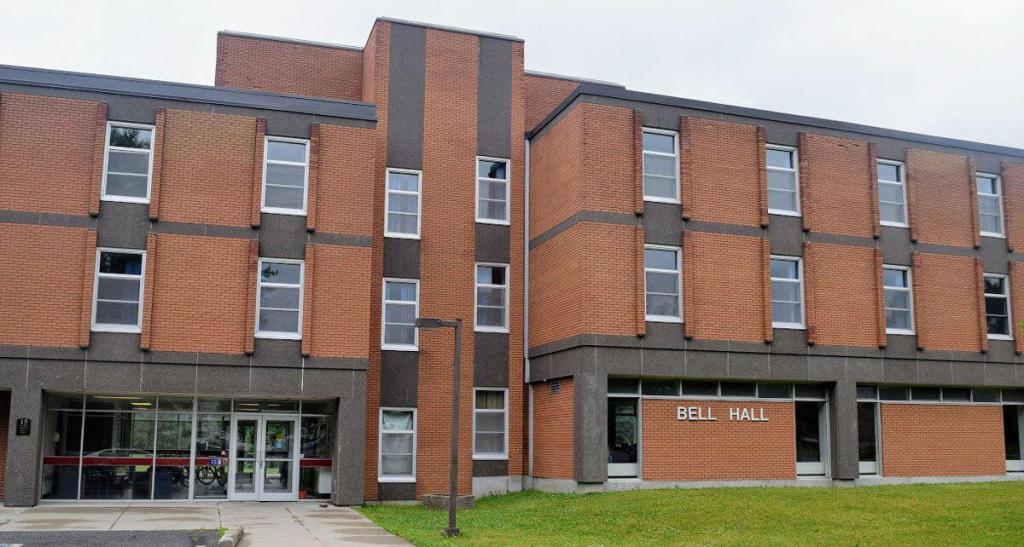
In communities across Canada, the housing crisis has become more than a policy debate, it’s a daily struggle. While costs rise and waitlists grow, the Municipality of North Grenville, just south of Ottawa, is offering a bold response. Its $25 million proposal to convert Bell Hall, a vacant dormitory on the Kemptville Campus, into more than 60 affordable rental units is both practical and symbolic, a microcosm of what’s possible when local governments lead.

The campus itself is a 630-acre hub of community, education, and sustainability activities. Once part of the University of Guelph’s agricultural network, it’s now owned by the municipality and governed by a 2021 master plan that prioritizes adaptive reuse, environmental responsibility, and deep community engagement. Bell Hall fits that vision precisely; a municipally owned, appropriately zoned, fully serviced building, already standing and waiting to be converted.

This is not a speculative plan. Developed over months with input from senior staff and not-for-profit partners, the Bell Hall project targets the real needs of North Grenville’s most vulnerable; seniors, veterans, and working families being priced out of their hometown. It offers not just housing, but stability, dignity, and a sense of belonging.

And yet, despite being shovel-ready, the proposal remains stalled in a growing backlog at the Canada Mortgage and Housing Corporation (CMHC). It’s a familiar story for municipalities across the country, many of whom are reporting delays due to limited federal processing capacity, particularly in underwriting. As federal priorities shift with the political winds, viable projects are left in limbo.

Mayor Nancy Peckford recently sounded the alarm in the Ottawa Citizen, arguing that the issue is not preferential treatment, but systemic inefficiency. Her call for transparency and faster turnaround is resonating with other small communities also ready to build. In an age where housing need is immediate, the logic is simple: when a plan meets all the criteria, and the groundwork is laid, it should move forward.

Some critics are suggesting that municipalities are just now “stepping up” on housing, but local governments have long managed zoning and development approvals. What’s new is the scale and pace of their engagement, assembling land, forming partnerships, applying for federal tools, and leading where senior governments lag.

North Grenville’s approach is part of a broader shift in small-town Canada, where pressures once confined to major cities are now spreading. The housing crisis isn’t urban anymore, it’s national. In this context, Bell Hall becomes more than a local project. It’s a test of the federal-municipal partnership that modern housing policy demands.

There’s also economic logic behind the urgency. A 2023 Deloitte report estimated that expanding community housing could add $70 billion to Canada’s GDP over five years. In places like Kemptville, where growth is manageable and materials can be sourced locally, the multiplier effects are significant with jobs, procurement, community stabilization, and reduced strain on health and social services.

And this is just one community. Rural municipalities across Eastern Ontario are facing similar challenges – aging populations, limited rental stock, and infrastructure that hasn’t kept pace. A regional alliance, or even a coordinated appeal, could elevate the urgency of rural housing and draw more attention to what’s at stake.

North Grenville is ready. Bell Hall is ready. The question is whether the federal system is ready to respond with the speed and seriousness the moment demands. If the next government wants to prove its commitment to housing, here is the perfect place to start.

The Ottawa Amalgamation Failure

The amalgamation of the 13 municipalities into the single-tier City of Ottawa in 2001 was touted as a transformative move. It was expected to streamline governance, reduce redundancy, and create financial efficiencies. Promises of improved municipal services and lower taxes were at the forefront of the pitch made by the Harris government in Ontario. However, in practice, the amalgamation has faced widespread criticism for its failure to fulfill these expectations. I worked as a member of a geospatial applications team to support evidence-based decision making during this transition, and it soon became clear that politics rather than data and community requirements was driving the bus. 

Improved Services
One of the primary promises of amalgamation was to standardize and enhance municipal services across all former municipalities. However, this promise has not been fully realized, particularly for rural and suburban areas, which have often felt left behind. Several key issues have been noted:

Prior to amalgamation, smaller municipalities had tailored services suited to their unique needs. Post-amalgamation, rural areas, such as West Carleton and Rideau-Goulbourn, have voiced concerns over reductions in services like road maintenance, snow clearing, and public transit availability. Urban-centric planning has often overshadowed rural priorities. Rather than simplifying governance, the larger bureaucratic structure of the amalgamated city has at times hindered efficient decision-making. Residents have reported delays in service delivery and inefficiencies in resolving local issues.

One of the most visible struggles has been with Ottawa’s public transit system, particularly with the Ottawa Light Rail Transit (LRT) project. This has been plagued by cost overruns, operational challenges, and inadequate service in suburban and rural areas. Residents question whether the amalgamated city’s centralization has exacerbated these issues.

Lower Taxes
Another major promise was the reduction of property taxes due to economies of scale and centralized administration. However, this has not materialized, and in many cases, taxes have increased. Many residents of rural and suburban areas have seen tax hikes without proportional improvements in services. Before amalgamation, smaller municipalities often operated with lower budgets and tax rates tailored to their limited scope. Amalgamation brought uniform tax rates, which disproportionately impacted these regions.

Amalgamation created unforeseen administrative and operational costs. For example, the integration of different IT systems, payroll structures, and service contracts has led to ballooning expenses. These costs have been passed on to residents through higher taxes. The perception that rural residents are subsidizing urban infrastructure projects, such as the LRT, has deepened dissatisfaction. Rural areas often feel they are paying higher taxes for services that primarily benefit the urban core.

Loss of Local Control
Another often-overlooked consequence of amalgamation has been the loss of local decision-making. Smaller municipalities had more control over their budgets, development priorities, and service delivery. Post-amalgamation, these decisions are centralized, often resulting in policies that do not reflect the needs of individual communities. This has alienated many residents and fostered distrust in the amalgamated city’s leadership.

Evaluation and Criticism
Critics argue that amalgamation prioritized financial theories over the realities of local governance. While some benefits of centralization, such as unified planning and a larger economic development strategy, have been achieved, the overall failure to deliver on improved services and lower taxes has undermined public confidence. Amalgamation’s implementation lacked sufficient consultation with residents and did not adequately address the diverse needs of Ottawa’s urban, suburban, and rural communities.

The amalgamation of Ottawa’s 13 municipalities was envisioned as a way to create efficiencies and deliver better services at lower costs. However, the reality has been far more complex, with significant gaps between promises and outcomes. The perceived failure to deliver on these promises has left many residents, particularly in rural and suburban areas, feeling underserved and overtaxed. This has sparked ongoing debates about whether the amalgamation truly benefited the diverse communities it was meant to unite or whether it simply centralized problems under a single, unwieldy structure.

Sustainable, Affordable, Inclusive: Canadian Cities Reshaping Rental Housing

For much of the 20th century, Canadian cities played a direct role in developing and managing affordable housing, often in partnership with provincial and federal governments. Public housing projects, such as Regent Park in Toronto and Benny Farm in Montreal, were built to provide low-income families with stable rental options. However, starting in the 1980s and accelerating through the 1990s, municipalities largely withdrew from housing development as senior governments cut funding and shifted responsibility to the private sector. The federal government ended its national social housing program in 1993, leaving provinces and cities with fewer resources to maintain or expand affordable housing stock. As a result, municipal involvement in housing became limited to zoning regulations, subsidies, and partnerships with private developers, contributing to the affordability crisis seen today.

Canadian cities are beginning to take a more hands-on approach to tackling the housing crisis again, by developing their own low-cost community rental properties on municipally-owned land. With rising rents, stagnant wages, and increased housing demand, affordability has become a pressing concern across the country. Many municipalities, recognizing the limits of relying solely on the private sector, are leveraging public land to create permanently affordable rental options for lower-income residents.

One of the key advantages of this approach is the ability to bypass speculative real estate markets that often drive up costs, and limit long-term affordability. By building on land they already own, cities can keep costs down and ensure that these units remain accessible to those in need, rather than being converted into high-priced rentals or condominiums. Toronto’s Housing Now initiative is a prime example, using city-owned lands to develop mixed-income communities where a significant portion of the units are dedicated to affordable rental housing. These projects are structured to remain affordable over the long term, either through direct municipal ownership or partnerships with non-profit housing providers.

Collaboration with non-profit organizations, housing cooperatives, and community land trusts has become an essential part of this strategy. Many cities recognize that while they can provide the land and initial investment, long-term management and tenant support are often best handled by organizations with experience in affordable housing. Vancouver has been a leader in this area, working with its Community Land Trust to develop and manage affordable units across the city. These partnerships not only ensure that affordability is maintained in perpetuity but also allow for a more community-focused approach to housing, where tenant needs and long-term sustainability are prioritized over profit.

Another emerging trend in municipal-led housing development is the use of modular and prefabricated construction. These methods allow for faster, more cost-effective builds, reducing both construction time and expenses. Ottawa and Edmonton, for example, have invested in modular housing projects to provide rapid solutions for those in immediate need, including people experiencing homelessness. These developments often integrate support services such as mental health care, employment programs, and childcare, recognizing that affordability is about more than just keeping rent low—it’s about providing stability and access to essential resources.

Policy changes at the municipal level are also playing a crucial role in supporting these initiatives. Some cities have adjusted zoning laws to allow for higher-density affordable housing developments or have introduced inclusionary zoning policies that require developers to include affordable units in new projects. Montreal’s 20-20-20 bylaw is an ambitious attempt to balance private development with affordability, mandating that large residential projects include at least 20% social housing, 20% affordable housing, and 20% family-oriented units. While policies like these don’t create city-built rental properties directly, they reinforce the broader municipal commitment to ensuring housing remains within reach for lower-income residents.

Despite the progress being made, challenges remain. Municipal governments often face funding constraints, relying on provincial and federal support to bring these projects to life. Bureaucratic hurdles and community opposition—often fueled by NIMBY (Not In My Backyard) sentiments—can slow down approvals and limit where these developments can be built. However, growing public awareness of the affordability crisis has led to increased political pressure to push projects forward. Programs like the federal Housing Accelerator Fundand the Rapid Housing Initiative are providing much-needed financial backing, allowing cities to expand their efforts and bring more units online.

The future of municipal-led affordable rental housing looks promising. While cities alone can’t solve Canada’s housing crisis, their willingness to take a more active role in development is a step toward ensuring that affordable housing is treated as essential infrastructure rather than a market-driven commodity. If these efforts continue to grow, they could serve as a model for other municipalities seeking sustainable, long-term solutions to the housing affordability challenge.