
Mark Carney’s recent remarks at the housing development announcement have sparked an intriguing debate on fiscal responsibility that could well shape our nation’s political discourse this election season. In a climate where every policy decision is scrutinized, Carney’s clear differentiation between mere spending and genuine investment stands out as both a pragmatic and visionary approach.
At the event, Carney took the podium with a measured resolve, declaring, “This is not merely spending.” The announcement, a multi-billion-dollar initiative aimed at creating thousands of affordable homes, was not just a government outlay but, as Carney argued, a strategic investment in the country’s future. He reminded us that spending provides short-term relief, a temporary boost that often fades without leaving a lasting impact. In contrast, investing builds physical assets, from homes that shelter citizens to infrastructure that drives long-term economic growth.
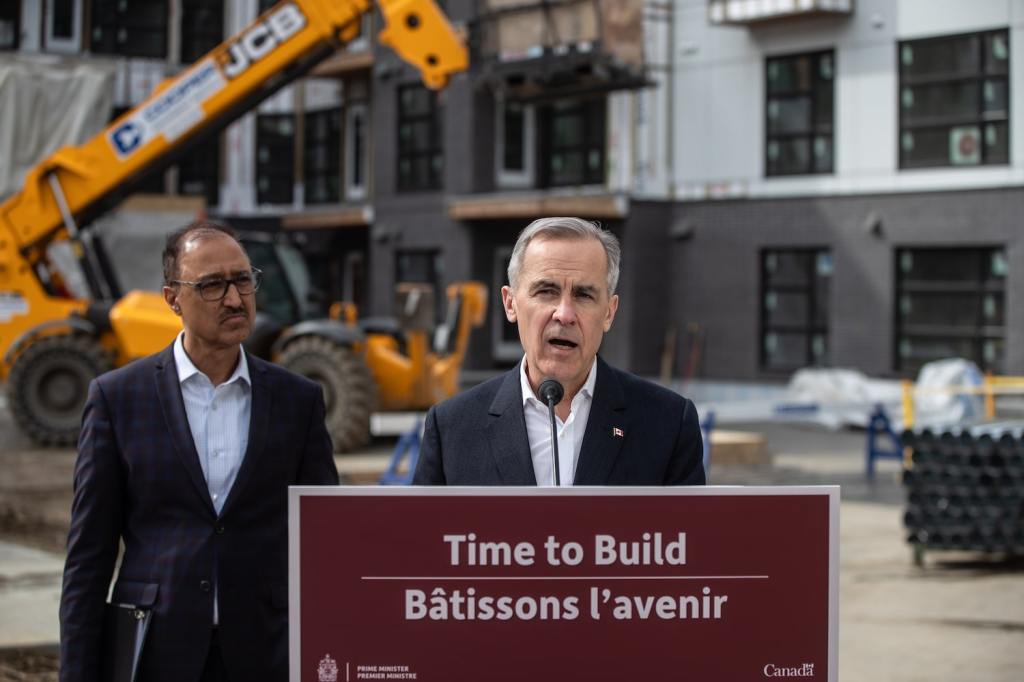
During the press conference, a journalist pressed Carney for clarity: “But what exactly distinguishes spending from investing, especially in these turbulent economic times?” Carney’s response was incisive. “Consider this housing initiative. If we were simply spending, we’d be issuing subsidies or providing temporary relief. That money would dissipate, leaving us to confront the same issues a year or two down the line. What we’re doing here is building assets that not only meet immediate needs, but also stabilize our market for decades to come.” His explanation resonated, emphasizing that when the government borrows money for tangible investments, it’s laying the groundwork for future prosperity, rather than just adding to the current debt burden.
Critics have raised valid concerns about increasing deficits, asking, “But what about government deficits? Isn’t this just adding to our debt load?” Carney acknowledged the worry, noting that borrowing for short-term fixes often leads to a perilous cycle of debt. However, he argued, borrowing to invest in enduring assets, such as new housing, yields dividends in the form of job creation, improved living standards, and a robust, resilient economy. “Debt for spending is dangerous because it leaves nothing behind,” he stated. “Debt for investment, however, is different. When we invest in projects that drive economic growth, we’re not just managing debt, we’re transforming it into a catalyst for long-term stability.”
As someone who has witnessed countless policy debates, I find Carney’s distinction particularly refreshing. In an era dominated by immediate solutions, and short-lived political gains, his perspective challenges leaders to think beyond the next election cycle. The choice, as Carney laid it out, is stark: Will our policymakers continue to opt for fleeting spending that merely masks underlying problems, or will they embrace investments that secure a prosperous future?
This is more than a fiscal debate, it’s a much needed, fundamental question about our nation’s priorities. As voters and citizens, Canadians must demand that our leaders consider the long-term impacts of their decisions. The current housing development initiative, if executed wisely, is a testament to the power of strategic investment over transient spending, such as tax cuts for the rich, or removing the carbon tax. It promises to deliver not just immediate relief, but a foundation upon which a stronger, more resilient economy can be built. Again, this goes beyond the usual election cycle promises, and short-term thinking, that politicians usually indulge in, to get the votes they need to stay in power.
In these uncertain times, Carney’s message is a timely reminder that every dollar spent should be scrutinized for its future value. As the election nears, his call to invest in our collective future rather than merely spending for today is one that deserves our full attention, and, perhaps, our support.
 The Rowanwood Chronicles