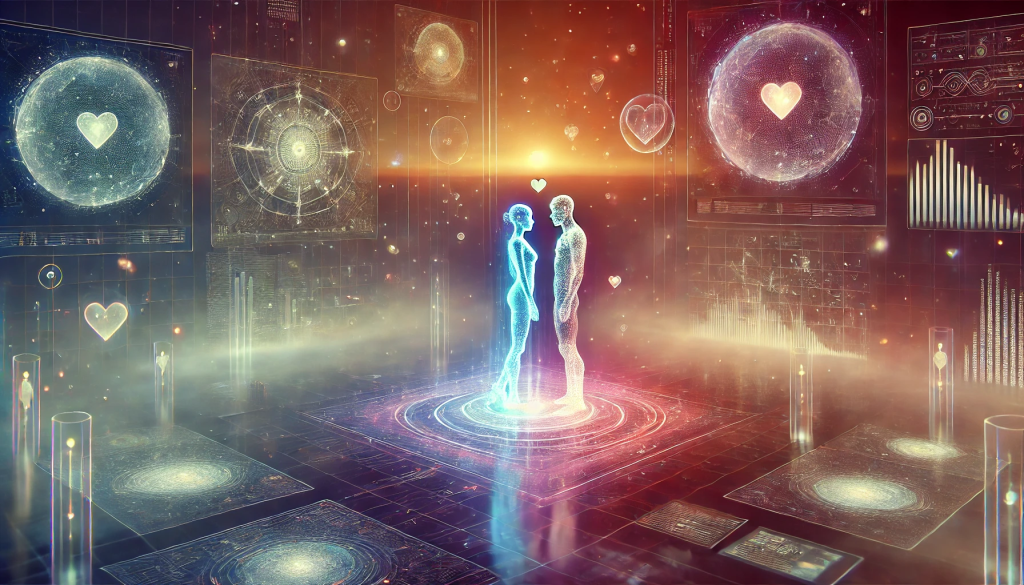
The Mirage of Intimacy: Online Relationships and the Illusion of Closeness

In the digital age, relationships often begin, or even flourish, online. A message pings at midnight, and suddenly a conversation feels urgent, intimate, and deeply personal. The hours slip by as we reveal our thoughts, secrets, and vulnerabilities to someone whose physical presence we may never experience. Online connections have a remarkable capacity to feel profoundly close, sometimes more so than our in-person friendships. Yet, beneath this apparent closeness lies a subtle paradox: what feels intimate is often a carefully curated illusion, a projection of our desire for connection rather than a fully realized relational reality.

One of the most striking aspects of online communication is how quickly intimacy can develop. Psychological research identifies the “online disinhibition effect,” where people disclose personal thoughts, fears, and fantasies faster than they would in face-to-face interactions. Late-night chats, shared memes, and deep confessions create a sense of continuous access and emotional availability. In polyamorous or kink communities, this effect is amplified: the vulnerability required in these spaces: sharing desires, boundaries, and experiences, naturally fosters trust, even across screens. The result can be a rapid acceleration of closeness, sometimes outpacing the organic development of real-world relationships.

Yet, this intimacy is often an illusion. Online, we present curated versions of ourselves. We choose our words, images, and emojis carefully, emphasizing the aspects we hope will resonate. Likewise, the person on the other end is also performing a curated self, revealing only fragments of their life. This selective visibility can create a perception of depth that exceeds reality. We feel we know someone profoundly, when in truth, we are engaging with a projection of their identity shaped by context, desire, and expectation. The mind naturally fills in gaps, constructing a narrative of connection that may be more reflective of our own needs than the other person’s reality.

The challenges of this illusion are particularly pronounced in communities where trust and vulnerability are central. In kink or poly contexts, emotional intimacy can feel heightened through shared fantasies, discussions of boundaries, and the negotiation of desire. Yet these interactions, while genuine, exist in a digital space that strips away many grounding elements of relational reality. Physical cues, timing, and shared daily experiences – all critical for building resilient intimacy – are often absent. The result is a relationship that feels complete in our minds but is incomplete in practice.

This is not to suggest that online intimacy is inherently false. Many long-distance partnerships, mentorships, and friendships thrive entirely in digital form, creating meaningful and enduring bonds. The difference lies in grounding. Healthy online intimacy balances emotional openness with an awareness of the limitations inherent in digital interaction. It requires reflection, patience, and, when possible, opportunities for embodied connection that anchor the relationship in shared experience.

When this balance is absent, online relationships can become a double-edged sword. Misaligned expectations, idealization, and the absence of tangible reality can lead to disappointment, heartache, and confusion. We might overestimate the closeness we share, projecting onto the other person qualities or commitments that exist only in our own imagination. In extreme cases, this can strain in-person relationships, particularly in polyamorous or kink communities where multiple layers of connection must be navigated simultaneously.

The key is not to reject digital intimacy but to engage with it critically and consciously. Online relationships are powerful, evocative, and often transformative, but they are not replacements for embodied connection. They are a mirror, reflecting both the depth we feel and the gaps we cannot see. Recognizing this duality allows us to embrace the richness of online relationships while remaining attuned to the boundaries between perception and reality.

In the end, the lesson is subtle yet vital: intimacy is both real and illusory. The digital world magnifies our desire for connection, offering an immediacy and intensity that can feel intoxicating. Yet the most enduring relationships, whether online or offline, are those grounded in a balance of openness and discernment, imagination and reality. Understanding the mirage of digital closeness allows us to cherish the connection we feel while remaining aware of the distance it conceals. Only then can we navigate the fascinating, complex, and often intoxicating terrain of online intimacy with clarity, care, and compassion.

Symbiosexuality: The Future of Love, Intimacy, and Connection

As our understanding of love and relationships evolves, so too does the way we define intimacy. A concept that’s starting to catch the attention of both relationship experts and storytellers alike is symbiosexuality. While it may not yet be a household term, it offers a new way of thinking about emotional connection, rooted in the biological principle of symbiosis—the mutually beneficial relationship between different organisms. In the realm of love, symbiosexuality suggests that relationships should be rooted in harmony, interdependence, and growth, not just between people, but also between humans and nature, and even between humans and technology.

In today’s dating world, where people are increasingly searching for more meaningful, emotionally fulfilling connections, symbiosexuality offers a model that reflects these desires. Gone are the days of relationships based solely on attraction or shared interests. Today’s singles are looking for something deeper: a connection that nurtures both partners, encouraging emotional and intellectual growth. Symbiosexuality embraces this shift, proposing that love can thrive when both individuals contribute to each other’s flourishing. It’s not about one person being “the other half” of the other, but about both people being whole in their own right, yet stronger together.

Technology has also played a significant role in changing how we form relationships, expanding the boundaries of intimacy far beyond physical presence. The rise of virtual dating, AI companions, and even relationships formed in virtual reality all reflect the growing need for connection that goes beyond the tangible. In this new world of digital love, symbiosexuality takes on a unique form—relationships with AI or virtual partners that are based on mutual emotional fulfillment and support. These connections might seem like something out of science fiction, but they’re becoming more real as technology advances. In some ways, they embody the symbiosexual model by providing companionship that nurtures the emotional well-being of the person, even when it’s not with another human.

At the same time, there’s a growing movement toward non-traditional relationship structures, like polyamory, where people cultivate multiple relationships that meet different needs. This, too, aligns with the idea of symbiosexuality—relationships that form a web of interdependence rather than a single, dependent bond. In polyamory, partners take on different roles, offering everything from emotional support to intellectual stimulation, and in doing so, they create a balanced, symbiotic ecosystem of connection.

Another fascinating aspect of symbiosexuality is how it dovetails with the eco-sexuality movement, which celebrates intimacy with nature itself. As environmental concerns become more urgent, many people are seeking to reconnect with the Earth in a deeply personal way. This trend goes beyond the idea of environmental activism; it’s about seeing nature as a partner, one that sustains and nurtures us. Whether it’s through ritual, activism, or simple acts of mindfulness, eco-sexuality offers a way to deepen our relationship with the planet—a form of love that acknowledges the symbiotic relationship between humanity and the Earth.

The idea of symbiosexuality isn’t just shaping how we date—it’s also influencing how we tell stories. Literature, especially science fiction, is filled with depictions of relationships that challenge traditional ideas of intimacy. In Dune, for example, the relationship between humans and the sandworms is symbiotic—both species rely on each other for survival. Similarly, Octavia Butler’s Xenogenesis Trilogy takes the concept of symbiosis even further, exploring how humans might merge with aliens to create a new, interdependent species. These narratives present love not as something confined to humans but as something that can span species, challenging our conventional boundaries of what intimacy means.

In modern fiction, the relationship between humans and AI also provides fertile ground for exploring symbiosexuality. Kazuo Ishiguro’s Klara and the Sun and Ian McEwan’s Machines Like Me both examine the emotional depth of human-AI relationships. In these stories, AI characters offer a form of emotional companionship that mirrors the symbiotic dynamics of human relationships. This opens up new ways of thinking about intimacy—what if the emotional support we need can come not from another human, but from a machine? These books raise fascinating questions about what it means to connect on a deep, emotional level and whether true symbiosis is possible between human and artificial beings.

But symbiosexuality isn’t confined to speculative fiction; it also appears in the real world. Novels like The Overstory by Richard Powers and Oryx and Crake by Margaret Atwood examine the relationships humans have with the natural world, urging us to rethink our connection with the Earth. These stories echo the central message of symbiosexuality—that love and intimacy can transcend human relationships, extending into our interactions with the environment. In these works, the survival of both humanity and nature depends on a mutually supportive, symbiotic relationship.

As we look to the future of relationships, symbiosexuality provides a fresh perspective on love. It’s no longer just about finding someone who completes us; it’s about forging relationships that allow both partners to grow, thrive, and evolve together. Whether it’s in human relationships, connections with the natural world, or bonds with technology, symbiosexuality challenges us to think beyond traditional ideas of love and intimacy. It asks us to consider how we can build relationships that are not only fulfilling on an individual level but that also contribute to the collective well-being of all involved.

In a world where connection is more important than ever, symbiosexuality offers a model for love that is as dynamic and interconnected as the world we live in. The question now is, as we look ahead, how will we embrace this new vision of intimacy? Will we be open to forging bonds that are less about ownership and more about mutual growth, balance, and care? That’s the essence of symbiosexuality, and it may just be the future of love.

As you reflect on your own relationships, consider this: Who or what in your life helps you grow, and how can you reciprocate that care? In a world that’s constantly evolving, perhaps the key to love lies not in searching for perfection, but in creating a mutually supportive, flourishing connection.

Update
When discussing this piece with a partner, apart from it being too long, they felt that the focus on a sexual connection in the term might be limiting.  Researchers have a history of mixing up labels for physical sexuality with intimacy and/or romance, and so the term “symbioromantic” or “symbiointimate” may be a more fitting descriptor than “symbiosexual” for relationships where intimacy is deeply rooted in emotional, intellectual, or spiritual connections rather than physical acts. While “symbiosexual” implies a focus on sexual interaction, “symbioromantic” emphasizes the shared emotional growth and interdependence that defines the bond. Romantic intimacy often transcends physicality, centering instead on mutual understanding, care, and the blending of lives in a way that nurtures both individuals. By shifting the focus to the romantic aspect, “symbioromantic” acknowledges that fulfilling, profound connections can thrive even in the absence of physical intimacy, making it a more inclusive term.