The Liberal Party’s New Power Struggle: Carney vs The Old Guard

Now that Mark Carney has won the 2025 federal election, and as Prime Minister, named his new cabinet, his ability to navigate the internal politics of the Liberal Party will be just as crucial as his capacity to govern the country. While Carney’s experience as Governor of the Bank of Canada and later the Bank of England gives him credibility as a skilled economic manager, political leadership is an entirely different challenge. Government is not just about making rational policy decisions; it is about managing competing egos, regional interests, and the internal factionalism that defines any major political party. The question is whether Carney, a newcomer to elected politics, can withstand the pressures of a party where everyone wants a piece of the action.

One of Carney’s greatest strengths is his ability to operate within complex institutions, where navigating bureaucracy and political sensitivities is essential. However, the Liberal Party is not a technocratic body, it is an organization with entrenched factions, long-standing rivalries, and individuals who expect rewards for their loyalty. A Prime Minister must act as both leader and power broker, ensuring that key players feel valued while still asserting control over the direction of the government. If Carney fails to grasp this dynamic early on, he risks being seen as an outsider unable to command the loyalty of his own caucus.

A major test will be how he handles the various factions within the party. The Liberals are not a monolithic entity; they consist of a progressive wing that leans heavily on social justice issues and a centrist bloc that prioritizes economic pragmatism. There are also strong regional interests at play, particularly from Ontario and Quebec, where powerful party figures hold significant influence. A successful leader must strike a balance, ensuring that no single faction feels alienated while maintaining a clear sense of direction. If Carney leans too heavily into one camp, especially if he is seen as overly technocratic at the expense of political instinct, he risks internal dissent.

Another potential challenge is dealing with the remnants of Trudeau’s inner circle. If Carney takes the leadership, it will not necessarily mean the party’s Trudeau-era power structure disappears overnight. There will be long-time MPs and advisers who built their careers under Trudeau’s leadership and may not be quick to embrace Carney’s vision. Some may resist his authority outright, while others could quietly work against him if they feel sidelined. Managing this transition will require careful maneuvering, if Carney fails to integrate these figures into his team in a way that acknowledges their influence, he could find himself facing internal power struggles before he even settles into office.

Cabinet appointments announced today will be an early indicator of whether Carney understands the importance of political management. Every successful leader knows that forming a cabinet is not just about qualifications; it is about rewarding allies, neutralizing threats, and ensuring regional representation. If Carney takes a purely meritocratic approach, appointing ministers based solely on expertise rather than political necessity, he could alienate those who expect a return on their loyalty. The most effective prime ministers understand that governing is about both competence and coalition-building; failing to strike that balance can quickly lead to discontent within caucus.

Beyond Parliament Hill, Carney will also need to connect with the party’s grassroots. The Liberal base consists of volunteers, donors, and riding association leaders who expect their voices to be heard. Carney’s reputation as an elite, internationalist figure could work against him if he does not make a concerted effort to engage directly with these groups. If he is perceived as distant or disconnected from the party’s rank and file, he could struggle to maintain cohesion within the Liberal movement. Trudeau, for all his faults, had a deep personal connection with the party’s grassroots, something that sustained him through difficult periods. Carney will need to build that relationship from scratch.

Like any new leader, Carney will face an early test, a moment that defines his ability to command respect and authority within his party. Whether it is a scandal, an economic crisis, or a policy misstep, how he handles that first major challenge will set the tone for his leadership. If he shows strength and decisiveness, he could solidify his position within the party. But if he falters, doubts about his leadership will begin to fester, potentially leading to deeper internal divisions.

Ultimately, Carney’s success will hinge on his ability to adapt. He has the intellectual firepower and the institutional experience, but politics is a game of relationships, instincts, and survival. If he can master that side of the job, he could thrive. If not, he risks becoming yet another promising leader undone by the very party that brought him to power.
Manufactured Crisis? How Manning’s Separation Rhetoric Boosts Poilievre’s Leadership Image

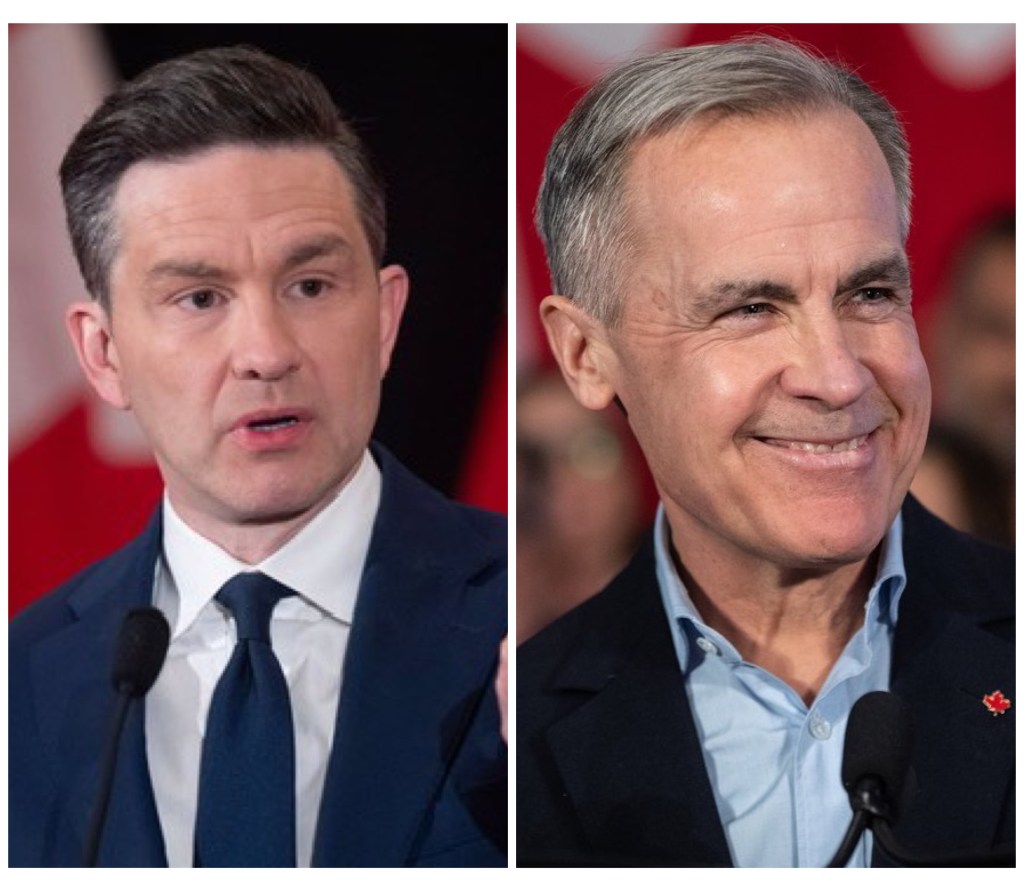
Preston Manning’s recent comments suggesting that Mark Carney’s political positions might drive Western Canada toward separatism seem to serve a dual purpose: first, they reinforce long-standing Western alienation narratives, and second, they may act as a strategic setup for Pierre Poilievre to position himself as a national unifier ahead of the next federal election.

Western alienation has been a recurring theme in Canadian politics, particularly under conservative figures who have used it as a rallying point. Manning, as a former leader of the Reform Party, has deep roots in this movement. By framing Carney, who is associated with the Liberals and seen as a potential successor to Trudeau, as a threat to Western unity, Manning effectively stokes regional frustrations. However, the timing and messaging of his comments raise questions about whether they are part of a broader conservative strategy.

If Western separation is framed as an impending crisis, Poilievre can step in as the “voice of reason” advocating for national unity, all while reinforcing his commitment to Western interests. This allows him to attack both the Liberals and Carney while appearing above the fray as a leader who can keep the country together. This tactic, raising the specter of division to later present a preferred leader as the solution, is a classic political maneuver.

Additionally, such rhetoric creates a convenient contrast between Poilievre and Carney. Carney is often positioned as a technocratic elite with strong international credentials, whereas Poilievre appeals to populist, anti-establishment sentiments. By invoking Western alienation, Manning shifts the conversation away from policy and toward identity-based politics, an area where Poilievre has excelled.

Ultimately, whether this is a deliberate “red flag” operation or simply a reflection of Manning’s personal beliefs, the effect is the same: it benefits Poilievre by giving him a crisis to “solve,” reinforcing his national leadership image while deepening the perception of Liberal detachment from Western concerns.

Elbows Up, Canada! 

Ah, Canada. The land of politeness, poutine, and apparently perfectly timed political drama. If you’ve been paying attention over the last month, you know it’s been a real doozy for us Canucks. First, Mark Carney, the economist-turned-political-messiah, officially stepped onto the national stage. Then, Mother Nature decided to remind us who’s boss with a wild mix of warm spells, deep freezes, and sudden dumps of snow. And finally, as if the week wasn’t Canadian enough, we got a new rallying cry: Elbows Up!

Mark Carney’s entry into federal politics has been long expected, but still managed to cause a stir. Here’s a guy who made central banking look—well, not exciting, exactly, but at least important enough that people pretended to care. He kept Canada’s economy steady through the 2008 financial crisis, under the Harper government, jetted off to the UK to help them through Brexit, and now he’s back, seemingly ready to steer this country through whatever economic storm comes next. He’s got the calm, measured tone of a man who has witnessed financial meltdowns up close, and the kind of charisma that makes fiscal policy sound almost appealing; but politics is a different beast altogether. Managing currency fluctuations is one thing—handling Question Period is another. I wasn’t really looking forward to yet another grey-haired white guy leading the country, but we’ll see if Canada buys what he’s selling. For now, we know Mark Carney is officially in charge of the Liberals, and almost the new Prime Minister.

Meanwhile, the weather has been reminding Canadians why March is the cruelest month. The classic fake spring arrived in full force, tricking people into putting their winter boots away—only for reality to come slamming back with an ice storm, a deep freeze, or a snow dump, depending on where you live. Ottawa, as always, seemed to be experiencing three different seasons at once, with the added insult of a wind chill so sharp it felt personal. And yet, like every year, we go through the same ritual; the brief moment of hope, the inevitable betrayal, and then the begrudging acceptance that we are, in fact, still in Canada.

And then there’s Elbows Up. What started as a phrase to describe Connor Bedard’s determined return to hockey after a brutal injury has quickly taken on a life of its own. There’s something deeply Canadian about it—it’s tough, practical, and just a little bit scrappy. It’s the perfect metaphor for how we handle everything. Snowstorm? Elbows up. Hockey fight? Elbows up. Trying to squeeze past someone in a Tim Hortons without knocking over their double-double? Elbows up—politely, of course.

It’s a reminder that we don’t back down easily in this country. We don’t go looking for trouble, but if it comes, we brace ourselves and push through—sometimes with a bit of force, but always with the unspoken agreement that we’ll say sorry afterward. So whether you’re trying to navigate Carney’s political future, survive the next swing in temperature, or just make it through the day without slipping on the ice, one thing is clear; keep your elbows up, Canada. It’s what we do best.

And not one mention of the Pumpkin Spice Palpatine!

Partisan Outrage: Conservatives’ Double Standards on Prorogation

This week, the Federal Court is hearing a constitutional challenge against Prime Minister Justin Trudeau’s decision to prorogue Parliament until March 24, 2025. The applicants, David MacKinnon and Aris Lavranos, argue that this move is unconstitutional, claiming it undermines Parliament’s ability to hold the government accountable – especially in the face of pressing issues like recent U.S. tariff threats. They contend that while the Prime Minister has the authority to advise the Governor General on prorogation, this power is not absolute and must be exercised with reasonable justification.

Federal lawyers, however, insist that Trudeau’s decision aligns with constitutional conventions and falls outside the scope of judicial review. They argue that the government remains accountable to voters, and prorogation is a legitimate tool within Canada’s parliamentary system. The court’s ruling could set a significant precedent, determining whether prime ministers have unchecked authority to suspend legislative scrutiny or whether limits must be imposed.

Amid this legal battle, conservative politicians and business leaders have been vocal in their calls to end prorogation, claiming it damages democracy and disrupts economic stability. But their outrage is as selective as it is hypocritical. When Conservative Prime Minister Stephen Harper twice prorogued Parliament – once in 2008 to dodge a confidence vote, and again in 2009 to stall inquiries into his government – many of these same voices either defended the move or remained conspicuously silent. Their sudden concern for democratic norms now suggests that their stance depends entirely on who is in power.

Business leaders, too, have taken up the cry, arguing that prorogation creates uncertainty that harms investment and economic confidence. Yet these same figures have backed policies that introduce far greater instability – aggressive deregulation, tax cuts that balloon deficits, and budget standoffs that delay essential government funding. Their selective outrage makes it clear: they aren’t worried about economic disruption in principle, only about the inconvenience of a temporary legislative pause that may slow down policies they favor.

Conservatives have long weaponized procedural arguments to suit their political needs. When in opposition, they decry any government move that limits their ability to grandstand. When in power, they are quick to use the same tools to stifle criticism and control the political narrative. Harper’s use of prorogation to shut down inquiries into the Afghan detainee scandal is a prime example. Back then, the argument was that Parliament needed a “break” to focus on governance. Now, with Trudeau at the helm, they claim a temporary pause is an attack on democracy itself. The double standard could not be clearer.

Ultimately, the conservative push to end prorogation isn’t about principle – it’s about power. Their calls for accountability and stability ring hollow when contrasted with their own history of procedural manipulation. This is not a stand for democracy; it is political opportunism, plain and simple.

Justin Trudeau’s Legacy: A Leader of Bold Aspirations and Imperfect Progress

I have been working on this post for a while, as soon as it became clear that Justin Trudeau would be resigning. I don’t normally publish pieces this long, but I found that I needed this length to enable me to even just skim the surface of how this man transformed Canada as a nation, and its standing in the world. For me, his biggest failure was not reforming Canada’s federal election system after he vowed that the 2015 process would be the last conducted under the first past the post model. However, it soon became clear that the party’s backroom boys, and many newly minted MPs had other priorities, and so his government abandoned the pledge in 2017, disappointing advocates for electoral reform and leaving a key campaign promise unfulfilled.

Justin Trudeau’s tenure as Canada’s 23rd Prime Minister is a legacy of contradictions: one of bold progressive achievements, and high-profile missteps, of inspiring rhetoric and underwhelming follow-through. While his time in office has left the country more inclusive and forward-looking in many ways, it has also been marked by challenges and controversies that complicate the narrative of his leadership. Viewed holistically, Trudeau’s legacy is one of meaningful but imperfect progress – an era defined by a mixture of transformative change and opportunities missed.

Economically, Trudeau’s record is more complex. Programs like the Canada Child Benefit significantly reduced child poverty, providing direct financial relief to families and underscoring his government’s focus on middle-class Canadians. His investments in infrastructure and housing created jobs and spurred economic growth. However, these initiatives came at the cost of mounting deficits and an increased national debt, raising questions about long-term fiscal sustainability. Critics argue that his government’s policies failed to adequately address systemic issues such as housing affordability, which worsened during his tenure. Rising home prices left many young Canadians struggling to enter the housing market, highlighting a gap between Trudeau’s promises and tangible results. While his economic agenda was ambitious, it often struggled to balance short-term relief with long-term stability.

One of the most enduring aspects of Trudeau’s legacy is his commitment to diversity and inclusion. From the outset, he reshaped the face of Canadian politics with his historic, gender-balanced cabinet that included individuals from a variety of racial, religious, and cultural backgrounds. His reasoning – “Because it’s 2015” – became a shorthand for Canada’s progressive aspirations on the global stage. By elevating underrepresented voices, Trudeau sought to ensure that Canada’s leadership reflected its diverse population, signaling a renewed commitment to multiculturalism at a time when many countries were turning inward. This emphasis on inclusion not only bolstered Canada’s international reputation but also helped inspire a new generation of Canadians to see politics as a space for all.

Climate change was one of the defining issues of Trudeau’s leadership, and his government made significant strides in this area. The implementation of a nationwide carbon pricing system positioned Canada as a global leader in climate policy, reinforcing the country’s commitment to the Paris Agreement. Yet, this progress was undermined by the government’s purchase of the Trans Mountain Pipeline, which angered environmental advocates and Indigenous communities. Trudeau’s attempt to balance environmental goals with the economic realities of a resource-driven economy often left both sides dissatisfied. Nevertheless, his climate policies laid the groundwork for Canada’s transition to a more sustainable future, even if they were not without contradictions.

Trudeau’s relationship with Indigenous communities represents another area of mixed results. He made reconciliation a central theme of his leadership, offering apologies for historical injustices and pledging to address long-standing inequities. His government made progress on some fronts, such as lifting long-standing boil-water advisories in many Indigenous communities. However, significant gaps remained, particularly in addressing land rights and implementing the Truth and Reconciliation Commission’s calls to action. Many Indigenous leaders criticized the slow pace of change, arguing that Trudeau’s symbolic gestures often failed to translate into substantive action. While his efforts were genuine, they were frequently insufficient to meet the scale of the challenges at hand.

Ethics and accountability proved to be persistent weak points in Trudeau’s leadership. The SNC-Lavalin affair and the WE Charity scandal highlighted a troubling pattern of ethical lapses that undermined public trust. In both cases, Trudeau faced accusations of placing political interests above transparency and accountability. These controversies tarnished his image as a champion of ethical governance, leaving a stain on his record that cannot be ignored.

Yet, even amid these challenges, Trudeau’s ability to connect with Canadians on a personal level remained one of his greatest strengths. Whether marching in Pride parades, hosting town halls, or addressing the nation during the COVID-19 pandemic, he demonstrated an empathy and accessibility that set him apart from many of his predecessors. His optimism and charisma helped re-energize Canadian politics, particularly among younger voters, who saw in him a leader who genuinely cared about their concerns. While his leadership style occasionally veered toward the performative, it also reflected a deep understanding of the importance of symbolism in shaping national identity.

Ultimately, Trudeau’s legacy is one of imperfect but meaningful progress. His government advanced diversity, economic support for families, and climate action, while grappling with the realities of governance in a polarized and rapidly changing world. His tenure was far from flawless, marred by ethical lapses, unfulfilled promises, and the challenges of balancing competing priorities. However, his vision for a more inclusive, progressive, and globally engaged Canada resonated with millions and left an indelible mark on the country’s political landscape.

Justin Trudeau’s time as Prime Minister will likely be remembered not for perfection, but for aspiration. He sought to push Canada forward in ways that reflected its highest ideals, even if he sometimes fell short. For all the controversies and compromises, his leadership ushered in an era that redefined what Canada could stand for on the world stage: diversity, progress, and hope.

Please, Not Another Old White Male Academic

The Canadian Liberal Party finds itself at a crossroads, staring down the barrel of declining voter support, a fractured image, and leadership fatigue. Recent polling paints a grim picture for the governing party. According to a Nanos Research poll from November 2024, the Conservatives are riding high with 41% support, compared to the Liberals’ dismal 23%, while the NDP trails just behind at 20%. Similarly, an Abacus Data poll reveals an equally bleak scenario, with the Conservatives holding a commanding 22-point lead. For a party that once dominated Canadian politics, the question isn’t just about how to bounce back—it’s about survival.

The Curse of Intellectual Leadership
The Liberals’ current predicament has parallels to their past missteps. Two glaring examples—Stéphane Dion and Michael Ignatieff—serve as cautionary tales about the dangers of picking leaders who, while intellectually formidable, fail to connect with voters on a human level.

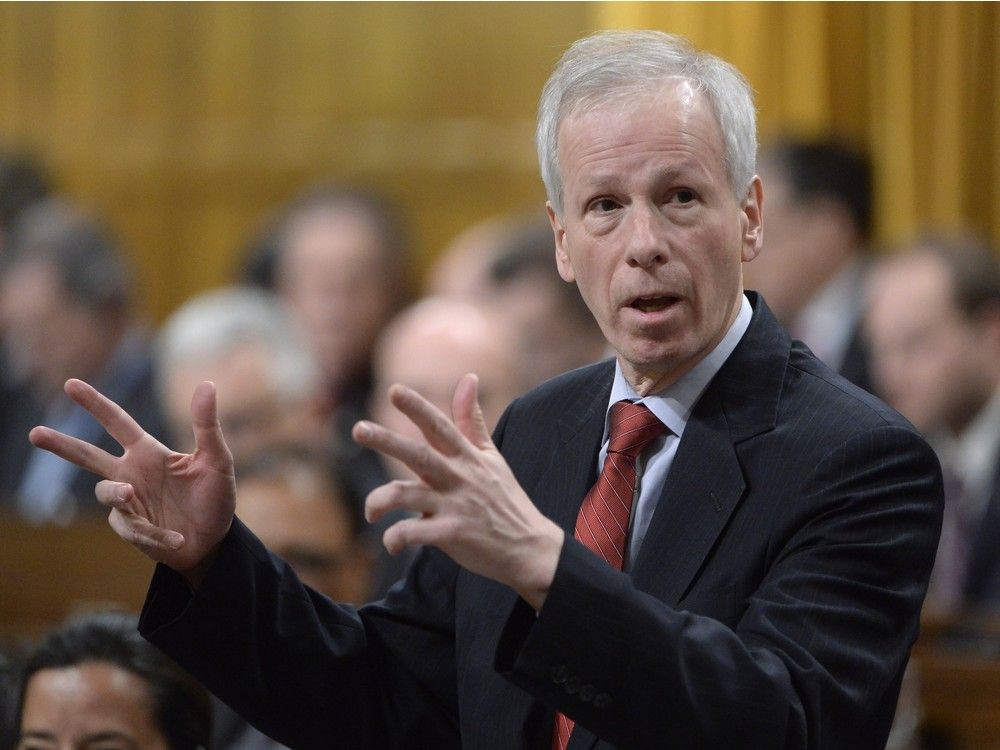
In 2006, the Liberals turned to Stéphane Dion, an academic and policy wonk with a passion for climate change. Dion’s “Green Shift” plan was ambitious, but lacked the messaging needed to win over Canadians worried about the economy. In the 2008 election, the party was hammered, falling to just 77 seats and 26.3% of the popular vote. Dion’s perceived aloofness, and inability to inspire confidence left the Liberals weak and divided, opening the door for Stephen Harper’s Conservatives to consolidate power.

The Liberals repeated this mistake with Michael Ignatieff, an accomplished academic and author, in 2008. Despite his intellectual prowess, Ignatieff struggled to shake the perception that he was a carpetbagger disconnected from the concerns of average Canadians. In the 2011 election, the party collapsed, capturing a mere 18.9% of the vote and just 34 seats—the worst performance in Liberal history. For the first time, the Liberals were relegated to third-party status, a stunning fall for Canada’s so-called “natural governing party.”

The Liberal Dilemma in 2025
Fast forward to today, and the Liberals seem poised to repeat history. With Justin Trudeau’s star power fading after nearly a decade in office, there is a real risk that the party might turn to yet another “safe” choice—a figure who mirrors the old archetype of a white male intellectual, disconnected from the realities of modern Canada. But the Canada of 2025 isn’t the Canada of 2006 or 2011. Demographics have shifted, and so have voter priorities.

Canada is now more diverse than ever. Over a quarter of the population identifies as part of a racialized group, and millennials and Gen Z make up the largest voting blocs. These voters expect leaders who reflect their lived experiences—not just in terms of identity but also in terms of relatable policies and vision. A leader who represents “business as usual” risks alienating not only racialized communities but also younger, progressive Canadians who are increasingly drawn to the NDP or Greens.

Recent polling reflects this growing discontent. The Liberals are hemorrhaging support to both the Conservatives and the NDP, with voters fed up with Trudeau’s perceived failures on affordability, housing, and climate action. Even Liberal loyalists are looking for something—or someone—new to rekindle their enthusiasm.

What the Liberals Need Now
The Liberals must understand that leadership is as much about identity and relatability as it is about policy and experience. A leader who embodies the diversity of Canada, speaks to the struggles of everyday people, and offers a compelling vision for the future could galvanize the party’s base and attract disillusioned voters. In contrast, opting for another “old white academic” risks reinforcing the image of a party out of touch with 21st-century Canada.

The successes of other leaders offer lessons. Jagmeet Singh’s historic leadership of the NDP has drawn younger and more diverse voters to his party, even if they haven’t translated into electoral dominance. Meanwhile, Pierre Poilievre has managed to connect with younger Conservatives through his populist messaging on affordability and housing.

The stakes for the Liberals couldn’t be higher. If they fail to read the room and make a bold choice, they risk not just losing the next election but fading into irrelevance altogether. As Dion and Ignatieff’s defeats demonstrated, intellectual credentials alone don’t win elections. Representation, relatability, and vision do.

For the Liberals, the time for reinvention is now—or never.

Is Ford Coming for Poilievre? 

The idea that Ontario Premier Doug Ford may be positioning himself as a future contender for the leadership of the federal Conservative Party – and ultimately the role of Prime Minister – is worth serious consideration, especially given Ford’s political trajectory and unique approach to conservatism.

Ford’s Political Ambition
Doug Ford has consistently demonstrated a knack for navigating and surviving in the political spotlight. As Premier of Ontario, Ford has carefully cultivated a “common man” image, appealing to a broad swath of voters, including blue-collar workers and suburban families – key demographics for any federal election. His brand of conservatism is less ideologically rigid than Pierre Poilievre’s; Ford focuses on pragmatism and populist messaging, which could make him a strong contender in federal politics.

While Ford has repeatedly stated he is focused on Ontario, his actions suggest he is not averse to expanding his influence. His willingness to work with Prime Minister Justin Trudeau on infrastructure projects and economic initiatives may be positioning him as a centrist alternative to Poilievre’s more hardline, ideological approach. This strategy could help Ford appeal to swing voters in urban areas and ridings that Poilievre might struggle to win.

Tensions with Poilievre
Ford and Poilievre’s relationship has been notably distant. Ford has avoided openly endorsing Poilievre or closely aligning with him, even during the latter’s rise to federal Conservative leadership. This distance hints at a potential rivalry, or at the very least, an unwillingness to be overshadowed by Poilievre on the national stage.

Poilievre’s leadership style, which leans heavily on ideological conservatism and combative rhetoric, may alienate moderate voters – a gap Ford could exploit. Ford’s track record of winning elections in a diverse province like Ontario demonstrates his ability to bridge divides and appeal to a broader electorate, including centrists who might find Poilievre’s approach too polarizing.

Ontario, the Powerhouse of Canadian Politics 
Historically, Ontarians have shown a preference for balancing power between provincial and federal governments, often avoiding having the same political party in charge at both levels. This dynamic could spell trouble for Doug Ford if Pierre Poilievre’s federal Conservatives win the next election. A federal Conservative victory might shift Ontario voters toward the provincial Liberals or NDP in an effort to counterbalance federal policies, particularly if there is dissatisfaction with Conservative governance nationally. Ford’s political calculus must account for this trend, as maintaining his grip on Ontario could become significantly more challenging with a Conservative government in Ottawa. This precarious balance might also incentivize Ford to consider a move to federal politics, especially if he perceives his provincial support waning.

While Ford has not explicitly declared any federal ambitions, the possibility that he could eventually seek Pierre Poilievre’s job cannot be dismissed. His pragmatic approach to conservatism, ability to appeal to diverse voters, and political survival instincts make him a viable alternative for a party looking to broaden its appeal. Whether by design or by opportunity, Ford may very well see himself as Canada’s next Conservative Prime Minister-in-waiting.